
Travel to Djibouti
A small Horn of Africa country where three tectonic plates meet: a turquoise salt lake more than 150 metres below sea level, limestone chimneys rising out of the desert, islands and waters rich in marine life. Djibouti is a trip for landscapes unlike any other. Here is what to know before you look for cheap flights to Djibouti.
Djibouti in numbers
Capital
Djibouti
Population
About 1M
Area
~23,200 km²
Currency
Djibouti franc
Language
French and Arabic
Lowest point
Lake Assal
Continent
Africa
Time zone
UTC+3
Airports covered
1
Why visit Djibouti
Landscapes from the edge of the world, between salt, volcanoes and the Red Sea
Lake Assal, Africa's record
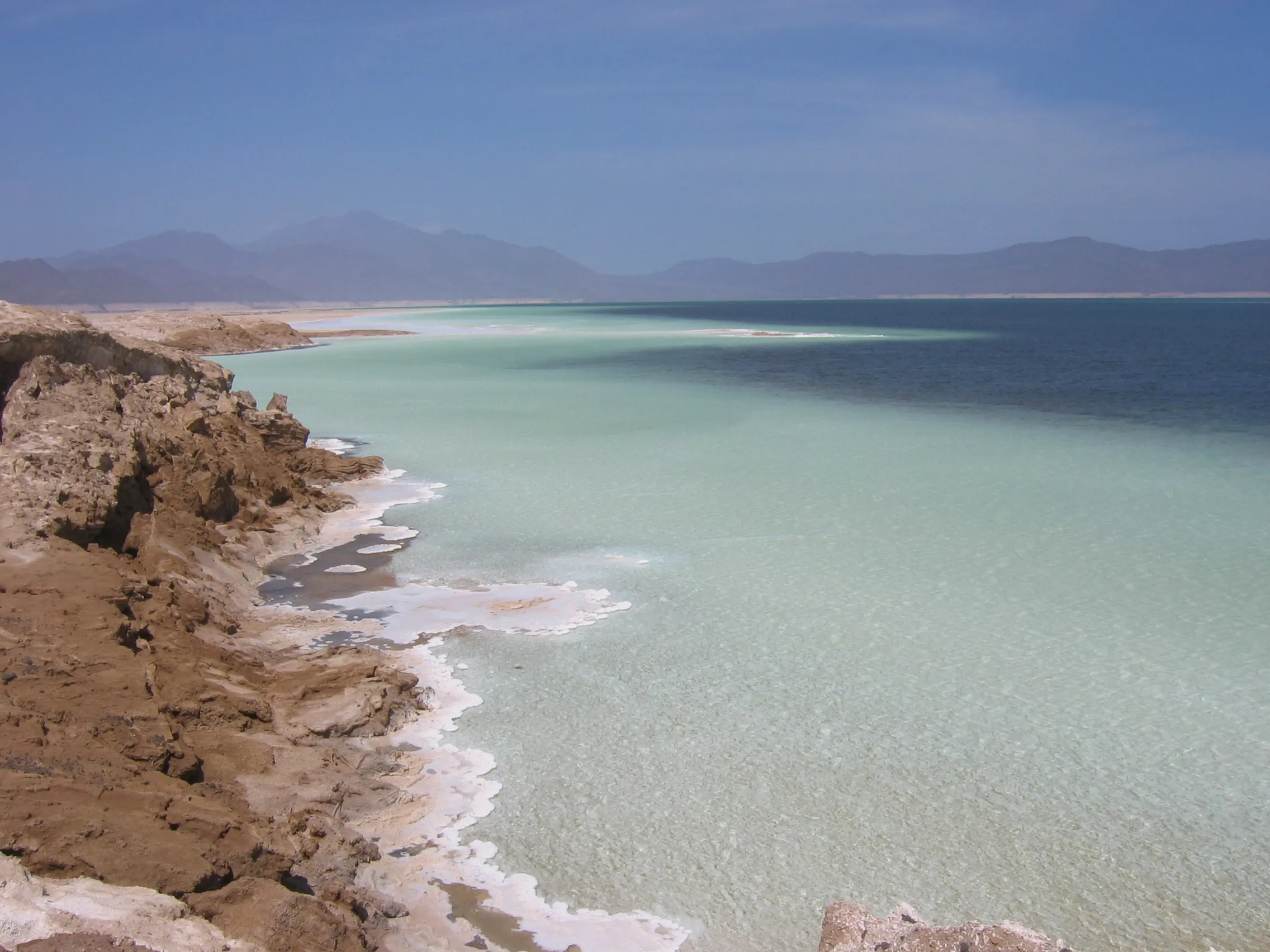
Lake Assal lies more than 150 metres below sea level, the lowest point on the continent. Its turquoise water, ringed by white salt crusts and volcanic rock, makes a landscape you do not forget.
Lake Abbe and its chimneys
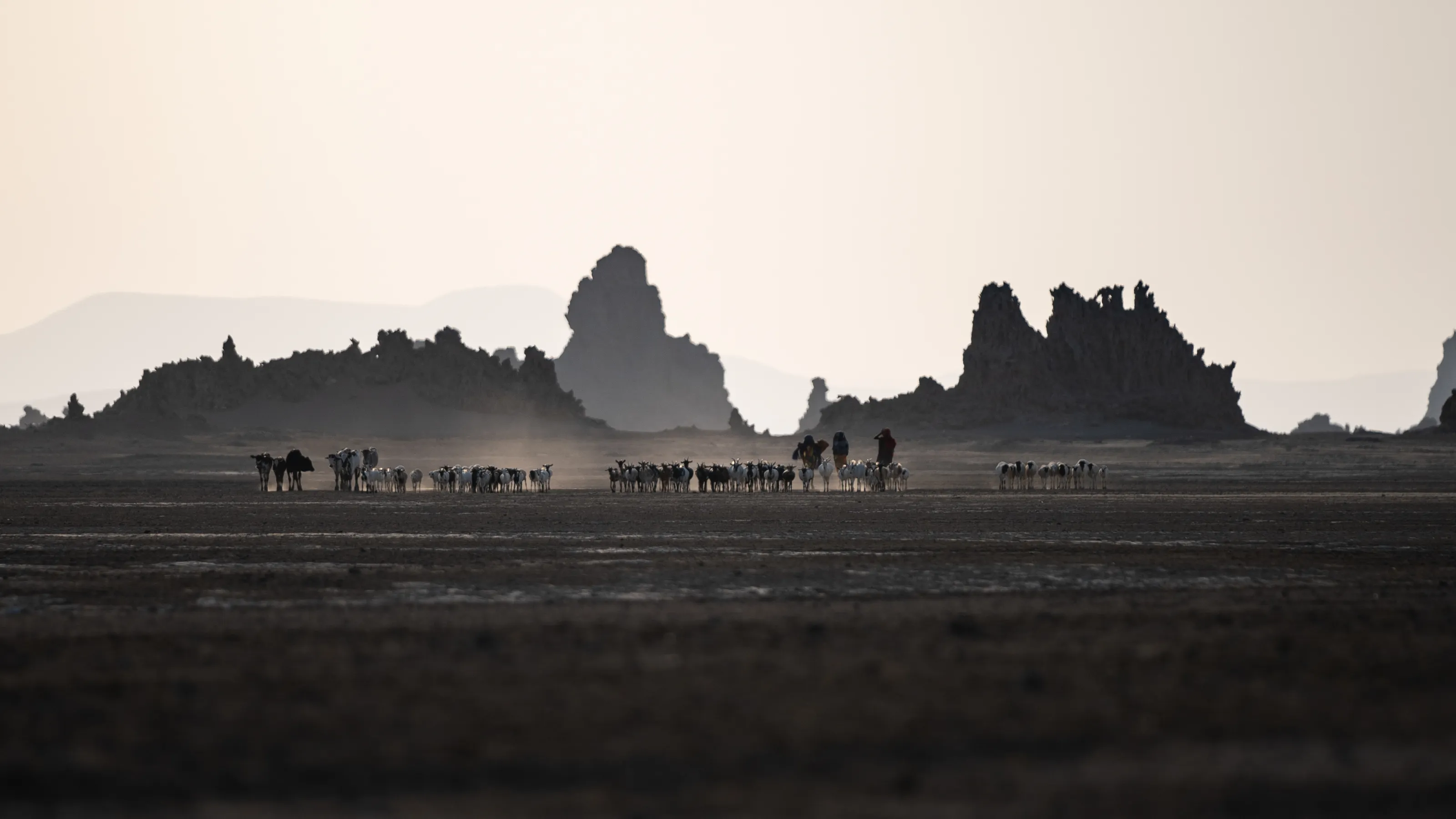
Near the Ethiopian border, Lake Abbe is a desert of salt and mud from which limestone chimneys rise. Flamingos, ibises and pelicans visit the water, and herders bring their flocks across the plain.
The Gulf of Tadjoura
The coast, islands, reefs and underwater volcanoes are considered a diver's paradise. The gulf is also known for whale sharks in season, giant and harmless animals that feed on plankton.
A country at a tectonic tripoint
Djibouti sits where the African, Somali and Arabian plates meet. That position explains its volcanoes, faults and depressions: Mousa Ali, the highest point, reaches 2,028 metres, while Lake Assal drops below sea level.
Where to go
Lake Assal, Lake Abbe, Tadjoura and Ghoubet Bay
Tourist infrastructure is thin, so most visitors use a local agency for the lakes and the gulf, with a guide and an off-road vehicle. Expect long days under intense sun, and plan your transfers from Djibouti City carefully.
Lake Assal: turquoise water and salt crusts
About two hours by road from the capital, Lake Assal fills a crater more than 150 metres below sea level. Its shores are lined with salt formations that contrast with the turquoise water and dark mountains. Salt extraction has grown since the early 2000s, but the site remains spectacular and little visited.
Lake Abbe: chimneys in the desert
In the south-west, near the Ethiopian border, Lake Abbe is best known for limestone chimneys several metres tall, which sometimes release steam. The scene changes with the light, and dawn and sunset are the best times. Flamingos, ibises and pelicans visit the water, and nomadic families graze their animals nearby.
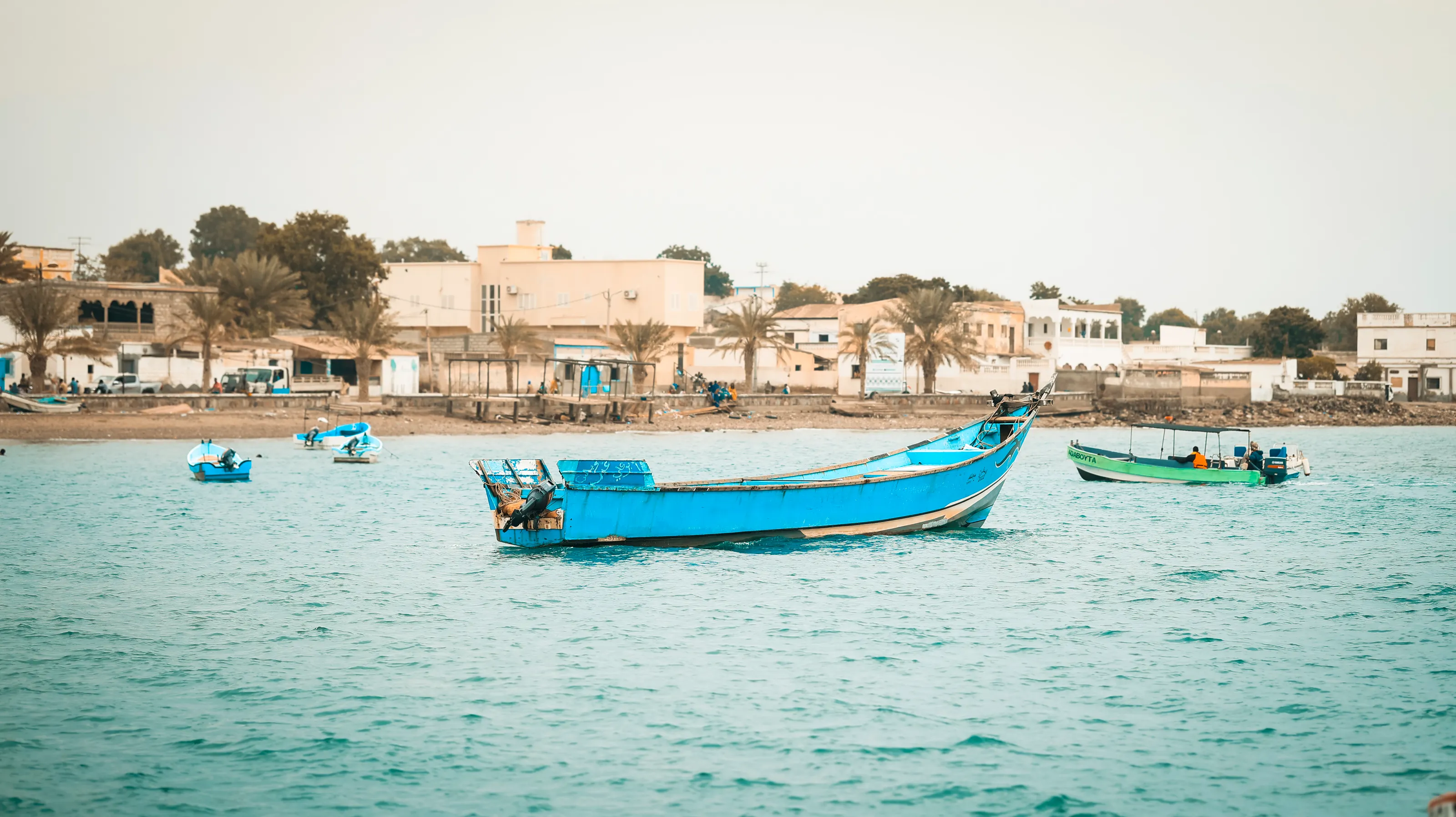
Tadjoura and the gulf
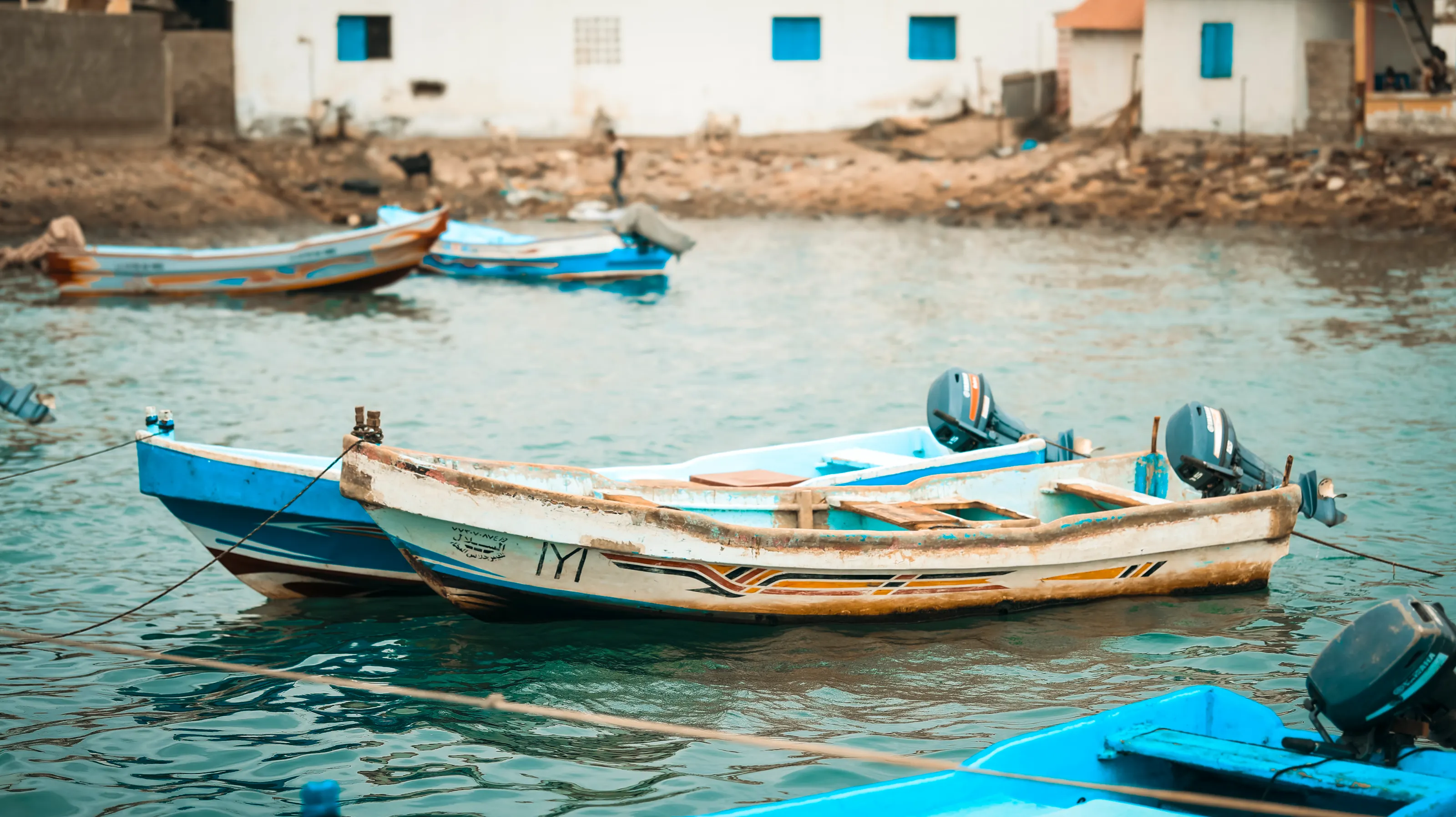
On the Gulf of Tadjoura, the town of Tadjoura is the oldest in the country, founded in the 16th century. Its white houses and small harbour of blue boats give a taste of local rhythm. Around it the sea allows snorkelling, diving and whale shark watching in season, and islands such as Moucha draw boat trips.
Ghoubet Bay, Day Forest and Djibouti City
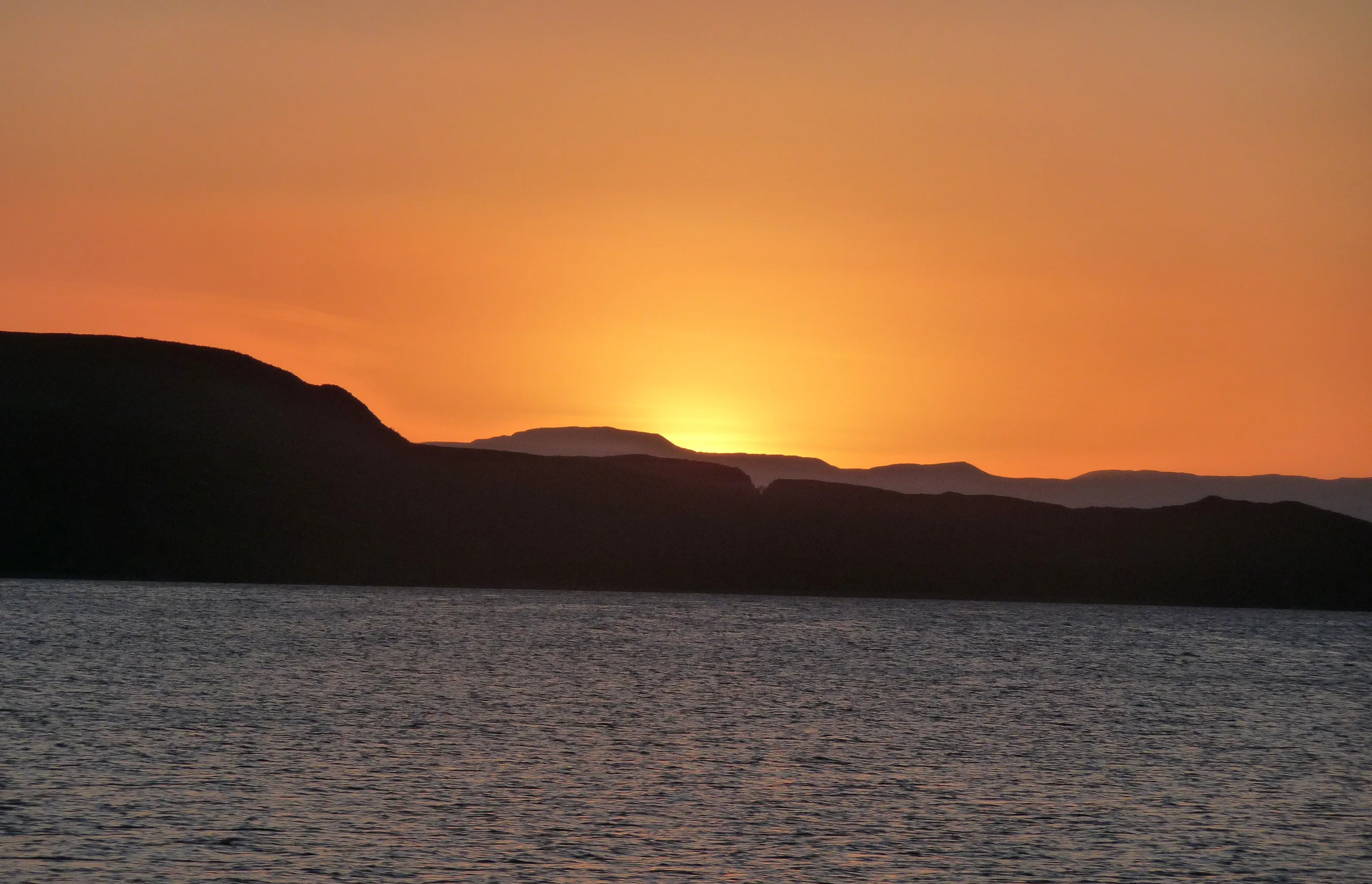
At the head of the gulf, Ghoubet Bay offers volcanic scenery and spectacular sunsets. In the north, Day Forest, at about 1,500 metres, is an island of junipers in the desert. Djibouti City itself holds markets, restaurants and the big port through which most of neighbouring Ethiopia's trade passes.
Before you go
A desert climate, with relative coolness from November to March
| Area | Climate | Best time to visit |
|---|---|---|
| Djibouti City and coast | Very hot all year, 27 to 30 °C by day in January; humid in winter, crushing heat from April. | November to March |
| Gulf of Tadjoura | Sea at 25 to 27 °C in winter, up to 30 °C in summer; morning haze possible in winter. | November to March |
| Lakes Assal and Abbe | Desert, very dry and scorching in summer; cooler nights in winter. | November to March, early morning |
| Day Forest and uplands | Cooler and a little wetter at altitude, between 500 and nearly 2,000 metres. | November to March |
Rain is rare: roughly fifteen days a year. From June to September the heat is extreme and desert excursions are best avoided in the middle of the day. Take water, a hat and sun protection, and keep an eye on flight prices before fixing your dates.
Getting around
Local agencies, 4x4s and boat trips
Travelling independently is hard: distances between sites are long, tracks need a 4x4 and private tours are costly. Most visitors book a local agency that supplies vehicle, guide and water for the lakes and the gulf, and arranges the boat trips.
From Ethiopia, the train between Addis Ababa and Djibouti reopened in 2018, which makes it possible to combine the two countries. Leave slack in your schedule and check your government's travel advice before you go.
Food and culture
A crossroads of Africa, the Arab world and France
Djibouti was French Somaliland before independence in 1977, and French remains an official language alongside Arabic. The everyday languages are Somali and Afar, from the country's two main peoples, many of them herders and nomads.
The food mixes grilled fish, spiced rice and coffee, with Somali, Yemeni and French influences. Meals are often shared from one large plate in a simple, friendly setting.
Flying to Djibouti
The Djibouti airport tracked by SniperAir
Djibouti-Ambouli International
Djibouti's international airport, about five kilometres from the capital. It is the country's gateway and the starting point for excursions to the lakes and the Gulf of Tadjoura.
FAQ
Frequently asked questions about Djibouti
Which airport should I use to travel to Djibouti?
Djibouti-Ambouli International (JIB), close to the capital, is the country's main airport and the one SniperAir tracks. From there you reach the lakes and the gulf with a local agency.
When is the best time to travel to Djibouti?
November to March, when temperatures are most bearable and whale sharks visit the gulf. From June to September the heat is extreme and desert excursions become difficult.
Is Djibouti expensive to visit?
The country is small but organised excursions cost a lot: the budget depends mostly on the flight, 4x4 tours and boat trips. Choosing your season and watching flight prices helps keep the bill down.
Do I need a visa for Djibouti?
Entry rules depend on your nationality and change over time. A visa is often required and can sometimes be applied for online before departure. Check official sources and your government's travel advice before booking.
How long should I spend in Djibouti?
Allow four to seven days to combine Lake Assal, Lake Abbe and the Gulf of Tadjoura. The country combines well with Ethiopia, by air or by train.
Can I travel alone in Djibouti?
Tourist infrastructure is thin and sites are far apart, so most visitors use local agencies for the lakes and the sea. Check your government's travel advice to learn which areas to avoid.
How do I get alerted when flights to Djibouti drop in price?
Create a SniperAir alert profile with your departure airport and Djibouti as the destination. We track prices and notify you as soon as a match appears. See how it works.
Ready to track prices to Djibouti?
Create an alert and let SniperAir do the rest.
Create my alert