
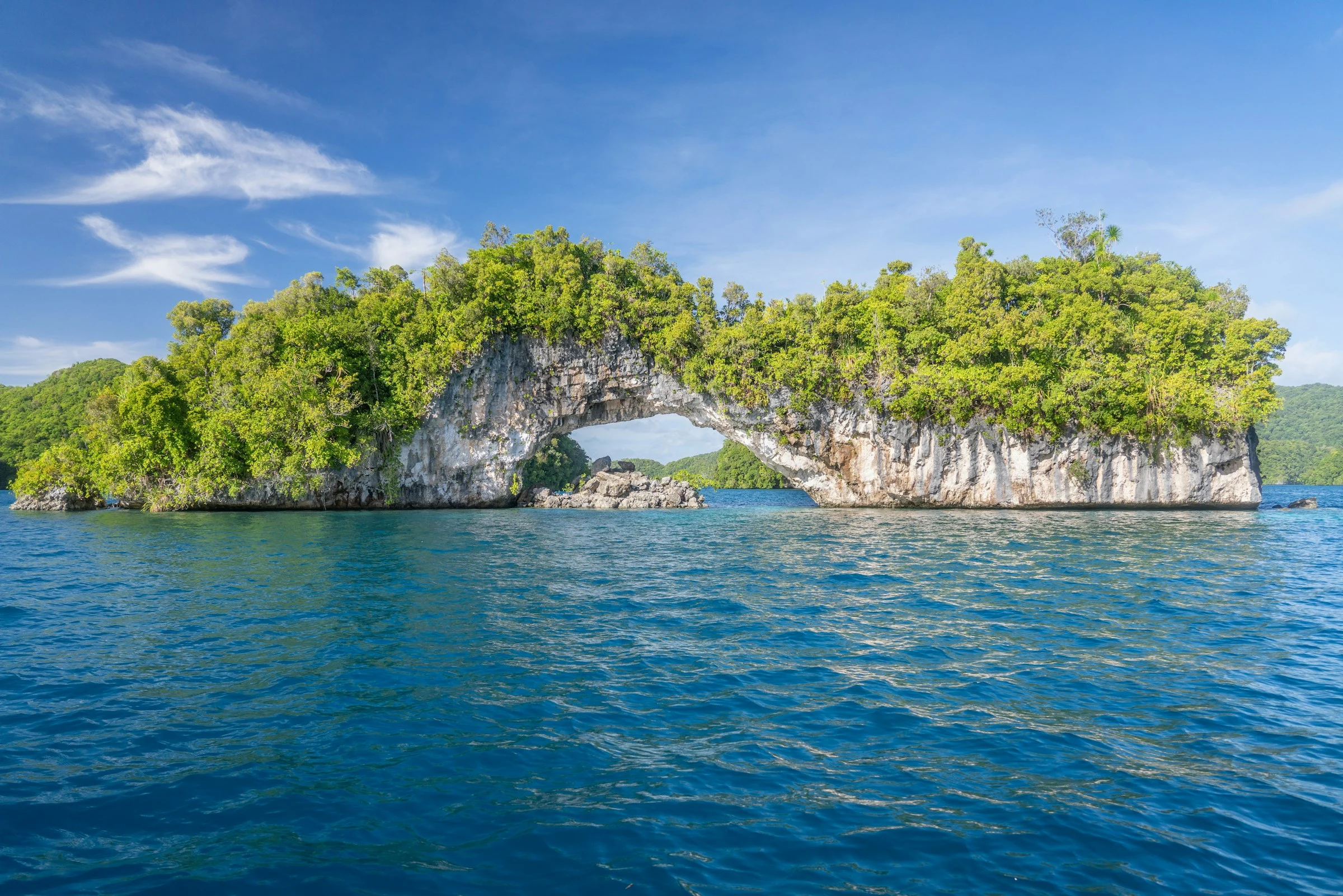
Travel to Palau: cheap flights to Koror
About 340 islands, limestone hills rising from a turquoise lagoon, stingless jellyfish and the world's first shark sanctuary: Palau is one of the planet's great dive destinations. Here is what to know before you go, and how to watch fares to Koror.
Palau at a glance
Capital
Ngerulmud
Main town
Koror
Population
~17,000 to 21,000
Area
~460 km²
Currency
US dollar
Languages
Palauan, English
UNESCO sites
1
Independence
1994
Time zone
UTC+9
Why visit Palau
A lagoon of green hills and world-class diving
The Rock Islands, World Heritage
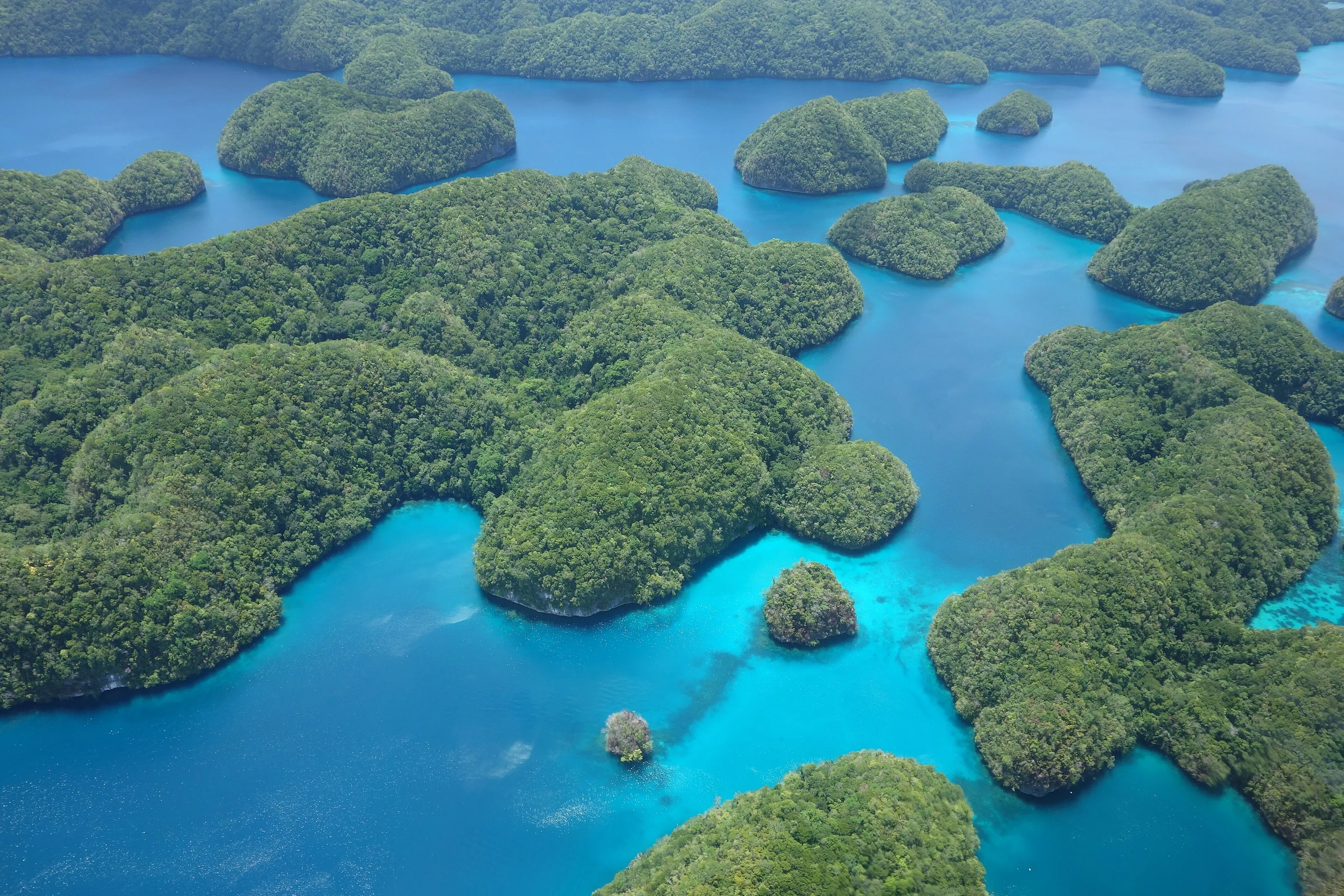
Forested limestone hills rise from a turquoise lagoon: the site, listed by UNESCO in 2012 as Rock Islands Southern Lagoon, covers 100,200 hectares and blends nature and culture.
Jellyfish Lake
In the Rock Islands, a marine lake shelters stingless jellyfish found only in Palau. You meet them by snorkelling, without tanks.
Blue Corner and its sharks
Blue Corner is a dive site known for grey reef sharks and barracuda, with currents that can be strong. The country created the world's first shark sanctuary and protects 80 percent of its waters.
A country that asks for respect
Since 2017 the Palau Pledge, an eco-promise, has been stamped in visitors' passports. Only nine beaches are open to the public, to protect the natural sites.
Islands and places to see
Koror, the Rock Islands, Babeldaob and Peleliu
Koror and the Rock Islands
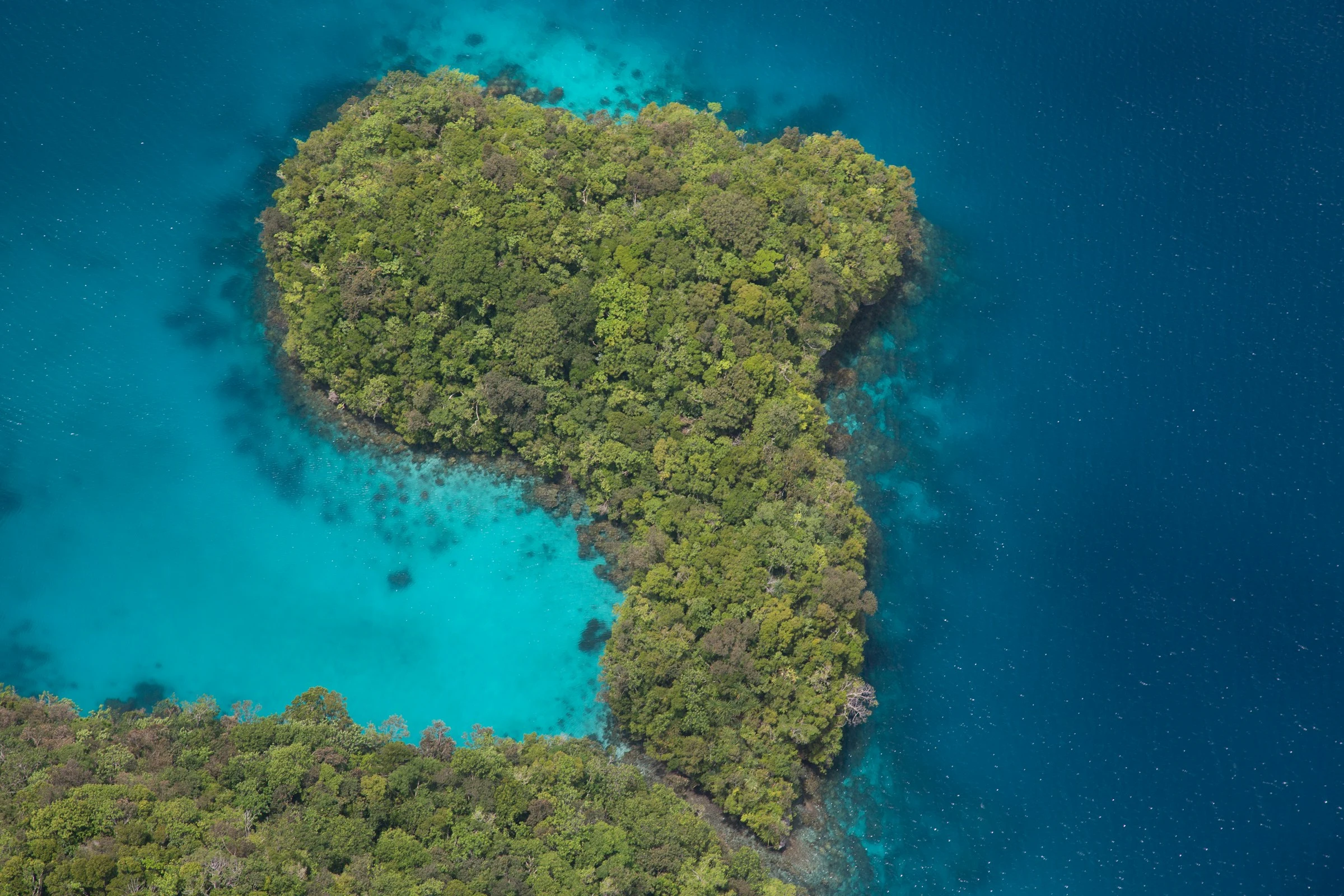
Koror, the largest town, is the base for boat trips in the Rock Islands: snorkelling, diving and Jellyfish Lake. The mushroom-shaped limestone hills give the archipelago its look.
Babeldaob, the big island
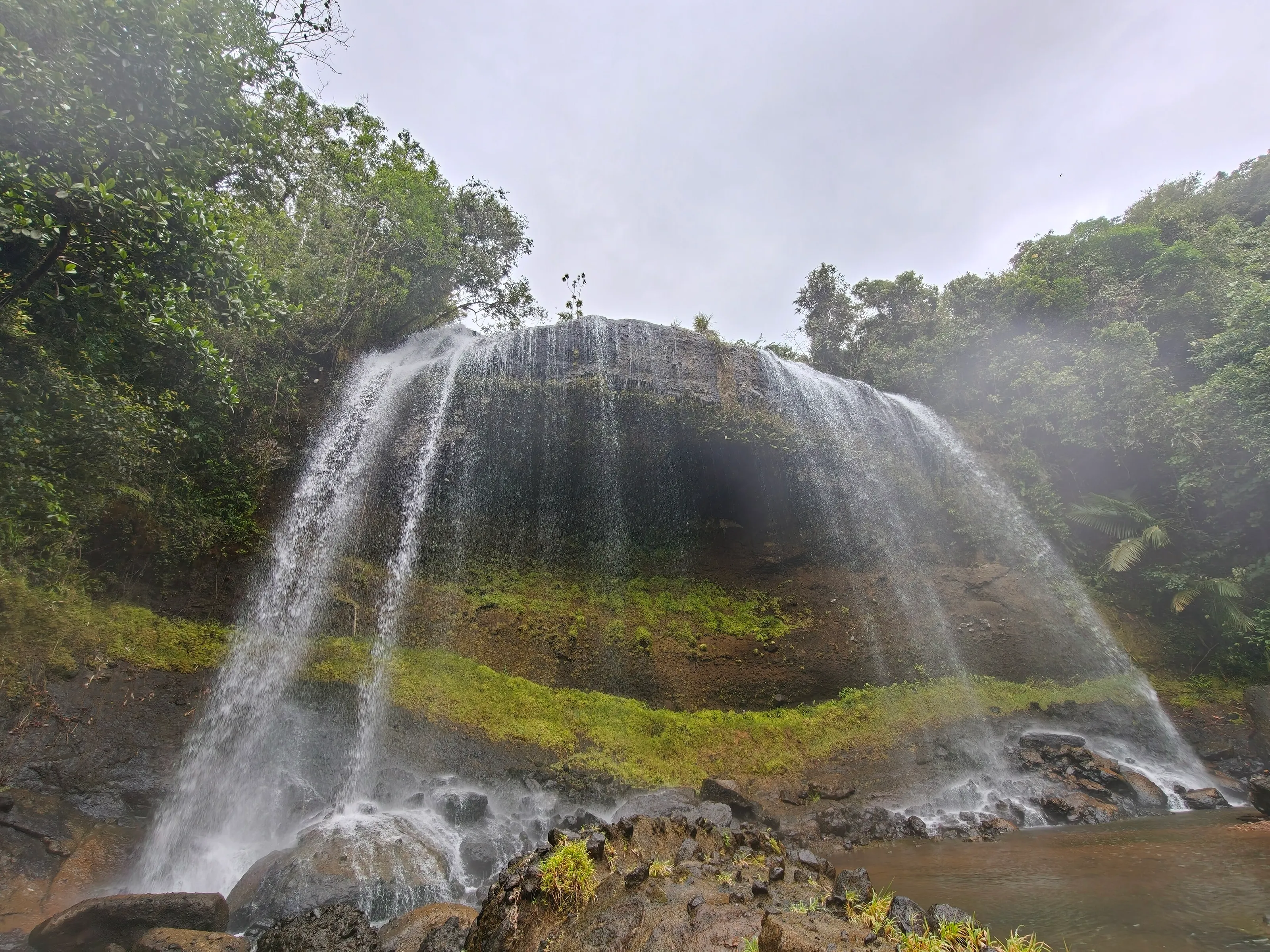
Babeldaob is by far the largest island, home to the capital Ngerulmud, in Melekeok State since 2006, and the international airport. It sees fewer visitors than Koror.
Blue Corner and diving
Dive sites are among the country's first assets, and tourism, built around diving and snorkelling, is the second source of income after fishing. Currents mean you should dive with a local operator.
Peleliu and the memory of 1944
Peleliu was the scene of a Pacific war battle in 1944, reached by local Belau Air flights. Other sites tell the story of that period, which also left a Japanese legacy in the language.
Culture and local life
Fish, taro and a Japanese legacy
Palauan cooking rests on fish, taro and coconut, as on many Pacific islands. Palauan and English are official, and Japanese has regional status in some states, a reminder of the occupation.
The country proclaimed a republic in 1981 and gained full independence with the Compact of Free Association with the United States, in force on 1 October 1994. It has 16 states and lives mostly from tourism and fishing.
Getting around
Boats, local flights and roads
Roman Tmetuchl International Airport is in Airai on Babeldaob, about 6 km from Koror; Koror and Babeldaob are linked by road. For the Rock Islands you go with a boat operator. Local Belau Air flights serve Peleliu and Angaur.
To combine with other stops, Guam and Micronesia are the closest neighbours, and the region continues towards the Philippines or Japan; because Palau is associated with the United States, the United States page gives the wider picture.
Before you go
Warm all year round
| Area | Climate | Worth knowing |
|---|---|---|
| Koror and the Rock Islands | Humid tropical, about 28 C, sea at 29 C | Snorkelling and diving all year |
| Babeldaob | About 3,000 to 3,800 mm of rain a year, 82 percent humidity | Pack rain protection |
| Peleliu and Angaur | Same climate, reached by local flight | Keep your plans flexible |
| Dive sites | Currents can be strong at Blue Corner | Dive with a local operator |
Palau sits at the edge of the typhoon belt: only three (Mike, Bopha and Haiyan) are on record as having struck. An online entry form must be filled in at most 72 hours before departure, and entry depends on your nationality: check with the authorities before you travel.
Travel to Palau
The Palau airport covered by SniperAir
Roman Tmetuchl International
In Airai on Babeldaob, about 6 km from Koror: the country's only international airport, linked to Guam, Manila, Tokyo, Taipei and Brisbane.
FAQ
Frequently asked questions about Palau
Which airport do I fly into for Palau?
Roman Tmetuchl (ROR), in Airai on Babeldaob, about 6 km from Koror. It is linked to Guam, Manila, Tokyo, Taipei and Brisbane.
When is the best time to go?
The sources we read do not settle it: the climate is warm and humid all year, with roughly 3,000 to 3,800 mm of rain. Ask a dive operator based on what you want to do.
Is Palau expensive?
The islands are remote and live off dive tourism: the budget depends mostly on the flight and boat trips, paid in US dollars. Compare offers with our partners before booking.
Do I need a visa for Palau?
It depends on your nationality: check entry rules with the authorities, fill in the online entry form and keep a valid passport.
How long should I stay in Palau?
Five to eight days cover the Rock Islands, Jellyfish Lake and a few dives. Palau pairs well with Guam or Yap.
How do I get alerted when a flight to Palau drops below my budget?
Create a SniperAir alert with your departure airport and Koror as destination. We watch prices and notify you when an opportunity matches. See how it works.
Ready to watch fares to Palau?
Create an alert and let SniperAir do the rest.
Create my alert