
Travel to Saint Helena
A volcanic island in the middle of the South Atlantic, more than 1,800 kilometres from the African coast: Napoleon's place of exile, a giant tortoise approaching two centuries old, cloud-forest ridges full of plants found nowhere else and a seabed dotted with wrecks. Saint Helena takes effort to reach and rewards it. Here is what to know before you look for cheap flights to Saint Helena.
Saint Helena at a glance
Status
British Overseas Territory
Capital
Jamestown
Area
~122 km²
Population
About 4,000
Highest point
Diana's Peak
Currency
Saint Helena pound
Continent
Africa
Time zone
UTC+0
Airports covered
1
Why visit Saint Helena
Napoleon, a giant tortoise and endemic nature at the far end of the map
In Napoleon's footsteps
Napoleon was exiled here from October 1815 until his death on 5 May 1821. Three Napoleonic sites are open to visitors: Longwood House, where he lived, the Tomb valley and the Briars pavilion.
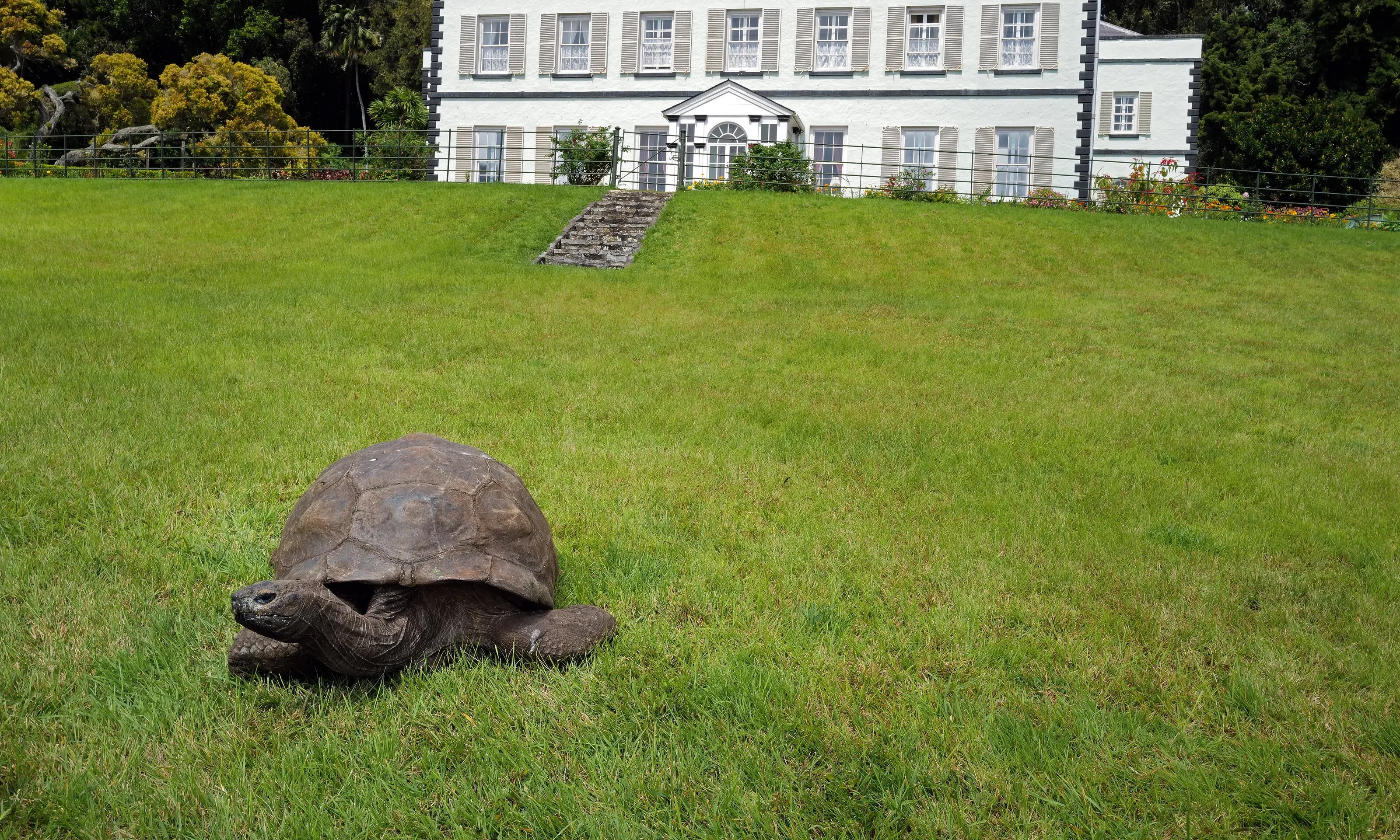
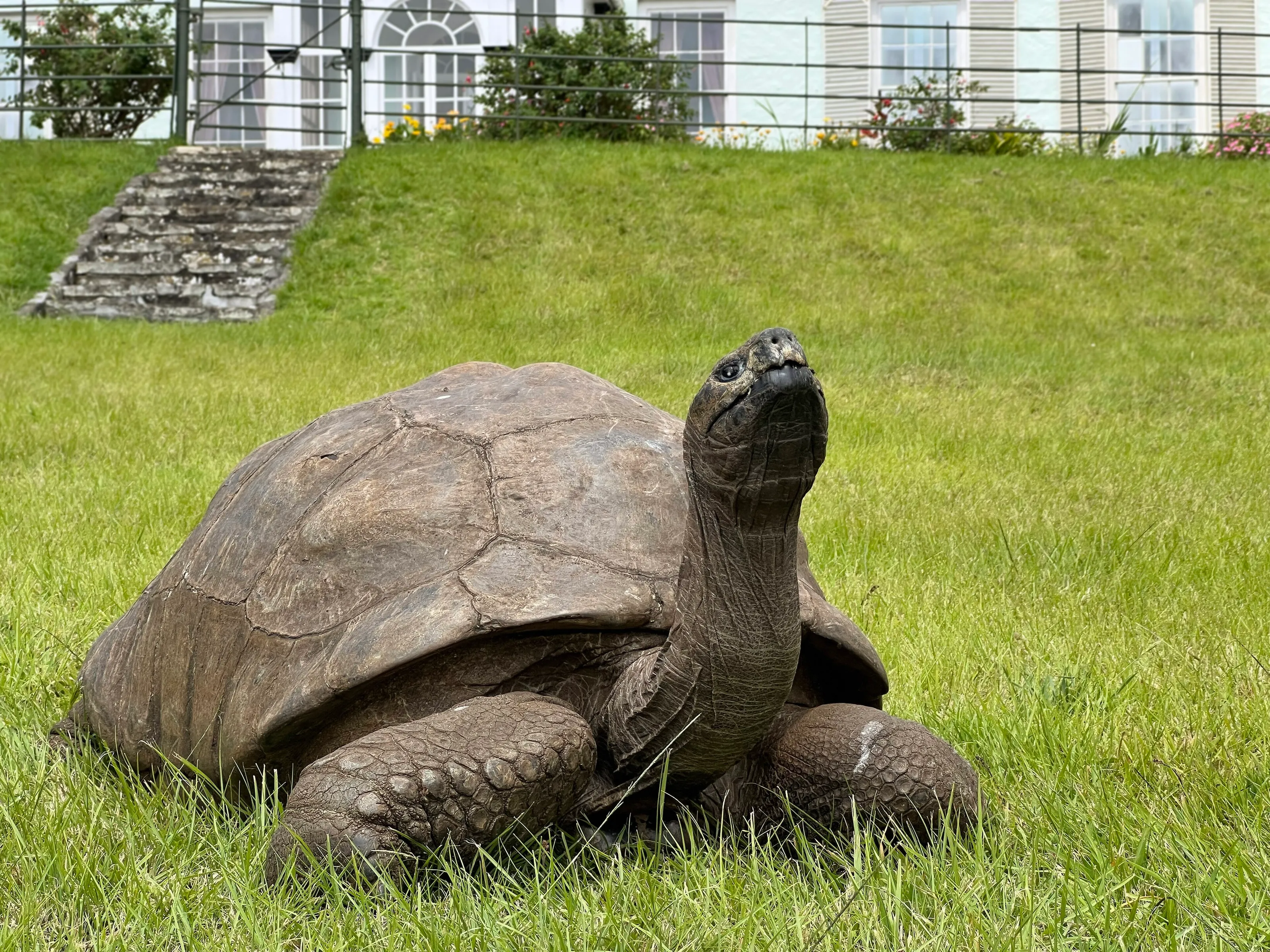
Jonathan the tortoise
Jonathan, a giant Seychelles tortoise, has grazed the lawns of Plantation House since 1882 and is regarded as the oldest living land animal. You can meet him on a tour of the house.
Hikes with 360-degree views
The Post Box walks, around twenty marked trails, climb from the coast to the ridges. Hikers collect a stamp at each box, up to the summit of Diana's Peak.
Dark skies and a rich sea
Far from any light pollution, the night sky is outstanding. Offshore there are accessible wrecks and, in the southern summer, the chance to swim with whale sharks.
Highlights
Jamestown, Plantation House, Diana's Peak and Napoleon's Tomb
You can see the island in a few days, but most people stay longer because the scenery shifts from one valley to the next: a dry brown coast around Jamestown, green pasture and cloud forest in the centre. These are the places not to miss.
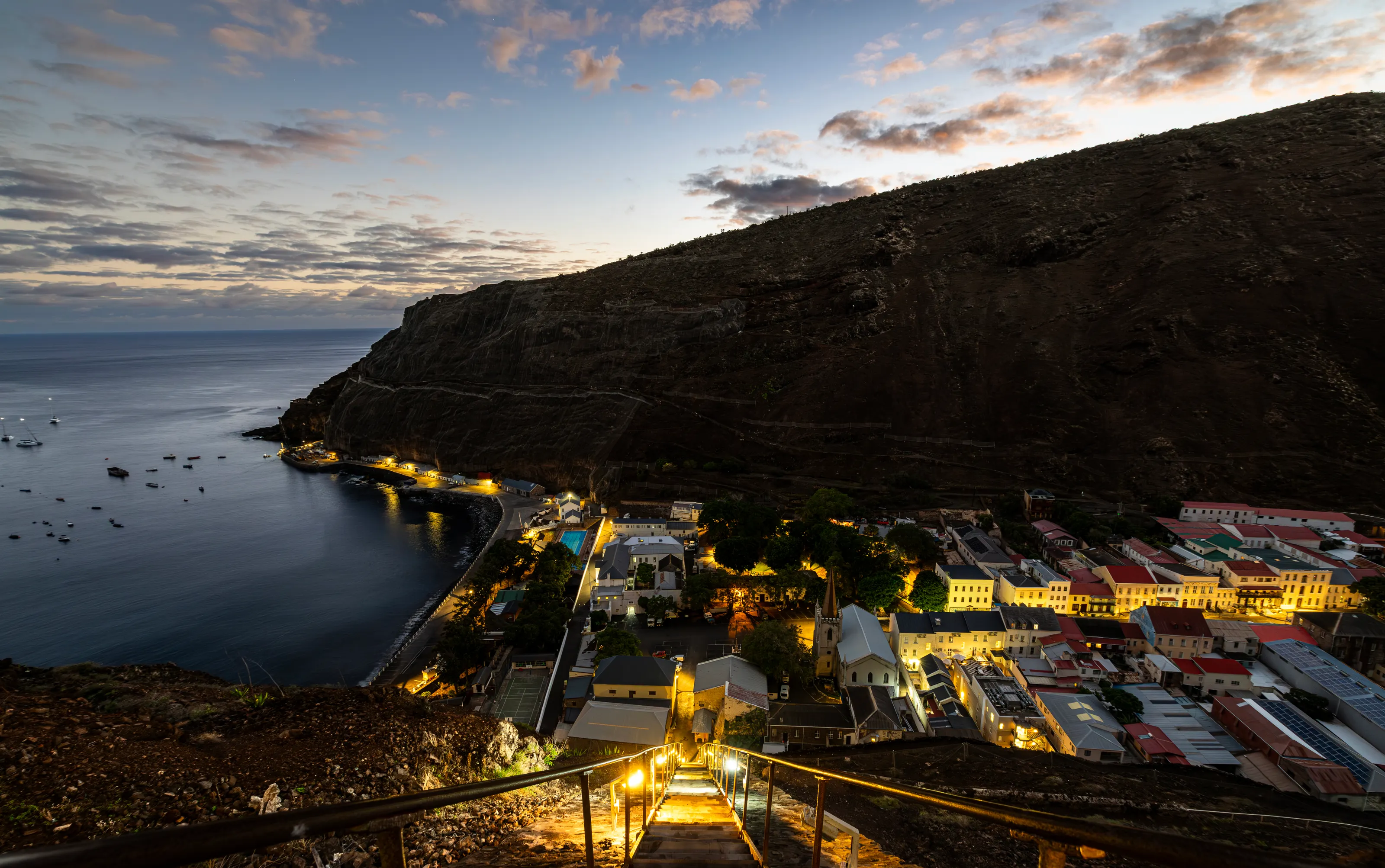
Jamestown and Jacob's Ladder
The capital stretches along a narrow valley between two dark cliffs falling into the bay. It has a Georgian main street, a museum, old fortifications and a small harbour where fishing boats sit beside visitors. Above town, Jacob's Ladder climbs 699 steps: tackling it is a rite of passage, and a certificate rewards the brave. In the evening the town lights up below the mountain.
Plantation House and Jonathan
The Governor's residence, a large white house surrounded by gardens, is home to Jonathan, a giant Seychelles tortoise on its lawn. He has been here since 1882 and is said to be close to two centuries old, making him the island's most surprising resident. Visits are guided and in groups, and the calm of the place contrasts with life in the capital.
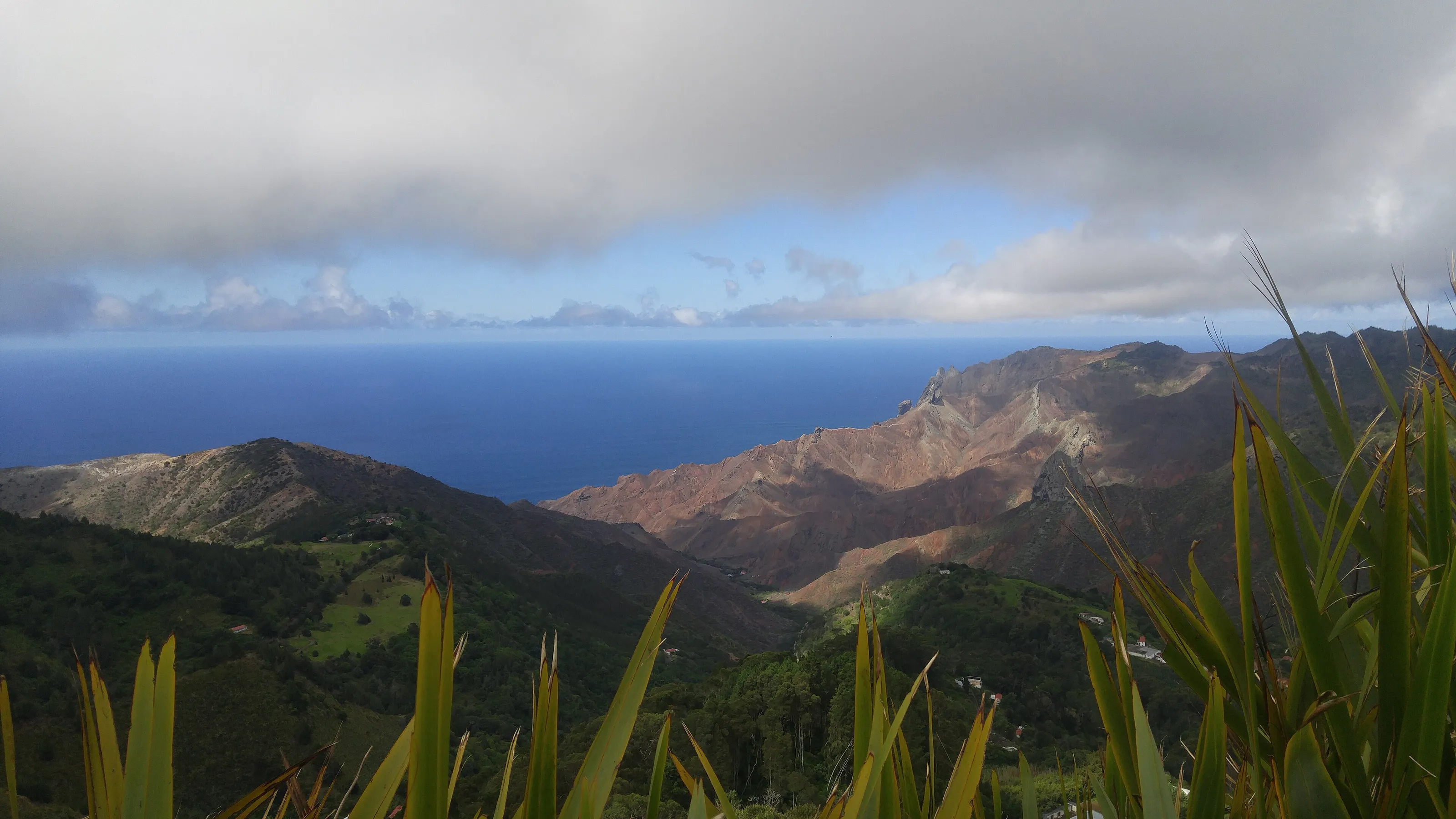
Diana's Peak and the central ridges
Diana's Peak National Park covers the high part of the island, including its highest point at roughly 820 m. Trails cross a forest of tree ferns and endemic plants, with sea views on both sides when the clouds lift. Bring good shoes, a jacket and some patience: weather changes fast up high.
Longwood House and the Tomb valley
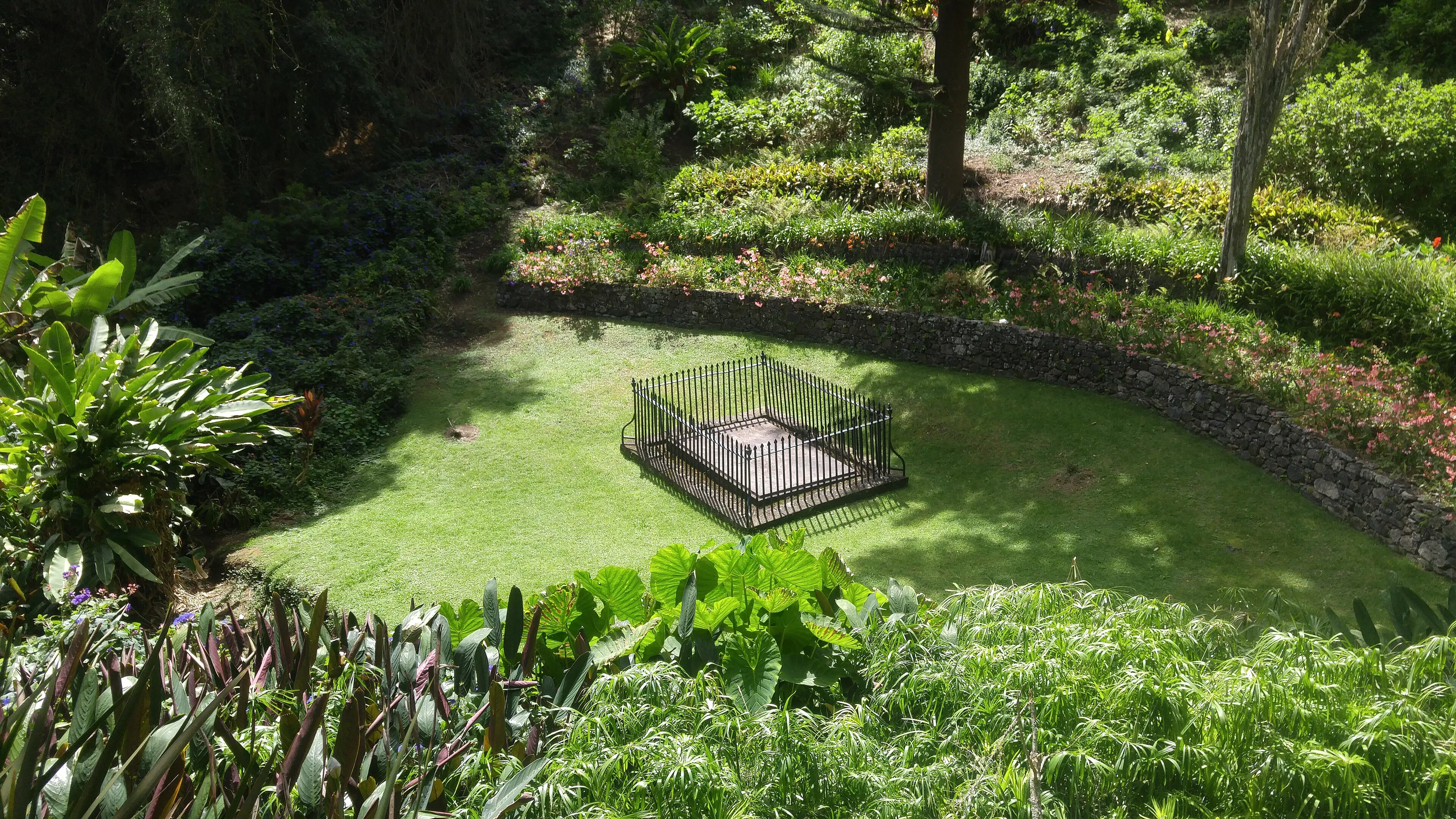
Longwood House, French-owned, is where Napoleon spent his last years; you can visit its rooms and gardens. Lower down, the Tomb valley holds a peaceful garden with the empty slab where he was buried before his remains returned to France. It is a quiet spot under trees and flowers that gives a sense of the man.
Before you go
A mild climate all year, with December to April best for the sea
| Area | Climate | Best time |
|---|---|---|
| Jamestown and the coast | Warm and dry, 21-28 C from January to April and 17-24 C the rest of the year. | December to April |
| Highlands and centre | 5-6 C cooler, frequent cloud and 750-1,000 mm of rain a year. | All year, with a jacket |
| Sea, diving and whale sharks | Water between 19 and 25 C, good visibility on wrecks. | December to April |
| Ridge hikes | Wind, mist and showers possible at any time. | Clear mornings |
The southern summer runs roughly from November to May. The sun is strong, so pack sun protection. Few places take cards, so carry some cash. Watch flight prices before fixing your dates, and check your government's official travel advice before you leave.
Getting around
Taxis, guided tours and rental cars
Roads are narrow, winding and steep, but distances are short. You get around by taxi, rental car or with a guide who knows the trails and the stories of each valley. Bicycles cannot be rented on the island.
Accommodation is limited, so book early. Before departure, prepare entry formalities: a valid passport, proof of accommodation, a return ticket, insurance covering medical evacuation and, depending on your nationality, an entry permit or an e-visa to arrange in advance. Check current rules with official sources.
Culture and food
A small community, a rare coffee and fresh fish
The population, around 4,000 people, speaks English and calls itself the Saints. Life follows the rhythm of ships and aircraft, and visitors quickly notice the island's welcoming spirit. The endemic plover, nicknamed the wirebird, is the national bird.
On the plate you will find fresh fish, tuna in particular, fishcakes and British-influenced dishes. The island's coffee, a bourbon arabica grown on the slopes, ranks among the world's most expensive: a tasting is a must.
Travelling to Saint Helena
The Saint Helena airport covered by SniperAir
Saint Helena Airport
The island's airport, open to commercial flights since October 2017. It links the island with South Africa, while cargo ships, yachts and cruise ships complete the sea links. It is the entry point for most visitors.
FAQ
Frequently asked questions about Saint Helena
Which airport should I use to travel to Saint Helena?
Saint Helena Airport (HLE) is the island's only airport and the one SniperAir tracks. It links the island with South Africa; the island is also served by cargo ships, yachts and cruise ships.
What is the best time to travel to Saint Helena?
The climate is mild all year. The southern summer, roughly December to April, suits the sea and swimming with whale sharks best. You can hike all year, with a jacket for the high ground.
Is travelling to Saint Helena expensive?
The journey is the biggest cost, since the island is remote and accommodation limited. Choosing your season and tracking flight prices helps keep the budget under control.
Do I need a visa for Saint Helena?
It depends on your nationality: an entry permit is required and, in some cases, an e-visa must be obtained before departure. Also arrange insurance covering medical evacuation and check the official rules.
How long should I spend on Saint Helena?
Allow at least a week for Jamestown, Plantation House, Longwood House, one or two hikes and a day at sea.
Can I travel alone to Saint Helena?
Yes, the island is safe and welcoming, but accommodation is limited and trails are steep. Guided tours help organise visits. Check your government's travel advice before you leave.
How do I get alerted when a flight to Saint Helena drops in price?
Create a SniperAir alert profile with your departure airport and Saint Helena as the destination: we track prices and notify you as soon as an opportunity matches. See how it works.
Ready to track prices to Saint Helena?
Create an alert and let SniperAir do the rest.
Create my alert