
Travel to Sri Lanka
A fortress rock rising out of the forest, trains winding through tea plantations, elephants by the lakes, a Dutch fort facing the ocean and golden beaches, all on an island you can cross in a few days. Here is what to know before you look for cheap flights to Sri Lanka.
Sri Lanka in numbers
Capital
Colombo
Population
Over 22M
Area
~65,600 km²
Currency
Sri Lankan rupee
Languages
Sinhala, Tamil
Highest point
2,524 m
Continent
Asia
Time zone
UTC+5:30
Airports covered
1
Why visit Sri Lanka
Ancient cities, tea, elephants and beaches on one island
A heritage thousands of years deep
The country has eight UNESCO sites, from the ancient cities of Anuradhapura and Polonnaruwa to the fortress of Sigiriya, the Golden Temple of Dambulla, the sacred city of Kandy and Galle Fort.
The hill country and tea
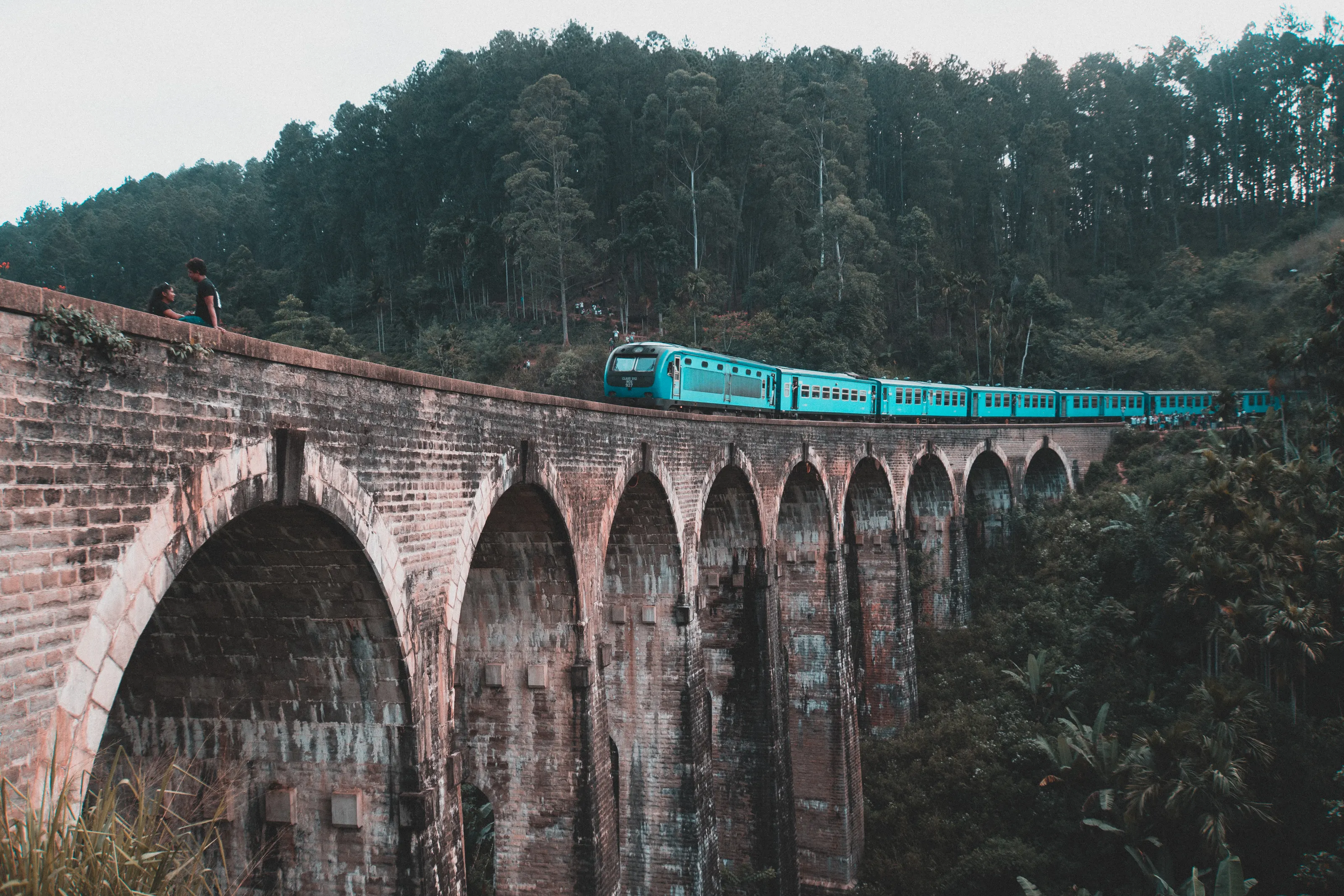
Around Kandy, Nuwara Eliya and Ella the hills are covered in tea estates and forest. The train ride from Kandy to Ella ranks among the finest in Asia.
Elephants, leopards and whales
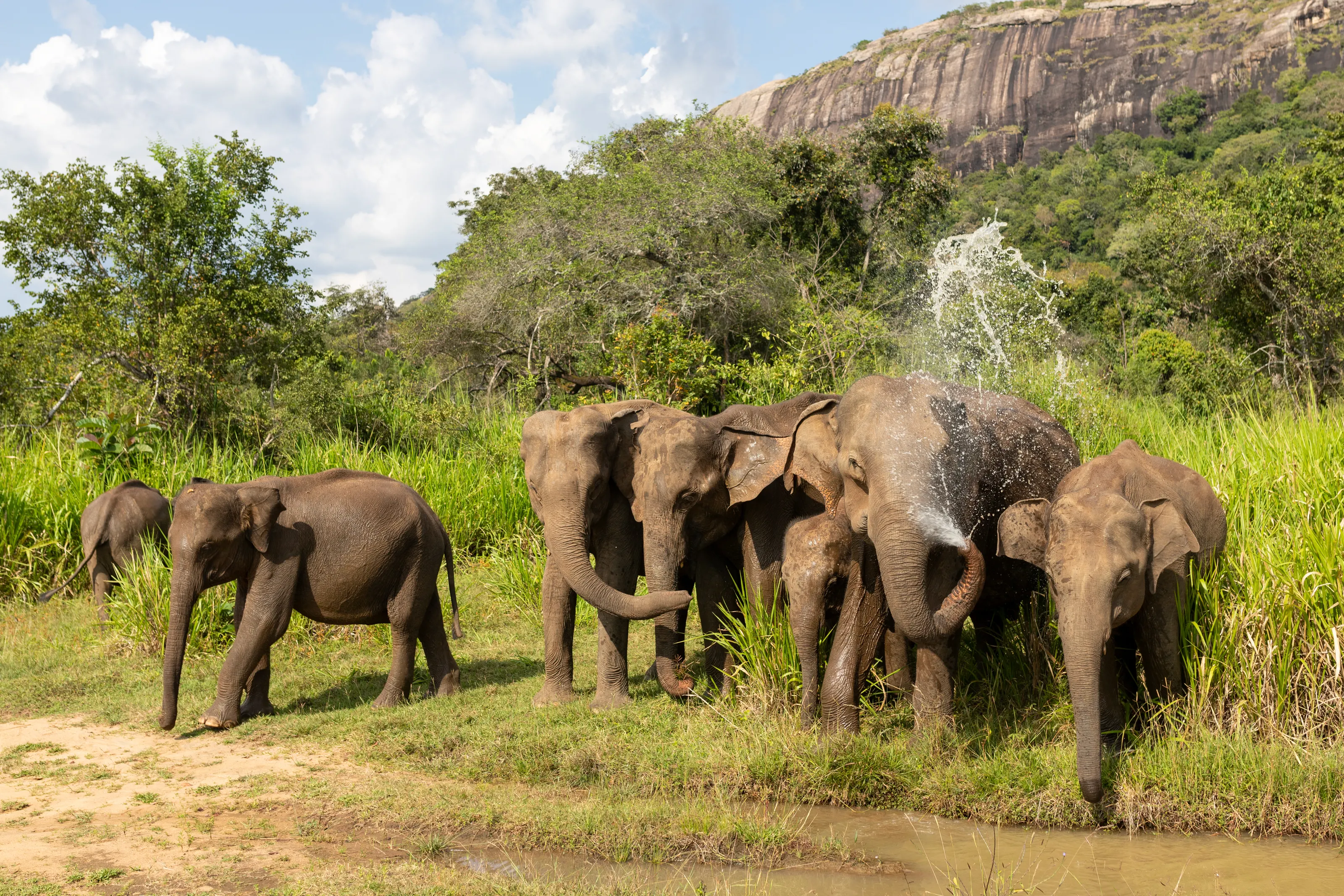
The parks of Yala, Udawalawe and Minneriya offer elephants and birdlife, and the south coast at Mirissa runs blue whale watching through the winter.
Beaches for every mood
In the south and west, from Bentota to Unawatuna, you can swim, surf and rest; on the east coast Trincomalee and Arugam Bay enjoy the opposite monsoon.
Landmarks
Sigiriya, Kandy, Ella, Galle and Colombo: the stops in Sri Lanka
Sri Lanka works like a loop: arrive in Colombo, head up to the Cultural Triangle and the hill country, then drop down to the south coast. Distances look short on the map, but winding roads slow things down, so allow time.
Sigiriya, the Cultural Triangle and elephants
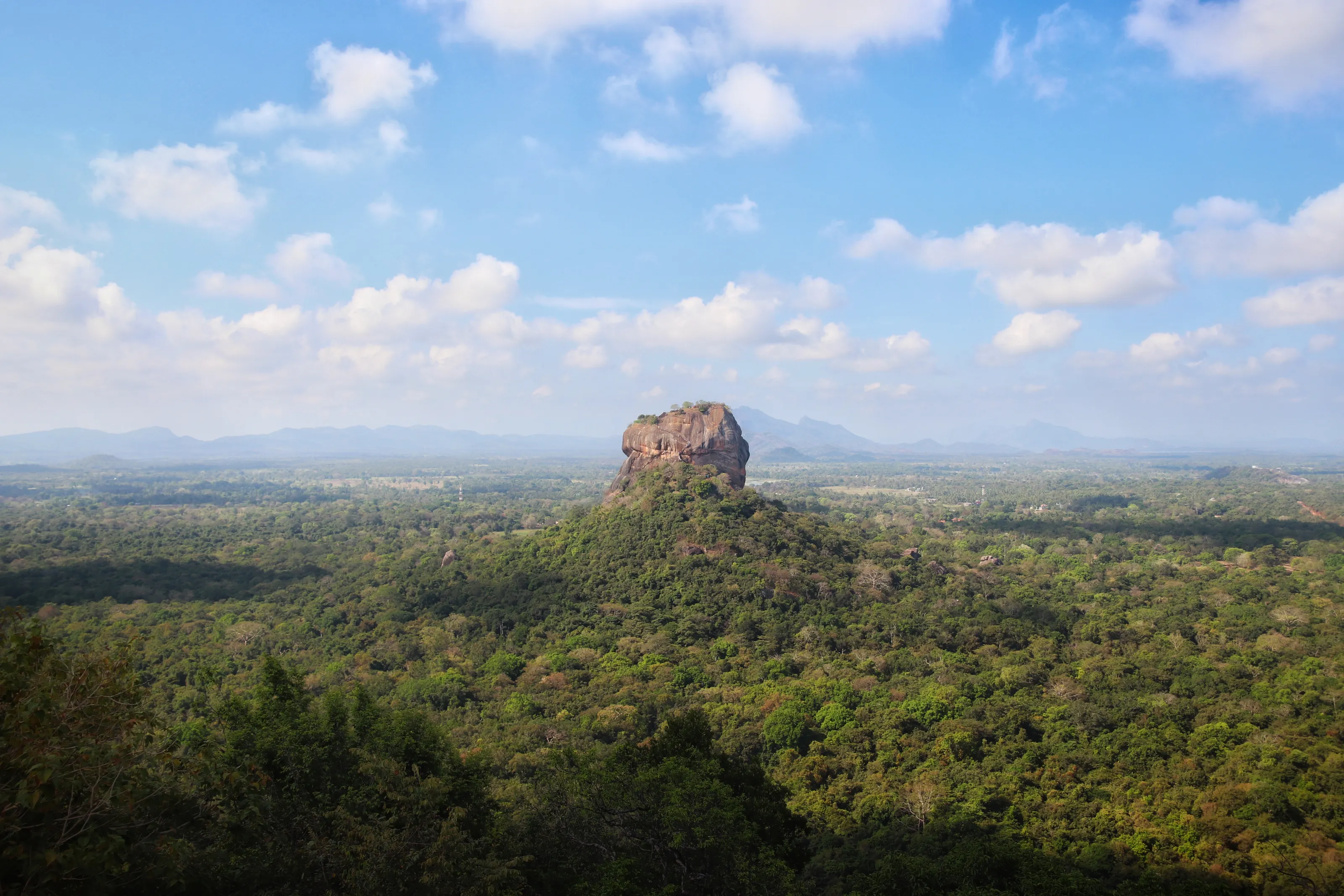
In the north-centre, Sigiriya, Lion Rock, lifts a fifth-century fortress above the forest, with its gardens, frescoes and dizzying stairway. Nearby, the cave temple of Dambulla and the ruined cities of Polonnaruwa and Anuradhapura make up the Cultural Triangle. Parks such as Minneriya host, at the end of the dry season, one of the largest gatherings of elephants in Asia.
Kandy and the hill country: tea, trains and Ella
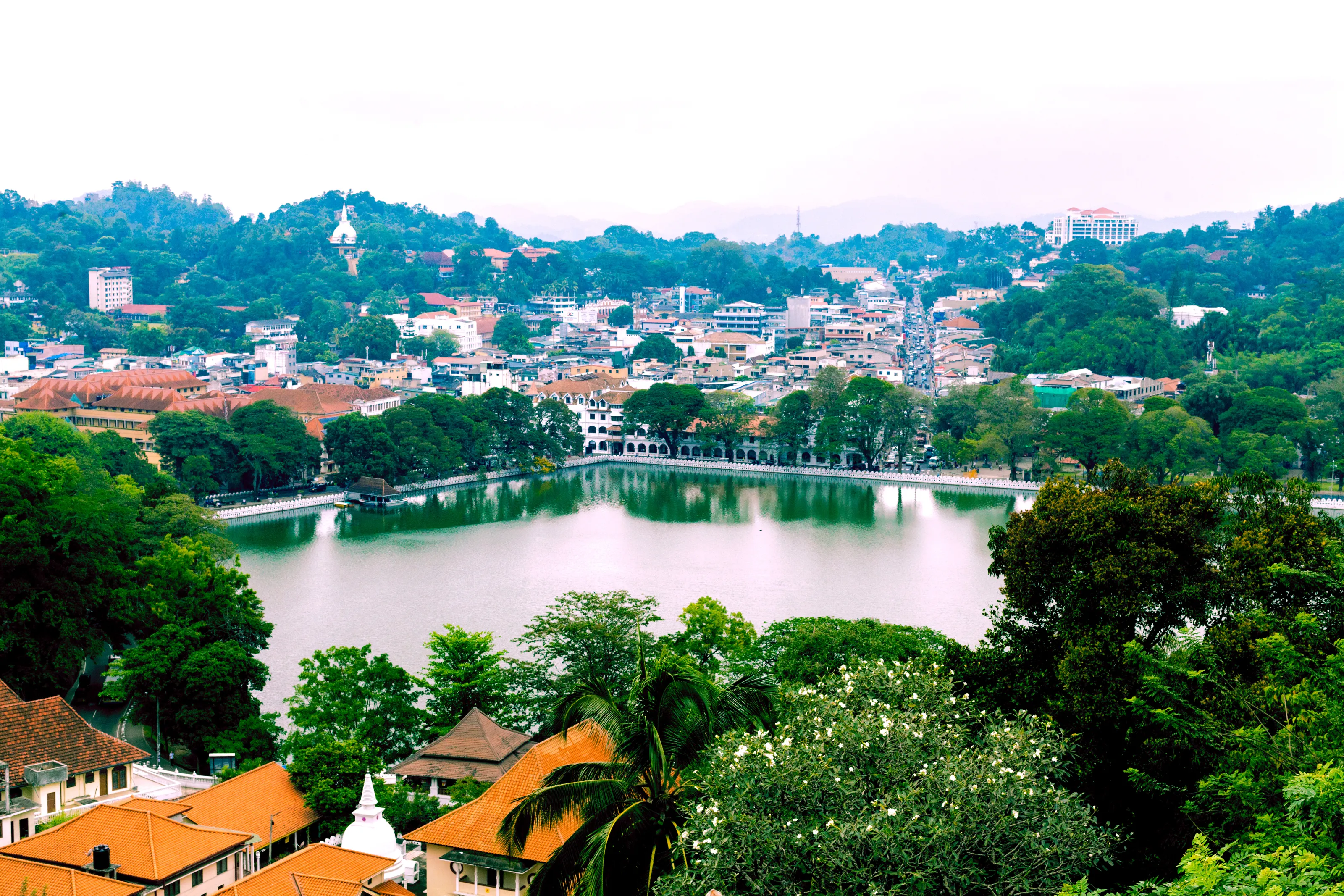
Kandy, the former royal capital, is built around its lake and the Temple of the Tooth, a major Buddhist site. Higher up, Nuwara Eliya and its tea estates offer cool air and English-countryside views. The train from Kandy to Ella crosses forests and plantations to the nine-arch viaduct, one of the island's most photographed spots.
Galle, Mirissa and the south coast
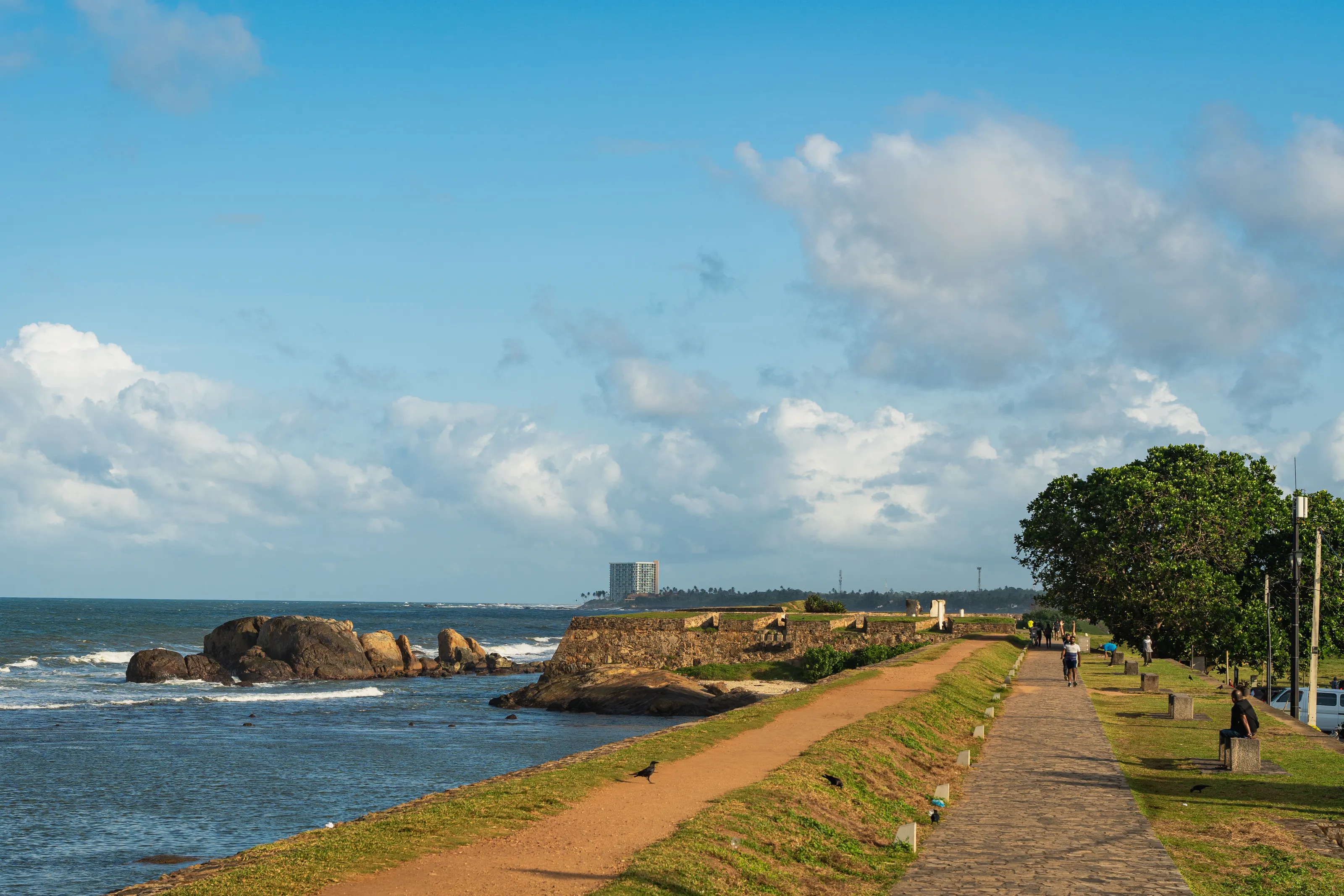
Galle keeps its fort built by the Portuguese then the Dutch and listed by UNESCO: you walk its ramparts facing the Indian Ocean, among shops, cafés and colonial houses. Further east, Mirissa and Unawatuna mix beaches, surf and boat trips to watch whales.
Colombo, the island's gateway
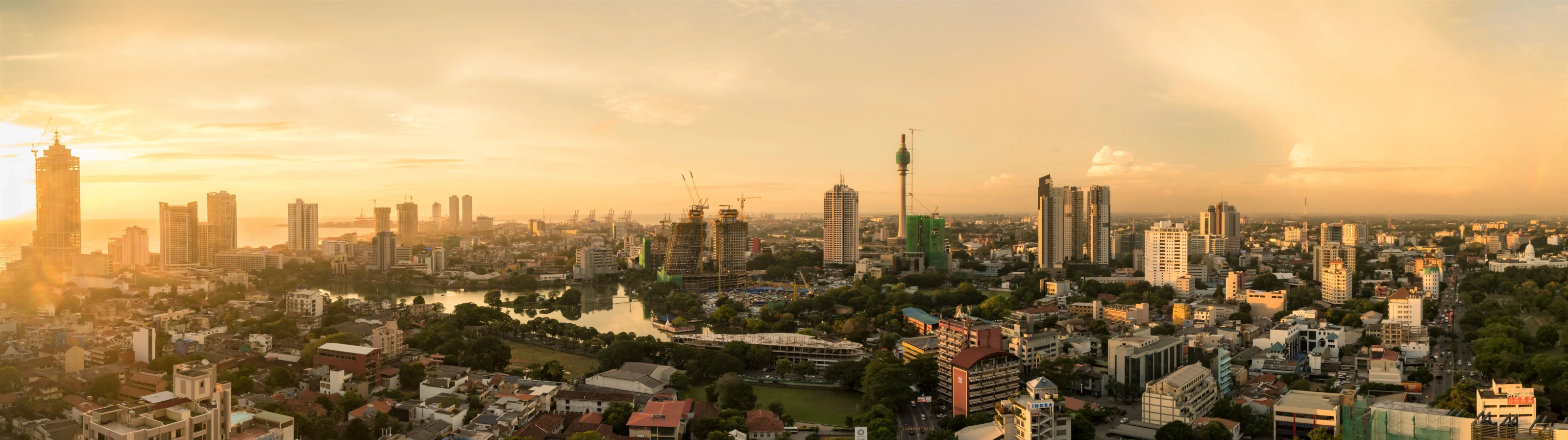
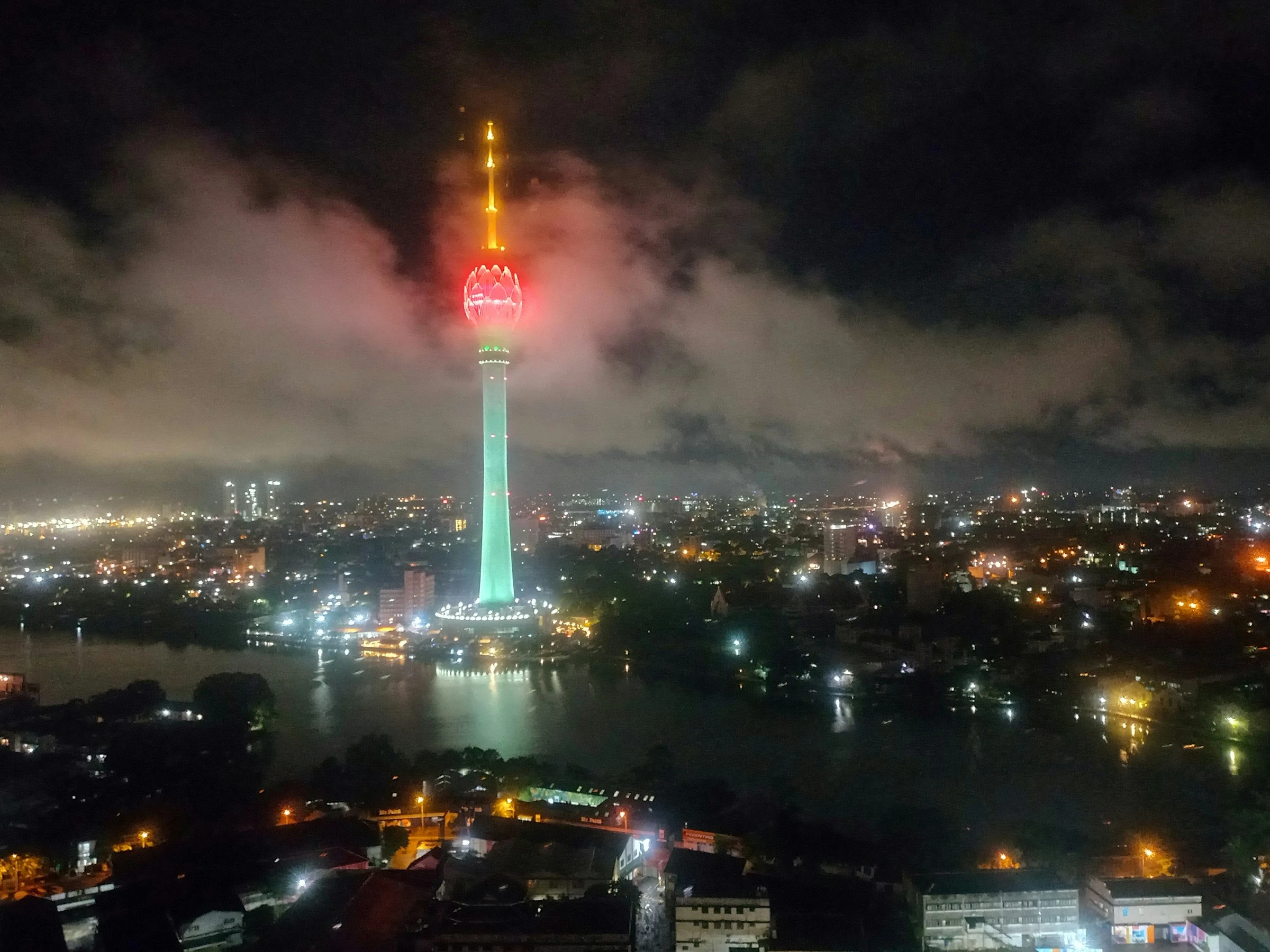
Colombo, the commercial capital and largest city, mixes colonial districts, busy markets, the Galle Face seafront and modern towers around its lake. Many travellers spend a night here on arrival before heading to the centre or the coast.
Before you go
Two monsoons, so a good season for each coast
| Area | Climate | Best time to visit |
|---|---|---|
| West and south coasts (Colombo, Galle, Mirissa) | Hot and humid; the south-west monsoon brings rain and rough seas from May to September. | December to March |
| Hill country (Kandy, Nuwara Eliya, Ella) | Cooler at altitude, with mist; showers possible all year and more frequent during the monsoon. | January to April |
| Cultural Triangle (Sigiriya, Dambulla) | Hot and drier; very hot at midday. | January to September, with the Minneriya elephants from August to October |
| East coast (Trincomalee, Arugam Bay) | Enjoys the dry season while the south-west is wet; the north-east monsoon affects it from October to January. | April to September |
Temperatures stay hot almost everywhere, with high humidity on the coasts; altitude cools the hill country. Pack light clothes, a rain jacket and sun protection, and keep an eye on flight prices before fixing your dates.
Getting around
Scenic trains, private drivers and tuk-tuks
The train is a highlight of the trip, especially between Kandy and Ella: seats are booked in advance and second-class carriages are popular with travellers. Buses link almost every town cheaply, but they are slow and often crowded.
Many visitors hire a car with a driver to string together Sigiriya, Kandy and the coast at their own pace. In town, tuk-tuks cover short trips. An expressway links Colombo to Galle, which speeds the way to the south coast.
Food and culture
Rice and curry, hoppers, kottu roti and Ceylon tea
Sri Lanka is a multi-faith country: Buddhism is the majority religion, alongside Hinduism, Islam and Christianity. In temples you remove your shoes, cover shoulders and knees, and avoid turning your back on Buddha statues for photos. Cinnamon, tea and spices have defined the island for centuries.
At the table, rice comes with a spread of lentil, fish, vegetable and coconut curries, with spicy sambol. You also try hoppers (bowl-shaped pancakes), kottu roti chopped on the griddle and, of course, a cup of Ceylon tea.
Flying to Sri Lanka
The Sri Lankan airport covered by SniperAir
Bandaranaike International
Colombo's international airport, at Katunayake north of the capital and close to Negombo. Allow about 35 kilometres to central Colombo, or 45 minutes to an hour and a half depending on traffic. The island's main gateway.
SniperAir destinations
Discover our destination pages
FAQ
Frequently asked questions about Sri Lanka
Which airport do I fly into for Sri Lanka?
Bandaranaike International in Colombo (CMB), at Katunayake, is the island's gateway and the airport SniperAir tracks. From there you reach Colombo, Negombo, the hill country or the south coast by road or train.
When is the best time to travel to Sri Lanka?
It depends on the coast: December to March in the west and south, April to September in the east, January to April for the hill country. Thanks to the two monsoons there is almost always a sunny region.
Is travelling to Sri Lanka expensive?
On the ground, living costs are generally moderate, especially for meals, trains and simple stays. The flight is the most variable item: choosing your dates and watching prices helps keep the bill down.
Do I need a visa for Sri Lanka?
An electronic travel authorisation (ETA) or a visa is required depending on nationality, to be obtained before departure. Rules change, so check the official site and your government's travel advice.
How long should I spend in Sri Lanka?
Allow ten days to link Colombo, the Cultural Triangle, the hill country and the south coast. With a week, focus on two regions to avoid spending your days on the road.
What should I see first?
Sigiriya and the Cultural Triangle for heritage, Kandy and Ella for tea and the train, a park such as Minneriya or Yala for elephants, then Galle and Mirissa for the sea.
How do I get alerted when a flight to Sri Lanka gets cheaper?
Create a SniperAir alert profile with your departure airport and Colombo as the destination: we watch prices and notify you as soon as an opportunity matches. See how it works.
Ready to track fares to Sri Lanka?
Create an alert and let SniperAir do the rest.
Create my alert