
Travel to Slovenia
Slovenia is a small Central European country with big variety: mountains and lakes in the north-west, caves under the Karst plateau, a short Adriatic coastline and a relaxed, walkable capital. Here is what to know before you travel to Slovenia and how to catch cheap flights to Slovenia.
Slovenia in numbers
Capital
Ljubljana
Population
~2.1 M
Area
20,271 km²
Currency
Euro
Language
Slovene
Highest peak
Triglav
Continent
Europe
Time zone
UTC+1
Airports covered
1
Why visit Slovenia
Compact, green and surprisingly varied
Second most forested country in Europe
Forests cover about 58% of the land, the second-highest share in Europe after Finland, and in 2017 National Geographic Traveller's Magazine called it the world's most sustainable tourism destination.
The home of karst
The Karst Plateau gave its name to landscapes shaped by water dissolving rock. Postojna Cave and the UNESCO-listed Škocjan Caves are the best known.
Alps, lakes and sea
Mount Triglav, 2,864 m, appears on the national flag and coat of arms. The Julian Alps hold Lake Bled and the Soča Valley, and a Venetian Gothic port, Piran, sits on the coast.
Ljubljana and Plečnik
The capital has Baroque and Vienna Secession buildings and works by Jože Plečnik, whose paths and bridges along the Ljubljanica are on UNESCO's list.
Signature places
Ljubljana, Lake Bled, the Karst and the coast
Slovenia is easy to cover as a hub-and-spoke trip from Ljubljana. Distances are short, but each region looks different.
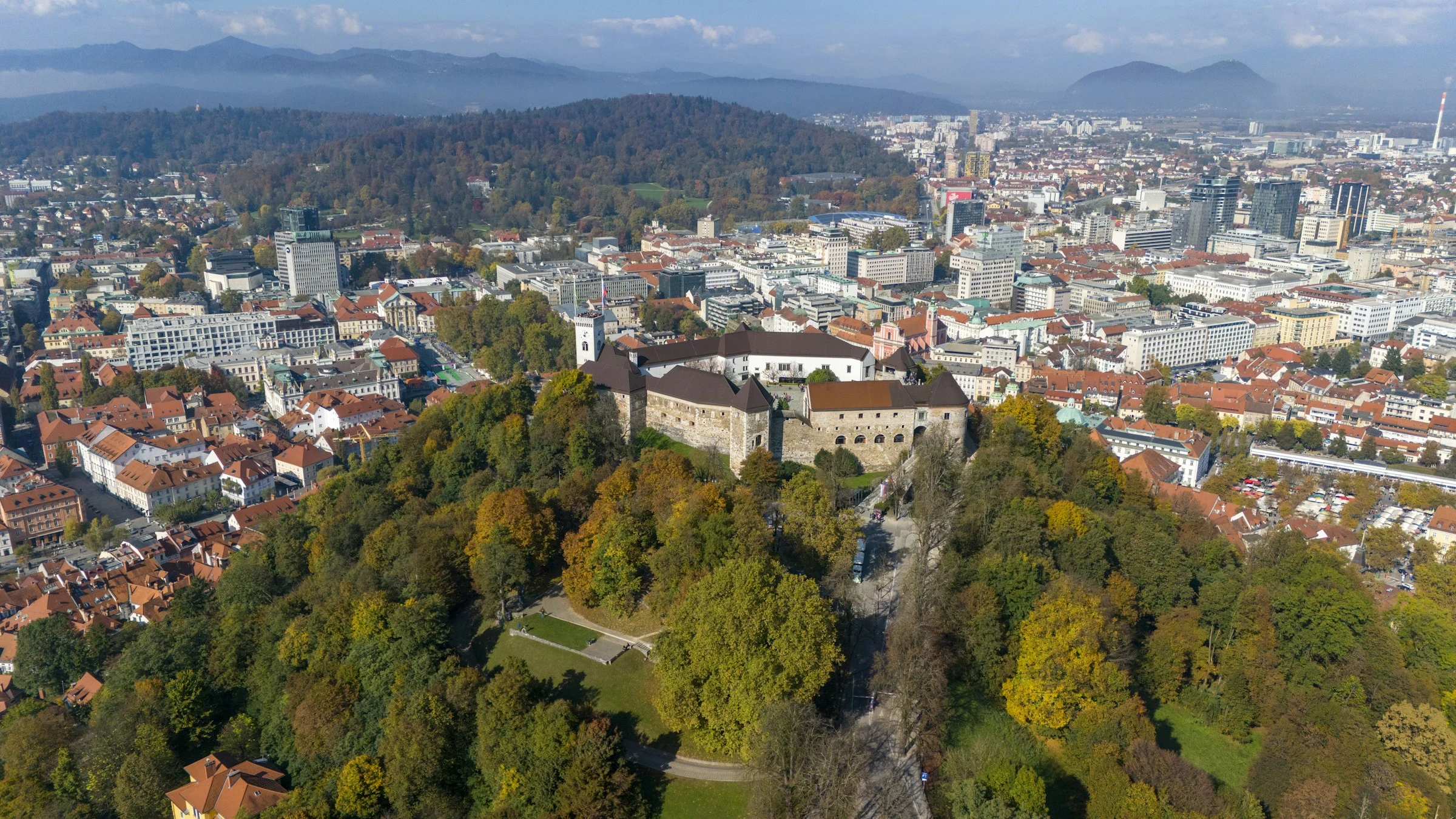
Ljubljana, a walkable capital
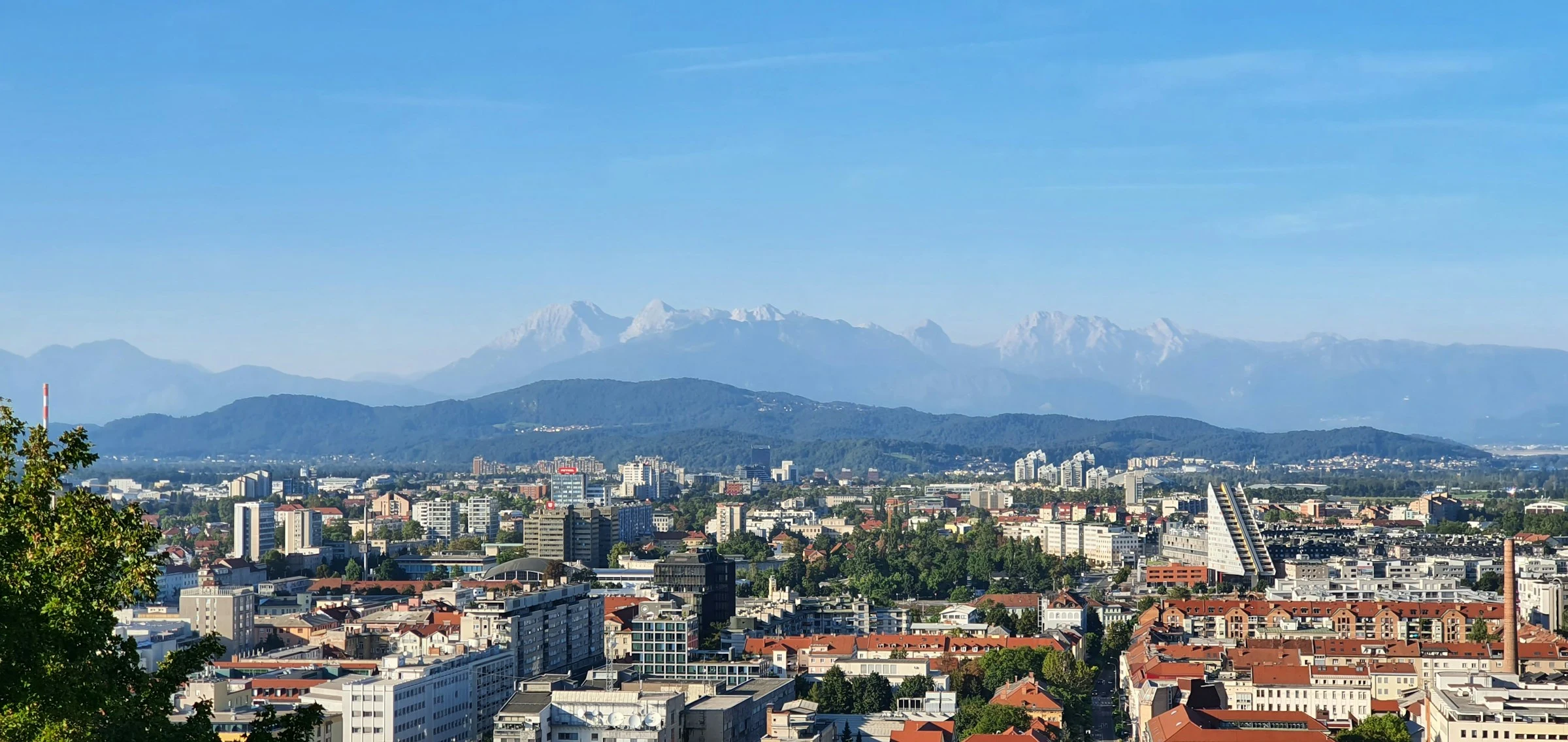
Ljubljana sits near the centre of the country. Its Baroque and Secession buildings, castle and riverside promenades make it a calm base, with museums that hold some of the oldest finds in the region.
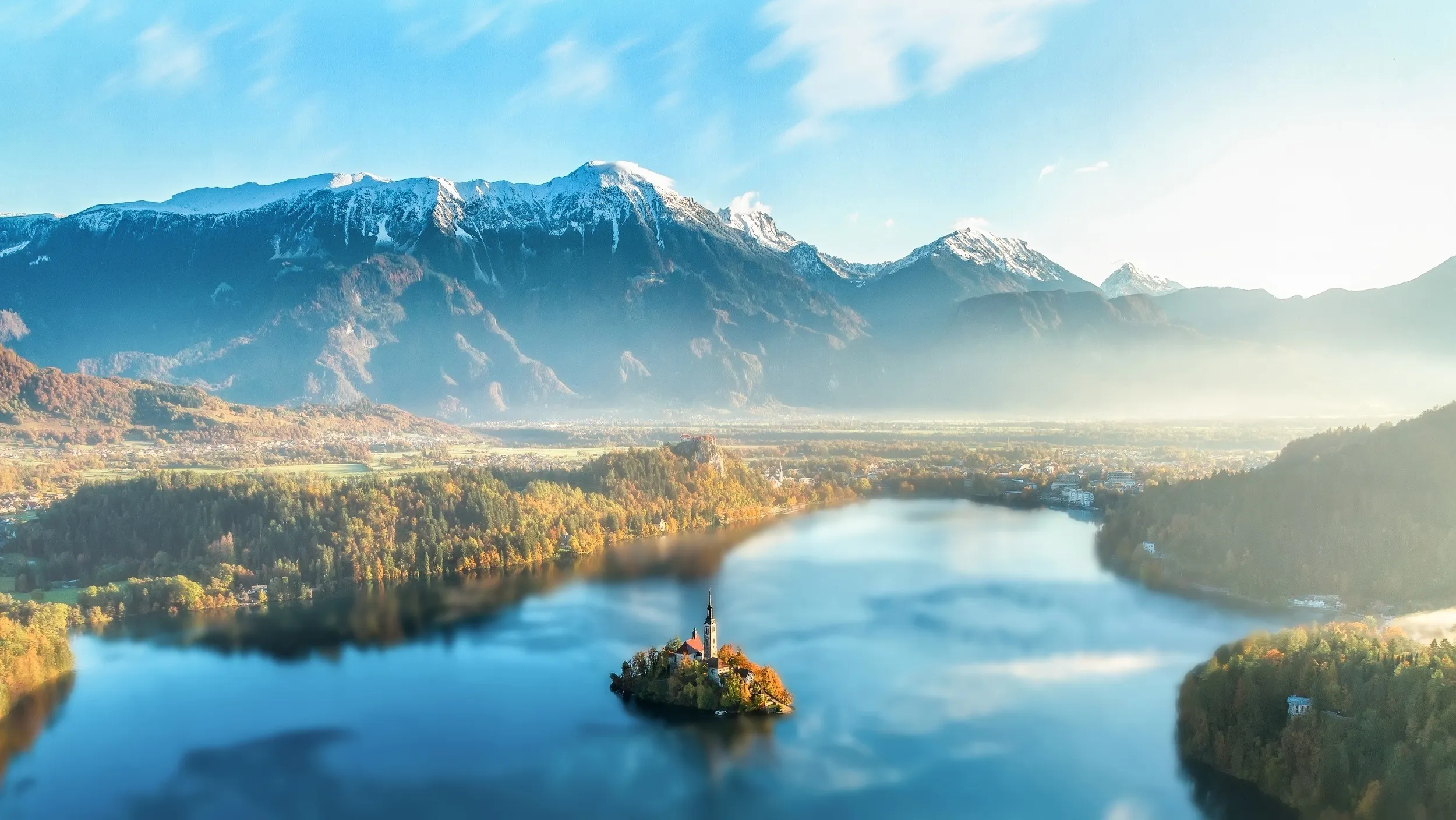
Lake Bled, Triglav and the Soča
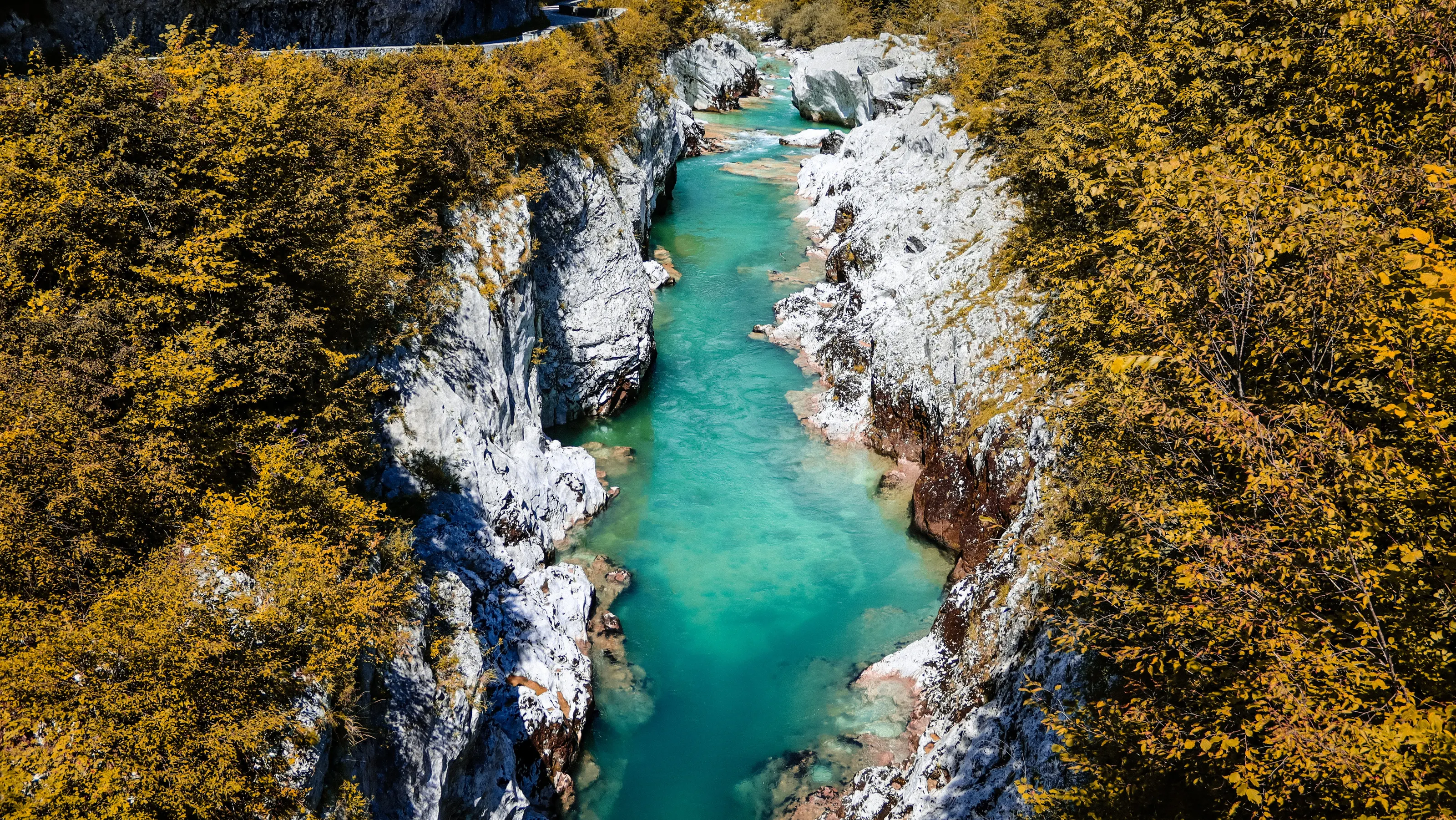
At the north-western corner lie the Julian Alps with Lake Bled, a romantic lake with its own island and church, Triglav National Park and the Soča Valley, whose emerald river is among the most beautiful alpine rivers in Europe.
Caves, castles and the coast
Postojna Cave is a major visit, and nearby Predjama Castle is half hidden in a cave. Škocjan Caves are less commercial. On the coast, Piran is a Venetian Gothic town and Portorož attracts crowds in summer.
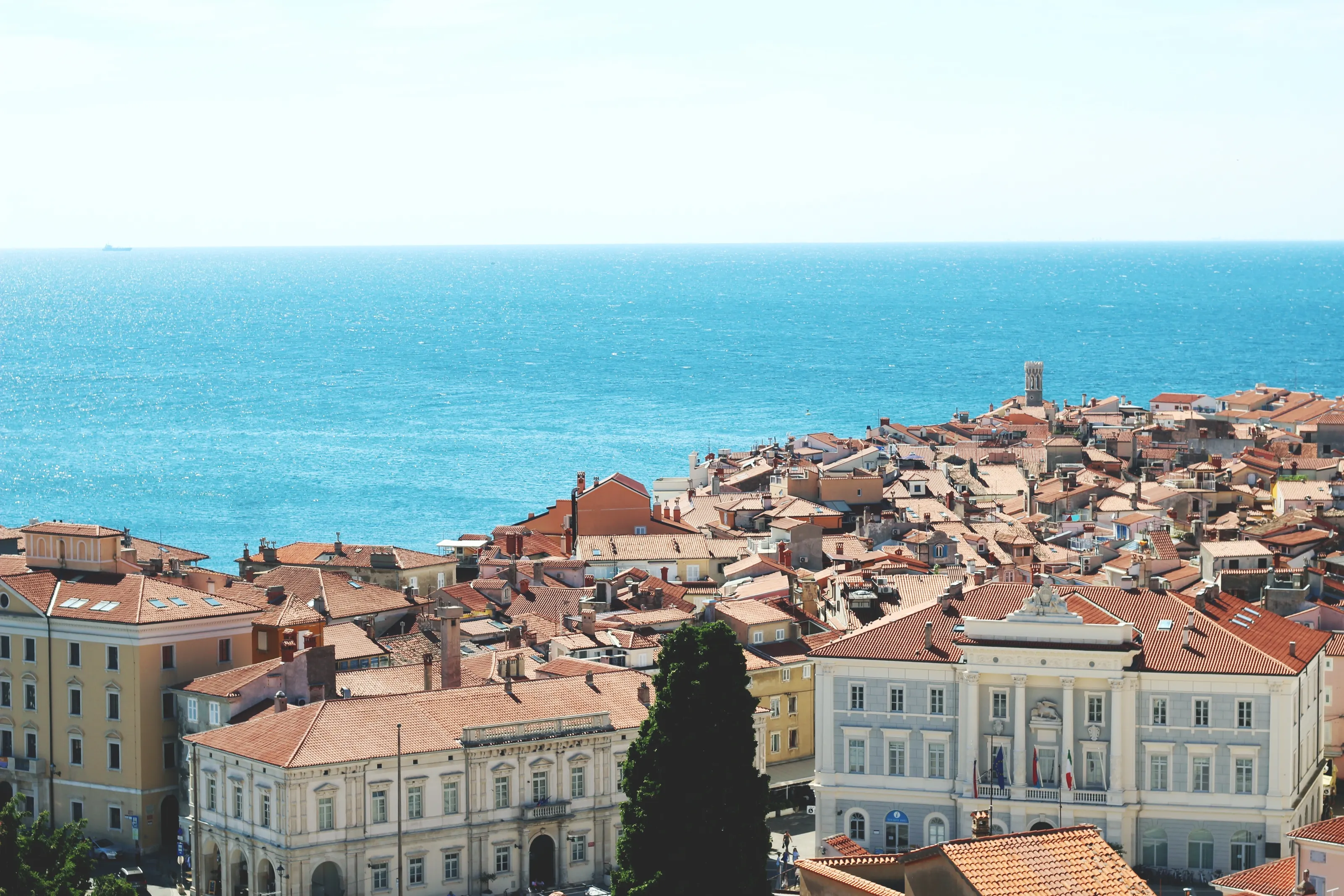
Maribor and the north-east
The hills around Maribor, the second-largest city, are renowned for wine, and the north-east is rich with spas such as Rogaška Slatina.
Getting around
Small distances, but plan around buses
Slovenia is small, so getting around is generally quick. However, car ownership has grown fast and bus schedules have been cut: services are sparse on Saturdays and very limited on Sundays, so plan ahead and use the simo.si planner.
Motorways such as the A1 from Maribor to Koper via Ljubljana are tolled with an e-vignette. A car is often the easiest way to reach the Julian Alps, caves and coast, especially off-season.
Before you go
Three climates in one small country
| Region | Climate | Best time to visit |
|---|---|---|
| Julian Alps and Bled | Alpine: mild summers, snowy winters, with over 3,500 mm of rain in some western areas | June to September; December to March for skiing |
| Ljubljana and central Slovenia | Temperate continental; record snow cover of 146 cm in Ljubljana in 1952 | May to September |
| Coast and Karst | Sub-Mediterranean, with cold, gusty bora winds | June to September for swimming |
| North-east (Maribor) | Continental, with the biggest gap between winter and summer temperatures | May to September; harvest season in early autumn |
Slovenia has been in the EU and NATO since 2004 and in the eurozone since 2007. Compared with Western Europe it is not very windy, because it lies in the slipstream of the Alps.
Food
Central European plates with Mediterranean touches
Slovenian cuisine combines Central European traditions, particularly Austrian and Hungarian, with Mediterranean influences on the coast. More than 40 regional cuisines have been identified. Typical dishes include ričet, Istrian stew called jota, minestrone, žganci, potica (nut roll) and prekmurska gibanica, a layered pastry.
Pršut, the dry-cured ham, is a Littoral speciality. Rustic inns called gostilna serve hearty portions, and a three-course lunch set costs around 7 euros. Wikivoyage notes that Austrians cross the border just for the food. Plan three to four days for Ljubljana and Bled, and a week to link the Alps, the Karst and the coast.
Flying to Slovenia
The Slovenian airport SniperAir covers
Ljubljana Jože Pučnik (Ljubljana)
Also known as Brnik, it is the largest airport in Slovenia, 24 km northwest of Ljubljana. Arriva buses run roughly hourly from the airport car park.
FAQ
Frequently asked questions about Slovenia
Which airport should I fly into for Slovenia?
Ljubljana Jože Pučnik (LJU), also known as Brnik, is the main airport, about 24 km northwest of the capital.
When is the best time to travel to Slovenia?
May to September for Lake Bled, hiking and the coast; December to March for skiing in the Julian Alps and Pohorje.
Is Slovenia expensive?
Moderately. Lunch sets and rural inns are cheap, while peak summer at Lake Bled and on the coast costs more.
Do I need a visa for Slovenia?
Slovenia is part of the Schengen area. EU, EEA and Swiss citizens need only an ID card or passport, and visa-exempt visitors can stay up to 90 days in any 180. The currency is the euro.
How long should I spend in Slovenia?
Three to four days for Ljubljana and Bled; a week to combine the Alps, the Karst and the coast.
Is Slovenia safe?
Yes, it is one of the safest countries. The emergency number is 112; just stay aware of your surroundings in parts of Ljubljana and in crowded bars.
How do I get alerted when a flight to Slovenia drops below my budget?
Create a SniperAir alert profile with your departure airport and your Slovenian destination: we track prices for you and notify you the moment a deal matching your criteria appears.
Ready to track prices to Slovenia?
Create an alert and let SniperAir do the rest.
Create my alert