
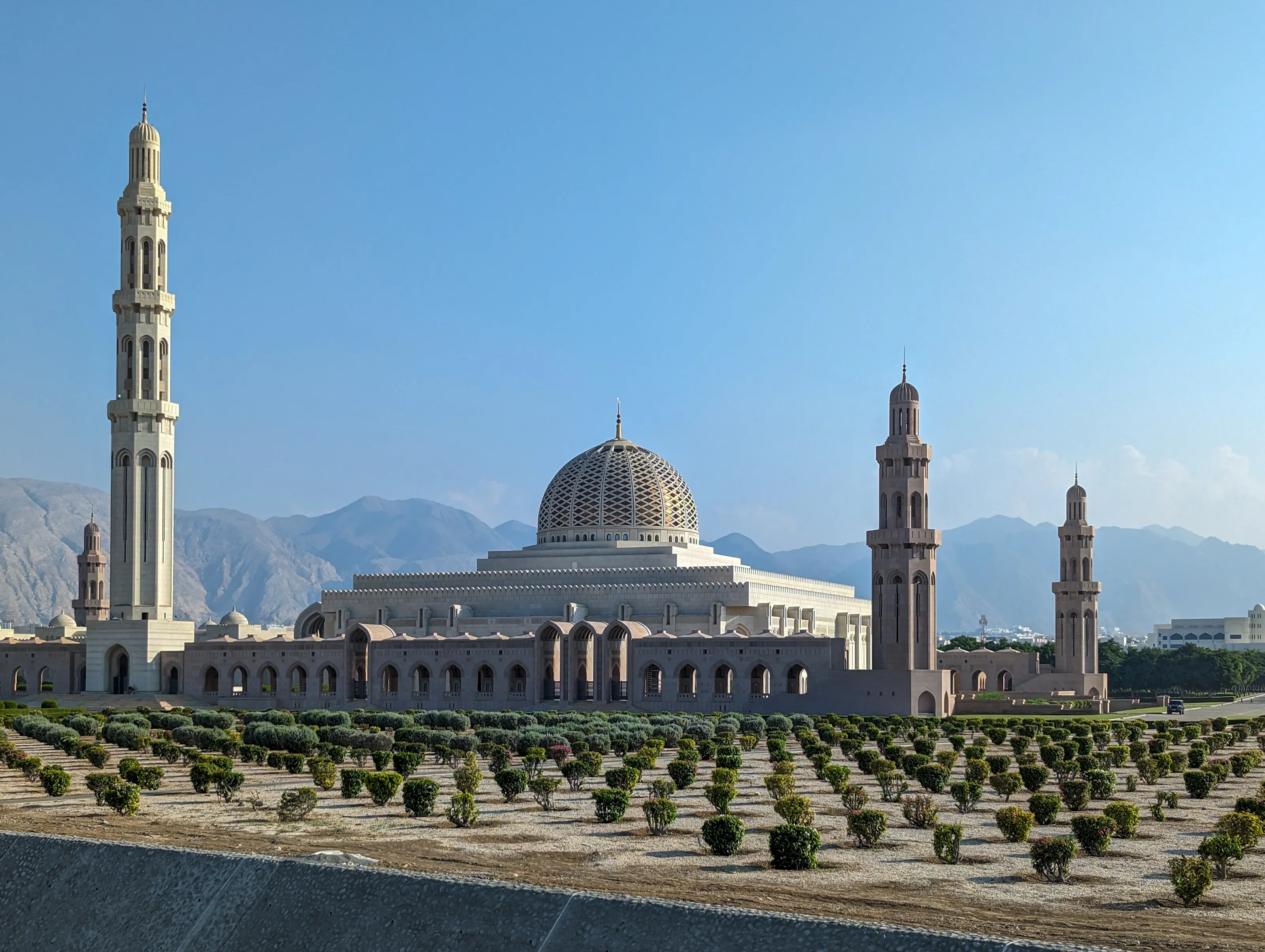
Travel to Oman
Pale marble mosques, stone forts below ochre mountains, golden dunes, a turquoise coast and a summer monsoon that turns the south green: that is the Oman worth dreaming about before you look for cheap flights to Oman.
Oman in numbers
Capital
Muscat
Population
About 5 M
Area
Over 300,000 km²
Currency
Omani rial
Languages
Arabic
Highest point
Jebel Shams
Continent
Asia
Time zone
UTC+4
Airports covered
2
Why visit Oman
Mosques, forts, dunes, coast and monsoon in one sultanate
A quieter Arabia
Oman wins you over with white houses, old forts and hospitality rather than skyscrapers. Muscat keeps an easy pace, with its corniche, souk and dry mountains on every side.
Dunes and mountains
The Wahiba desert lines up golden dunes for a night under the stars, while the Hajar range offers canyons, oases and hill villages less than two hours from the capital.
Four World Heritage sites
Bahla Fort, the tombs of Bat, Al-Khutm and Al-Ayn, the Land of Frankincense in Dhofar and the aflaj irrigation systems show a heritage thousands of years deep.
A coast and a monsoon
More than 1,000 km of coastline, hidden coves and, around Salalah, a summer khareef that coats the hills in green, a surprise for the Arabian Peninsula.
Landmarks
Muscat, Mutrah, Sur, Wahiba, Nizwa and Salalah
A trip to Oman usually starts in Muscat, with a loop into the Hajar mountains and Nizwa, a night in the Wahiba desert and a drive down to the coast at Sur; Salalah, in the far south, makes a trip of its own, especially in summer.
Muscat: the Grand Mosque and the old town
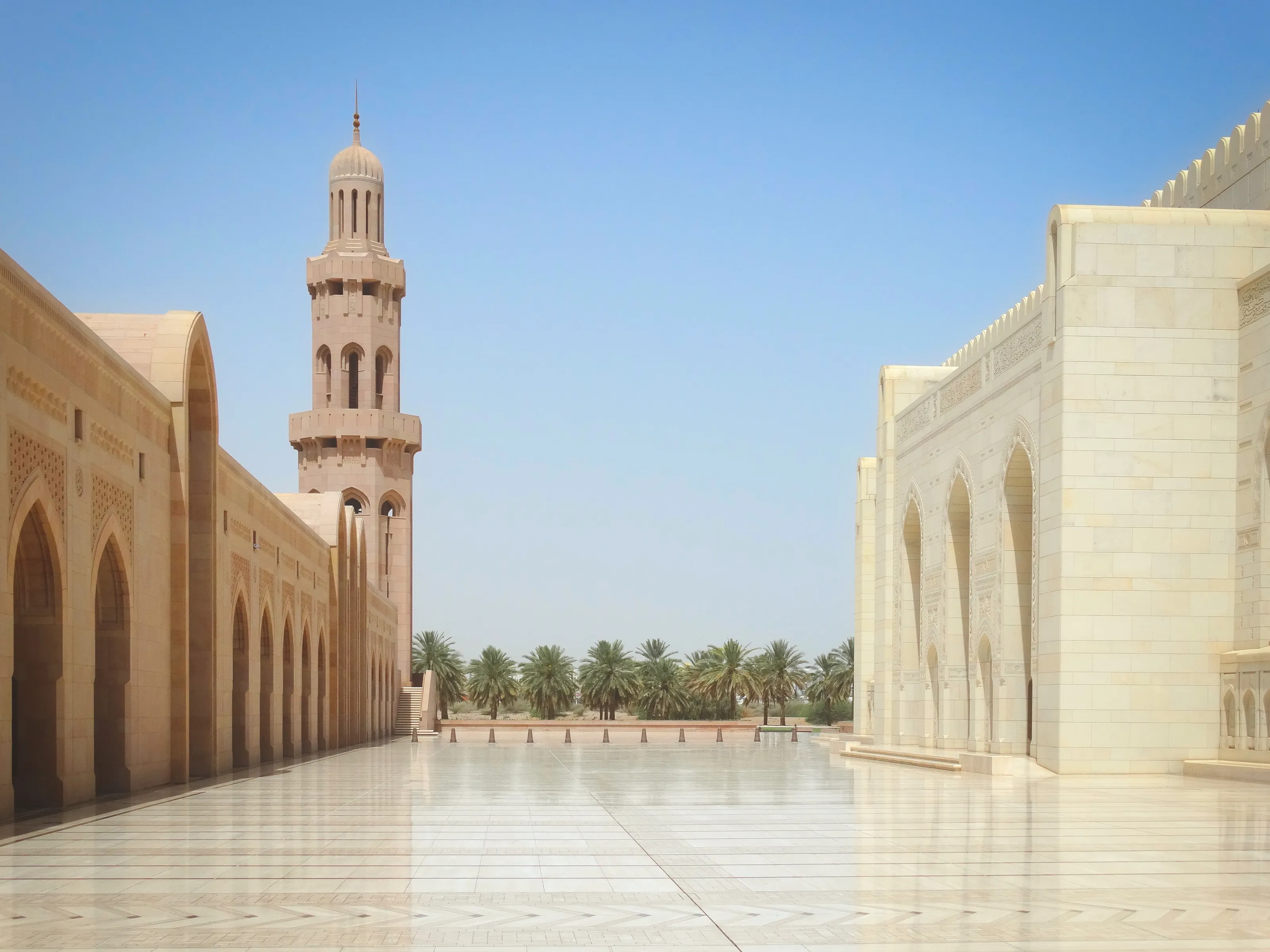
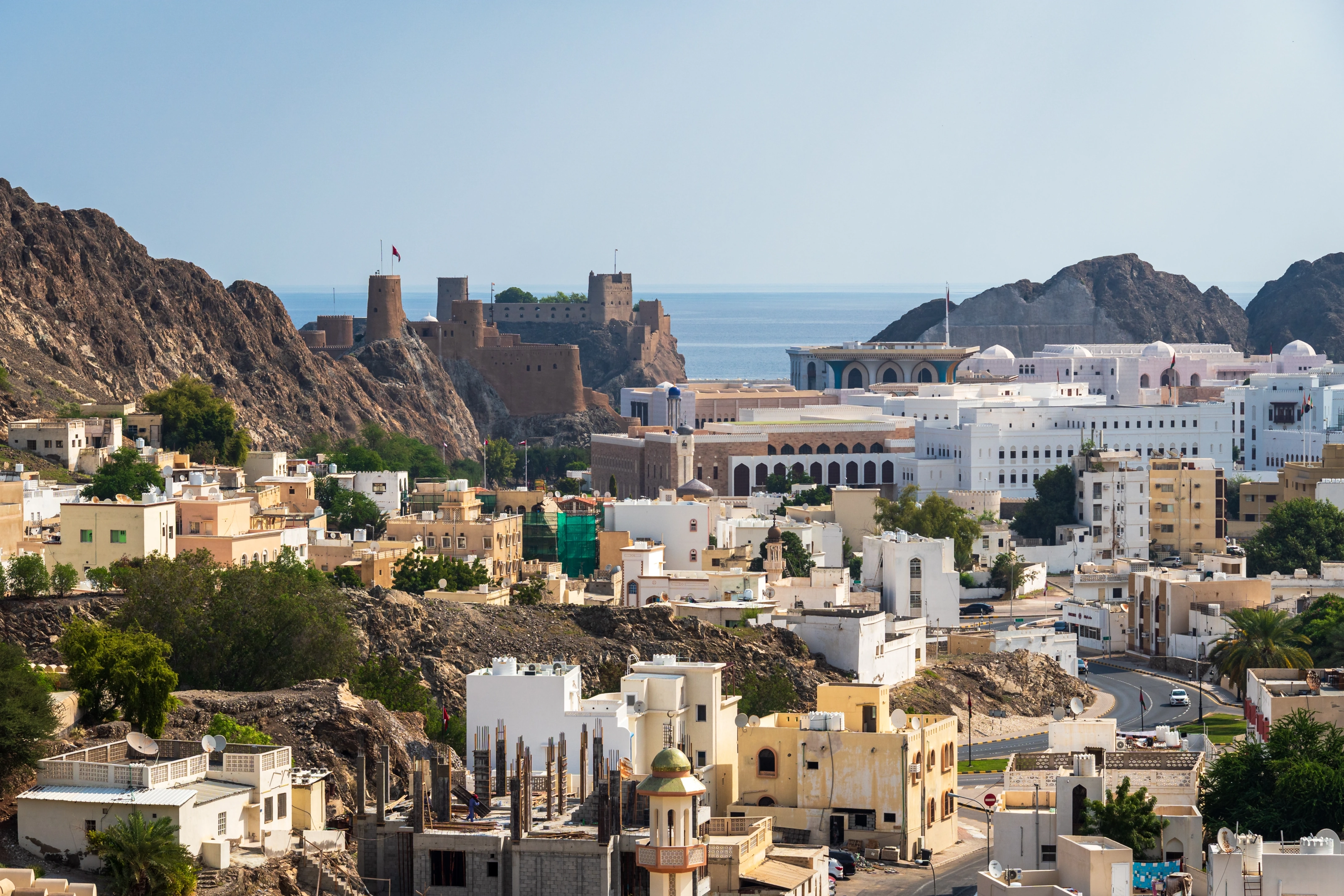
The Sultan Qaboos Grand Mosque rises above the capital with its minarets and lacework dome; visitors enter in modest dress outside prayer times. Further east, the old town gathers a palace, forts and white lanes along the water.
Mutrah, corniche and souk
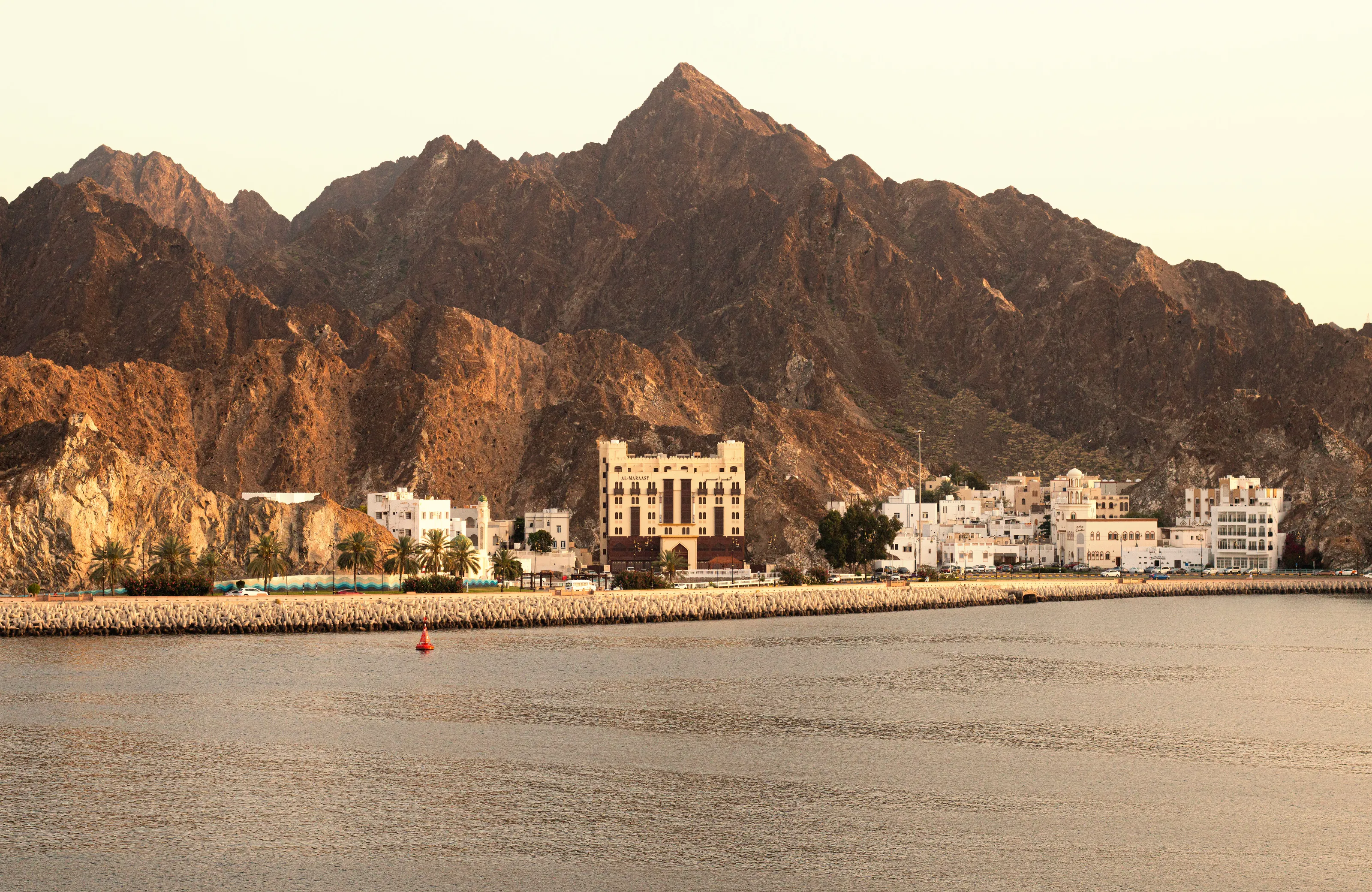
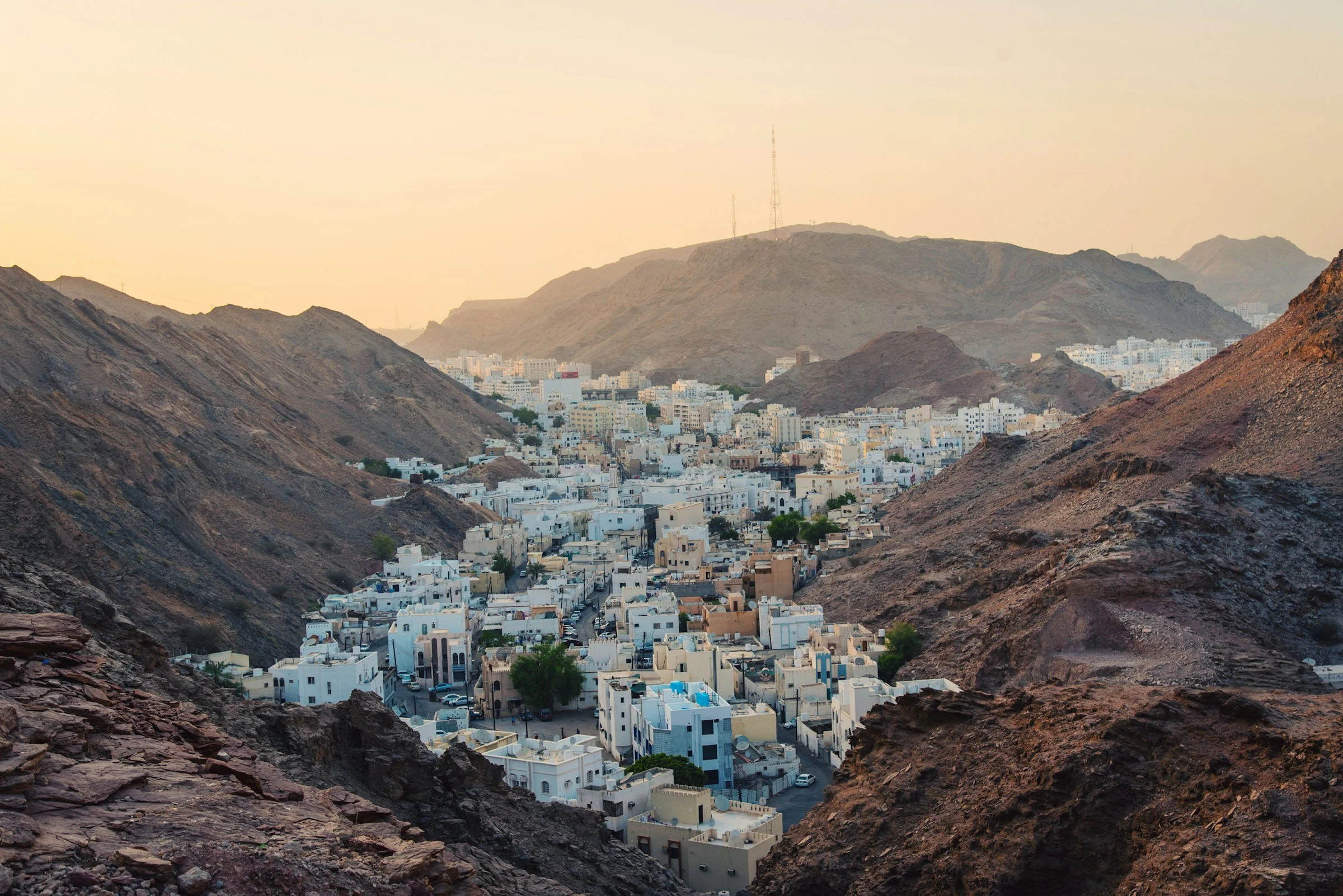
Mutrah curves around its harbour below ochre mountains. Walk the corniche, then lose yourself in a souk scented with frankincense, spices and silverwork, best visited in the late afternoon.
Sur and the coast, down to Salalah
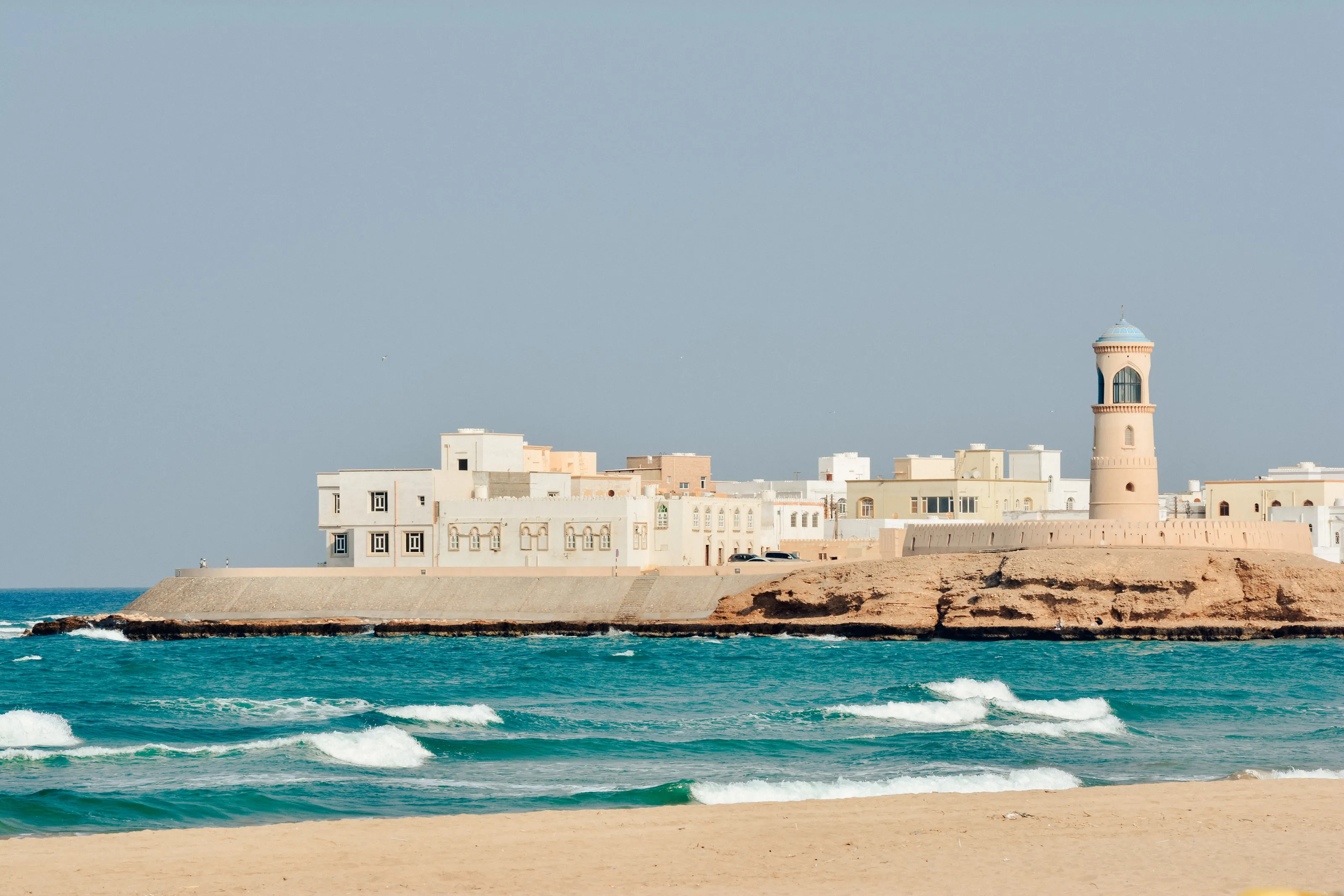
At Sur, a dhow-building port, a lighthouse and white houses face a turquoise sea and long beaches. Far to the south, the Salalah region lives by the khareef from June to September: mist, drizzle and green hills draw visitors from across the region.
The Wahiba desert
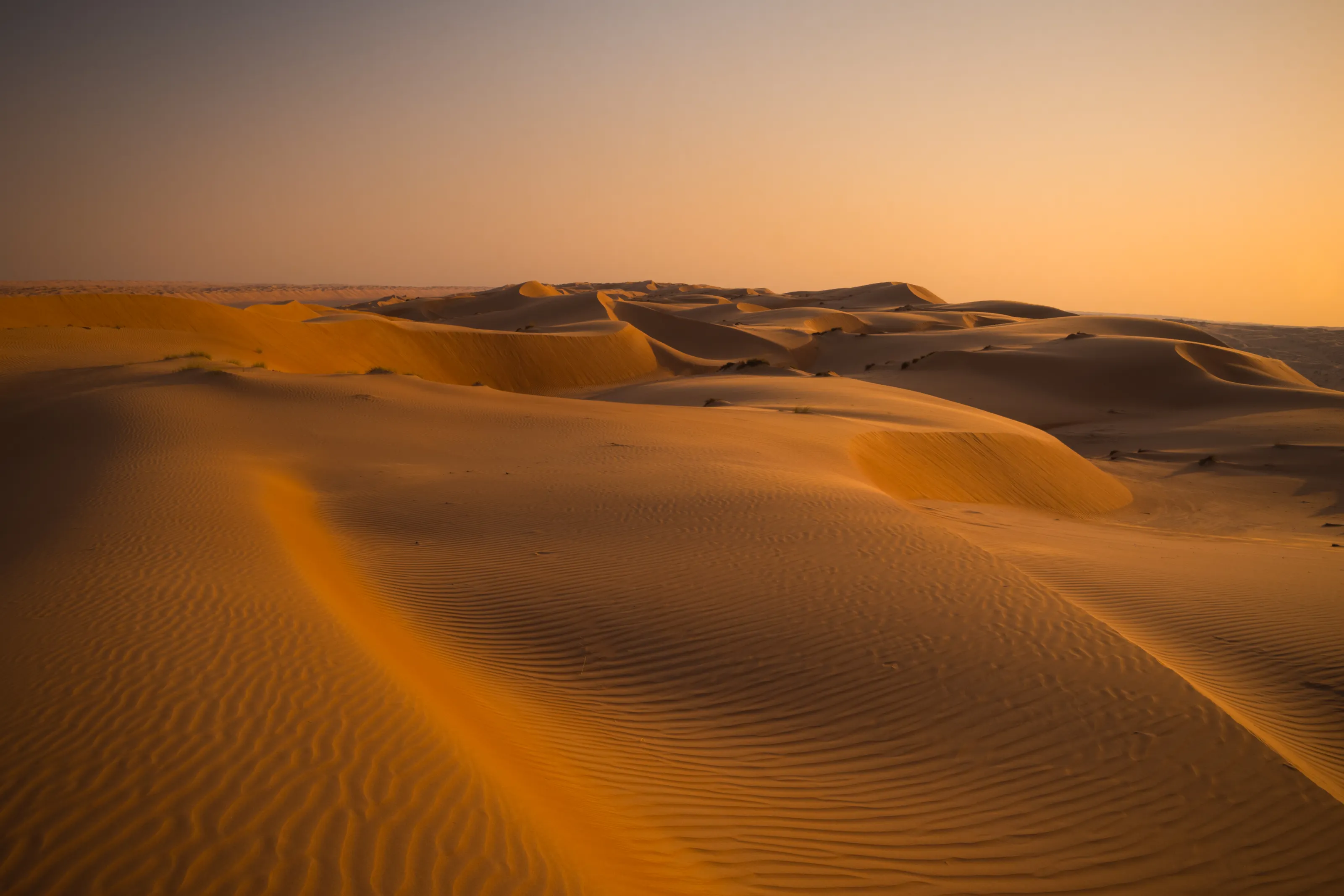
South-east of Muscat, the rippled dunes of the Wahiba change colour through the day. You cross them by 4x4 with a local driver, then sleep in a camp far from any light.
Nizwa, Bahla and the Hajar
Nizwa, the old inland capital, has a fort and a lively Friday market. Bahla Fort, a World Heritage site, stands below Jebel Akhdar among oases watered by the aflaj channels.
Before you go
October to April for the north, July and August for Salalah
| Area | Climate | Best time to visit |
|---|---|---|
| Muscat and the north coast | Mild sunny winters, very hot and humid summers. | October to April |
| Hajar mountains and Nizwa | Cooler at altitude, very hot in summer in the valleys. | October to March |
| Wahiba desert | Hot and dry; cool evenings in winter, extreme heat in summer. | November to March |
| Salalah and Dhofar | Monsoon from June to September, green hills and gentler temperatures. | July and August for the khareef, winter for the beach |
Rain is rare, but flash floods in the wadis do happen, so ask locally before any excursion. Keep an eye on fares before locking in dates, since the winter high season is the most in demand.
Getting around
Rental cars, 4x4s, taxis and domestic flights
Roads are in good shape and a rental car is the freest way to see Muscat, Nizwa and the coast. For the desert and some wadis, a 4x4 with a driver is advisable. Taxis and ride apps cover the capital.
There is no passenger rail network, so most people fly from Muscat to Salalah. Allow slack in your plans: distances between regions are long.
Food and culture
Frankincense, cardamom coffee, shuwa and hospitality
Dhofar frankincense is the emblem of the country, and the white dishdasha is still everyday wear for men. You will often be offered cardamom coffee with dates. Modest dress is expected at places of worship.
At the table, shuwa (slow-cooked meat), fresh fish, fragrant rice and Omani halwa make a meal true to the country. Coastal restaurants serve seafood every day.
Flying to Oman
The Omani airports covered by SniperAir
Muscat International
Muscat's airport, at Seeb, about thirty kilometres from Mutrah and the old town: allow thirty to forty minutes by road. The sultanate's main gateway.
Salalah International
Salalah's airport, very close to the city: around ten minutes by road. Ideal for the summer khareef and the Dhofar coast.
SniperAir destinations
Discover our destination pages
Oman
Muscat
Muscat: Sultan Qaboos Grand Mosque, old harbour forts and Mutrah souq, with price alerts to Muscat International Airport (MCT).
Discover
Oman
Salalah
Salalah: the green khareef monsoon, Al Baleed, frankincense souqs and the Dhofar coast, with price alerts to Salalah airport (SLL).
DiscoverFAQ
Frequently asked questions about Oman
Which airport do I fly into for Oman?
Muscat (MCT) is the main gateway, about 30 km from Mutrah and the old town. Salalah (SLL) serves Dhofar in the south. SniperAir tracks both airports.
When is the best time to travel to Oman?
October to April for Muscat, Nizwa and the desert, with milder temperatures. For Salalah, July and August in the middle of the monsoon, or winter for the beach. Summer stays very hot in the north.
Is travelling to Oman expensive?
The budget is mostly mid-range, with lodging sometimes pricey compared with the region. A rental car and 4x4 excursions weigh on the total; local meals stay affordable.
Do I need a visa for Oman?
It depends on your nationality and the length of stay. Check the entry conditions on the official Omani authorities' website before you travel.
How long should I spend in Oman?
Seven to ten days cover Muscat, Nizwa, the Wahiba desert and the coast. Add three or four days if you include Salalah and Dhofar.
What travel precautions should I take?
Check your foreign ministry's travel advice, dress modestly away from beaches and hotels, avoid wadis when it rains and drink plenty of water.
How do I get alerted when a flight to Oman gets cheaper?
Create a SniperAir alert profile with your departure airport and Muscat or Salalah as destination: we track prices and notify you as soon as a matching deal appears. See how it works.
Ready to track fares to Oman?
Create an alert and let SniperAir do the rest.
Create my alert