
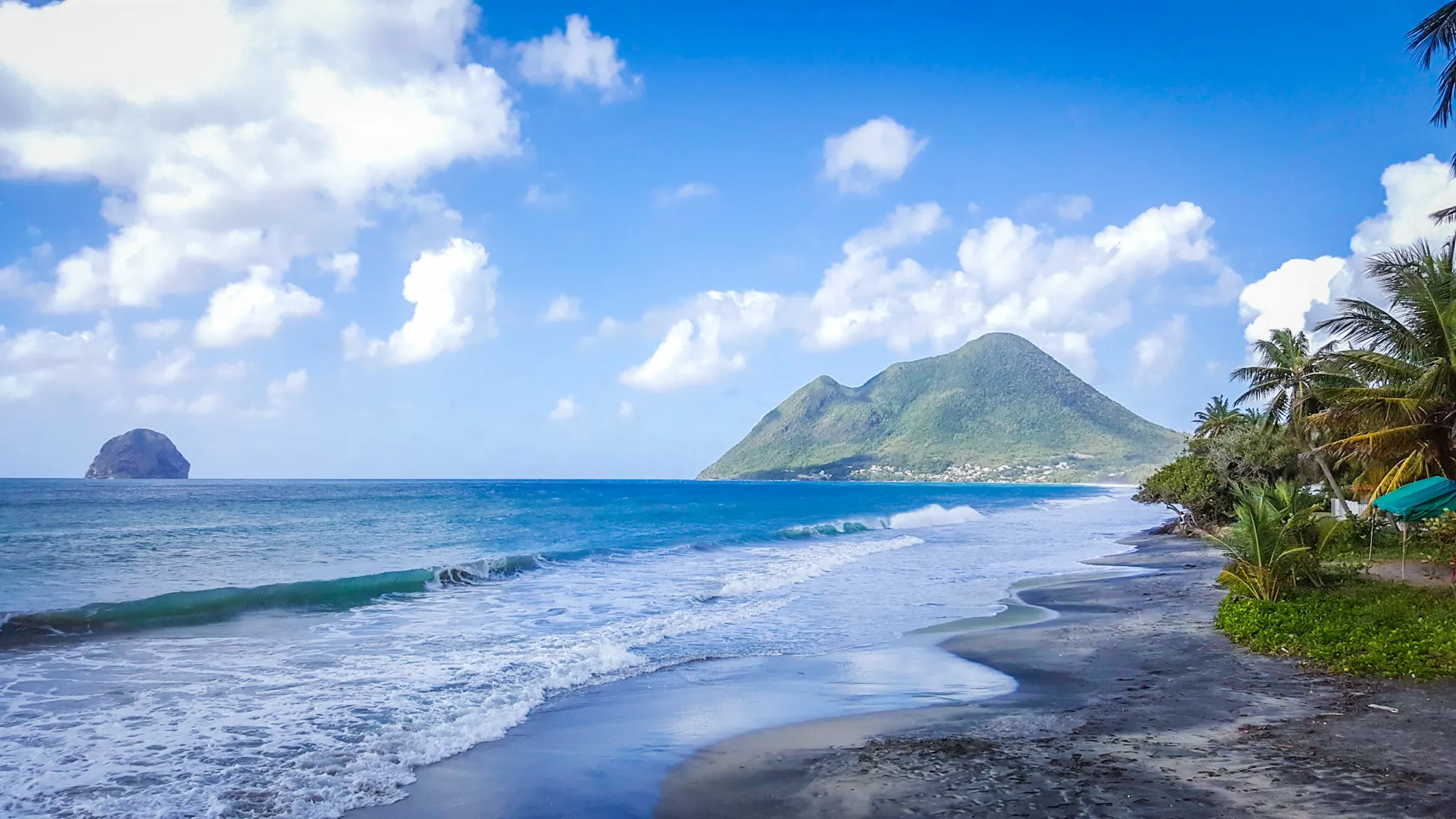
Travel to Martinique: cheap flights to the island of flowers
White or black sand beaches, Mount Pelée, Diamond Rock, agricultural rum and Creole cooking: Martinique, nicknamed the island of flowers, blends volcanic nature with a Caribbean way of life. Here is what to know before you go, and how to follow cheap flights to Martinique.
Martinique in numbers
Capital
Fort-de-France
Population
About 360,000
Area
1,128 km²
Currency
Euro
Languages
French, Creole
Highest point
Mount Pelée
Continent
North America
Time zone
UTC-4
Airports covered
1
Why visit Martinique
Volcano, beaches, rum and UNESCO World Heritage
A UNESCO-listed volcano
Mount Pelée and the northern pitons have been World Heritage since 2023, and the whole island is a biosphere reserve. Expect rainforest hikes with views of the sea and of Dominica.
Beaches for every taste
In the south, white sand and calm water; on the Caribbean and Atlantic coasts, dark volcanic sand and wild scenery. Le Diamant, Les Salines and Les Anses-d'Arlet are classics.
Home of agricultural rum
The island's distilleries and plantation houses can be visited, and AOC agricultural rum is a local emblem: ti-punch, planteur and tastings pace the days.
A strong history and culture
Saint-Pierre, destroyed by Pelée in 1902, keeps its ruins and a volcanology museum; biguine, zouk, round-hulled yoles and Creole cuisine tell the story of a blended island.
Landmarks
Le Diamant, Les Salines, Saint-Pierre, La Caravelle and Fort-de-France
Martinique is easy to see in a week by car: the south for beaches, the north for Mount Pelée and Saint-Pierre, the Atlantic coast for wild scenery, and Fort-de-France for the city and its markets.
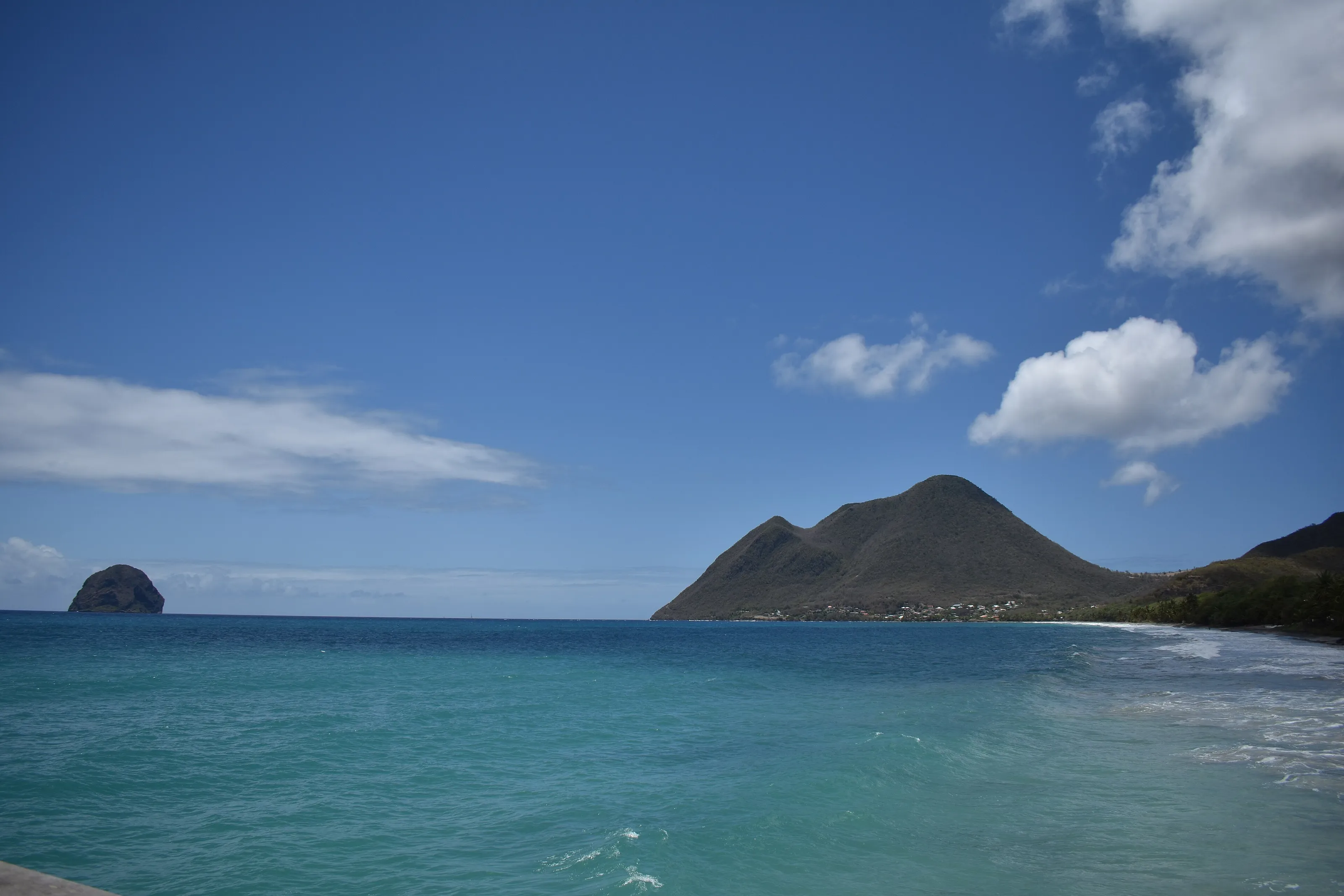
Le Diamant, the Rock and Les Anses-d'Arlet
In the south-west, the long beach of Le Diamant faces Diamond Rock, a basalt islet rising from the sea. The water is beautiful but often rough, so you admire, stroll and swim with care. Further west, Les Anses-d'Arlet offers fishing villages and calm water, ideal for snorkelling.
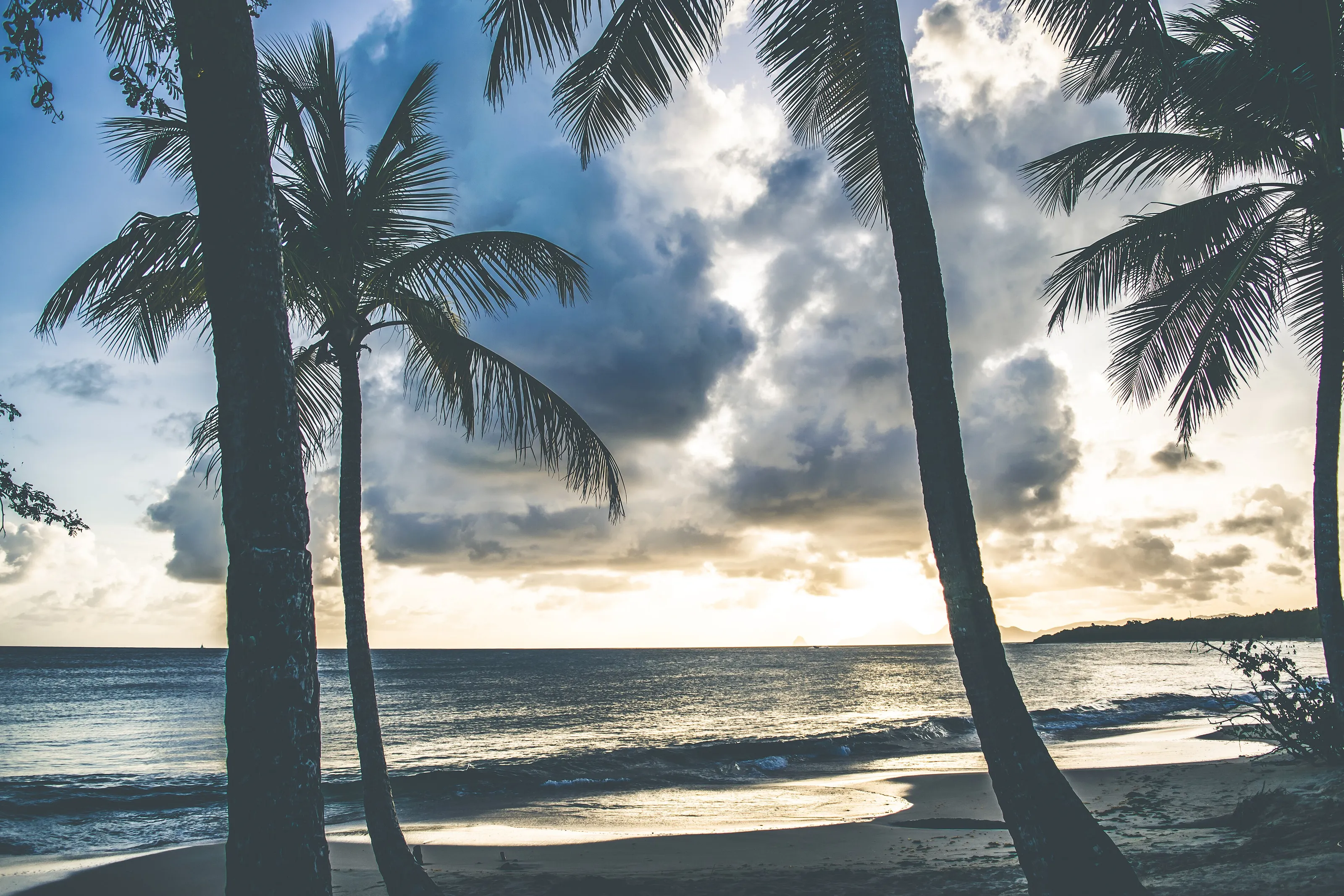
Sainte-Anne and Les Salines beach
At the far south, Sainte-Anne leads to Les Salines beach, lined with coconut palms and promoted by the tourism office as a public natural site. At sunset the light is especially beautiful. The petrified savanna, further south, offers a surprising mineral landscape.
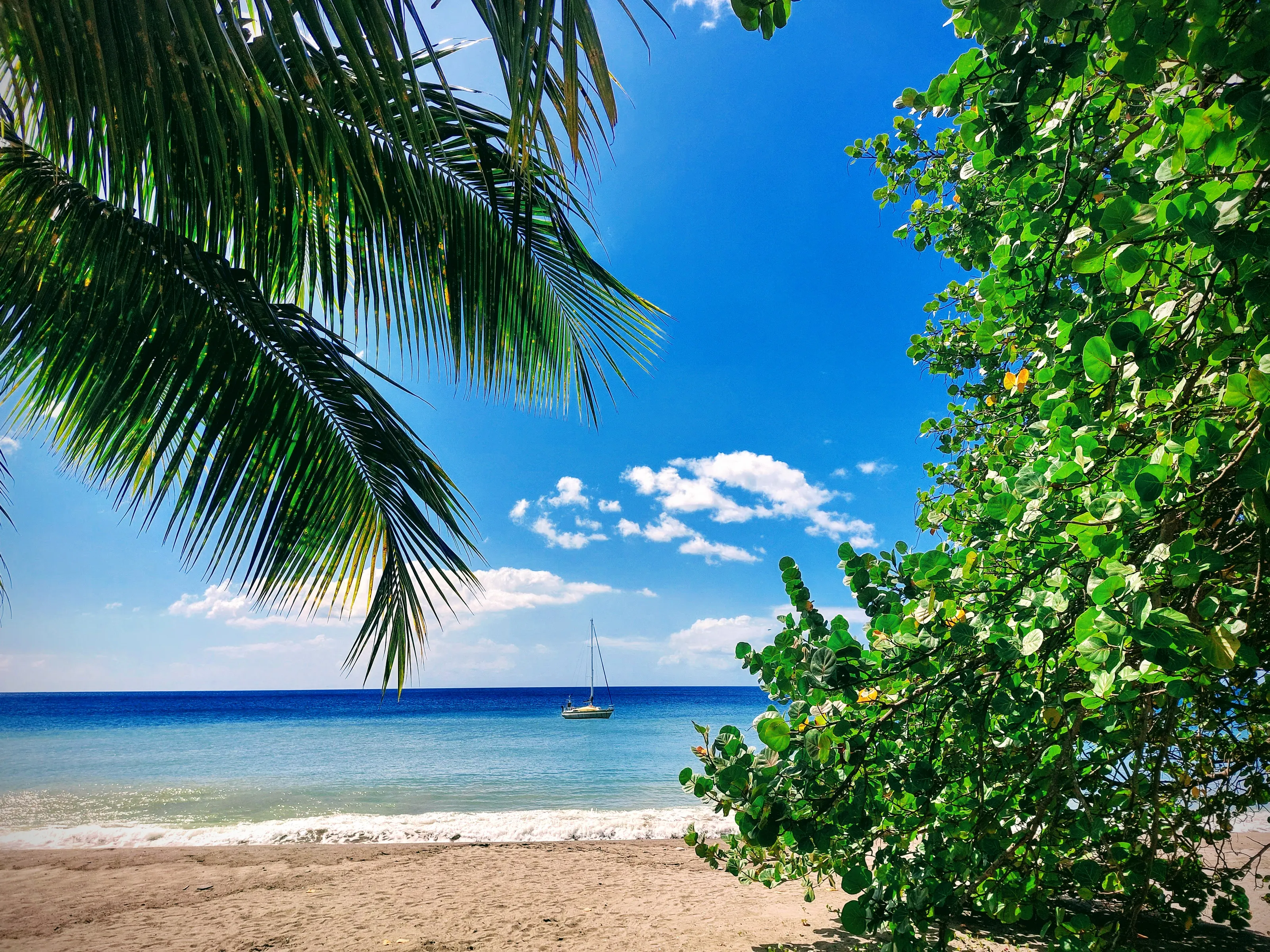
The Caribbean north: Saint-Pierre, Le Carbet and Mount Pelée
Saint-Pierre, once the Paris of the Lesser Antilles, was destroyed by Pelée's eruption on 8 May 1902; you can visit the ruins and a volcanology museum. Le Carbet has quiet beaches facing the open sea, and Mount Pelée, about 1,400 m high, offers the island's big hike, best done early in the morning.
The Atlantic coast: La Caravelle, Sainte-Marie and La Trinité
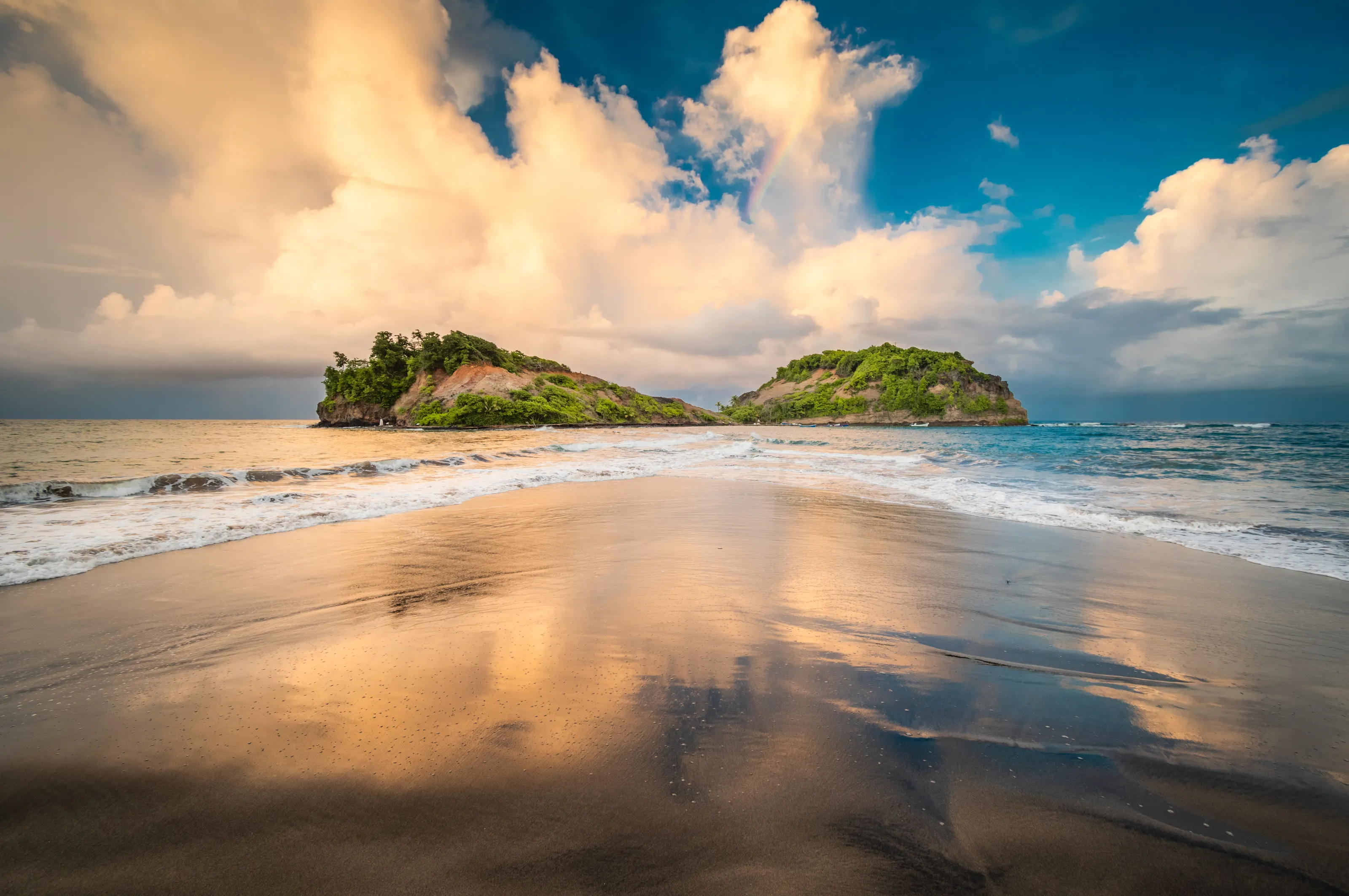
The Atlantic side is wilder and windier. The La Caravelle peninsula is a nature reserve with panoramic trails. Sainte-Marie and its green islets, facing a dark-sand beach, make spectacular scenery, while the mangroves show the island's natural diversity.
Fort-de-France, Les Trois-Îlets and rum
The capital gathers Saint-Louis Cathedral, Fort Saint-Louis, markets and the Balata garden. Les Trois-Îlets, reached by ferry from Fort-de-France, leads to Pointe du Bout. Rum lovers can add a distillery estate visit, such as in Le François.
Before you go
Best time: the dry season, January to April
| Area | Climate | Best time |
|---|---|---|
| South (Diamant, Salines) | Drier and sunnier, the most visited beaches. | January to April; pleasant off-season too |
| North and Mount Pelée | Humid and lush, frequent mist on the summits. | January to April, early in the morning |
| Atlantic coast | Windy with stronger swell; wild scenery. | All year, with care for swimming |
| Fort-de-France and centre | Hot, with more showers in summer and autumn. | January to April; December is popular |
The dry season (carême) runs roughly from January to April; the wet season (hivernage) covers summer and autumn, with more showers. Hurricane season runs from June to November, so check forecasts and stay flexible. Following fares several weeks ahead helps you pay less, especially before school holidays.
Getting around
Rental car, buses and ferries
A rental car is the freest way to link the south, the north and the Atlantic coast: the road network is extensive, with a motorway around Fort-de-France. Traffic drives on the right, as in mainland France. Allow time at rush hour around the capital.
A dedicated-lane bus links Fort-de-France and the airport since 2018, and ferries cross the bay to Les Trois-Îlets. There are also regular boat services to Guadeloupe, Dominica and Saint Lucia.
Food and culture
Colombo, féroce d'avocat, ti-punch and yoles
Martinican cooking blends Carib, European, African and Indian influences: féroce d'avocat, salt cod accras, chicken colombo, boucané chicken, chatrou (octopus) or crab matoutou. Blancmange often ends the meal, with agricultural rum or ti-punch alongside.
On the cultural side, biguine, zouk and gwo ka drive the festivities, and the Tour des Yoles, a regatta of traditional sailing boats, is a highlight of summer. Fort-de-France's market is the place to taste spices, liqueurs and fruit.
Travelling to Martinique
The Martinique airport covered by SniperAir
Aimé Césaire
Martinique's international airport is in Le Lamentin, about ten kilometres from Fort-de-France: allow roughly twenty minutes by road. It is the island's air gateway, with a bus link to the capital.
FAQ
Frequently asked questions about Martinique
Which airport do I fly into for Martinique?
Martinique Aimé Césaire International Airport (FDF), in Le Lamentin, about ten kilometres from Fort-de-France. SniperAir tracks it for you.
When is the best time to travel to Martinique?
The dry season, roughly January to April, is the most popular. The island stays pleasant the rest of the year, with more showers in summer and autumn. Hurricane season runs from June to November.
Is Martinique expensive?
Living costs are higher than in mainland France, especially in high season. You can keep a budget in check with rentals, local meals and free beaches. The easiest item to optimise is the plane ticket, so watch fares.
Do I need a visa for Martinique?
Martinique is French and part of the European Union, but outside the Schengen Area. Entry rules depend on your nationality, so always check official information before you travel.
How long should I stay in Martinique?
A week covers the south, the north with Mount Pelée, the Atlantic coast and Fort-de-France. Ten days leave more time for hiking and diving.
What currency is used in Martinique?
The euro, as in mainland France. Cards are widely accepted; keep some cash for markets and small shops.
How do I get alerted when a flight to Martinique drops below my budget?
Create a SniperAir alert with your departure airport and FDF, set your maximum price, and we notify you when a fare falls below it. SniperAir tracks prices and sends alerts. See how it works.
Ready to track fares to Martinique?
Create an alert and let SniperAir do the rest.
Create my alert