
Travel to São Tomé and Príncipe
Two volcanic islands on the equator in the Gulf of Guinea: São Tomé and Príncipe is Africa's second-smallest country, covered in rainforest, cocoa plantations and quiet coves. A rock needle rises from the jungle, waves burst through a blowhole, and Príncipe hides beaches with no one on them. Here is what to know before you look for cheap flights to São Tomé and Príncipe.
São Tomé and Príncipe in numbers
Capital
São Tomé
Population
About 200,000
Area
~1,000 km²
Currency
New dobra
Language
Portuguese
UNESCO sites
Biosphere
Continent
Africa
Time zone
UTC+0
Airports covered
1
Why visit São Tomé and Príncipe
A little-known tropical island nation of rainforest, cocoa and wild beaches
Protected nature
Almost nine-tenths of the islands is tree-covered, and the archipelago shelters birds and plants found nowhere else, such as the world's smallest ibis and its largest sunbird. In 2025 UNESCO designated the whole country a biosphere reserve, a world first at that scale.
Beaches without crowds
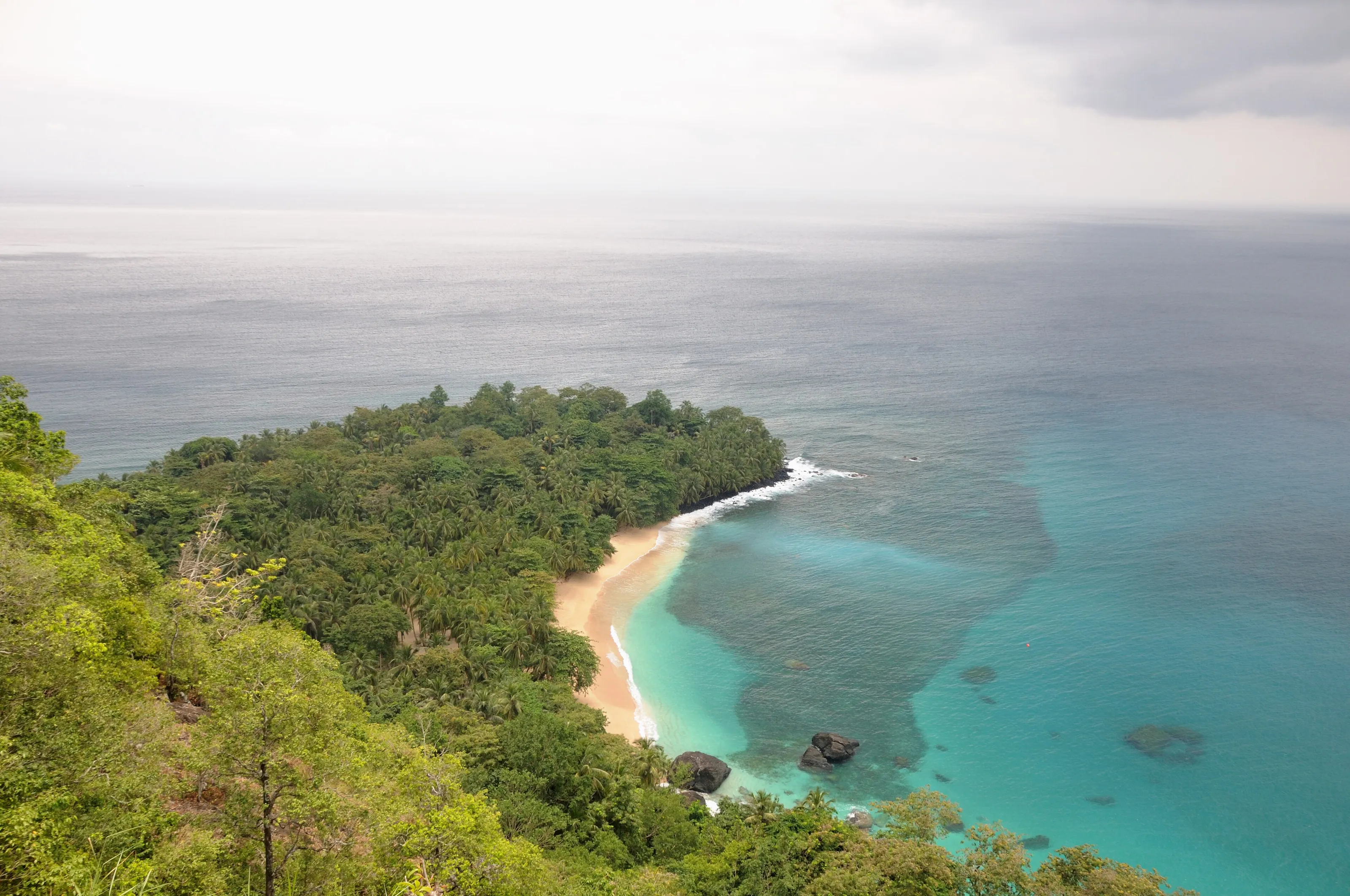
Coves of orange or pale sand lined with coconut palms, turquoise water and lava rocks: Príncipe's beaches, such as Praia Banana, are among the prettiest in the Gulf of Guinea. Many see very few visitors, and sea turtles come ashore to nest.
Hiking and volcanoes
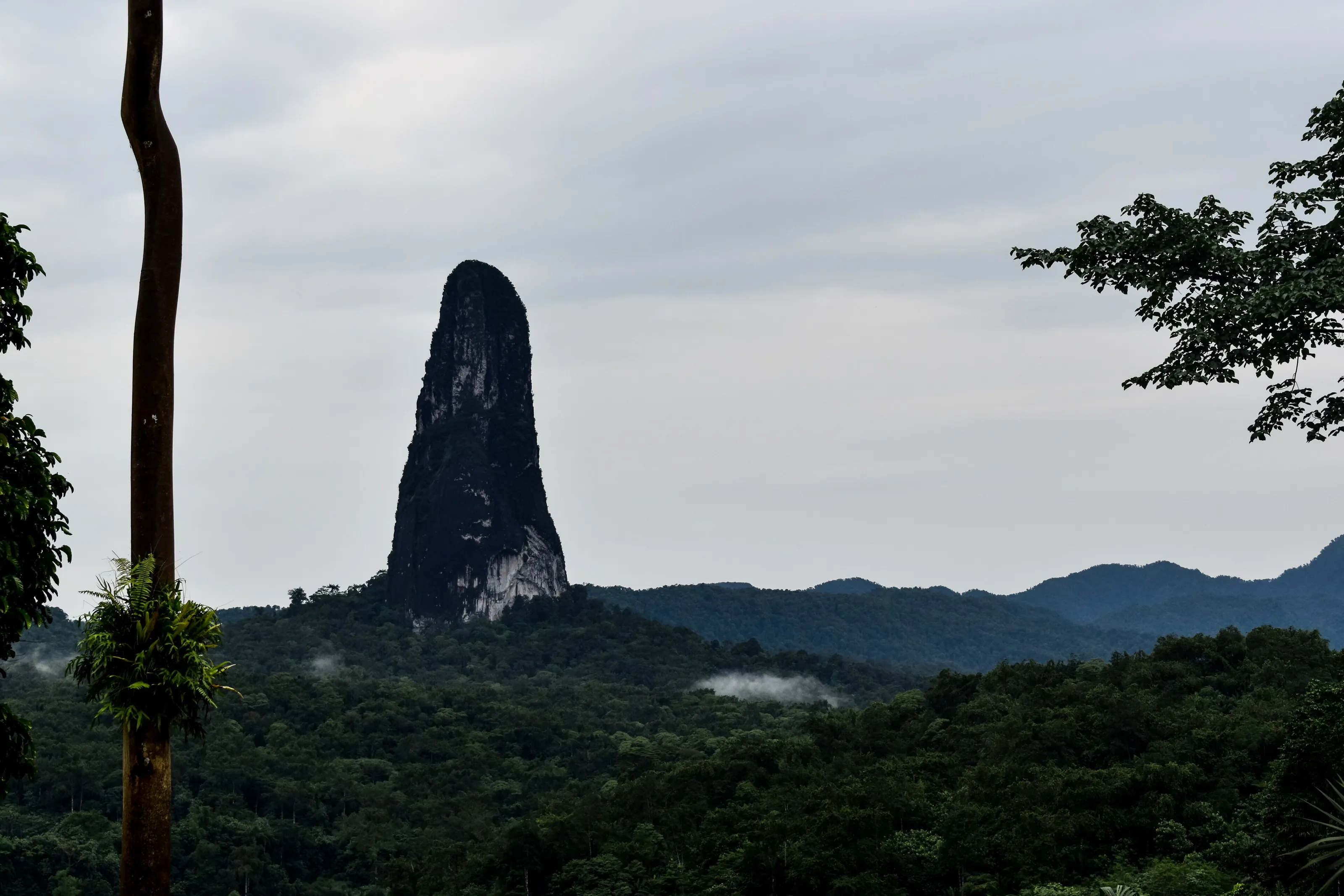
Obô Natural Park leads to waterfalls, orchids and Pico de São Tomé, which rises to 2,024 metres. Pico Cão Grande, a lava plug over 300 metres above the forest, is the country's emblem.
Cocoa, coffee and history
The roças, former plantations, tell the story of cocoa and slavery. You can visit chocolate makers, sometimes stay overnight, and a 16th-century fort houses the national museum. In 1919 astronomer Eddington came to Príncipe to watch an eclipse and test relativity.
Where to go
Pico Cão Grande, São Tomé beaches, Príncipe and the capital
Most travellers spend the bulk of a trip on São Tomé and add, if time allows, a stop on Príncipe, a short flight away. Roads are paved but sometimes rough, so a driver or local guide helps for hikes. To combine with the mainland, see also our Gabon page, the archipelago's closest neighbour.
Pico Cão Grande and Obô Natural Park
In the south of the island, Pico Cão Grande is a plug of hardened lava that shoots more than 300 metres above the forest, with its summit at 663 metres. You can admire it from access tracks and walk to its base; climbing it is for experienced climbers only. The neighbouring Obô park offers hikes to waterfalls, birdwatching and orchids with a local guide.
Boca do Inferno and São Tomé beaches
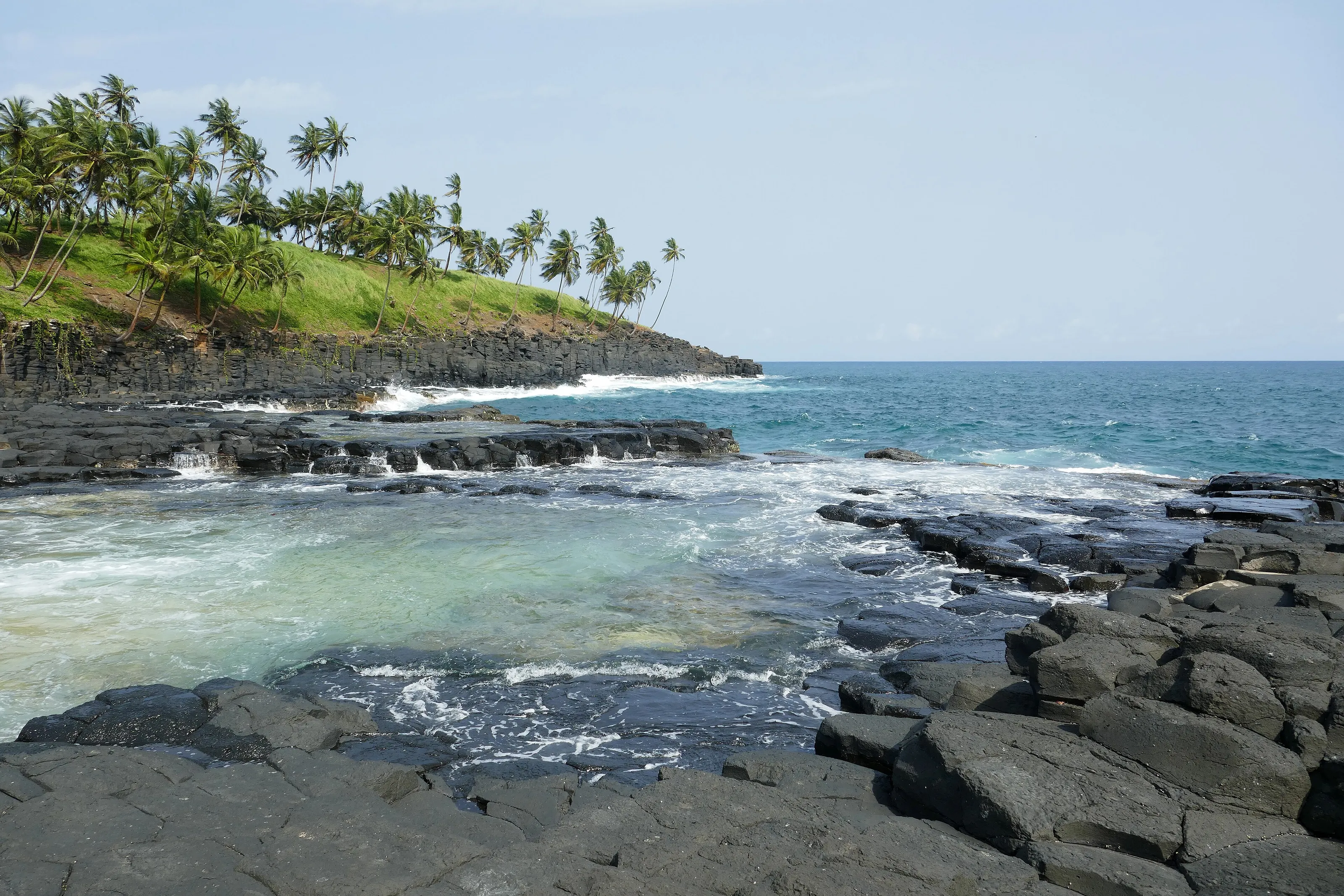
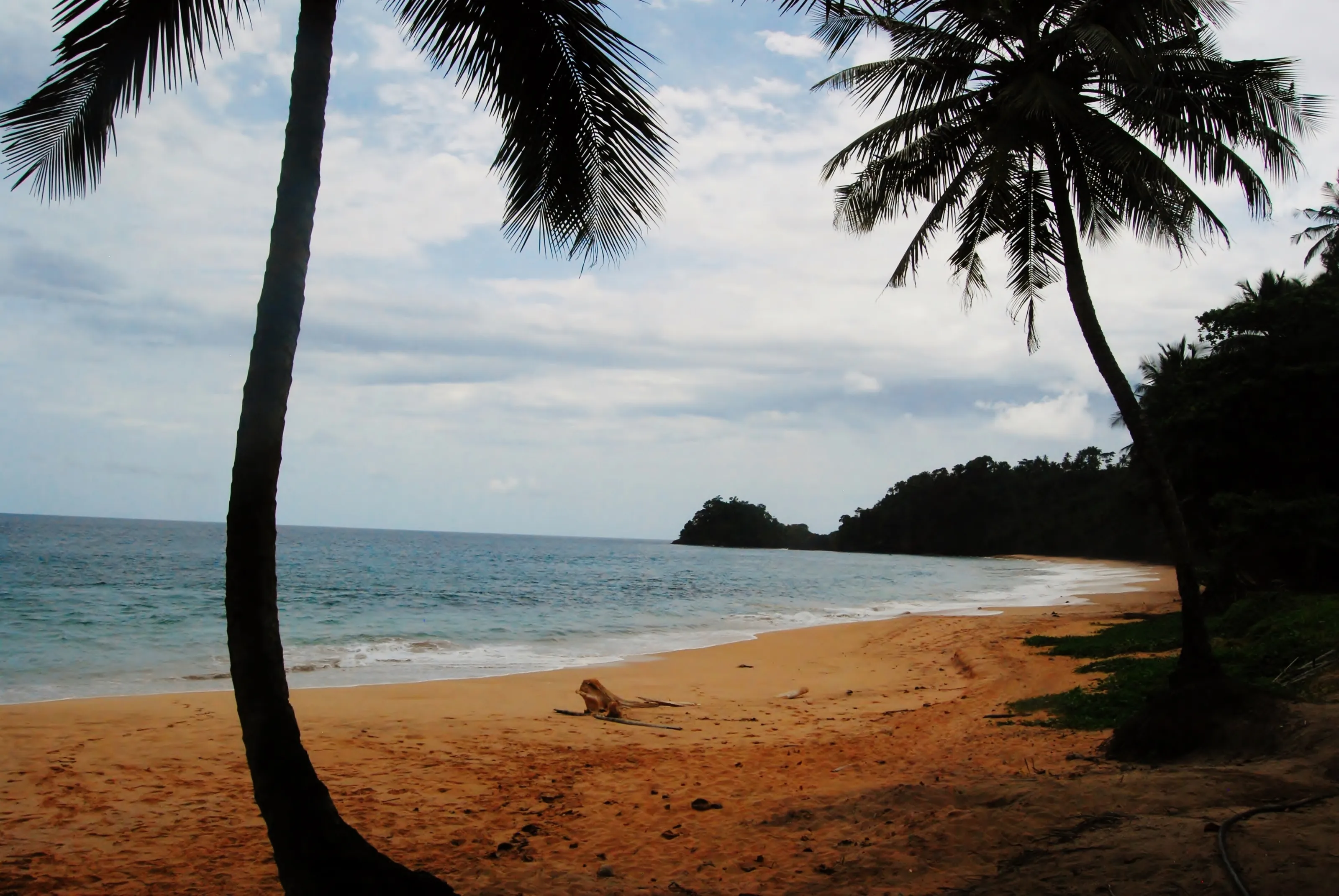
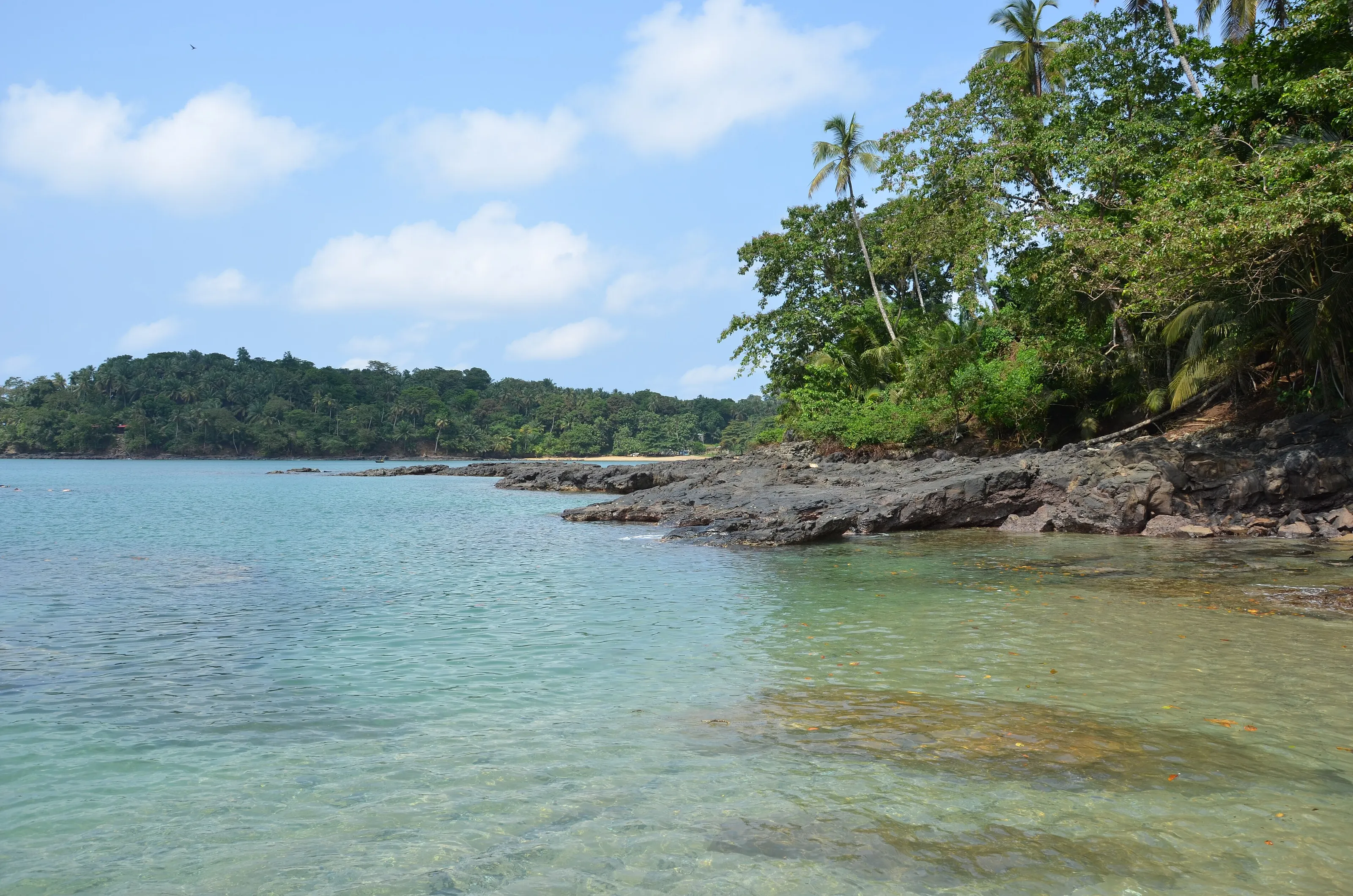
South of the capital, Boca do Inferno is a black volcanic rock coast where the sea surges into a blowhole, with coconut palms above. Further on, beaches such as Praia Jalé, with grains of orange sand, open onto almost deserted coves backed by palms. Waves can be strong, so ask before swimming. Sea turtles come ashore to nest on some beaches.
Príncipe, an island of forest and coves
On Príncipe, the country's second island, forest drops straight into clear water. Praia Banana, one of the loveliest beaches in the Gulf of Guinea, and coves like Praia Salgada invite swimming and snorkelling far from everything. Santo António, the small capital, is the base, while lodges set in old roças or on Bom Bom islet offer a quiet stay close to nature.
São Tomé, its roças and its fort
The capital, in the north-east of the main island, is best explored on foot: Fort São Sebastião, built in 1575 and now the national museum, street art on the walls, the market and the waterfront. Around it, roças such as São João dos Angolares or Água Izé let you taste chocolate, coffee and local food. A chocolate-maker visit remains one of the most appreciated experiences.
Before you go
A hot, humid tropical climate with a drier season from June to September
| Region | Climate | Best time to visit |
|---|---|---|
| North coast of São Tomé | Drier than the rest of the island, savanna and beaches, around 27 C. Marked rains from October to May. | June to September |
| South-west and Obô park | Very wet, dense forest, mist and muddy paths. Temperatures fall with altitude, around 20 C inland. | June to September for hiking |
| Príncipe | Hot and humid with lush forest. Rainy season October to May, clearer sea in the dry season. | June to September |
| Sea and diving | Warm water all year, with good visibility from December to March according to some sources, though that is also the hottest period. | December to March, or the dry season |
The archipelago sits on the equator, so temperatures barely change: around 27 C on the coast and 20 C inland. Rain falls mostly between October and May, with big differences between the drier north and the very wet south-west. The dry season from June to September is best for hiking. Keep an eye on flight prices before fixing your dates.
Getting around
Shared taxis, a car with driver and flights to Príncipe
On São Tomé, taxis, including shared ones, link the towns, and many travellers rent a car or a scooter. Roads are paved but often in poor condition, and traffic can be dangerous. For hikes in Obô park, a local guide is recommended.
To reach Príncipe, the usual way is a small plane from São Tomé airport; boats exist but are slower. Príncipe has fewer roads, and visitors often hire a driver or a boat to reach beaches. Portuguese dominates, French is fairly well understood and English much less, so a few words of Portuguese help.
Food and culture
Grilled fish, breadfruit, cooking banana and coffee
Fish is the base of the cuisine, grilled or in a spicy sauce, with breadfruit, cooked banana, rice, maize and beans. Tropical fruit such as pineapple, avocado and banana is everywhere, and coffee sometimes serves as a seasoning. Much food is imported.
You can drink local beer, palm wine or cane rum. Musically, ússua and socopé enliven São Tomé, dêxa Príncipe, and tchiloli, a dance-theatre tradition, is on UNESCO's intangible heritage list. Chocolate from the roças, especially from Claudio Corallo, is a prized souvenir.
Flying to São Tomé and Príncipe
The São Tomé airport tracked by SniperAir
São Tomé International
The country's international airport and the only one for long-haul flights, about 5 km from the centre of the capital. Connections mostly run via Lisbon, Luanda, Accra or Libreville. It is also the departure point for flights to Príncipe.
FAQ
Frequently asked questions about São Tomé and Príncipe
Which airport should I fly into for São Tomé and Príncipe?
São Tomé International (TMS), a few kilometres from the centre, is the country's only international airport. You then reach Príncipe by domestic flight or boat.
When is the best time to visit São Tomé and Príncipe?
The dry season, June to September, is best for hiking and beaches. Rains from October to May turn the landscapes green but make paths muddy, especially in the south-west. Temperatures change little through the year.
Is São Tomé and Príncipe expensive to visit?
It is rather expensive for Africa: few flights, limited tourist infrastructure and often upmarket accommodation. Choosing your season, planning ahead and watching flight prices helps keep the total down.
Do I need a visa for São Tomé and Príncipe?
Entry rules depend on your nationality and change over time: a visa or e-visa may be required, and a yellow fever certificate is requested depending on where you travel from. Check official sources and your government's travel advice before booking.
How long should I spend in São Tomé and Príncipe?
Five to eight days cover São Tomé, its roças and Obô park. Plan about ten days if you add Príncipe, whose access depends on domestic flight availability.
Is São Tomé and Príncipe safe for travellers?
It is considered safe, but scams sometimes target tourists and traffic is dangerous. Keep valuables out of sight, talk to a doctor about malaria prevention and take insurance covering repatriation, as local care is limited.
How do I get alerted when flights to São Tomé and Príncipe drop in price?
Create a SniperAir alert profile with your departure airport and São Tomé as the destination. We track prices and notify you as soon as a matching opportunity appears. See how it works.
Ready to track prices to São Tomé and Príncipe?
Create an alert and let SniperAir do the rest.
Create my alert