
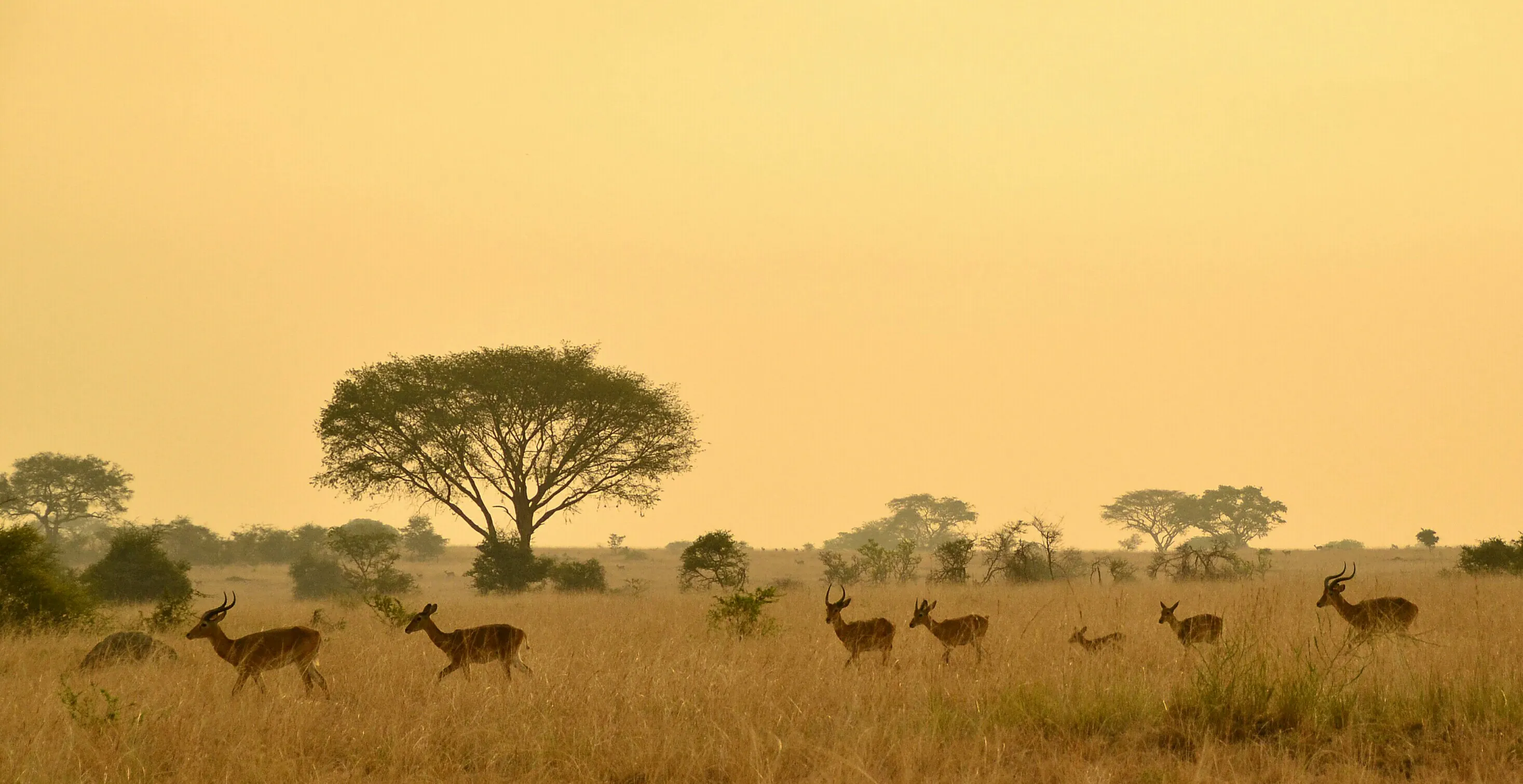
Travel to Uganda
Mountain gorillas in a misty forest, a river squeezed into a gorge a few metres wide, lions that sleep in trees and snow-capped peaks on the equator: Uganda, which Winston Churchill called the pearl of Africa, packs rare wildlife and scenery into a modest territory. Here is what to know before you look for cheap flights to Uganda.
Uganda in numbers
Capital
Kampala
Population
Over 45M
Area
~241,000 km²
Currency
Ugandan shilling
Language
English, Swahili
UNESCO sites
3
Continent
Africa
Time zone
UTC+3
Airports covered
1
Why visit Uganda
Meet gorillas, chimpanzees and the source of the Nile
Mountain gorillas
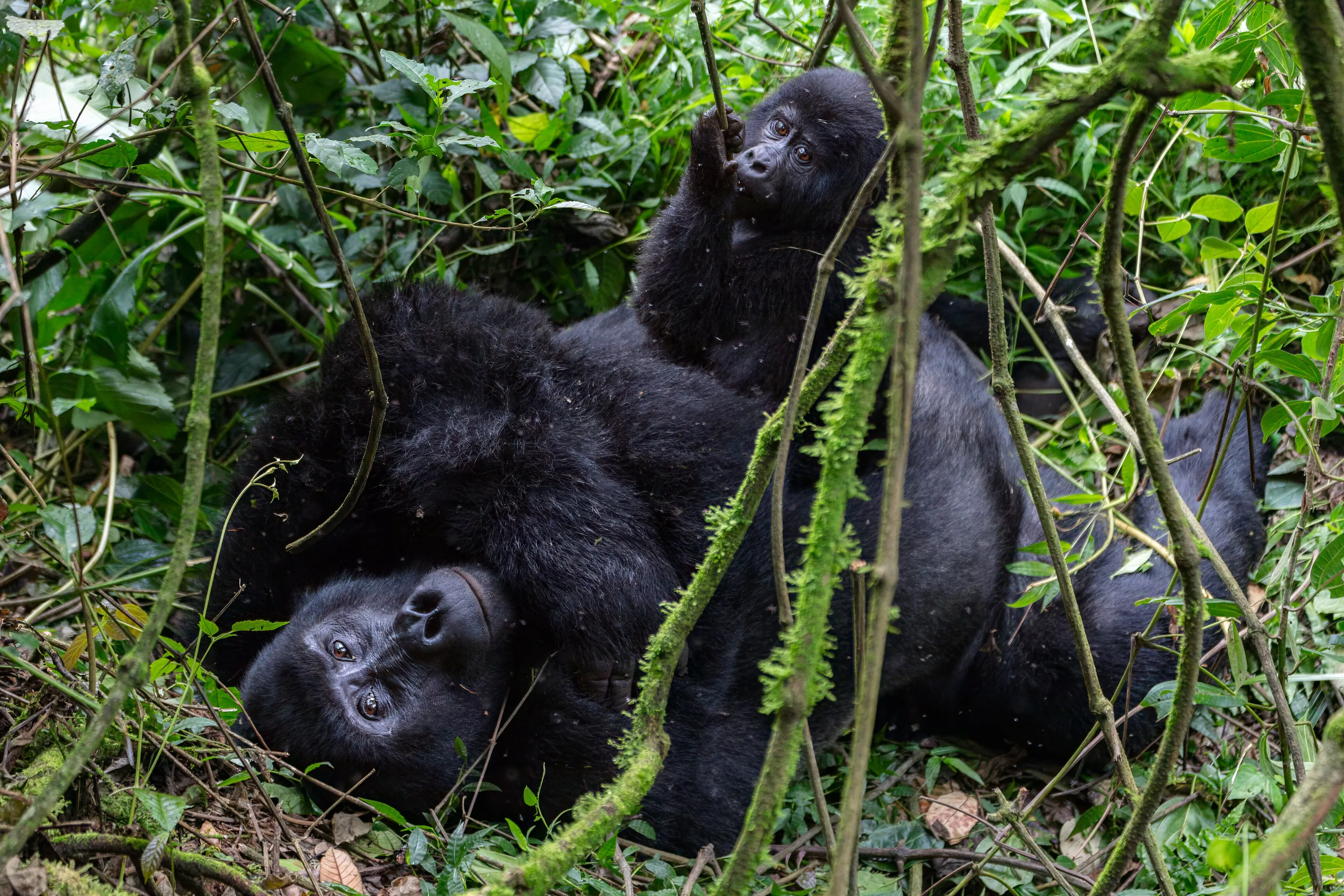
Uganda is home to roughly half of the mountain gorillas still alive, mostly in Bwindi Impenetrable Forest. You meet them on a guided trek, for a supervised hour of viewing, with a permit to book well in advance.
The Nile and its falls
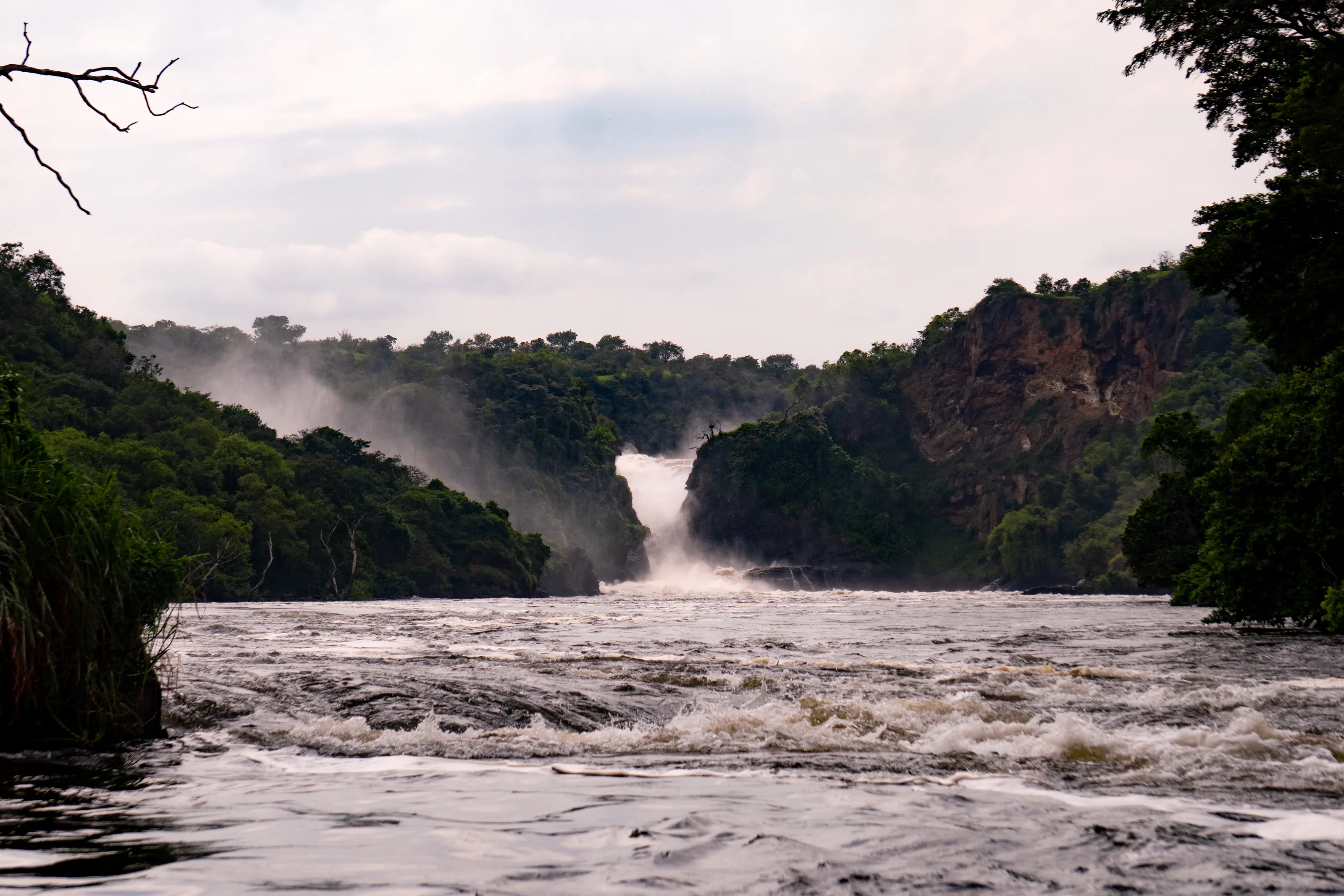
The Nile leaves Lake Victoria near Jinja and crosses the country to Murchison Falls, where the river is squeezed into a narrow gorge. You can raft, cruise and take boat safaris.
Varied wildlife
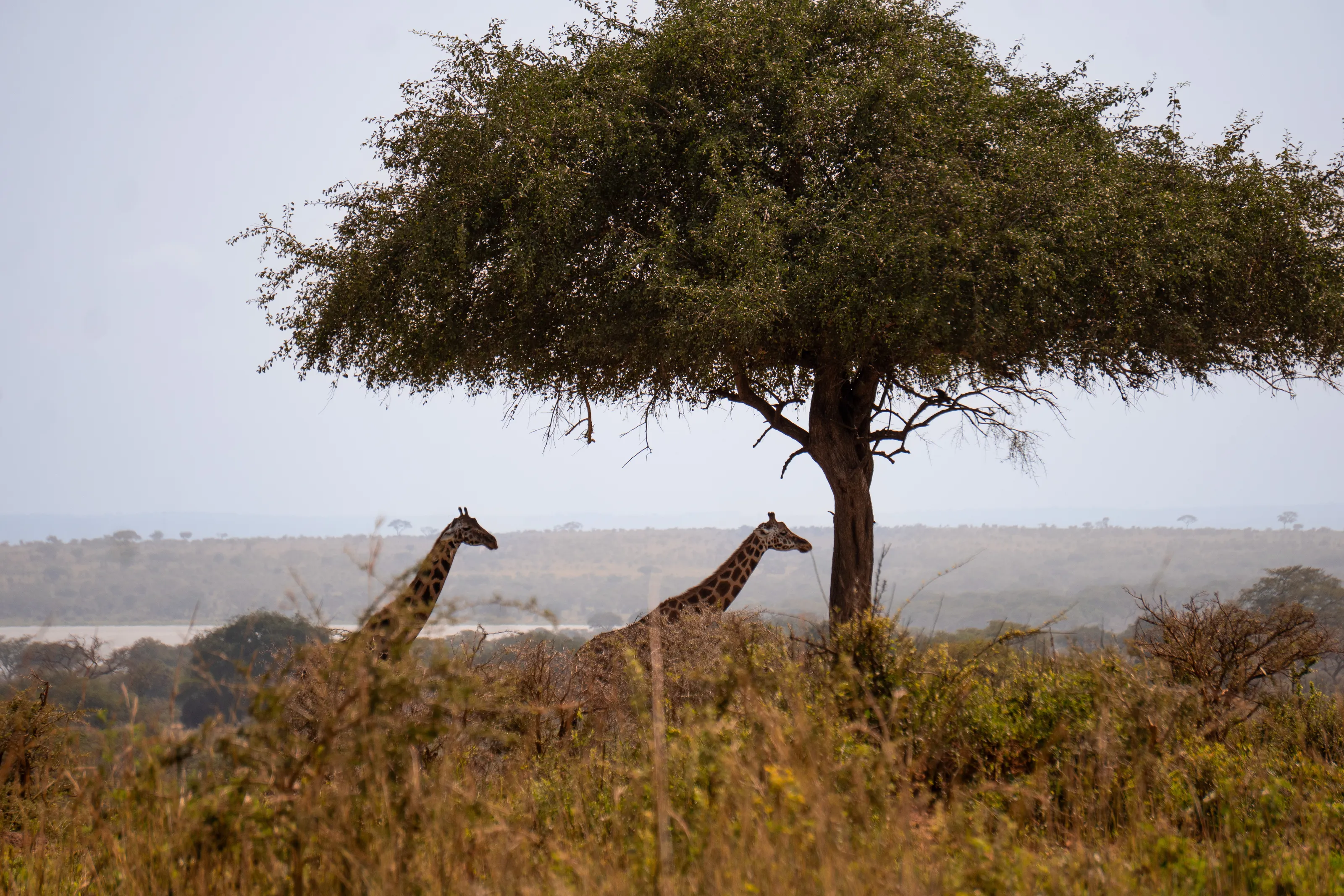
At Queen Elizabeth, tree-climbing lions, elephants and hippos; at Kibale, chimpanzees; at Murchison, giraffes and buffalo. Few African countries offer so many encounters in so few kilometres.
Mountains, lakes and hills
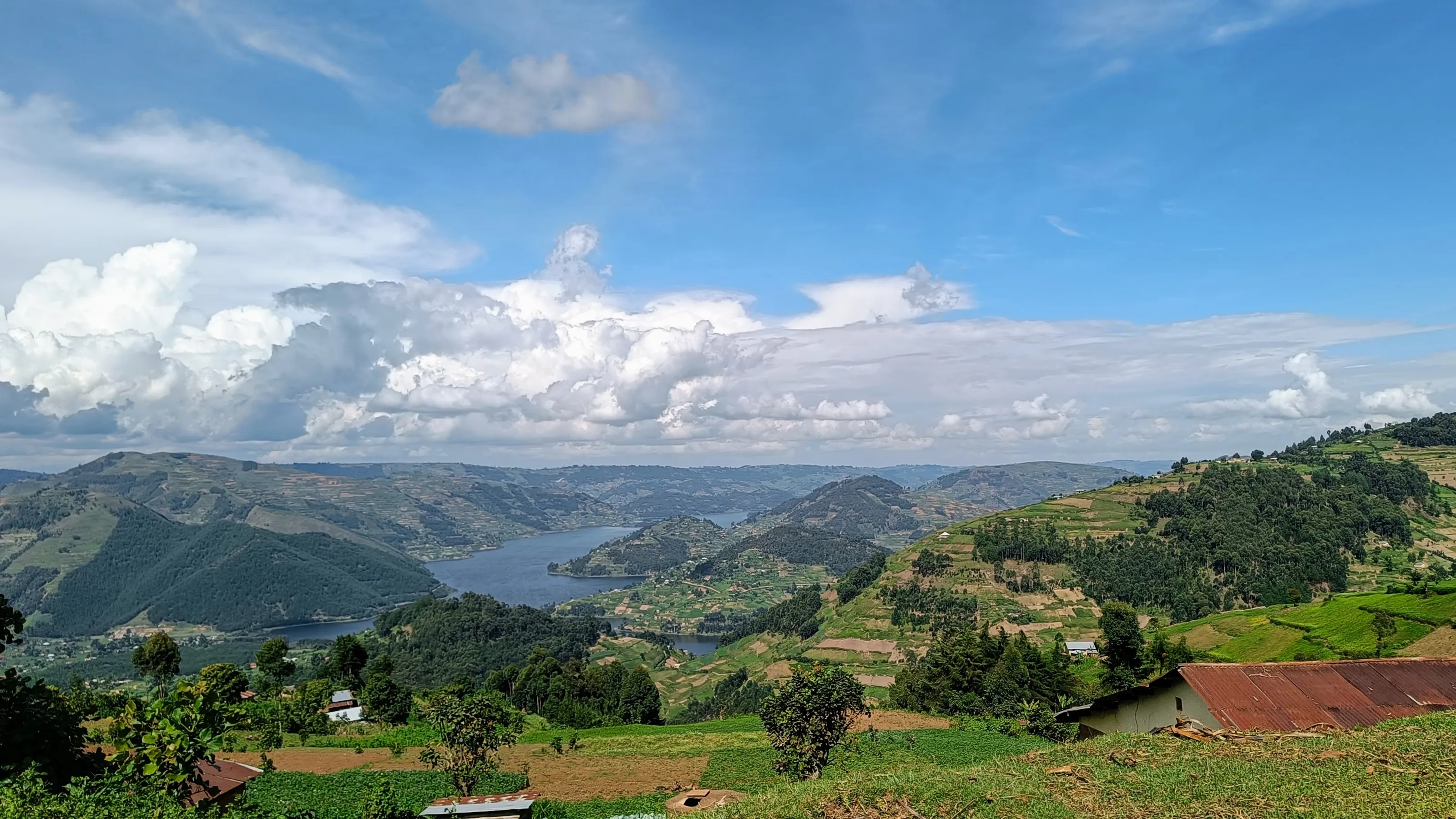
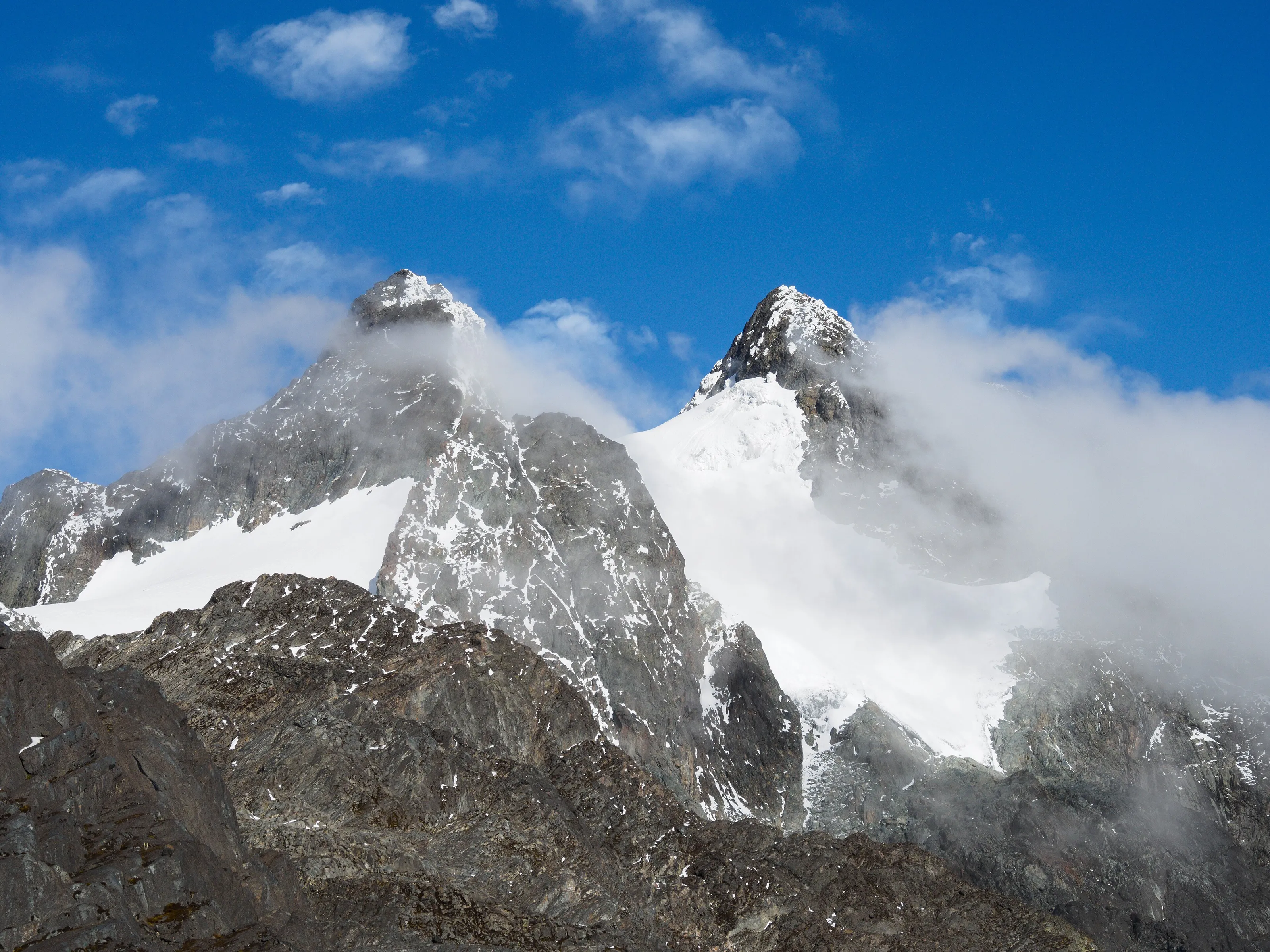
The Rwenzori mountains carry glaciers on the equator, Lake Bunyonyi opens among terraced hills and Lake Victoria laps the south. The highland climate stays mild with altitude.
Where to go
Bwindi, Queen Elizabeth, Murchison and Jinja
Most trips start from Entebbe and Kampala, head south-west for gorillas and chimpanzees, then go north or east for the Nile. Roads are long and sometimes slow, so it is better to limit the number of stops.
Bwindi, Lake Bunyonyi and the south-west
Bwindi Impenetrable Forest is the reference place to see mountain gorillas, in small groups with a guide. Trails are steep and sometimes muddy, so bring good boots. Further south, Lake Bunyonyi offers terraced hills, islands and canoe rides, ideal for resting after a trek.
Queen Elizabeth, Kibale and the Rwenzori
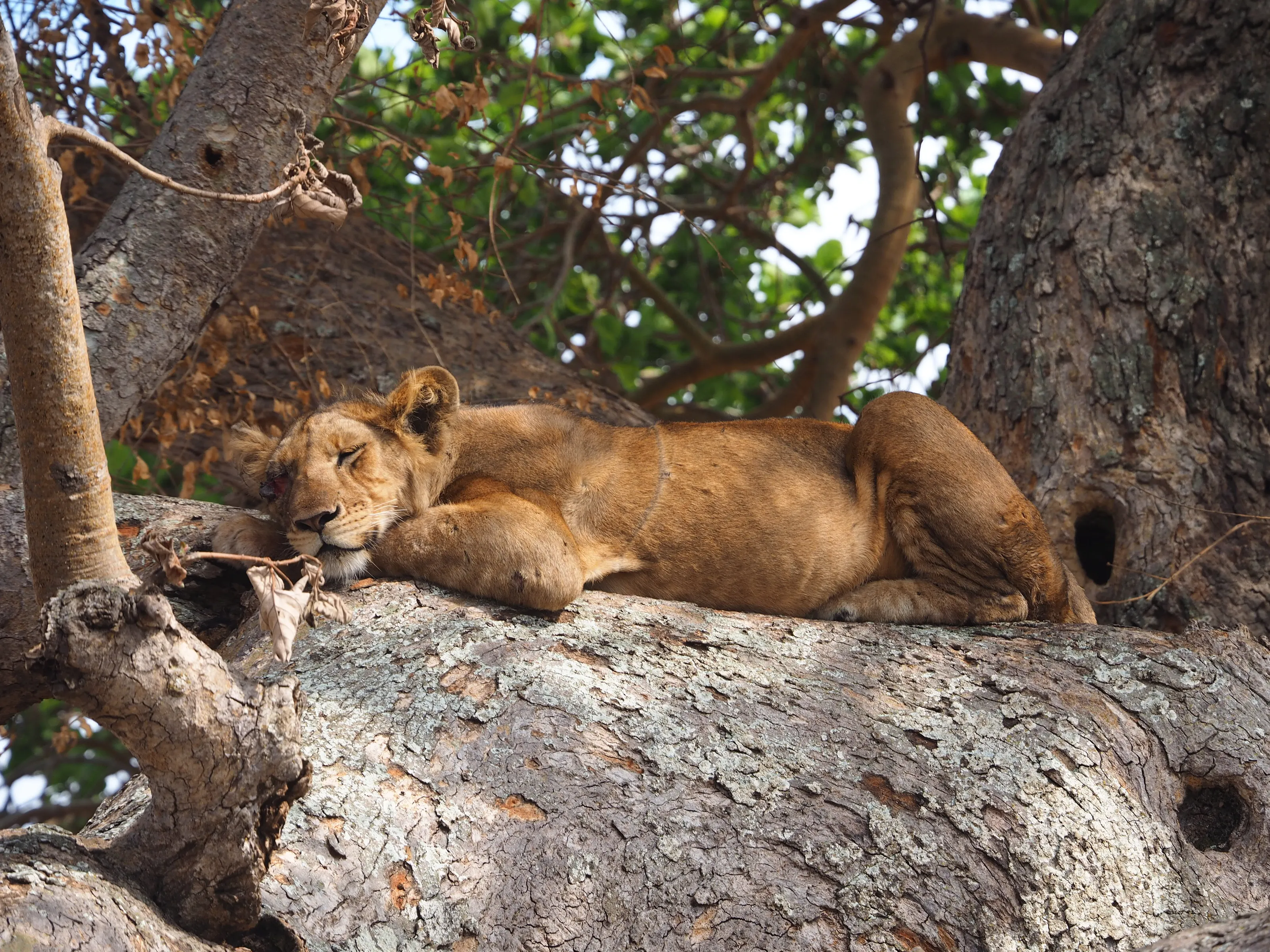
Queen Elizabeth National Park, between Lake Edward and Lake George, is the country's largest and one of its most varied: lions, elephants, hippos and Kazinga Channel cruises. In the Ishasha sector lions climb trees. At Kibale, near Fort Portal, you track chimpanzees on foot, and the Rwenzori offer multi-day treks towards glaciers on the equator.
Murchison Falls and the north-west
In Murchison Falls National Park, the Nile squeezes into a narrow gorge before plunging down. You combine 4x4 game drives to see giraffes, buffalo and elephants with a boat trip to the foot of the falls. The park is visited over two days from Masindi or Kampala, or by bush flights.
Jinja, the source of the Nile and Lake Victoria
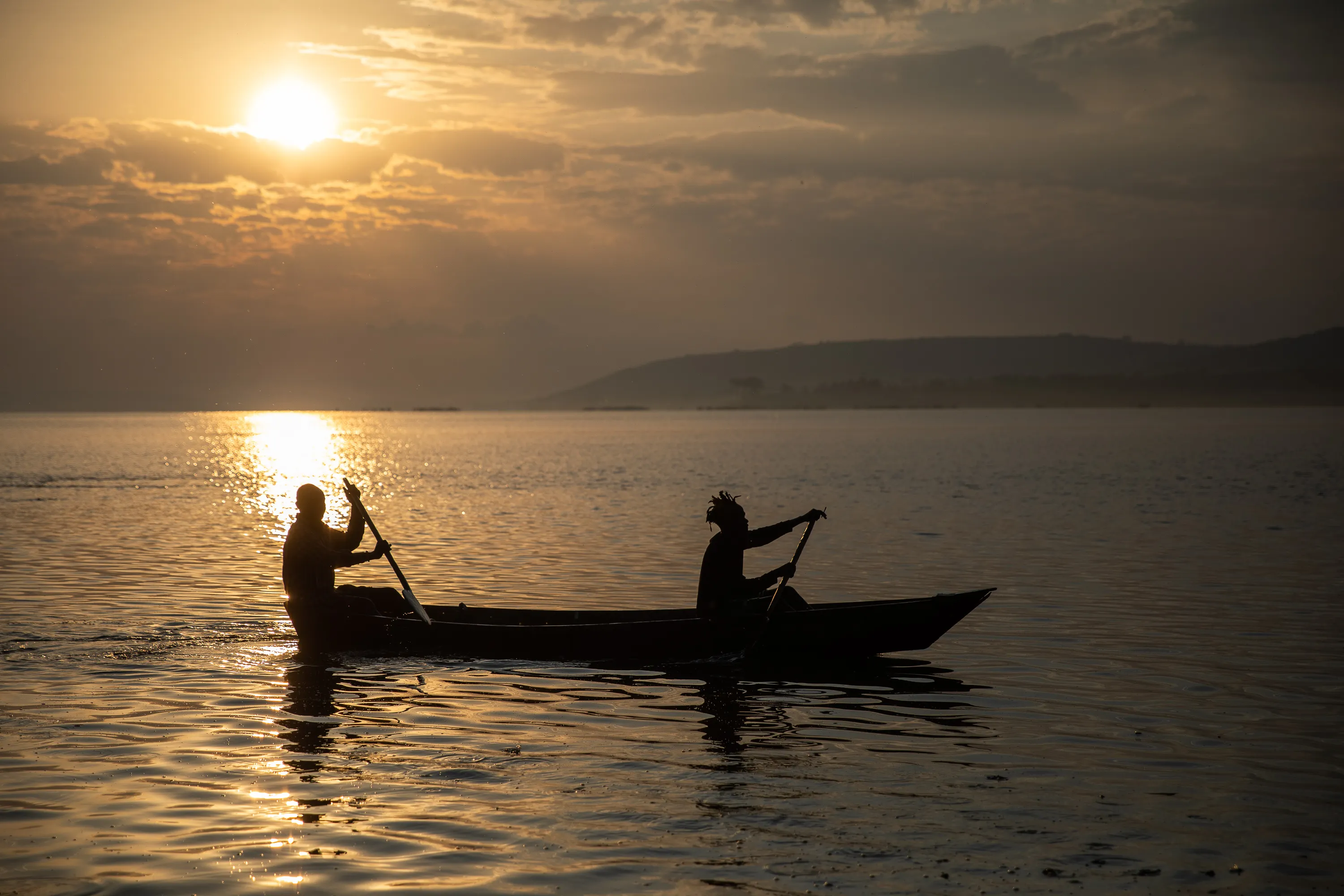
Jinja is the country's adventure town, where the Nile leaves Lake Victoria: white-water rafting, kayaking, quad biking and sunset cruises on the lake. The town is about two hours by road from Kampala. To extend your trip east, see also our Kenya page.
Kampala and Entebbe
Kampala, the capital, spreads across hills: markets, museums, the Kasubi royal tombs and nightlife. Entebbe, calmer, sits by the lake and hosts the international airport and a botanical garden. To add neighbouring Tanzania to your trip, see our Tanzania page.
Before you go
An equatorial climate tempered by altitude
| Region | Climate | Best time to visit |
|---|---|---|
| Kampala, Entebbe and Lake Victoria | Mild equatorial climate, roughly 20 to 28 C. Rains mainly March to May and September to November. | December to February, June to September |
| South-west (Bwindi, Bunyonyi) | Cool and damp at altitude; rain can fall all year in the mountains. Trails are easier in the dry season. | June to September, December to February |
| Queen Elizabeth and Rwenzori | Hot savanna at low altitude; cool, misty high mountains with heavy rain almost all year. | June to August, December to February |
| North (Murchison, Gulu) | One rainy season from March to November in the north, drier from December to February. | December to February for safaris |
The two rainy seasons make tracks slipperier, especially in the gorilla forests, but the landscape is greener. Between June and September and in December-February, journeys are generally easier.
Getting around
Long roads, driver-guides and boda-bodas
Distances look short on the map but are long in practice: roads are sometimes in poor condition and traffic around Kampala is heavy. The simplest option is a guided tour with a driver-guide and 4x4, which also handles trek permits and park fees. Traffic drives on the left.
For short trips, take a taxi or a boda-boda, the widely used motorbike taxi. Ride-hailing apps exist in Kampala; always ask for a helmet. Domestic flights serve a few parks, and mobile money pays for many services.
Food and culture
Matoke, rolex and lake tilapia
Matoke, steamed plantain, is the staple, served with groundnut, bean or meat sauces. Luwombo, a stew cooked in banana leaves, is a festive dish of the Buganda kingdom.
The rolex, a chapati rolled around an omelette (the name comes from rolled eggs), is the most popular street meal. By Lake Victoria people eat grilled tilapia, and local beers go with meals.
Flying to Uganda
The Ugandan airport covered by SniperAir
Entebbe International
The country's only international airport, at Entebbe, about 40 km from Kampala. Allow 45 minutes to well over an hour by road depending on traffic. It is the starting point for all trips to the parks.
FAQ
Frequently asked questions about Uganda
Which airport should I fly into for Uganda?
Entebbe (EBB) is the country's international airport and the entry point for all trips. There is no other air gateway for a first visit.
When is the best time to visit Uganda?
The dry seasons, June to September and December to February, are best for treks and safaris. The rains, March to May and September to November, make tracks slippery but landscapes greener.
Is Uganda expensive to visit?
Gorilla and chimpanzee permits make up a large share of the budget, and parks charge entry fees. Accommodation and local meals stay more affordable. Choosing your season and watching flight prices helps keep costs down.
Do I need a visa to travel to Uganda?
Entry rules depend on your nationality and change over time. An online visa is generally required, along with a yellow fever vaccination certificate. Check official sites and your government's travel advice before booking.
How long should I spend in Uganda?
Plan ten to fourteen days to combine gorillas, Queen Elizabeth, Murchison and Jinja. A week is enough for a single region, such as Bwindi and Lake Bunyonyi.
Can I see gorillas without a long trek?
Encounters involve a forest walk of one to several hours depending on where the group is. Permits are limited and must be booked well in advance. Talk to your doctor if you doubt your fitness.
How do I get alerted when flights to Uganda drop in price?
Create a SniperAir alert profile with your departure airport and Entebbe as the destination. We track prices and notify you when an opportunity matches. See how it works.
Ready to track prices to Uganda?
Create an alert and let SniperAir do the rest.
Create my alert