
Travel to Gabon
On the equator, almost entirely forested and home to more than half of Africa's forest elephants, Gabon is a place where wildlife walks onto the beach. Here's what to know before you go.
Gabon in numbers
Capital
Libreville
Population
2 to 2.6M
Area
~270,000 km²
Currency
CFA franc
Language
French
UNESCO sites
Lopé, Ivindo
Continent
Africa
Time zone
UTC+1
Airports covered
1
Why visit Gabon
A forest country with a long Atlantic coastline
A forest country
About 89 percent of the land is forested, and the country is widely considered the most carbon-positive in the world. It ranks ninth worldwide for forest landscape integrity.
Loango, "Africa's Last Eden"
Naturalist Mike Fay's phrase for a park where elephants, buffalo, hippos, gorillas and leopards venture onto the beach, with humpback and killer whales offshore.
Lopé: primates and rock art
The first protected area in Gabon holds one of the world's largest wild primate concentrations and more than 1,600 petroglyphs, which helped earn UNESCO status in 2007.
Ivindo's waterfalls
The Kongou and Mingouli falls on the Ivindo River, known as the wonders of Ivindo, plus Langoué Baï, one of Central Africa's five most important forest clearings.
Libreville and the parks
Libreville, Loango, Lopé and Ivindo
The 13 national parks were announced in 2002 and cover roughly a tenth of the country. They are managed by the National Agency for National Parks.
Libreville
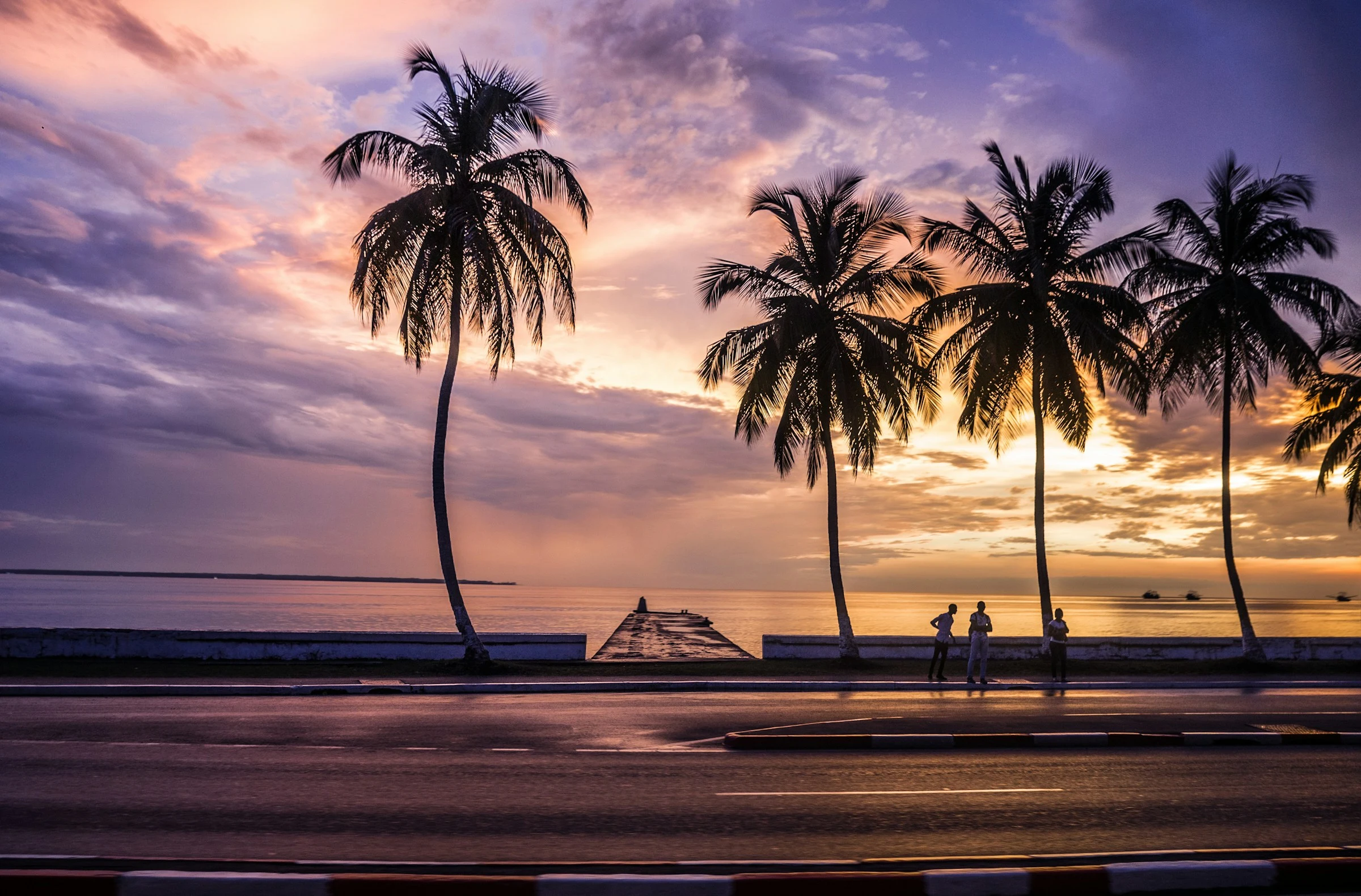
The capital occupies 65 km² on the Gabon Estuary and is home to about one third of the country's people. Quartier Louis is known for nightlife, Marché du Mont-Bouët is the largest market in Gabon with several hundred stalls, and the National Museum of Arts, Rites and Traditions is on the seafront.
Loango
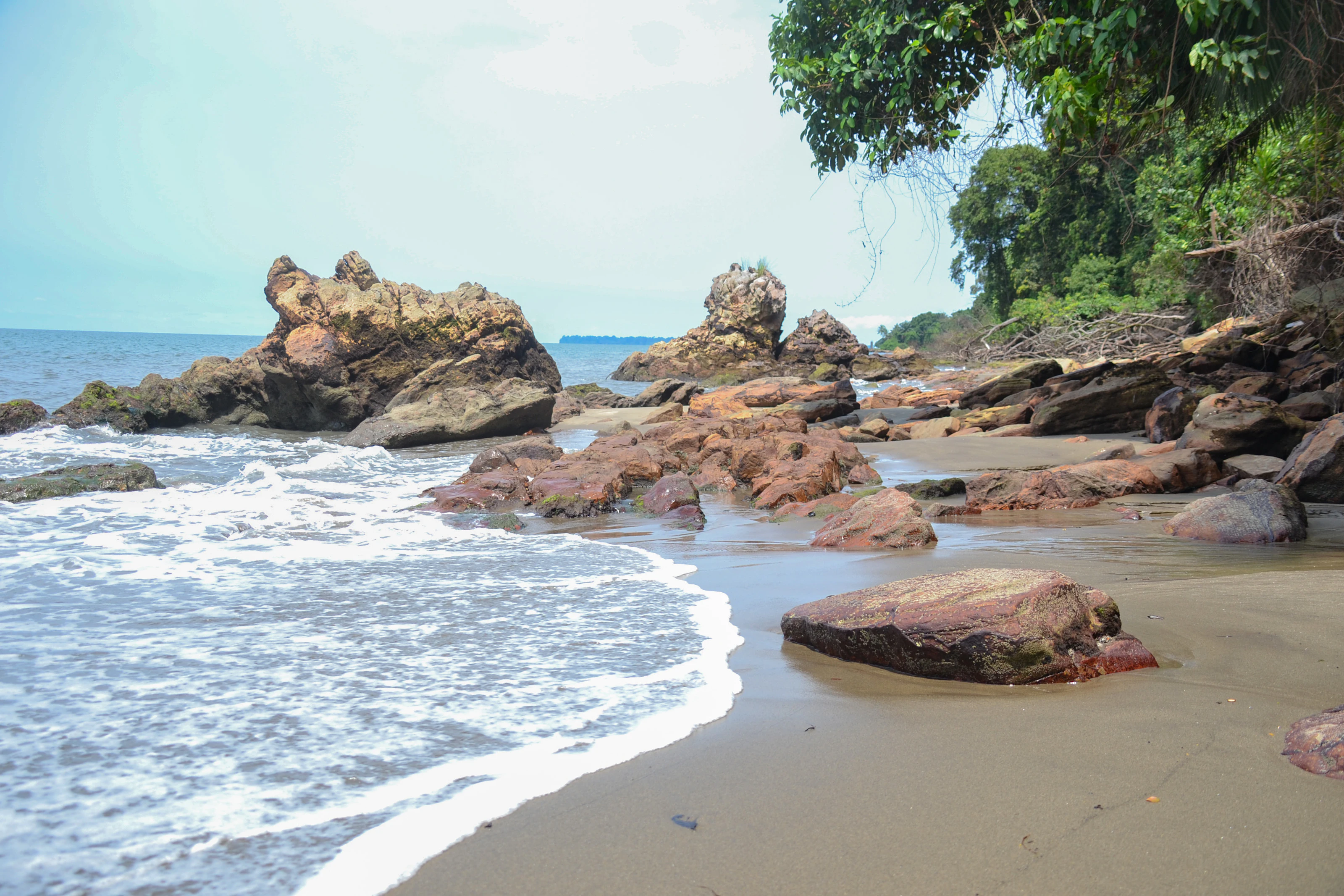
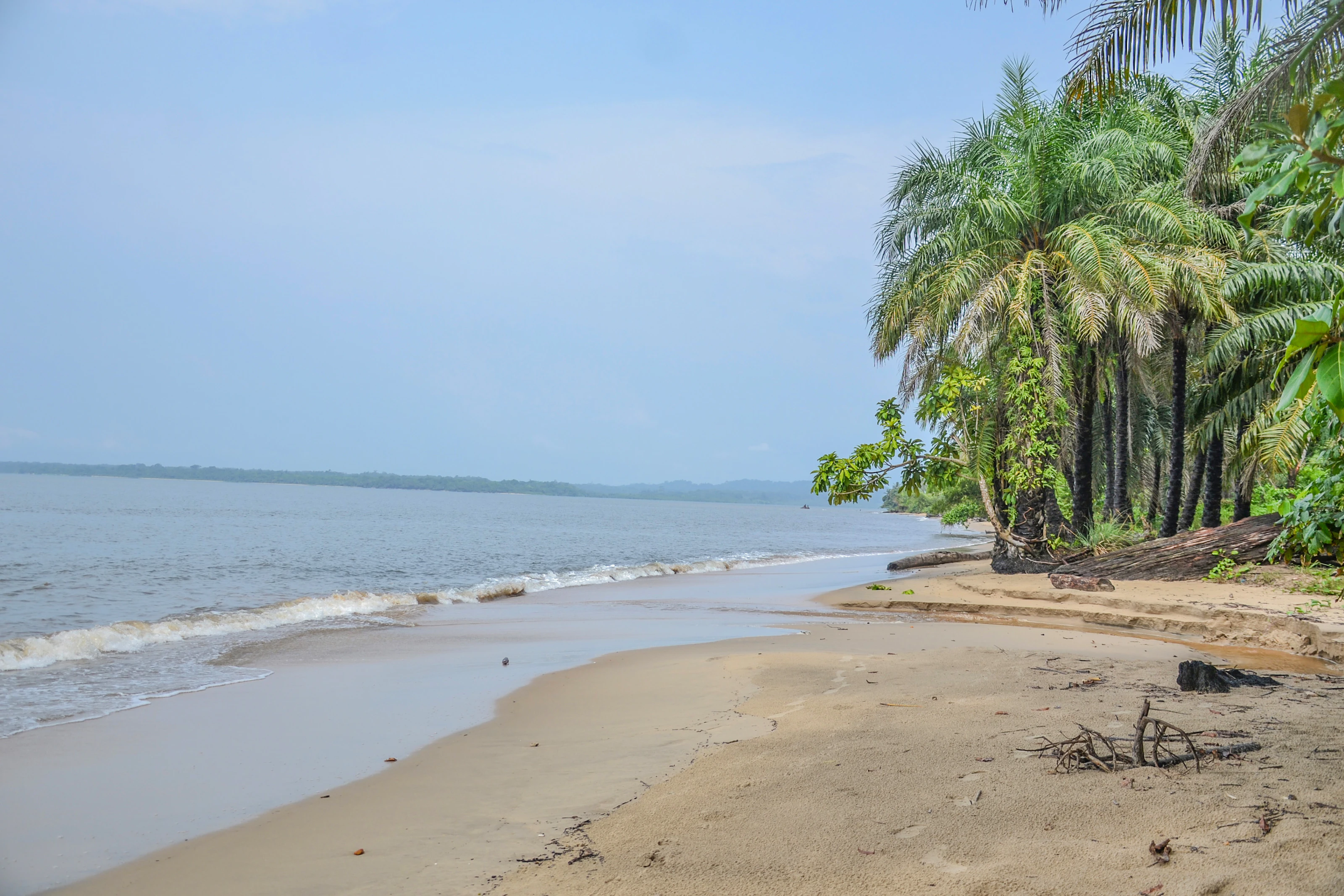
The park spans 1,550 km² of savanna, beach, forest and mangroves between the Nkomi and Ndogo lagoons, including part of the 220 km² Iguéla Lagoon. Over 100 km of coastline is uninhabited.
Lopé
The park covers 4,912 km² between the Ogooué River and the Chaillu Massif. It is the only significant protected population of the sun-tailed monkey, and an Important Bird Area.
Ivindo
The 300,000-hectare park is almost entirely forested. The Langoué research camp sits 3 km from the Baï, and the Ipassa Makokou Biosphere Reserve lies within the park.
Before you go
An equatorial climate with a long wet season
| Period | Climate | Notes |
|---|---|---|
| June to August | Short dry season in Libreville | The easiest months for the coast and the parks |
| September to May | Wet season of about nine months in Libreville | Heavy rain, with a monsoon-type pattern |
| All year | Average highs around 29 °C in Libreville | Warm and humid at any time |
Entry rules vary by nationality: check official sources and your government's travel advice before booking, including any vaccination requirements.
Gabon borders Cameroon; for another central or West African trip, see Ivory Coast. Benin, Togo and Mali are also on our African list.
Wildlife
Giant pangolins, forest elephants and chimpanzees
Gabon has 604 bird species, 98 amphibians and 198 mammal species. The giant pangolin and the grey-necked rockfowl are rare residents, and the country is an important refuge for chimpanzees and gorillas. Lopé's Gorilla and Chimpanzee Study Station is dedicated to their study.
It also holds more than half the world's African forest elephants, many of them in remote parks such as Minkébé.
Food
Poulet nyembwe, grilled tilapia and coupé-coupé
Gabonese cooking blends Central African and French influences. Seafood is common in coastal cities, with grilled tilapia, barracuda and captain fish served with fried plantains and spicy pepper sauces. Poulet nyembwe, chicken cooked in palm nut sauce, is considered the national dish.
On the street, look for skewers and coupé-coupé, smoked meat served on a baguette. Odika sauce, made from wild mango seeds, is sometimes called chocolat because of its colour.
Cheap flights to Gabon
The Libreville airport SniperAir tracks
Libreville Léon M'ba
The country's main airport, about 10 km from the city centre, with taxi rides typically taking 10 to 20 minutes.
FAQ
Frequently asked questions about Gabon
What's the best airport for arriving in Gabon?
Libreville Léon M'ba (LBV) is the main international gateway, about 10 km from the centre.
What's the best time to visit Gabon?
The dry season from June to August is generally the most comfortable in Libreville. The rest of the year is wet and humid.
Can you see gorillas and elephants in Gabon?
Yes. Loango is known for elephants on the beach, and Lopé holds one of the world's largest wild primate concentrations. Sightings are never guaranteed.
Is Gabon an expensive destination?
Gabon has one of the higher incomes per head in sub-Saharan Africa, but getting to remote parks takes time and transport, which adds to the budget.
Do I need a visa to travel to Gabon?
It depends on your nationality, and rules change. Check official websites and your government's travel advice, including vaccination requirements, before you book.
How many days should I spend in Gabon?
Seven to ten days if you combine Libreville with one national park, since distances are long and transport is limited.
How do I get alerted when a flight to Gabon drops below my budget?
Create a SniperAir alert profile with your departure airport and Libreville as the destination: we track prices for you and notify you the moment a deal matching your criteria appears. See how it works.
Ready to track prices to Gabon?
Create an alert and let SniperAir do the rest.
Create my alert