
Travel to Bosnia and Herzegovina
Well-restored historic cities, a warm and welcoming atmosphere and more medieval monuments than socialist housing blocks: Bosnia and Herzegovina surprises those who expect only wartime memories. Here is what to know before you go.
Bosnia and Herzegovina in numbers
Capital
Sarajevo
Population
~3.4M
Area
~51,000 km²
Currency
Convertible mark
Language
Bosnian
UNESCO sites
5
Continent
Europe
Time zone
UTC+1
Airports covered
1
Why visit Bosnia and Herzegovina
A cosmopolitan city with an Eastern twist
Sarajevo's mix of styles
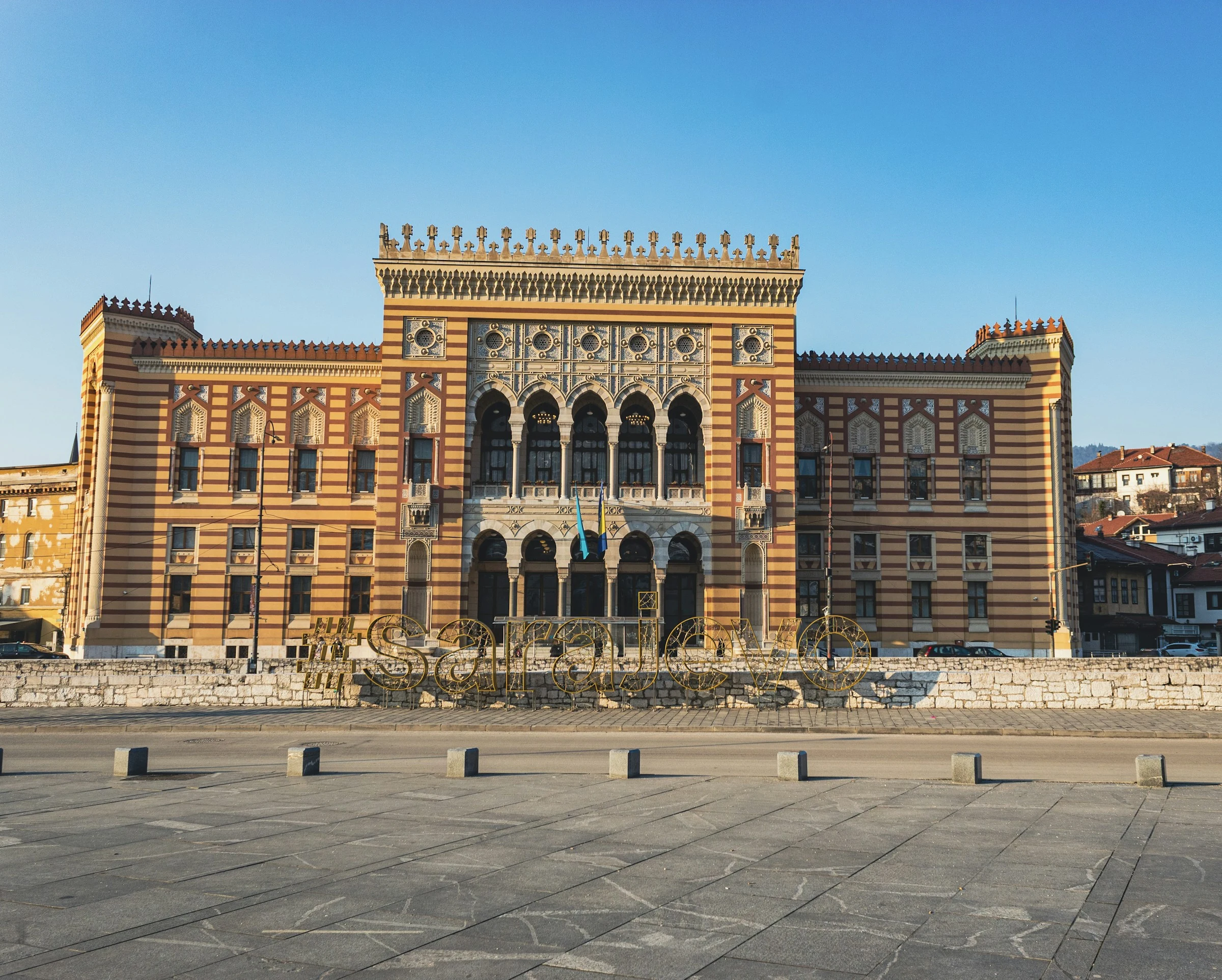
Sarajevo is a cosmopolitan European city with a unique Eastern twist, visible in a vast diversity of architectural styles and the Ottoman stronghold it grew from in the 15th century.
The Old Bridge of Mostar
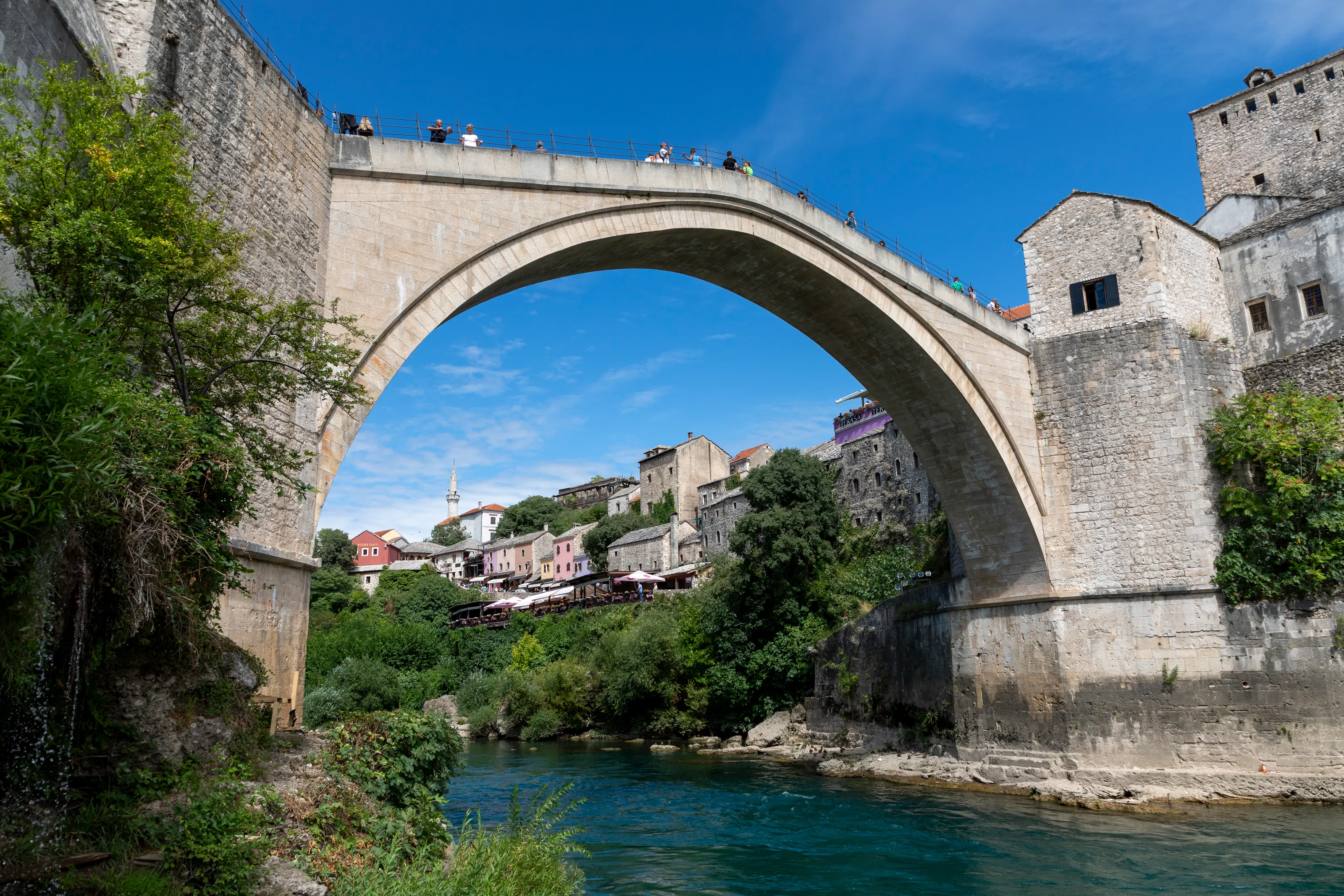
The medieval bridge symbolises the old town on the Neretva River, and the Old Bridge Area was inscribed on the UNESCO list in 2005.
Rivers, rafting and the Una
Raft the Neretva, Una, Tara and Drina rivers, kayak on the Krivaja or visit Una National Park, the country's largest.
Winter Olympics and Tito's bunker
Sarajevo hosted the 1984 Winter Olympics, and the D-0 ARK bunker near Konjic, known as Tito's Bunker, has become an attraction of its own.
Places to see
Sarajevo, Mostar, Jajce and the national parks
Sarajevo and the Olympic Mountains
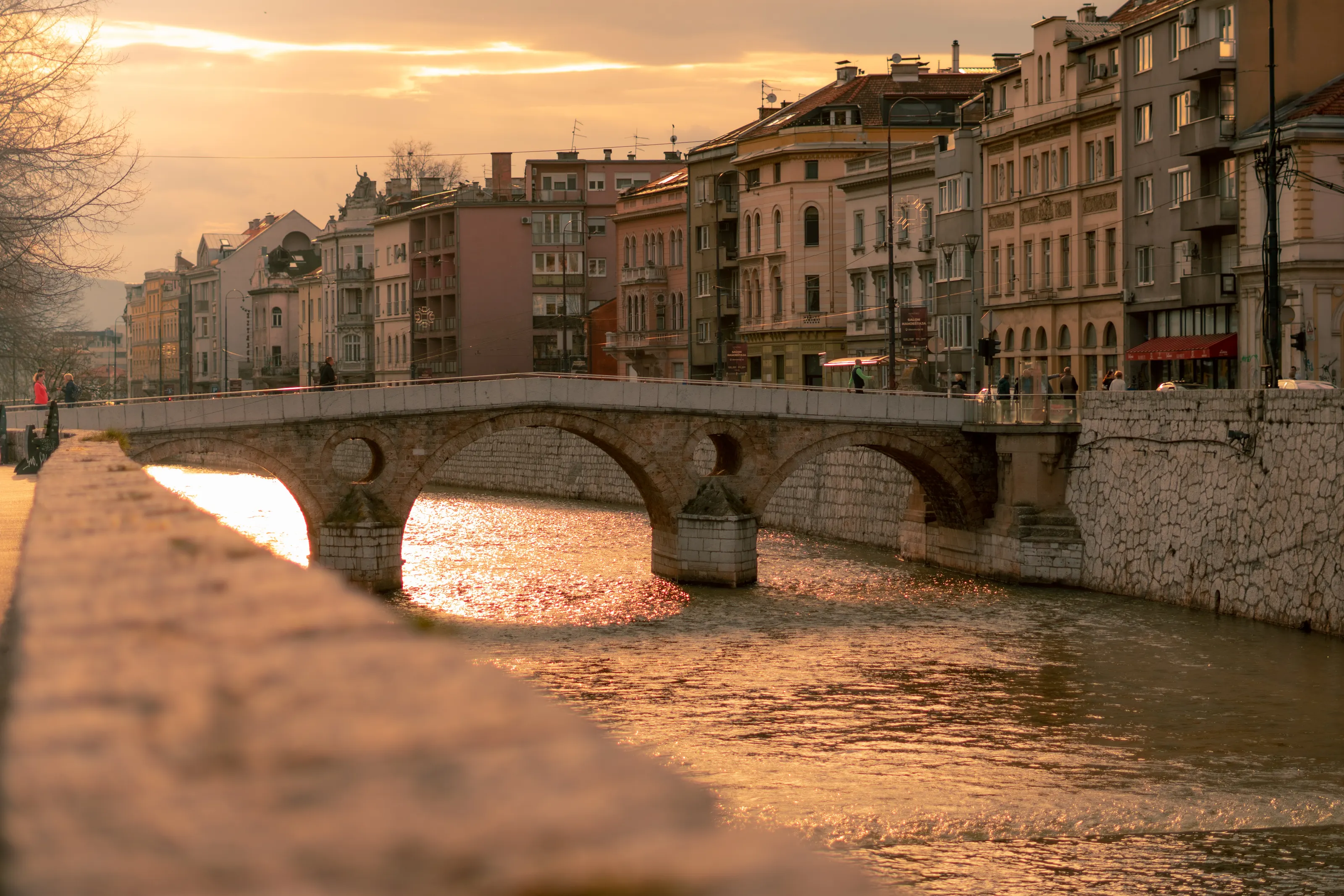
Sarajevo has 275,524 inhabitants within its administrative limits and is surrounded by the Olympic Mountains: Bjelašnica, Jahorina, Trebević and Igman. One theory traces its name to an Ottoman term meaning the plains around the palace.
Mostar, Jajce and Neum
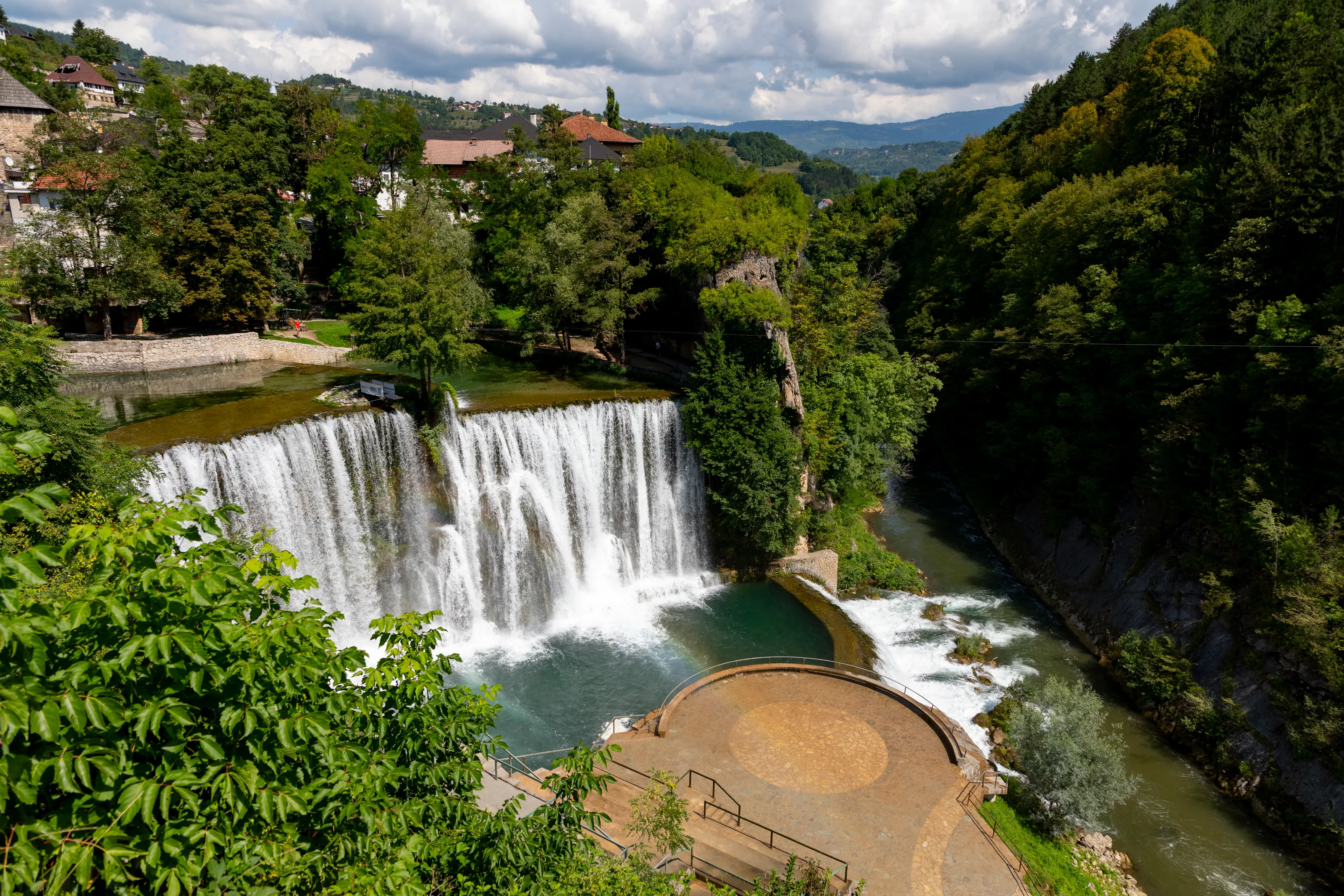
Mostar is a nice old town on the Neretva, Jajce a small city with a beautiful waterfall and historical attractions, and Neum the only coastal town, with sandy beaches backed by steep hills along a coastline of about 20 km.
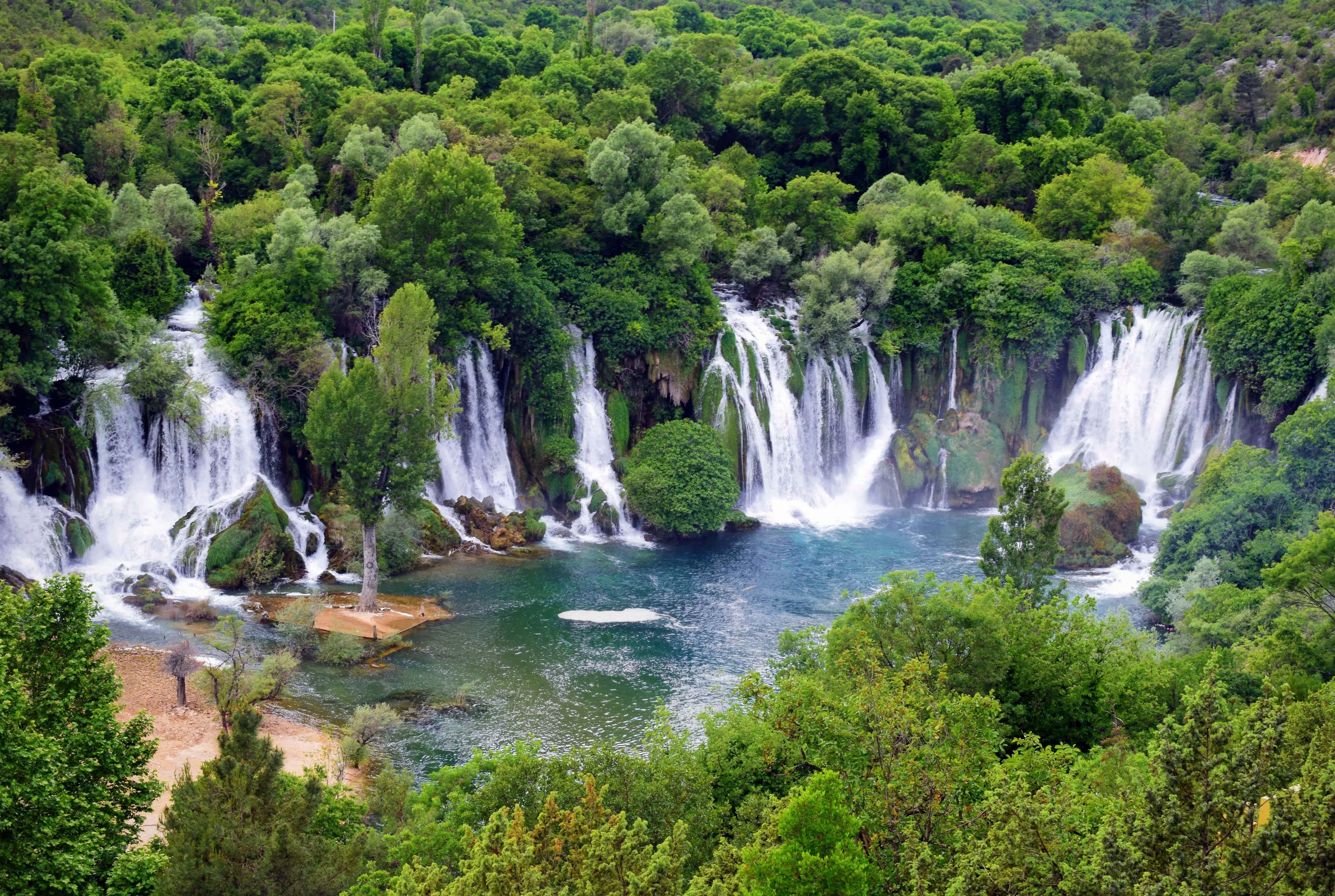
Banja Luka, Bihać and Una National Park
Banja Luka is the second-largest city and the base for rafting on the Vrbas, with some historical sights and a rich nightlife. Bihać, near the Croatian border, is surrounded by an impressive nature preserve.
Pilgrimage and remembrance
Međugorje is a pilgrimage site known for claims of apparitions of the Virgin Mary, while Srebrenica is the site of a genocidal massacre during the Bosnian War.
Food and drink
A warm welcome and simple food
Bosnian cuisine is balanced between Western and Eastern influences and, after almost 500 years of Ottoman administration, is closely related to Turkish, Greek and Mediterranean cooking. Specialities include ćevapi, a grilled minced-meat dish considered a national dish, burek, dolma, sarma, pilav, goulash and ajvar.
Coffeehouses serve Bosnian coffee in a džezva with rahat lokum and sugar cubes in Sarajevo and every city in the country, alongside a whole range of Eastern sweets.
Getting around
Buses, a few airports and careful walking
Sarajevo Airport is the main entry point and lies about 12 km west of downtown, in the Ilidža municipality. Bosnia has no airline of its own: Croatia Airlines connects Sarajevo via Zagreb, and Air Serbia daily via Belgrade. Mostar, Tuzla and Banja Luka also have international airports.
Unexploded mines remain from the 1992-1995 war, so stay on paved roads and well-used paths outside towns. Domestic flights are rare; travel inland by bus or car.
Before you go
Three climate zones
| Region | Climate | Best time |
|---|---|---|
| Inland (Sarajevo) | Hot summers and cold winters | May to September |
| High elevations | Short, cool summers and long, severe winters | Winter for skiing |
| South and coast | Mild, rainy winters along the coast | May to October |
Bosnia and Herzegovina is not in the Schengen area: check entry rules for your passport before booking. Few stray dogs are reported across the country, except around Mostar and south of it.
To extend your trip, see also Croatia, whose airports are a common alternative entry point. Montenegro, Serbia and Albania are coming soon.
Flying to Bosnia and Herzegovina
The Bosnian airport tracked by SniperAir
Sarajevo International (Sarajevo)
The country's main air gateway, about 12 km west of downtown in the Ilidža municipality; Wizz Air announced a base there in 2021.
FAQ
Frequently asked questions about Bosnia and Herzegovina
Which airport should I fly into for Bosnia and Herzegovina?
Sarajevo (SJJ) is the main entry point by air and the one SniperAir tracks. Mostar, Tuzla and Banja Luka also have international airports.
When is the best time to visit Bosnia and Herzegovina?
The country has hot summers and cold winters. May to September suits cities and rafting, while winter is for skiing in the mountains around Sarajevo.
How many days do I need in Bosnia and Herzegovina?
Three to four days cover Sarajevo and Mostar. Allow a week if you add Jajce, Una National Park and the inland towns.
Is Bosnia and Herzegovina expensive?
It is considered cheap by European standards. Your budget depends mostly on the season and where you stay.
Do I need a visa for Bosnia and Herzegovina?
The country is not in the Schengen area. Entry rules depend on your nationality, so check your government's official travel advice before you book.
Is it safe to hike in Bosnia and Herzegovina?
Unexploded mines remain from the 1992-1995 war, so stay on paved roads and marked paths and ask locals before leaving them.
How do I get an alert when a flight to Bosnia and Herzegovina drops below my budget?
Create a SniperAir alert profile with your departure airport and Sarajevo as the destination. We track prices for you and notify you as soon as an opportunity matching your criteria is detected.
Ready to track prices to Bosnia and Herzegovina?
Create an alert and let SniperAir do the rest.
Create my alert