
Travel to Cambodia
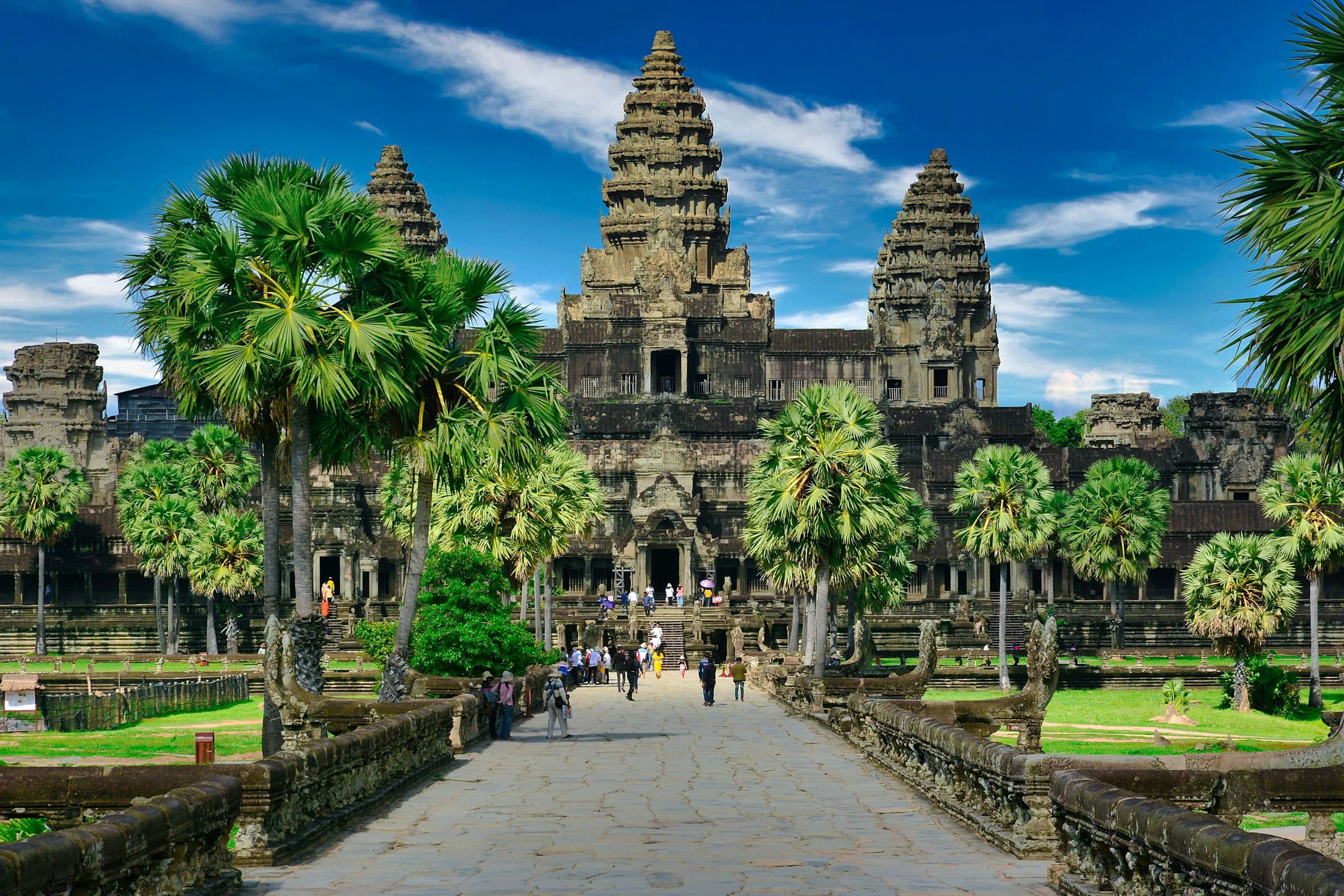
The world's largest religious monument at sunrise, temples swallowed by silk-cotton tree roots, a capital on the Mekong and white-sand islands in the Gulf of Thailand: here is what to plan before you look for cheap flights to Cambodia.
Cambodia in numbers
Capital
Phnom Penh
Population
About 17 M
Area
~181,000 km²
Currency
Riel
Languages
Khmer
Government
Monarchy
Continent
Asia
Time zone
UTC+7
Airports covered
2
Why visit Cambodia
Angkor, rivers, lakes, the capital and the islands of the Gulf of Thailand
Angkor, a World Heritage site
The former heart of the Khmer Empire, Angkor brings together Angkor Wat, the city of Angkor Thom and dozens of other temples scattered through the forest near Siem Reap. Several days are not enough to see everything.
Tonle Sap, a lake that breathes
Southeast Asia's largest lake changes size with the monsoon: it swells to several times its dry-season area. Stilt villages and flooded mangroves are best seen by boat.
A history to feel
Phnom Penh combines the royal palace, golden pagodas, markets and memorial sites of the twentieth century. This recent history is visited with respect and gives the trip depth.
Quiet beaches and islands
On the south-west coast, Sihanoukville is the gateway to islands such as Koh Rong, while Kampot and Kep offer pepper plantations, rice fields and a peaceful river.
Landmarks
Angkor Wat, Angkor Thom, Ta Prohm, Phnom Penh and Koh Rong
A stay in Cambodia usually revolves around Siem Reap and the Angkor temples, the capital Phnom Penh and a break on the coast or islands, which fits comfortably in eight to ten days.
Siem Reap and Angkor Wat
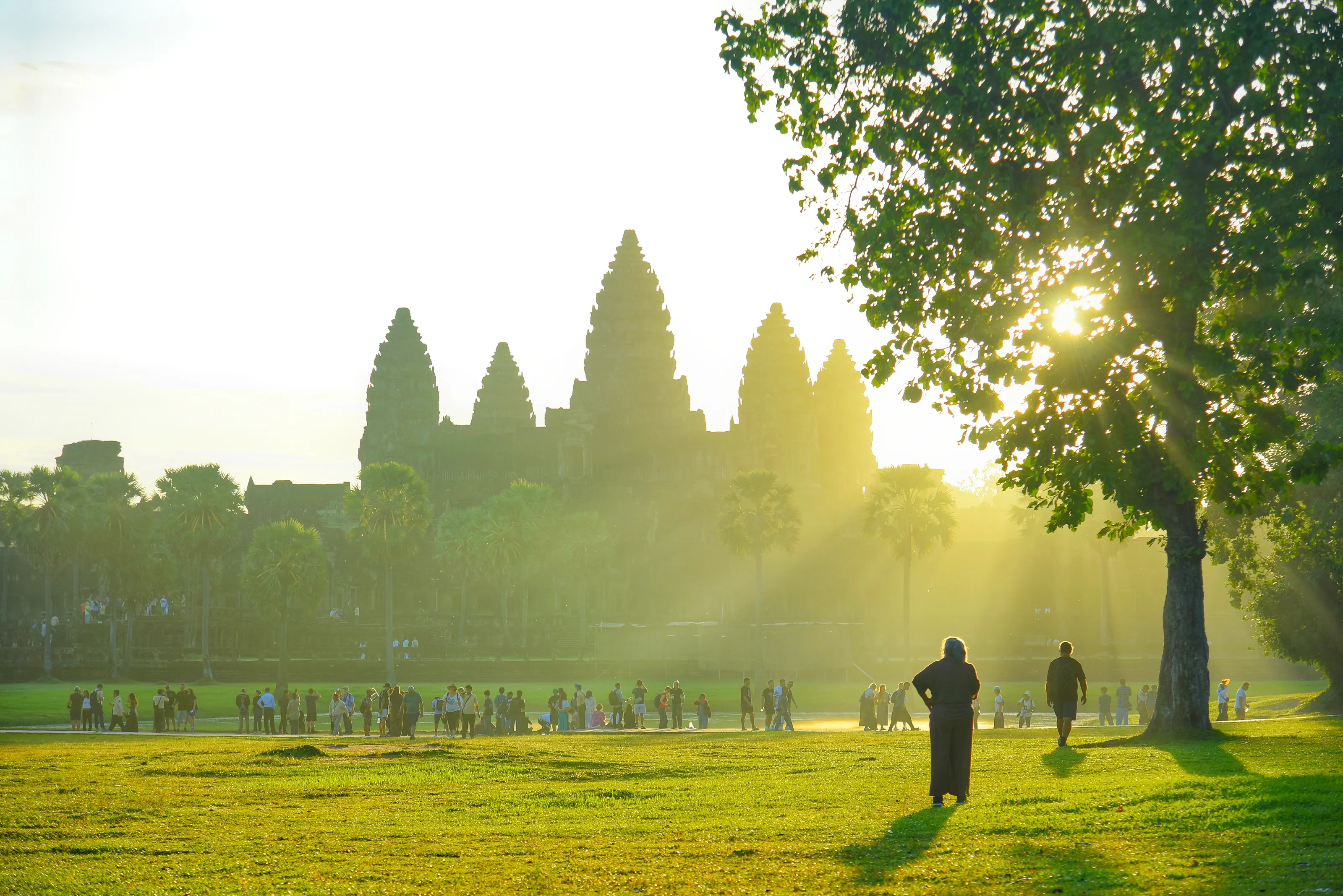
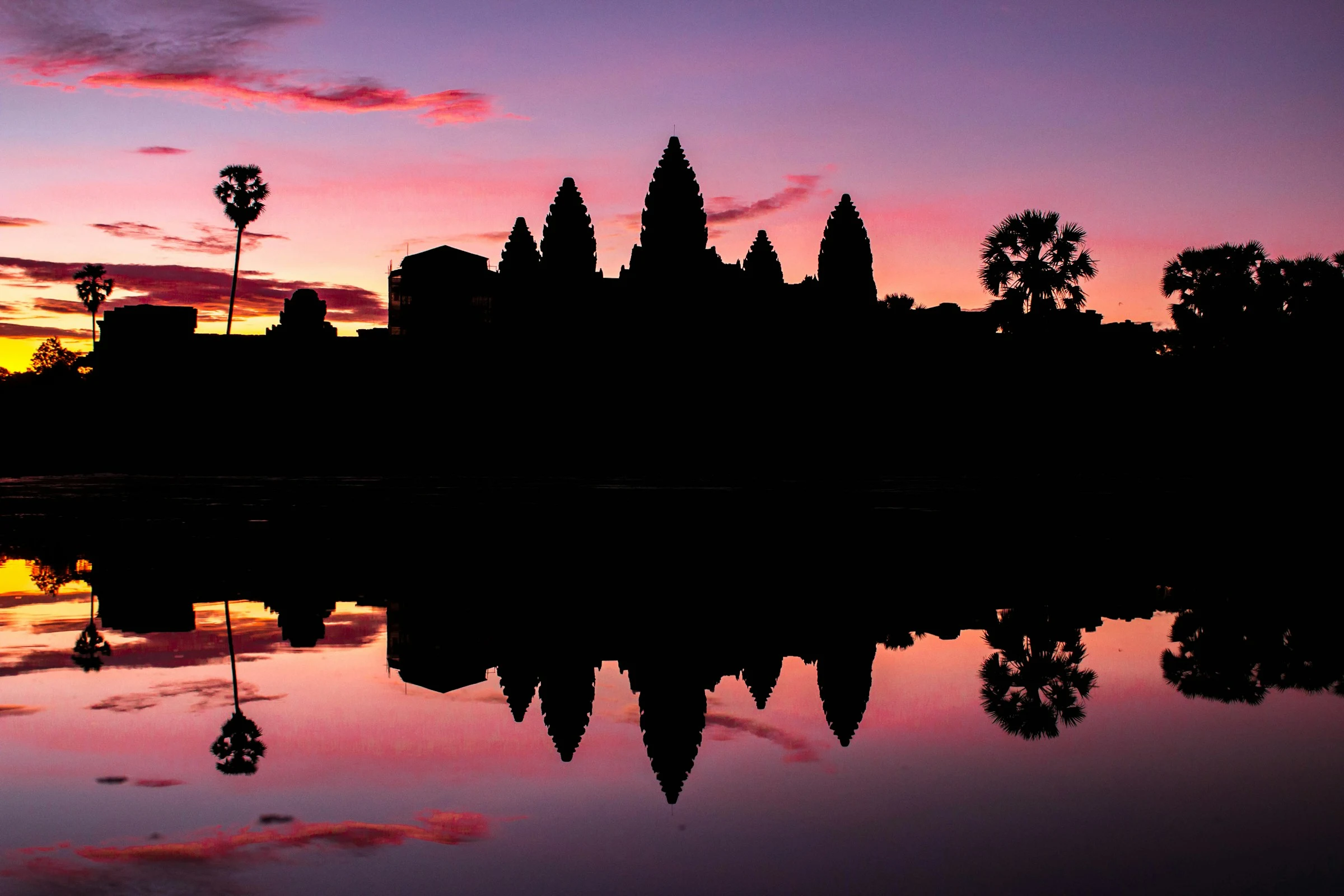
Angkor Wat is the country's most famous temple: five lotus-bud towers ringed by a wide moat, reflected in the pools at sunrise. Many visitors arrive before dawn for that moment. Siem Reap, the nearby town, is the base, with its markets, restaurants and Khmer dance shows.
Angkor Thom, the Bayon and Ta Prohm
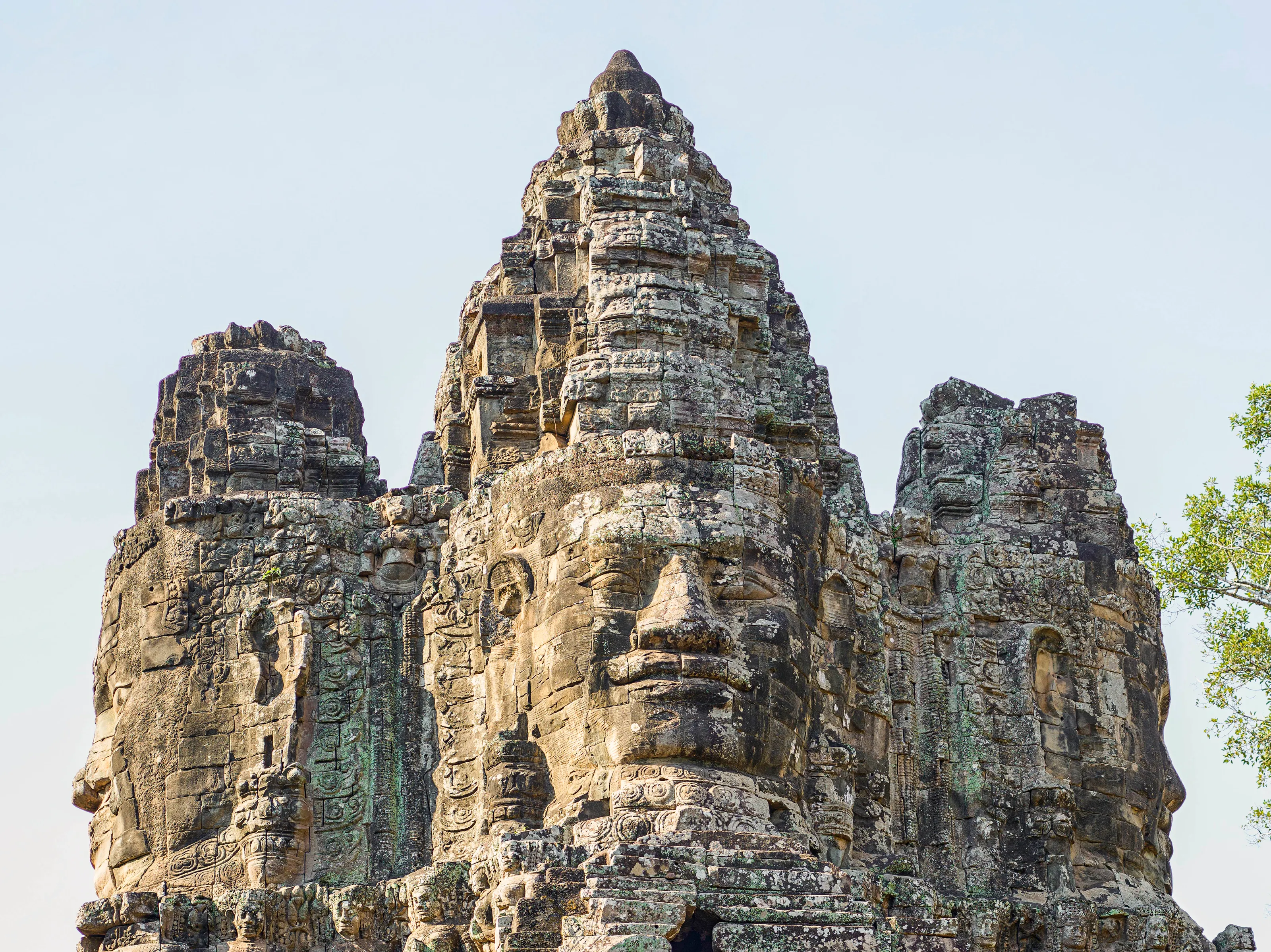
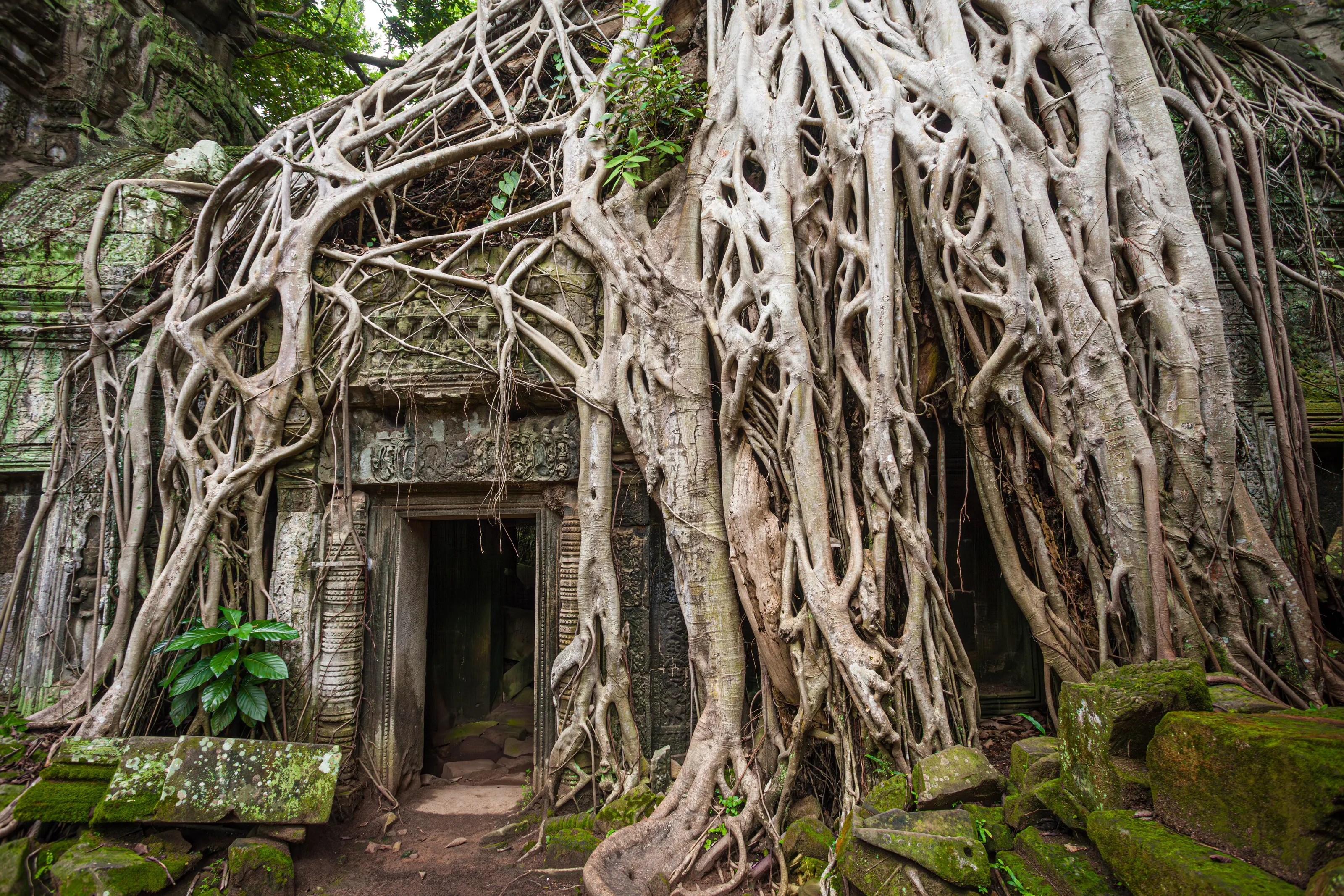
Angkor Thom, the former royal city, is entered through gates decorated with carved faces, and its face towers, notably at the Bayon, are among the strongest images of the country. At Ta Prohm, the roots of giant silk-cotton trees grip stone walls and doorways, in an atmosphere of jungle reclaiming its ground.
Phnom Penh and the Mekong riverbank
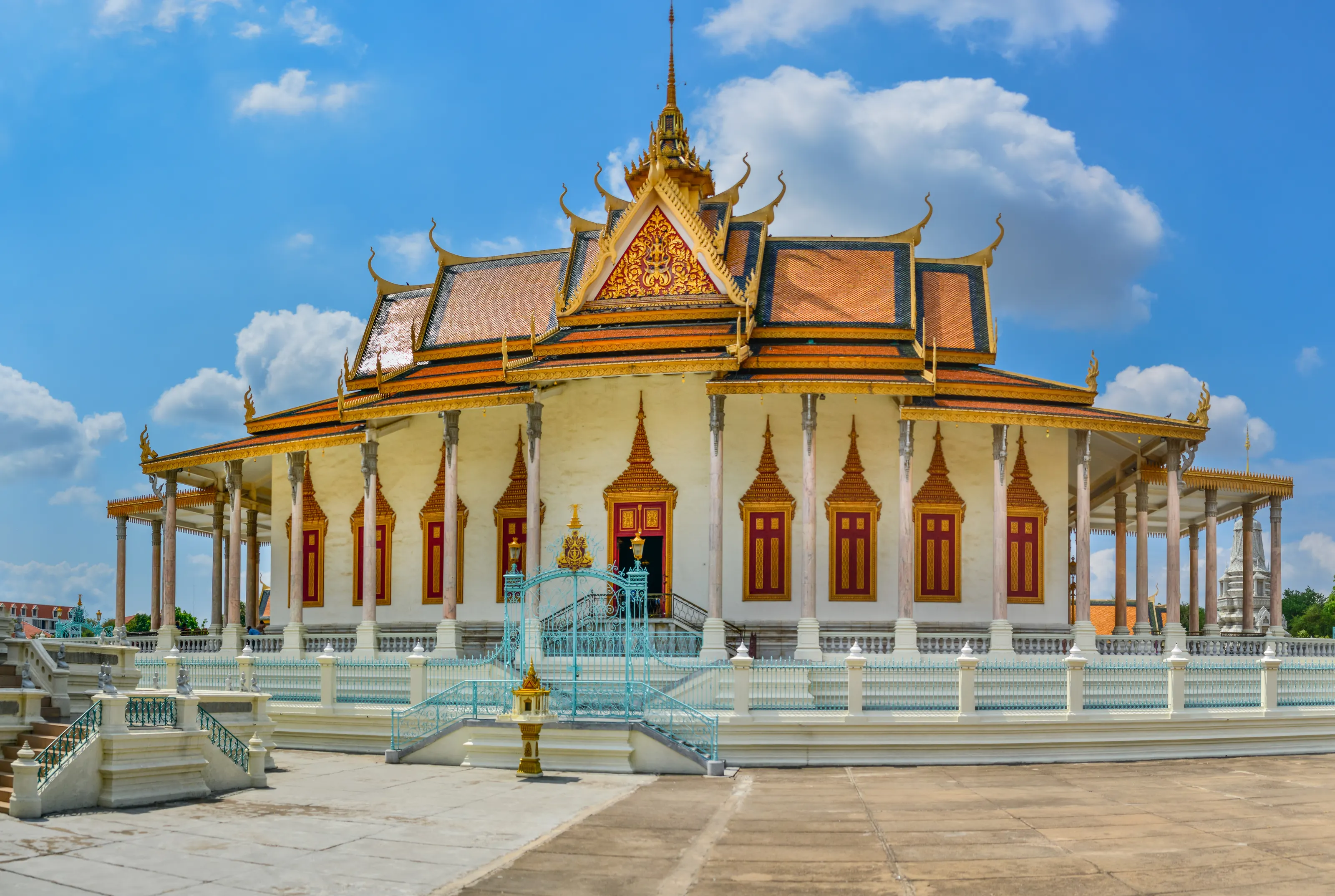
Phnom Penh brings together the royal palace and its Silver Pagoda, with orange roofs and red windows, the national museum and the lively riverfront. Sites recalling the Khmer Rouge period are visited with respect. One to two days cover the essentials.
Kampot, Kep and the coastal islands
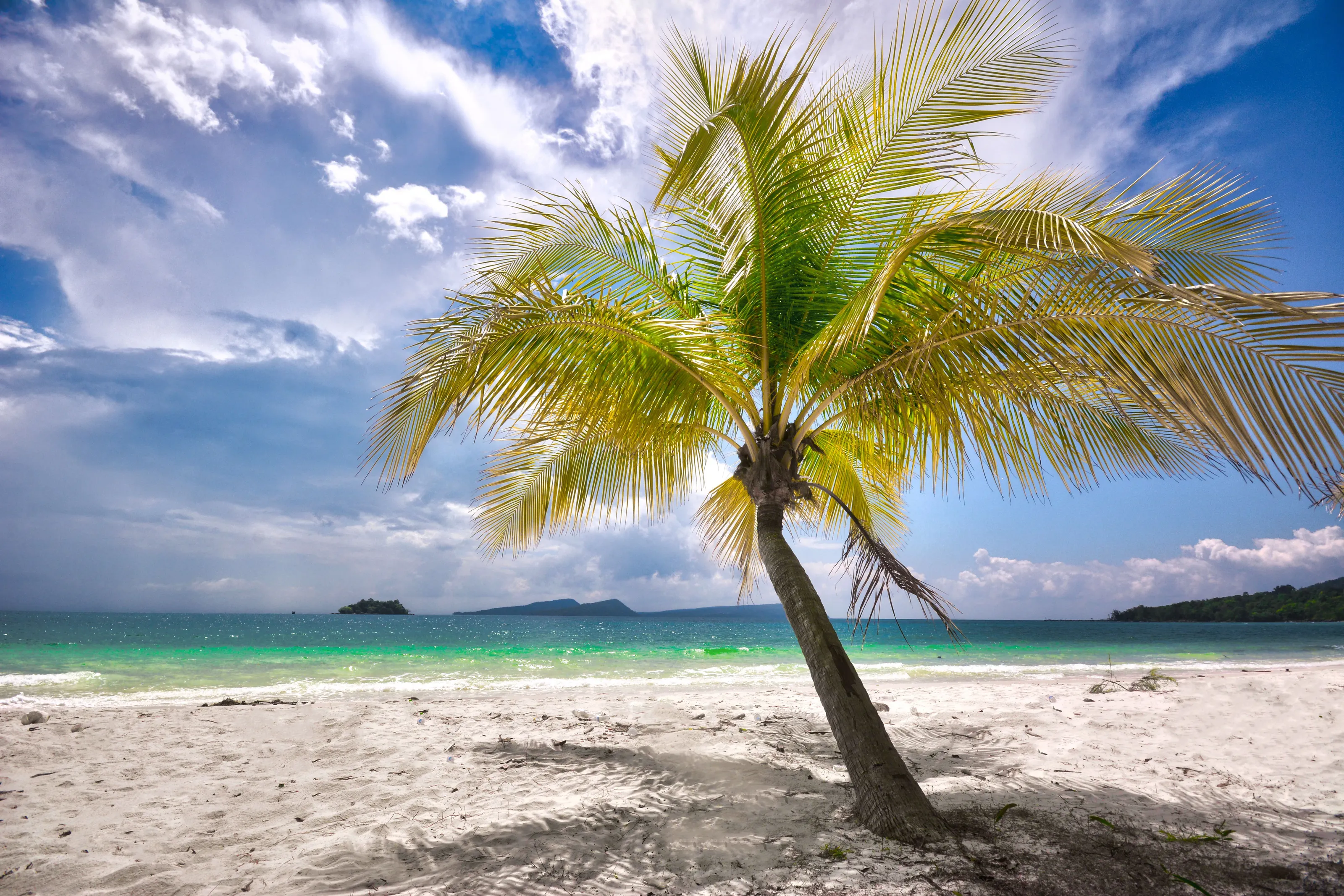
On the Gulf of Thailand, Kampot and Kep are known for crab markets and pepper plantations, while islands such as Koh Rong offer white-sand beaches, clear water and calm nights. Boat links depend on the weather.
Before you go
Dry season or monsoon: when to travel to Cambodia
| Area | Climate | Best time to visit |
|---|---|---|
| Siem Reap and Angkor | Monsoon from May to October, dry season from November; very hot in March-April. | November to February |
| Phnom Penh and the central plain | Hot all year; heavy showers during the monsoon. | November to February |
| Tonle Sap | The lake swells in the rainy season and shrinks in the dry season. | Depends on what you want to see: floating villages at high water |
| Coast and islands (Koh Rong, Kampot) | Calmer sea in the dry season, rougher during the monsoon. | November to April |
Temperatures stay high all year, from 21 to 35 degrees on average. The Angkor temples involve a lot of walking: bring water, a hat and clothes that cover shoulders and knees for temple entry. Keep an eye on fares before you lock in your dates.
Getting around
Tuk-tuks, buses, domestic flights and boats
Between Phnom Penh and Siem Reap you take a bus, a domestic flight or, depending on the season, a boat. In towns the tuk-tuk is the most common transport: in Siem Reap a driver can take you from temple to temple over a day. A rail network exists but is limited.
For the islands, boats leave from Sihanoukville or the coast, with schedules that vary with the weather. Leave some slack before a return flight.
Food and culture
Amok, kuyteav noodles and the Bon Om Touk water festival
Theravada Buddhism shapes daily life: pagodas, monks in saffron robes, offerings and festivals. Classical Khmer dance and shadow plays retell ancient epics. The Bon Om Touk water festival, at the end of the rainy season, brings boat races to the river in Phnom Penh.
Cooking relies on rice and fish from the Mekong and Tonle Sap: amok, fish steamed in banana leaf with coconut milk, kuyteav, a rice noodle soup, and a red curry sometimes eaten with bread, a French legacy.
Flying to Cambodia
The Cambodian airports covered by SniperAir
Phnom Penh International
The capital's airport, about ten kilometres from the centre: allow half an hour by road depending on traffic. It serves Phnom Penh, the coast and the south of the country.
Siem Reap Angkor International
The airport for Siem Reap and the Angkor temples, east of the town: allow about three quarters of an hour to an hour by road to central Siem Reap.
SniperAir destinations
Discover our destination pages
Cambodia
Phnom Penh
Phnom Penh: the Royal Palace, Silver Pagoda, Wat Phnom and the riverfront, with SniperAir price alerts for flights to Cambodia's capital.
Discover
Cambodia
Siem Reap
Siem Reap: the gateway to Angkor Wat, the Bayon, Ta Prohm and the Tonle Sap, with SniperAir price alerts on flights to SAI.
DiscoverFAQ
Frequently asked questions about Cambodia
Which airport do I fly into for Cambodia?
Two main airports: Siem Reap Angkor (SAI) for the temples and Phnom Penh (PNH) for the capital. SniperAir tracks both.
When is the best time to travel to Cambodia?
From November to February the dry season is cooler and more pleasant for temples. The monsoon, from May to October, brings showers but also very green landscapes.
Is travelling to Cambodia expensive?
On the ground, living costs are generally moderate for meals, simple lodging and local transport. The Angkor park entry fee and excursions are costs to plan for.
Do I need a visa for Cambodia?
It depends on your nationality. Check the entry conditions and any e-visa on the official Cambodian authorities' website before you travel.
How long should I spend in Cambodia?
Eight to ten days cover Angkor (three days), Phnom Penh (two days) and a finish on the coast. One week is enough for Angkor and Phnom Penh alone.
How should I visit Angkor?
Start early in the morning to avoid the heat, with a tuk-tuk or a guide, and spread the sites over several days.
How do I get alerted when a flight to Cambodia gets cheaper?
Create a SniperAir alert profile with your departure airport and Siem Reap or Phnom Penh as destination: we track prices and notify you as soon as a matching deal appears. See how it works.
Ready to track fares to Cambodia?
Create an alert and let SniperAir do the rest.
Create my alert