
Travel to Aruba: cheap flights to the sunny Caribbean island
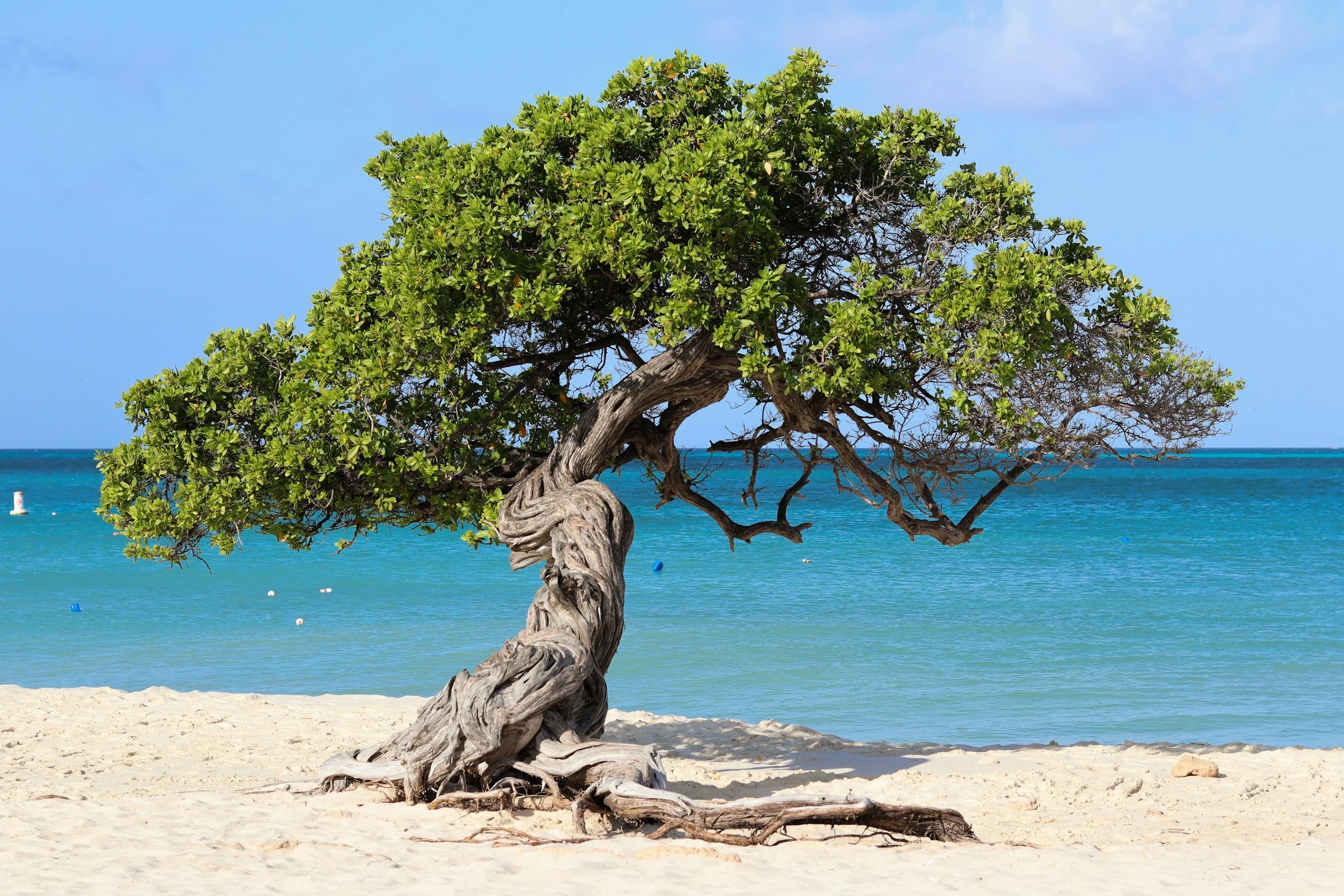
White-sand beaches, turquoise water, sunshine almost all year and the famous divi-divi tree bent by the trade winds: that is Aruba, a constituent country of the Kingdom of the Netherlands just off Venezuela. Here is what to know before you go, and how to follow cheap flights to Aruba.
Aruba in numbers
Capital
Oranjestad
Population
About 110,000
Length
About 30 km
Currency
Aruban florin
Languages
Papiamento, Dutch
Highest point
Jamanota
Continent
North America
Time zone
UTC-4
Airports covered
1
Why visit Aruba
White sand, trade winds, desert scenery and steady sunshine
Sun almost guaranteed
Aruba is one of the driest islands in the Caribbean: rain is rare, days are sunny and the trade winds keep the air fresh all year. The landscape feels desert-like, with cacti, aloes and divi-divi trees.
Postcard beaches
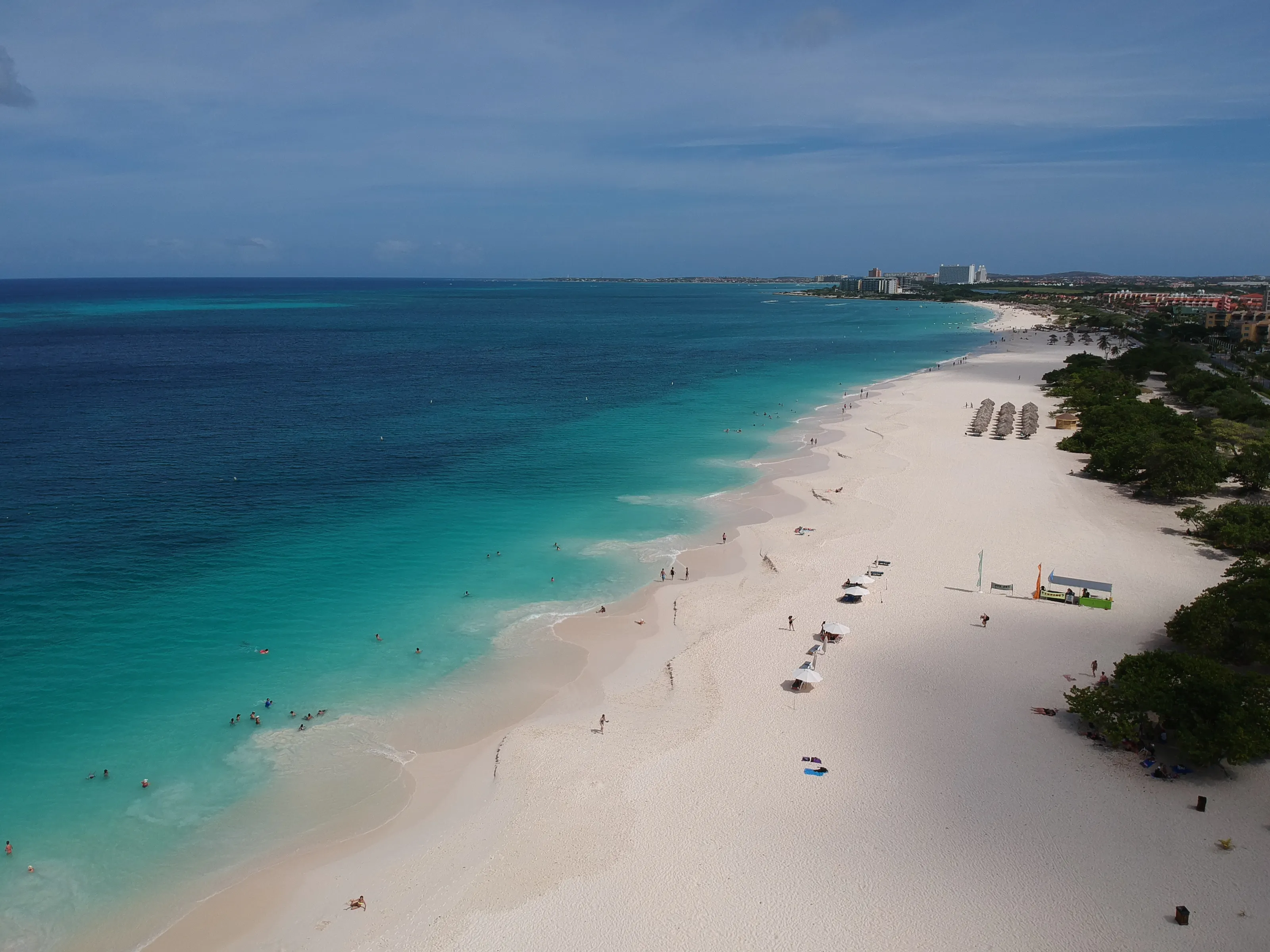
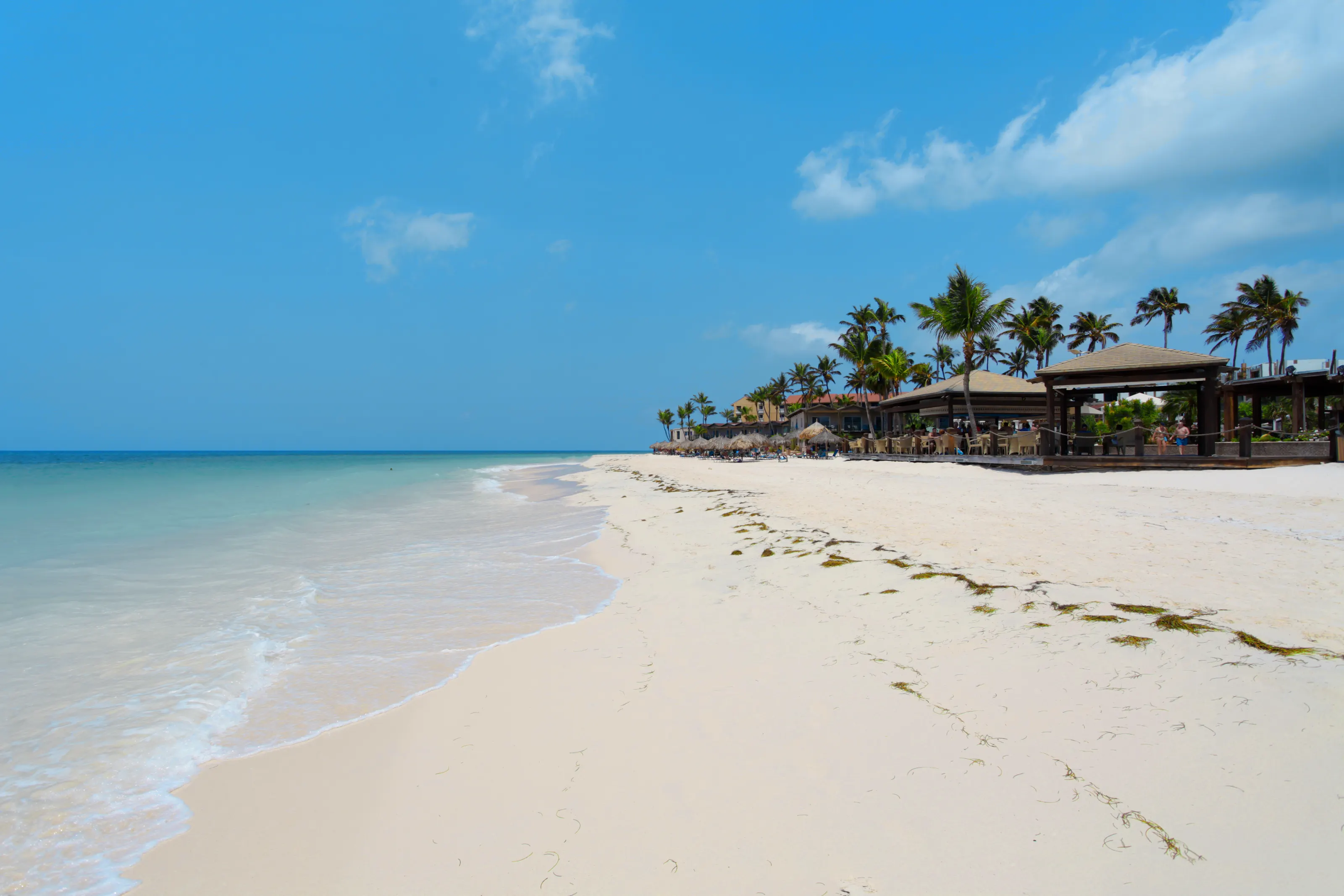
Eagle Beach and Palm Beach on the west coast offer long ribbons of white sand and calm, clear water. At the other end of the island, sheltered coves let you swim without waves.
A wild coastline
On the north and east coasts the sea crashes against limestone cliffs, far from the crowds. Arikok National Park protects dunes, caves and cactus scrub in the south-east.
Outside the main hurricane belt
Lying south of the main hurricane development region, Aruba is rarely hit, a real plus when you want more freedom in choosing your travel dates.
Landmarks
Eagle Beach, Palm Beach, Oranjestad, Arikok and Baby Beach
Aruba is easy to cover in a week: the west coast for beaches and hotels, Oranjestad for its colourful Dutch-style architecture, one day by 4x4 to the east and Arikok park, and a finish on the southern coves.
Eagle Beach and Palm Beach: the white ribbon
The west coast holds the island's best-known beaches. Eagle Beach, wider and quieter, is famous for its divi-divi trees leaning in the wind; Palm Beach is livelier, lined with big hotels, beach bars and water sports. Sunset is a daily ritual here.
Oranjestad, Dutch gables and harbours
The capital is built around its harbour, with colourful Dutch-style gabled facades, shops, terraces and a tram running along the waterfront. It is a good place for an end-of-day stroll, a taste of local food and planning boat trips.
Arikok National Park and the wild coast
In the south-east, Arikok park protects a large part of the island: cacti, rocky hills, caves, dunes and wave-battered coves. Explore it by 4x4 or on foot, with water and a hat. The natural bridge that once made the north coast famous collapsed in 2005, but the shoreline is still dramatic.
Baby Beach, San Nicolas and the southern tip
In the south, the sheltered bay of Baby Beach has shallow water, ideal for children and first-time snorkellers. Nearby, San Nicolas, a former refinery town, has revived with wall murals, while California Lighthouse watches over the north-western tip, a good sunset viewpoint.
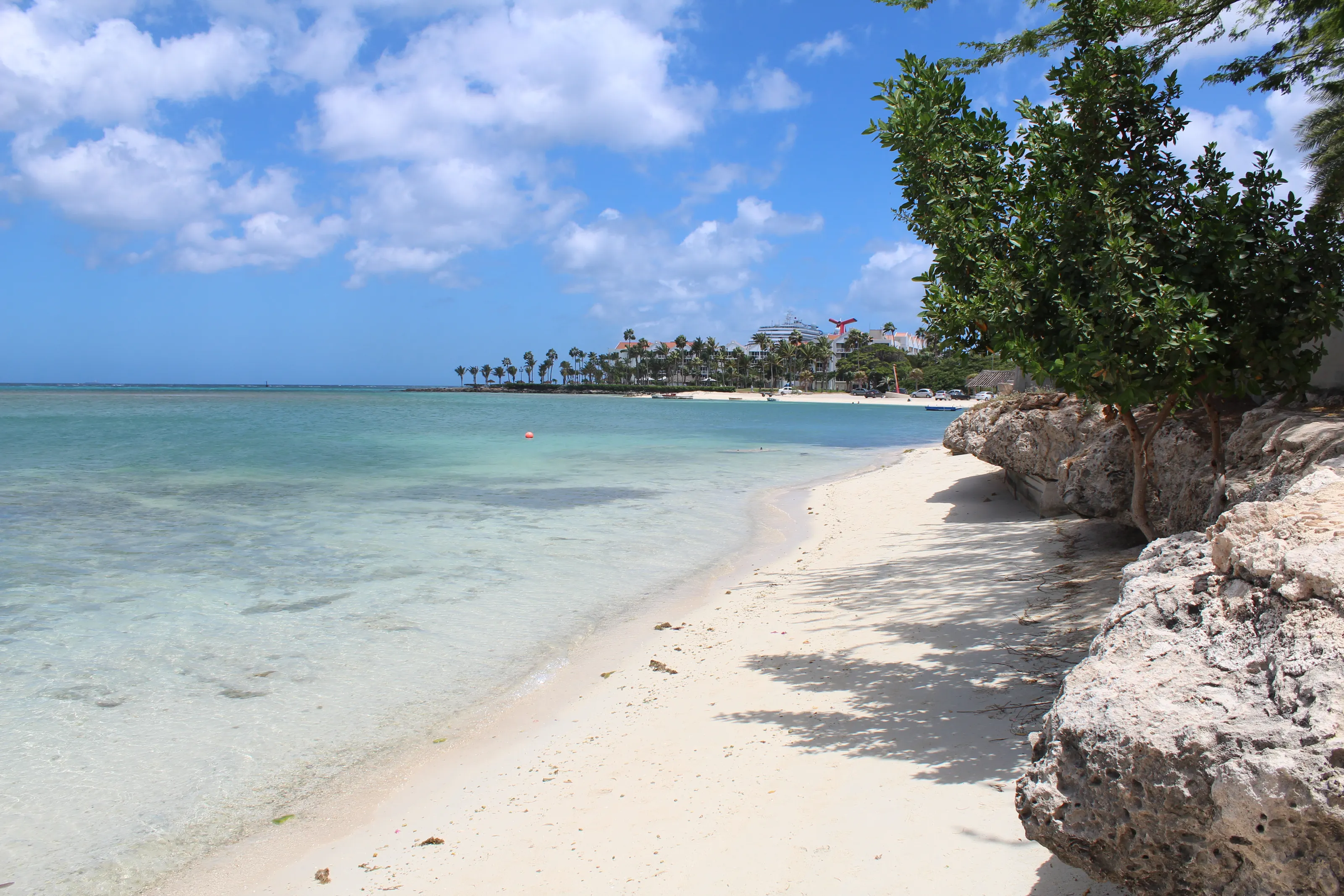
Snorkelling, diving, kitesurfing and boat trips
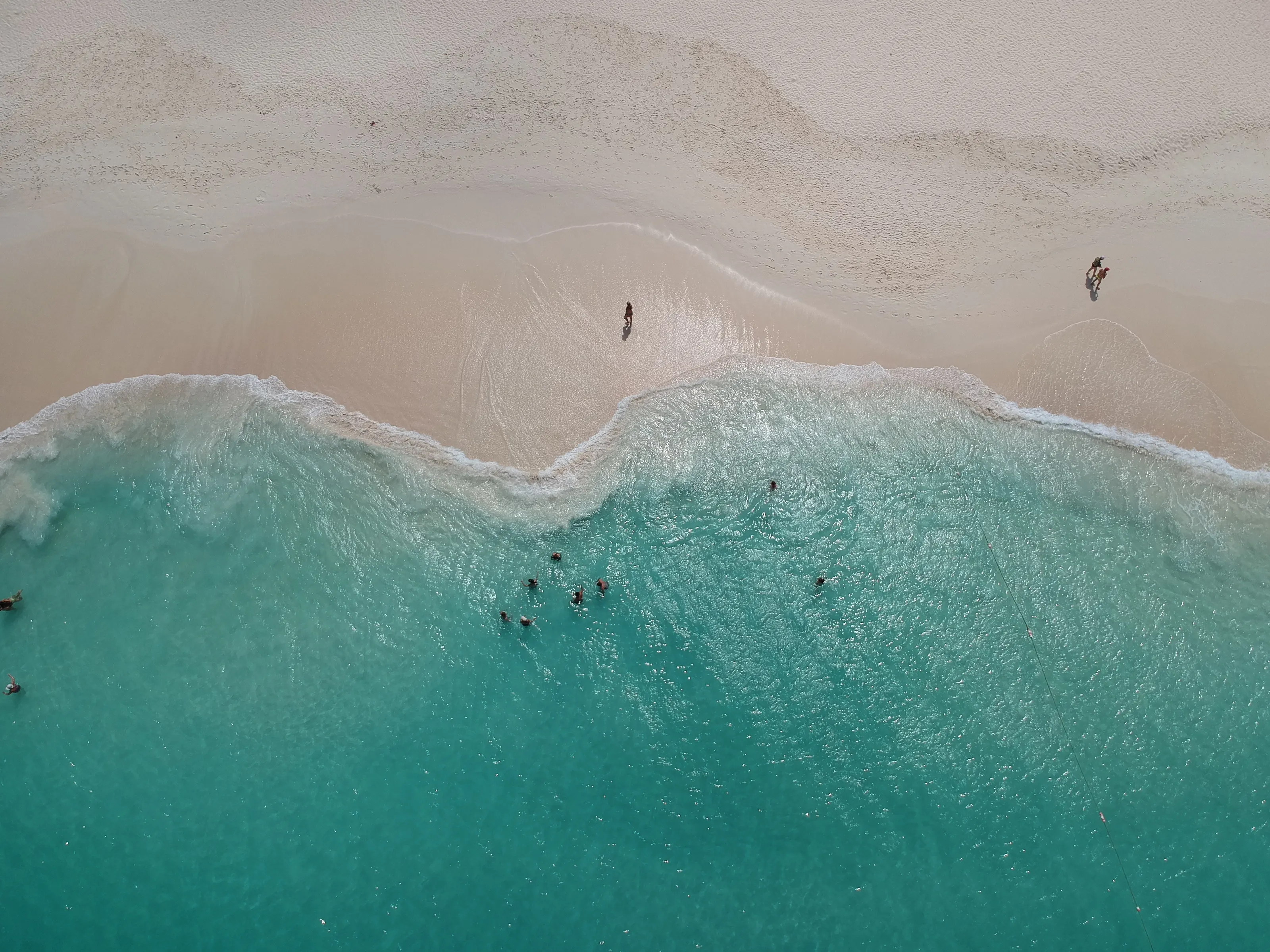
The calm waters of the leeward coast suit snorkelling and diving, including on wrecks. The steady trade winds also draw kitesurfers and windsurfers on the north-west coast. Catamarans run day trips and sunset cruises.
Before you go
All year, with a little more rain from October to January
| Area | Climate | Best time |
|---|---|---|
| West coast (Eagle Beach, Palm Beach) | Hot, dry and breezy; calm sea, ideal for swimming. | All year, especially December to April |
| North and east coasts | Strong wind, rough sea and cliffs: not for swimming, but big landscapes. | All year, preferably early in the morning |
| Arikok National Park | Very sunny with little shade; strong heat around midday. | Morning or late afternoon, all year |
| Oranjestad | Hot, with a short rainy season from autumn to early winter. | December to April; great in summer too |
Aruba lies south of the main hurricane belt, but no island is entirely safe: check forecasts before booking. Fares rise mostly around the year-end holidays, so it pays to follow prices several weeks ahead.
Getting around
Rental car, 4x4, buses and taxis
The island is small: Oranjestad to the east coast takes about half an hour. A rental car is the freest way to explore; a 4x4 or a guided tour helps on the tracks of Arikok park. Traffic drives on the right.
Public buses link Oranjestad with the hotel areas and San Nicolas, and taxis use fixed fares. The downtown tram is handy for a walk around the capital. Bring sunscreen, water and a hat: the sun is strong all year.
Culture and food
Papiamento, carnival, keshi yena and pastechi
Aruba blends Amerindian, Dutch, Spanish and African heritage, and Papiamento, a creole language, is heard everywhere alongside Dutch, English and Spanish. Carnival, in January and February, is one of the highlights of the year, with parades and music.
On the plate, try keshi yena (melted cheese filled with meat or fish), pastechi, fried pastries with savoury fillings, and freshly grilled fish. Coastal restaurants also serve international cooking for every budget.
Travel to Aruba
The Aruba airport covered by SniperAir
Queen Beatrix International
Aruba's airport, only a few kilometres from Oranjestad: about ten minutes by road, and a short drive to the Palm Beach hotels. The island's only airline gateway.
FAQ
Frequently asked questions about Aruba
Which airport do I fly into for Aruba?
The island has a single airline airport, Queen Beatrix (AUA), a few kilometres from Oranjestad. SniperAir tracks it for you.
When is the best time to travel to Aruba?
The weather is sunny and dry all year. December to April is the busiest season with little rain; the short wet season runs from autumn into early winter. The island lies outside the main hurricane belt.
Is travelling to Aruba expensive?
The island is fairly pricey, especially in high season: lodging and restaurants are priced for tourists. You can trim the bill with apartments, local meals and free public beaches. The easiest way to pay less is to watch flight prices.
Do I need a visa for Aruba?
Rules depend on your nationality. Aruba is part of the Kingdom of the Netherlands but is outside the Schengen area: a valid passport is required and online entry formalities may apply. Always check official rules before you travel.
How long should I spend in Aruba?
A week lets you enjoy the beaches, Oranjestad, Arikok park and boat trips without rushing. Five days is enough for a first stay; the island is also popular for longer relaxing breaks.
Which currency is used in Aruba?
The official currency is the Aruban florin, but US dollars are accepted almost everywhere and bank cards work well. Keep a little cash for small shops and tips.
How do I get alerted when a flight to Aruba drops below my budget?
Create a SniperAir alert with your departure airport and AUA, set your maximum price, and we notify you as soon as a fare falls below it. SniperAir tracks prices and sends alerts. See how it works.
Ready to track fares to Aruba?
Create an alert and let SniperAir do the rest.
Create my alert