
Travel to Bhutan
A Himalayan kingdom of monasteries clinging to cliffs, white-and-red fortresses beside rivers and prayer flags on every pass: this is what to plan before you look for cheap flights to Bhutan.
Bhutan in numbers
Capital
Thimphu
Population
About 800,000
Area
Nearly 40,000 km²
Currency
Ngultrum
Language
Dzongkha
Forests
Over 70%
Continent
Asia
Time zone
UTC+6
Airports covered
1
Why visit Bhutan
Monasteries, dzongs, Himalayan passes and protected nature
The Tiger's Nest
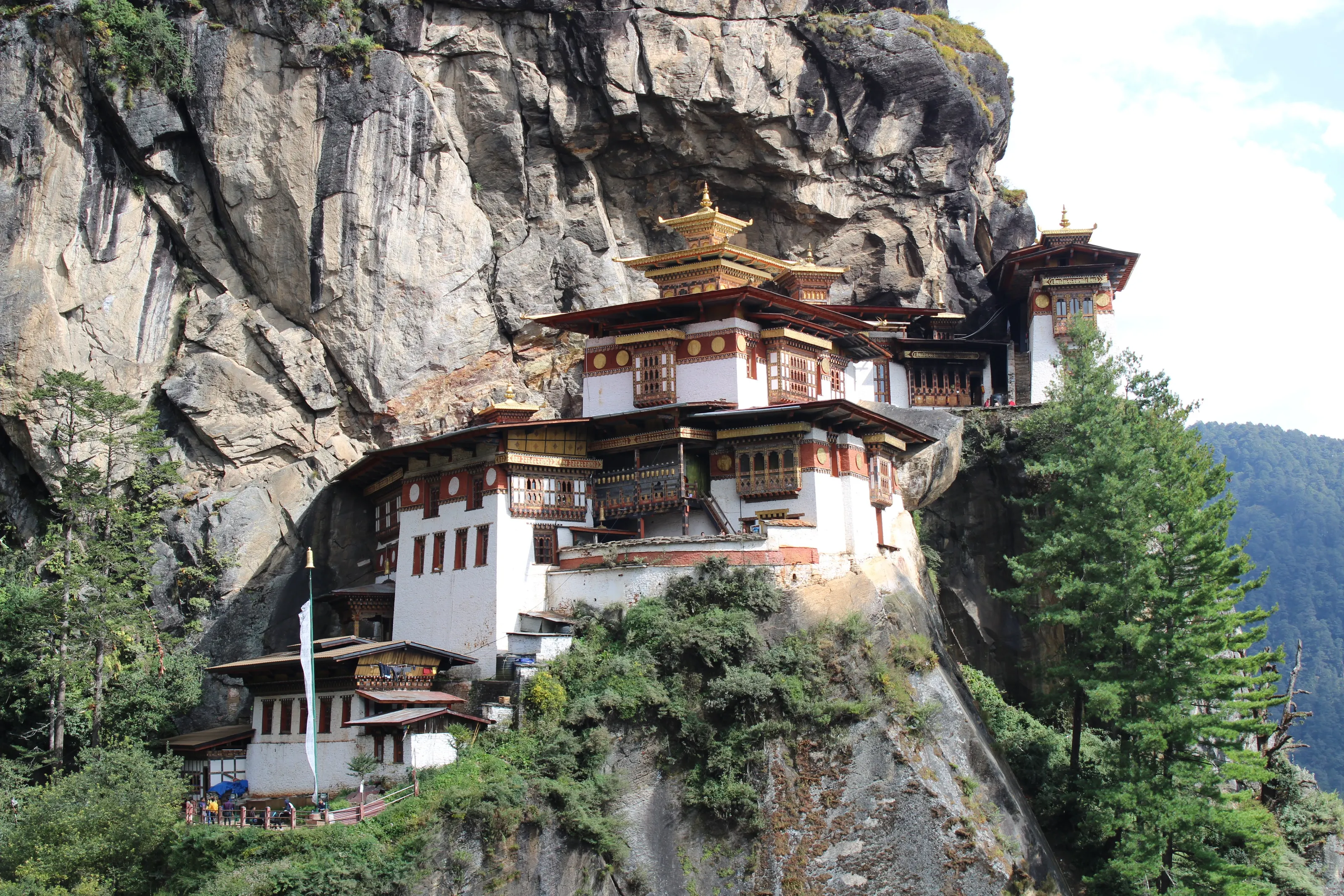
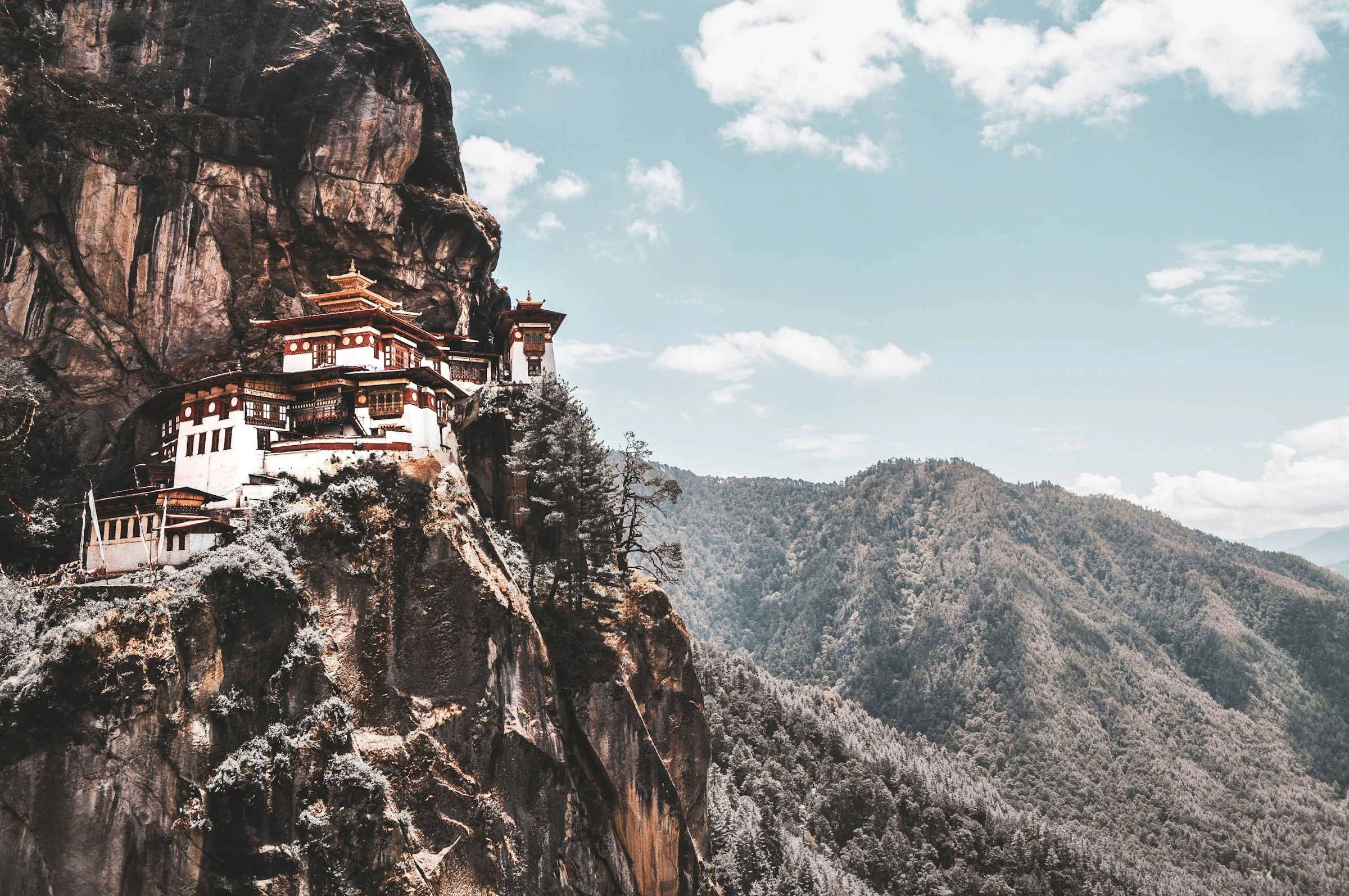
Taktsang monastery, perched on a cliff above the Paro valley, is the country's most famous image. You reach it on foot, by a mountain trail through the forest.
Living dzongs
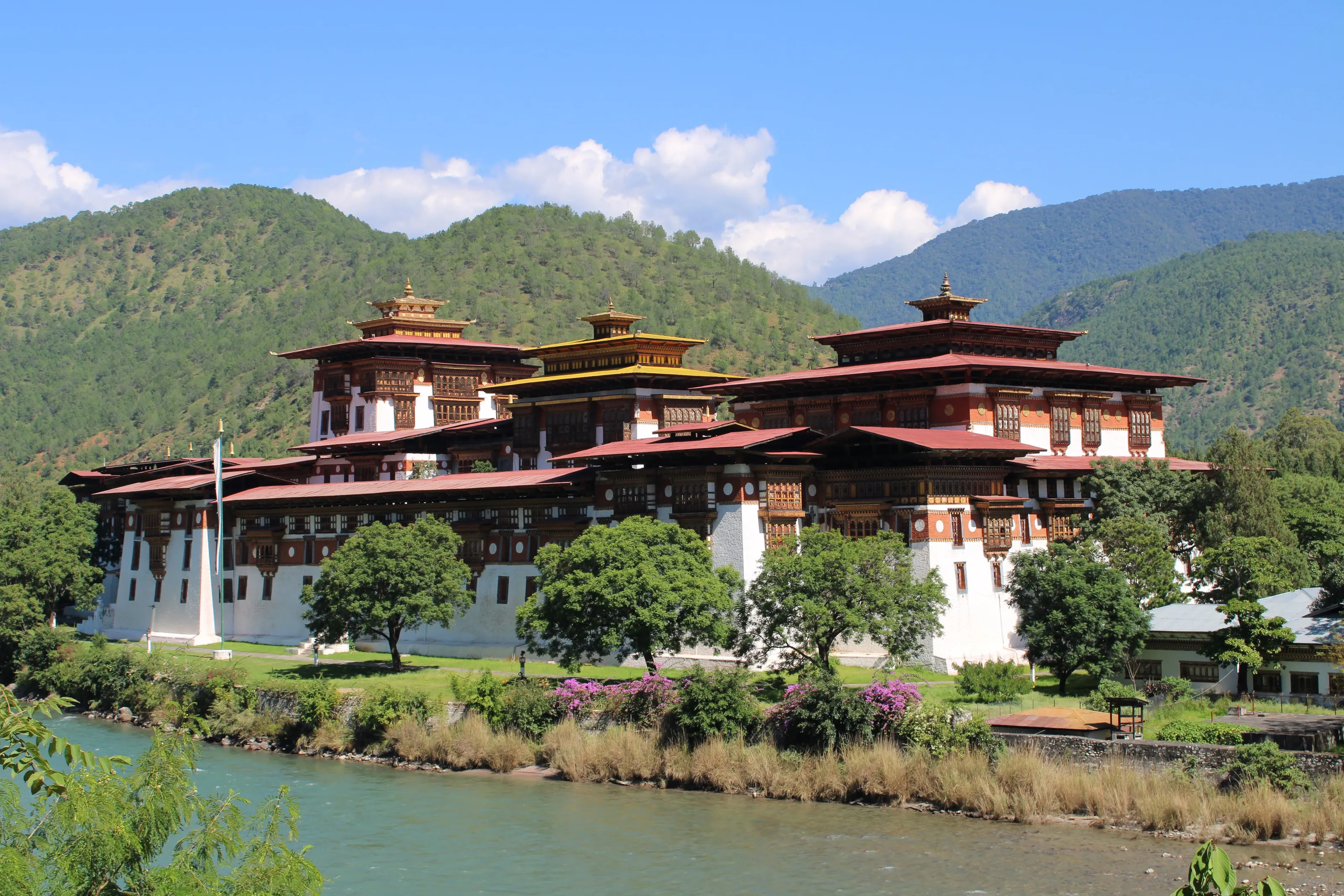
These white-and-red monastery-fortresses, like Punakha at the meeting of two rivers, still house administrators and monks and open to visitors at set hours.
A way of life
The country champions Gross National Happiness, conservation and forests covering over 70% of the territory, according to its tourism office.
Festivals and traditions
Archery, masked dances at autumn festivals, prayer flags on passes: Vajrayana Buddhist culture is lived daily, far from mass tourism.
Landmarks
Paro, Thimphu, Dochula Pass, Punakha and Bumthang
A Bhutan itinerary usually links Paro, where flights land, to Thimphu, then crosses Dochula Pass and drops to Punakha, with the Bumthang valley further east as an option. Roads wind: short distances take time.
Paro and the Tiger's Nest
The Paro valley gathers rice fields, a river and Taktsang monastery, clinging to a rock wall. The walk up takes several hours and rewards you with spectacular views, especially on clear days.
Thimphu, the capital
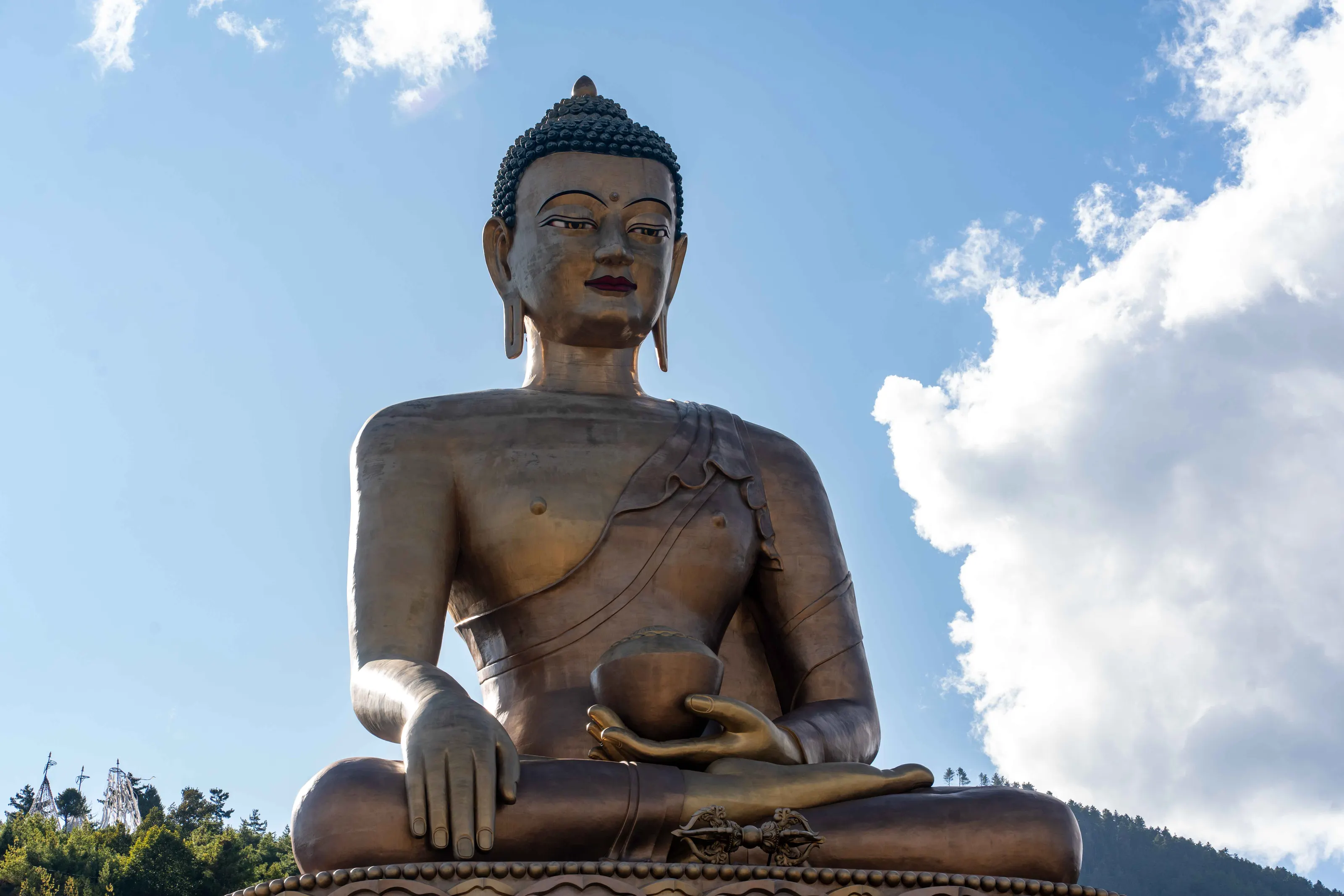
Thimphu combines markets, gardens and monasteries with the Buddha Dordenma, a giant golden statue overlooking the valley. The city is small, quiet and lightly built-up.
Dochula Pass
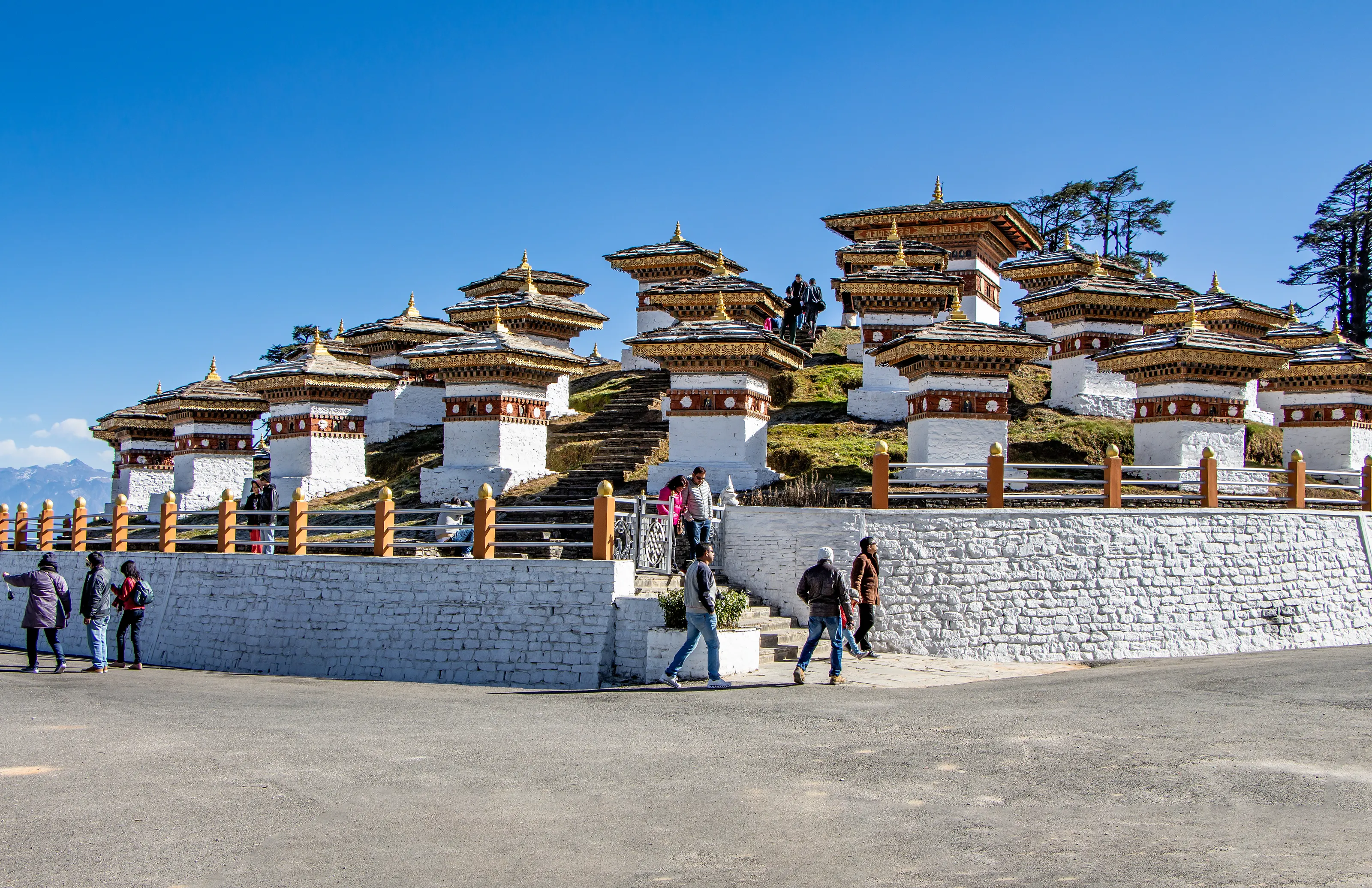
At over 3,000 metres, between Thimphu and Punakha, Dochula Pass lines up 108 white and ochre chortens, with Himalayan views on clear days. A near-obligatory stop on the road.
Punakha and its valley
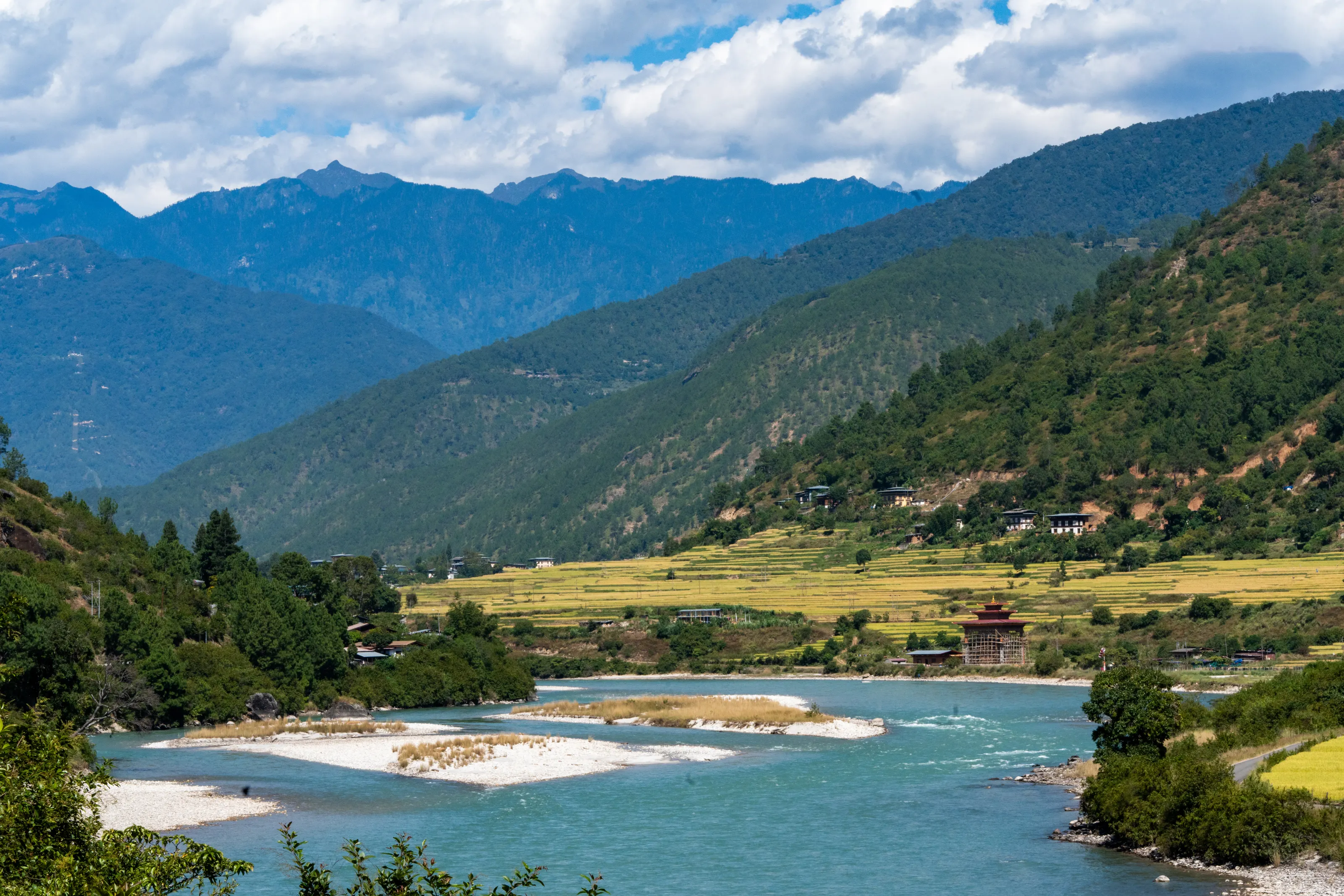
Punakha lies in a valley of rice terraces and turquoise rivers. Its dzong, built where two rivers meet, is one of the most beautiful in the kingdom.
Bumthang and the east
Further east, the Bumthang valley and its neighbours gather monasteries, villages and festivals. This part of the country takes more time, since mountain roads are long and can be cut by weather.
Before you go
March-April and September-November, monsoon from June to September
| Season | Climate | Good to know |
|---|---|---|
| March to April | Generally dry, spring blooms, mild temperatures in the valleys. | A good time for hiking |
| June to September | Monsoon, mostly in the south, with rain and sometimes cut roads. | Green landscapes, but slower travel |
| Late September to November | Clear skies, sunny days, first snow at altitude. | Festival season |
| December to February | Dry, clear winter, frost, snow above 3,000 m. | Cold nights, clear views of the Himalaya |
The climate varies widely with altitude, from the subtropical south to cold high valleys. Keep an eye on fares before locking dates: Bhutan is visited mostly in spring and autumn.
Getting around
Driver-guides, mountain roads and limited domestic flights
The country has just one international airport, at Paro. Mountain roads are narrow, winding and prone to landslides, so most visitors travel with a driver and a guide, often arranged through a licensed operator. There is no train.
Domestic flights are few and seasonal. Allow one to two hours from Paro to Thimphu, and a full day for the long stages east.
Food and culture
Buddhism, archery, chillies and cheese
Vajrayana Buddhism is the state religion and shapes daily life: prayer flags on passes, prayer wheels, monasteries and masked-dance festivals. Archery is a popular sport, and hot-stone baths are part of the way of life.
At the table, chillies and home-made cheese are the base of signature dishes like ema datshi, often served with rice. Try salted butter tea in the villages.
Flying to Bhutan
The Bhutanese airport covered by SniperAir
Paro International
Paro airport, the country's only international airport, in the Paro valley: allow about one to one and a half hours by road to Thimphu. The approach between the mountains is known to be spectacular.
SniperAir destinations
Discover our destination pages
FAQ
Frequently asked questions about Bhutan
Which airport do I fly into for Bhutan?
Paro (PBH) is Bhutan's only international airport, about one to one and a half hours by road from Thimphu. SniperAir tracks it.
When is the best time to travel to Bhutan?
March-April and September-November are the most recommended periods, with clear days. Summer is monsoon season, and winter is cold at altitude but clear.
Is travelling to Bhutan expensive?
Yes, the budget is rather high: entry is framed by a sustainable development fee, and trips are often arranged through a licensed operator. Check the official amounts before you go.
Do I need a visa for Bhutan?
Most nationalities need a visa applied for before departure, along with the sustainable development fee. Check the formalities on Bhutan's official tourism website before booking.
How long should I spend in Bhutan?
Seven to ten days cover Paro, Thimphu, Punakha, Dochula and the Bumthang valley. Five days are enough for the west of the country.
What travel precautions should I take?
Check your foreign ministry's travel advice, buy travel insurance, dress respectfully in monasteries and allow for altitude.
How do I get alerted when a flight to Bhutan gets cheaper?
Create a SniperAir alert profile with your departure airport and Paro as destination: we track prices and notify you as soon as a matching deal appears. See how it works.
Ready to track fares to Bhutan?
Create an alert and let SniperAir do the rest.
Create my alert