
Travel to Equatorial Guinea
The only country in Africa where Spanish is an official language: a volcanic island off Cameroon, a peak above 3,000 metres, empty beaches where turtles nest and, on the mainland, a vast rainforest home to gorillas and elephants. Equatorial Guinea remains one of the least visited countries in the world. Here is what to know before you look for cheap flights to Equatorial Guinea.
Equatorial Guinea at a glance
Gateway city
Malabo
Area
~28,000 km²
Official languages
Spanish, French, Portuguese
Currency
CFA franc
Highest point
Pico Basile
Monte Alen forest
Over 1,000 km²
Continent
Africa
Time zone
UTC+1
Airports covered
1
Why visit Equatorial Guinea
Rainforest, a volcanic island and Spanish heritage in the Gulf of Guinea
Spanish-speaking Africa
A former Spanish colony, independent since 1968, the country keeps Spanish alongside French and Portuguese. You see it in Malabo's colonial architecture, its squares and the mood of its cafe terraces.
Bioko, a volcanic island
Bioko, about 2,000 km², is dominated by Pico Basile, which tops 3,000 m. Remote beaches, waterfalls, craters and dense forest follow one another, with rare primates such as the red colobus.
Monte Alen, the mainland forest
On the mainland, Monte Alen National Park protects hundreds of square kilometres of rainforest. More than 100 mammal species have been recorded, sixteen of them primates, along with over 260 bird species.
Turtles, beaches and islets
On some Bioko beaches, sea turtles come to nest. Further out, Corisco has white sand and far-flung Annobon draws humpback whales in season.
Highlights
Malabo, Bioko, Monte Alen, Corisco and Annobon
The country is best seen in two stages: Bioko island, with Malabo, its beaches and its peaks, then the mainland, with Bata and the forest. Infrastructure is modest, but the landscapes are worth the detour.
Malabo and its cathedral
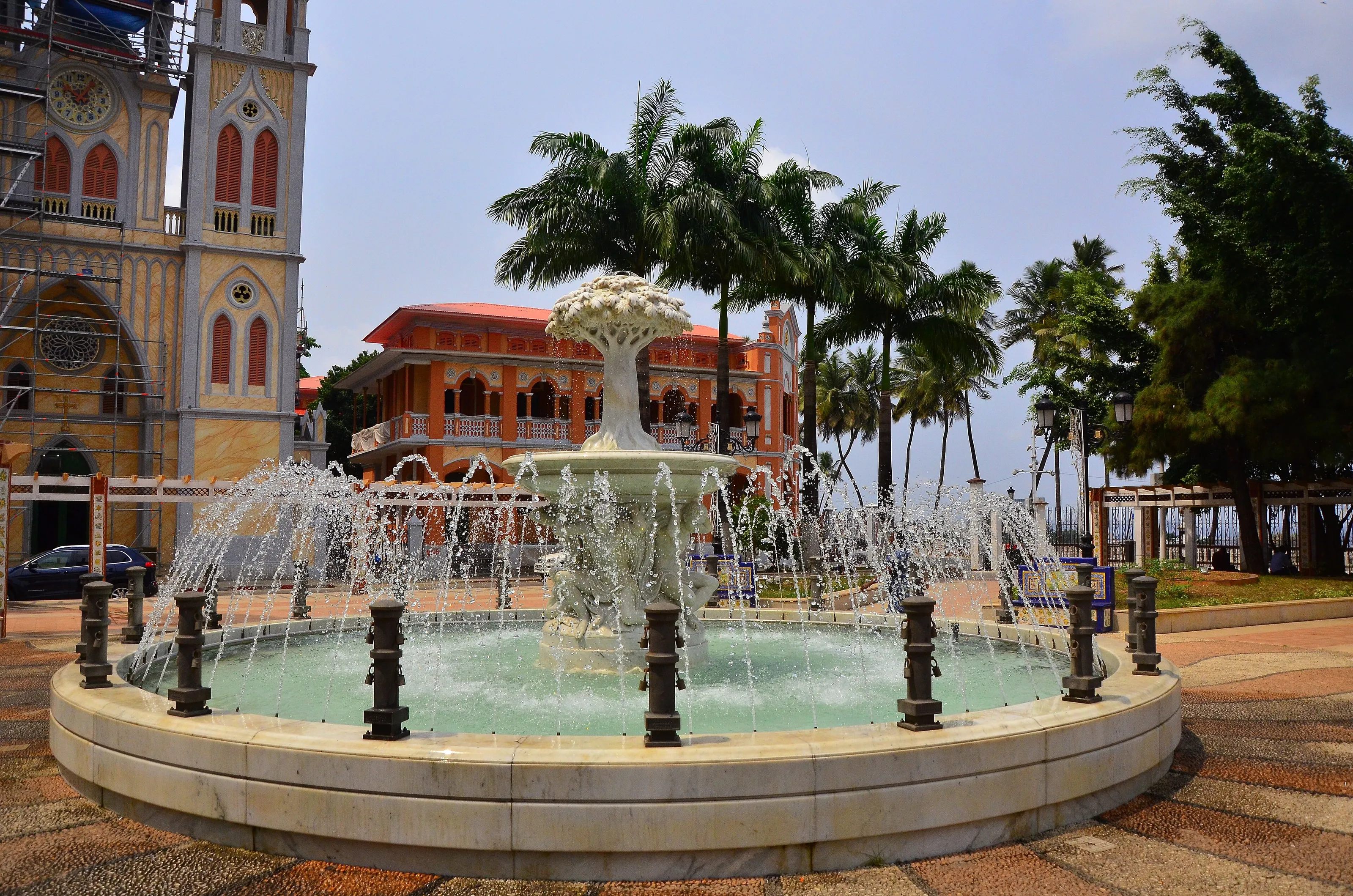
On Bioko's north coast, Malabo (about 300,000 people) keeps its colonial charm. The neo-Gothic Santa Isabel cathedral, built between 1897 and 1916 on Independence Square, raises two 40-metre spires above the palms. Around it you find colonial houses, a seafront, markets and restaurants serving grilled fish and Central African dishes.
Malabo's parks, palms and seafront
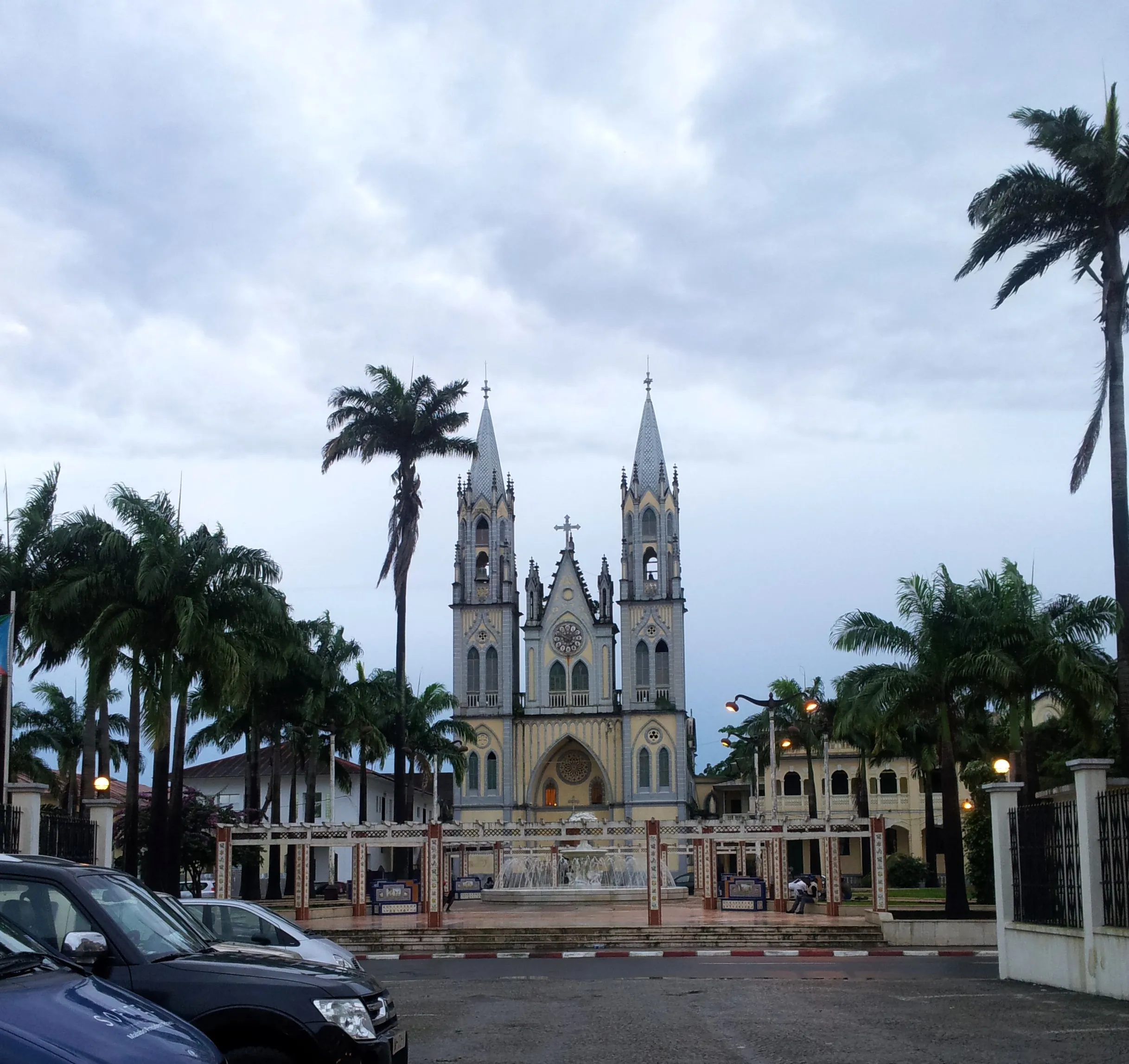
The city stretches between sea and hills. Its wide avenues lined with royal palms, its parks and its paths near white bridges invite an evening stroll. The airport is less than ten kilometres from the centre, which makes arrival easy. Bioko is also the gateway to remote beaches such as Arena Blanca, the southern coast and the Iladyi waterfalls near Moka.
Monte Alen National Park
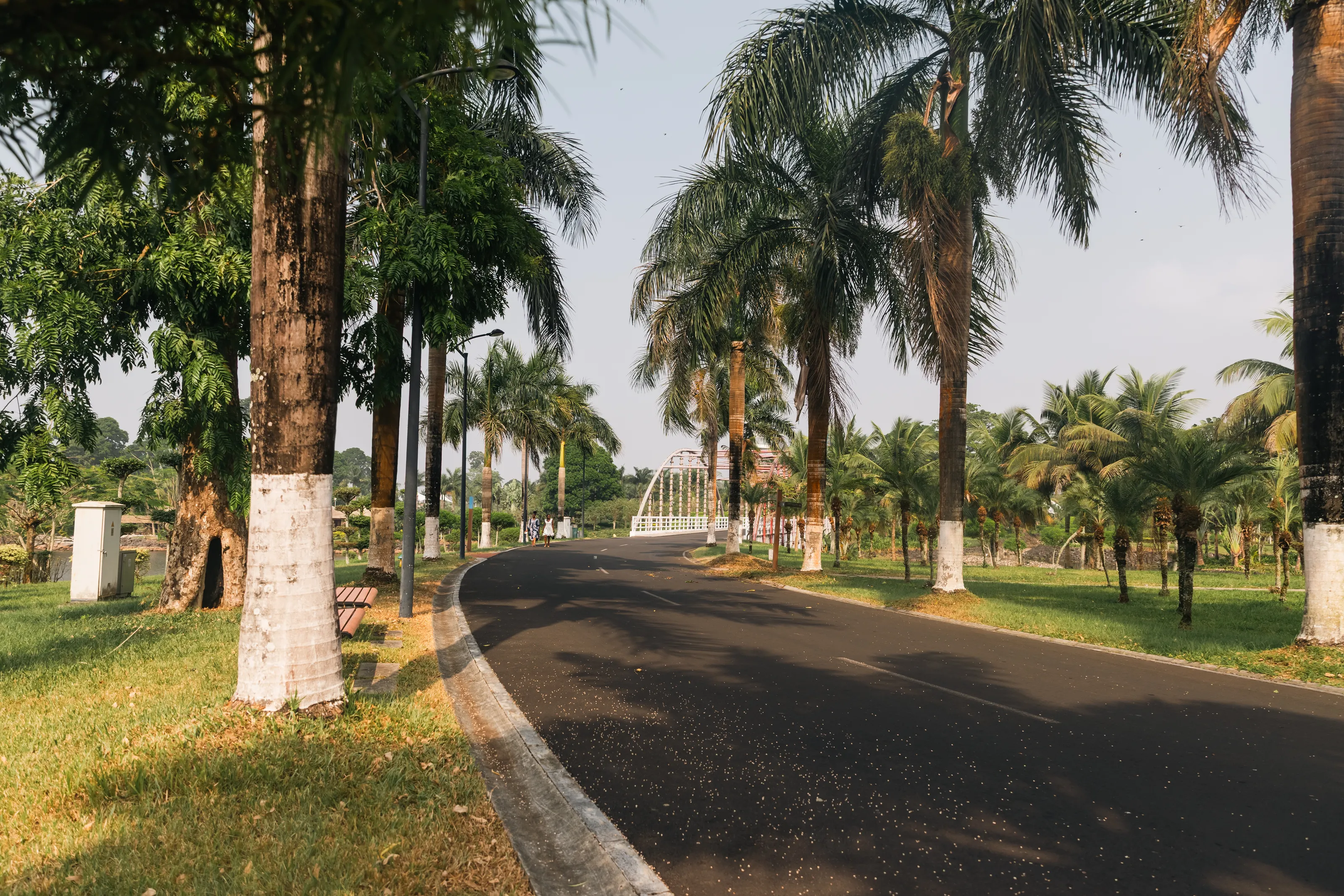
On the mainland, Monte Alen protects rainforest rising from 300 to more than 1,000 metres. You may meet mandrills, chimpanzees, gorillas and forest elephants, plus rich birdlife of over 260 species. Trails are done on foot with a guide in hot, humid conditions: the immersion is total.
Bata, Corisco and Annobon
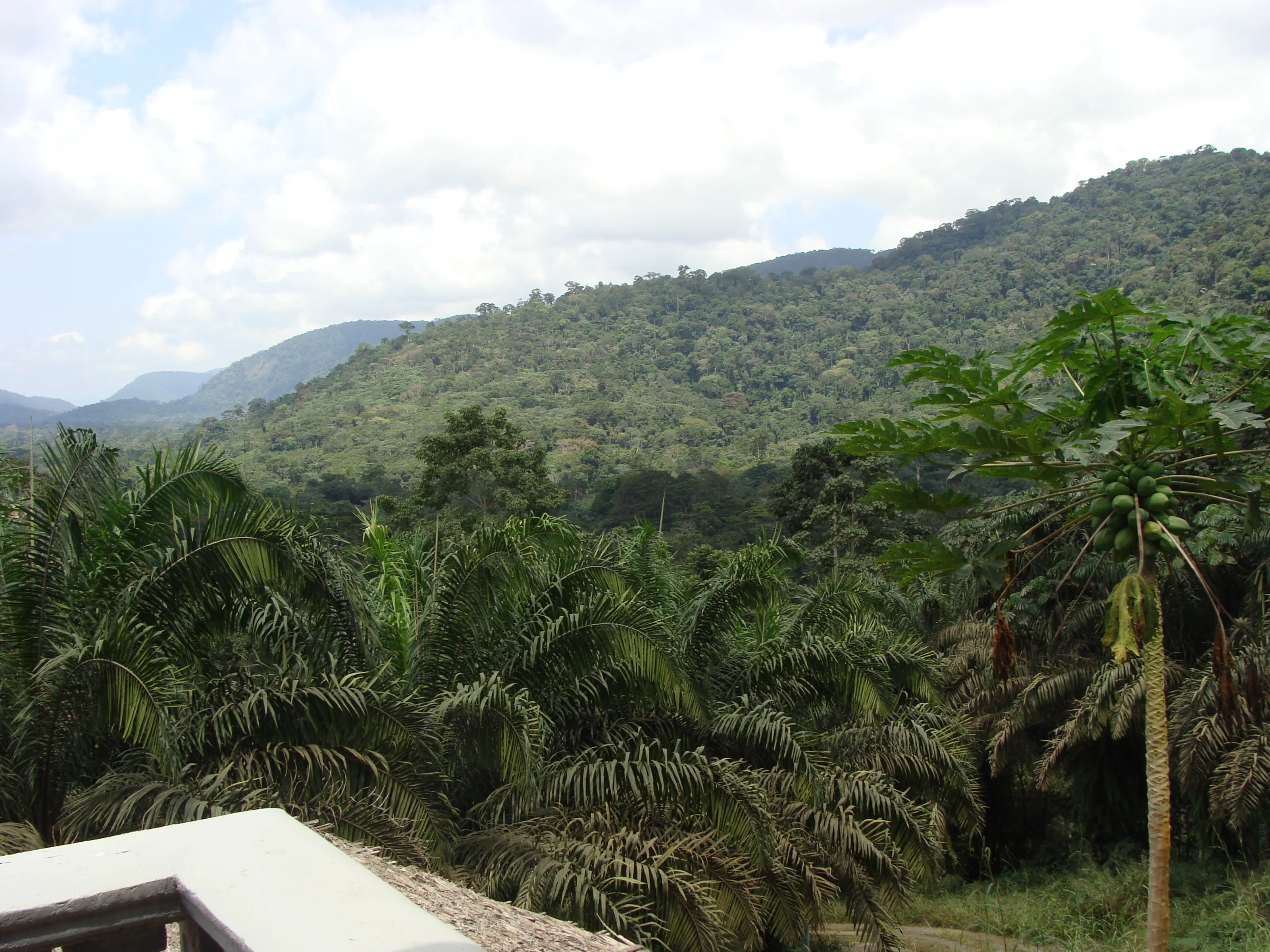
Bata, the largest mainland city, offers markets, restaurants and hotels with a pleasant colonial atmosphere. Offshore, Corisco is a small, remote island of white-sand beaches. Annobon, even further away, is known for humpback whales and untouched nature: this is an adventure to arrange with local agencies.
Before you go
An equatorial climate: the driest season runs December to February
| Area | Climate | Best time |
|---|---|---|
| Malabo and north Bioko | Hot and humid; about 1,900 mm of rain a year, with a relatively dry season. | December to February |
| South Bioko | Very wet, dense forest and remote beaches. | December to February |
| Mainland (Bata, Monte Alen) | 25 C on the plain, 20-23 C higher up; a short dry season. | July and August |
| Corisco and Annobon | Hot and sea-dependent; limited access. | Depending on access, outside the heaviest rains |
Rain is frequent all year, above all in south Bioko and in the forest. Pack a waterproof layer, sturdy shoes and repellent. Watch flight prices before fixing your dates, and check your government's official travel advice before you leave.
Getting around
Domestic flights, roads and local guides
Between Malabo and Bata you travel by air: the two cities are linked by domestic flights. On the ground, a car with a driver or a taxi is the easiest option. Road quality varies, especially outside towns.
For parks, remote beaches and islands, go with a guide or a local agency. Before leaving, check entry conditions with the embassy: a visa is generally required depending on your nationality. Plan travel insurance and recommended vaccinations.
Culture and food
Between Spanish heritage, Bantu peoples and Central African cooking
The country blends influences: the Fang, the majority on the mainland, the Bubi on Bioko and a Spanish legacy. Spanish is the working language in tourism, French is also official and some English is spoken on Bioko.
At the table, fish and seafood meet plantain, cassava, yam and peanut sauces. The island was long a land of cocoa and coffee, whose plantations are part of local history.
Travelling to Equatorial Guinea
The Equatorial Guinea airport covered by SniperAir
Malabo International
Malabo's international airport, on Bioko island, less than ten kilometres from the centre. It is the country's air gateway and the starting point for trips to beaches, mountains and domestic flights to Bata.
FAQ
Frequently asked questions about Equatorial Guinea
Which airport should I use to travel to Equatorial Guinea?
Malabo International (SSG), on Bioko island, is the one SniperAir tracks. From there, domestic flights serve Bata on the mainland.
What is the best time to travel to Equatorial Guinea?
December to February in Malabo and on Bioko, when rains are lightest. On the mainland, July and August are relatively drier.
Is travelling to Equatorial Guinea expensive?
The country gets few tourists and hotels and transport are often costly. The budget depends mainly on the flight, domestic flights and guided excursions. Choosing your season and tracking flight prices helps keep costs down.
Do I need a visa for Equatorial Guinea?
A visa is generally required, depending on your nationality. Conditions change, so check with the embassy and consult your government's official travel advice before booking.
How long should I spend in Equatorial Guinea?
Allow five to ten days to combine Bioko and the mainland: three or four days in Malabo and on the island, then Bata and Monte Alen.
What language is spoken in Equatorial Guinea?
Spanish is the most widely used language. French and Portuguese are also official, and some English is spoken on Bioko. A few words of Spanish are useful.
How do I get alerted when a flight to Equatorial Guinea drops in price?
Create a SniperAir alert profile with your departure airport and Malabo as the destination: we track prices and notify you as soon as an opportunity matches. See how it works.
Ready to track prices to Equatorial Guinea?
Create an alert and let SniperAir do the rest.
Create my alert