
Travel to Belarus
Two UNESCO-listed castles, one of Europe's last lowland primeval forests, lakes by the dozen and a capital rebuilt in Stalinist style after 1944: Belarus offers a trip that feels very different from its neighbours. Here is what to know before you travel to Belarus and look for cheap flights to Minsk.
Belarus in numbers
Capital
Minsk
Population
~9.1M
Area
207,600 km²
Currency
Belarusian ruble
Language
Belarusian and Russian
UNESCO sites
4
Continent
Europe
Time zone
UTC+3
Airports covered
1
Why visit Belarus
Radziwiłł castles, primeval forest and wide open spaces
Mir and Nesvizh, two UNESCO castles
Mir Castle, Gothic and then Renaissance, has been listed since 2000, and the Radziwiłł ensemble at Nesvizh since 2005. Both sit within parkland, about 30 km apart.
The Białowieża Forest
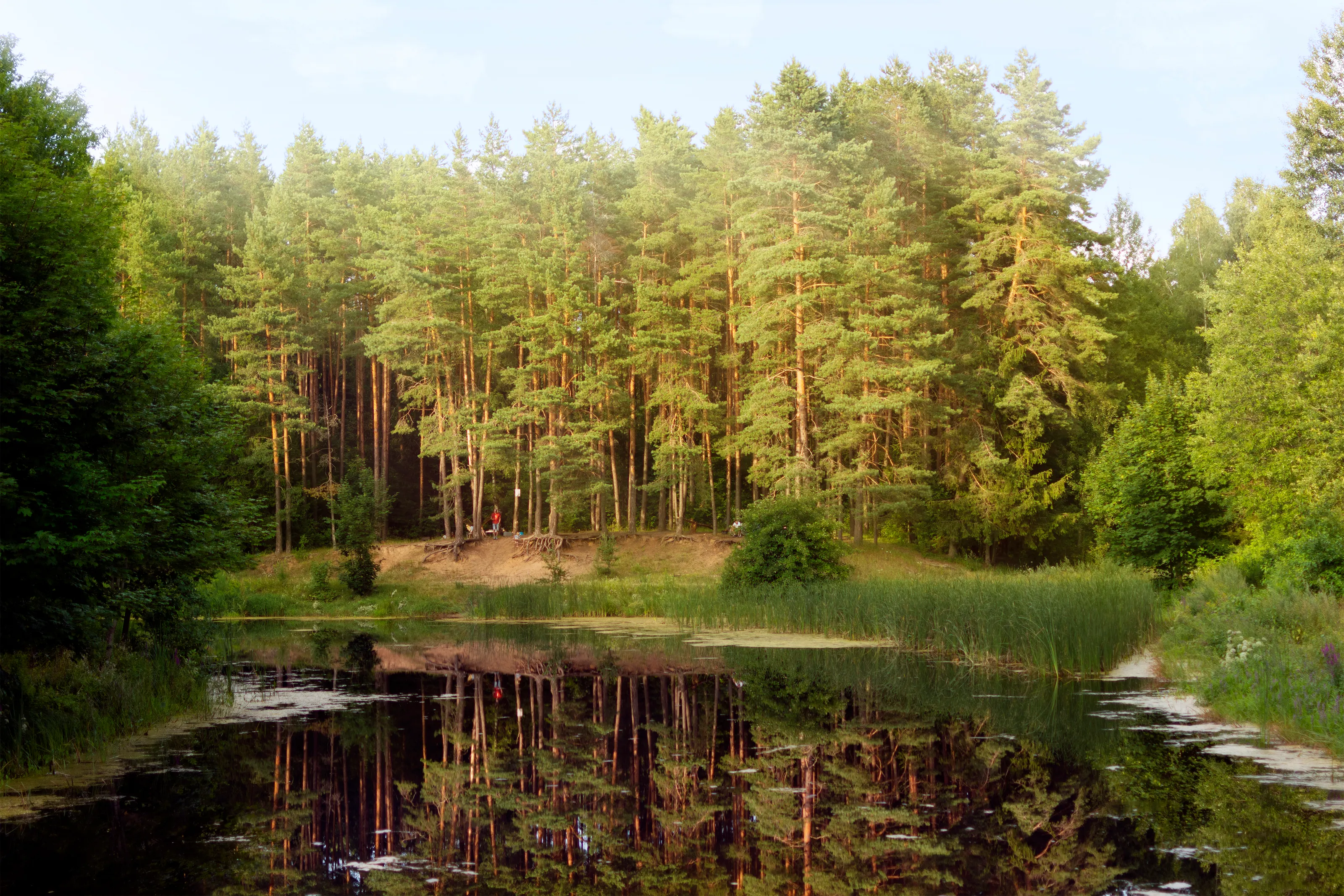
Shared with Poland, it is described as the last lowland primeval forest in Europe. European bison, the national animal, live there, and the site has been UNESCO-listed since 1979.
A rebuilt capital
Minsk was about 90% destroyed in 1944. Rebuilt in Stalinist style, it keeps wide avenues, parks and the country's only metro.
Lakes, marshes and potato cooking
Lake Naroch, the largest, in the north; the Braslau Lakes; the Pinsk marshes in the south. At the table, draniki, potato pancakes, are the best-known dish.
Highlights
Minsk, Mir, Nesvizh and the Białowieża Forest
Three to four days cover Minsk and the two castles; a week lets you add Brest, Grodno and the forest.
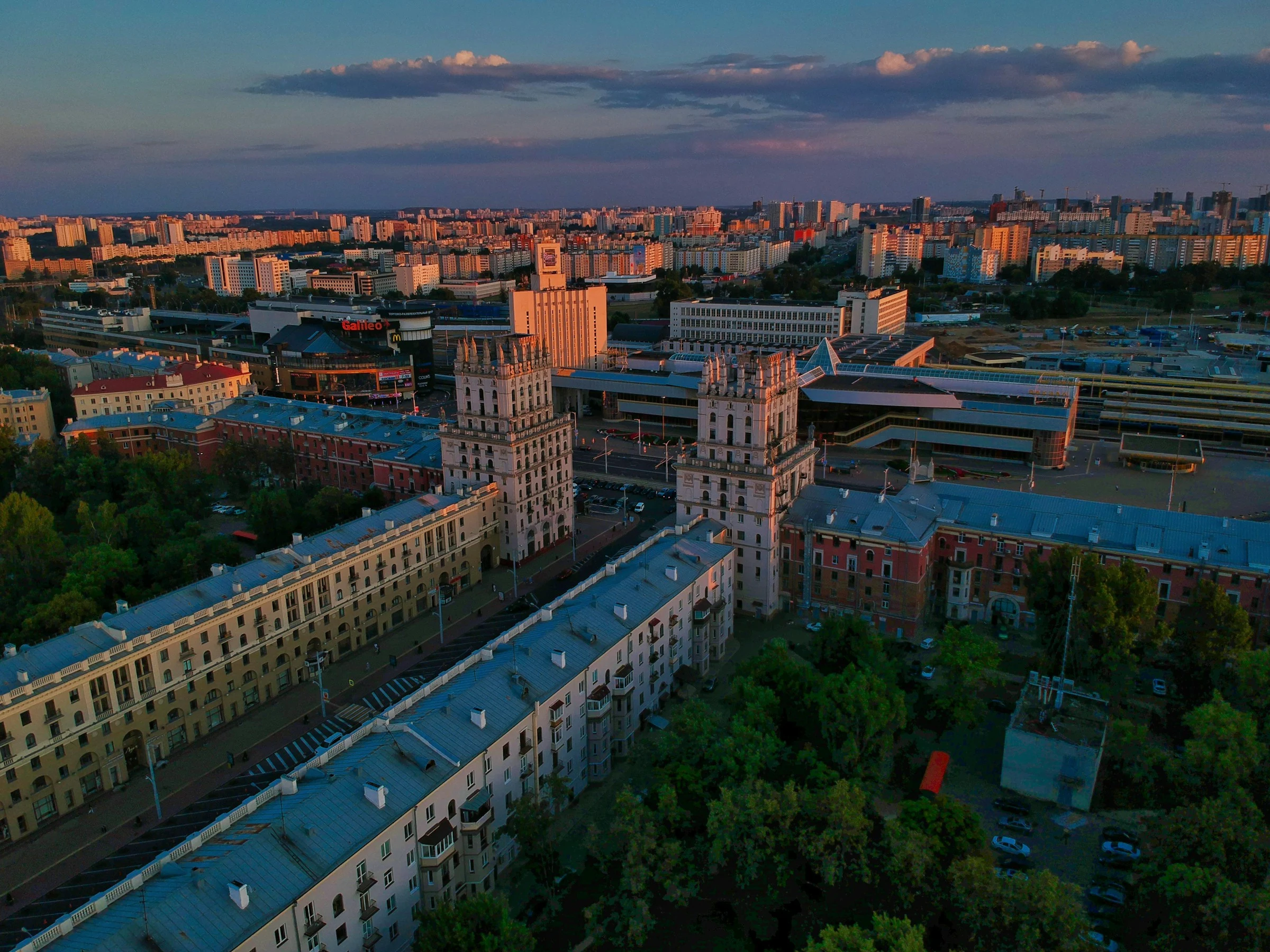
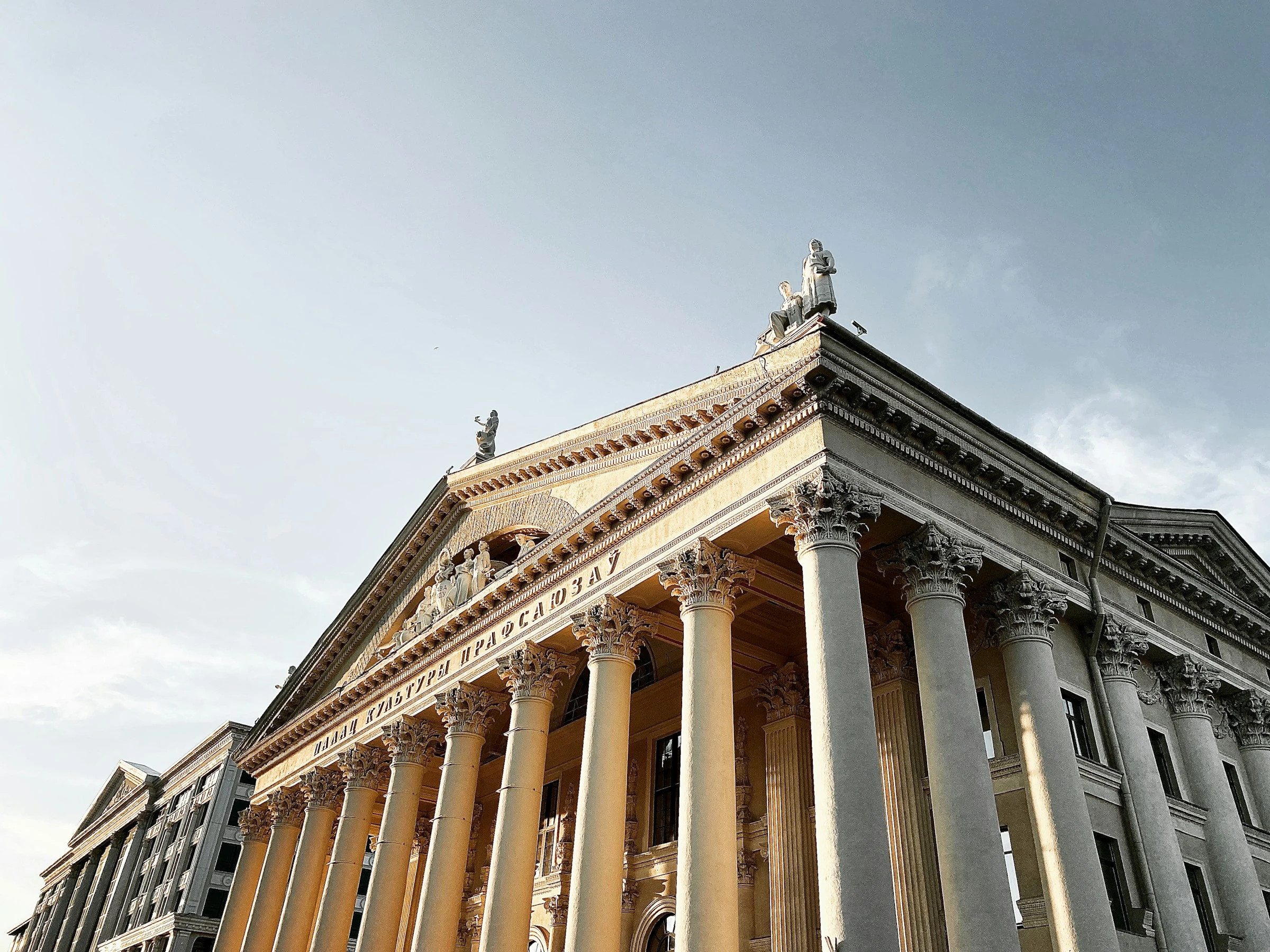
Minsk, a capital of wide avenues
The centre is built around broad avenues and Stalinist buildings, such as the two towers flanking the station square. The war museum, the National Library, the parks and the Svislach river complete a visit. Minsk has around 2 million inhabitants and two metro lines.
Mir and Nesvizh
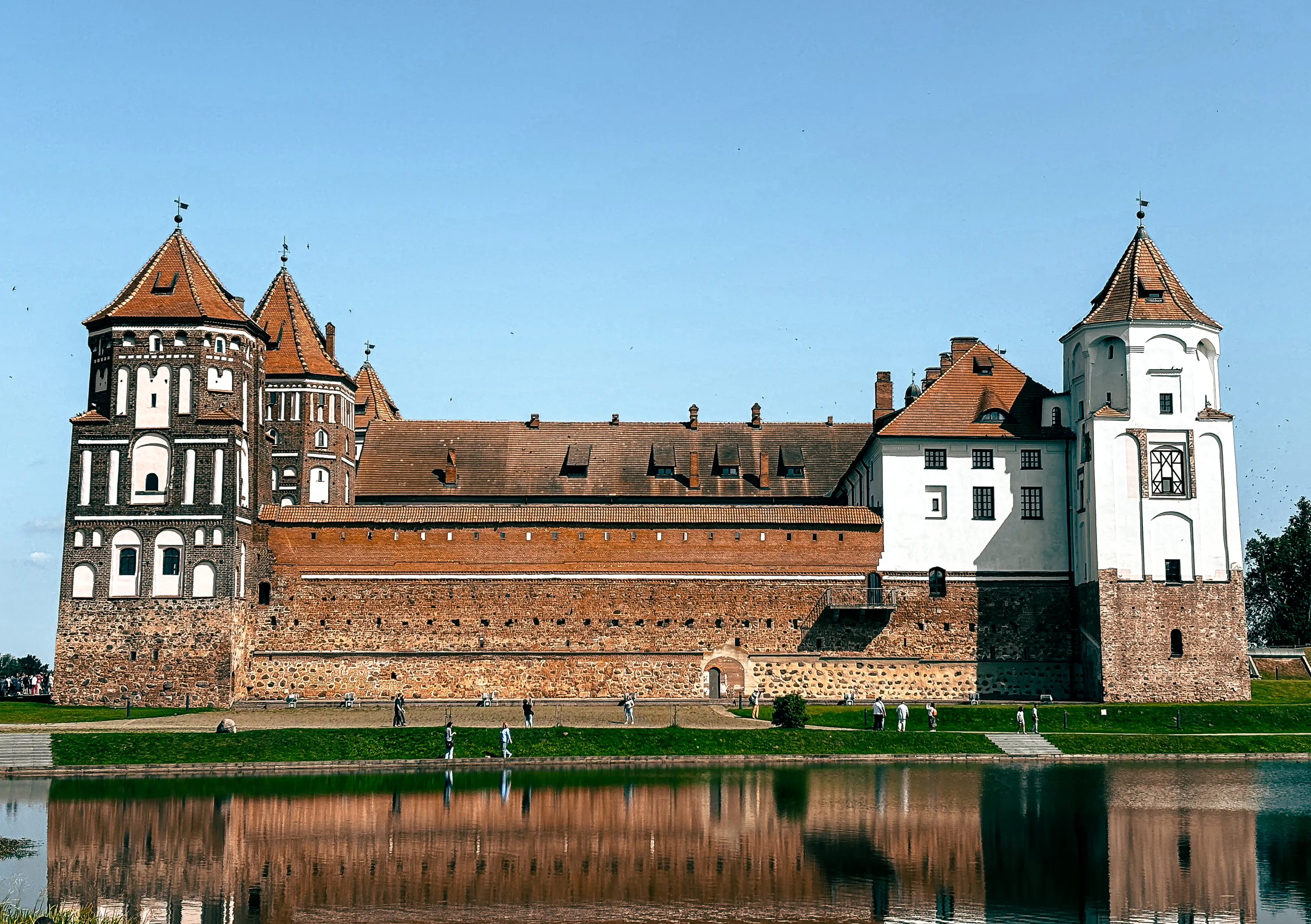
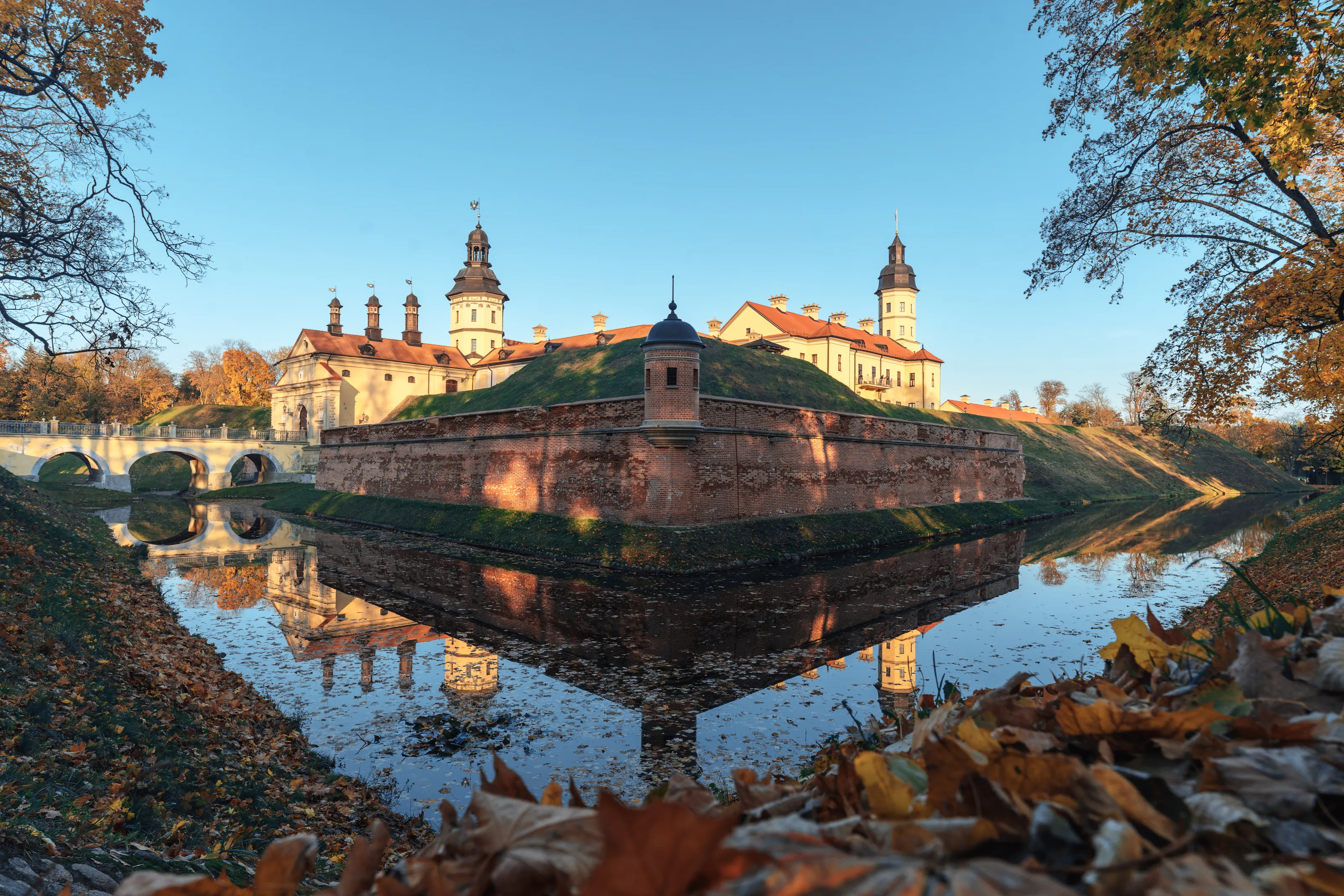
Mir Castle, begun in the late 15th century in Gothic style, was completed around 1568 by the Radziwiłł in Renaissance style. At Nesvizh, the Radziwiłł ensemble is a residence surrounded by parks, listed in 2005.
Brest, Grodno and Białowieża
Brest Fortress, near the Polish border, is a Second World War memorial. Grodno is known for its well-preserved architecture, and Białowieża offers walks in primeval forest, where bison, elk and wild boar live.
Polotsk, Vitebsk and the lakes
Polotsk is described as the oldest Belarusian city, Vitebsk is Marc Chagall's hometown, and the Braslau Lakes make a good nature stop.
Getting around
Trains, buses and cars across a flat country
Trains and buses link the main cities; booking ahead is wise. Minsk is the only city with a metro, which has two lines. Minsk to Brest takes about four hours by car, and motorways are toll roads.
Yandex Taxi is the most widely used taxi app. Driving at night and in winter can be difficult: animals, fog and icy roads.
Before you go
Four regions, four ways to travel
| Region | Climate | Best time |
|---|---|---|
| Minsk and the centre | Continental: about 18 °C in July, -4 °C in January, snow in winter | June to August; May and September milder |
| Mir and Nesvizh | Same continental climate, pleasant summers, cold winters | June to September |
| Brest and Białowieża | Damper, forest and marshes, cool from autumn | May to September |
| North and lakes (Braslau, Naroch) | Cold winters, mild summers good for swimming and walking | June to August |
Entry rules change regularly: many countries benefit from a time-limited visa-free regime under conditions, while other nationalities need a visa. Check the conditions with official sources before booking and consult your government's travel advice.
To combine several countries, see also Poland, Lithuania and Latvia. Western bank cards do not work reliably, so carry cash.
Food and drink
Draniki, kvas and krambambula
Belarusian cooking is built on the potato. Draniki, grated-potato pancakes, come with sour cream; you will also find machanka, a meat dish in sauce, kalduny, a kind of dumpling, and potato babka.
To drink: kvas, kefir, kompot and krambambula, a traditional drink. Birch sap is also drunk in spring. Tap water is not considered safe to drink.
Flying to Belarus
The Belarusian airport tracked by SniperAir
Minsk National (Minsk)
About 40 km from central Minsk, linked to the city by bus. Since 2022, flights from EU airspace have been restricted: routings often run through Istanbul, for example, so check options before booking.
FAQ
Frequently asked questions about Belarus
Which airport should I fly into for Belarus?
Minsk National (MSQ), tracked by SniperAir, about 40 km from the centre. Flights from the European Union are restricted, so check the available routings before booking.
When is the best time to visit Belarus?
June to August for castles, lakes and the forest; May and September are milder. Winter is cold and snowy.
Is Belarus an expensive destination?
Prices are generally lower than in Western Europe, but Western bank cards do not work reliably: carry cash and change it at official exchange offices.
Do I need a visa for Belarus?
It depends on your nationality, and the rules change often. Check the conditions with official authorities and consult your government's travel advice before booking.
How long should I stay in Belarus?
Three to four days for Minsk, Mir and Nesvizh, and a week to add Brest, Grodno and the Białowieża Forest.
Can I visit Mir and Nesvizh from Minsk?
Yes: the two castles are about 30 km apart and can be visited as an excursion from the capital. Check transport options on the ground.
How can I be alerted when a flight to Belarus drops below my budget?
Create a SniperAir alert profile with your departure airport and Minsk as the destination: we watch prices for you and notify you as soon as a deal matching your criteria is detected.
Ready to track prices to Belarus?
Create an alert and let SniperAir do the rest.
Create my alert