
Travel to Azerbaijan
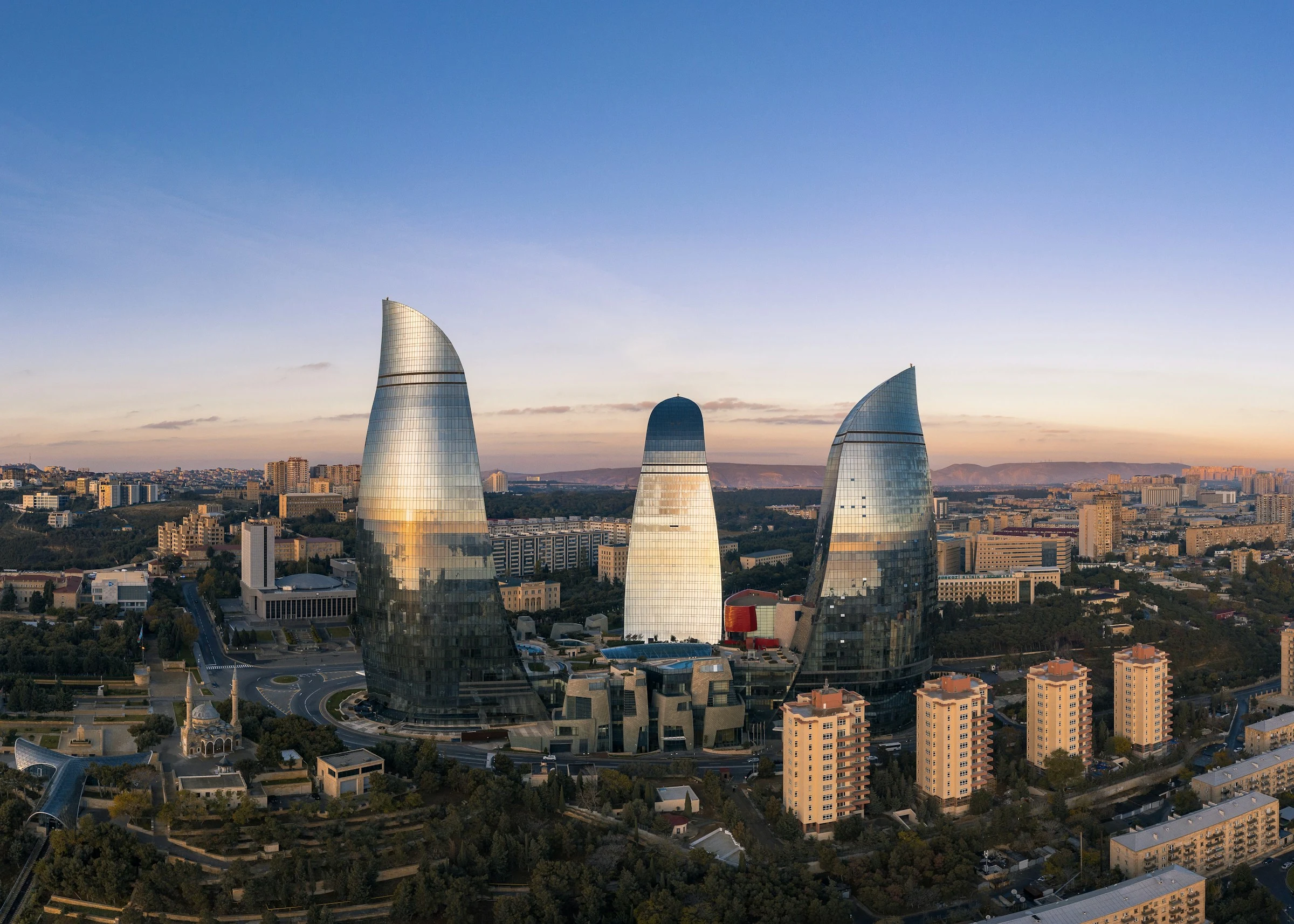
Glass towers shaped like flames, a walled old town on the Caspian, thousands of prehistoric carvings and bubbling mud volcanoes: here is what to plan before you look for cheap flights to Azerbaijan, the Caucasus' land of fire.
Azerbaijan in numbers
Capital
Baku
Population
About 10 M
Highest point
4,466 m
Currency
Manat
Language
Azerbaijani
Caspian coast
713 km
Continent
Asia
Time zone
UTC+4
Airports covered
1
Why visit Azerbaijan
Fire, stone and mountains between Europe and Asia
The land of fire
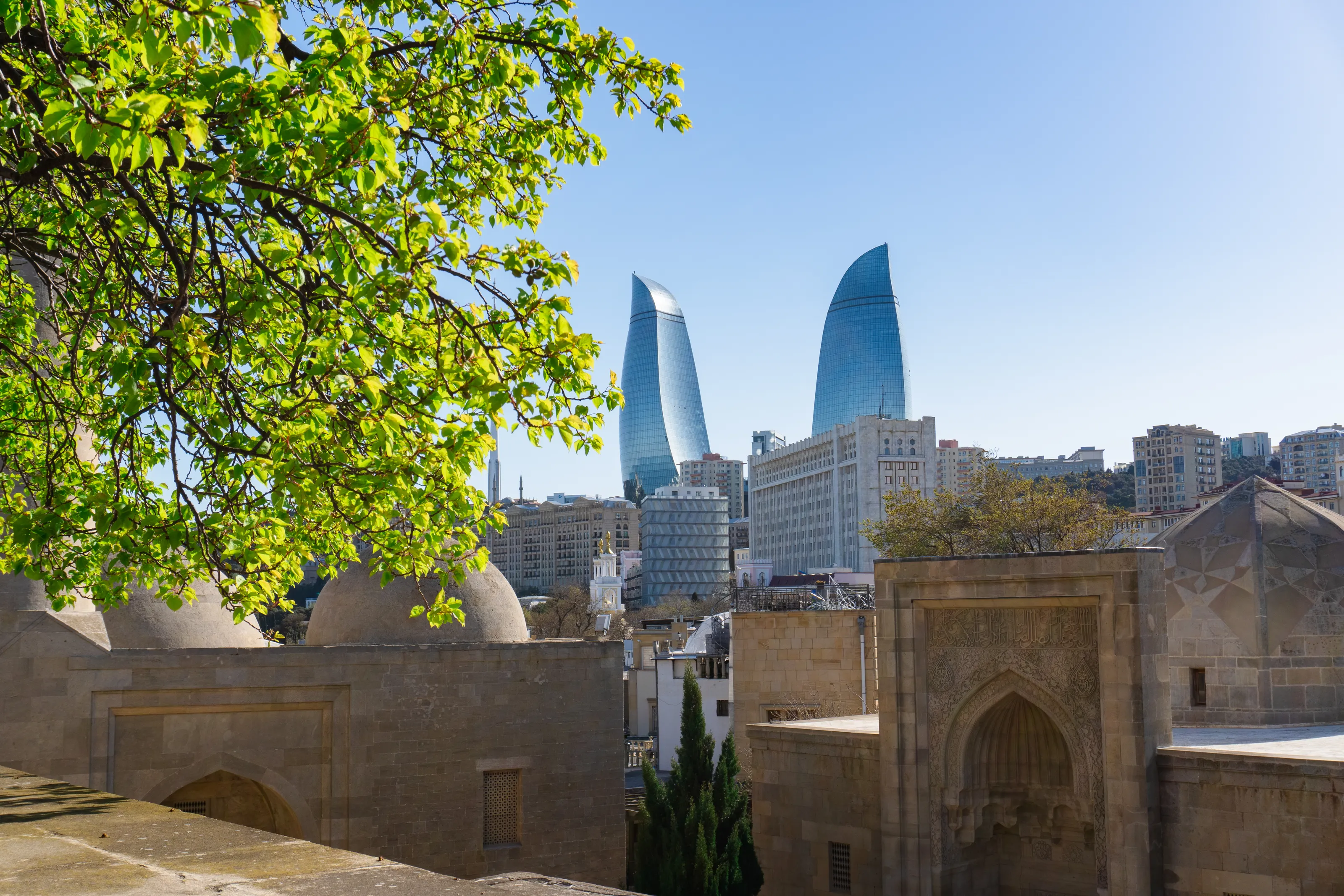
The name is read as "protector of fire": oil, gas, old fire-worshipping traditions and natural flames that still burn on the Absheron hillsides. The Flame Towers have become the emblem of Baku's waterfront.
A walled old town
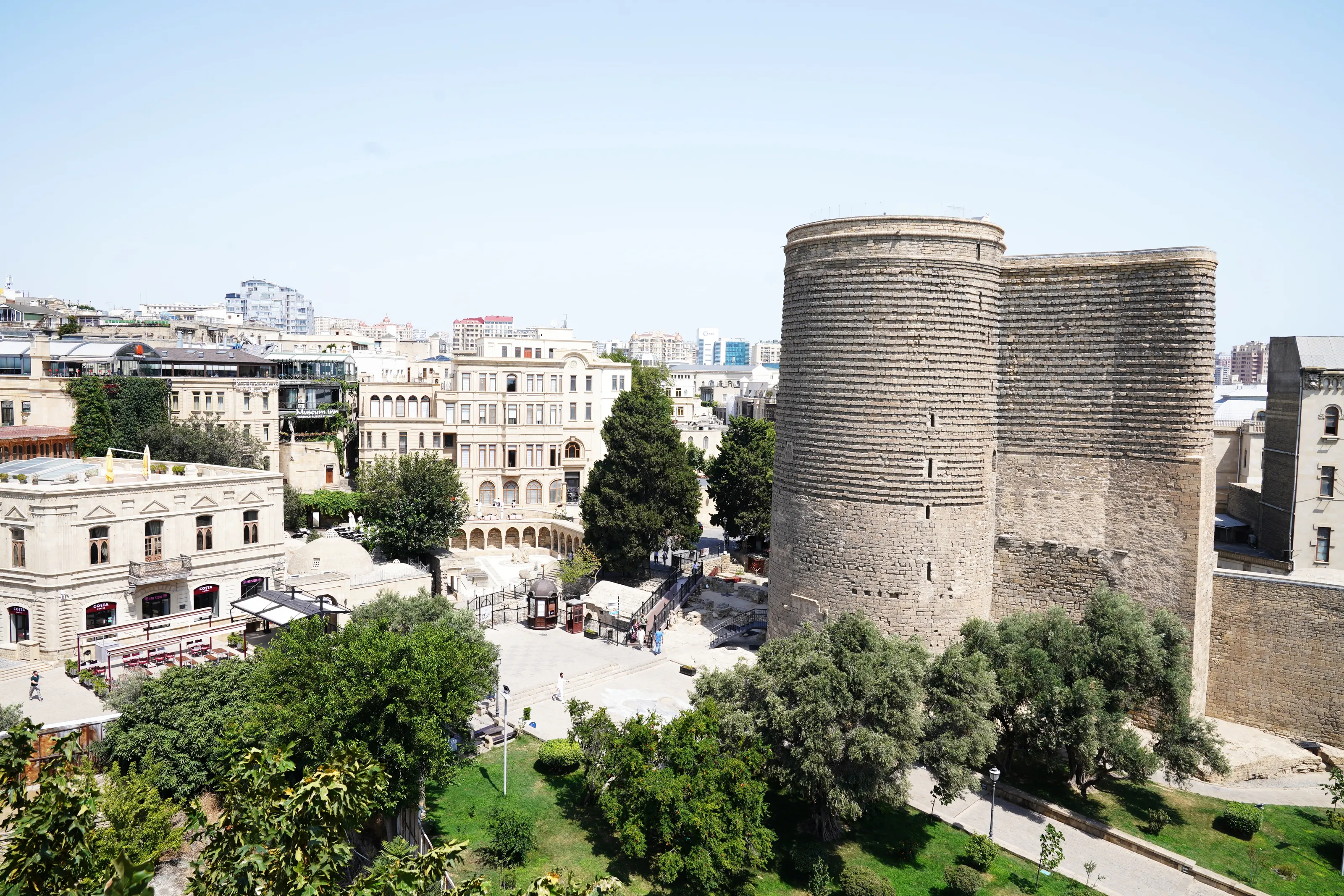
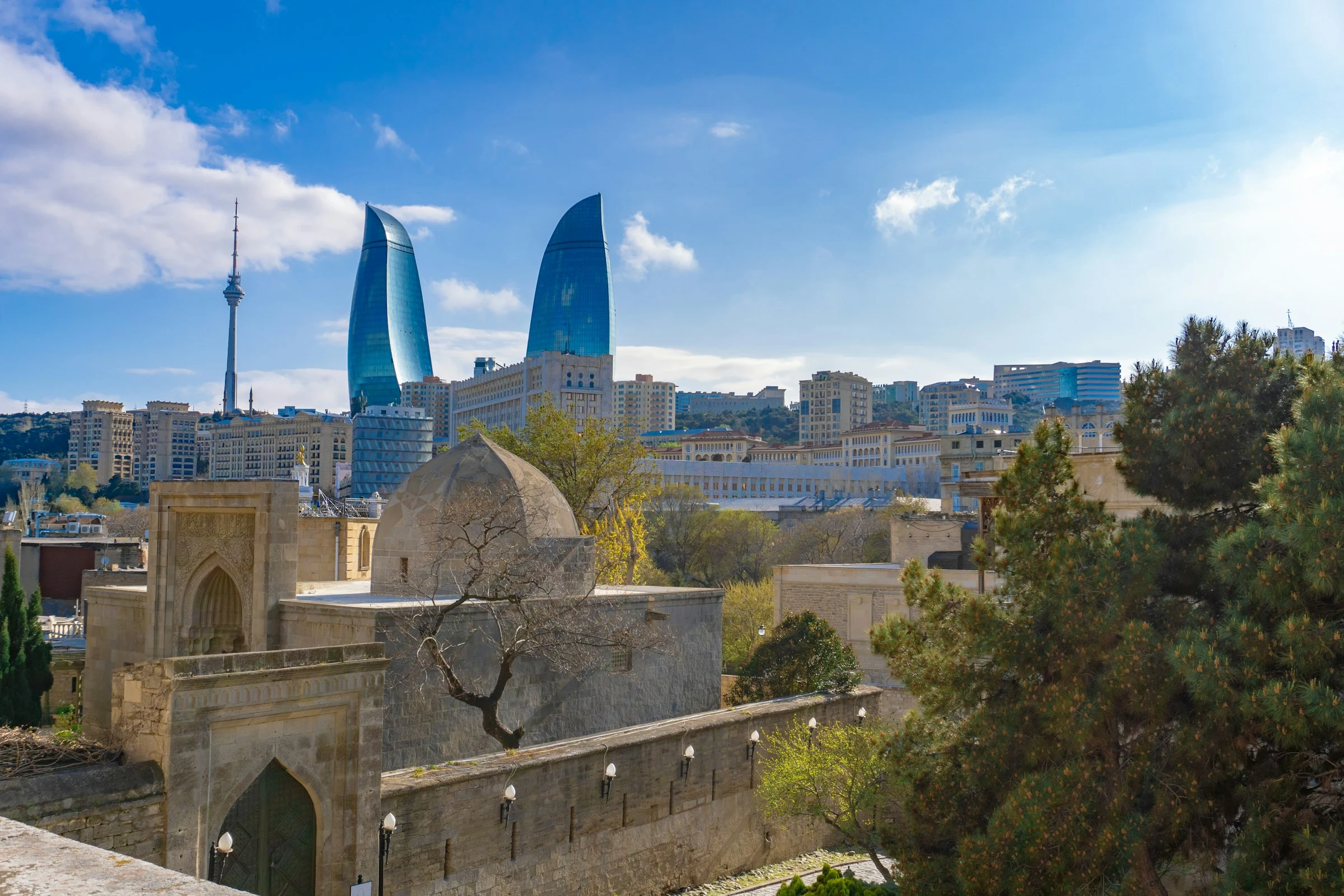
Icherisheher, Baku's medieval heart, is a UNESCO site: narrow alleys, the Maiden Tower, the 15th-century Shirvanshahs' Palace, hammams, galleries and rooftop terraces.
Gobustan and mud volcanoes
About 60 kilometres from the capital, over 6,000 carvings between 5,000 and 20,000 years old, and close by a few of the country's roughly 350 mud volcanoes.
Caucasus, forests and the Silk Road
Sheki and its palace, Gabala's pine forests, the villages of Lahij and Guba: the country grew along the Silk Road, and in winter you can ski at Shahdag and Tufandag.
Landmarks
Baku, Gobustan, Sheki, Absheron and Gabala
A trip to Azerbaijan usually starts in Baku, with day trips to Gobustan and the Absheron peninsula, then two or three more days in Sheki, Gabala or Guba: a week gives a good rhythm, and four or five days are enough for the capital region alone.
Baku, the Old City and the Maiden Tower
Icherisheher sits behind 12th-century walls and shelters a few thousand residents, museums, galleries, mosques, caravanserais and cafes. The Maiden Tower, whose date and original purpose are still debated, dominates the quarter; the 15th-century Shirvanshahs' Palace gathers palace, mosque, mausoleum and hammam in one complex. Don't miss the Museum of Miniature Books, home to the world's smallest book, just two millimetres wide.
Modern Baku: Flame Towers and the Heydar Aliyev Centre
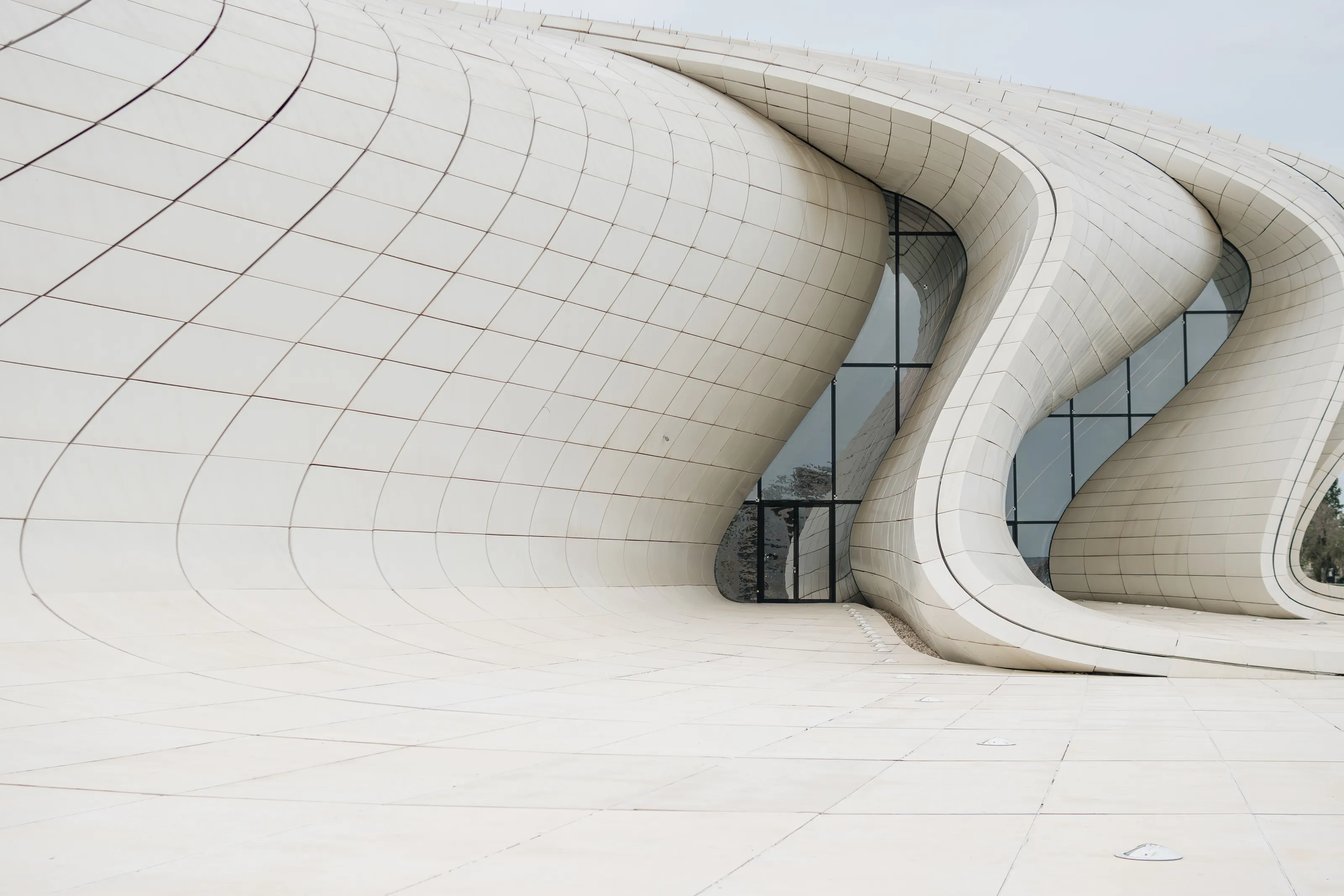
Outside the walls Baku shows a different face: three glass Flame Towers that light up like flames at night, a boulevard along the Caspian, buildings from the late 19th-century oil boom and the Heydar Aliyev Centre, designed by Zaha Hadid with not a single straight line and named Design of the Year in 2014. The city is nicknamed the City of Winds, between the warm gilavar from the south and the cool khazri from the north.
Gobustan and the mud volcanoes
About 60 kilometres south of Baku, Gobustan reserve, founded in 1966, protects more than 6,000 petroglyphs showing hunters, boats, dances and camel caravans. There is also a musical stone, the gaval dash, that rings like a tambourine, and an inscription left by a Roman soldier in the 1st century. Active mud volcanoes can be visited a few minutes away by road.
Sheki and the Khan's Palace
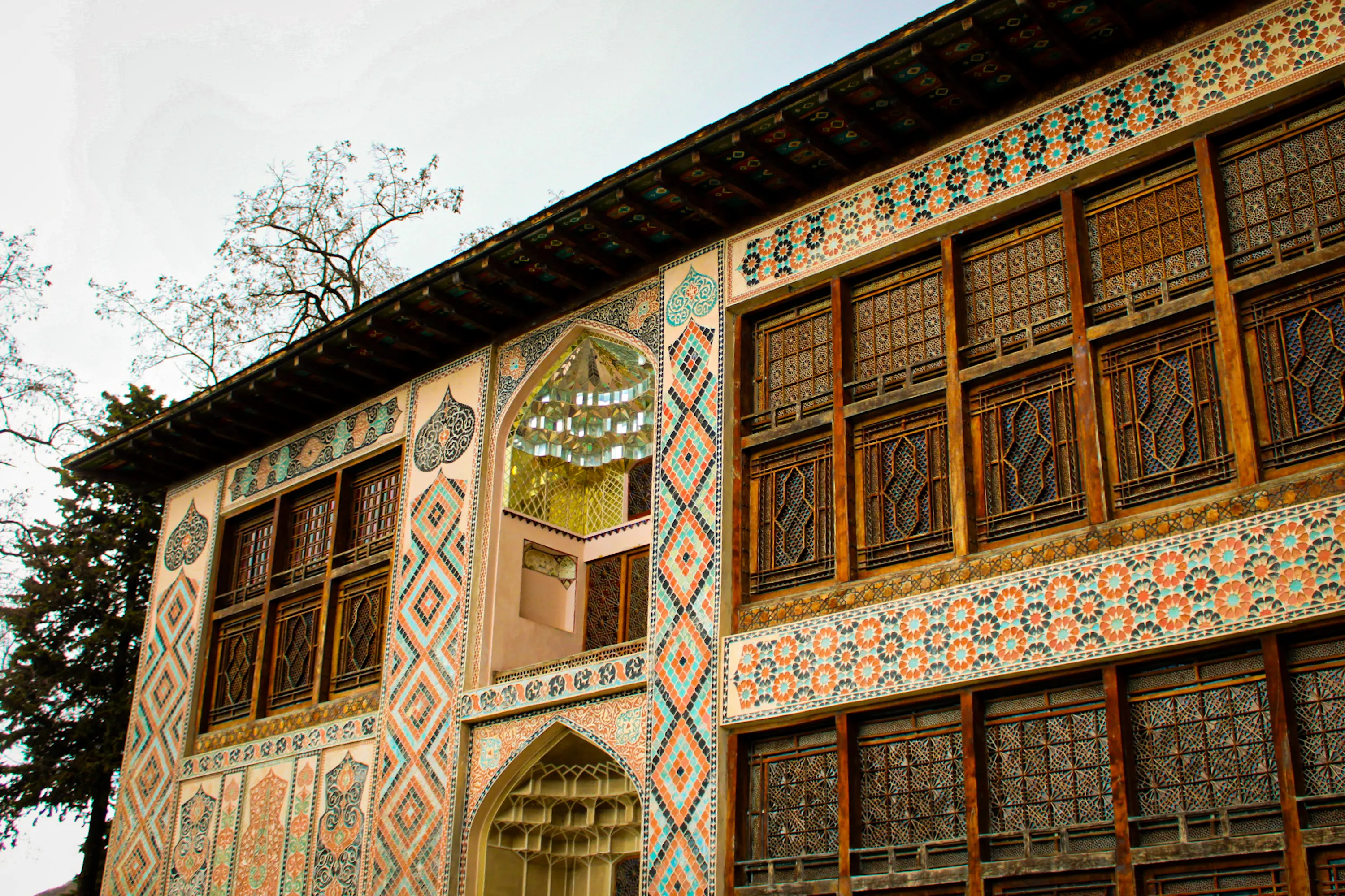
In the north-west, Sheki is a town of stone and timber at the foot of the Caucasus. Its Khan's Palace, decorated with wooden stained glass assembled without nails and with wall paintings, is the main visit; caravanserais and honey-pastry workshops fill out the day. Plan a night there rather than a round trip from Baku.
Absheron, Gabala and the Greater Caucasus
The Absheron peninsula combines sandy beaches, the natural flames of Yanar Dag and the Ateshgah fire temple, less than an hour from the centre. Further on, Gabala charms with pine forests, Lake Nohur, thermal springs and resorts, and can also be reached by train from Baku. The mountain villages of Lahij and Guba, known for its carpets, round off the route.
Before you go
Which season to travel to Azerbaijan
| Area | Climate | Best time to visit |
|---|---|---|
| Baku and Absheron | Hot sunny summers, cool winters; windy, snow rare in the city. | April-June and September-October |
| Sheki, Gabala, Shamakhi | Green spring, grape harvest in autumn in the Gabala and Ismayilli vineyards. | May and September-October |
| Greater Caucasus (Guba, Shahdag, Tufandag) | Snowy winters, cooler summers for hiking. | December to March for skiing, June to September for hiking |
| Gobustan and the steppe | Semi-arid ground, little shade in midsummer. | Spring and autumn |
May is a very good month for monuments and lakes, and Novruz, the spring festival, brightens the country in March. Temperatures vary by region: pack layers for the mountains. Keep an eye on fares before you lock in your dates.
Getting around
Metro, taxis, trains and minibuses
In Baku, the metro, ride-hailing taxis and walking cover the central districts. For Gobustan, Absheron or Sheki, a driver or a rental car gives more freedom than a fixed timetable; minibuses and coaches also link the main towns.
A passenger train links Baku with Gabala. Leave some slack before a return flight if you head into the mountains, and remember the wind can pick up along the Caspian coast.
Food and culture
Saffron plov, black tea and Caucasus carpets
The Azerbaijani table stars saffron plov, dolma (stuffed vegetables or leaves), bozbash lamb soup, qutab flatbreads filled with herbs or meat, and honey pastries such as baklava. Black tea, served in a pear-shaped glass, punctuates every meal.
The country was a crossroads of the Silk Road, with regional carpet schools, kelaghayi silk scarves and a love for Novruz, which celebrates spring. Baku's museums, from carpets to miniature books, are easy to visit on a rainy day.
Flying to Azerbaijan
The Azerbaijani airport covered by SniperAir
Heydar Aliyev International
The capital's airport, about twenty kilometres from central Baku: allow half an hour by road; taxis and buses serve it. It is the entry point for Baku, Gobustan, Absheron and, further on, Sheki or Gabala.
FAQ
Frequently asked questions about Azerbaijan
Which airport do I fly into for Azerbaijan?
Baku (GYD) is the main international airport and the one SniperAir tracks. The city centre is about half an hour away by road.
When is the best time to travel to Azerbaijan?
April-June and September-October are the most pleasant for Baku, Sheki and the grape harvest. Summer is hot and sunny on the coast, winter suits skiing at Shahdag and Tufandag.
Is travelling to Azerbaijan expensive?
On the ground, meals, local transport and accommodation are generally moderate outside Baku. Excursions with a driver and seafront hotels push the bill up.
Do I need a visa for Azerbaijan?
It depends on your nationality. Many travellers can get an e-visa online; check the conditions on the official Azerbaijan tourism site and with the authorities before you go.
How long do I need in Azerbaijan?
Four to five days cover Baku, Gobustan and Absheron. Allow seven to nine days if you add Sheki, Gabala or Guba.
What should I see in a weekend in Baku?
The Old City and the Maiden Tower, the boulevard and the Flame Towers, then the Heydar Aliyev Centre. With half a day more, head to Gobustan.
How do I get alerted when a flight to Azerbaijan gets cheaper?
Create a SniperAir alert profile with your departure airport and Baku as destination: we track prices and tell you as soon as an opportunity matches. See how it works.
Ready to track fares to Azerbaijan?
Create an alert and let SniperAir do the rest.
Create my alert