
Travel to Sudan: Nubian pyramids and the Nile valley
More pyramids than Egypt, a river running through the desert, mud-brick temples four thousand years old: Sudan was the heart of the Kingdom of Kush, and its Nubian sites rank among the most remarkable on the continent. Heritage to discover when conditions allow. Here is some background before you look at flights to Sudan.
Before reading further: many governments advise against or restrict travel to Sudan, and the situation can change. Check the official advice of your country of departure before considering any trip; this page only presents cultural and natural landmarks.
Sudan at a glance
Capital
Khartoum
Area
Nearly 1.9 million km²
Currency
Sudanese pound
Languages
Arabic and English
River
The Nile
Coast
About 850 km
Continent
Africa
Time zone
UTC+2
Airports covered
1
Why it fascinates
The Kingdom of Kush, its pyramids and the great river
Nubian pyramids
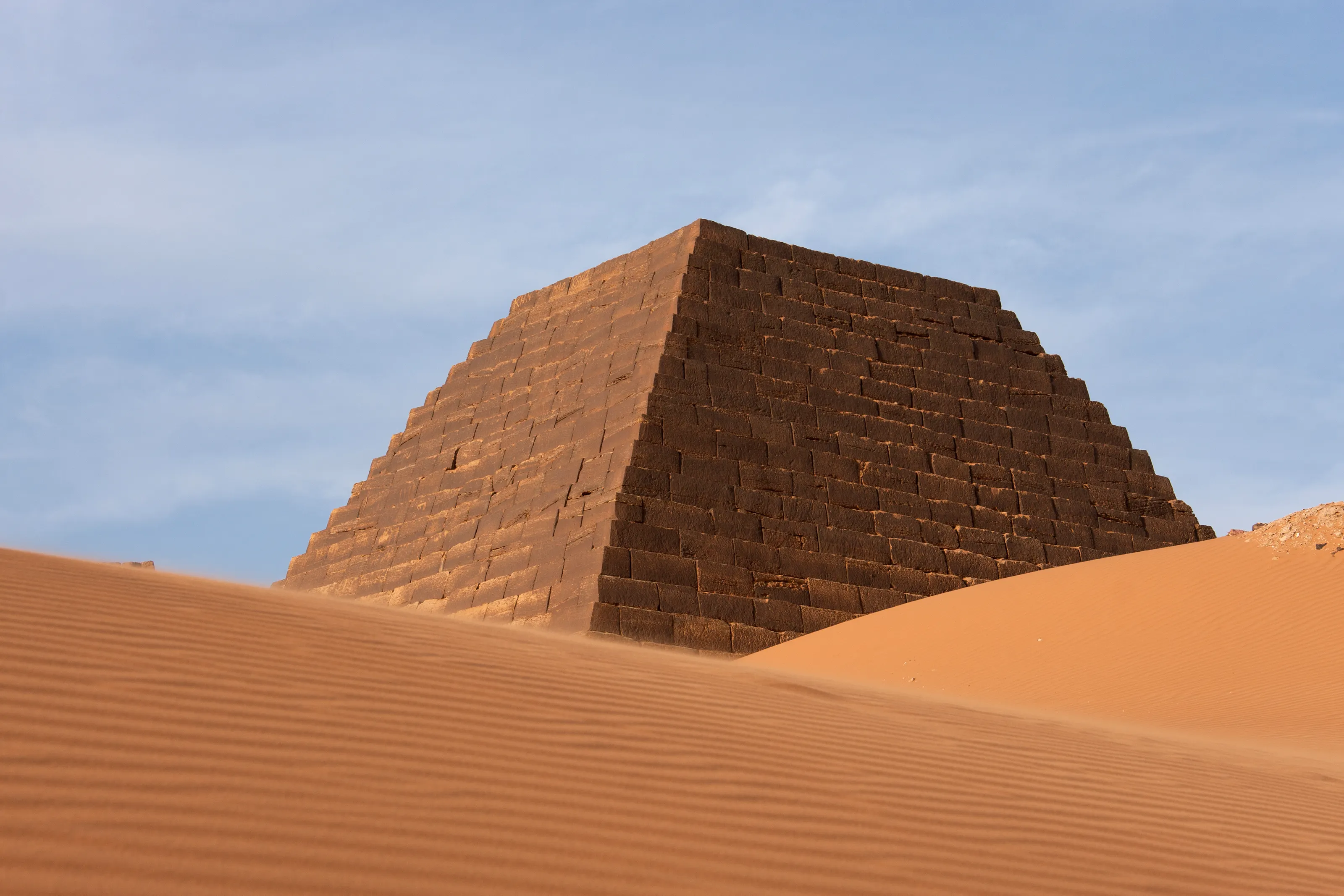
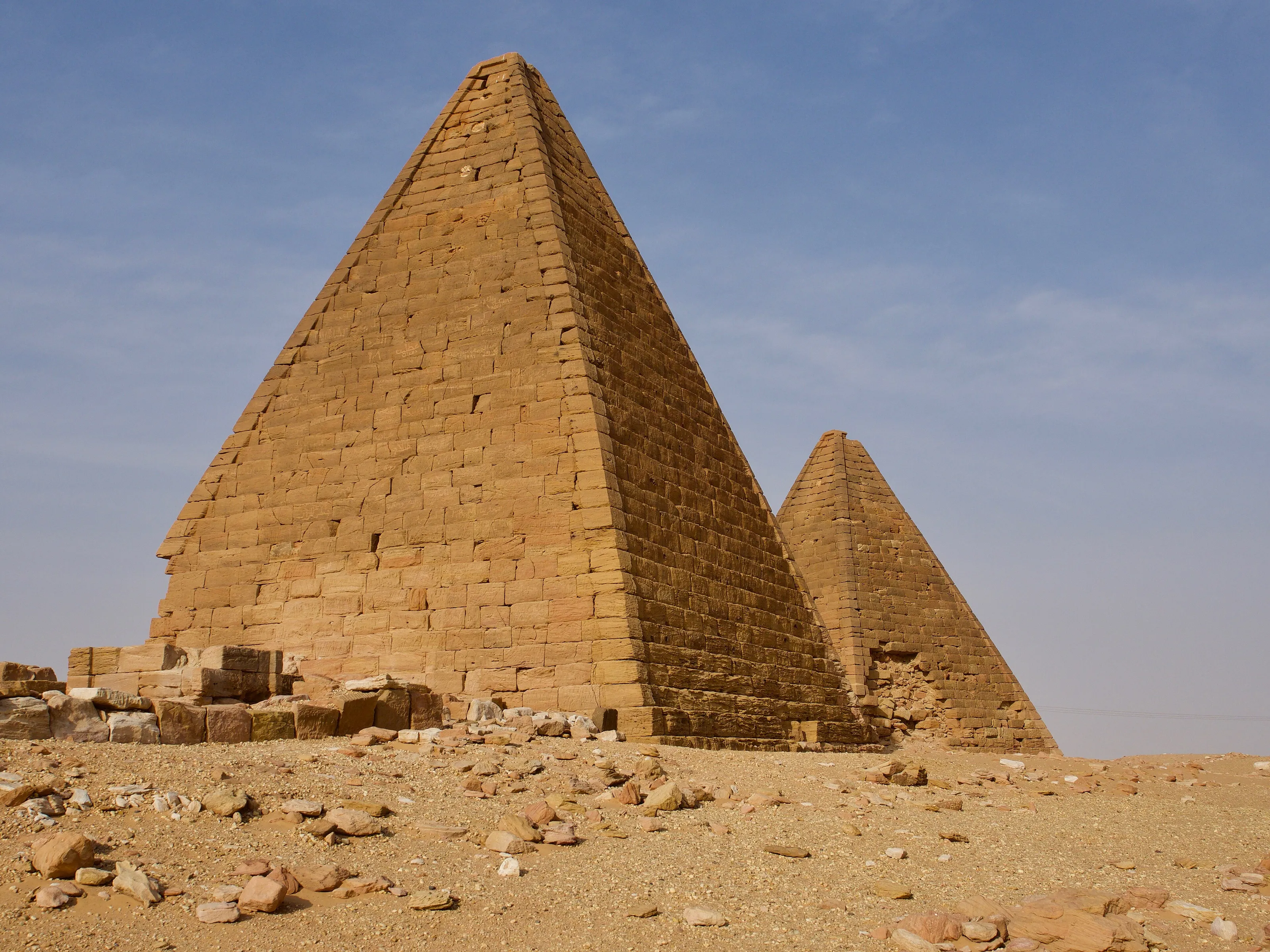
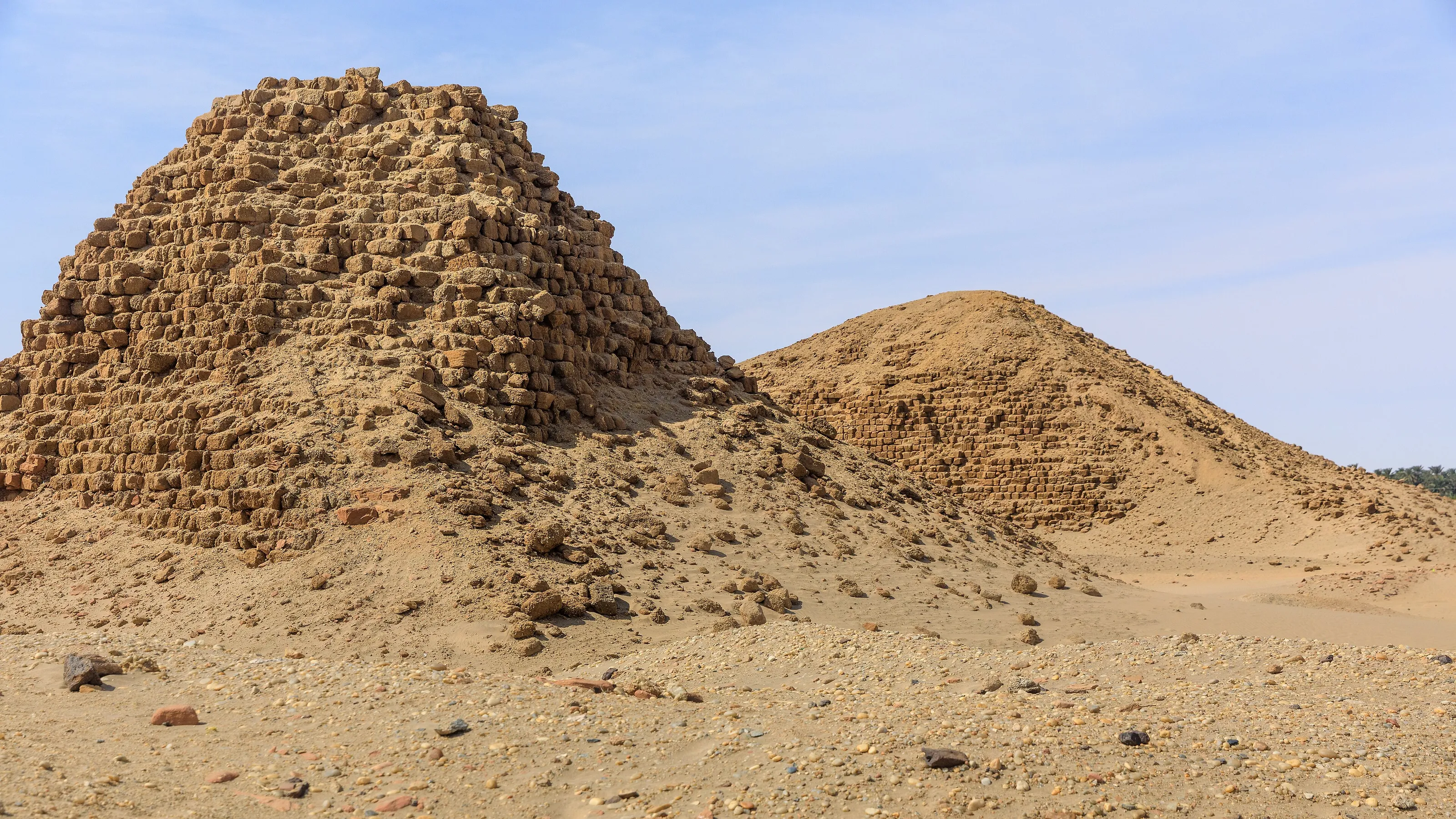
Between 800 BC and 100 AD the rulers of Kush built hundreds of pyramids, smaller and steeper than Egypt's.
The Nile in the desert
The river traces a ribbon of date palms and villages through sand and rock, from Khartoum up into Nubia.
Kerma, mud-brick giant
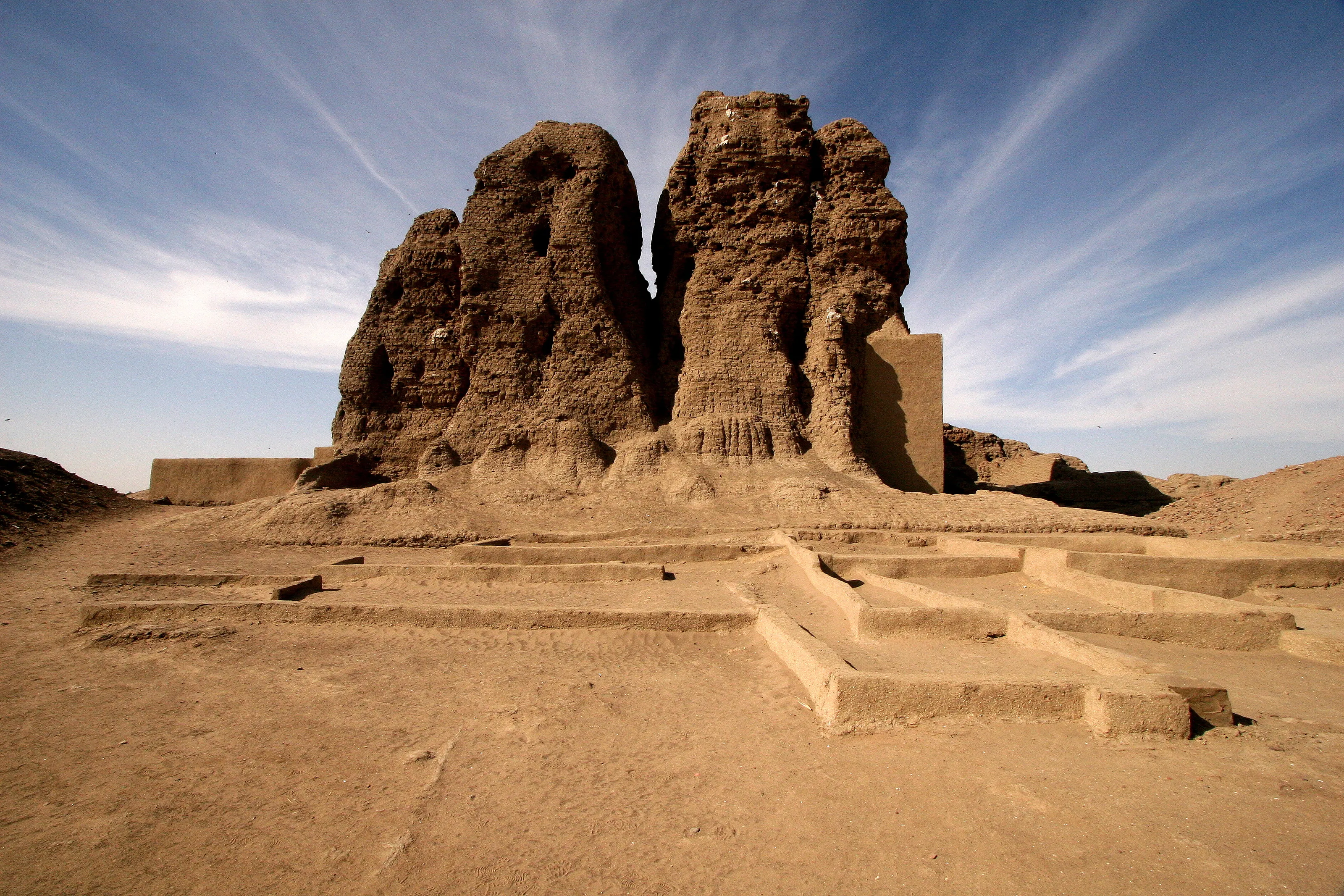
The Kingdom of Kerma, around 2500 to 1500 BC, left the Western Deffufa, a huge mud-brick temple still standing.
A quiet Red Sea
In the north-east, nearly 850 km of coast and coral reefs are part of the country's natural heritage too.
Highlights
Meroë, Jebel Barkal, Kerma, Nuri and Khartoum
These are the places that give Sudan its reputation for Nubian heritage. They are presented as cultural information, landmarks to discover when conditions allow; this page offers no itinerary and no on-the-ground advice.
Meroë, the pyramid necropolis
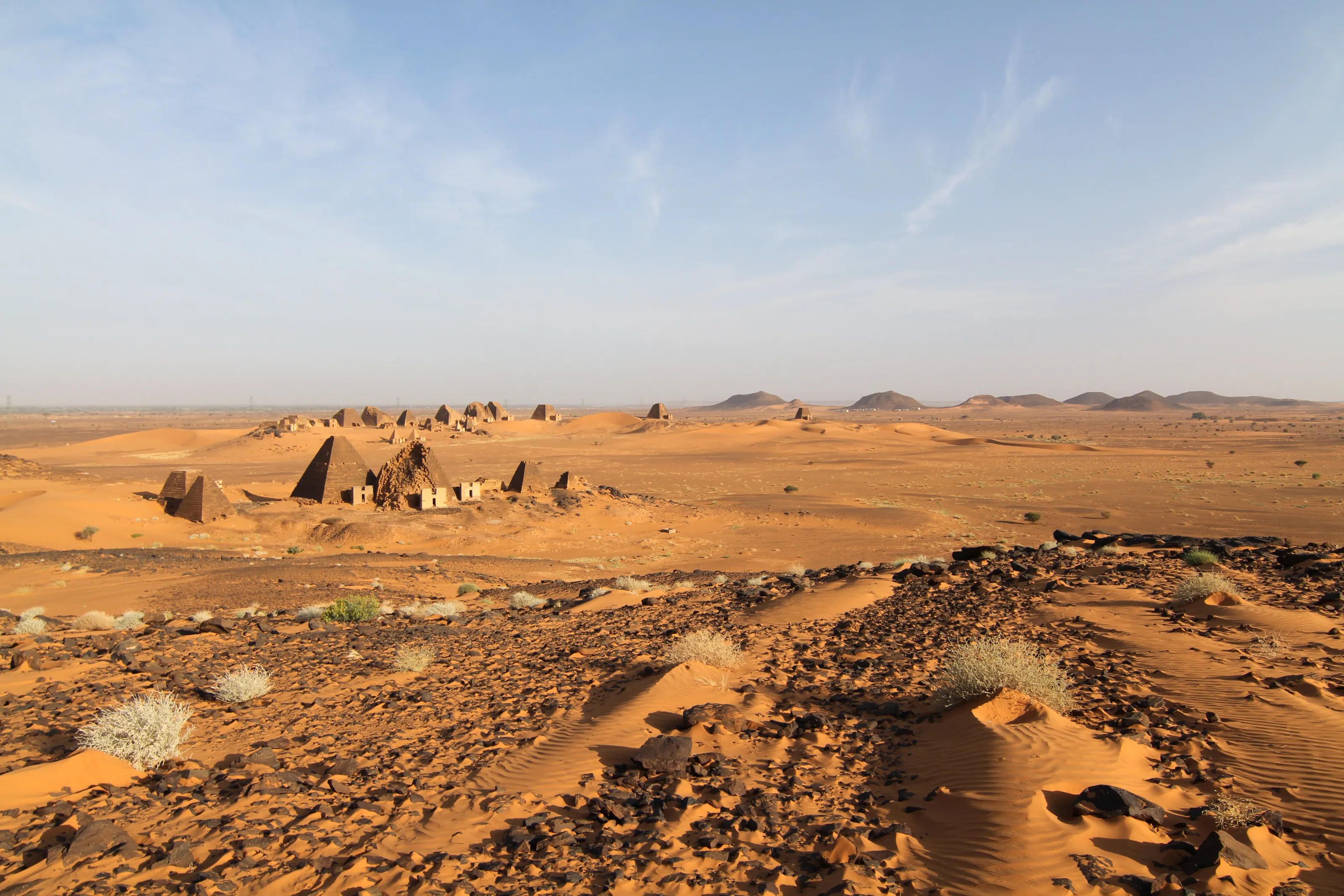
About 200 km north-east of Khartoum, the pyramids of Meroë line up along sandy ridges. The Archaeological Sites of the Island of Meroë have been a UNESCO World Heritage Site since 2011; the city was one of the capitals of the Kingdom of Kush, which looked both to Egypt and to inner Africa. The pyramids, narrow and steep, once had chapels decorated with reliefs. The contrast of dark sandstone and orange sand makes this one of Sudan's strongest images.
Jebel Barkal, the sacred mountain of Napata
On the banks of the Nile near Karima, Jebel Barkal is a sandstone butte about 100 m high, which Egyptians and later Kushites regarded as the home of the god Amun. Temples and a group of royal pyramids stand at its foot. The site, together with other places in the Napatan region, has been on the UNESCO list since 2003.
Kerma and the Western Deffufa
Kerma was the capital of a powerful kingdom of Upper Nubia around 2500 to 1500 BC. The Western Deffufa, a mud-brick mass with walls carved by the wind, still dominates the site, and a nearby museum shows objects found in its cemeteries. This landscape of sand, earth and streaky clouds is among the most photogenic in the country.
Nuri, the royal cemetery
On the left bank of the Nile, Nuri holds the pyramids of several kings and queens of Kush, among them Taharqa's, the largest. Less visited than Meroë, these stepped stone tombs stand at the edge of the date-palm groves, between river and desert.
Khartoum, between two Niles
Where the Blue Nile joins the White Nile, Khartoum and its neighbour Omdurman hold the museums, among them the National Museum with temples rescued from Lower Nubia, and the markets. The setting is that of a large river city with a very hot climate.
Before you go
Desert, heat and rainy season: the climate of Sudan
| Area | Climate | Period often cited |
|---|---|---|
| North and Nubia (Meroë, Kerma, Nuri) | Desert: very little rain, hot to very hot days, cooler nights in winter. | November to February, milder |
| Khartoum and the centre | Hot all year, with peaks above 40 C in spring. | November to February |
| South and south-east | Savanna, rain from April or May to October, up to about 1,500 mm a year in the south. | Dry season |
| Red Sea coast | Hot and humid, very little rainfall. | Winter |
Many governments advise against or restrict travel to Sudan. These climate notes are cultural information only; check your departure country's official advice before considering any trip, and follow it. Entry requirements vary by nationality.
Getting around
A very large country built around the Nile
Sudan covers nearly 1.9 million km2: the Nile forms its axis, and the Nubian sites are strung along its course, in desert areas. Travel conditions change and depend on decisions that only the official sources of your country of departure can reliably communicate.
This page offers no itinerary and no on-the-ground advice. It presents the country for what is most precious about it: its Nubian heritage, landscapes and culture, to discover when conditions allow.
Culture and food
Ful, kisra, spiced tea and Nubian hospitality
The Sudanese table is built on simple, filling dishes: ful, a mashed fava bean dish, kisra, a thin sorghum flatbread, or asida, a grain porridge served with a sauce. Coffee, often scented with ginger, and karkade, a hibiscus infusion served hot or cold, go with every gathering.
Nubian culture gave the country a language, a music and a reputation for hospitality; medieval Nubia even devised an alphabet based on Coptic, and its churches kept wall paintings.
Travel to Sudan
The Sudanese airport tracked by SniperAir
Khartoum International
The airport of Khartoum, the capital, close to the centre. Some services may be suspended or limited: check the situation before any booking.
FAQ
Frequently asked questions about flights to Sudan
Which airport for a flight to Sudan?
SniperAir tracks Khartoum (KRT). Some services may be suspended or limited: check with airlines and the authorities before any booking. Other cities have their own airports, not covered.
When is the best time to travel to Sudan?
In the desert north, November to February is the mildest period; in the south the rainy season runs from April or May to October. These are only climate notes.
Is travelling to Sudan expensive?
The budget depends on many factors, and the flight is often a large share. We give no prices or estimates: conditions can change and fares vary widely.
Do I need a visa for Sudan?
A visa is generally required, but conditions vary by nationality and can change. Ask the competent authorities and check the official website of your country of departure.
How long should I plan for?
The length depends entirely on conditions at the time, and SniperAir offers no itinerary. Distances are long; the answer belongs with official sources.
What should I know before going?
Many governments advise against or restrict travel to Sudan, and the situation can change. Check the official advice of your country of departure before considering any trip. This page is cultural information: it does not recommend travelling.
How do I get alerted when a flight to Sudan changes price?
SniperAir monitors flight prices and sends alerts; we do not sell or book any ticket. Create an alert profile with your departure airport if you follow this destination. See how it works.
Follow flight prices to Sudan?
Create an alert and let SniperAir do the rest.
Create my alert