
Travel to Yemen: Socotra and mud-brick architecture
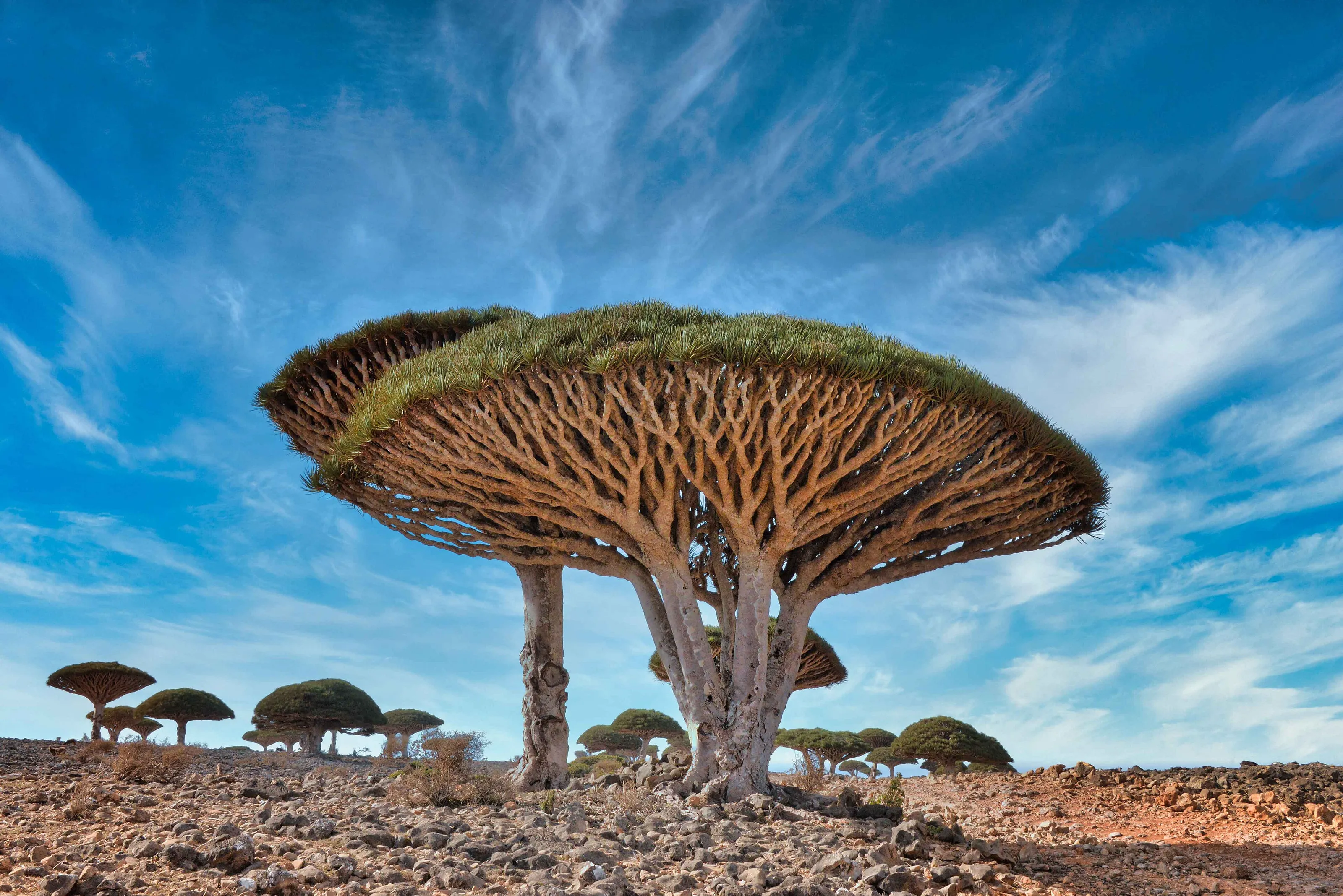
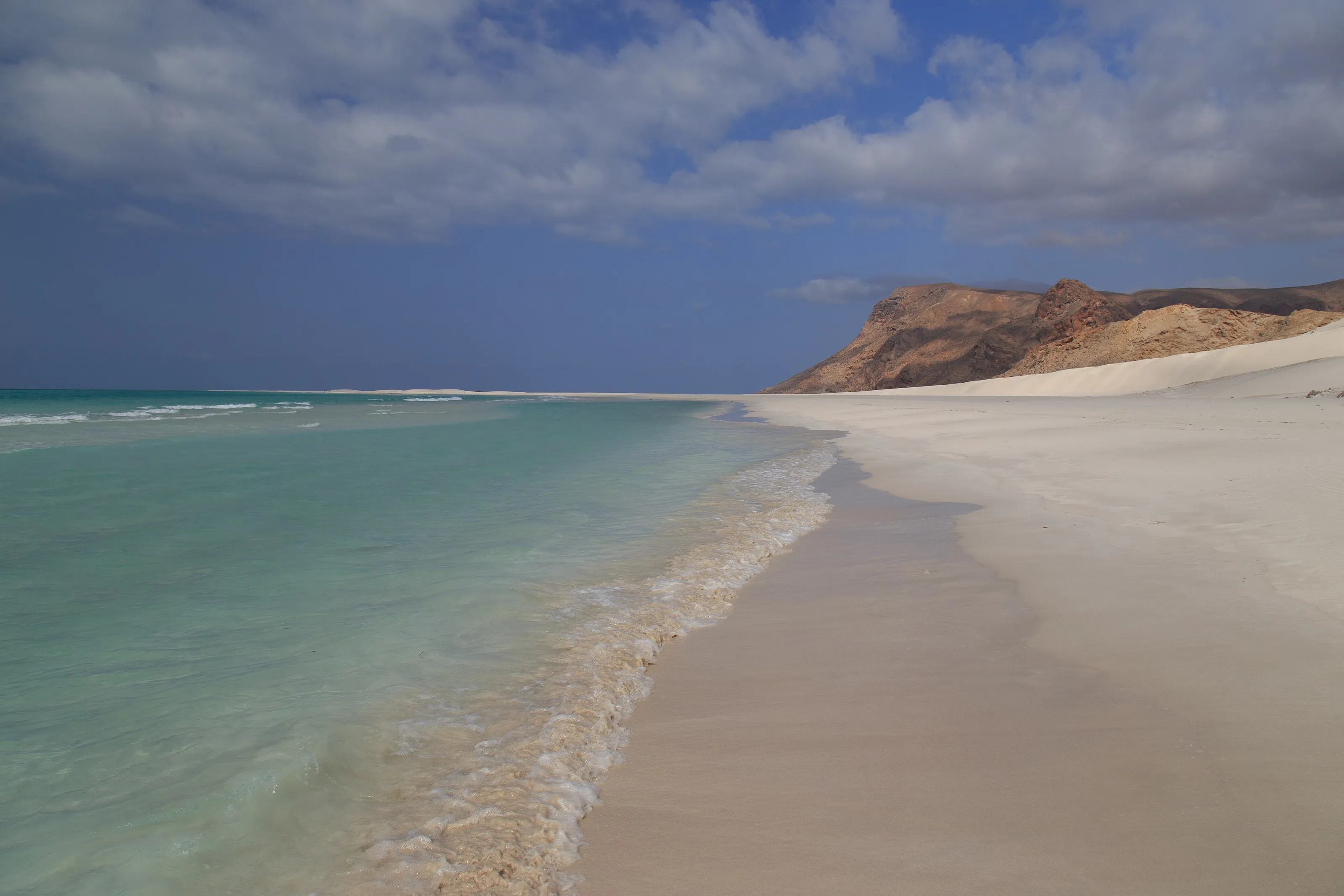
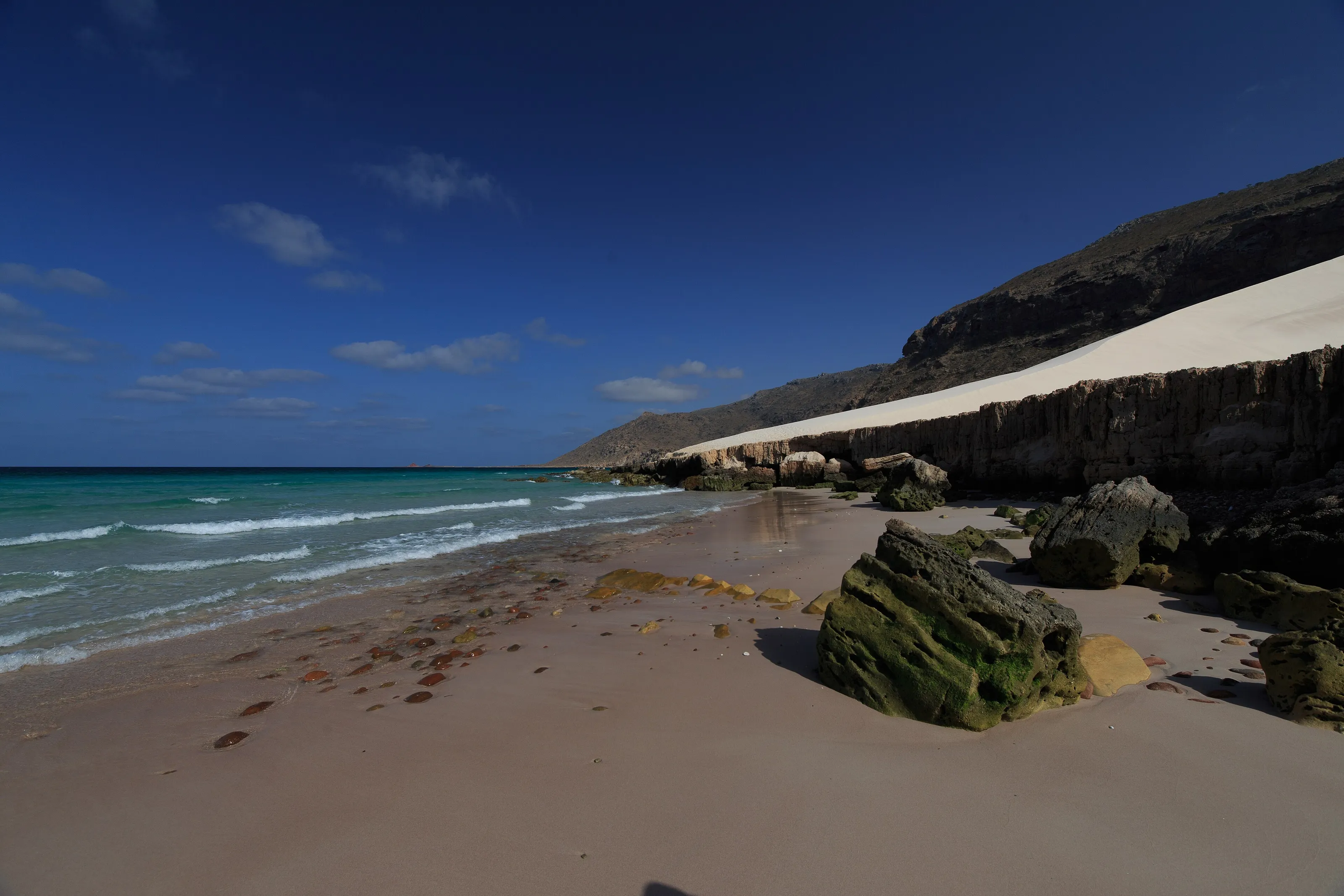
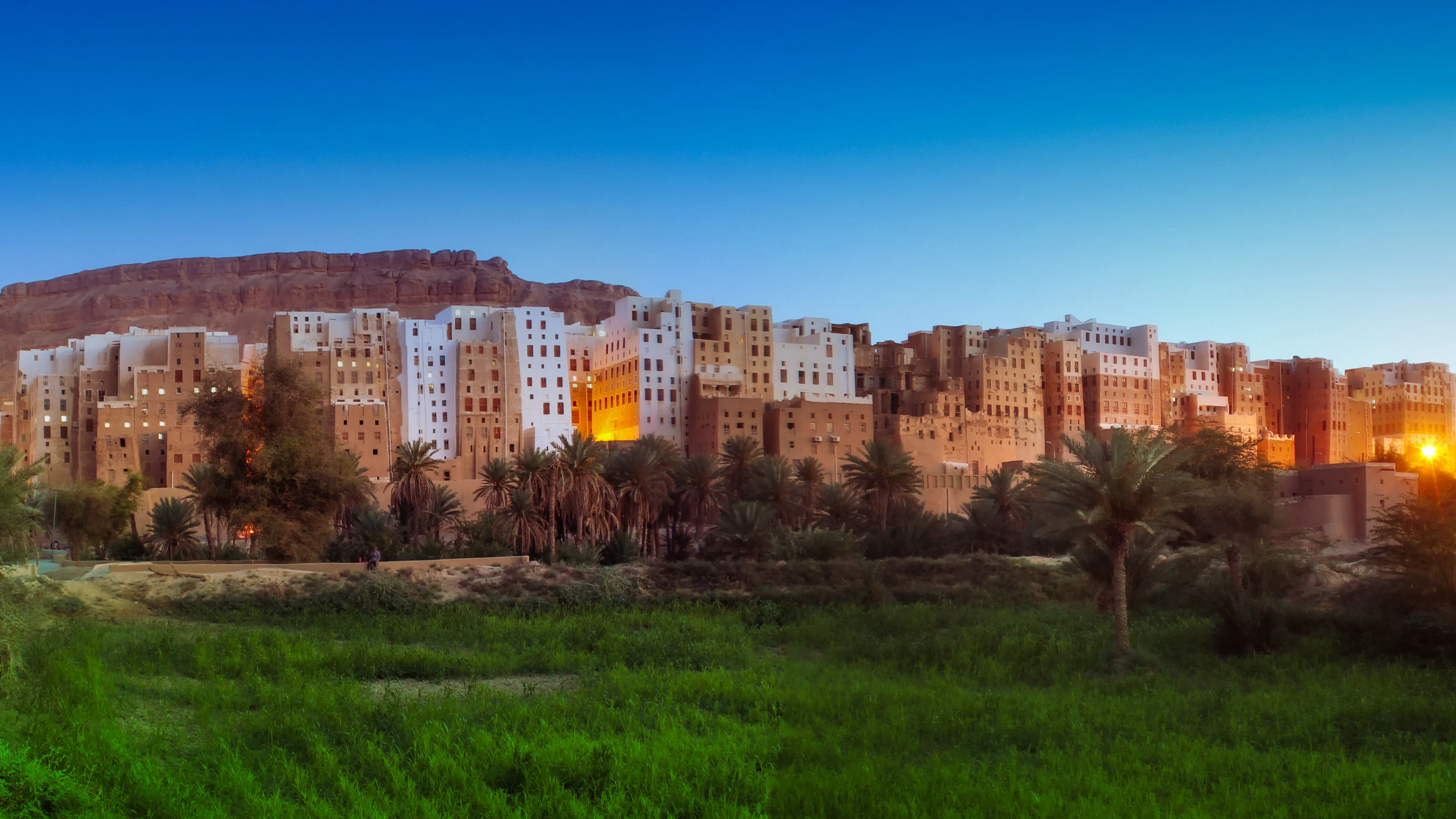
Umbrella-shaped dragon trees on the island of Socotra, white beaches backed by dunes, the mud-brick towers of Shibam and a palace perched on its rock in Wadi Dhar: Yemen is a country of rare nature and unique architecture, to discover when conditions allow. Here is some background before you look at flights to Yemen.
Before reading further: many governments advise against or restrict travel to Yemen, and the situation can change. Check the official advice of your country of departure before considering any trip; this page only presents cultural and natural landmarks.
Yemen at a glance
Capital
Sanaa
Area
About 455,500 km²
Currency
Yemeni rial
Language
Arabic
Highest point
Jabal an-Nabi Shu'ayb
Heritage
Socotra and Shibam
Continent
Asia
Time zone
UTC+3
Airports covered
1
Why it fascinates
A unique island, mud towers and a desert of wadis
Socotra, island of dragon trees
Isolated in the Arabian Sea, Socotra holds a flora in which more than a third of the species grow nowhere else; it has been UNESCO-listed since 2008.
Shibam, the city of mud
Nicknamed the Manhattan of the Desert, Shibam lines up multi-storey mud-brick tower houses, most dating from the 16th century.
Palaces on their rocks
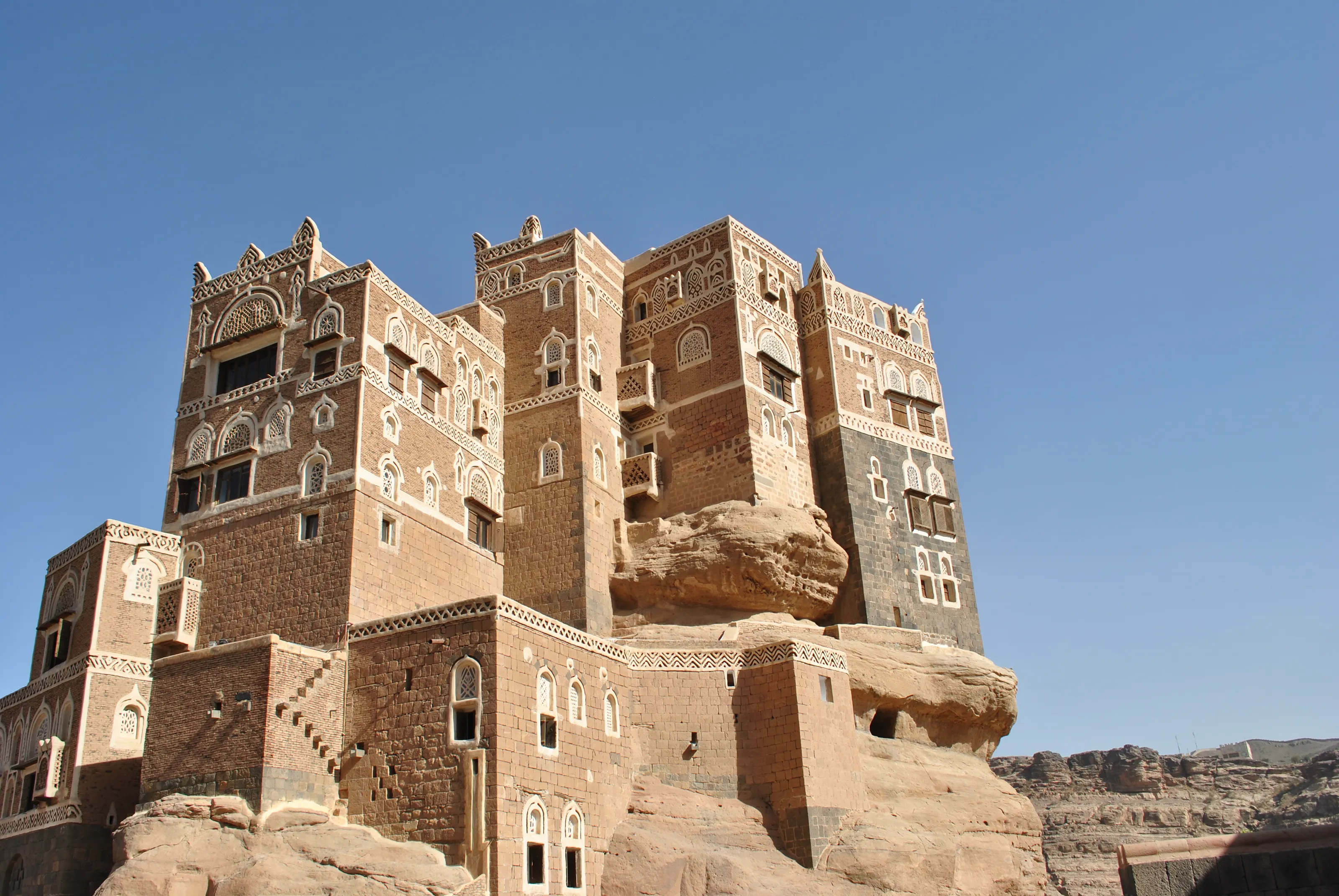
In Wadi Dhar, the Dar al-Hajar palace is a mud tower decorated with white motifs, perched on a rock about fifty metres high.
Hadramawt and its wadis
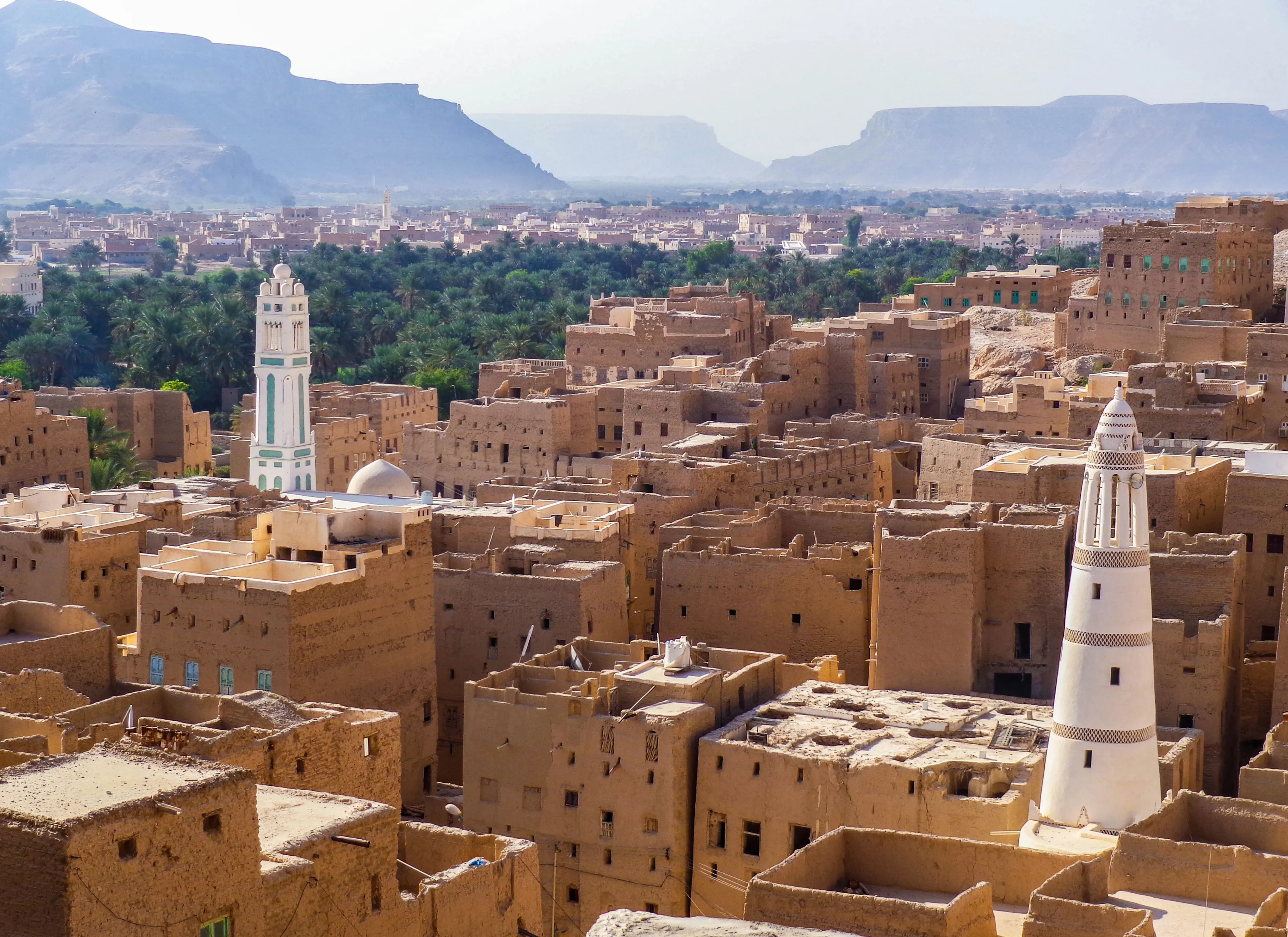
A fertile valley cut into an arid plateau, mud-brick villages, white minarets and palm groves: an inhabited desert landscape.
Highlights
Socotra, Shibam, Wadi Dhar and Hadramawt
These are the places that give Yemen its reputation for nature and architecture. They are presented as cultural information, landmarks to discover when conditions allow; this page offers no itinerary and no on-the-ground advice.
Socotra: dragon trees, beaches and dunes
About 230 km from the tip of the Horn of Africa, Socotra covers around 3,600 km2. Its emblem, the dragon's blood tree (Dracaena cinnabari), has an umbrella-shaped crown and yields a red sap; it grows at about 600 m in often misty areas. On the coast, white sand beaches are backed by some of the largest coastal dunes in the world. The best time is October to April; the June to September monsoon brings strong winds and rough seas. Socotra has its own airport, not covered here.
Shibam, the Manhattan of the desert
In Hadramawt, the old walled city of Shibam is famous for its mud-brick tower houses, about five to eleven storeys and more than twenty metres tall for the highest. The present town dates from 1533 and many buildings go back to the 16th century; the walls thin towards the top and timber beams tie them together. UNESCO-listed since 1982.
Wadi Dhar and the Dar al-Hajar palace
About fifteen kilometres from Sanaa, in the Wadi Dhar valley, the Dar al-Hajar, the Rock Palace, stands on a rock about fifty metres high. This mud-brick tower house, built in the first half of the 20th century, shows the Yemeni style well: facades decorated with white lime geometric motifs.
Hadramawt and its valleys
A desert region in the east, open to the Gulf of Aden and bordering the Rub al Khali, Hadramawt is cut by fertile wadis in the middle of an arid plateau. It holds Seiyun with its mud-brick palace, Tarim, a centre of Islamic learning, and the legacy of frankincense, once a major product of the region.
Before you go
Hot coast, mild plateaus, scorching desert: the climate of Yemen
| Area | Climate | Period often cited |
|---|---|---|
| Tihama coast | Very hot and humid, 34 to 38 C in summer, little rain. | Winter |
| Western highlands | Mostly dry, mild winters, big temperature swings, cool summer nights. | Spring and autumn |
| Hadramawt and the eastern desert | Very hot dry desert, up to 45 C at the edges in summer. | Winter |
| Island of Socotra | Arid; monsoon from June to September with strong winds and rough seas. | October to April |
Many governments advise against or restrict travel to Yemen. These climate notes are cultural information only; check your departure country's official advice before considering any trip, and follow it. Entry requirements vary by nationality.
Getting around
A vast country and an island apart
Yemen covers more than 455,000 km2 between the Red Sea, the highlands and the eastern desert, and Socotra lies more than 350 km from the Yemeni coast. Travel conditions change and depend on decisions that only the official sources of your country of departure can reliably communicate.
This page offers no itinerary and no on-the-ground advice. It presents the country for what is most precious about it: its nature, heritage and culture, to discover when conditions allow.
Culture and food
Coffee, saltah, mandi and mud architecture
Coffee was long exported from the port of Mocha, whose name stayed attached to the drink. Yemeni architecture rests on mud brick, whitewashed walls and windows with stained glass or lattice screens: Shibam is the best-known example.
At the table you find saltah, a stew served in a stone dish, mandi, meat with fragrant rice, flatbread, local honey and cardamom tea.
Travel to Yemen
The Yemeni airport tracked by SniperAir
Sana'a International
Sanaa's airport, in the capital. Some services may be suspended or limited: check the situation before any booking.
FAQ
Frequently asked questions about flights to Yemen
Which airport for a flight to Yemen?
SniperAir tracks Sanaa (SAH). Some services may be suspended or limited: check with airlines and the authorities before any booking. Socotra has its own airport, not covered.
When is the best time to travel to Yemen?
It depends on the region: October to April on Socotra, winter on the coast and in the desert, spring and autumn in the highlands. These are only climate notes.
Is travelling to Yemen expensive?
The budget depends on many factors, and the flight is often a large share. We give no prices or estimates: conditions can change and fares vary widely.
Do I need a visa for Yemen?
A visa is generally required, but conditions vary by nationality and can change. Ask the competent authorities and check the official website of your country of departure.
How long should I plan for?
The length depends entirely on conditions at the time, and SniperAir offers no itinerary. Distances are long and Socotra is a remote island; the answer belongs with official sources.
What should I know before going?
Many governments advise against or restrict travel to Yemen, and the situation can change. Check the official advice of your country of departure before considering any trip. This page is cultural information: it does not recommend travelling.
How do I get alerted when a flight to Yemen changes price?
SniperAir monitors flight prices and sends alerts; we do not sell or book any ticket. Create an alert profile with your departure airport if you follow this destination. See how it works.
Follow flight prices to Yemen?
Create an alert and let SniperAir do the rest.
Create my alert