
Travel to the British Virgin Islands: cheap flights to Tortola and Virgin Gorda
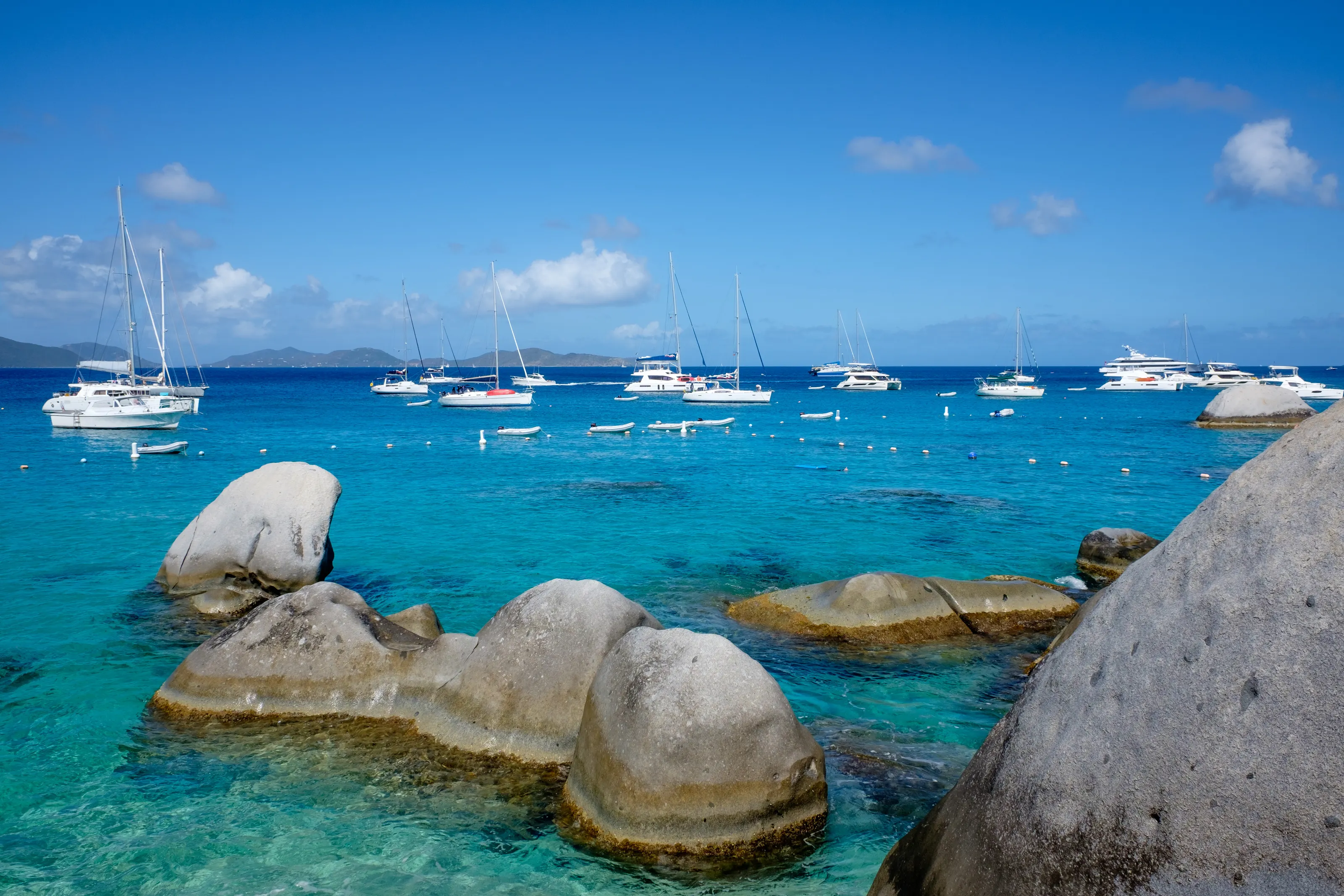
Giant granite boulders tumbling into turquoise water, sheltered bays made for dropping anchor, white-sand beaches, beach bars on Jost Van Dyke and a flat coral island fringed by a huge reef: the British Virgin Islands are one of the Caribbean's great sailing playgrounds. Here is what you need to plan the trip, then start watching cheap flights to the British Virgin Islands.
British Virgin Islands at a glance
Capital
Road Town
Islands
More than fifty
Area
About 150 km2
Currency
US dollar
Language
English
Driving
On the left
Continent
North America
Time zone
UTC-4
Airports covered
1
Why visit the British Virgin Islands
Granite, turquoise bays, beaches and sailing
The Baths, a granite wonderland
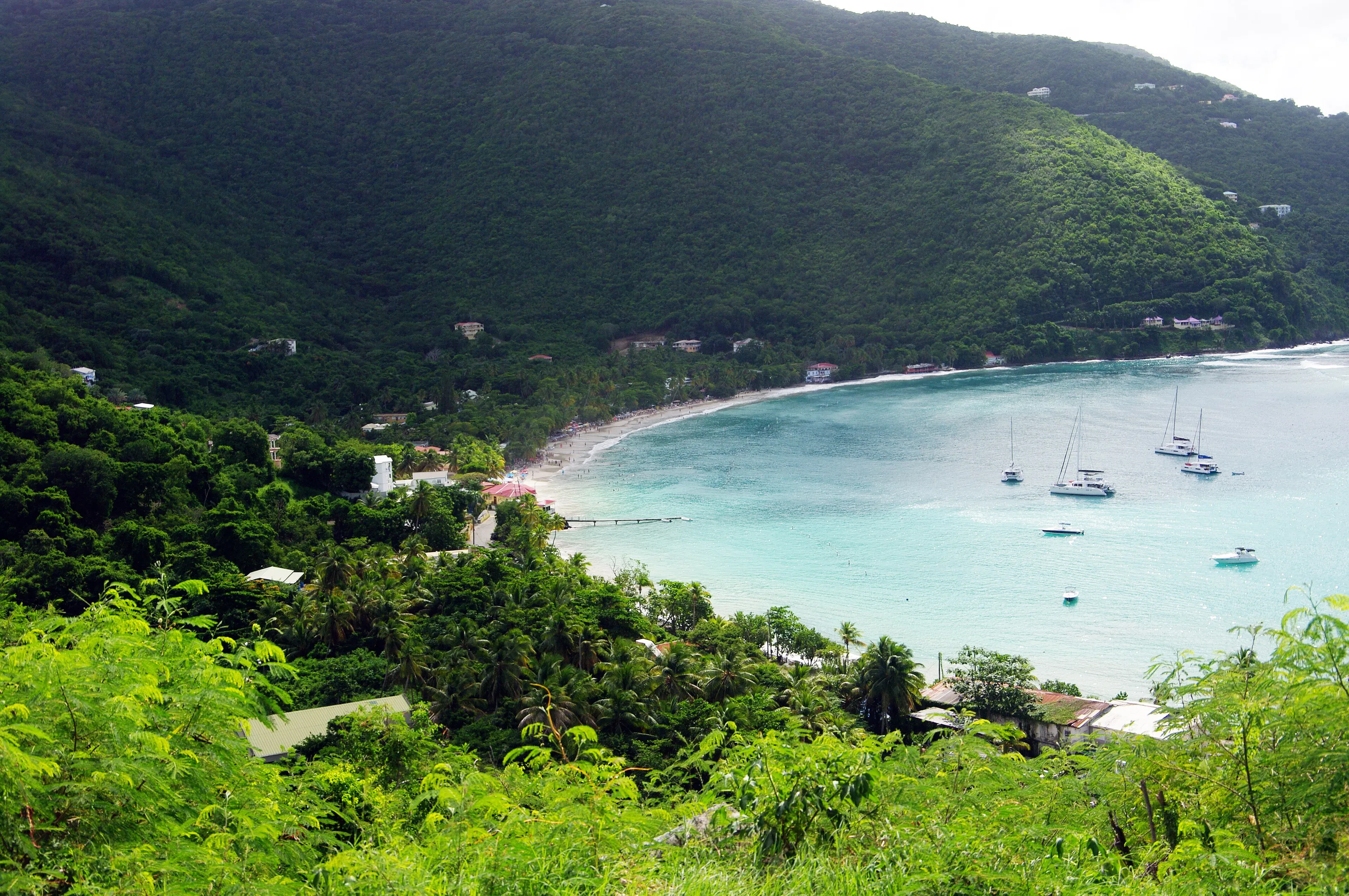
On Virgin Gorda, huge rounded granite boulders pile up at the water's edge, forming caves, passages and pools open to the sea. You can walk, swim and snorkel through clear water.
Sailing heaven
Sheltered anchorages, short hops between islands and steady trade winds: charter a sailboat or catamaran, with or without a skipper, and change island every day. The Spring Regatta, founded in 1972, is a fixture on the sailing calendar.
Beaches and beach bars
From Cane Garden Bay to White Bay on Jost Van Dyke, pale-sand beaches open on calm water, with beach bars and music as the day winds down.
A reef and an island apart
Anegada, the flat coral island in the north, is ringed by a long reef and near-empty beaches. Flamingos have been reintroduced and the rare Anegada rock iguana is the subject of a protection programme.
Places to see
Tortola, Virgin Gorda, Jost Van Dyke and Anegada
Four main islands share most of the archipelago and are linked by ferry and boat. One thing to keep straight: the British Virgin Islands are not the US Virgin Islands (St Thomas, St John, St Croix), a separate territory right next door, linked by ferry. Here is a quick tour.
Tortola, the main island
Tortola holds Road Town, the capital and main harbour, and most of the population. The island is mountainous, peaking at Mount Sage, and its north-coast beaches, such as Cane Garden Bay, Smugglers Cove and Brewers Bay, are among the archipelago's best. This is where you rent cars, catch ferries and board charter boats.
Virgin Gorda and The Baths
Virgin Gorda is famous for The Baths in the south: a jumble of granite boulders at the water's edge with passages to explore by swimming or on foot. Spanish Town, the main settlement, has a handful of restaurants and shops, while North Sound in the north-east shelters a bay for watersports and anchoring.
Jost Van Dyke, the beach-bar island
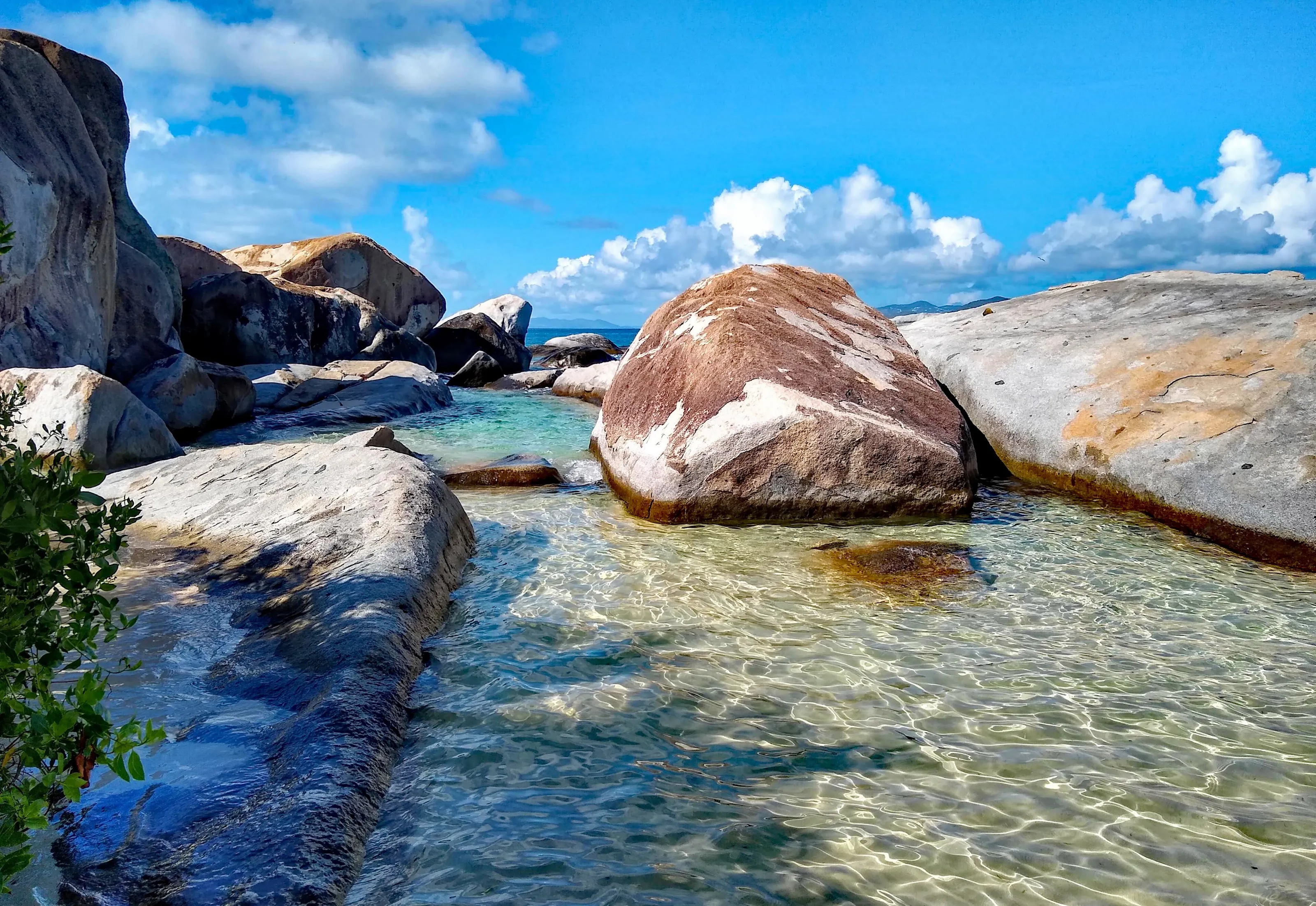
A small island of a few hundred residents, Jost Van Dyke is known for Great Harbour and for White Bay, a long white-sand beach with bars that serve boats at anchor. The Bubbly Pool, a rock basin where waves foam, and the beach party scene make it a popular day trip.
Anegada, the flat island of the reef
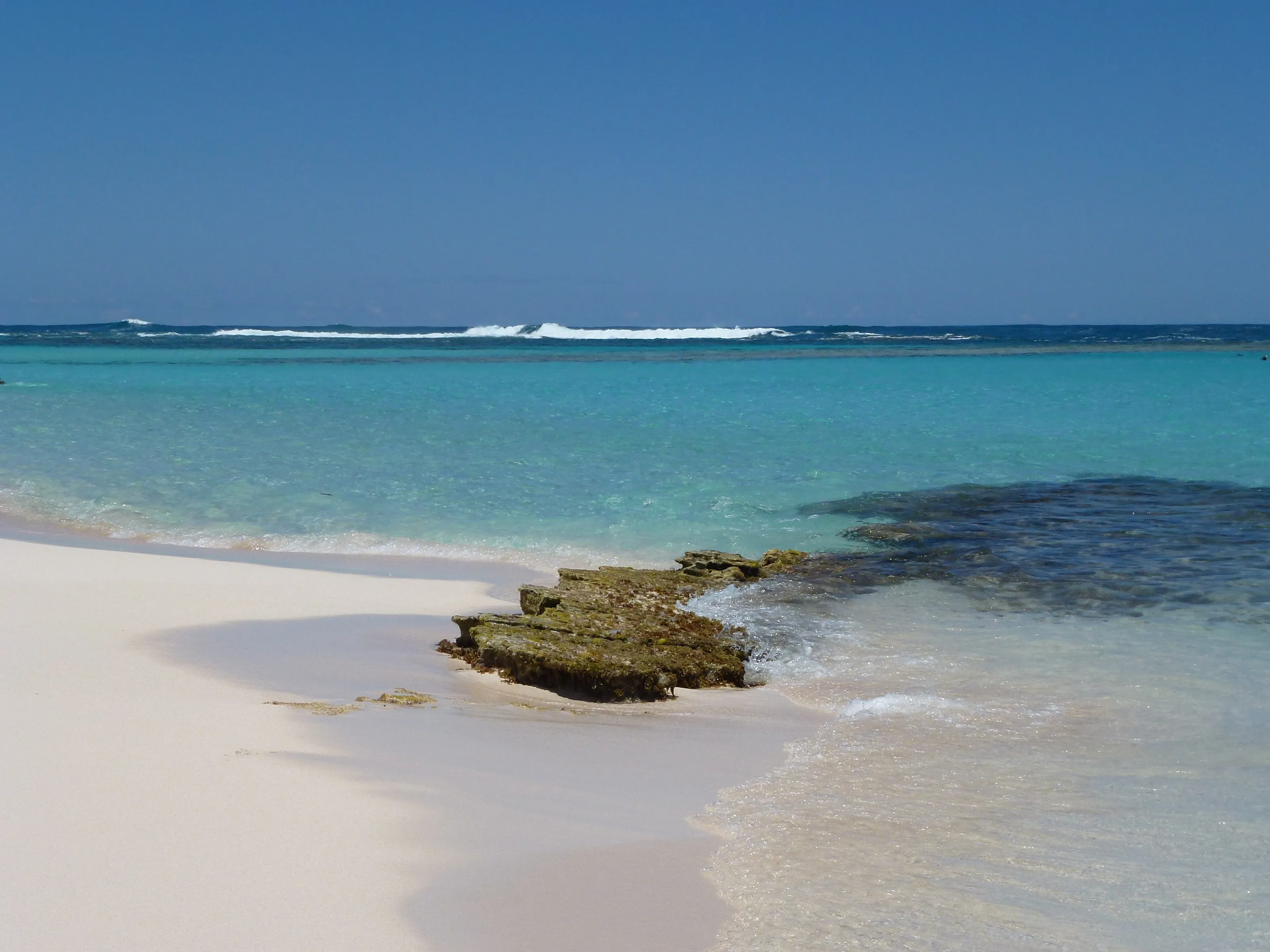
Flat, coral-built and ringed by a reef about thirty kilometres long that has caused hundreds of shipwrecks, Anegada is reached by ferry, small plane or boat. Its long white beaches, such as Loblolly Bay, and fresh lobster draw visitors looking for calm, while its salt ponds shelter flamingos.
Sailing, snorkelling and diving
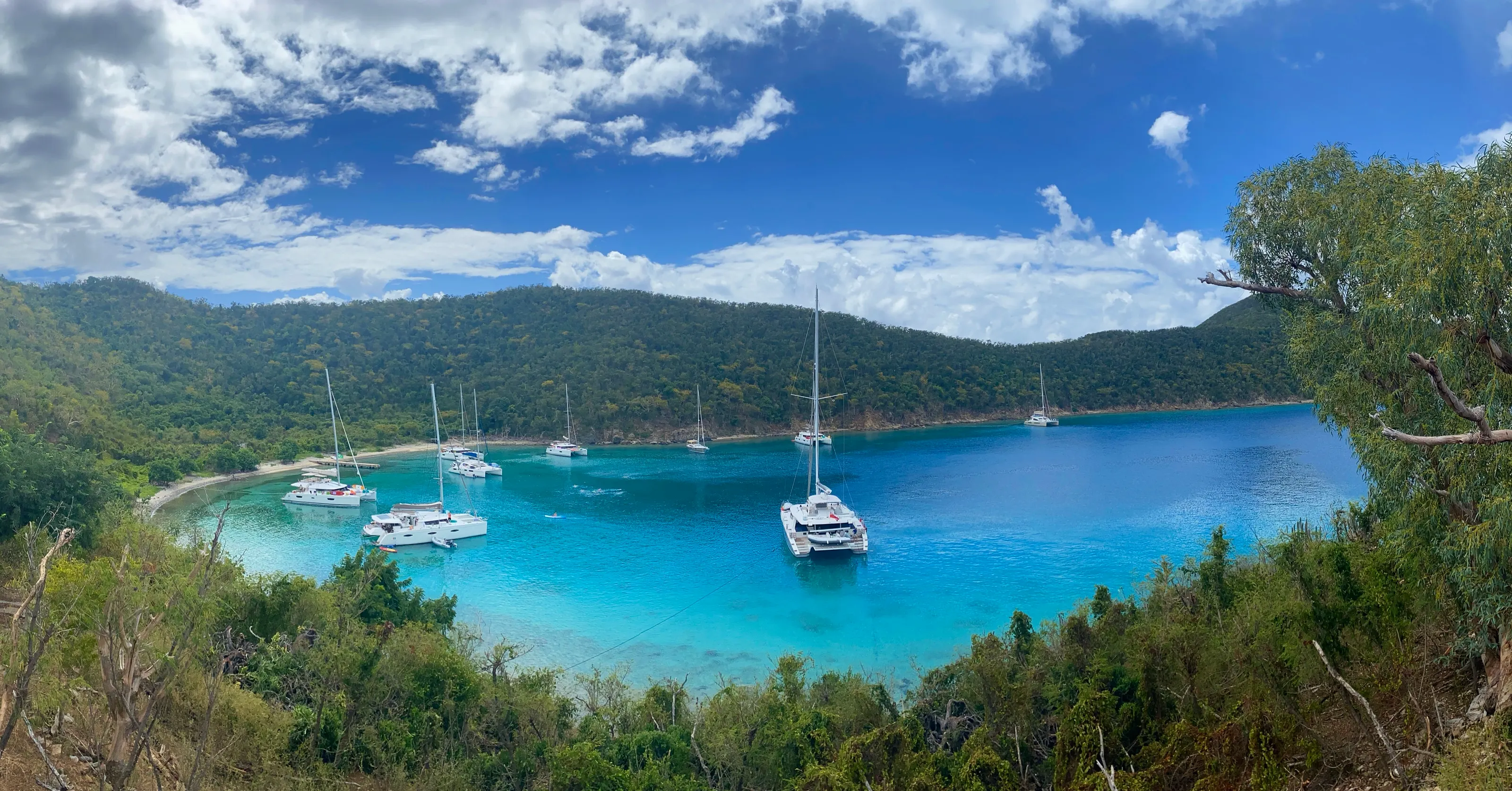
Sheltered bays delight boaters, and snorkelling is easy on nearby reefs. Divers visit the wreck of the RMS Rhone, sunk in 1867 near Salt Island, an archipelago classic. Private islands such as Necker or Guana are mostly something to admire from the water.
Before you go
Warm all year, with a drier winter season
| Area | Climate | Best time |
|---|---|---|
| Tortola and Virgin Gorda | Warm and sunny; steady trade winds, more showers from September to November. | December to April |
| Jost Van Dyke | Calm water in the bays; busy in high season. | December to April |
| Anegada | Heat and little shade; livelier sea on the north coast. | December to April |
| Sailing and diving | Reliable trade winds and good visibility in the dry season. | December to April, then May |
Temperatures change little: about 29 to 32 C by day and 23 to 26 C at night. February and March are the driest months. The Atlantic hurricane season runs from June to November, so check forecasts, keep your dates flexible and consider travel insurance. The territory sets its own entry rules: check the official conditions for your nationality.
Getting around
Ferries, taxis, rental cars and boats
Tortola is the logistics base: rental cars (drive on the left, on narrow, steep roads that can turn slippery in rain), shared taxis and ferries to the other islands and to the US Virgin Islands. Allow time: schedules depend on the operator and the sea.
For Anegada you take a ferry, a small plane or a boat. Many visitors charter a sailboat or catamaran, which doubles as transport and lodging. Book early in high season.
Food and culture
Fresh fish, lobster and beach cocktails
The table is English-speaking Caribbean: grilled fish, lobster (especially renowned on Anegada), conch, rice and plantain. Jost Van Dyke's beach bars helped popularise rum cocktails such as the Painkiller. Events follow one another in winter, from restaurant week to the charter yacht show.
The archipelago's story weaves together Arawaks, Kalinago, Dutch settlers (1648) then English (1672), a sugar economy and abolition in 1834. Today financial services and tourism sustain the territory, whose infrastructure Hurricane Irma tested hard in 2017.
Travel to the British Virgin Islands
The British Virgin Islands airport covered by SniperAir
Terrance B. Lettsome
On Beef Island, joined to Tortola by the Queen Elizabeth II Bridge: about twenty minutes by road from Road Town. Flights often connect through San Juan or St Thomas; Virgin Gorda and Anegada have small airports of their own.
FAQ
Frequently asked questions about the British Virgin Islands
Which airport should I use to travel to the British Virgin Islands?
EIS, Terrance B. Lettsome International, on Beef Island next to Tortola. SniperAir tracks EIS for you. Flights there often connect through a regional hub such as San Juan or St Thomas.
When is the best time to travel to the British Virgin Islands?
December to April is warm with little rain. The hurricane season runs from June to November, so keep dates flexible and consider travel insurance.
Are the British Virgin Islands expensive?
It is a rather upmarket destination, especially for sailing and hotels. You can balance it with simple lodging, local meals and free beaches. Watching flights ahead of time helps keep the budget under control.
Do I need a visa for the British Virgin Islands?
The territory has its own entry rules, which depend on your nationality. A valid passport is expected. Always check the official conditions before booking.
How long should I spend in the British Virgin Islands?
Five to eight nights lets you combine Tortola, Virgin Gorda and a day or two on the water. Add two days for Anegada or a sailing cruise.
Which currency is used in the British Virgin Islands?
The US dollar, in use since 1959. Cards are taken in hotels and restaurants; keep a little cash for small places and beach bars.
How do I get alerted when a flight to the British Virgin Islands drops below my budget?
Create a SniperAir alert with your departure airport and EIS, set your maximum price, and we notify you as soon as a fare falls below it. SniperAir tracks prices and sends alerts. See how it works.
Ready to track prices to the British Virgin Islands?
Create an alert and let SniperAir do the rest.
Create my alert