
Cheap flights to Kinshasa
Set your departure airport and maximum budget: SniperAir tracks prices to Kinshasa and alerts you the moment a deal matching your criteria appears.
Quick summary
Country
DR Congo
Continent
Africa
Airport
FIH
Currency
Congolese franc (CDF)
Time zone
UTC+1
Deals already spotted to Kinshasa
Real flight examples detected by SniperAir, with their reference price.
Loading examples…
Why track Kinshasa with SniperAir
You do not need to compare prices every day
Choose your departure
Enter your departure airport and your maximum budget for a flight to Kinshasa (FIH).
SniperAir keeps watch
Our systems continuously compare new prices with the real price history of the route. SniperAir monitors prices and alerts you: it does not sell or book tickets.
You receive an alert
As soon as a price matches your criteria, you are notified, without having searched for anything yourself.
Kinshasa, called Léopoldville from 1881 to 1966, is the capital and largest city of the Democratic Republic of the Congo, according to Wikipedia (FR) and Wikivoyage (EN). It spreads along the south bank of the Congo River at Malebo Pool, facing Brazzaville, the capital of a different country: the Republic of the Congo. French Wikipedia describes it as a cosmopolitan city of contrasts where, besides French, people mostly speak Lingala, Kikongo, Swahili and Tshiluba. Population figures vary widely depending on the source and the area counted, so we do not publish one.
Wikivoyage (EN) calls it sprawling, chaotic and often intimidating, yet also a major cultural and intellectual centre of Central Africa, with a flourishing community of musicians and artists. It is a destination that needs serious preparation: read the section on precautions carefully. SniperAir tracks fares to FIH and alerts you; it does not sell or book tickets.
Airport and getting into town
N'djili, east of the city
Kinshasa – N'djili International Airport (FIH)
Wikipedia (FR) and Wikivoyage (EN) place N'djili airport east of the city, roughly twenty kilometres from the centre, linked by Boulevard Lumumba. Wikivoyage (EN) lists direct flights from Paris, Brussels and Istanbul, as well as from Johannesburg, Nairobi, Addis Ababa and Casablanca. These routes change, so check the stopovers on your ticket.
The distance is given only approximately by Wikipedia (FR) and Wikivoyage (EN); journeys depend enormously on traffic, which is described as very difficult. We do not quote fares.
Wikivoyage (EN, DE) describes an airport where formalities can be long and advises against arriving alone: a yellow fever vaccination certificate is described as essential, and providers offer a meet-and-assist service known as 'protocol'. It also advises caution with people who spontaneously offer to carry your bags. On departure, fees must be paid in cash before entering the terminal: ask your airline, as we do not publish an amount.
Wikivoyage (DE) advises leaving the centre about two hours before check-in because of traffic jams, and longer if you still need to collect a boarding pass or check in luggage.
Landmarks
The Congo River, its banks and its sanctuaries
Kinshasa is first discovered through its river: the places below are described according to our sources; figures differ between sources, so we stay cautious.
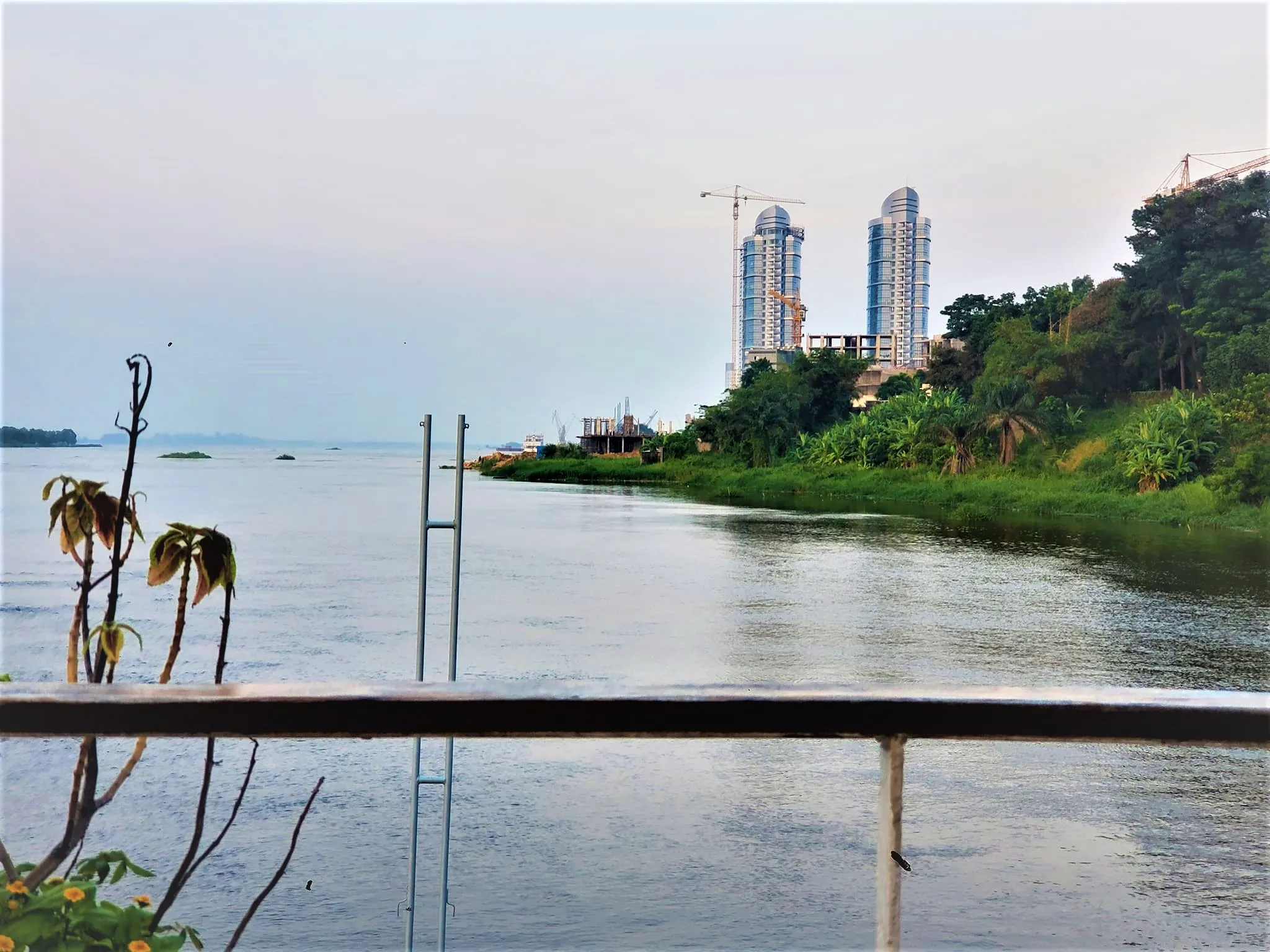
The Congo River seen from Kinshasa
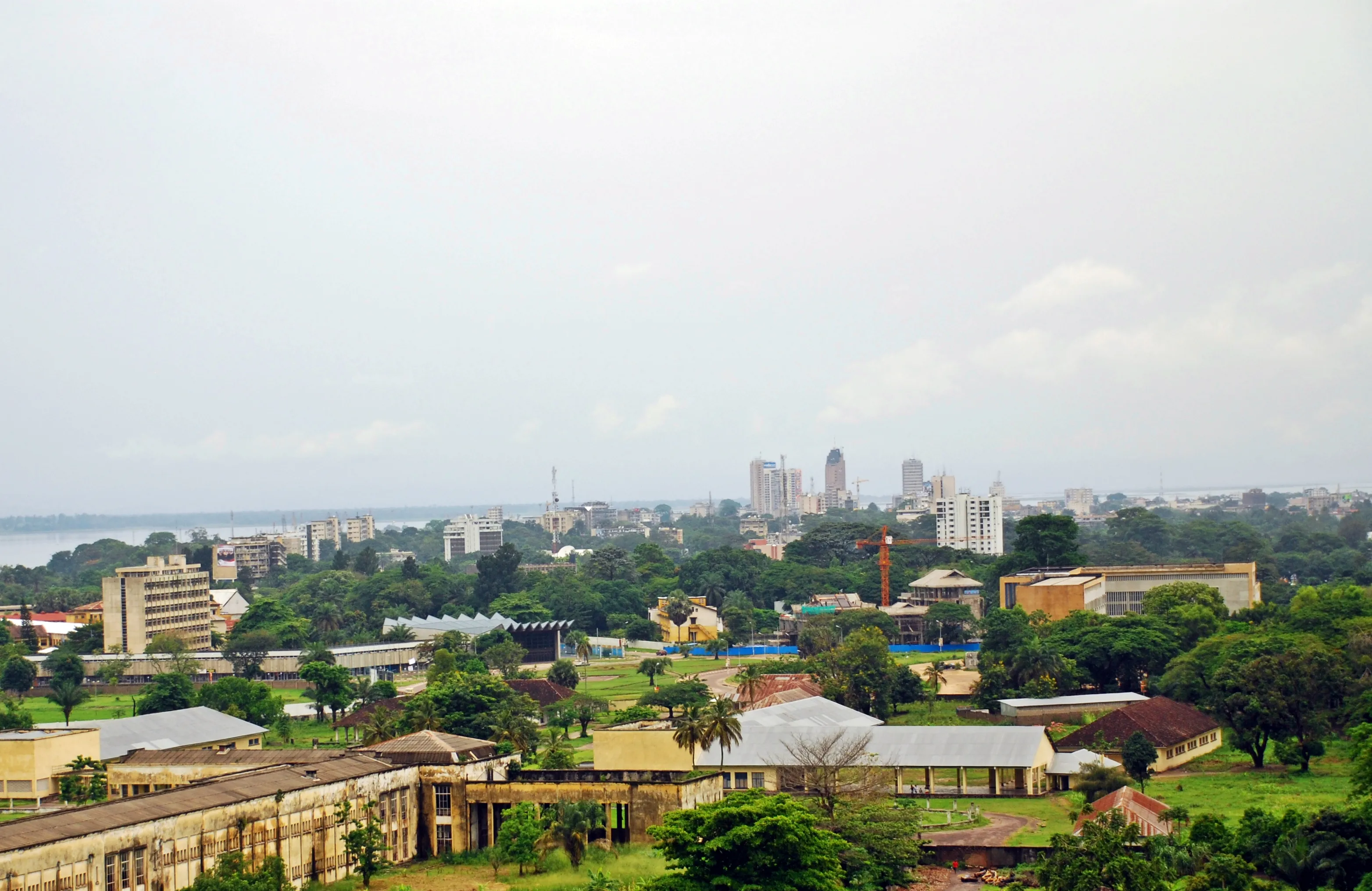
French Wikipedia recalls that the city is built on the south bank of the Congo River at Malebo Pool, and Wikivoyage (EN) that Brazzaville can be seen in the distance on the other side. Wikivoyage (DE) lists the imposing river among the city's main attractions. In this photo, two tall towers stand on the shore.
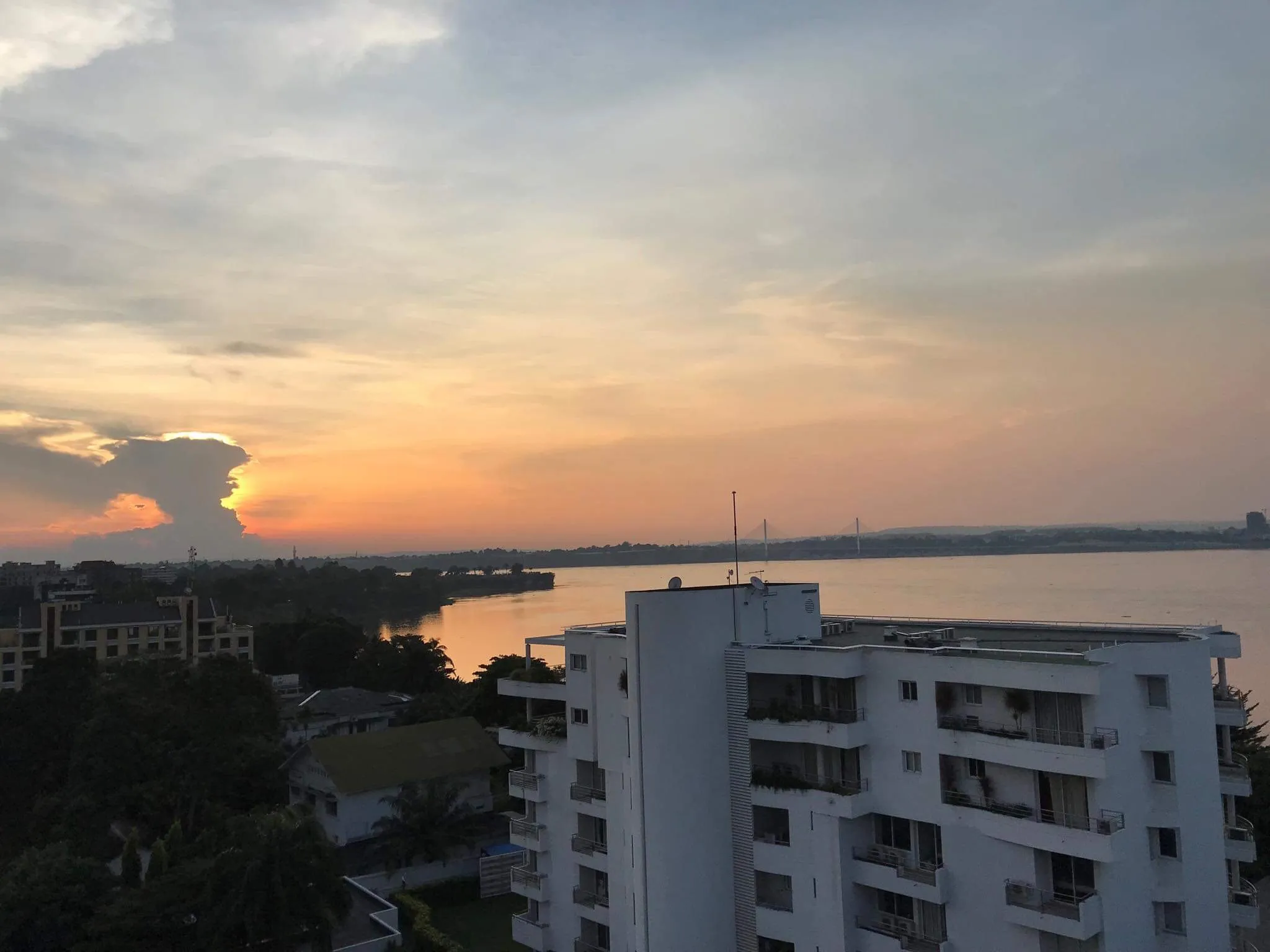
The river at sunset
Wikivoyage (EN) suggests renting a boat with a driver for a day on the river, with a barbecue on a sandbank, from a boat club: an activity to arrange with a trusted provider. At the end of the day, the light gilds the water and the buildings along the shore.
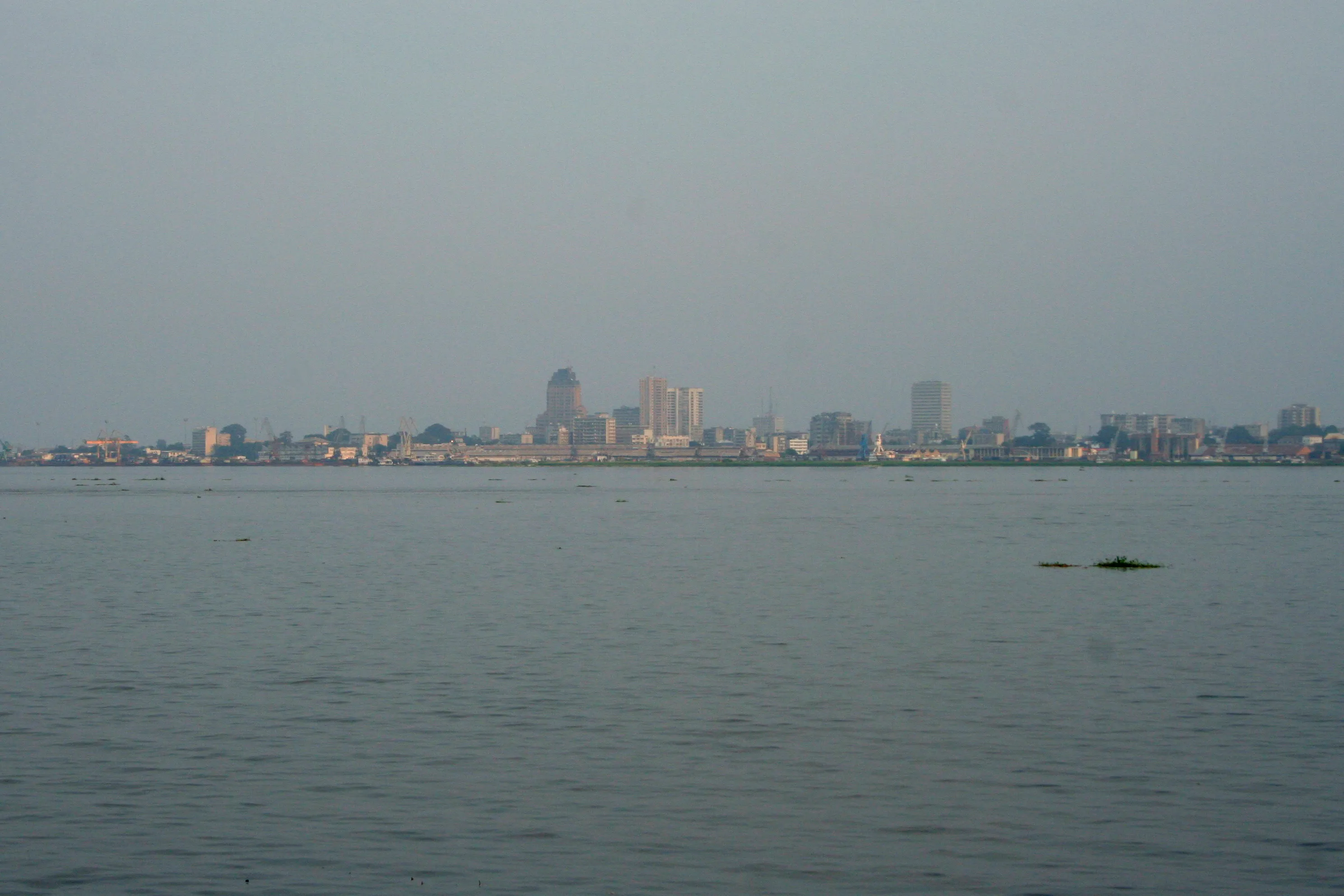
Kinshasa facing Brazzaville
This photo, taken from the opposite bank, shows Kinshasa's skyline. French Wikipedia says the two capitals face each other across the river, and Wikivoyage (EN) that each can be seen from the other. They are two different countries, with different formalities.
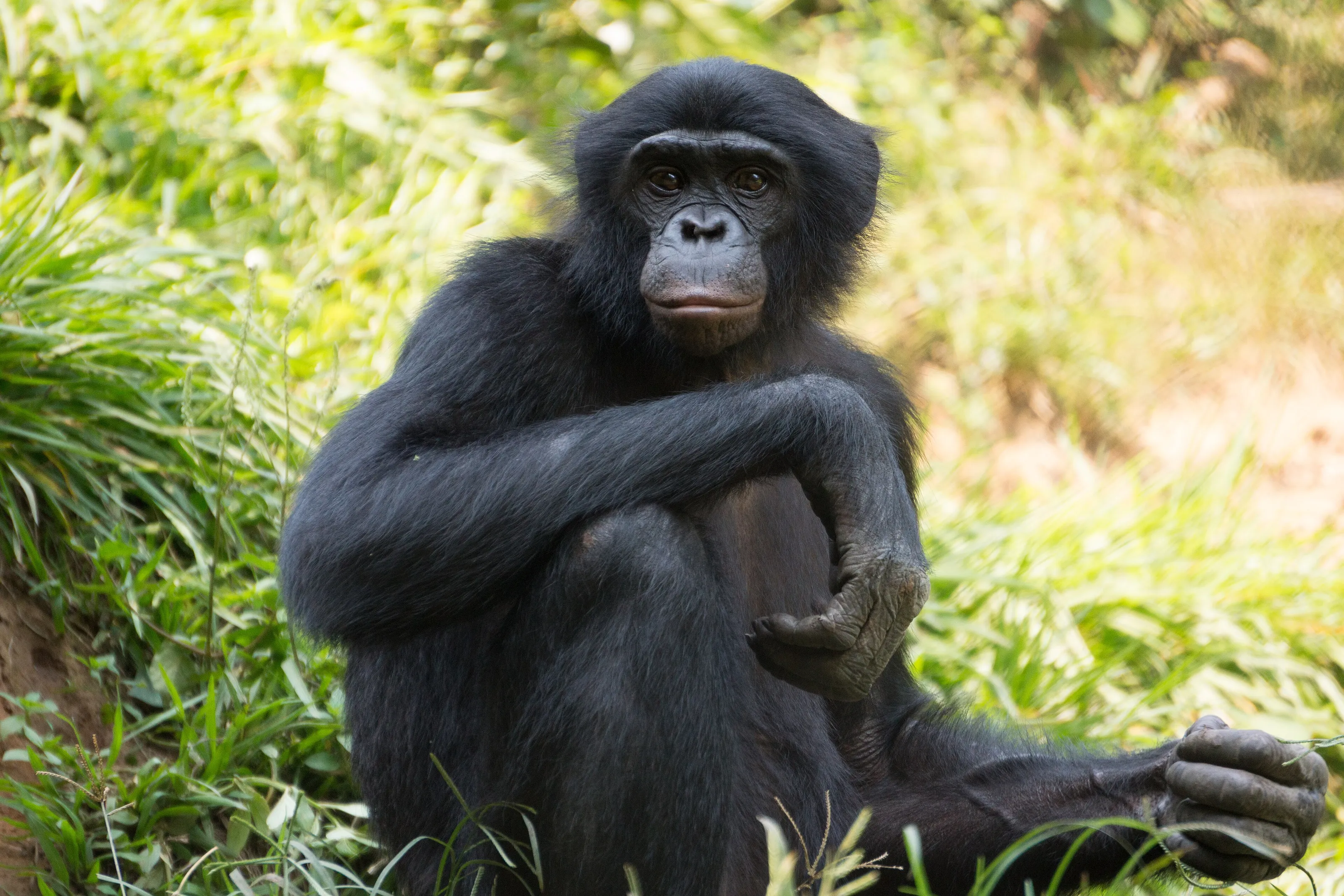
Lola ya Bonobo
Wikivoyage (EN) presents Lola ya Bonobo as the world's only sanctuary for orphaned bonobos, set since 2002 at the Petites Chutes de la Lukaya, just outside Kinshasa. Bonobos are primates endemic to this country; visits should be arranged in advance with the sanctuary.
Other places named by Wikipedia (FR, ES) and Wikivoyage (EN): the unfinished Limete Interchange Tower, 210 m high and built between 1970 and 1974; the Martyrs' Stadium; the People's Palace; Boulevard du 30 Juin, linking several districts; Mbudi Nature, a private park with views of the river; the N'Sele Valley park, a drive-through safari; and the village of Kinkole with its fishermen's market. Wikivoyage (EN) recommends checking before taking photos: some official sites are sensitive.
Museums and culture
Academy of Fine Arts, museums and rumba
National Museum and other museums
French Wikipedia names the National Museum of the Democratic Republic of the Congo, the National Museum of Kinshasa, the Museum of Prehistory and the Marble Palace; Wikivoyage (EN) describes the national museum as rich in ethnographic objects. We give no hours or fees, which change.
Academy of Fine Arts and the market of values
Wikipedia (FR, ES) make the Academy of Fine Arts, founded in 1943 according to Wikipedia (ES), a high place of painting and sculpture, linked to what is called the School of Kinshasa; the 'marché des valeurs', a kind of art market, is named by Wikipedia (FR) and Wikivoyage (EN), which advises haggling. Artists also exhibit in galleries.
Rumba, sapeurs and dance
Spanish Wikipedia recalls that Congolese rumba was born in the 1920s and 1930s in Kinshasa as well as Brazzaville; it was added to UNESCO's intangible heritage list in 2021. French Wikipedia also names the sapeurs and dance among the city's lively cultural expressions.
Food and drink
Pondu, muambe and river fish
Congolese dishes
French Wikipedia's article on the country lists fish, cassava, rice, fufu, maize and plantains, with pondu, pounded cassava leaves, among the most common dishes. Muambe, chicken in cassava leaves or in groundnut and palm oil, is served with rice or makemba, that is, plantain.
By the river
Wikivoyage (EN) mentions Kinkole, east of the city, where terrace restaurants serve local food and a fish market sells produce from the river. Restaurants used by expatriates can be expensive and sometimes take payment in dollars; we give no prices.
Markets
Spanish Wikipedia names the Grand Marché, or central market, downtown, and the Liberté market in Masina. Wikivoyage (EN) advises going with a local and keeping your belongings out of sight.
Getting around
Traffic jams, shared minibuses and a driver
Traffic
Wikivoyage (EN) calls the traffic jams notorious: it can sometimes take up to two hours to travel 500 m. Avoid rush hours. French Wikipedia notes that many streets are impassable outside the dry season.
Minibus taxis and city buses
According to Wikivoyage (EN), a public bus network (Transco) serves the city, but locals mostly use small shared minibus taxis that follow set routes with informal stops. Visitors need local help and some French or Lingala.
Private driver and walking
Wikivoyage (EN) says many foreigners hire a driver during their stay, and Wikivoyage (DE) advises always being driven, even over short distances, rather than walking. We quote no fares.
Budget and precautions
Budget and precautions
Price level
Wikivoyage (EN) notes that many restaurants and services for expatriates are very expensive. We give no range, as we could not confirm any on two independent sources.
Currency
The currency is the Congolese franc (CDF), but Wikivoyage (EN) also mentions payments in dollars at some establishments. Check payment options before leaving, as they change.
Flights, safety and health
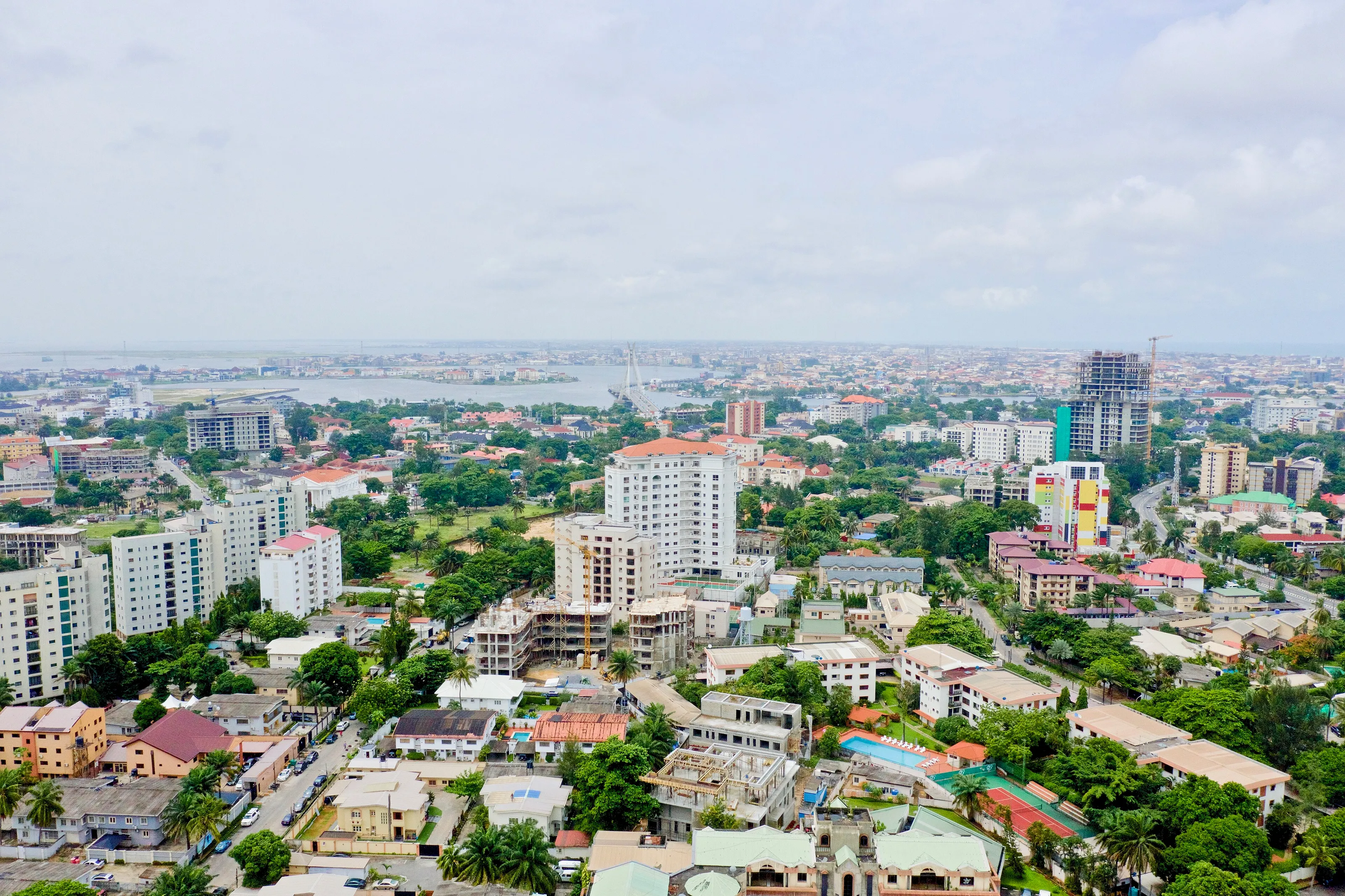
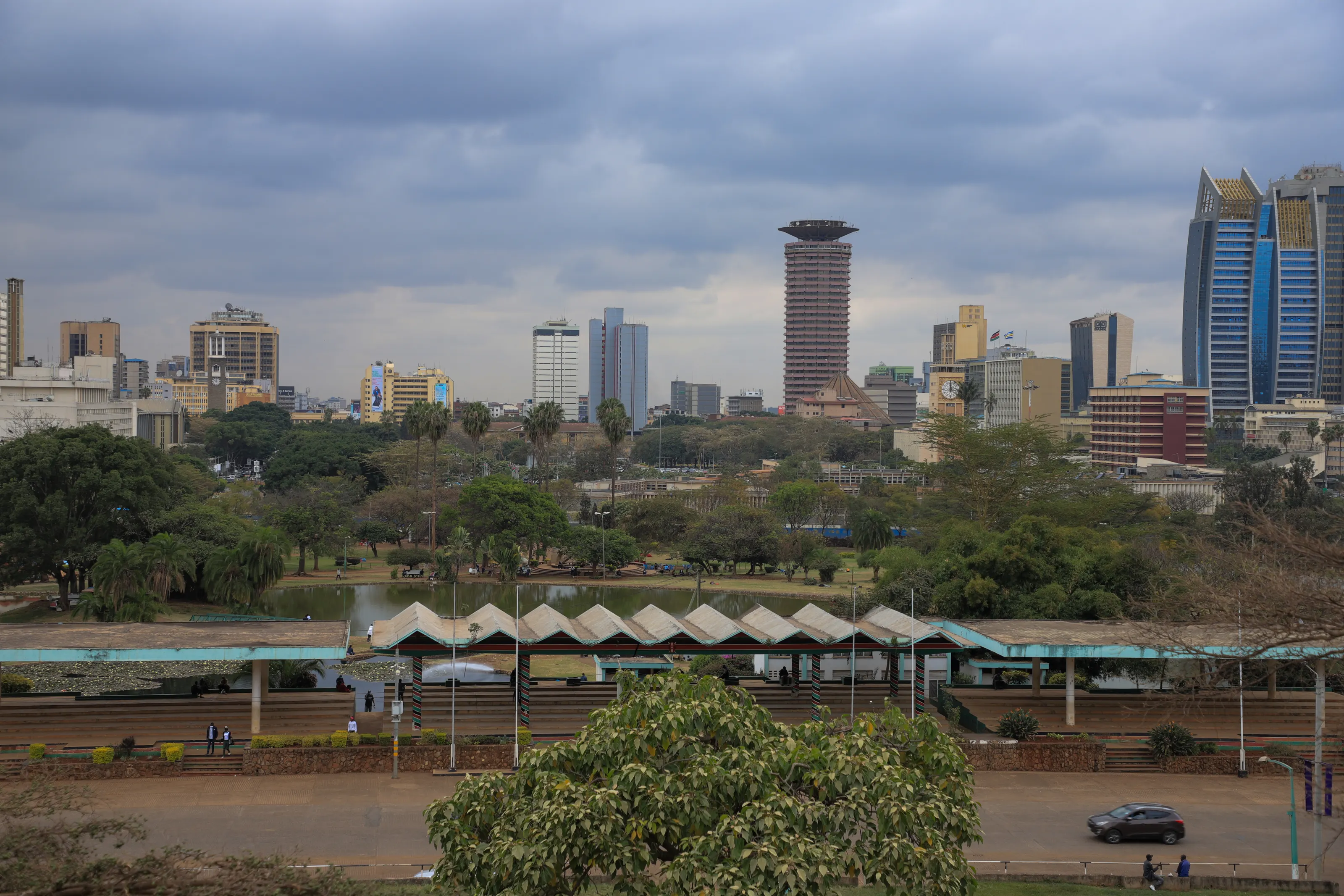
SniperAir tracks fares to FIH and compares them with the route's price history, but it does not sell or book tickets. To compare, you can also follow Nairobi or Lagos. Wikivoyage (EN) strongly recommends being accompanied by a local outside your hotel, being wary of fake police officers, locking car doors and being careful with photos. Official travel advice varies widely depending on your country of departure, sometimes advising against certain regions of the country, notably the east of DR Congo, so check your own government's advice before booking. For health, ask a doctor or a vaccination centre well before departure: yellow fever and malaria prevention; Wikivoyage (EN) also advises against tap water.
When to go
A dry season of about four months
Dry season (mid-May to September)
French Wikipedia places the dry season from mid-May to mid-September, and Wikivoyage (EN) from June to September. July and August are the driest months according to Wikipedia (FR), and temperatures are a little lower then.
Rainy season (October to mid-May)
The rest of the year is rainy, with very wet months around March-April and November according to Wikipedia (FR). Streets can then become hard to use.
Temperatures
French Wikipedia gives an annual average temperature of 25.3 °C, in a tropical savanna climate, with yearly variations of about thirteen degrees. Wikivoyage (EN) notes that the dry season is a little cooler.
Rainfall
Annual rainfall is about 1,270 mm according to Wikipedia (FR), with 3 mm in July and August and nearly 200 mm in March and April: we stay approximate.
For more comfortable visits, the dry season, from June to September, is the one most often recommended. We do not give full monthly averages, because the sources do not cover the same stations or years.
By length of stay
What to do in Kinshasa depending on how long you stay
River and centre, with a driver
One to two days for the river, Boulevard du 30 Juin, the Academy of Fine Arts and the market of values, always accompanied.
Bonobos, parks and museums
Add Lola ya Bonobo, a riverside park such as Mbudi Nature, a museum and an evening of rumba, with a trusted driver.
Beyond Kinshasa
For other regions of the country, such as the east or the big parks, check your country's official advice first: some areas are advised against. Wikivoyage (EN) also mentions the crossing to Brazzaville, whose formalities differ.
In pictures
Kinshasa in pictures
You might also like
Similar destinations
FAQ
Frequently asked questions about flights to Kinshasa
Where is Kinshasa airport?
N'djili airport (FIH) is east of the city, roughly twenty kilometres from the centre according to Wikipedia (FR) and Wikivoyage (EN). Wikivoyage (DE) advises allowing about two hours before check-in because of traffic jams.
Is Kinshasa a safe city?
Wikivoyage (EN) strongly recommends being accompanied by a local outside your hotel and being wary of fake police officers. Official advice varies widely depending on your country of departure, with some regions advised against, notably the east of DR Congo: check your own before booking.
What health precautions should I take for Kinshasa?
Ask a doctor or a vaccination centre well before departure: yellow fever vaccination, described as essential by Wikivoyage (EN), and malaria prevention. Entry conditions depend on your nationality and change: check official websites.
When is the best time to visit Kinshasa?
The dry season, roughly June to September, is the one most often recommended; July and August are the driest months according to Wikipedia (FR).
What is the difference between Kinshasa and Brazzaville?
Kinshasa is the capital of the Democratic Republic of the Congo, on the south bank of the river; Brazzaville is the capital of the Republic of the Congo, on the north bank. They are two countries, with two airports and different formalities.
How long should I stay in Kinshasa?
Two days are enough for the river, the centre and one cultural site; allow three to four days to add Lola ya Bonobo, a riverside park and a museum, allowing for traffic.
How much does a flight to Kinshasa usually cost?
The price depends mainly on your departure city, the time of year and how far ahead you book. The "opportunities" section above shows real examples of prices SniperAir has already detected to this destination.
How do I get alerted when a flight to Kinshasa drops below my budget?
Create an alert profile with your departure airport, Kinshasa (FIH) as the destination and your maximum budget. You are notified automatically as soon as a matching price is detected. SniperAir monitors and alerts, it does not sell or book tickets.
Ready to head to Kinshasa?
Set your budget and let SniperAir monitor fares for you.
Create my alert