
Cheap flights to Johannesburg
Set your departure airport and maximum budget: SniperAir tracks prices to Johannesburg and alerts you the moment a deal matching your criteria appears.
Quick summary
Country
South Africa
Continent
Africa
Airport
JNB
Currency
South African rand (ZAR)
Time zone
UTC+2 (SAST), no daylight saving
Deals already spotted to Johannesburg
Real flight examples detected by SniperAir, with their reference price.
Loading examples…
Why track Johannesburg with SniperAir
You do not need to compare prices every day
Choose your departure
Enter your departure airport and your maximum budget for a flight to Johannesburg (JNB).
SniperAir keeps watch
Our systems continuously compare new prices with the real price history of the route. SniperAir monitors prices and alerts you: it does not sell or book tickets.
You receive an alert
As soon as a price matches your criteria, you are notified, without having searched for anything yourself.
Airport and getting into town
A major airport about 24 km out, linked by the Gautrain
O.R. Tambo International (JNB)
O.R. Tambo International, formerly Jan Smuts, is Johannesburg's main airport. Wikivoyage (EN) puts it 24 km east of the centre and Wikivoyage (FR) 25 km north-east, so sources differ by a kilometre or so. It is the busiest airport in Africa, according to Wikivoyage (EN), and the connecting hub for flights across Southern Africa. The Gautrain high-speed train runs to Sandton in about 15 minutes, per Wikivoyage (EN), which adds that with an airport surcharge it is often dearer than Bolt or Uber for groups. Wikivoyage (EN, DE) advises staying on the freeway to Sandton and avoiding shortcuts through Alexandra.
Lanseria (HLA)
Lanseria lies north-west of the city and mainly handles domestic flights and private aviation, according to Wikivoyage (EN, FR); it has commercial flights to Cape Town and Durban. SniperAir follows JNB for Johannesburg.
Approximate distances, per Wikivoyage (EN, FR). Transport services change, so check them before you go. We do not quote fares.
Johannesburg, known as Joburg or Jozi, is the capital of Gauteng province and South Africa's largest city, according to Wikipedia (EN). It was founded in 1886 after gold was found on the Witwatersrand, and it is the country's economic capital with the Johannesburg Stock Exchange, the continent's largest. Its Zulu name, eGoli, means place of gold.
It stands on the Highveld at roughly 1,750 m (1,753 m per Wikipedia DE, ES) and is among the large cities of the world with no sea or major river, per Wikipedia (DE, ES). Wikivoyage (EN) warns that UV levels are high all year and that newcomers can get out of breath at this altitude.
Landmarks
Soweto, the Apartheid Museum, Maboneng, Sandton and the Hillbrow Tower
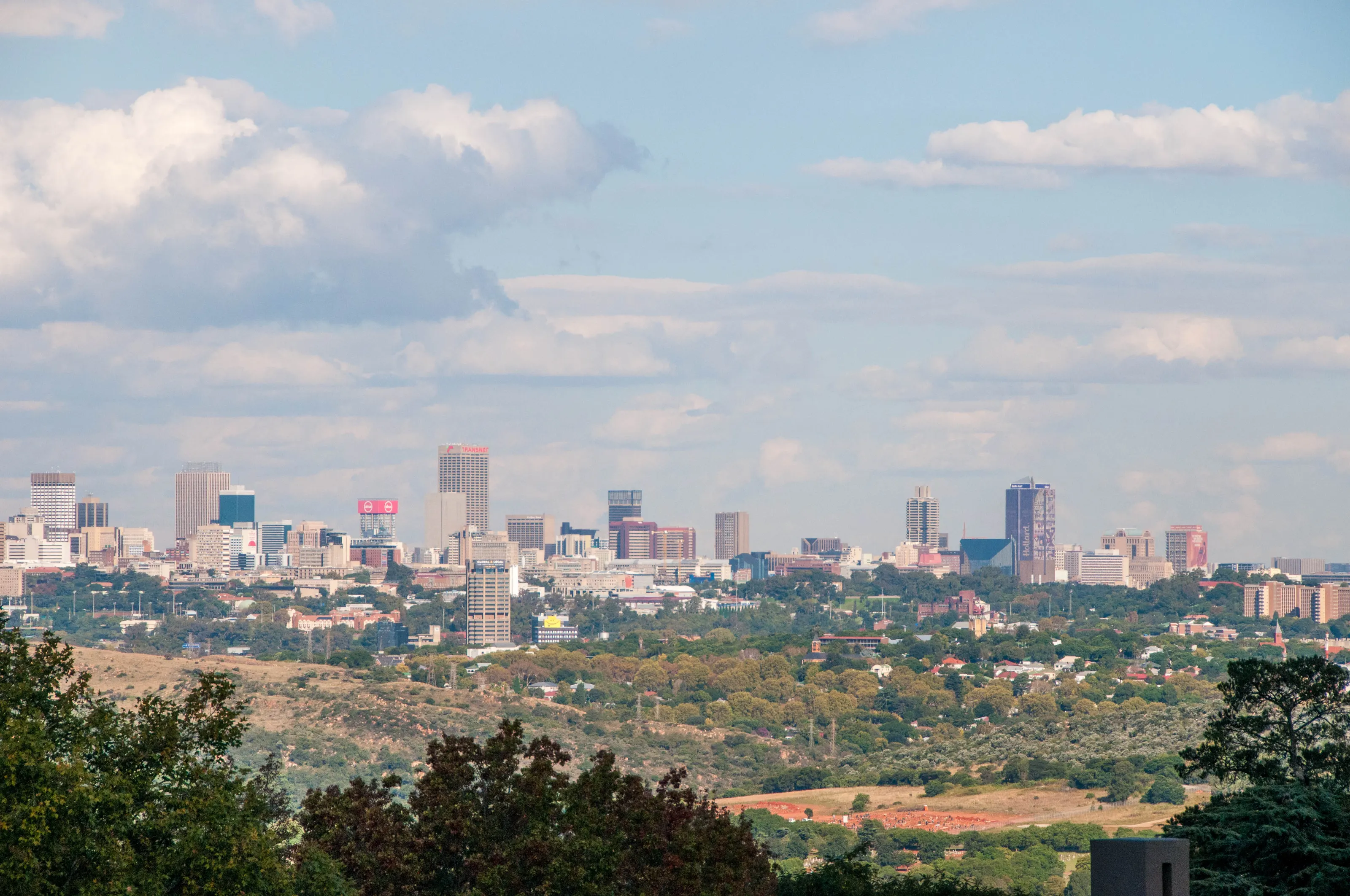
Johannesburg is a city of memory and business. The places below are described from the sources; the photographs show the city from afar, from its heights and from its northern suburbs.
The inner city from above
The Inner City covers tourist neighbourhoods such as Braamfontein, Maboneng, Newtown and Fordsburg, per Wikivoyage (EN). Wikipedia (DE) describes high-rises in Joubert Park, Hillbrow and Berea that many firms have left for security reasons. Newtown and the Market Theatre area form the cultural precinct, says Wikivoyage (EN).
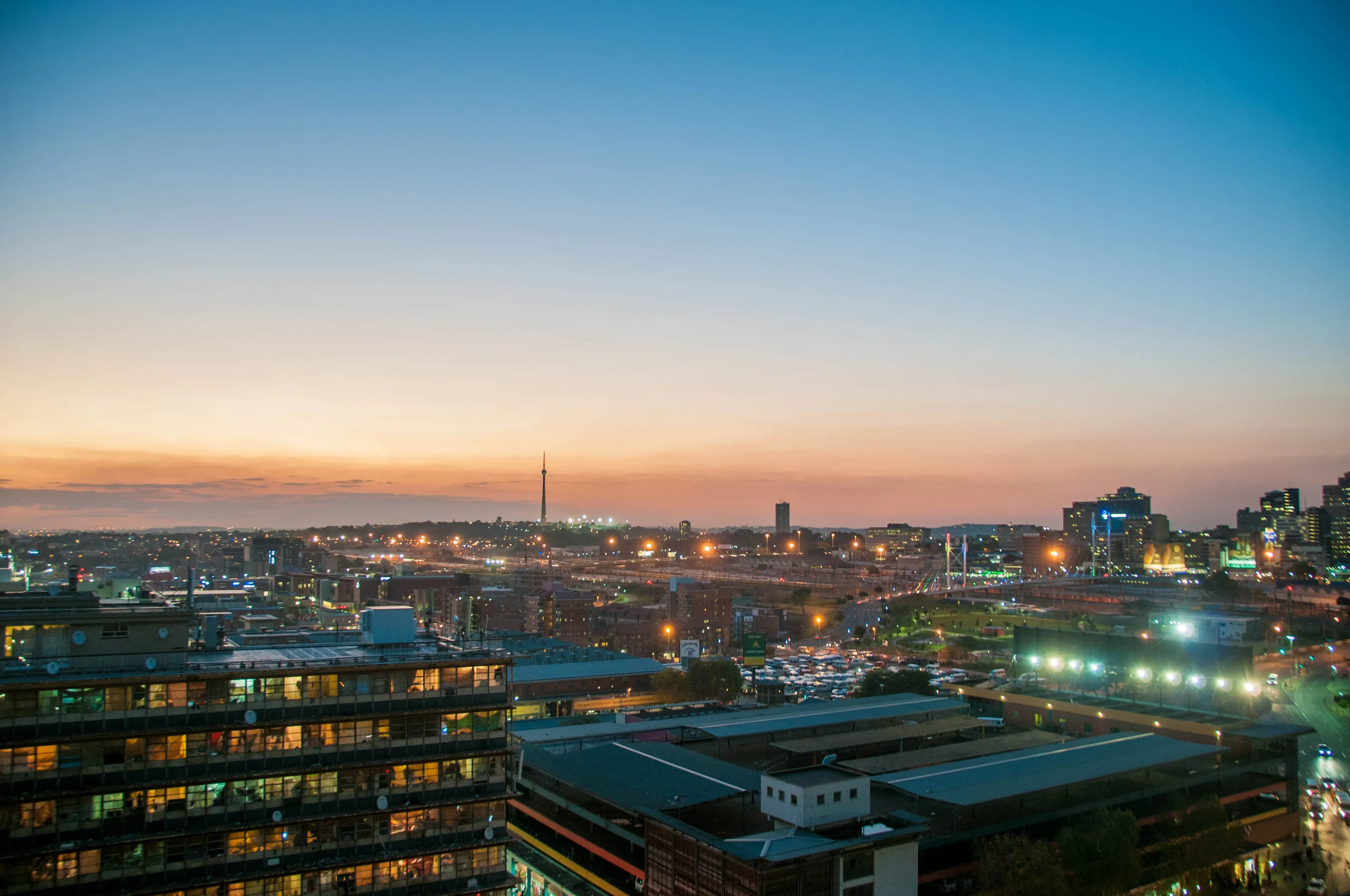
The city at dusk
Johannesburg is one of the world's large cities with neither sea nor major river, per Wikipedia (DE, ES). Summer brings spectacular afternoon thunderstorms from December to February, says Wikivoyage (EN), and winter nights can drop below freezing (Wikivoyage EN, FR).
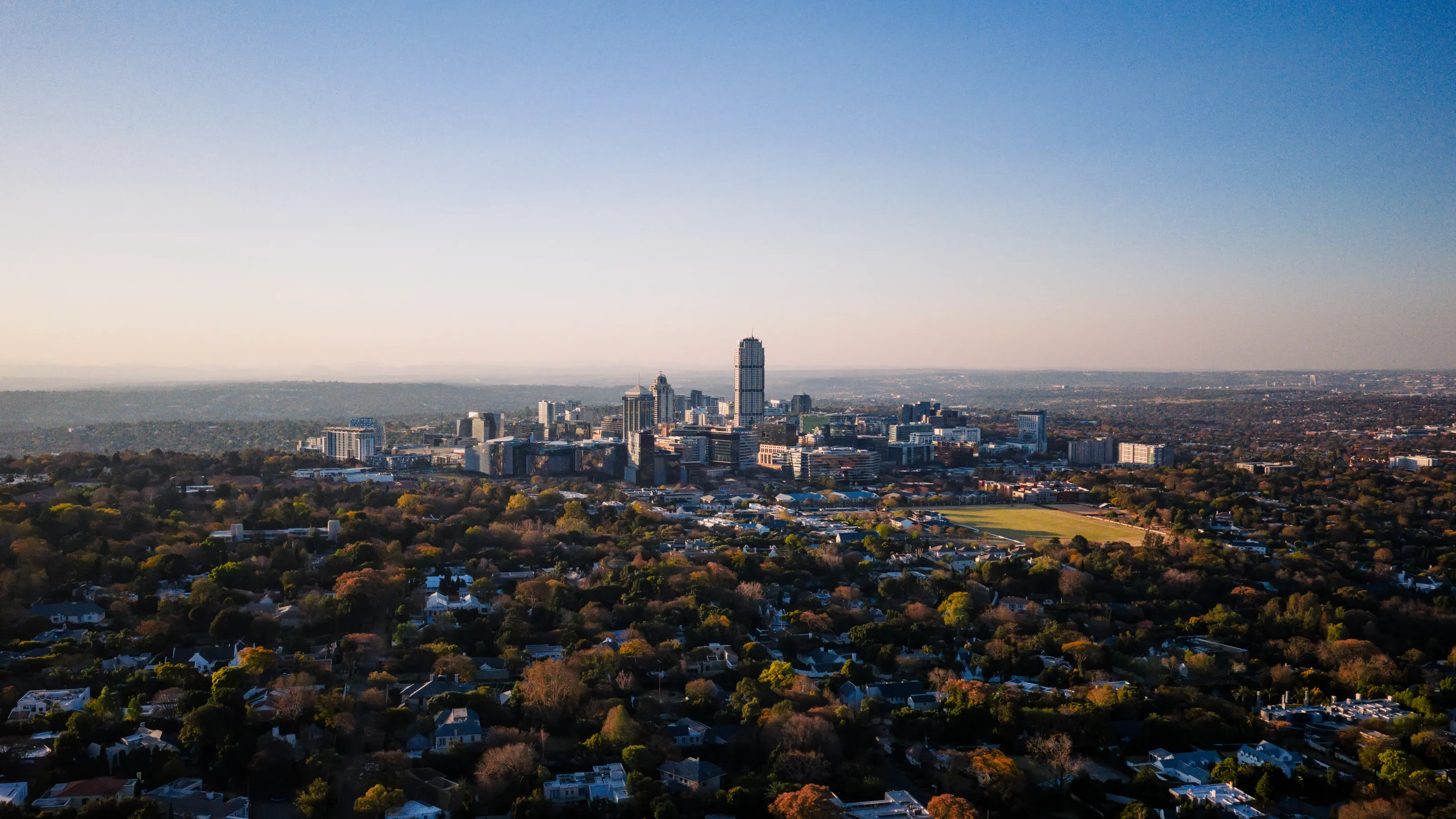
The leafy northern suburbs
Wikipedia (ES) says the city has about six million trees and is said to hold the largest man-made urban forest in the world. In the north, areas such as Rosebank, Parkhurst and Melrose are green and pleasant, with big shopping malls, per Wikivoyage (EN). The Walter Sisulu Botanical Gardens and the zoo are nature outings, per Wikivoyage (FR, EN).
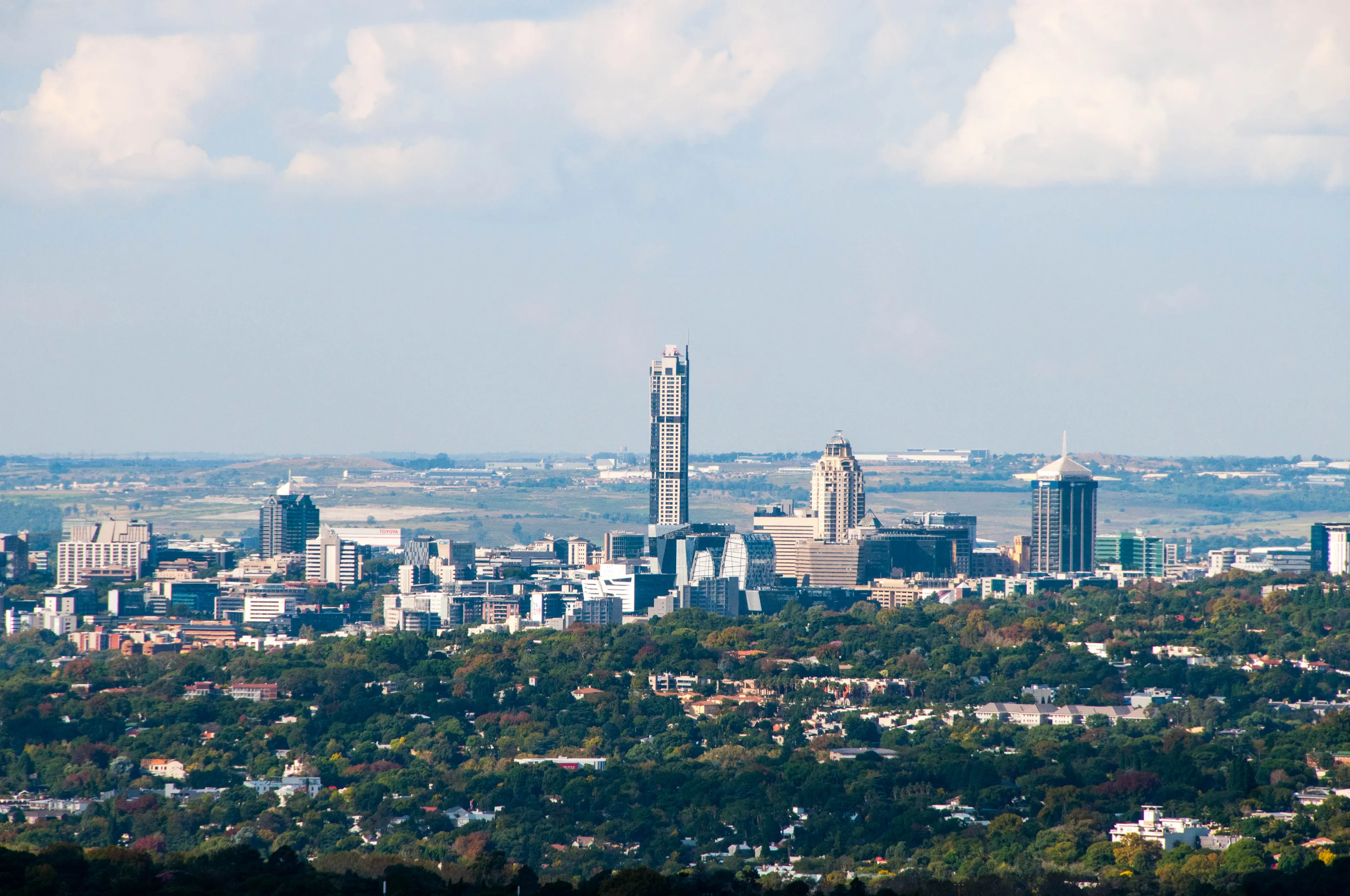
Sandton, the new business centre
Wikipedia (EN) calls Sandton Africa's richest square mile and Wikivoyage (EN) the new city centre. Wikipedia (DE) places South Africa's finance sector there, north of the old centre. Midrand, between Johannesburg and Pretoria, hosts many international companies. The Gautrain links Sandton with the airport in about 15 minutes.
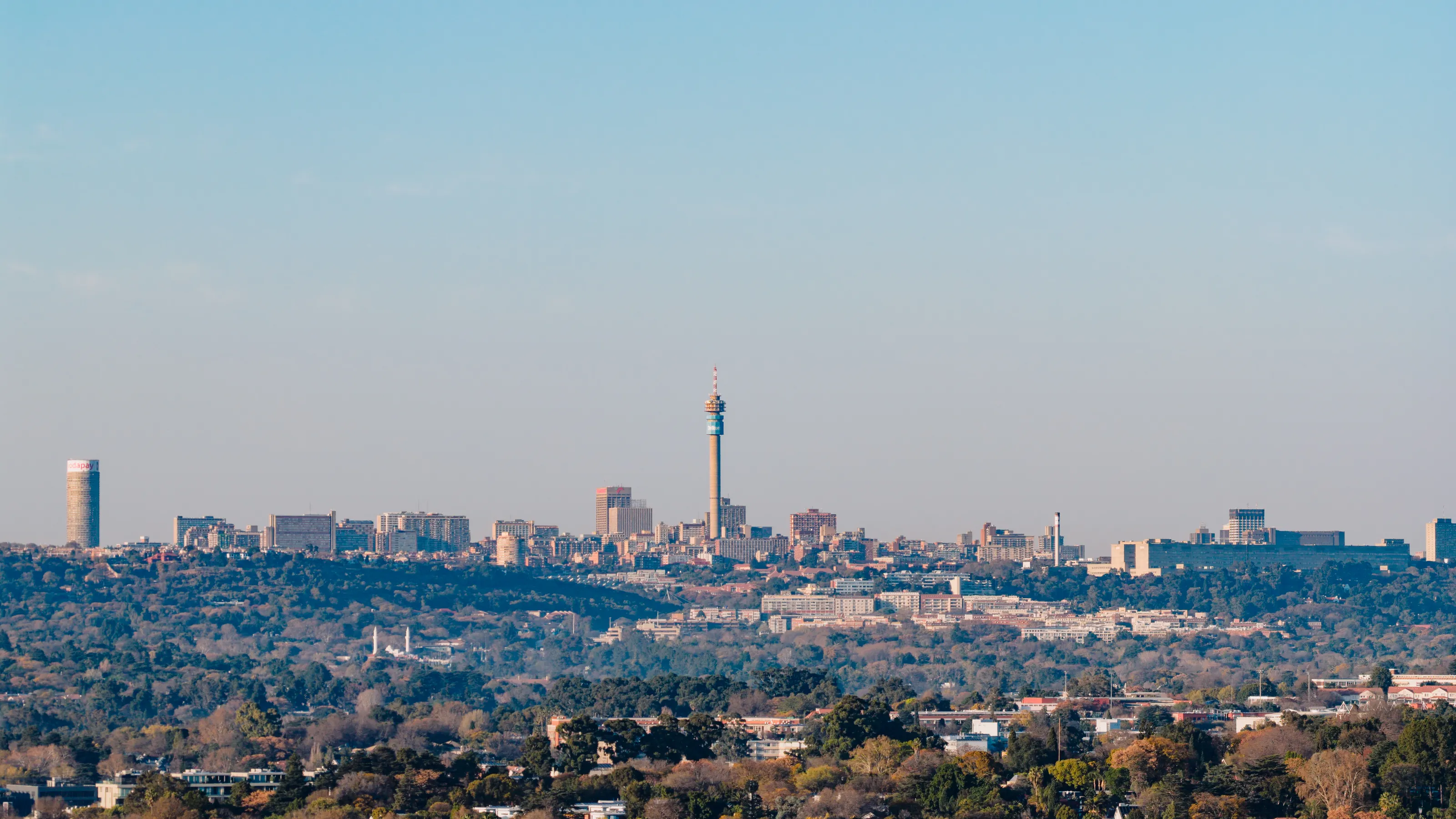
The Hillbrow Tower, a skyline marker
The slender Hillbrow Tower is easy to spot on the horizon. Wikivoyage (EN) says Hillbrow has a bad reputation but that the streets around Constitution Hill, just across the road, are not scary by day; caution still applies. The area is slowly improving, per the same source.
Soweto, the Apartheid Museum and Constitution Hill
Soweto, short for South Western Townships, lies about 24 km south-west of the city, per Wikipedia (ES). The student uprising of 16 June 1976 began there, according to Wikipedia (EN, ES), and Vilakazi Street is the usual reference point for visits (Wikivoyage EN). The Apartheid Museum, near Gold Reef City, deserves at least half a day, says Wikivoyage (FR). Constitution Hill, the old Old Fort prison complex, now houses the Constitutional Court (Wikivoyage FR). Wikivoyage (DE) advises visiting townships only on a professional guided tour.
Museums and culture
Apartheid memory, art, rock engravings and military history
Political history
Since 1994 several museums have preserved the country's political memory: the Apartheid Museum, Constitution Hill, the Hector Pieterson Museum and Mandela House, per Wikipedia (EN). The Workers Museum at Constitution Hill shows the life of migrant labourers in original dormitories, per Wikivoyage (EN).
Art and origins
The Johannesburg Art Gallery in Joubert Park is called the largest art gallery on the African continent by Wikivoyage (FR). Museum Africa covers the history of the city and holds a large rock art collection, per Wikipedia (ES). The Origins Centre at the University of the Witwatersrand presents rock art and human origins, per Wikivoyage (EN, FR).
Other museums
The National Museum of Military History in Saxonwold holds one of the few surviving Me 262 jet fighters, per Wikivoyage (EN, FR). The James Hall Museum of Transport is the country's largest museum of transport. We do not quote ticket prices: hours and fees change.
Food and drink
Meat, pap and chakalaka, Indian and African street food
Specialities
Wikivoyage (DE) describes South African food as rustic and meat-heavy: beef, game such as springbok, served with pap (white maize porridge) and chakalaka (a vegetable sauce). Steak lovers are well served, per the same source.
Neighbourhoods and markets
Wikivoyage (EN) names Melville, Norwood, Rosebank and Fordsburg for eating out, the last for Indian, Pakistani and African street food. The Sunday markets at Maboneng and Rosebank are popular outings, per the same source.
Nightlife
Newtown and the Market Theatre area offer live music and bars, and Braamfontein is lively, per Wikivoyage (EN). Go out by taxi or ride-hailing rather than on foot at night.
Getting around
By car, Gautrain, Rea Vaya buses and ride-hailing
A city built for cars
Johannesburg was built for the car and public transport is still developing, per Wikivoyage (EN, FR). Traffic is heavy at peak hours, and distances are long: over 45 km from Midrand to Soweto, says Wikivoyage (EN).
Gautrain and buses
The Gautrain links the airport, Sandton, Rosebank and Pretoria and is judged clean and safe by Wikivoyage (EN, FR); its feeder buses do not run at weekends. Rea Vaya is a bus rapid transit system with dedicated lanes and off-board fares. Wikivoyage (EN) discourages foreign visitors from using city buses and minibuses.
Taxis and apps
Uber is considered reliable, especially in the comfort option, per Wikivoyage (EN); Wikivoyage (DE) urges visitors to use it to avoid haggling with regular taxis. Taxis are not metered, except the licensed ones at the airport, and fares are negotiated.
Caution
Avoid stopping at traffic lights at night, since carjacking is a real risk, per Wikivoyage (EN, DE).
Budget and precautions
Costs vary, and caution counts in this city
Price level
Wikivoyage (DE) finds meat cheap and quality very good, but we do not quote figures, because we could not confirm them across two independent open sources.
Currency and payment
The currency is the South African rand. Wikivoyage (EN) suggests withdrawing cash at ATMs rather than airport exchange desks, whose commissions can exceed 10%.
Flights
SniperAir monitors prices to JNB and compares them with the route's history, but it does not sell or book tickets. Johannesburg is a connection point to Cape Town, Durban and Kruger, per Wikipedia (ES); you can also watch CPT or DUR.
Safety
For entry rules and safety, check your own government's official advice. Wikivoyage (EN, DE) mentions violent crime in some areas and urges visitors not to wander like tourists beyond busy zones.
When to go
A highland climate: stormy summers, dry cool winters
Summer (December to February)
Hot, with highs around 30 °C per Wikivoyage (FR) and into the mid-30s per Wikivoyage (EN), plus afternoon thunderstorms. Wikipedia (DE) mentions late-afternoon storms from October to April.
Autumn (March to May)
Storms ease and the days stay sunny. Wikipedia (DE) describes a sunny and mostly dry climate.
Winter (June to August)
Mild days, around 10 to 12 °C per Wikipedia (DE), but nights that can fall below freezing; snow is extremely rare, per Wikivoyage (EN).
Spring (September to November)
Storms return from October, says Wikipedia (DE). The sun stays strong at this altitude: wear sunscreen all year, advises Wikivoyage (EN).
Wikipedia (DE) classes the climate as subtropical highland (Cwb), with summer days averaging 26 °C. Sources disagree on summer highs (about 30 °C, 26 °C average or mid-30s), so we give only orders of magnitude.
By length of stay
What to do in Johannesburg depending on how long you stay
The essentials
The Apartheid Museum, Constitution Hill and a cultural district such as Maboneng or Newtown.
Soweto and Sandton
A guided tour of Soweto, Vilakazi Street, then Sandton and its markets.
Nature and safari
The Cradle of Humankind, the Lion Park or a connection to Kruger National Park.
In pictures
Johannesburg in pictures
You might also like
Similar destinations
FAQ
Frequently asked questions about flights to Johannesburg
How do I get from Johannesburg airport to the centre?
O.R. Tambo is about 24 to 25 km from the centre. The Gautrain reaches Sandton in about 15 minutes; a licensed taxi or ride-hailing also works. Avoid touts.
When should I visit Johannesburg?
All year: summers bring late-afternoon thunderstorms, winters are dry and cool with nights that can fall below freezing. The sun is strong in every season.
Is Johannesburg expensive?
Wikivoyage finds meat cheap, but we publish no figures because we could not confirm them on two sources.
How long should I stay in Johannesburg?
Two to four days for the museums, Soweto and Sandton; more with a safari.
How do I get around Johannesburg?
By car or ride-hailing, with the Gautrain for the airport and Sandton. Suburban trains and minibuses are discouraged for visitors.
What should I eat in Johannesburg?
Grilled beef, game, pap and chakalaka, and the Indian cooking of Fordsburg.
How much does a flight to Johannesburg usually cost?
The price depends mainly on your departure city, the time of year and how far ahead you book. The "opportunities" section above shows real examples of prices SniperAir has already detected to this destination.
How do I get alerted when a flight to Johannesburg drops below my budget?
Create an alert profile with your departure airport, Johannesburg as the destination and your maximum budget. You are notified automatically as soon as a matching price is detected.
Ready to head to Johannesburg?
Set your budget and let SniperAir monitor fares for you.
Create my alert