
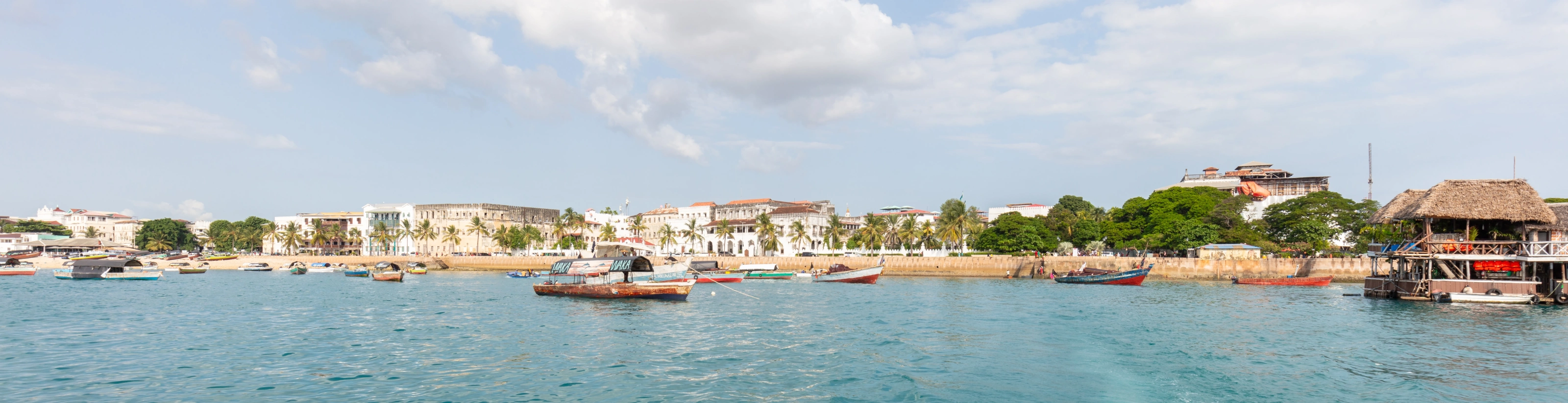
Cheap flights to Zanzibar
Set your departure airport and maximum budget: SniperAir tracks prices to Zanzibar and alerts you the moment a deal matching your criteria appears.
Quick summary
Country
Tanzania
Continent
Africa
Airport
ZNZ
Currency
Tanzanian shilling (TZS)
Time zone
UTC+3
Deals already spotted to Zanzibar
Real flight examples detected by SniperAir, with their reference price.
Loading examples…
Identity
A Swahili trading post turned postcard beach destination
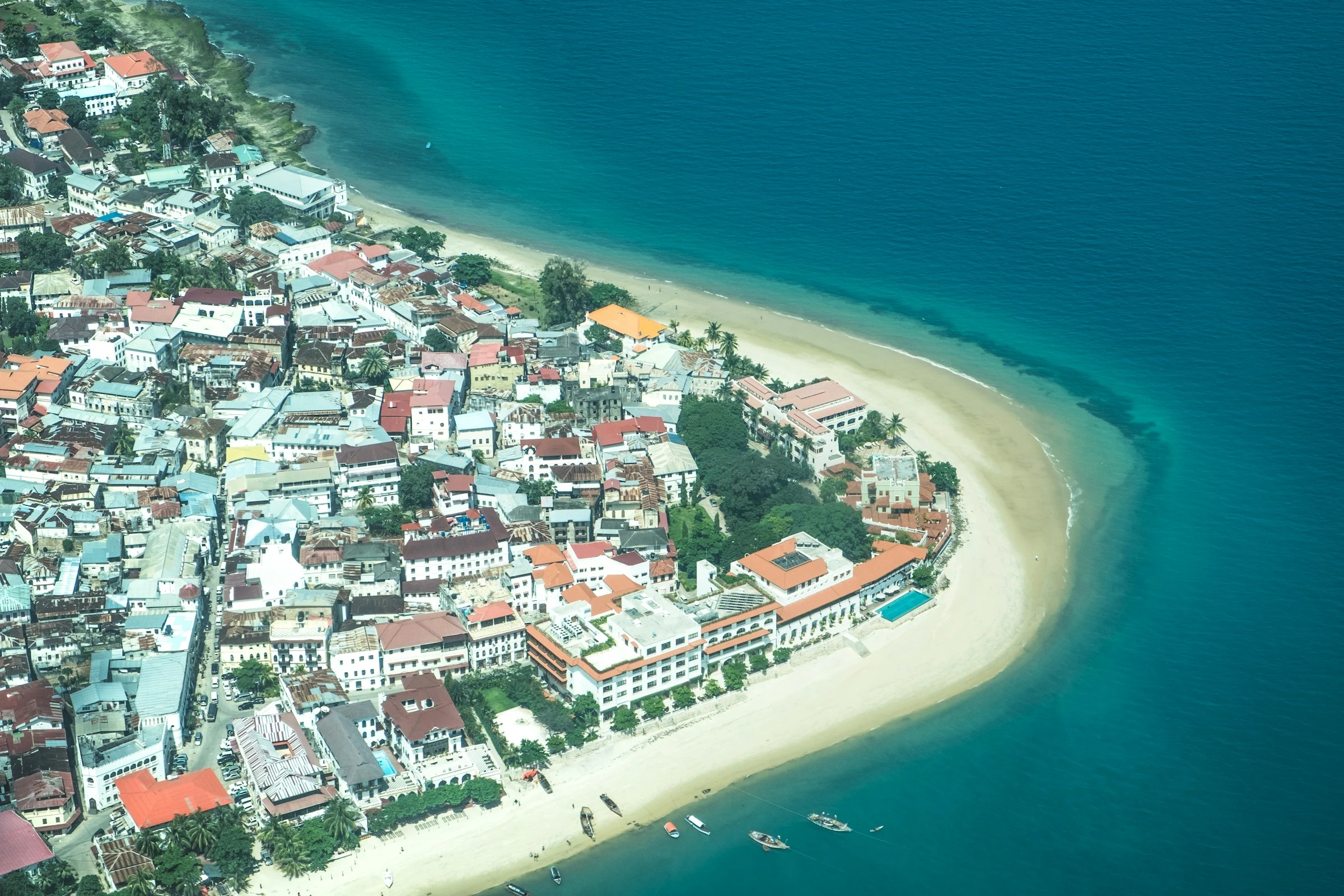
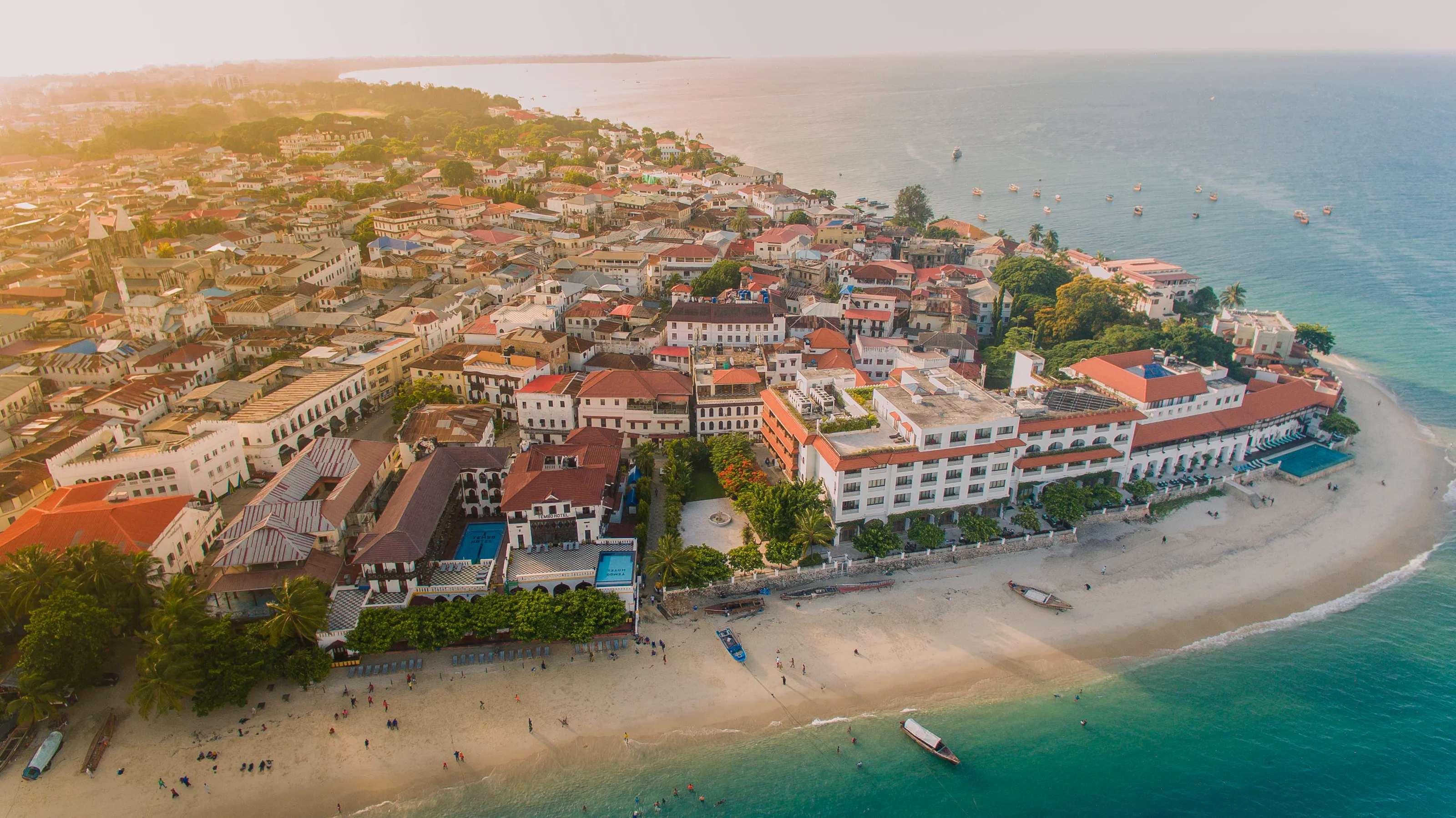
This Zanzibar travel guide has to start with a small correction: Zanzibar isn't one island but an archipelago, and Unguja — often just called "Zanzibar Island" — is the main one, with Stone Town as its historic core and former capital of the 19th-century Sultanate of Zanzibar. As a trading hub for spices, ivory and, for a long stretch of its history, enslaved people between Africa, the Arabian Peninsula and India, the old town kept a maze of narrow lanes, houses with carved wooden balconies and ornate doors that blend Swahili, Arab, Indian and European influences — an urban ensemble that's been a UNESCO World Heritage Site since 2000.
Not to miss
Stone Town, from the House of Wonders to Darajani market
The House of Wonders, the former ceremonial palace of Sultan Barghash built in 1883, was one of the first buildings in East Africa fitted with electricity and an elevator — it still dominates the waterfront today, even after a partial collapse in 2020 that's currently being repaired. Right next door, the 17th-century Old Fort, built by Omani forces over the ruins of a Portuguese chapel, now hosts craft markets and open-air concerts. Darajani covered market remains the old town's beating heart: fresh fish, spices sold loose and tropical fruit change hands there from first light.
Freddie Mercury and the Forodhani Gardens
Born Farrokh Bulsara in Stone Town in 1946, the future Queen frontman spent his early childhood in these same lanes before his family left the island; a house-museum near the market is now dedicated to him. As evening falls, Forodhani Gardens, right on the waterfront in front of the Old Fort, turn into a buzzing night food market — grilled octopus skewers, samosas and tamarind toffee are all part of the ritual, shared between residents and travellers watching the sunset.
Museums
House of Wonders, Palace Museum and the memory of slavery
House of Wonders
Completed in 1883 for Sultan Barghash, it is the largest and tallest building in Stone Town and housed the Museum of History and Culture of Zanzibar and the Swahili Coast (Wikipedia EN). It partly collapsed in 2020 and is being restored: check whether it is open before you visit.
Palace Museum (Beit el-Sahel)
Another former sultan's palace on the seafront north of the House of Wonders, built in the late 19th century. It shows the daily life of the royal family, including items belonging to Sayyida Salme, a Zanzibar princess who left to live in Europe (Wikipedia EN).
Slave market and Anglican cathedral
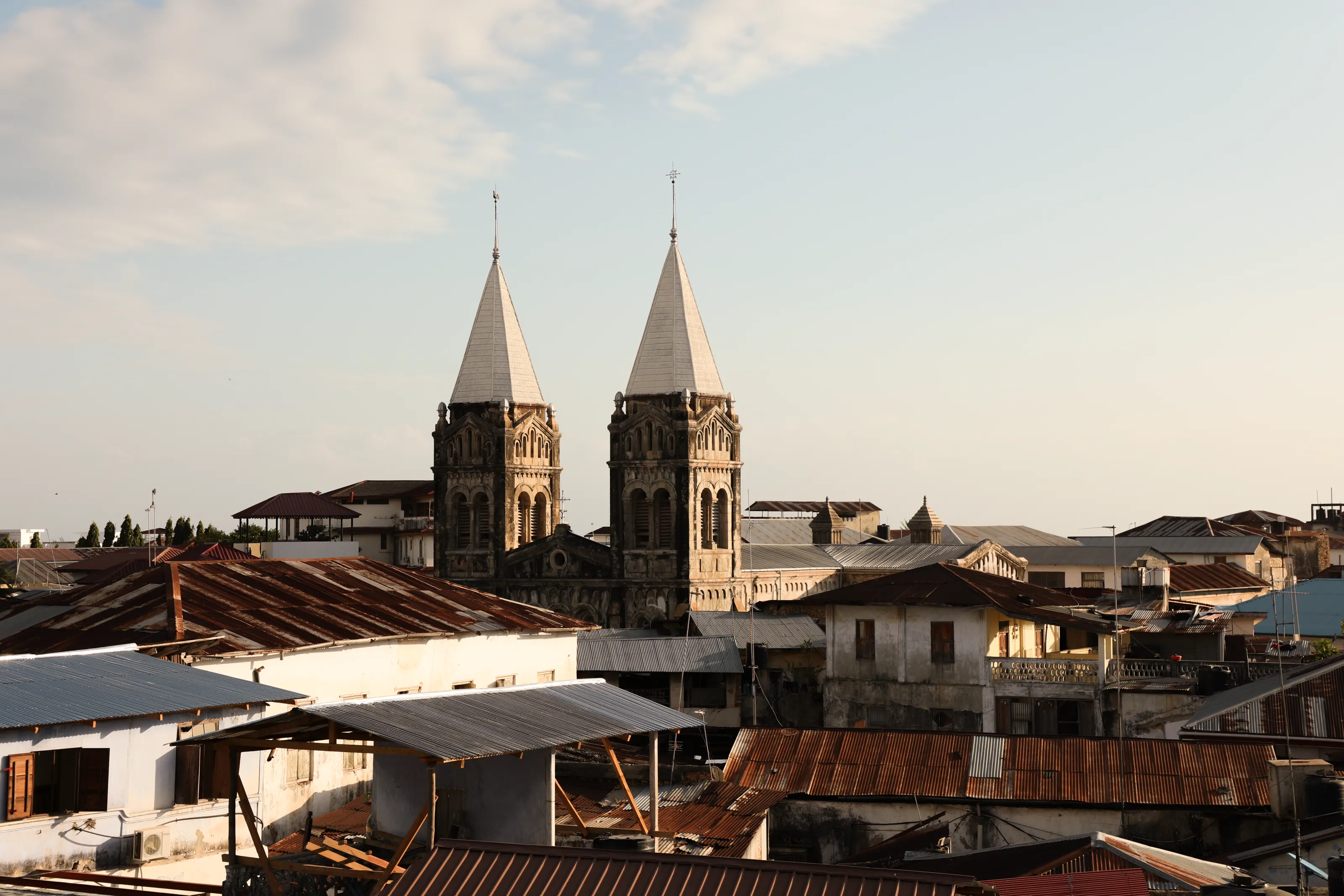
The site of the old slave market in central Stone Town now holds Christ Church Anglican Cathedral, built at the end of the 19th century: the altar stands where the whipping post used to be. A monument to the slaves and a museum on the history of slavery are next to it (Wikipedia EN); cellar chambers can be visited, with little explanation according to Wikivoyage EN.
Old Fort
The oldest building in Stone Town, built by the Omanis in 1699; it hosts craft stalls and performances.
In pictures
Stone Town's waterfront, up close
Beyond Stone Town
Northern beaches and a spice-tasting detour
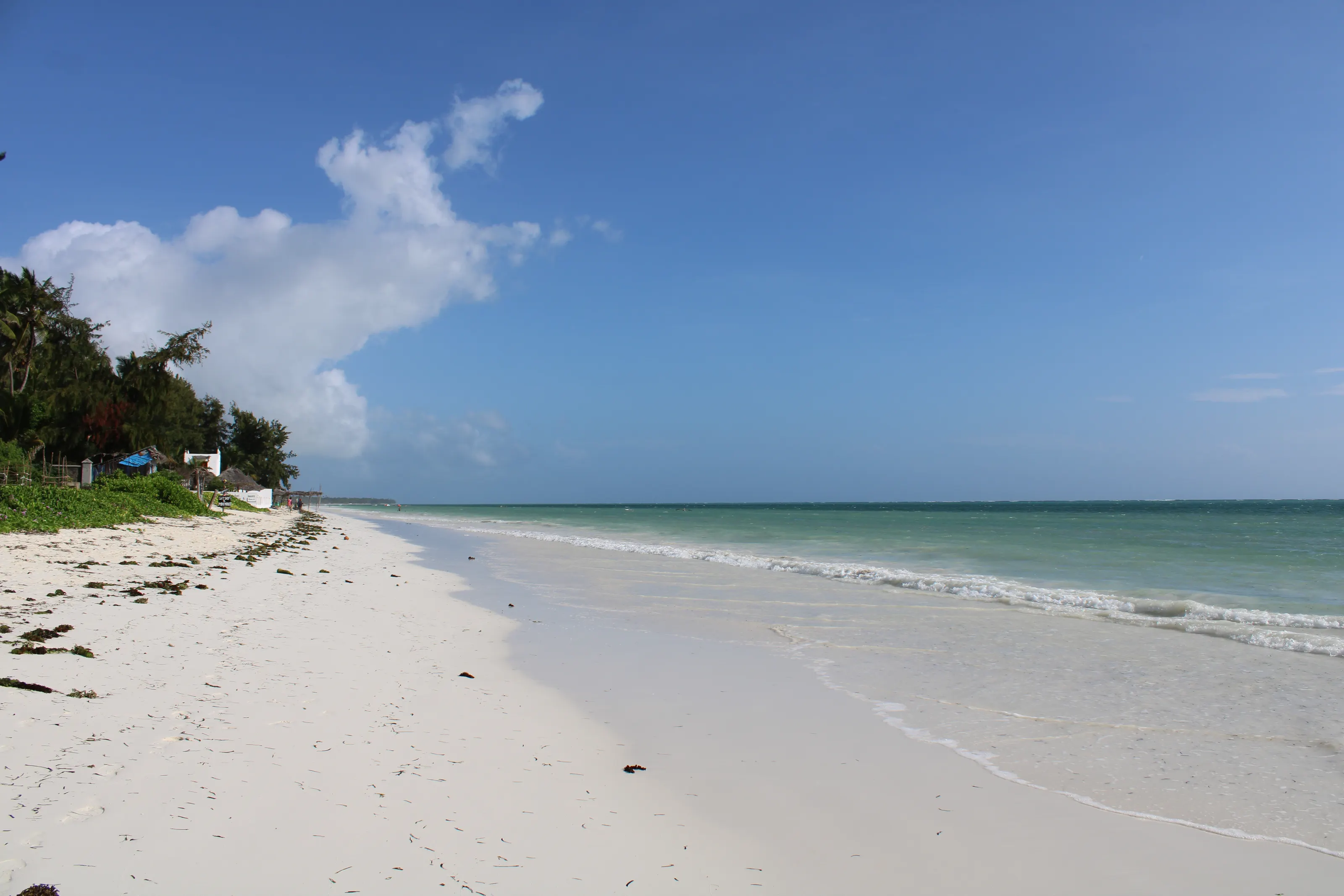
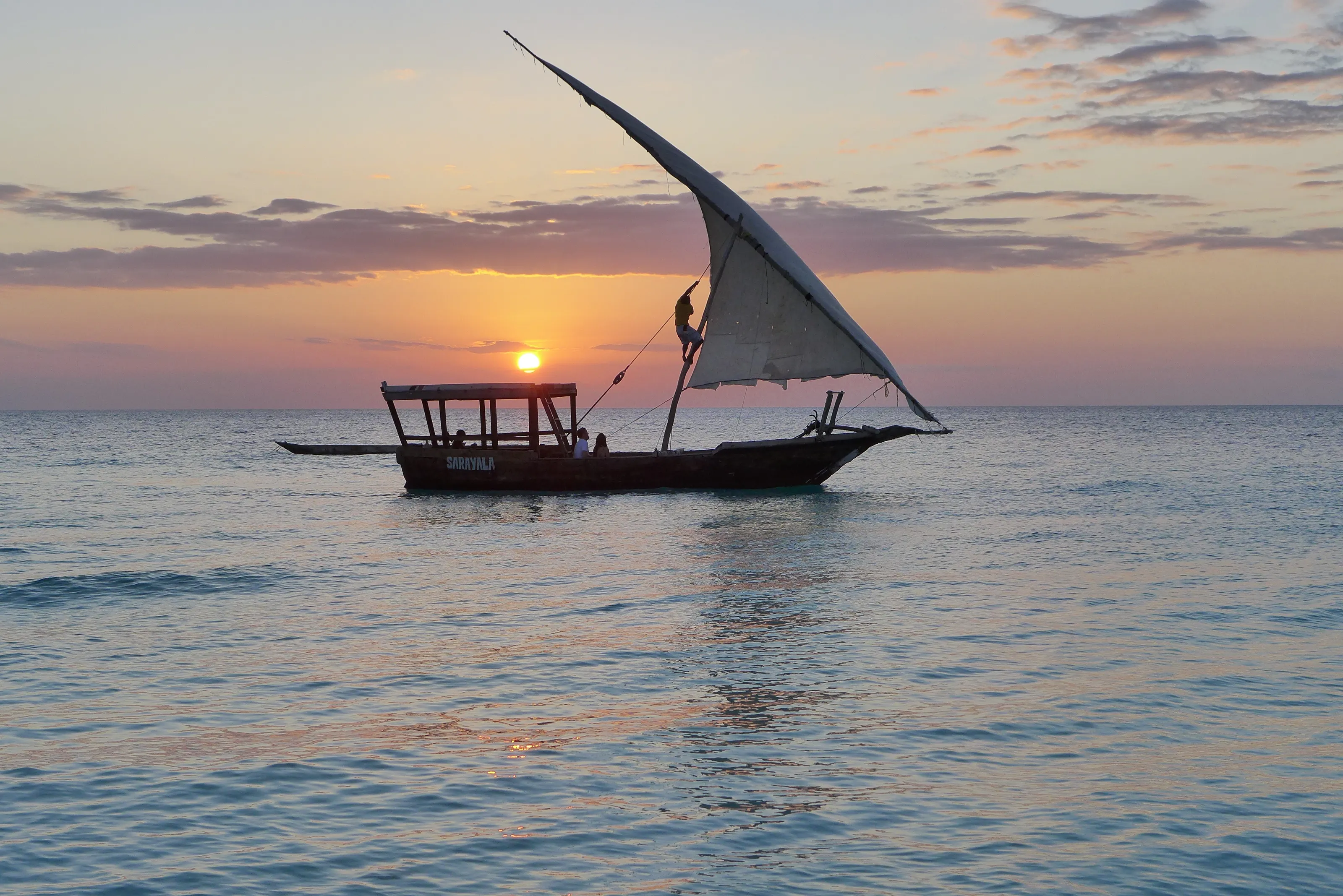
About an hour's drive north of Stone Town, Nungwi and Kendwa have the whitest sand and the clearest turquoise water on the archipelago, and are far less affected by tides than the rest of the east coast — they're also where most sunset dhow trips and snorkeling excursions out to Mnemba Island depart from. Inland, the well-known spice tours take visitors through a working plantation of spices and tropical fruit (clove, cinnamon, vanilla, ylang-ylang), often wrapped up with a local cooking lesson — a nod to the archipelago's old nickname, the Spice Island.
Jozani, home of the red colobus
Southeast of Stone Town, the Jozani-Chwaka Bay forest, the island's only national park, shelters the Zanzibar red colobus, an endangered endemic primate that can be spotted in the wild on a short guided walk through the canopy.
Food
Forodhani, Zanzibar pizza, sugar cane juice and spices
Zanzibar's cuisine is more varied than the mainland's, especially in Stone Town (Wikivoyage EN). Forodhani Gardens, facing the Old Fort, turn after sunset into a busy street food market: grilled fish and seafood, samosas, cassava and sweet potato (Wikipedia EN). It is also the place to try the 'Zanzibar pizza', a kind of savoury crêpe filled, in its basic version, with beef, egg and salad.
Drinks
Freshly pressed sugar cane juice and coconut milk are not to be missed in Stone Town; tangawizi is a spicy ginger soda; on the beaches there are local beers and the Dawa cocktail (Wikivoyage EN).
Spices
Zanzibar is the old Spice Island: cloves, cinnamon, vanilla, cardamom, nutmeg, ginger and saffron grow on the island, and spice tours often end with a local meal.
Good to know
The archipelago is mostly Muslim: drink alcohol discreetly, especially during Ramadan. Beach hotels also serve more international food.
Getting to Zanzibar
An airport close to Stone Town and ferries from Dar es Salaam
Abeid Amani Karume International Airport
The airport is about 5 km south of Zanzibar City according to Wikipedia EN and Wikivoyage EN, which corrects the 8 km given earlier. Several regional and international airlines serve it from East Africa, the Middle East and Europe, for example Turkish Airlines, Qatar Airways, Ethiopian Airlines or Oman Air. Taxis wait outside and prices are negotiable; a local minibus (dala-dala) passes the gate.
Approximate distances and times from Wikipedia EN and Wikivoyage EN; check entry conditions, as Zanzibar has its own immigration service.
Fast ferries and catamarans link Dar es Salaam and Zanzibar in about 1 h 30 to 2 h (Wikivoyage EN and DE), while the slow Flying Horse ferry takes up to 4 h 30.
Even from the mainland you need a valid passport in Zanzibar: the archipelago keeps a separate immigration service (Wikivoyage EN).
| Landmark | Indicative distance or time |
|---|---|
| ZNZ airport to Stone Town | about 5 km, around twenty minutes |
| Stone Town to Nungwi or Kendwa | about 1 h to 1 h 30 by road (56 km to Nungwi) |
| Stone Town to Paje | about 1 hour by road |
| Dar es Salaam to Zanzibar | about 1 h 30 to 2 h by fast ferry |
| Zanzibar to Pemba | about 48 km of open sea |
Getting around
On foot in Stone Town, taxi or dala-dala on the island
In Stone Town walking is the most practical option: the alleys are narrow. To leave town, taxis and cars with a driver are the most comfortable; prices are negotiated before departure, and private cars are often 10 to 20 per cent cheaper than official taxis (Wikivoyage EN).
Dala-dala
Minibuses and pickups serving every village on the island at very low prices; allow about two hours to Nungwi and note that no line links north and south directly: you change at Stone Town (Wikivoyage EN).
Shared taxi and rental
A shared taxi to be booked online runs on the island. Driving yourself can be hard: roads are sometimes in poor condition, there are obstacles, many police checks and a temporary Zanzibar driving permit; avoid driving at night (Wikivoyage EN).
Respect
The island is mostly Muslim; away from the beaches, cover arms and legs and avoid public displays of affection (Wikivoyage EN).
When to go
When to visit Zanzibar?
June to October
The long dry, cooler season, the one Wikivoyage DE recommends most: calm sea, clear skies and fewer people than from December to February.
December to February
Hot, with temperatures above 30 °C and high humidity (Wikivoyage DE); the north-east monsoon (kaskazi) cools the north and east coasts in particular.
March to May
The main rainy season (masika), tied to the south-west monsoon; many places close or cut prices.
November
Short rains, often brief, before the high season returns; July is the driest month.
Tropical monsoon climate: near the equator the archipelago is warm all year; there are two rainfall peaks, March-May and November-December (Wikipedia EN). Best period: June to October for the dry season, December to February for the heat.
By length of stay
What to do in Zanzibar depending on how long you stay
Stone Town
House of Wonders, Old Fort, Palace Museum, Darajani market and Forodhani at sunset.
Spices and nature
A spice tour and Jozani forest to add to Stone Town.
Beaches
Nungwi, Kendwa or the east coast for swimming, snorkelling towards Mnemba and dhow trips.
Budget
A mid-range stay, pricier by the beach
Zanzibar is not a cheap destination for lodging: according to Wikivoyage EN, budget hotels are scarce, beach hotels are often pricier than those in Stone Town, and rates fall in the low season, when some places close. Street food, dala-dalas and markets remain affordable, while excursions, spice tours and entry to Jozani can cost foreign visitors more. We do not publish precise prices here.
Keeping costs down
Visit in the low season, negotiate taxis and excursions before setting off, and compare several offers before booking. Avoid paying on the street: beware of touts in Stone Town.
You might also like
Similar destinations
FAQ
Frequently asked questions about flights to Zanzibar
Which airport do I use to reach Zanzibar?
Abeid Amani Karume International Airport (ZNZ), about 5 km south of Zanzibar City.
How much does a flight to Zanzibar usually cost?
The price mainly depends on your departure city, the time of year and how far ahead you book. The "opportunities" section above shows real price examples already detected by SniperAir for this destination.
When is the best time to visit Zanzibar?
June to October, the dry season, or December to February for the heat; March to May is the main rainy season.
Which museums should I visit in Stone Town?
The House of Wonders (being restored after a partial collapse in 2020), the Palace Museum, the museum and memorial at the old slave market beside the Anglican cathedral, and the Old Fort.
Can Stone Town and the northern beaches be combined easily?
Yes, Nungwi and Kendwa are about one to one and a half hours by road from Stone Town, so a cultural visit and a beach stay combine easily.
How do I get to Zanzibar from Dar es Salaam?
Fast ferries link the two cities in about 1 h 30 to 2 h, several times a day, as well as flights between the two airports.
How do I get around the island?
On foot in Stone Town, by taxi at a negotiated price or by dala-dala for villages; driving yourself requires caution.
What should I eat in Zanzibar?
At the Forodhani night market: grilled fish, samosas, Zanzibar pizza and sugar cane juice; and the island's spiced cooking.
How can I be alerted when a flight to Zanzibar drops below my budget?
Create an alert profile with your departure airport, Zanzibar as destination and your maximum budget. SniperAir monitors prices and notifies you as soon as a matching price is detected; we do not sell or book tickets.
Ready to head to Zanzibar?
Set your budget and let SniperAir monitor fares for you.
Create my alert