
Cheap flights to Jaipur
Set your departure airport and maximum budget: SniperAir tracks prices to Jaipur and alerts you the moment a deal matching your criteria appears.
Quick summary
Country
India
Continent
Asia
Airport
JAI
Currency
Indian rupee
Time zone
UTC+5:30
Deals already spotted to Jaipur
Real flight examples detected by SniperAir, with their reference price.
Loading examples…
Why track Jaipur with SniperAir
You do not need to compare prices every day
Choose your departure
Enter your departure airport and your maximum budget for a flight to Jaipur (JAI).
SniperAir keeps watch
Our systems continuously compare new prices with the real price history of the route. SniperAir tracks prices and alerts you: it does not sell or book tickets.
You get an alert
As soon as a price matches your criteria, you are notified without having searched for anything yourself.
Airport and transfer
An airport close to the centre, south of the city
Jaipur International (Sanganer)
The airport is in Sanganer, in the southern suburbs, about 10 km from the centre. By taxi or car the ride usually takes a little over half an hour, longer at rush hour. Direct flights connect Jaipur with several large Indian cities and a few destinations in the Middle East and Southeast Asia.
New Delhi-Indira Gandhi (connection or alternative gateway)
Many travellers arrive via Delhi, about 270 km from Jaipur. Fast daytime trains link the two cities in 4 to 5 hours and air-conditioned buses in about 6 hours. Delhi, Agra and Jaipur make up the "Golden Triangle", the classic northern India route.
Distances and times are indicative (Wikipedia EN and FR, Wikivoyage EN and DE) and vary with traffic and schedules. Sources give the Delhi-Jaipur distance as between 260 and 300 km.
The heart of the Pink City
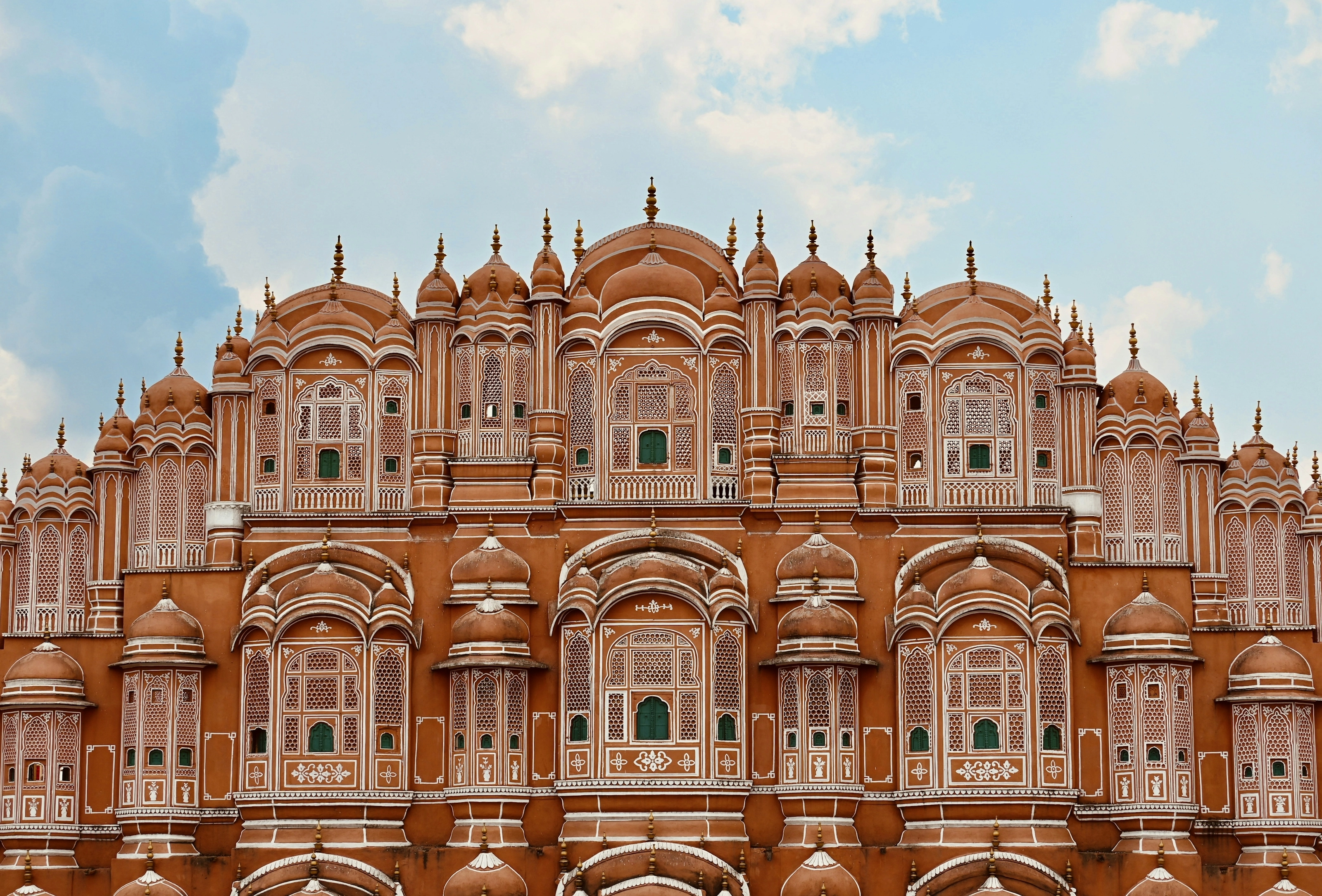
Hawa Mahal, City Palace and Jantar Mantar
Jaipur is the capital of Rajasthan and has around 3 million inhabitants. It was founded in 1727 by Maharaja Jai Singh II on a grid plan and has been nicknamed the "Pink City" since 1876, when the old town was painted pink, the traditional colour of welcome, for the visit of the Prince of Wales. Its historic centre has been a UNESCO World Heritage Site since 2019.
The Hawa Mahal, Palace of Winds
Built in 1799, the Hawa Mahal is the symbol of Jaipur: a pink sandstone facade pierced with hundreds of small latticed windows, from which the women of the court could watch street life without being seen. The breeze flowing through the facade gave it its name. It is best photographed from the street or from a cafe balcony opposite.
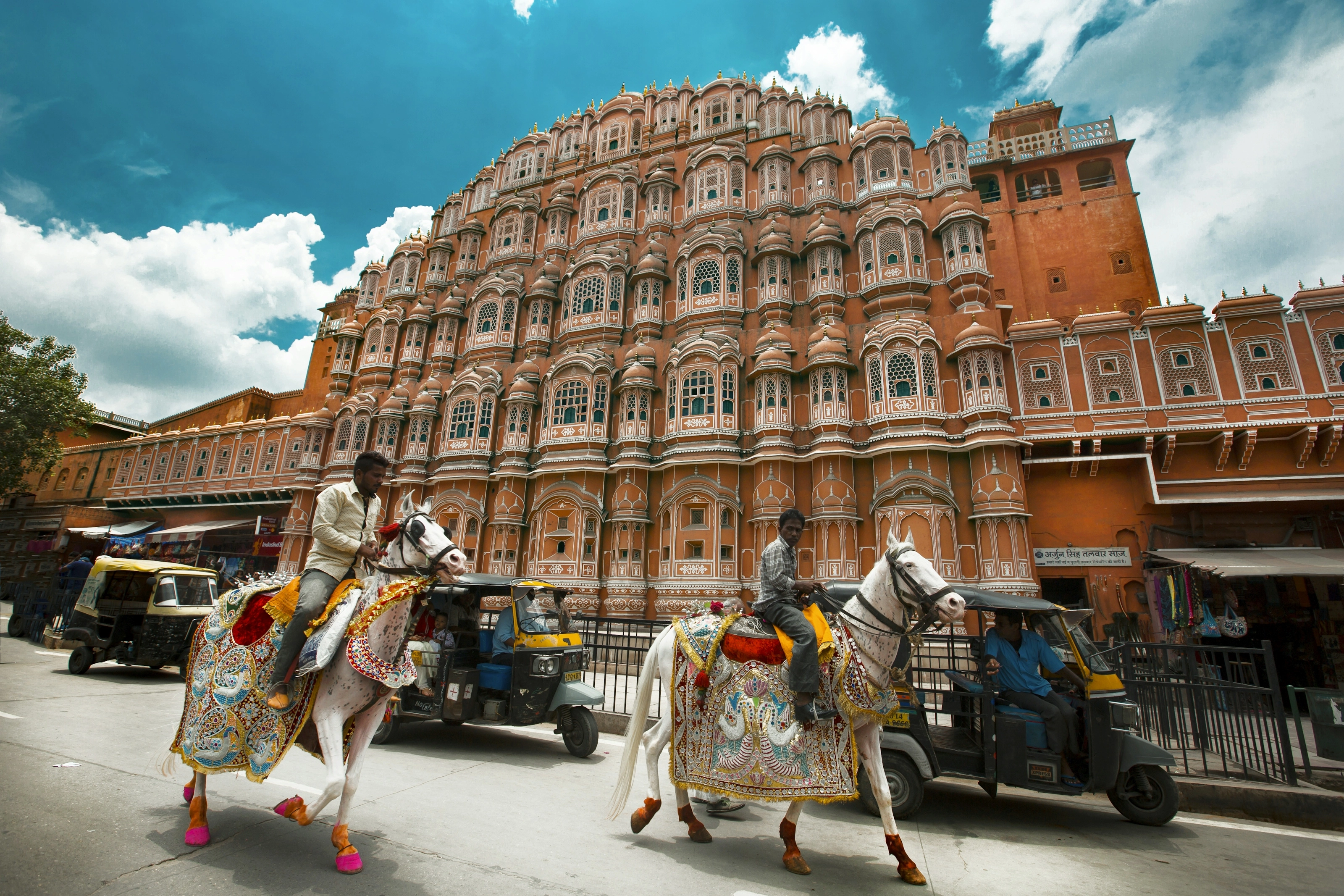
A lively street at the foot of the palace
The main road alongside the Hawa Mahal is one of the busiest in the old town: tuk-tuks, shops and richly decorated horses at weddings and festivals. In the morning the light is best and the crowds are still manageable.
The City Palace
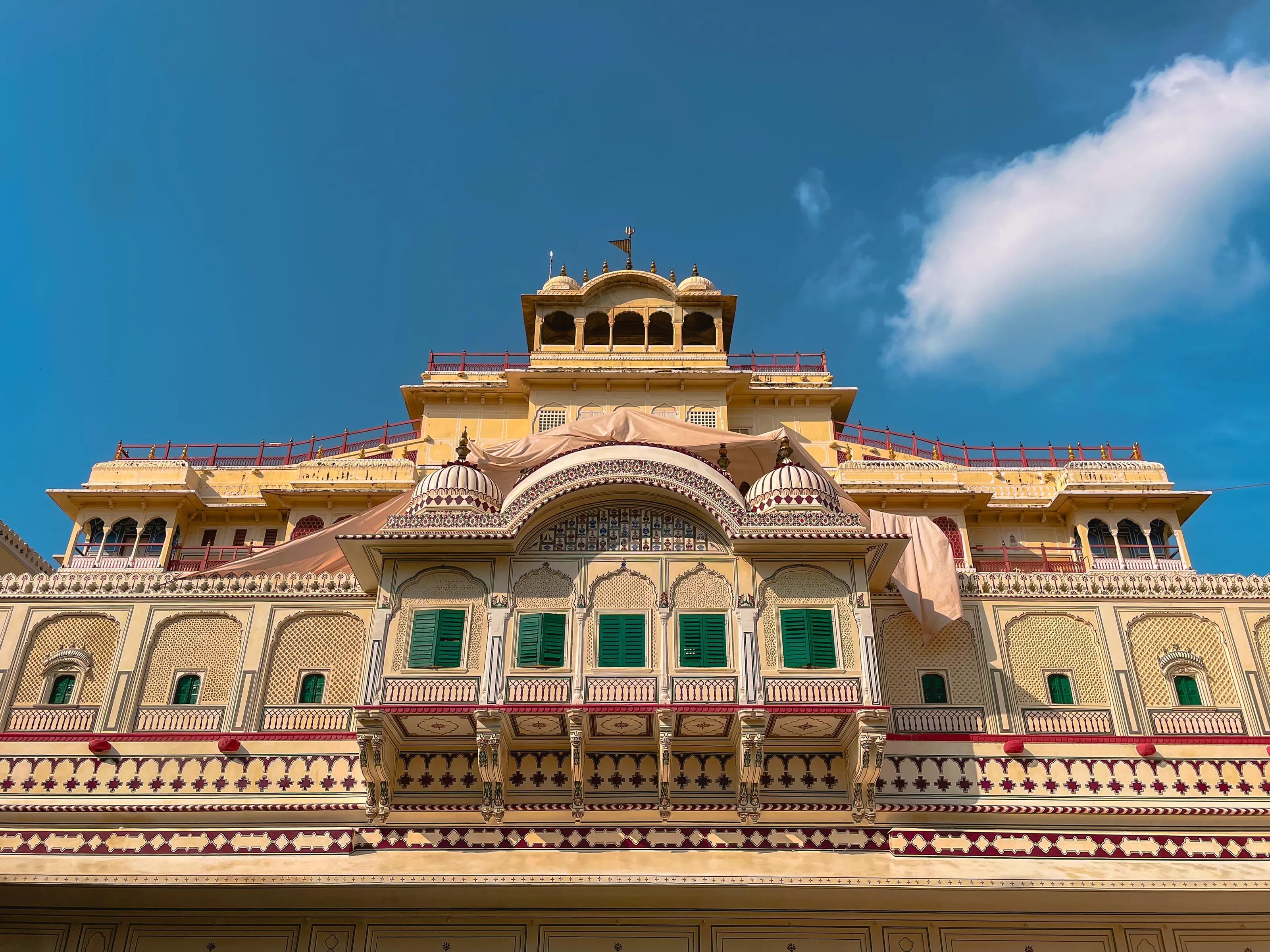
In the heart of the old town, the City Palace is a complex of courtyards, gardens and pavilions. One part houses the Maharaja Sawai Man Singh II Museum, while another is still lived in by the family descended from the former rulers. The yellow and ochre facades with green shutters open onto decorated inner courtyards.
Jantar Mantar, the observatory in stone
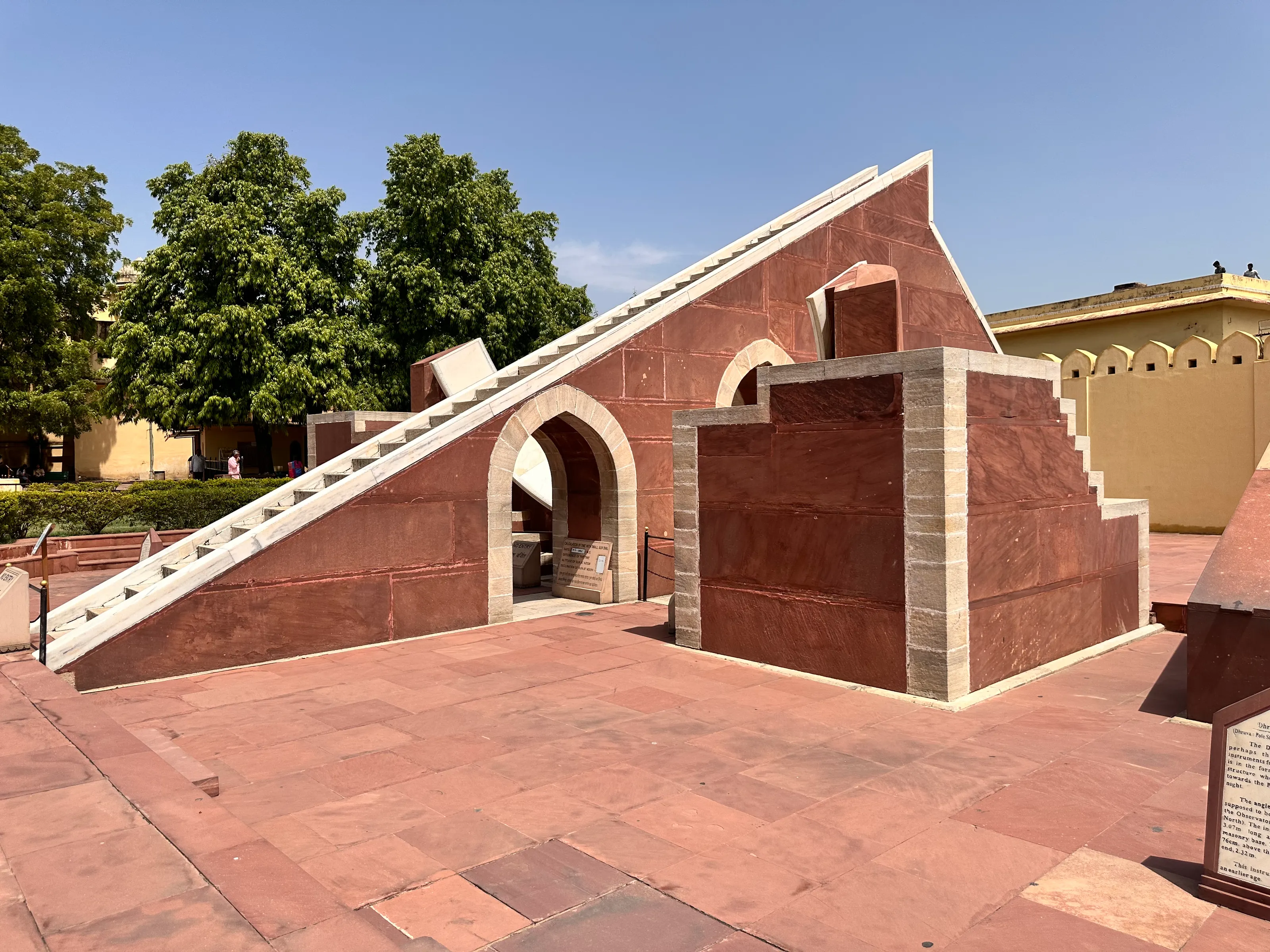
Right next to the palace, Jantar Mantar is an astronomical observatory built in the 18th century by Jai Singh II, a keen astronomer. Its large stone instruments measure time and the positions of the sun and stars. It is the largest and best preserved of the observatories he built, and it has been a UNESCO World Heritage Site since 2010.
Jal Mahal, the water palace
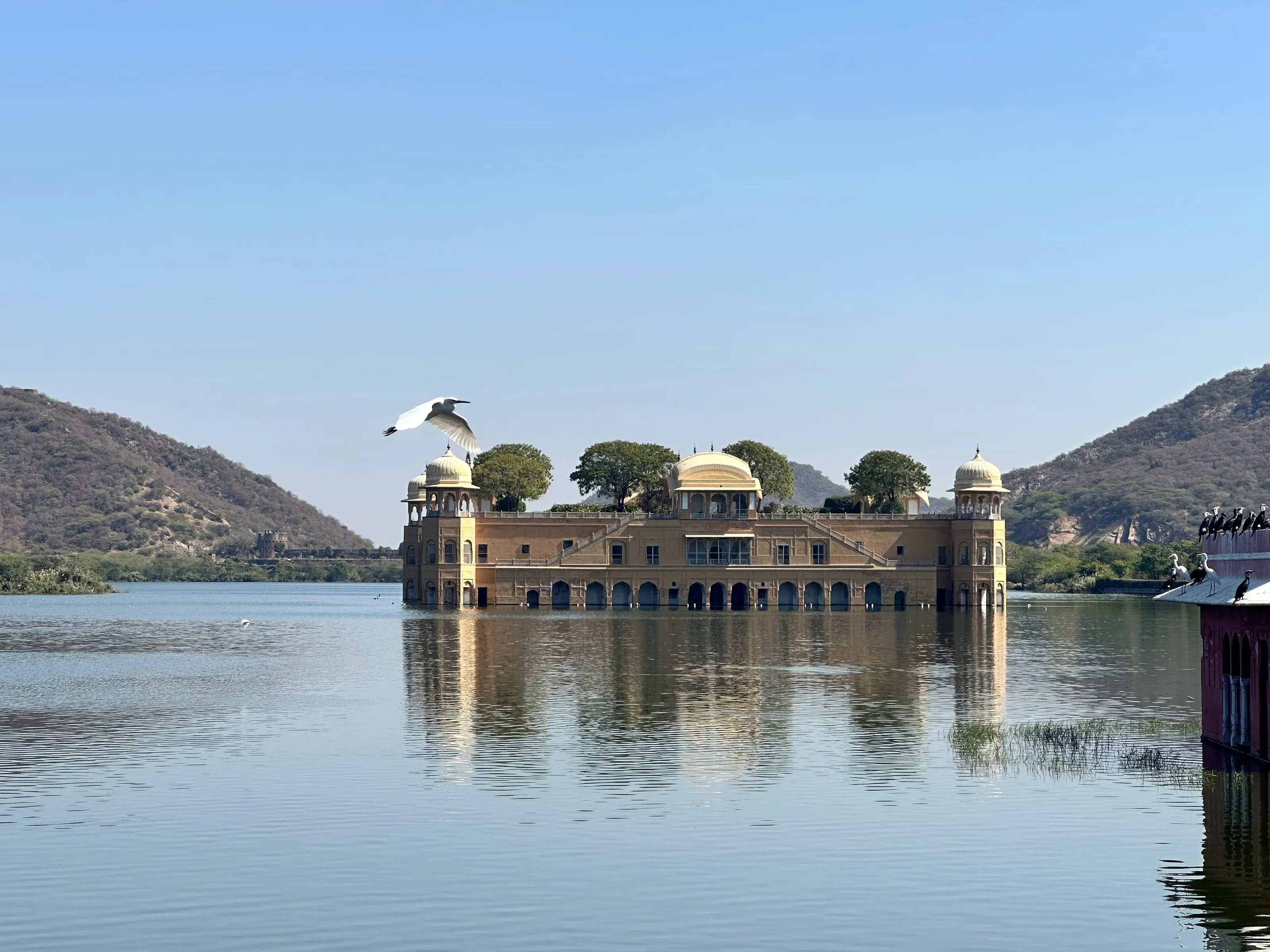
North of the city, on the road to Amber, the Jal Mahal seems to float on Lake Man Sagar, surrounded by hills. It is admired from the shore; in the morning and late in the day, when the water is calm, the reflections are at their best.
Forts and palaces
Amber Fort and the hills
Amber Fort
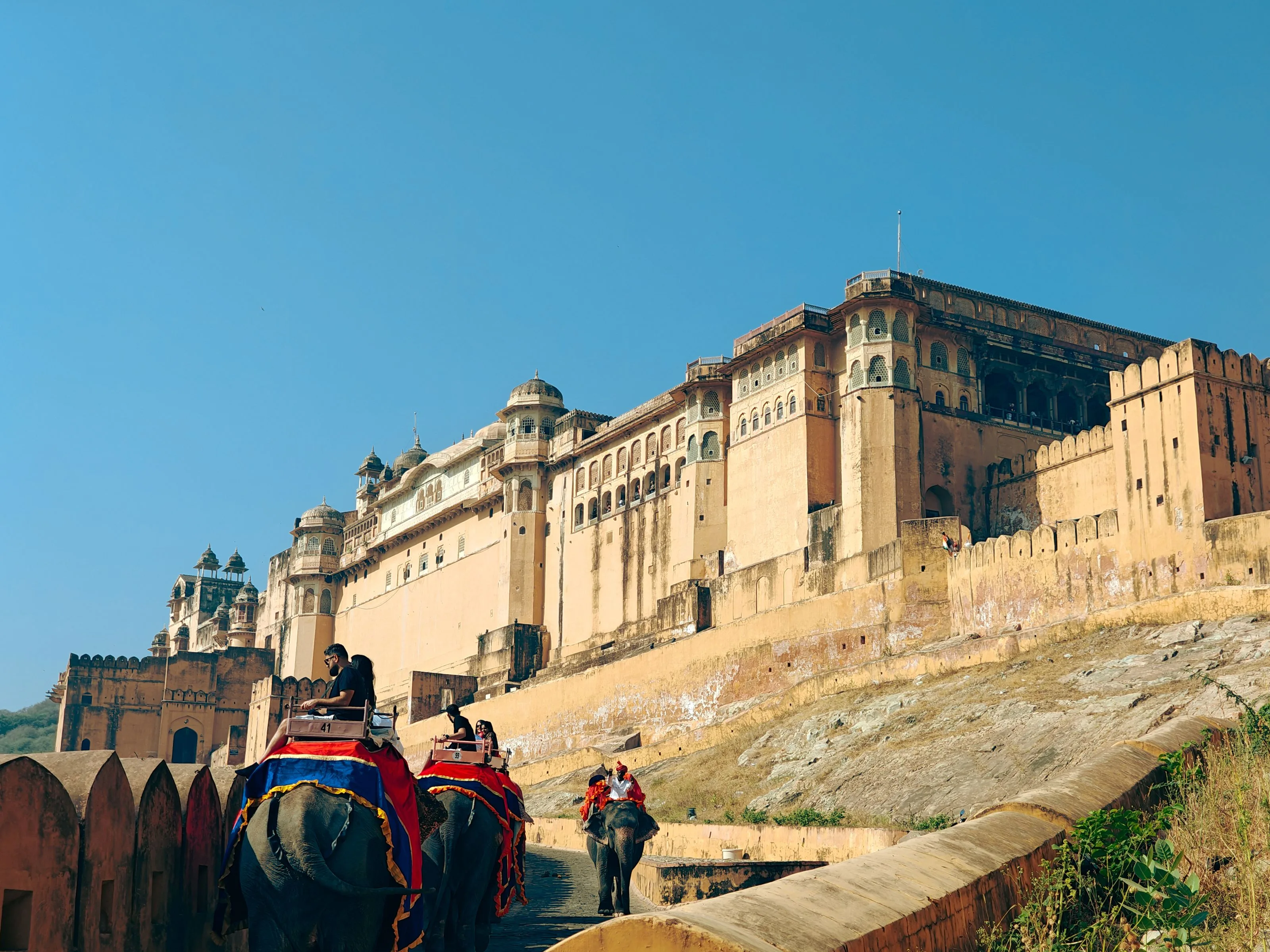
About 11 km north of the centre, Amber (Amer) Fort was the residence of the Kachhwaha rulers before Jaipur was founded. This vast fort-palace blends Hindu and Mughal styles and is one of the Rajasthan hill forts on the UNESCO list. Highlights include the Hall of Public Audience and the Sheesh Mahal, covered in tiny mirrors.
The elephants of Amber
Riding an elephant up to the fort is a traditional attraction, but animal welfare is debated, and many travellers prefer to walk up or take an authorised vehicle.
Nahargarh and Jaigarh
Above the city, the forts of Nahargarh, built from 1734, and Jaigarh offer views over Jaipur. Start early: several sites close in the late afternoon and the forts take time.
Bazaars and crafts
Jewellery, textiles and blue pottery
The old town bazaars
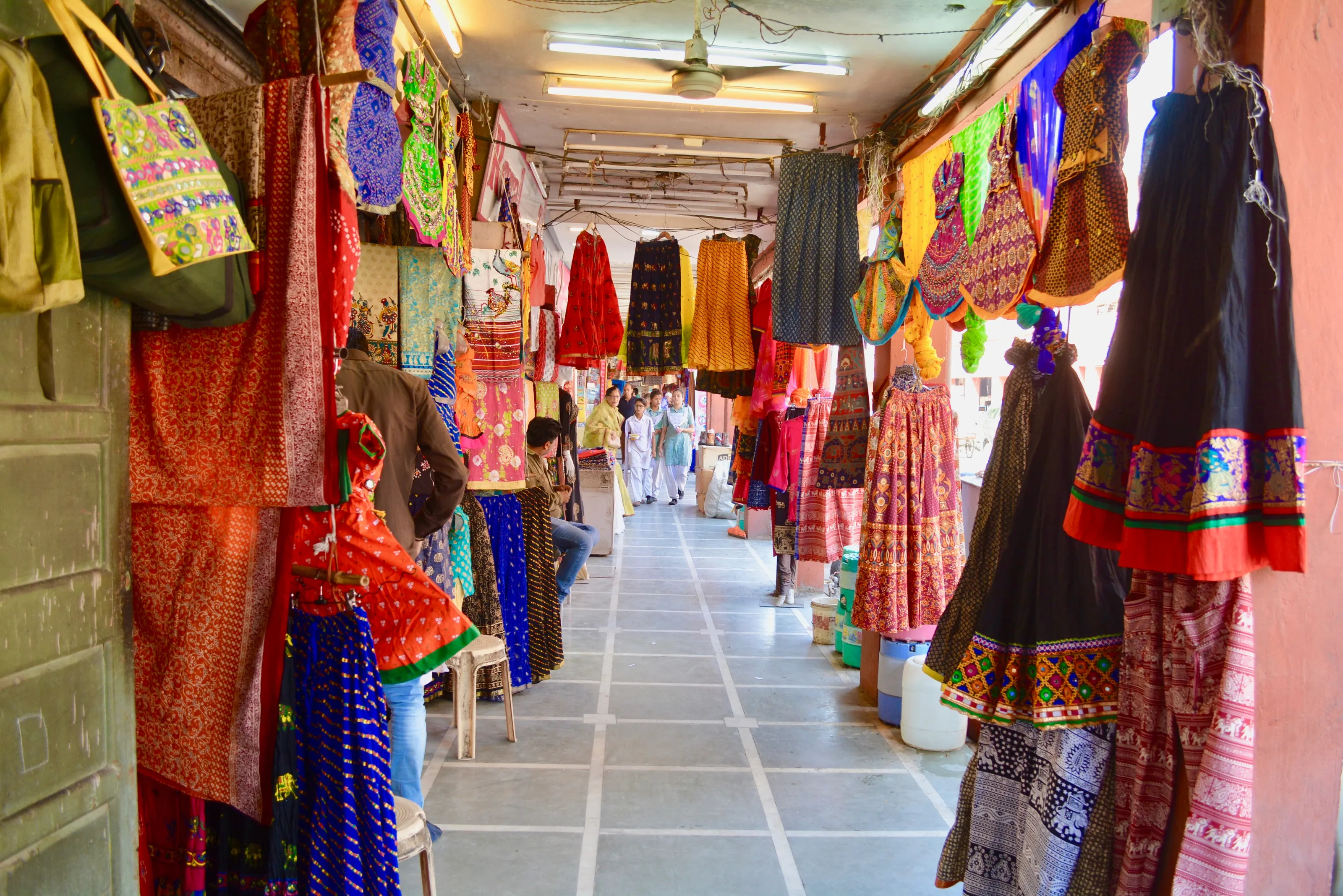
Jaipur has dozens of specialised bazaars. Bapu and Nehru bazaars, busy and chaotic, sell crafts, textiles and clothes; Johari Bazaar and Chameliwala Market are known for jewellery and gems. Nearly everything is negotiable, so compare several shops before buying.
What to bring back
Block-printed fabrics, embroidered textiles, jewellery and Jaipur's blue pottery are typical purchases. Be wary of strangers offering to take you to buy gemstones: it is a well-known scam.
Museums
The maharaja's palace, the central museum and textile arts
The City Palace museum
The Maharaja Sawai Man Singh II Museum, inside the City Palace, displays weapons, costumes, textiles and court objects, and lets you see several rooms of the palace.
Albert Hall and the central museum
Albert Hall, an Indo-Saracenic building in Ram Niwas Garden, houses the central museum, which presents art and antiquities collections.
The hand-printing museum
The Anokhi Museum of Hand Printing, near Amber, shows the art of woodblock printing, a regional speciality. A composite ticket covers several sites; check opening hours and closing days before you go.
Food and drink
Dal baati, kachori and lassi
Rajasthani cuisine
Local cooking is known for dal baati churma, a dish of lentils, baked wheat balls and crumbled sweet, and for laal maas, a very spicy meat dish. The region is also known for its vegetarian cooking.
Snacks, sweets and drinks
For breakfast or an afternoon snack, try pyaz kachori, an onion-filled fried pastry, and mawa kachori. Ghewar, a sweet honeycomb-like cake, is the treat of the Gangaur festival (March or April). A chilled lassi from one of the historic shops in the centre goes down well at any hour.
Water and precautions
Drink bottled or filtered water and pick busy places for street food.
Getting around
Metro, tuk-tuks and buses
In the old town
The centre can be explored partly on foot, but heat and traffic tire you quickly. The Jaipur Metro links the south of the city (Mansarovar) with Badi Chaupar, in the heart of the old town, at a low fare.
Tuk-tuks and apps
Tuk-tuks (autorickshaws) are handy for Amber and the forts. Agree the price and route before you set off and refuse imposed "photo stops". Ride-hailing apps also work, but getting a ride back from remote sites can take longer.
Tourist buses
Bus tours run by the Rajasthan tourism department cover the main sights in a day with a guide.
Budget
An affordable budget compared with Europe
Jaipur remains an affordable destination: local meals, city transport and simple accommodation cost much less than in Europe. Entrance fees are higher for foreign visitors than for Indians, and palace hotels can be expensive. We give no figures because they vary with the season and the exchange rate: check the official sites.
The plane ticket remains the most variable item of a trip. SniperAir tracks flights to JAI closely and compares them with the route's price history.
When to go
When to visit Jaipur?
Spring
March and April: the heat builds quickly. In April, maximum temperatures can reach or exceed 40 °C.
Summer
May and June: the hottest period, with average highs of about 41 °C in May according to Wikivoyage. The monsoon from June to September brings storms and heavy rain, mostly in July and August.
Autumn
October: the monsoon ends, skies clear, daytime temperatures remain high.
Winter
November to February: mild, dry season with pleasant days and nights that seldom fall below 10 °C.
The best period runs from October to March. May and June are very hot and best avoided for visiting forts and monuments in full sun. Pace yourself: water, a hat and early-morning visits.
By length of stay
What to do in Jaipur depending on your stay
The essentials
Hawa Mahal, City Palace, Jantar Mantar, Amber Fort and a bazaar walk.
Going deeper
Add Nahargarh and Jaigarh, the Jal Mahal and a museum (Albert Hall or the hand-printing museum).
Around Jaipur
Day trip to Abhaneri and its stepwell, or to Ranthambore National Park, about 180 km away. Jaipur is also part of the "Golden Triangle" with Delhi and Agra.
In pictures
Jaipur in pictures
You might also like
Similar destinations
FAQ
Frequently asked questions about flights to Jaipur
How do I get from Jaipur airport to the centre?
Jaipur airport (JAI) is in Sanganer, about 10 km south of the centre: allow a little over half an hour by taxi or car, longer at rush hour. Taxis and ride-hailing apps serve the city.
When is the best time to visit Jaipur?
From October to March, when days are pleasant and dry. May and June are very hot; the monsoon, from June to September, brings heavy rain mostly in July and August.
Is Jaipur an expensive city?
No, it is affordable compared with Europe for meals, transport and simple accommodation. Monument entrance fees cost more for foreign visitors, and luxury accommodation can be pricey.
How many days do you need in Jaipur?
Two days cover the essentials: old town, City Palace, Jantar Mantar and Amber Fort. A third day lets you see Nahargarh, Jaigarh, the Jal Mahal and a museum.
How do you get around Jaipur?
The centre can be explored partly on foot; the metro serves the old town, and tuk-tuks and ride-hailing apps are useful for Amber and the forts. Always agree the price before getting into a tuk-tuk.
Which dishes should I try in Jaipur?
Dal baati churma and laal maas, pyaz kachori, a chilled lassi, and ghewar around the Gangaur festival.
How much does a flight to Jaipur usually cost?
The price depends mainly on your departure city, the time of year and how far ahead you book. The "opportunities" section above shows real examples of prices already detected by SniperAir for this destination.
How do I get alerted when a flight to Jaipur drops below my budget?
Create an alert profile with your departure airport, Jaipur as the destination and your maximum budget. You are notified automatically as soon as a matching price is detected.
Ready to head to Jaipur?
Set your budget and let SniperAir monitor fares for you.
Create my alert