
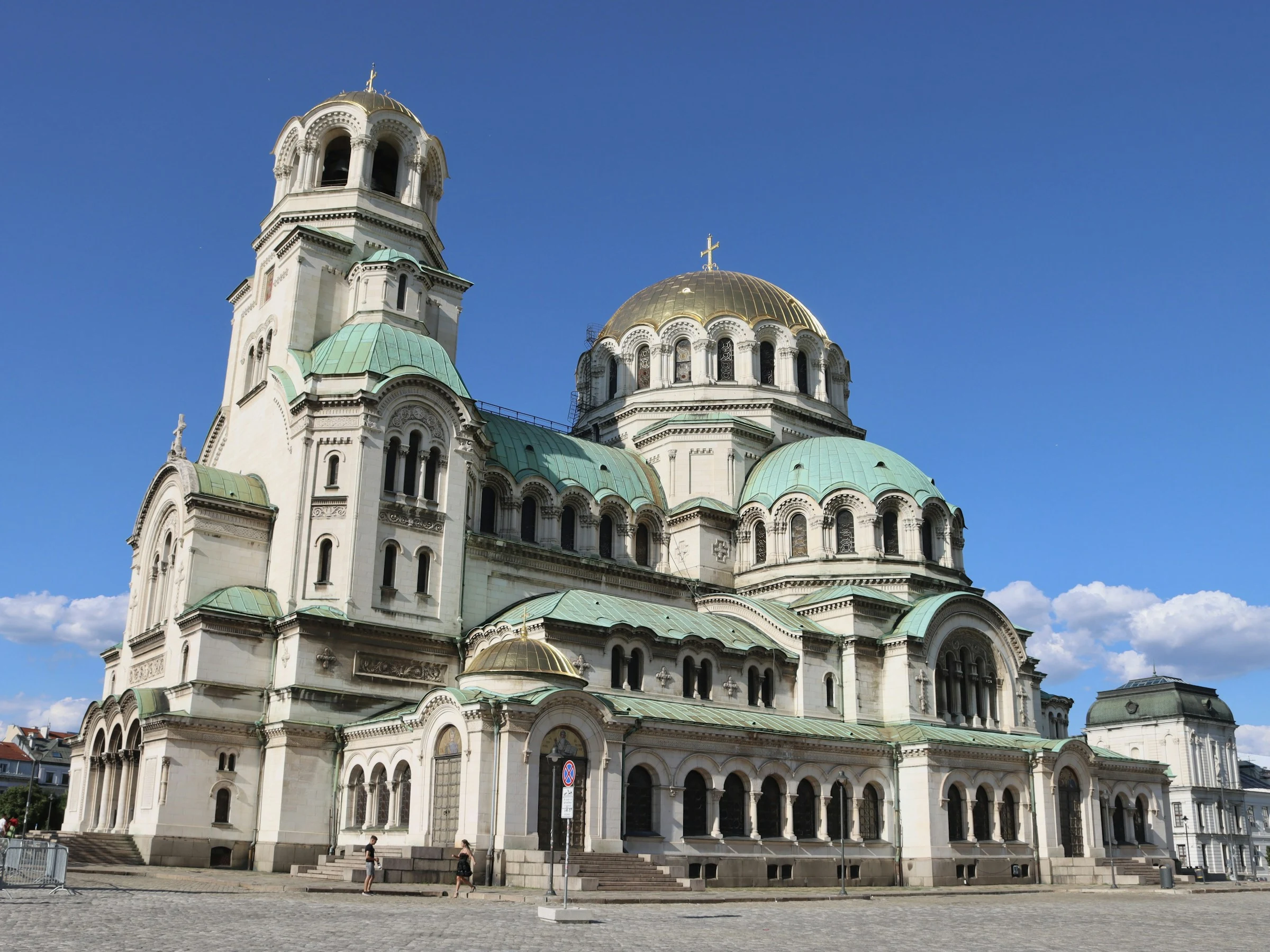
Cheap flights to Sofia
Set your departure airport and maximum budget: SniperAir tracks prices to Sofia and alerts you the moment a deal matching your criteria appears.
Quick summary
Country
Bulgaria
Continent
Europe
Airport
SOF
Currency
Euro
Time zone
UTC+2
Deals already spotted to Sofia
Real flight examples detected by SniperAir, with their reference price.
Loading examples…
Why track Sofia with SniperAir
You don't need to compare prices every day
Pick your departure
Tell us your departure airport and maximum budget for a flight to Sofia.
SniperAir watches
Our systems continuously compare new prices against the route's real price history.
You get an alert
The moment a price matches your criteria, you're notified, with no searching on your end.
Sofia airport
A single airport, linked to the city by metro, about 9 km out
Sofia Airport
Bulgaria's main airport, about 9 km east of the city centre. Metro line M4 (yellow), which stops at Terminal 2 and is still sometimes shown as M2 on older maps, links it to the centre and to Serdika station for a fare of under one euro. A free shuttle bus runs between Terminals 1 and 2 to reach the station.
| Mode | Approximate time | Good to know |
|---|---|---|
| Metro M4 | about 25 to 40 min to the centre | Runs from about 5:30 to midnight; fare under one euro; station at Terminal 2 |
| Bus 84 | about 30 to 40 min | Serves both terminals and the centre; contactless payment on board or a ticket bought locally |
| Taxi | about 20 to 30 min depending on traffic | Use the official taxi stand or order through an app; avoid touts and unlicensed cars |
Rough figures, to be checked before you travel: timetables, journey times and lines change with the season and with roadworks. For onward travel from Plovdiv or the rest of the country, check trains and coaches.
What makes Sofia unique
Roman streets inside a metro station, a mosque and a synagogue a few minutes from the churches
One of Europe's oldest capitals
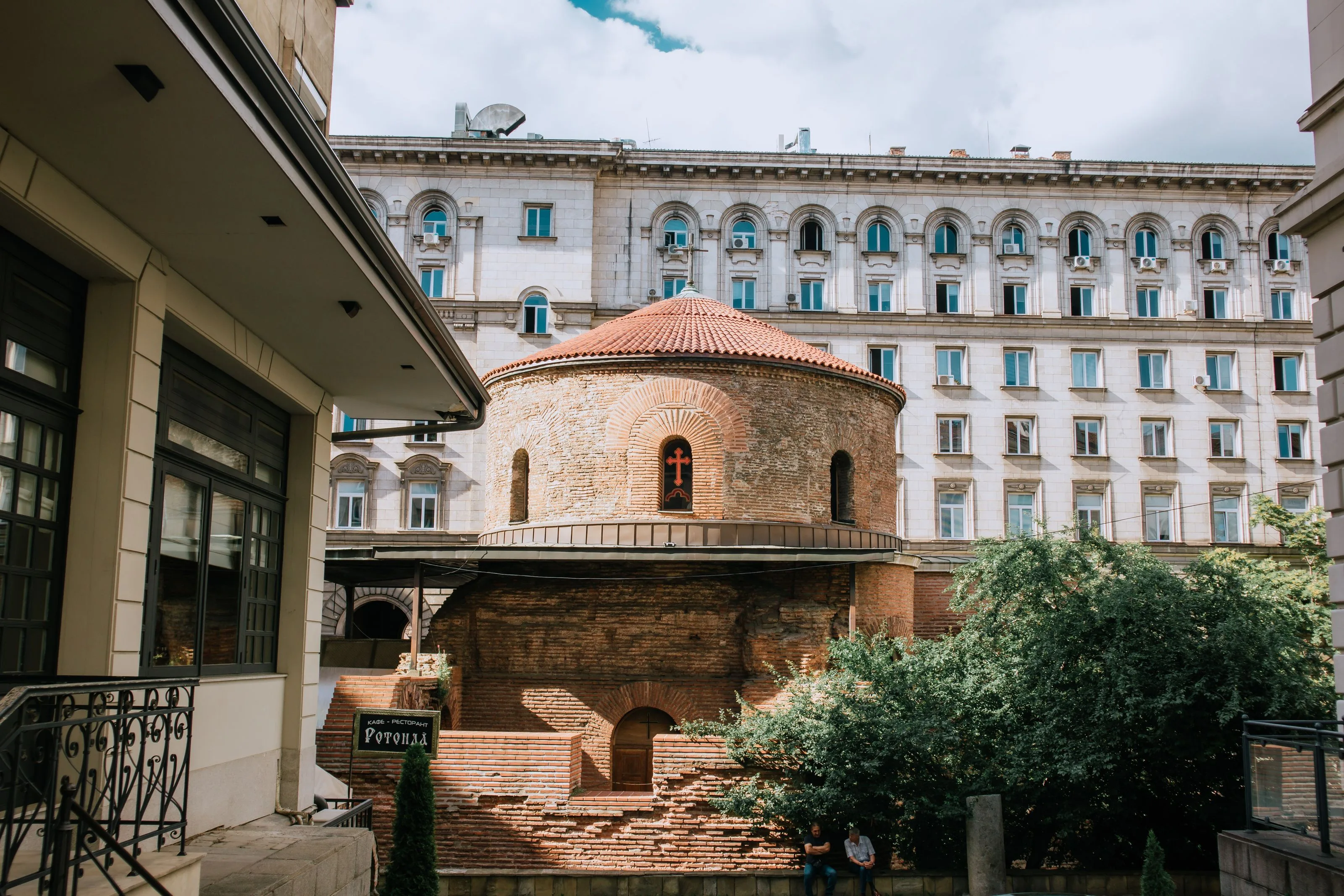
Sofia has been inhabited since at least 7000 BC and was the Roman city of Serdica. Nowhere is that clearer than in Serdika metro station, where Roman streets, gates, walls and thermal baths discovered in 2010 are visible. Nearby stand the 4th-century Rotunda of St George and the Amphitheatre of Serdica. The city is also one of the highest capitals in Europe, set in a valley below Vitosha mountain.
A mosque, a synagogue and churches within a short walk
The Banya Bashi Mosque, the Church of Sveta Nedelya, the synagogue and the Russian Church of St Nicholas with its golden domes all sit within a few minutes' walk of each other, next to the Central Mineral Baths. Sofia counts 49 mineral and thermal springs, and the baths are the best known.
A walkable centre and an affordable capital
The centre is easy to cover on foot and the capital remains very affordable by European standards. Street art decorates the electrical boxes around Tsar Ivan Shishman and Rakovski streets.
History
From Serdica to the capital of modern Bulgaria
Serdica, Sredets, Sofia
The Thracian Serdi tribe gave the city its ancient name. It was conquered by Rome around 29 BC, and in 311 AD the Edict of Toleration was issued here by Galerius. In 809 Khan Krum took it and renamed it Sredets, and the Ottomans conquered it in the 1380s, ruling for more than four centuries. The present name comes from the Church of Saint Sofia, from the Greek word for wisdom. Sofia was chosen as capital of the new Principality of Bulgaria in 1879, after Russian troops entered the city in January 1878.
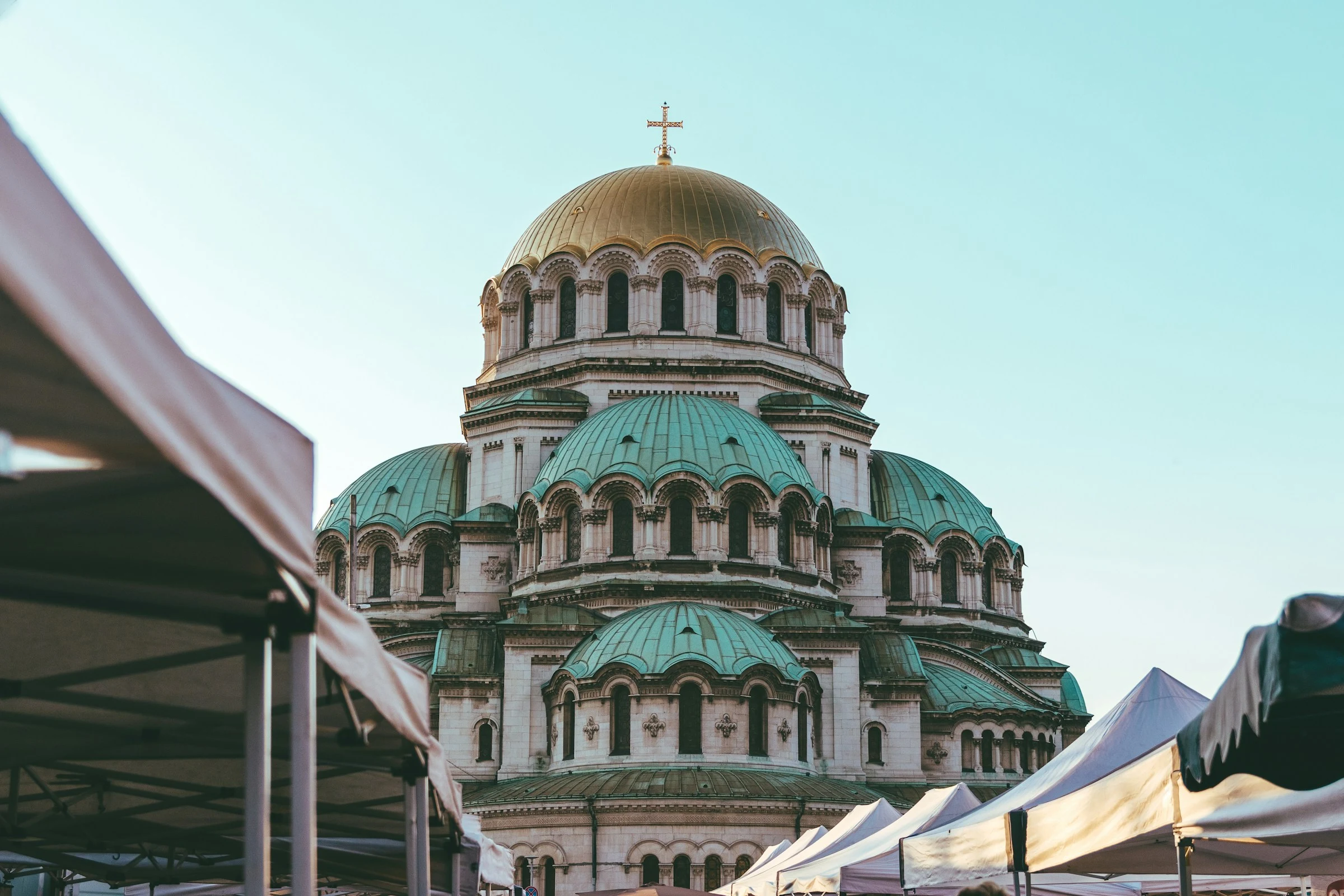
Alexander Nevsky Cathedral
The landmark that dominates Sofia's skyline
Built in memory of the soldiers of the war of liberation
Alexander Nevsky Cathedral was built between 1882 and 1912 in memory of the Russian soldiers who died in the Russo-Turkish war of liberation. Its gilded dome rises more than 50 metres and the building covers some 3,170 square metres. Entry to the nave is free, and the crypt houses the icon museum of the National Gallery. Visiting hours vary by source, so check before you go.
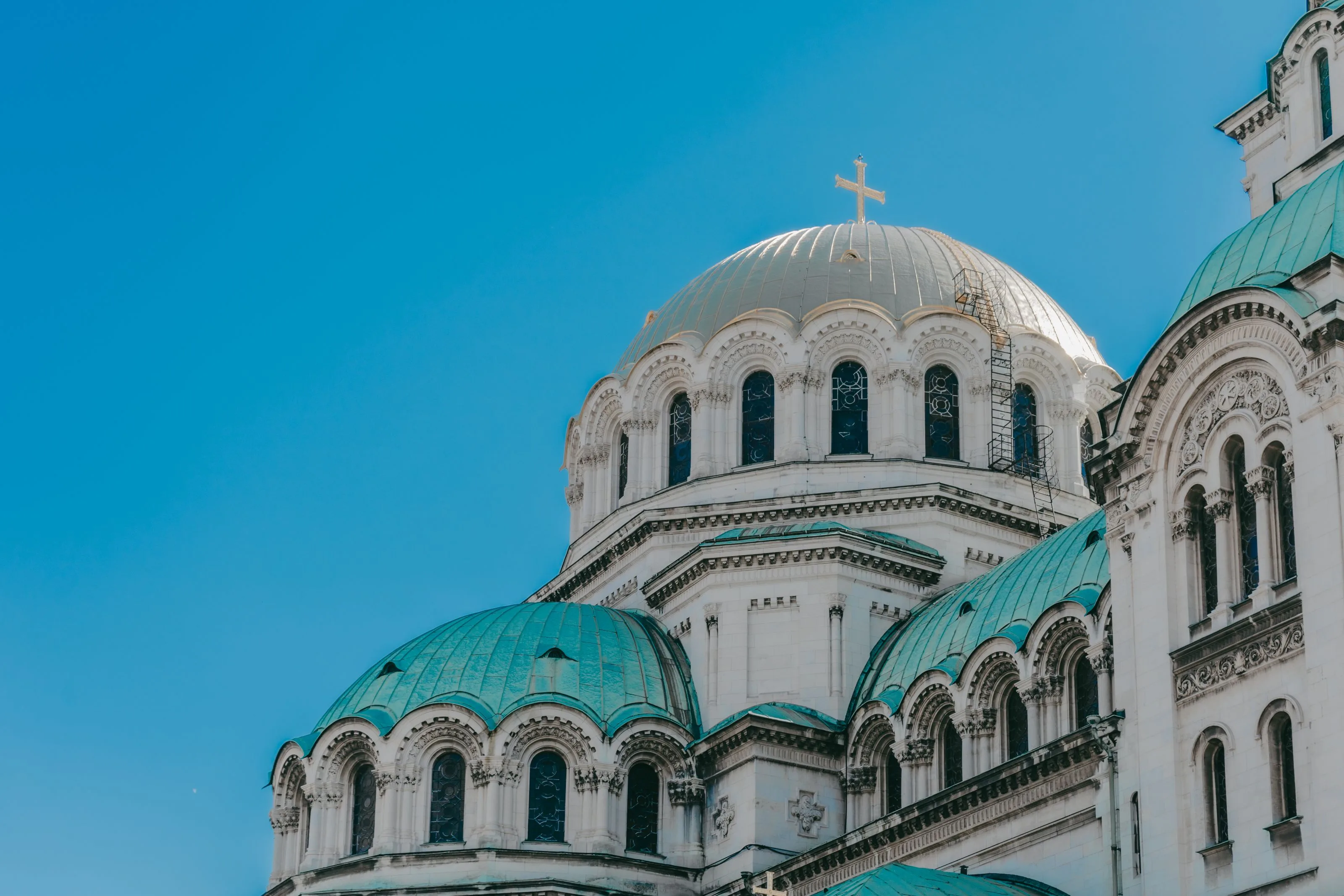
Nearby, the National Assembly, built between 1884 and 1928, the Ivan Vazov National Theatre and the City Garden, Sofia's oldest park, complete the central walk.
Museums and monuments
Boyana, history, archaeology and art
| Place | What to see |
|---|---|
| Boyana Church (UNESCO) | Listed in 1979: frescoes dating from 1259 with more than 240 figures, a pre-Renaissance landmark; only a few visitors are admitted at a time for 10 to 15 minutes |
| National History Museum | In the former Boyana residence; only part of a very large collection is on display |
| National Archaeological Museum | In a 15th-century mosque, with Thracian treasures |
| National Gallery | In the former royal palace, in the city centre |
| Rotunda of St George | A 4th-century church in the middle of a group of government buildings |
For Boyana, plan ahead: access arrangements, time slots and any free days vary. Opening hours at other museums also change with the season, so check on site or with the tourist office. The Sofia Arsenal contemporary art museum rounds out the offer.
Mountains and nature
Vitosha, within reach of city transport
Cherni Vrah, 2,290 metres
Sofia sits at the foot of the Vitosha massif, whose summit, Cherni Vrah, rises to 2,290 metres. A cable car and hiking trails make it an easy escape from the city; in winter it becomes a ski area. The capital itself lies at about 550 to 600 metres, making it one of Europe's highest capitals, and the central Borisova Gradina park gives green space inside town.
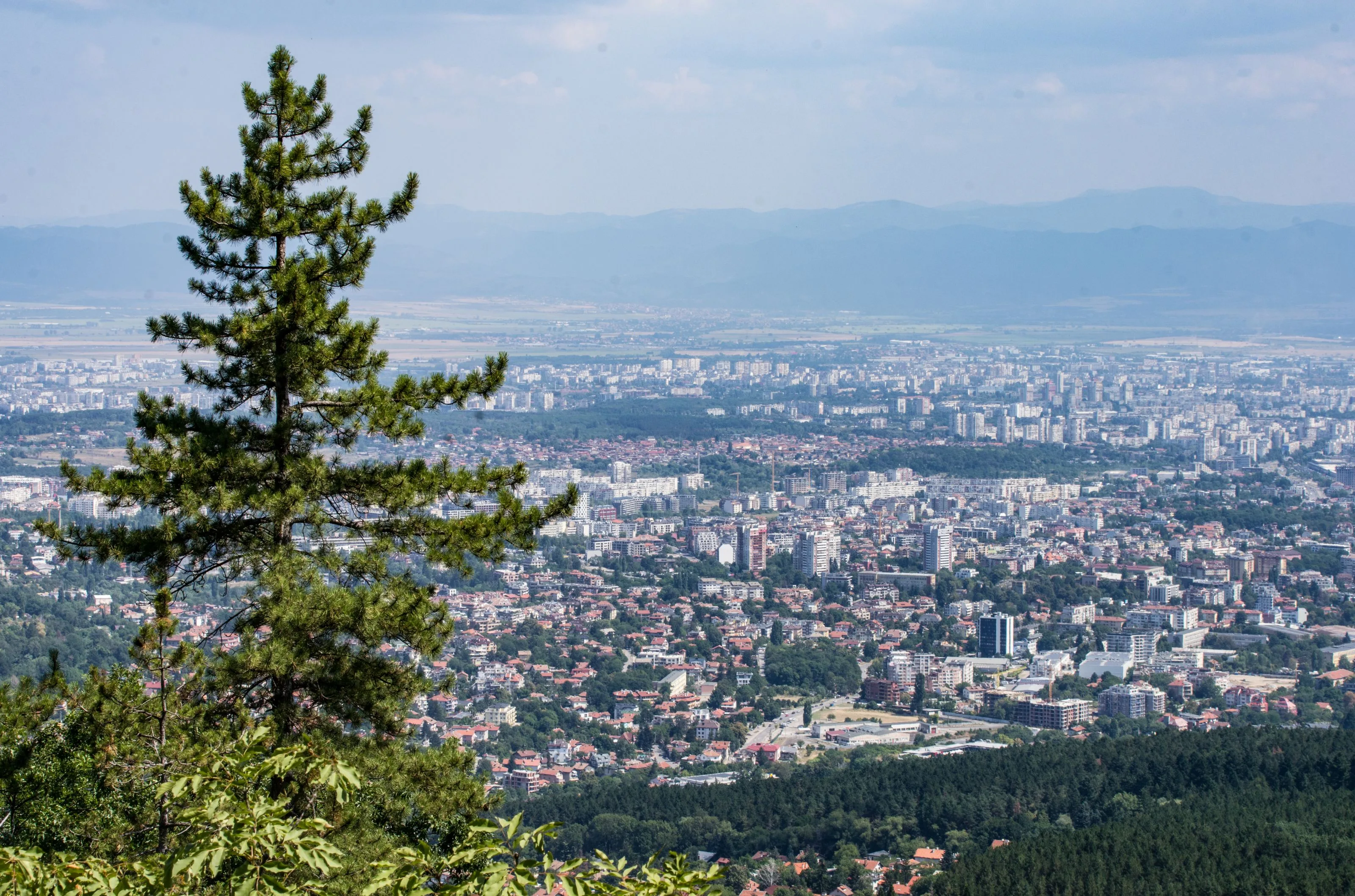
The pedestrian Vitosha Boulevard, the main shopping street of the centre, has an open view of the mountain.
Food and drink
Banitsa, shopska salad and rakia
Banitsa, shopska salad, tarator (a cold cucumber and yoghurt soup), kavarma, sarmi and grilled meats such as meshena skara are the Bulgarian classics, accompanied by rakia, the local fruit brandy, which can reach 40 percent alcohol. Tsentralni Hali market hall is a good place to start.
Among the addresses guides mention, Hadjidragana tavern offers live music and Raketa Rakia plays on a communist-era decor. Restaurants fill up mostly in the evening, so book for the weekend.
Day trips
Rila Monastery, the Rila lakes and Plovdiv
| Destination | Distance | Getting there |
|---|---|---|
| Rila Monastery (UNESCO) | about 120 km south | 1.5 to 2 hours by road, depending on the source |
| Seven Rila Lakes | in the Rila mountains | hiking, in season, often combined with the monastery |
| Plovdiv | about 2 hours by road | by car or coach; a former European Capital of Culture |
For Rila, set out early in the morning and cover your shoulders and knees inside the monastery. Road times depend on traffic and season, so check before you leave.
Budget
What level of cost to expect in Sofia
Sofia is a low-to-moderate cost capital: guides regularly describe it as one of the cheapest EU capitals for eating out, coffee and transport. Bulgaria has used the euro since 1 January 2026.
Accommodation is still the main expense, with higher prices on weekends and during events. Museums, public transport and local restaurants are inexpensive. We do not publish a price grid, which would soon be out of date; the airfare is often the easiest cost to optimise, and that is where price tracking helps.
Getting around
Metro, bus, tram, taxi and on foot
The centre is easy to walk. Public transport is extensive (a multi-line metro, buses, trams and trolleybuses) and inexpensive; tickets are sold at kiosks and machines, and buses accept contactless payment on board. The network can confuse newcomers, and an online journey planner helps.
Taxis are yellow; it is better to order by phone or app and to be wary of drivers who approach passers-by. The city is generally safe and pleasant to walk, including at night; avoid poorly lit areas and stay alert around the central station, as in any large city.
By length of stay
What to do in Sofia depending on your trip length
The center
Alexander Nevsky Cathedral, the Serdica complex, Banya Bashi and the central market hall.
Add Boyana or Rila
Boyana Church and the National History Museum, or Rila Monastery as a day trip.
The region
Combine Sofia, Vitosha hiking, Plovdiv and the Seven Rila Lakes.
When to go
When to visit Sofia?
Spring
April runs from about 5 to 17 degrees C depending on the time of day, a cool spring before the warm days.
Summer
June to September is the best stretch: about 28 degrees C on July and August afternoons, with possible heat waves.
Autumn
October is pleasant, from about 6 to 18 degrees C.
Winter
December and January are very cold, from about -4 degrees C at night to 3 or 4 degrees C by day in January; skiing on Vitosha runs from December to February.
The climate is continental: cold, snowy winters and warm, sunny summers, slightly cooler than elsewhere in Bulgaria thanks to the altitude. In winter, air pollution can be noticeable on some days.
In pictures
Sofia in pictures
You might also like
Similar destinations
FAQ
Frequently asked questions about flights to Sofia
What's the best airport for arriving in Sofia and how do I reach the centre?
Sofia Airport (SOF) is the capital's only airport, about 9 km from the centre. Metro line M4 links it to the centre for a fare of under one euro; bus 84 and taxis are the other options.
What are the top things to see in Sofia?
The Serdica ruins, Alexander Nevsky Cathedral, the Rotunda of St George, the Banya Bashi and Sveta Nedelya area, Boyana Church and the museums of the centre.
How many days do you need in Sofia?
Two days cover the center, and three let you add Boyana Church or a day trip to Rila Monastery. With five days or more you can include Vitosha, the Rila lakes and Plovdiv.
What's the best time to visit Sofia?
June to September is the best stretch for sightseeing and hiking, and October is also pleasant. December to February is very cold but suits skiing on Vitosha.
Is Sofia expensive?
Sofia is regularly described as one of the cheapest EU capitals for eating out, transport and accommodation. Bulgaria adopted the euro on 1 January 2026, so prices are now shown in euros.
How do you get around Sofia?
On foot in the centre, by metro, bus, tram or trolleybus, and by taxi ordered by phone or app.
What should you eat in Sofia?
Banitsa, shopska salad, tarator, kavarma, sarmi and grilled meats, with a glass of rakia.
What can you do outside Sofia?
Hike on Vitosha, visit Rila Monastery (about 1.5 to 2 hours by road) or take a day trip to Plovdiv, about 2 hours away.
How much does a flight to Sofia usually cost?
It mostly depends on your departure city, the season and how far ahead you book. The "deals" section above shows real examples of prices already detected by SniperAir for this destination.
How do I get alerted when a flight to Sofia drops below my budget?
Create an alert profile with your departure airport, Sofia as the destination and your maximum budget. You'll be notified automatically the moment a matching price is detected.
Ready to head to Sofia?
Set your budget and let SniperAir monitor fares for you.
Create my alert