
Cheap flights to Cork
Set your departure airport and maximum budget: SniperAir tracks prices to Cork and alerts you the moment a deal matching your criteria appears.
Quick summary
Country
Ireland
Continent
Europe
Airport
ORK
Currency
Euro
Time zone
UTC+0 (UTC+1 during summer time)
Deals already spotted to Cork
Real flight examples detected by SniperAir, with their reference price.
Loading examples…
Why track Cork with SniperAir
You do not need to compare prices every day
Choose your departure
Enter your departure airport and your maximum budget for a flight to Cork (ORK).
SniperAir watches
Our systems continuously compare new fares with the route's real price history. SniperAir tracks prices and alerts you: it does not sell or book tickets.
You receive an alert
As soon as a fare matches your criteria, you are notified, without having searched for anything yourself.
Airport and getting into town
An airport south of the city, linked to the centre by bus and taxi
Cork Airport (ORK)
Cork Airport lies south of the city, about 6 to 8 km from the centre depending on the source. A taxi takes roughly 15 to 25 minutes depending on traffic; shuttle buses link the airport with the city, in the order of 20 to 30 minutes. It is the second-busiest airport in Ireland after Dublin, with flights to many European cities.
Distances and times are approximate: timetables, routes and transport fares change, so check them before you travel. We do not quote fares.
Cork is the second-largest city in the Republic of Ireland. Its centre sits on an island between two channels of the River Lee, which meet at the eastern end before flowing into Cork Harbour, one of the largest natural harbours in the world. Traditionally founded in the 6th century around a monastery and expanded by the Vikings in the 10th century, the city received its charter in 1185.
Locals call it "the rebel city" and sometimes speak of Cork as the "real capital" of Ireland: this is a way of expressing local pride, not an official title. Dublin lies about 260 km to the north-east.
Historic centre and the English Market
The Shandon tower, two cathedrals and a covered market
Shandon and the cathedrals
The tower of St Anne's church in Shandon rises above the north bank of the Lee and is widely seen as the symbol of the city; it is topped by a salmon-shaped weather vane, and its bells are part of the visit depending on current arrangements. On the other side of the river, the Church of Ireland St Fin Barre's Cathedral, built between 1862 and 1879 to designs by William Burges, is one of the country's great Gothic Revival buildings. The Catholic St Mary's Cathedral, to the north, dates from the early 19th century.
The English Market
The covered market in the city centre, between Princes Street and Grand Parade, stands on a site where goods have been sold since the late 18th century; the present building largely dates from the mid-19th century. You will find fish, meat, cheese, bread and local produce. Opening hours vary by day, so check them before you go.
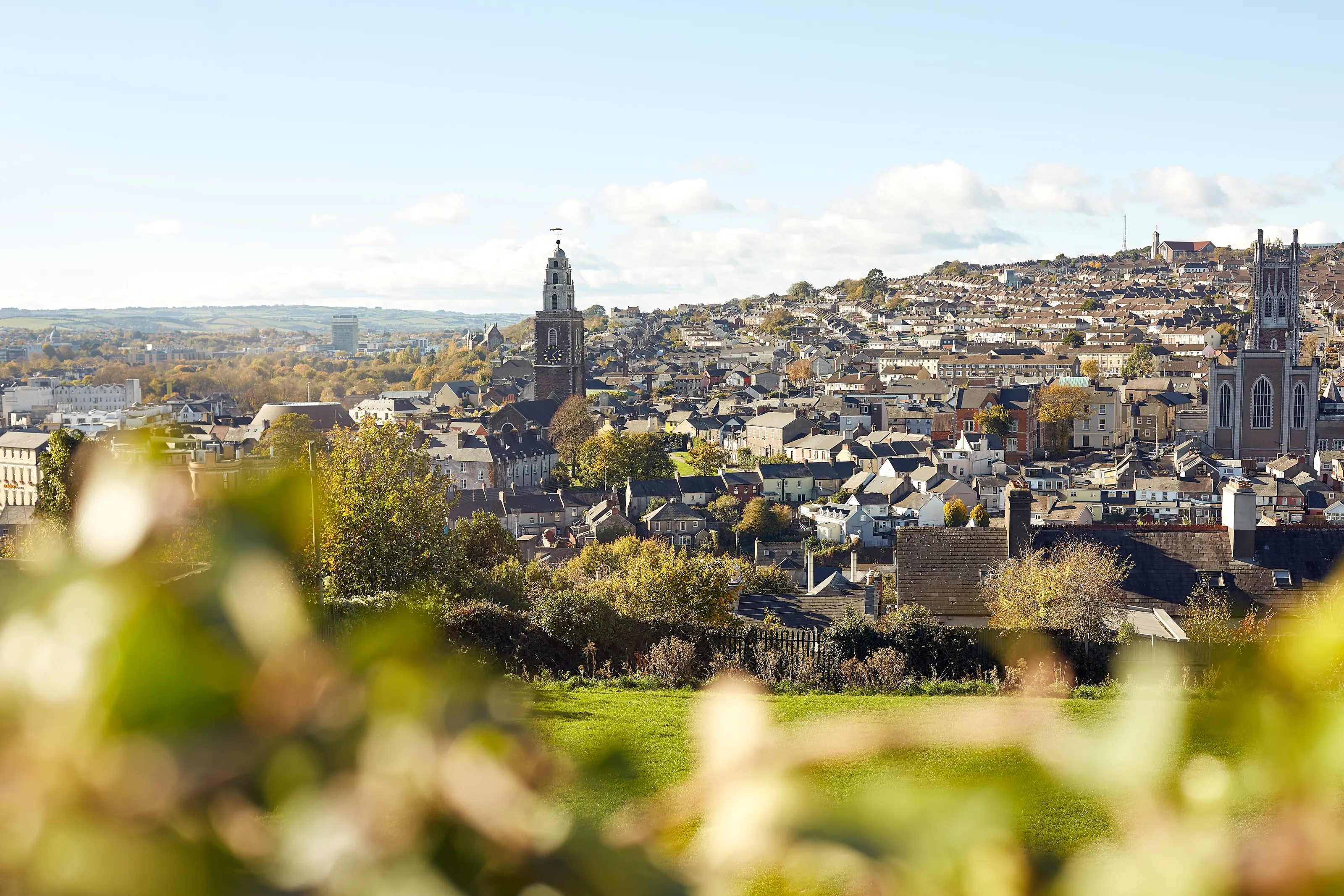
Panorama over the rooftops of Cork
This view from a hillside shows the Shandon tower among the stone and brick houses of the north bank, with rolling countryside in the distance. The steep streets and small coloured houses give the city its character of a port and a town of hills.
Blarney
Blarney Castle and the legend of the stone
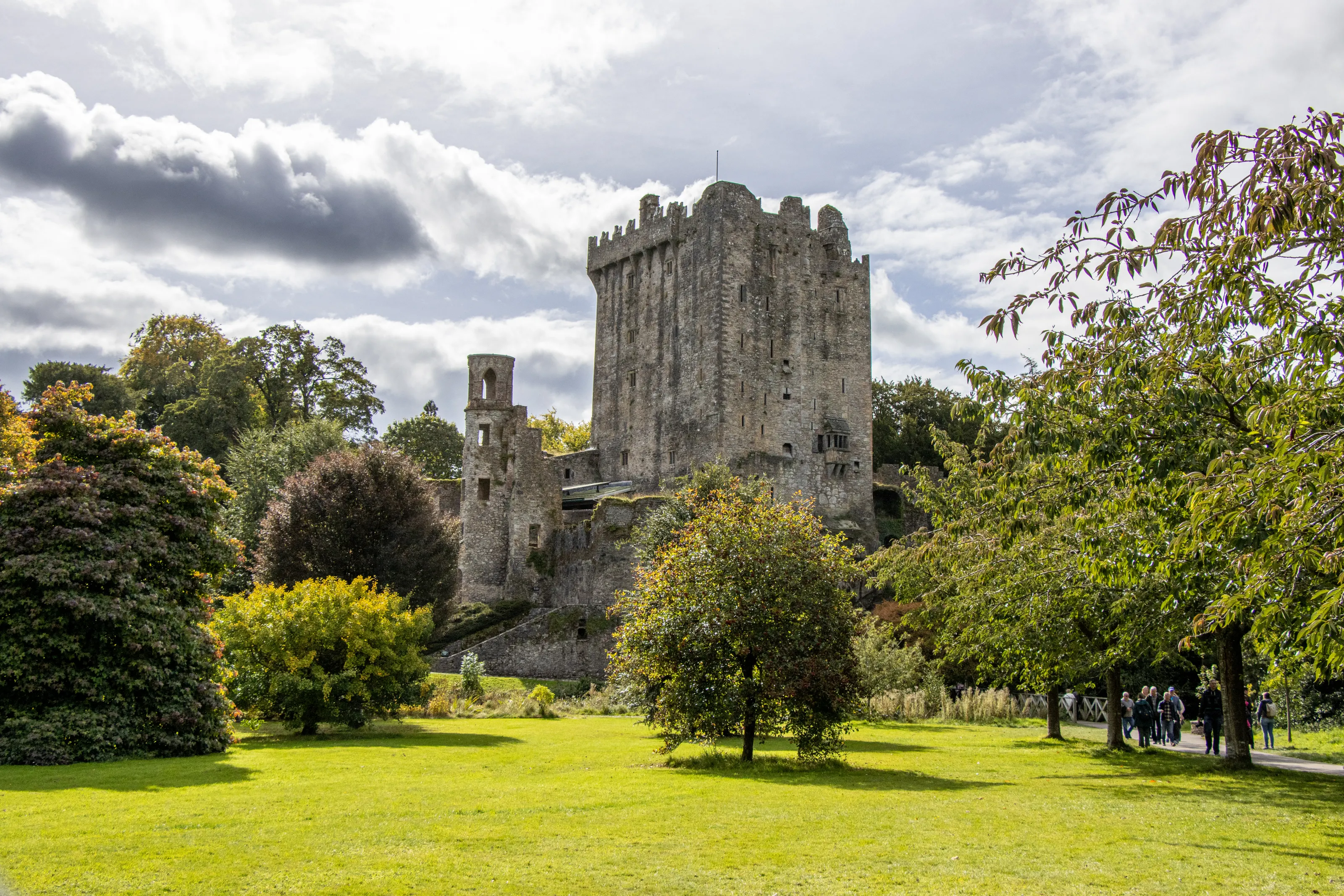
Blarney Castle stands in the village of the same name, about ten kilometres north-west of Cork. The present keep dates from 1446 and was built by the MacCarthy of Muskerry dynasty. It is famous for the Blarney Stone, set among the battlements: according to legend, kissing it gives the gift of eloquence. This is a popular tradition, not a historical fact. The gardens and parkland around the castle are worth a visit in their own right. Check opening hours and access to the stone before you go, as access can be limited.
The tower of Blarney Castle
The castle rises above its lawns and trees: the photo shows the tall crenellated keep, with walkers on the park paths in the foreground. The top is reached by a narrow stone staircase.
University and museums
Crawford Art Gallery, the old gaol, a university gallery and cultural life
Cork is a university and cultural city. We do not quote admission prices, which change; check opening hours before you go.
University College Cork
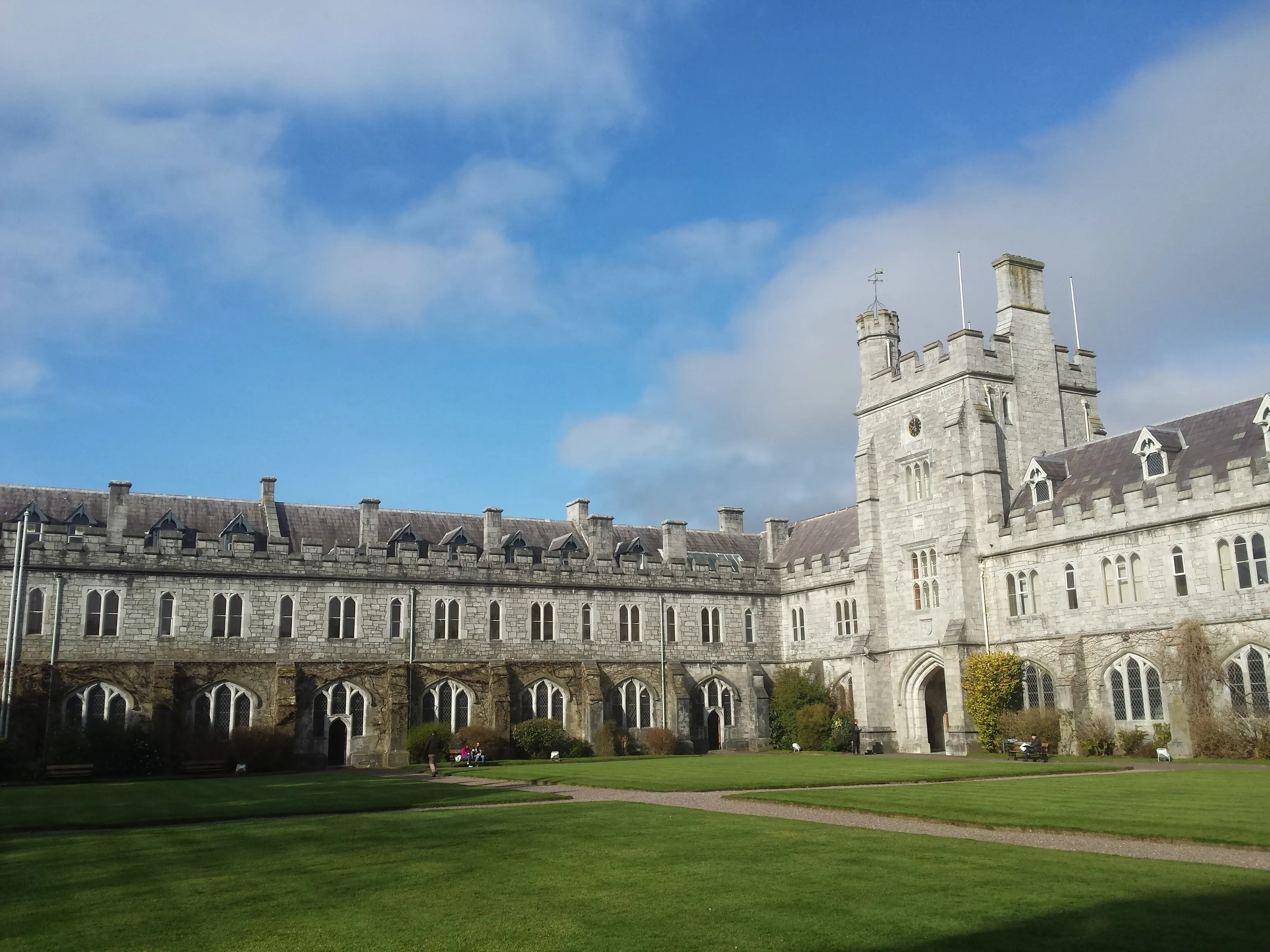
The campus of University College Cork, crossed by the River Lee, is one of the places to visit in the city. You can see the grey-stone Gothic Revival quadrangle and, on the site, the Lewis Glucksman Gallery, a contemporary art space opened in 2004.
Crawford Art Gallery
The Crawford Art Gallery is Cork's municipal art gallery: it shows Irish painting and sculpture as well as temporary exhibitions. We do not illustrate it: it is described in text only.
Cork City Gaol
The former prison at Sunday's Well, west of the centre, has become a heritage centre telling the story of inmates in the 19th century. Another place to know is the Cork Public Museum in Fitzgerald's Park.
Stages and festivals
Cork Opera House, the Everyman Palace Theatre and several smaller venues keep the city lively; a jazz festival takes place in late October and a film festival at other times of the year.
The Gothic quadrangle of University College Cork
The campus is arranged around a square court of pale stone: the photo shows a crenellated wing with Gothic windows, a corner tower and a well-kept lawn under a blue sky. It is one of the most photographed spots on the campus.
Cobh and Cork Harbour
Cobh, the Titanic's last port of call and a town of colourful houses
Cobh is a port about 15 km south-east of Cork as the crow flies. The train from Kent station reaches Cobh in under half an hour. The town was called Queenstown from 1849 to 1920; it was the last port of call of the Titanic on 11 April 1912 before the Atlantic crossing. The Cobh Heritage Centre tells the story of Irish emigration to North America, for which Cobh was one of the main departure ports.
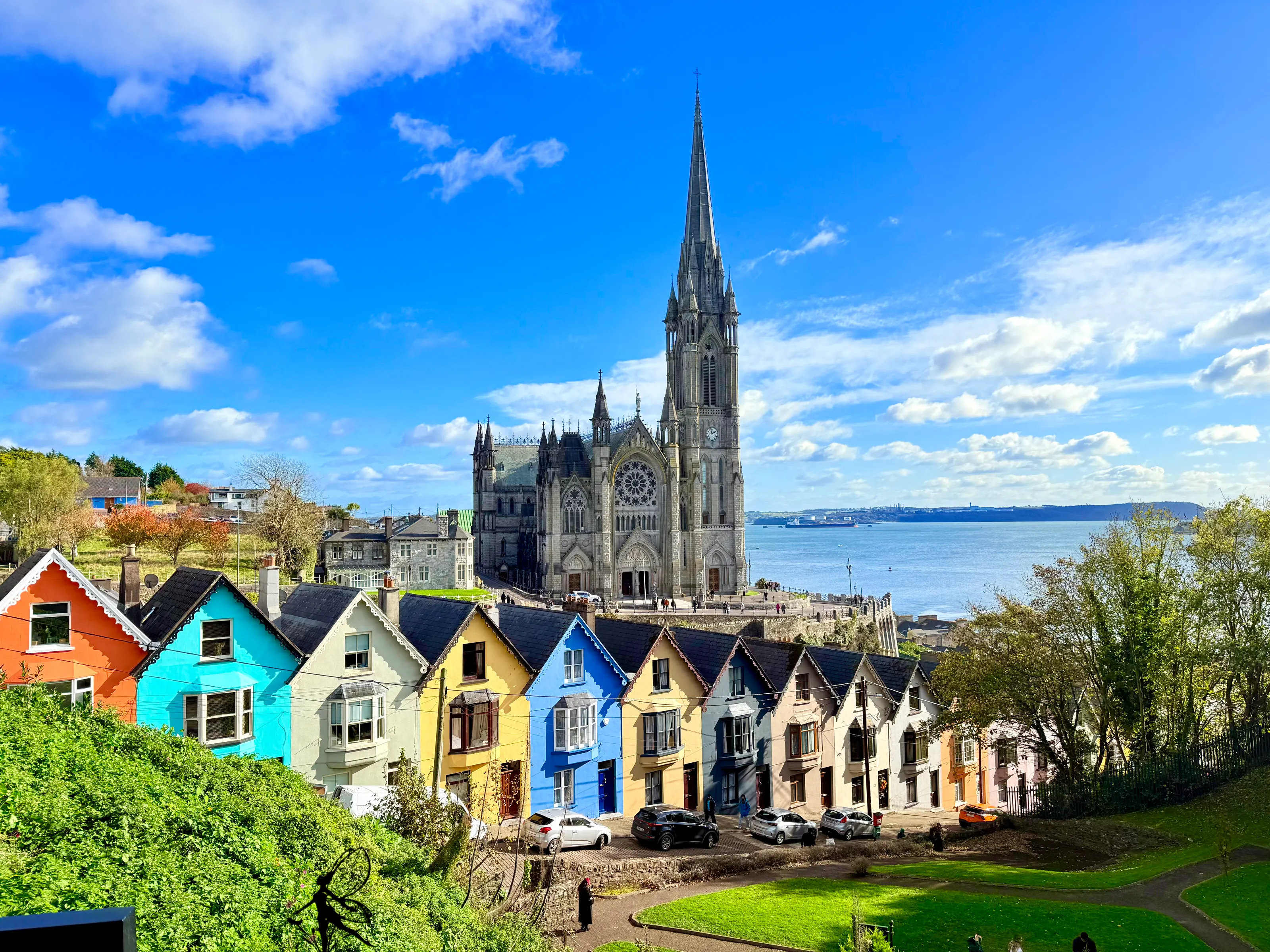
St Colman's Cathedral rises above the town to about 91 metres, making it one of the tallest buildings in Ireland. Cobh also receives cruise ships at its terminal. Allow half a day, more if you visit a museum.
Colourful houses and the cathedral in Cobh
Here you can see the row of brightly painted houses, often nicknamed the Deck of Cards, below St Colman's Cathedral and its spire. Behind, Cork Harbour stretches away to the hills on the far shore.
Kinsale and the south coast
Kinsale, the Atlantic coast and Midleton
Kinsale
Kinsale is a former fishing port about 25 km south of Cork, at the mouth of the River Bandon. It is known for its seafood restaurants and food festivals, so much so that some describe it as the country's food capital; that is a promotional nickname, not an official ranking. You can also visit Charles Fort, a 17th-century star fort, and explore the small town on foot. We do not illustrate them: they are described in text only.
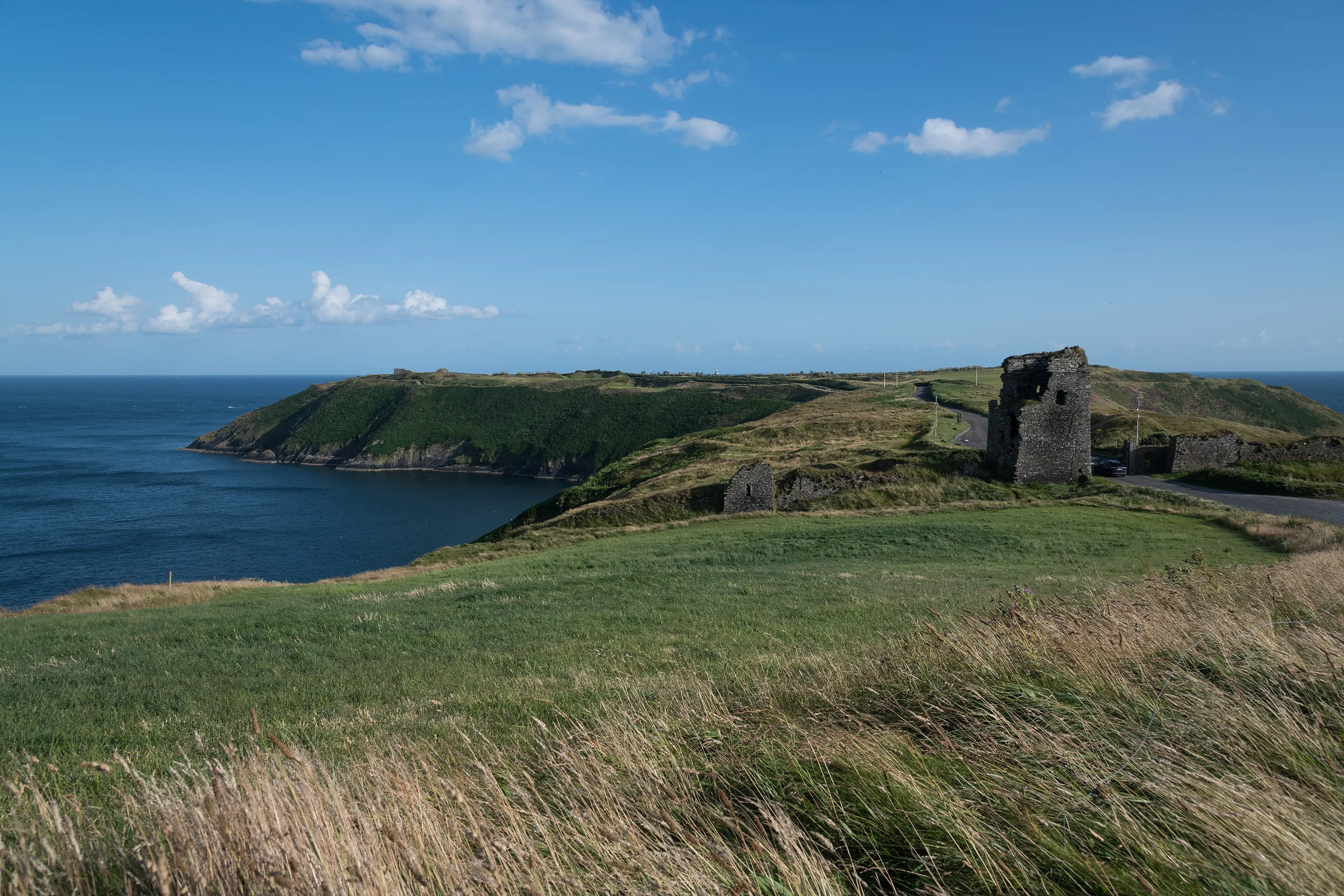
The Old Head of Kinsale
South of the town, the Old Head peninsula juts into the Atlantic. It is a headland of cliffs and meadows with open views of the ocean; access by road is private or regulated depending on the period, so check before you go.
Midleton
About 16 km east of Cork, Midleton is home to a historic distillery founded in 1825 that offers visits. The train runs there from Kent station.
The Old Head of Kinsale
The photo shows the grassy headland, a ruined tower beside the road and the deep-blue Atlantic below. The wind is often strong on this exposed site: bring a windproof jacket.
Food and pubs
Seafood, traditional dishes and pubs with music
Traditional dishes
Cork has its own traditional specialities: drisheen (a local blood sausage), tripe and crubeens (pigs' trotters). These dishes were originally served in the small eating houses of the past; you will find them mainly at the market or in some pubs, but they are less common than seafood.
Market and local produce
At the covered market and in the food halls of the docklands, you can taste fish, artisan cheeses, breads and prepared dishes. The bay and the coast supply oysters, mussels, crab and fresh fish, which you will find in restaurants in Cork, Cobh and Kinsale.
Pubs, stout and music
Cork's traditional pubs serve local stout and often live music. A simple rule: arrive early in the evening if you want a seat, and follow the customs of the place. Drink in moderation.
Getting around
A walkable centre, buses, and trains to Cobh and Midleton
On foot and by bus
The city centre, on its island between the two channels of the Lee, is easy to walk. City buses, run by the national operator, serve the suburbs and campuses; the long-distance bus terminal is in the centre.
By train
Kent station is the main station: it serves Dublin with roughly one train an hour, as well as Killarney, Tralee and Limerick, and Cork's suburban line, including Cobh and Midleton.
To Blarney, Kinsale and the coast
Blarney and Kinsale are served by buses, but a rental car gives more freedom on the coast. In Ireland you drive on the left and minor roads are often narrow: allow extra time and do not plan too many kilometres in a day.
Budget and precautions
A medium to high budget, especially for accommodation
Price level
Cork is a medium to high-budget destination compared with many European countries: accommodation is the main expense, especially in summer and during festivals. Booking early and staying a little outside the centre helps keep costs down. We give no figures, as we could not cross-check them on two independent sources.
Flights
The flight remains the most variable item. SniperAir tracks prices to ORK and compares them with the route's history, but it does not sell or book tickets.
Entry requirements and precautions
Entry requirements for Ireland depend on your nationality: check them on official websites. Also consult the official advice of your country of departure. The weather changes quickly: bring waterproof clothing, and take care on cliffs and along the coast.
When to go
Mild and rainy all year, most pleasant from May to September
Winter (December to February)
Mild for the latitude, with little frost, but damp, windy and with short days. The atmosphere of the pubs and markets makes up for it.
Spring (March to May)
Days lengthen and parks come back into flower; the weather stays changeable, with frequent showers.
Summer (June to August)
Mild temperatures, rarely hot, and long evenings: this is the most pleasant period, and the busiest.
Autumn (September to November)
Colour in the parks and still-mild sea in September; rain and wind return as the days shorten.
Cork has a mild, changeable oceanic climate, with frequent rain all year, in the order of 1,200 mm a year at the airport, and extreme temperatures are rare: it freezes or exceeds 25 °C on only a few days a year. So expect rain in any season, and choose your period according to what you want: long summer evenings, or the often lower prices out of season.
By length of stay
What to do in Cork depending on how long you stay
The essentials
The centre, Shandon, the English Market, one museum (the Crawford Art Gallery or the gaol at Sunday's Well) and a pub with music.
Excursions
Cobh by train, with the Heritage Centre, and Blarney Castle.
The south coast
Kinsale and the Old Head, Midleton, or a trip further afield to Killarney or the west coast.
In pictures
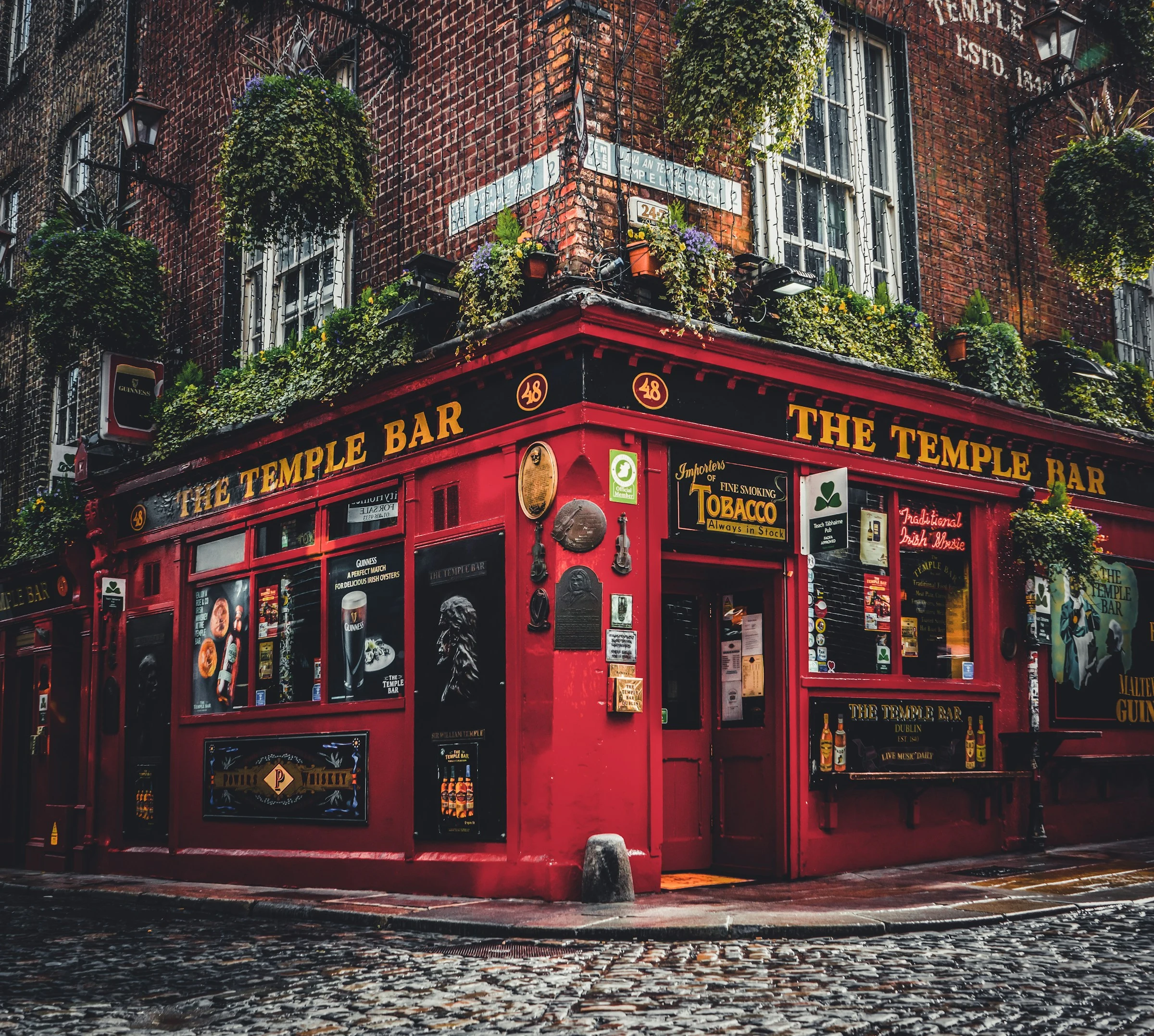
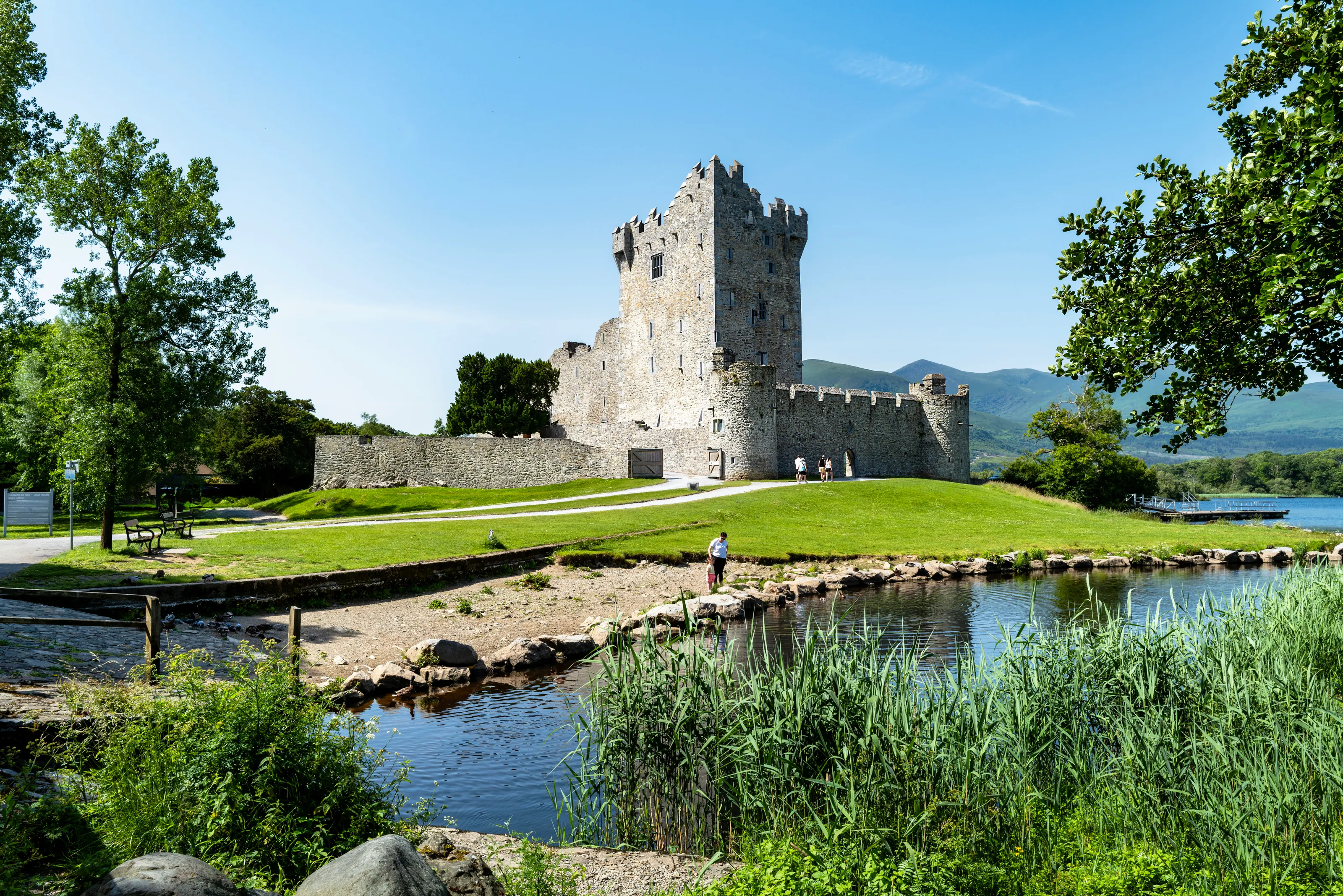
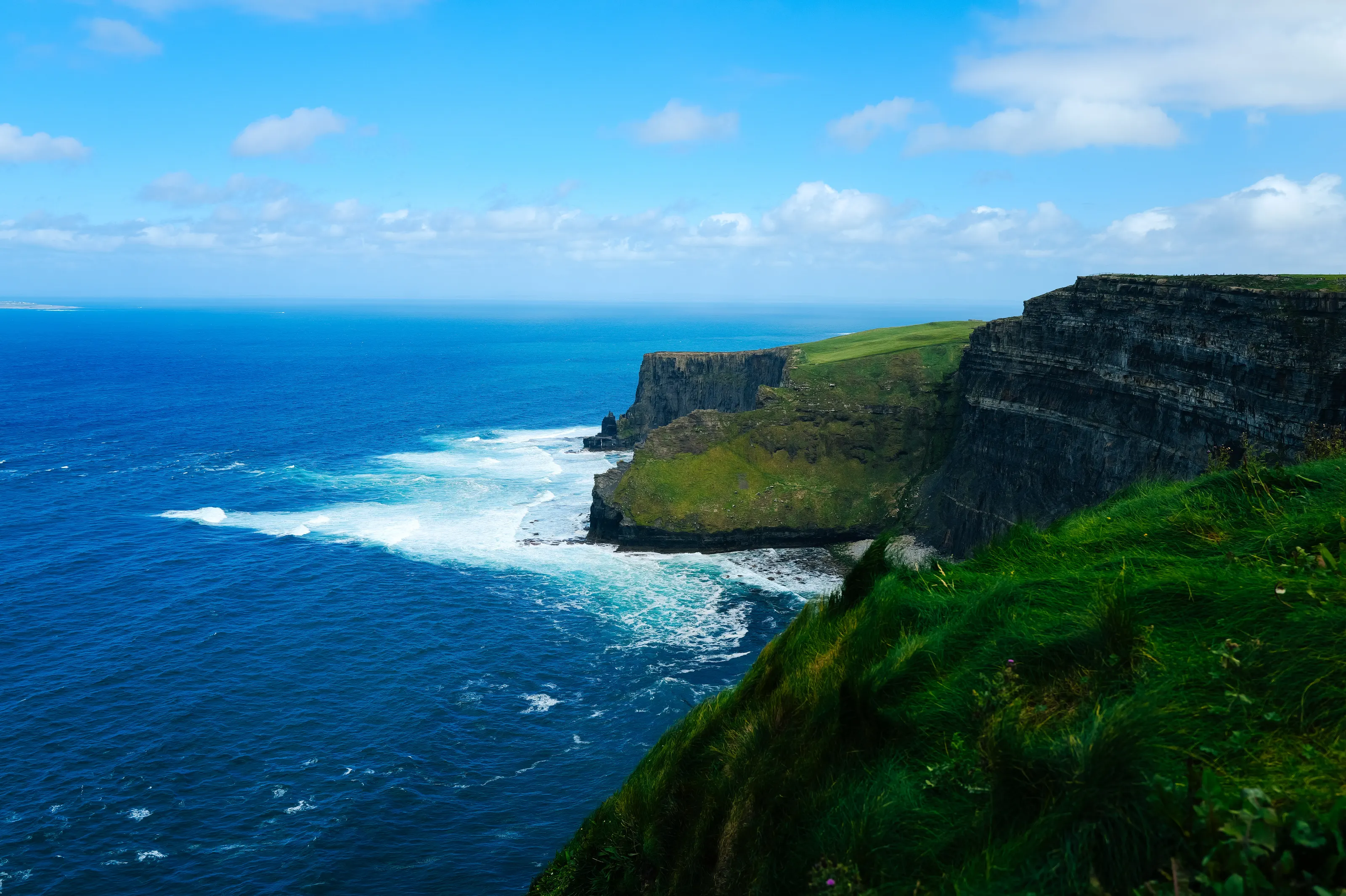
Cork in pictures
You might also like
Similar destinations
FAQ
Frequently asked questions about flights to Cork
How do I get from Cork Airport to the centre?
The airport (ORK) is south of the city, about 6 to 8 km from the centre. A taxi takes roughly 15 to 25 minutes; shuttle buses also link the airport with the city. Check timetables before you travel.
When is the best time to visit Cork?
From May to September for the long evenings and milder weather, although rain is possible all year. Out of season prices are often lower, but the days are short.
Is Cork expensive?
The budget is medium to high compared with many European countries, with accommodation as the main expense, especially in summer.
How long should I stay in Cork?
Two days for the centre, Shandon, the market and a museum; three days to add Cobh and Blarney; four days or more for Kinsale and the coast.
How do I get around Cork?
On foot in the centre, by city bus, and by train to Cobh and Midleton. For Blarney, Kinsale and the coast, buses work, but a rental car gives more freedom: you drive on the left.
What should I eat in Cork?
Produce from the covered market, seafood, and traditional dishes such as drisheen, tripe and crubeens; finish in a pub with a local stout and some music.
How much does a flight to Cork usually cost?
The price depends mainly on your departure city, the period and the booking date. The "opportunities" section above shows real examples of prices already detected by SniperAir for this destination.
How do I get alerted when a flight to Cork drops below my budget?
Create an alert profile with your departure airport, {n} as the destination and your maximum budget. You are notified automatically as soon as a matching fare is detected.
Ready to head to Cork?
Set your budget and let SniperAir monitor fares for you.
Create my alert