
Cheap flights to Pisa
Set your departure airport and maximum budget: SniperAir tracks prices to Pisa and alerts you the moment a deal matching your criteria appears.
Quick summary
Country
Italy
Continent
Europe
Airport
PSA
Currency
Euro (EUR)
Time zone
UTC+1 (UTC+2 during summer time)
Deals already spotted to Pisa
Real flight examples detected by SniperAir, with their reference price.
Loading examples…
Why track Pisa with SniperAir
You do not need to compare prices every day
Choose your departure
Enter your departure airport and your maximum budget for a flight to Pisa (PSA).
SniperAir keeps watch
Our systems continuously compare new prices with the route's real history. SniperAir tracks prices and alerts you: it does not sell or book tickets.
You receive an alert
As soon as a price matches your criteria, you are notified without having searched anything yourself.
Airport and getting into town
An airport very close to town, linked to the station by the PisaMover
Pisa Galileo Galilei (PSA)
Galileo Galilei international airport is Tuscany's main one and lies very close to the city: about 2 km on foot from the historic centre according to Wikivoyage (ES), around 4 km according to Wikivoyage (DE); the sources differ, so just remember it is very near. The PisaMover, a rail shuttle, links it to Pisa Centrale station according to Wikivoyage (EN). Direct buses to Florence and Lucca also leave from outside Arrivals, and taxis remain an option. Timetables and fares change, so check them before you travel.
Distances and times are approximate, from Wikivoyage (EN, DE, ES) and Wikipedia (FR, EN); timetables and fares change, so check them before you travel. We do not quote transport fares.
Pisa is a city of about 90,000 inhabitants on the Arno, in Tuscany, according to Wikipedia (FR). A former maritime republic, one of the most powerful in Italy from the 11th to the 13th century according to the same source, it is also Galileo's birthplace and a major university town. Many visitors only make a round trip from Florence: stay longer and you find a lively student city.
Landmarks
Piazza dei Miracoli, Leaning Tower, Duomo, baptistery and the Arno
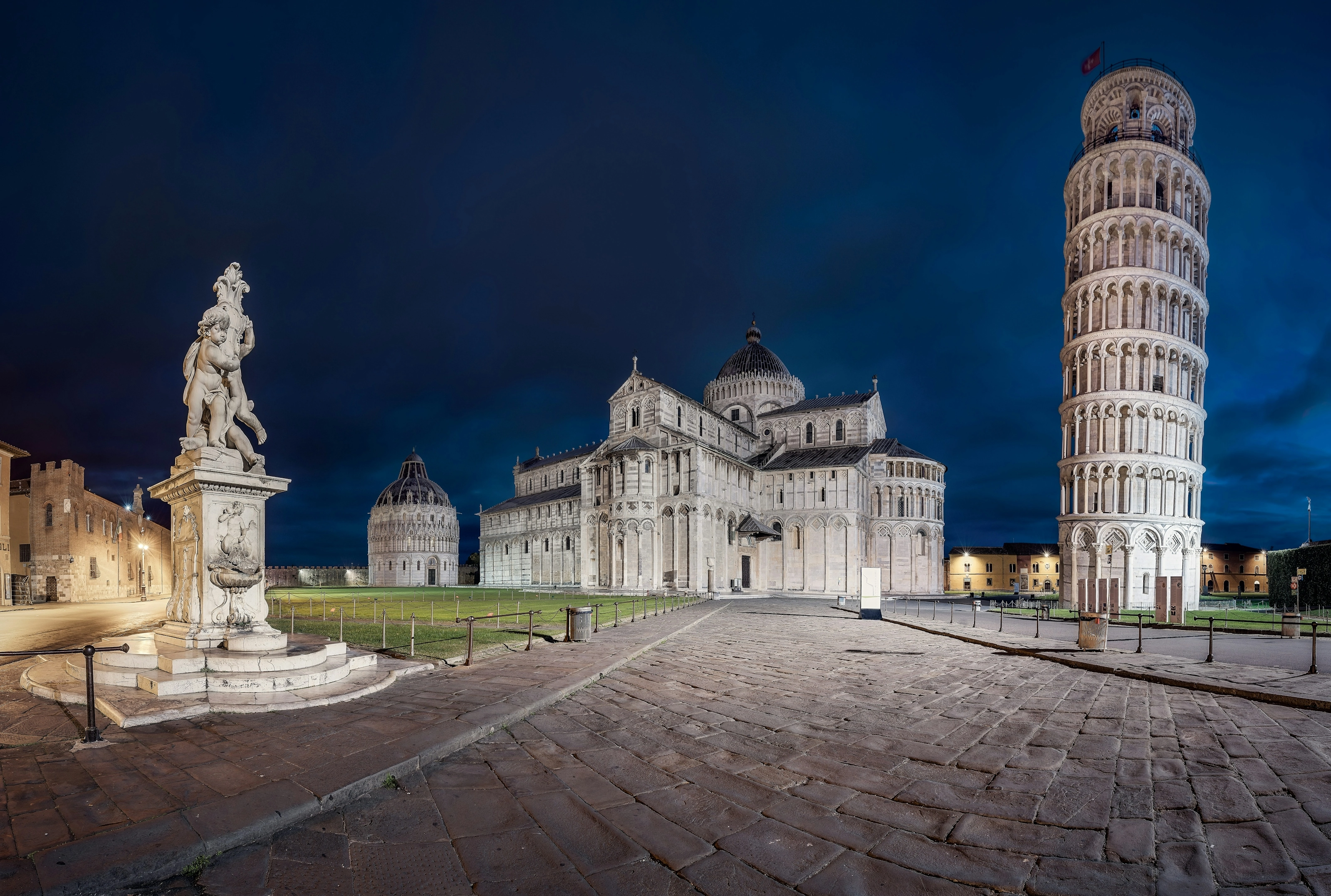
Pisa is above all known for the Piazza dei Miracoli, a UNESCO World Heritage Site since 1987 according to Wikipedia (FR). Five views are illustrated below; the Camposanto, the Spina and Piazza dei Cavalieri are described at the end of the section.
Piazza dei Miracoli
The Square of Miracles, a nickname that comes from a poem by Gabriele D'Annunzio according to Wikipedia (FR), gathers the cathedral, the baptistery, the bell tower and the Camposanto on one large lawn. In the evening the lighting shows off the pale marble of the monuments, and the square can be visited more quietly than in midday crowds.
The cathedral
The Duomo, begun in 1064 and completed in the mid-12th century according to Wikipedia (FR), is the model of the Pisan Romanesque style: façades of striped white and grey marble, arcades and colonnades. The dome is sometimes seen under scaffolding during restoration work.
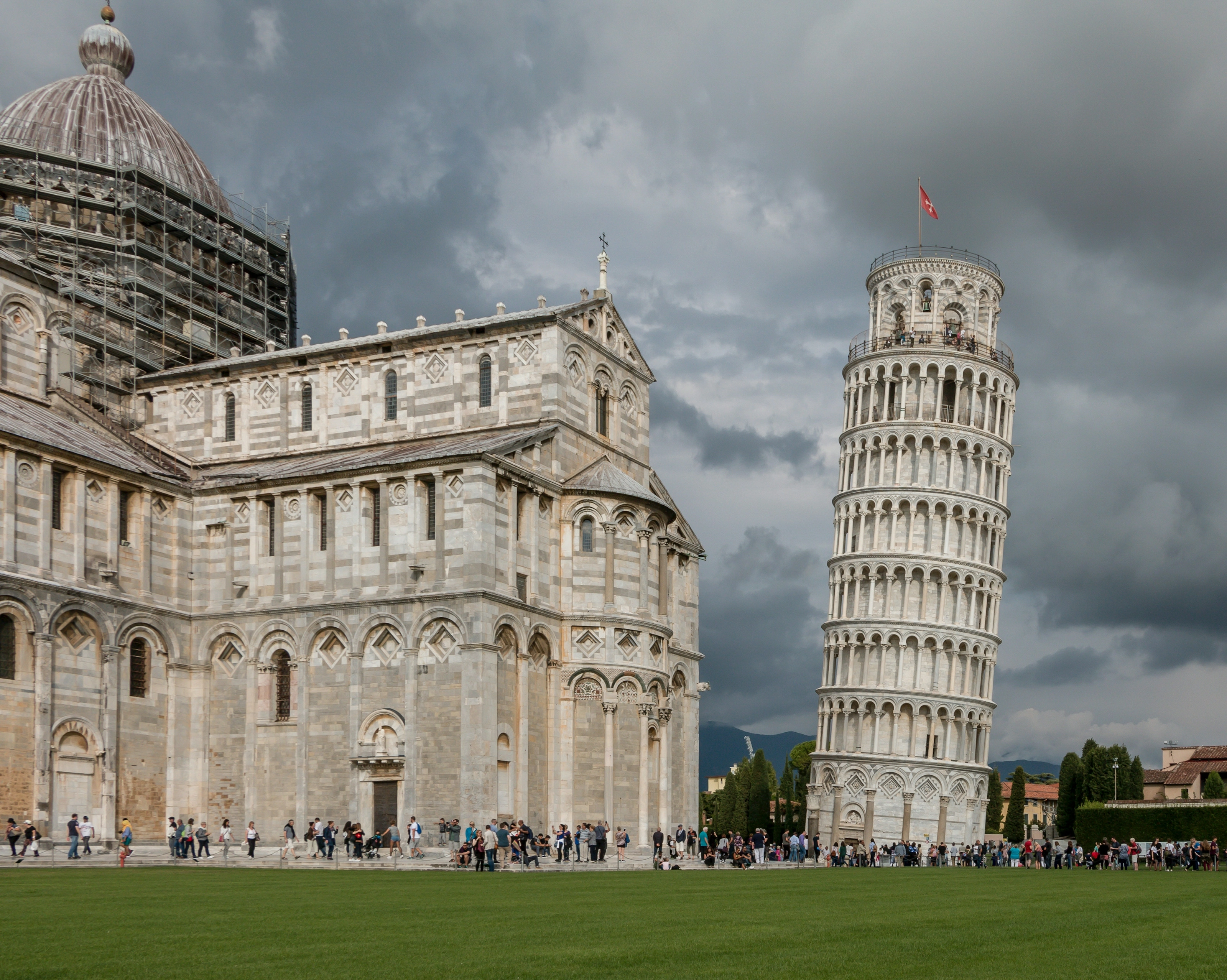
The tower above the rooftops
The bell tower has leaned since it was built, because the ground could not bear its weight. From some high viewpoints you see it above the tiled roofs of the old town, with mountains in the distance. Wikivoyage (EN) says that climbing it requires a reservation-based ticket for a set time: check conditions and book ahead.
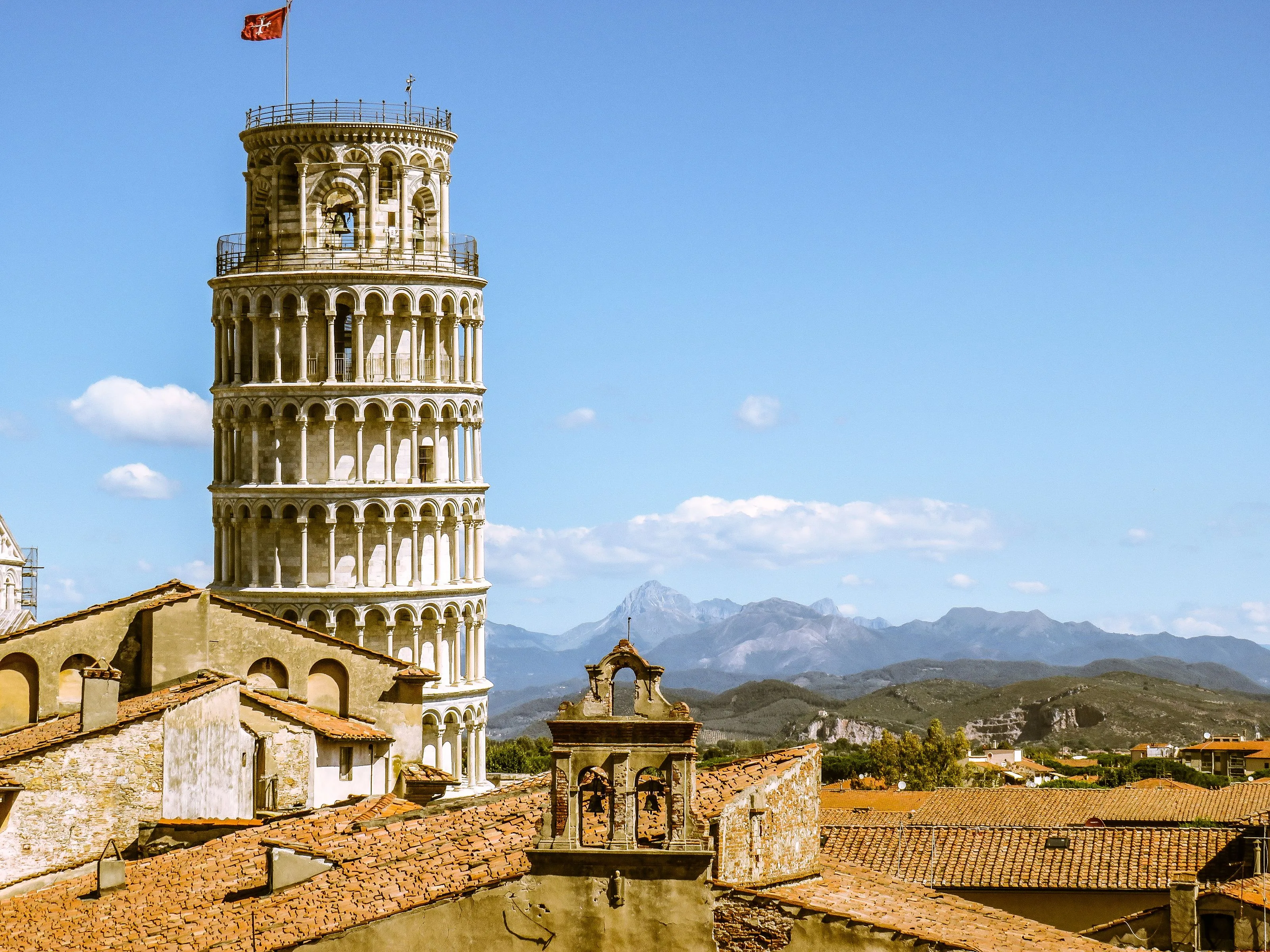
A leaning silhouette
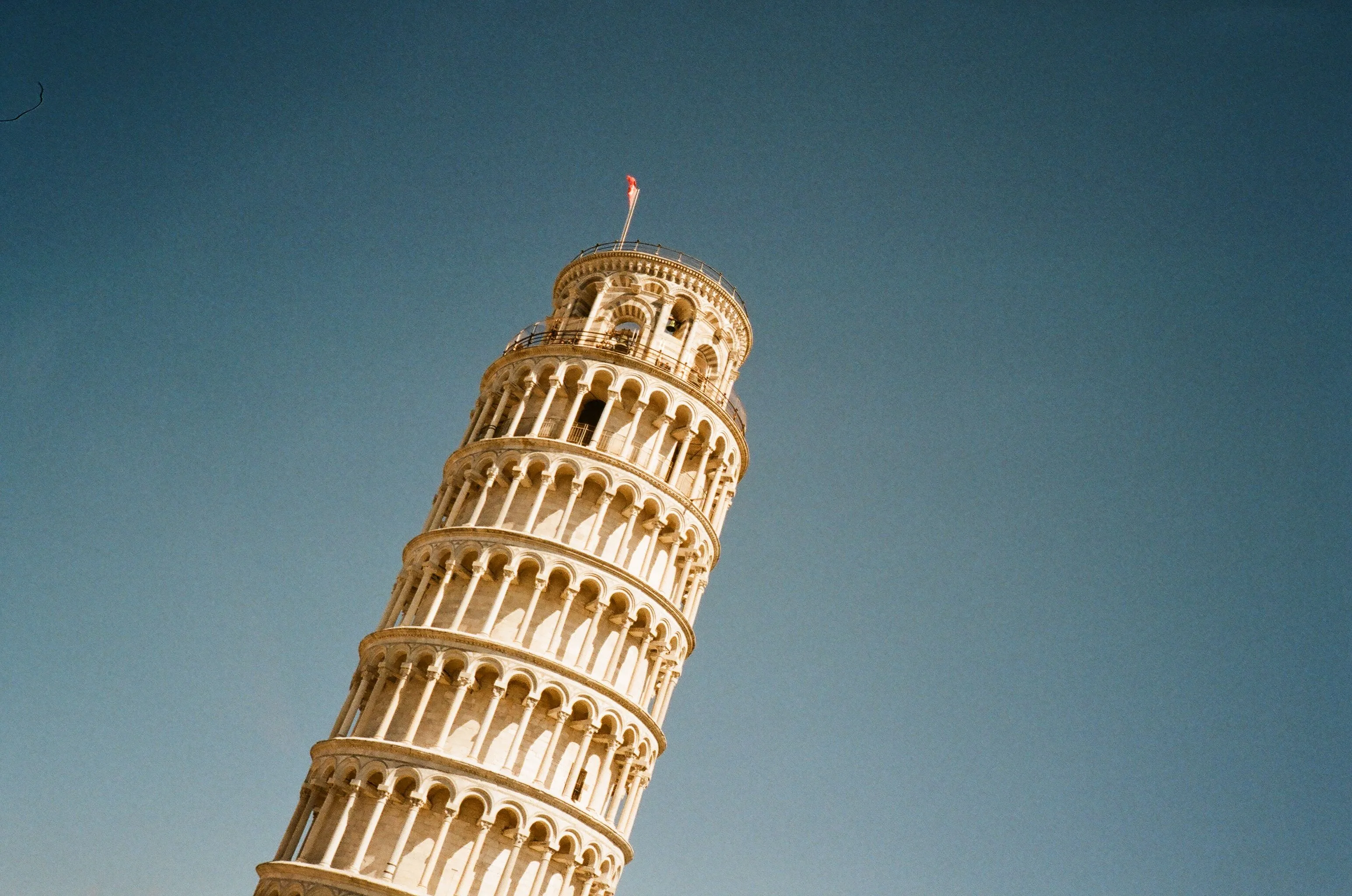
Close up, its tiers of pale marble arcades, stacked and slightly off-axis, stand out against the sky. The tower is the symbol of Pisa and most visitors go home with the same photo: take time to walk around the square as well.
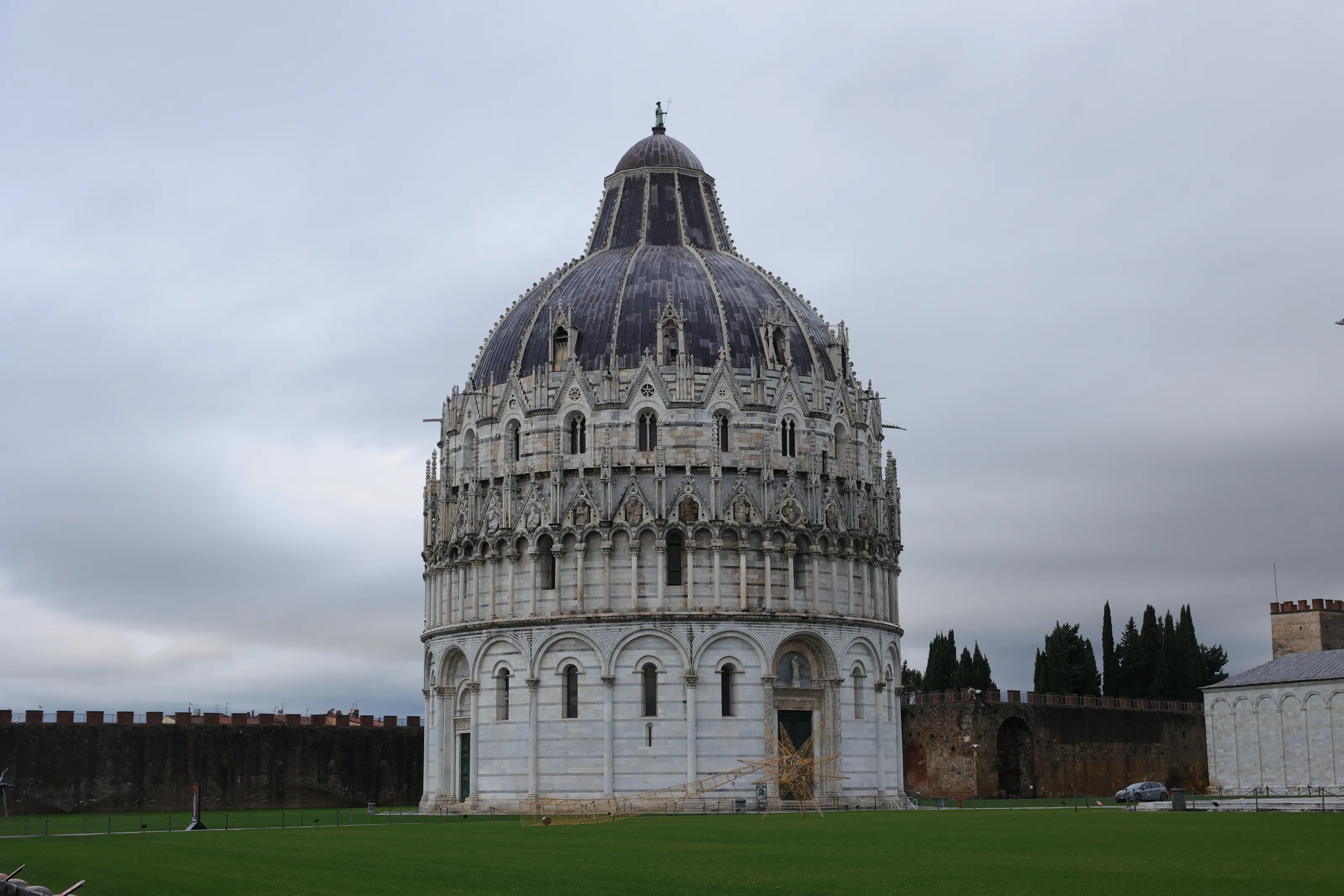
The baptistery
The baptistery, a round marble building with a dark dome, stands opposite the cathedral's façade. It belongs to the same Romanesque complex, where combined tickets for several monuments are available according to Wikivoyage (EN); we do not quote prices.
Camposanto, Spina and Piazza dei Cavalieri
The Camposanto Monumentale, a huge cloistered cemetery, holds Roman sarcophagi and fine medieval frescoes according to Wikivoyage (EN); the mathematician Fibonacci, a native of Pisa, has a statue there. The small Gothic church of Santa Maria della Spina stands on the Arno. Piazza dei Cavalieri, with the Palazzo della Carovana of the prestigious Scuola Normale Superiore, is the university heart of the city.
Museums and culture
Camposanto, sinopie, university and science
The museums on the square
Around the Piazza dei Miracoli, the cathedral museum and the Sinopie Museum round off a visit, with combined tickets according to Wikivoyage (EN). We do not quote prices.
The university city
The University of Pisa has a history going back to the 12th century, and the Scuola Normale Superiore was founded by Napoleon in 1810, according to Wikipedia (EN). Students give the city a lively life outside the tourist area.
Galileo and Fibonacci
Galileo was born in Pisa according to Wikipedia (FR), and the mathematician Fibonacci also came from the city. These figures give Pisa a strong scientific identity, not to be reduced to a leaning tower.
Food and drink
Cecina, unsalted Tuscan bread and Tuscan wines
Cecina
Wikivoyage (EN) presents cecina, a chickpea-flour pancake served inside focaccia with a sprinkle of pepper, as Pisa's traditional street food. It is a cheap, tasty snack to try near the centre.
Bread, cold cuts and wines
Traditional Tuscan bread is made without salt (pane sciocco), which surprises most visitors, according to Wikivoyage (EN). Tuscany is renowned for red wines such as Chianti, Brunello and Morellino, and cold cuts are a staple.
Where to eat
Around the Piazza dei Miracoli, restaurants are very touristy. It is better to move away from the square, towards the university district and along the Arno, where the atmosphere is more local, as Wikivoyage (EN) suggests.
Getting around
On foot, train, bus and PisaMover
A centre to walk
The historic centre is modest in size and can be covered on foot: the station, the Arno and the Piazza dei Miracoli are linked by simple walks. The Lungarni, the Arno embankments, are good for strolling.
From the airport
The PisaMover links the airport to the central station; direct buses to Florence and Lucca leave from outside Arrivals, according to Wikivoyage (EN). For a group of three or more, the same source notes that a taxi can work out cheaper than the shuttle.
Trains and excursions
Pisa Centrale is a Tuscan rail junction: Florence, Lucca and Livorno are easy day trips by train. Pisa is also a good base for the Tuscan coast.
Budget and precautions
A small university-town budget, to adjust by season
Price level
Pisa is a mid-sized city, but we do not quote figures, because we could not cross-check them against two independent open sources. Monument tickets and accommodation rates change every year.
Crowds and opening times
The Piazza dei Miracoli is very busy in summer; visit early in the morning or late in the day if you can. Monument opening times vary by season: check them before you come.
Flights and formalities
SniperAir tracks prices to PSA and compares them with the route's history, but it does not sell or book tickets. Italy is in the Schengen area: check entry rules for your nationality. Also watch Florence (FLR) if you want another gateway to Tuscany.
When to go
Mild winters, hot and sometimes humid summers, pleasant spring and autumn
Winter (December to February)
Mild: temperatures almost never drop below zero and snow is very rare, according to Wikivoyage (EN).
Spring (March to May)
Pleasant for visiting the square and strolling along the Arno, without the summer heat.
Summer (June to August)
Hot, sometimes very humid, but not as trying as in the Po Valley according to Wikivoyage (EN); the square is at its busiest.
Autumn (September to November)
Mild in September and October; the rains return late in the season.
Pisa's climate is something between that of northern and southern Italy, according to Wikivoyage (EN): mild winters, very rare snow, warm summers that are sometimes very humid, though not as intolerable as in Milan, Turin or Ferrara. We do not give monthly averages, because they vary with the reference period.
By length of stay
What to do in Pisa depending on how long you stay
The essentials
The Piazza dei Miracoli (cathedral, baptistery, Camposanto and Leaning Tower) and a walk along the Arno to Santa Maria della Spina.
Museums and districts
Piazza dei Cavalieri, the university city, the museums on the square and an evening in the centre.
Beyond the city
Florence, Lucca or Livorno by train, or the Tuscan coast, with Pisa as a base close to the airport.
In pictures
Pisa in pictures
You might also like
Similar destinations
FAQ
Frequently asked questions about flights to Pisa
How do I get from Pisa airport to the centre?
Galileo Galilei airport (PSA) is very close to the city. The PisaMover reaches Pisa Centrale station; direct buses also leave for Florence and Lucca. Check timetables before you travel.
When is the best time to visit Pisa?
Spring and early autumn. Summer is hot and the Piazza dei Miracoli very busy; winter is mild and snow is very rare.
Is Pisa expensive?
We do not quote figures because we could not cross-check them on two independent sources.
How long should I stay in Pisa?
Half a day for the square, a full day to add the museums and the city, two to three days with excursions to Florence or Lucca.
What should I taste in Pisa?
Cecina, the chickpea pancake in focaccia, unsalted Tuscan bread and a glass of Tuscan red wine.
Can you climb the Tower of Pisa?
Wikivoyage (EN) says the climb is by ticket, with a set time slot. Conditions and times change: check them and book ahead in high season.
How much does a flight to Pisa usually cost?
The price depends mainly on your departure city, the time of year and how far ahead you book. The "opportunities" section above shows real examples of prices SniperAir has already detected to this destination.
How do I get alerted when a flight to Pisa drops below my budget?
Create an alert profile with your departure airport, Pisa as the destination and your maximum budget. You are notified automatically as soon as a matching price is detected.
Ready to head to Pisa?
Set your budget and let SniperAir monitor fares for you.
Create my alert