
Cheap flights to Lofoten
Set your departure airport and maximum budget: SniperAir tracks prices to Lofoten and alerts you the moment a deal matching your criteria appears.
Quick summary
Country
Norway
Continent
Europe
Airport
BOO
Currency
Norwegian krone
Time zone
UTC+1
Deals already spotted to Lofoten
Real flight examples detected by SniperAir, with their reference price.
Loading examples…
The Lofoten at a glance
A surprisingly mild Arctic archipelago
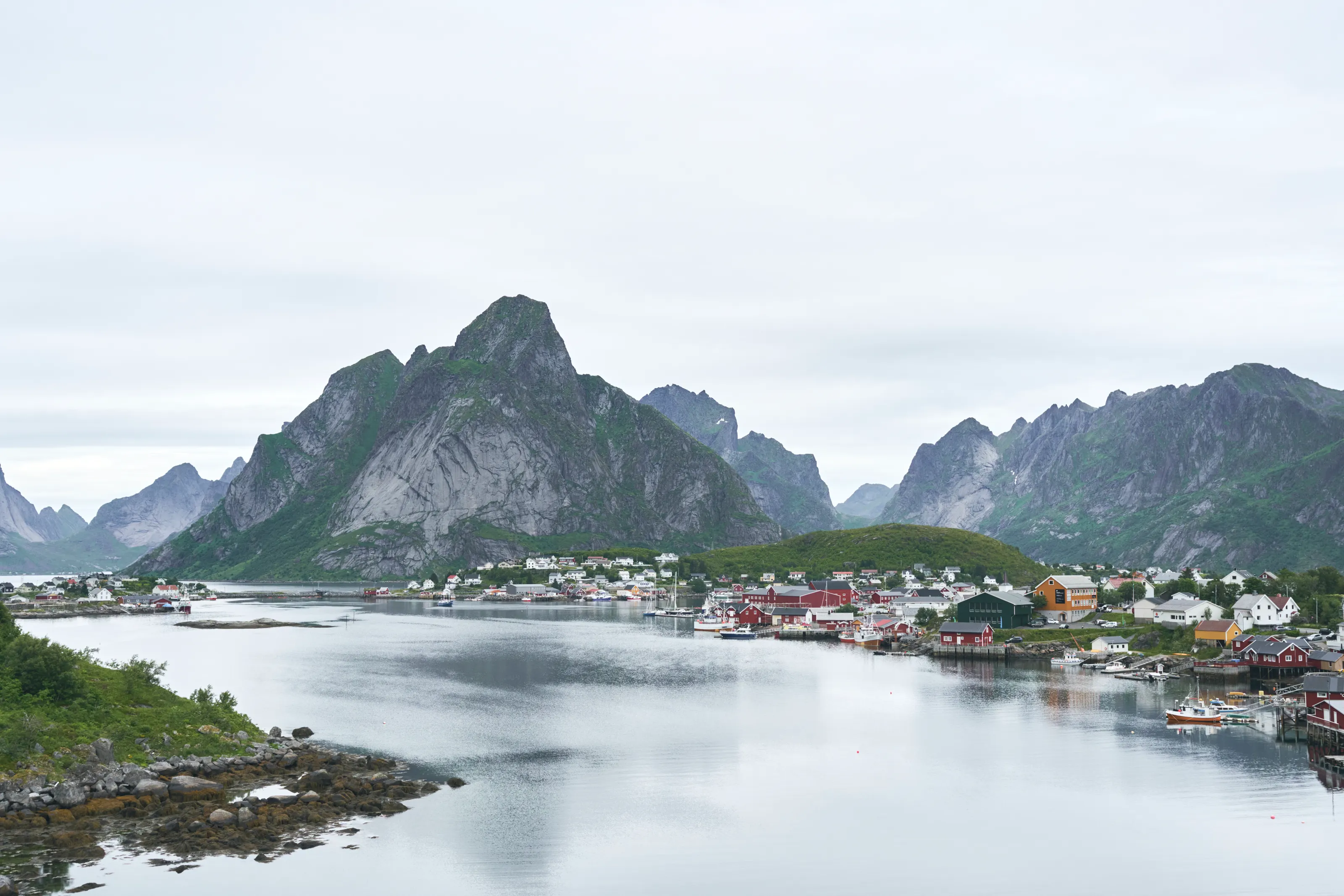
The Lofoten are an archipelago in northern Norway, off Bodø, between the 67th and 68th parallels and so well north of the Arctic Circle. They cover about 1,227 km² with some 25,000 inhabitants, mostly around Svolvær and Leknes, the two main towns (Wikipedia). Mountains plunge straight into the sea, between fjords, pale beaches and fishing villages.
A climate softened by the Gulf Stream
Despite the latitude, winters hover around freezing rather than deep cold thanks to the Gulf Stream, and summer can reach 23 °C. The weather still changes fast, and it can be cold even in July.
A thousand years of dried cod
Winter cod fishing (skrei) and fish hung to dry on wooden racks have shaped the islands for over a thousand years; Wikivoyage names Vågar, near Kabelvåg, as the first known town in northern Norway.
Bodø Airport
The gateway to the Arctic Circle
Bodø Airport
The main gateway to the Lofoten Islands. Bodø airport is about 1.5 km from the city centre (Wikipedia) and 10 to 20 minutes on foot according to Wikivoyage; short regional flights reach Leknes and Svolvær.
Approximate times, from Wikivoyage; timetables and routes change with the season, so check before you travel. We do not quote fares.
From Bodø to the Lofoten
The simplest way is the Bodø to Moskenes ferry, about 3 hours 15 minutes according to Wikivoyage, several times a day in season; the Hurtigruten and other boats also serve Svolvær and other ports. A short flight (about 20 to 30 minutes according to Wikivoyage) reaches Leknes, Svolvær or Røst. Book early in summer.
Other routes in
From Harstad/Narvik airport (Evenes), a bus reaches Svolvær in a little over 3 hours; from Narvik allow about 4 hours 15 minutes. Since 2007 the E10 road has linked the Lofoten to the mainland without a ferry.
Bodø, before the islands
Saltstraumen, the world's strongest tidal current
Bodø is often underrated, yet it gives access to Saltstraumen, one of the strongest tidal currents in the world, about 30 km by road (about 10 km in a straight line). Up to 400 million cubic metres of water force through a strait about 150 m wide with each tide, forming whirlpools. Check tide times before you go: the phenomenon is not equally strong at every hour.
Bodø itself
The town was bombed in May 1940 and rebuilt, so it looks remarkably modern. The Norwegian Aviation Museum, about a 20-minute walk from the centre, covers aviation and Cold War history; Bodin Church, from the 13th century, is one of the oldest in Norway according to Wikivoyage.
Kjerringøy
About 40 km north of Bodø, this well-preserved 19th-century trading post can be visited on a guided tour; buses run from Bodø.
Jagged peaks and fishing villages
The most immediate image of northern Norway
The Lofoten offer mountains plunging into the sea, red fishermen's cabins (rorbuer) and iconic harbours such as Svolvær, Henningsvær, Reine and Å. Their popularity means avoiding the classic mistakes: park only where allowed, do not camp on private or fragile land, and book very early in summer.
Reine and its cabins
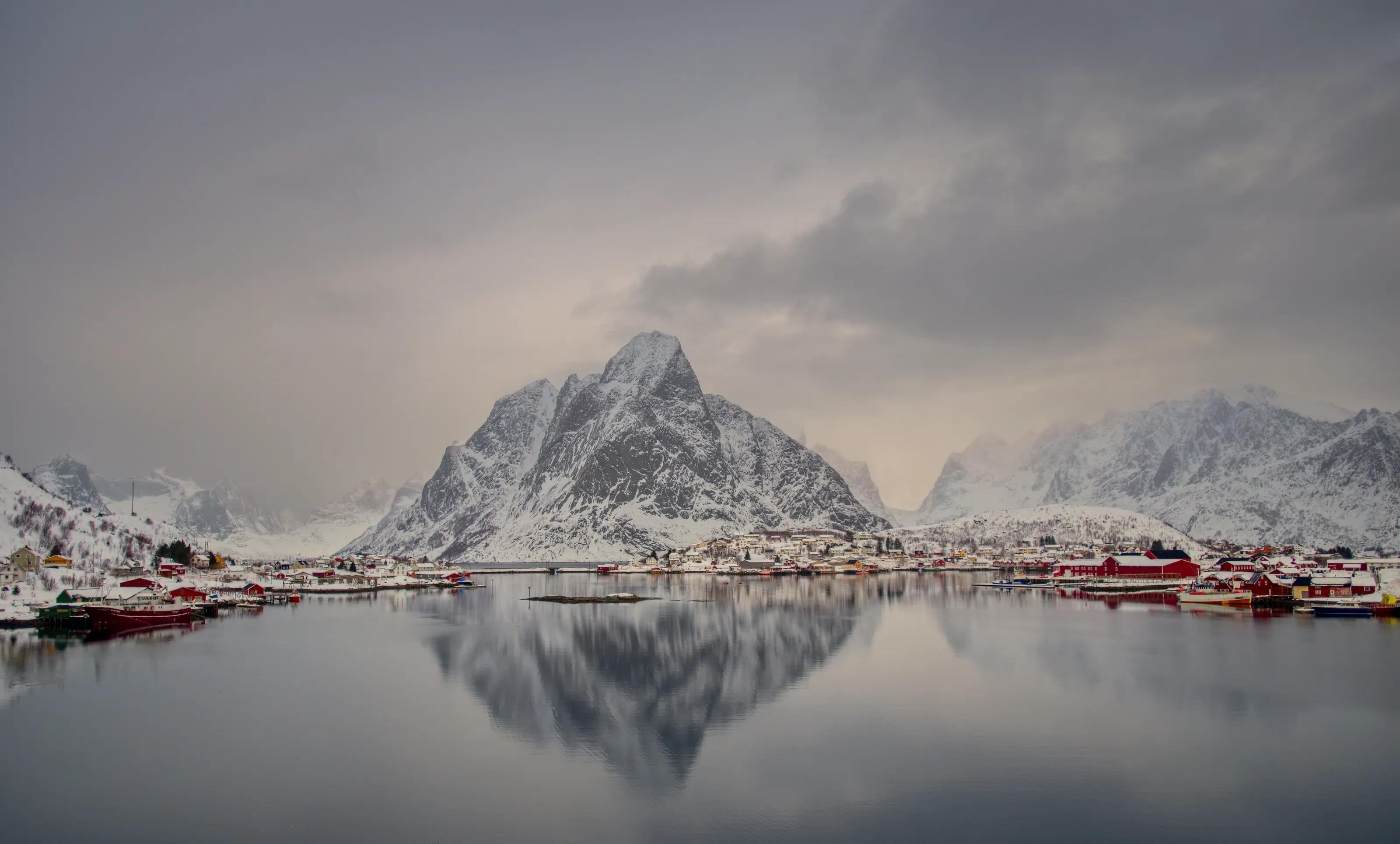
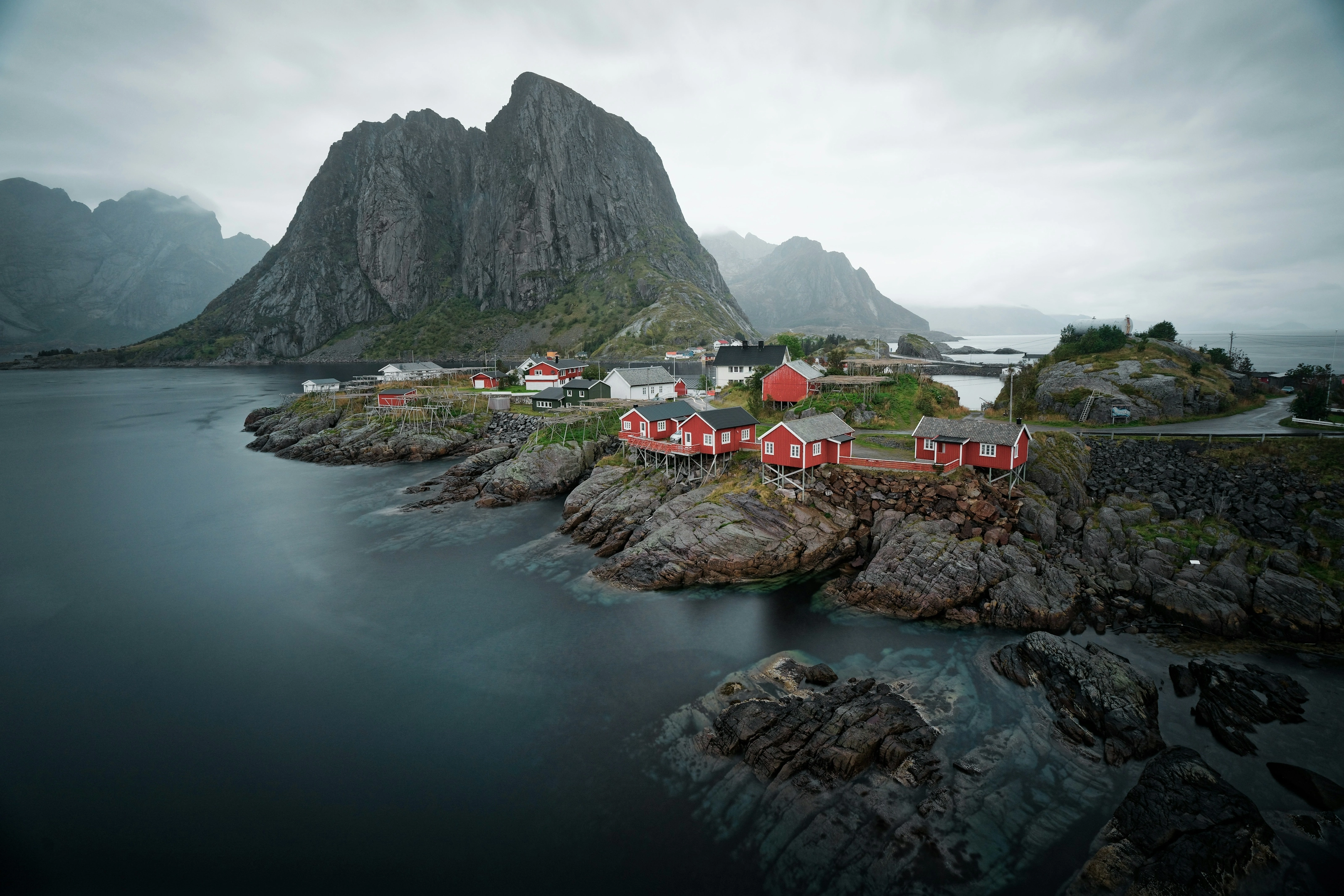
Reine, on the island of Moskenesøya, is known for its scenery and fishermen's cabins; the village has about 300 residents but welcomes thousands of visitors a year. You can sleep in a rorbu, a traditional fisherman's cabin built on the shore or on stilts.
Arctic beaches
The beaches of Haukland, Uttakleiv and Ramberg offer pale sand and almost unreal Arctic scenery; the sea temperature, about 14 °C in August near Skrova, is a quick reminder of where you are. Hiking, kayaking, fishing and cycling are superb in season, but the weather can turn fast: check forecasts and wear layers.
Reinebringen and hikes
The climb to Reinebringen has a famous view, but the path is very steep and its condition has varied: Wikivoyage calls it dangerous after damage in 2015. Ask locally about its current state and about maintained trails before you set out.
Villages and landmarks
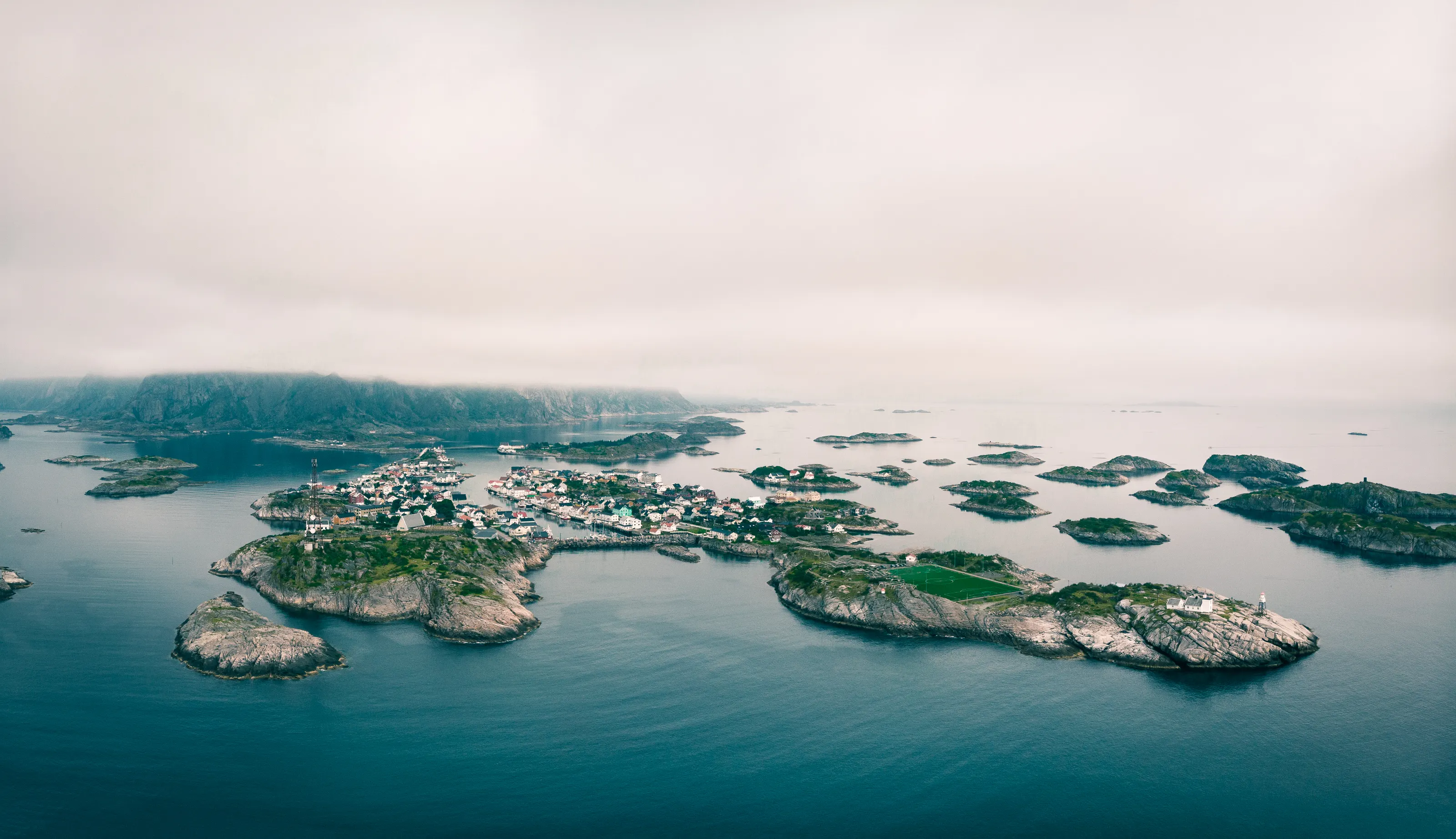
Kabelvåg, Henningsvær, Nusfjord and Å
Svolvær and Kabelvåg
Svolvær, with about 4,700 residents, is the largest settlement in the archipelago: hotels, rorbuer, restaurants and boat trips to the Trollfjord. Kabelvåg, a few kilometres west, is the oldest fishing village; its wooden church is nicknamed the Lofoten Cathedral.
Henningsvær, Nusfjord and Å
Henningsvær is described by Wikivoyage as a very pleasant village to wander. Nusfjord and Å, at the far south of the E10 on Moskenesøya, keep wooden buildings from the fishing era and a fishing museum.
Vikings at Borg
On Vestvågøya, the Lofotr Viking Museum recreates a large Viking Age chieftain's house, built around the year 500 according to Wikipedia, and discovered in 1983.
Museums and memorials
Vikings, fishing, war and the sea
| Place | What you discover |
|---|---|
| Lofotr Viking Museum (Borg, Vestvågøya) | A reconstructed chieftain's house, based on excavations carried out from 1986 to 1989, with exhibitions and activities. |
| Lofotmuseet (Kabelvåg) | Authentic 19th-century interiors in a beautiful setting. |
| Lofotakvariet (Kabelvåg) | An aquarium of fish and marine mammals from the north Norwegian coast. |
| Lofoten War Memorial Museum (Svolvær) | A Second World War museum with uniforms and an original Gestapo interrogation room, according to Wikivoyage. |
| Fishing museum and villages (Å, Nusfjord) | The heritage of cod fishing in former fishing villages. |
The Lofoten also saw two British commando raids in 1941 (Operation Claymore in March, then another in December), according to Wikipedia. Museum opening hours vary a lot by season: check them before you go. Kollhellaren cave, with prehistoric paintings discovered in 1989, can only be visited with a licensed guide.
Distances and excursions
On the E10, between ferries and the southern islands
The E10 road
Getting from Fiskebøl in the north to Å at the far south means driving about 168 km according to French Wikipedia. The road is winding: do not expect to average much more than about 50 km/h according to Wikivoyage, and the road becomes very narrow near Reine.
Værøy and Røst
The southernmost islands, Værøy and Røst, are reached by ferry from Moskenes (about 1.5 hours to Værøy, then about 2 more hours to Røst, check durations for each sailing). They are known for puffin colonies in summer; choice there is limited and expensive, so bring your own food.
Moskstraumen and Trollfjord
The Moskstraumen, or Maelstrom, is a powerful tidal current off Moskenesøya, often exaggerated in literature. The Trollfjord, so narrow that Hurtigruten ships must manoeuvre in it, can be visited on a boat trip from Svolvær; navigation is banned in spring because of falling rock.
Food and drink
Stockfish, skrei and seafood
Dried cod
The Lofoten are a traditional cod-fishing area. Stockfish, dried on wooden racks, is exported to Italy and Spain, where it is known as baccalà or stoccafisso, and several island restaurants serve it. Winter cod fishing (skrei) runs from mid-January to mid-April according to German Wikipedia.
Querini's story
In the early 1430s the Venetian merchant Pietro Querini was shipwrecked on Røst and spent three months with the islanders; he is credited with introducing stockfish to Italian cooking.
Where to eat
Small cafés and bakeries in Reine, Å or Kabelvåg are good for a break; choice is limited and prices high, especially on Værøy. A craft beer and the catch of the day complete the meal; spirits are only sold at Vinmonopolet.
Getting around
Car, bus, ferry and bike
By car
The main islands are easily covered by car on the E10, which links them by bridges and tunnels. Fuel is only available in the larger settlements: fill up whenever you can.
By bus and ferry
Most places can be reached by bus; buses from the south (Å, Reine) stop at Leknes, where you change for Svolvær. For Værøy and Røst a ferry from Moskenes is needed.
By bike
Bikes can be hired at several points along the E10, and the often quiet road suits short trips; tunnels and narrow sections call for care.
Budget and precautions
A high budget and rules to respect
Price level
Norway is expensive, and the Lofoten, very busy in summer and winter, are no exception: accommodation, restaurants and ferries weigh heavily, and bookings fill early. We do not publish prices because we could not cross-check them and they change quickly.
Camping and parking
Respect the permitted areas and never camp on private or fragile land, as the islands' popularity has made this rule essential. Park only where allowed.
Flights and alerts
The flight is the most variable cost. SniperAir tracks fares to BOO, compares them with the route's history and alerts you, but does not sell or book tickets. Check regional links to Leknes and Svolvær with the airlines afterwards.
When to go
Mild, changeable, with midnight sun and polar night
Spring
Nature waking up, still few tourists, changeable weather.
Summer
Midnight sun from late May to late July, the best season for hiking, kayaking and beaches.
Autumn
First northern lights possible, fewer visitors, stronger winds.
Winter
Skrei cod fishing, characteristic fish racks, northern lights hunting.
Light and temperatures
At Leknes the sun stays above the horizon from about 26 May to 17 July, and does not rise from 9 December to 4 January (Wikivoyage). The northern lights are hunted in winter; from late April to September nights may be too bright. Sea temperature near Skrova varies from about 3 °C in March to 14 °C in August (Wikipedia). Strong winds are possible in late autumn and winter, and snow is possible in the mountains.
By length of stay
What to do in the Lofoten depending on your trip length
The essentials (in Bodø)
Saltstraumen (depending on the tide) before taking the ferry or flight to the Lofoten.
Going deeper
Reine, Hamnøy and Henningsvær, with hikes and the beaches of Haukland or Uttakleiv, plus Kabelvåg and the Viking museum.
Exploring more
Kayaking, fishing, cycling between villages, Værøy or Røst, and a return towards Svolvær for winter or summer activities.
Why watch Bodø and the Lofoten with SniperAir
You don't need to compare prices every day
Pick your departure
Enter your departure airport and your maximum budget for a flight to Bodø and the Lofoten (BOO).
SniperAir watches
Our systems continuously compare new prices with the real price history of the route. SniperAir watches prices and alerts you: it does not sell or book tickets.
You get an alert
As soon as a price matches your criteria you are notified, without having searched anything yourself.
In pictures
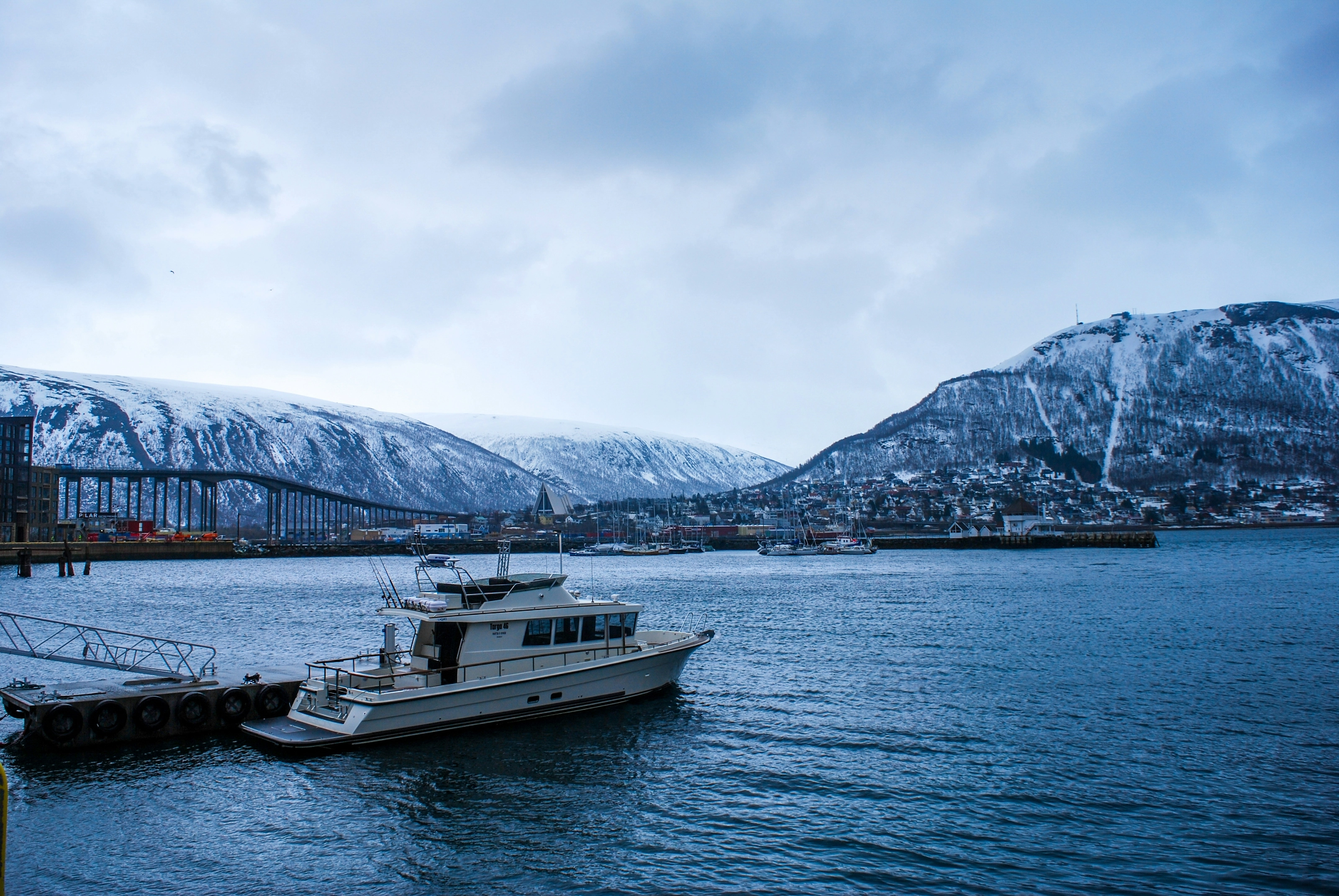
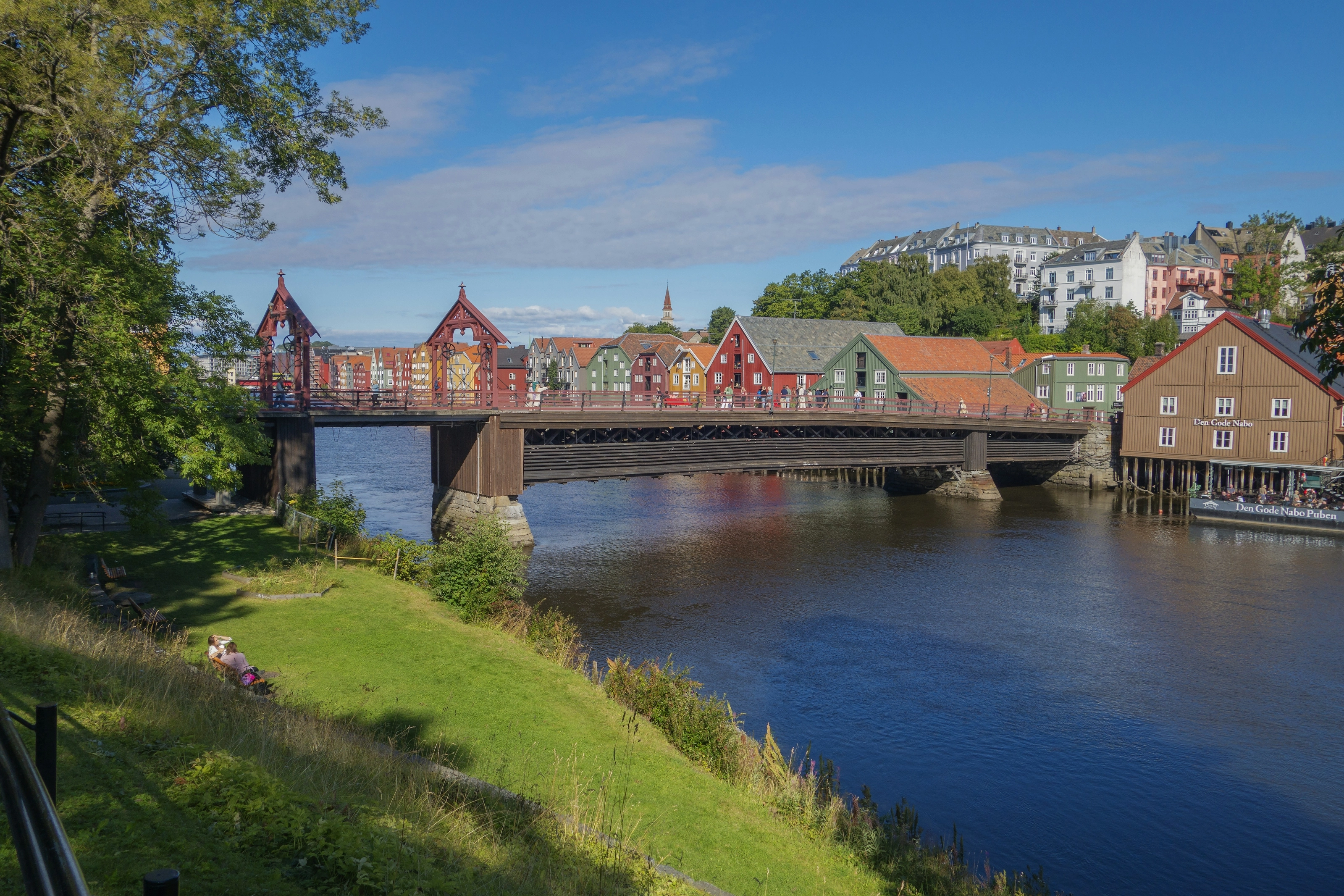
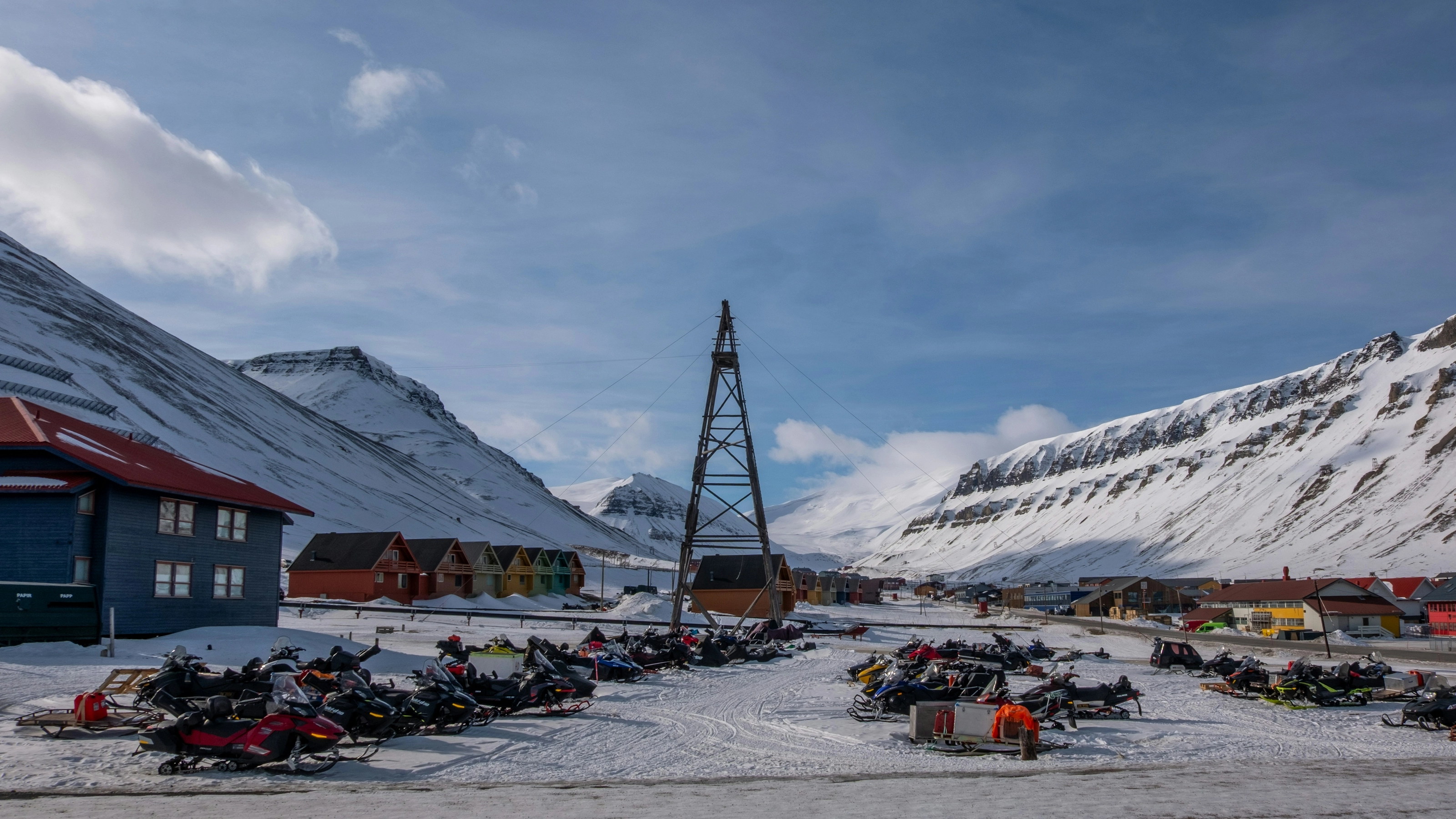
The Lofoten in pictures
You might also like
Similar destinations
FAQ
Frequently asked questions about flights to Lofoten
How do I reach the Lofoten Islands?
From Bodø (BOO), by ferry (about 3 hours 15 minutes to Moskenes according to Wikivoyage) or a short regional flight to Leknes or Svolvær. The E10 road also links the Lofoten to the mainland from Narvik and Evenes airport.
Which is the best airport to arrive at for the Lofoten?
Bodø Airport (BOO) is the main access point, followed by a ferry or short flight to the islands. Svolvær and Leknes have their own airports, served by regional flights.
Can I camp freely in the Lofoten?
No: respect the permitted areas and never camp on private or fragile land, as the islands' popularity has made this rule essential.
When is the best time to see the midnight sun in the Lofoten?
From late May to mid-July or so at Leknes (according to Wikivoyage) the sun does not set: ideal for hiking and evening activities.
Are the Lofoten expensive?
Yes, like the rest of Norway, especially for accommodation in summer and winter. The flight is the most variable cost, and SniperAir alerts you when a fare drops.
How long do I need for the Lofoten?
One day in Bodø before the islands, two to four days for Reine, Henningsvær and the beaches, five days or more for Værøy, Røst and activities.
How do I get around the Lofoten?
By rental car on the E10, or by bus (change at Leknes). Ferries link Moskenes with Værøy and Røst.
What should I eat in the Lofoten?
Fish, especially dried stockfish and cod. Prices are high; on Værøy, bring your own food.
How much does a flight to Bodø usually cost?
It mostly depends on your departure city, the season and how far ahead you book. The "deals" section above shows real examples of prices already detected by SniperAir for this destination.
How do I get an alert when a flight to Bodø falls under my budget?
Create an alert profile with your departure airport, Bodø as destination and your maximum budget. You are notified automatically as soon as a matching price is detected; SniperAir does not sell or book tickets.
Ready to head to Lofoten?
Set your budget and let SniperAir monitor fares for you.
Create my alert