
Cheap flights to Bournemouth
Set your departure airport and maximum budget: SniperAir tracks prices to Bournemouth and alerts you the moment a deal matching your criteria appears.
Quick summary
Country
United Kingdom
Continent
Europe
Airport
BOH
Currency
Pound sterling (GBP)
Time zone
UTC+0 (UTC+1 during summer time)
Deals already spotted to Bournemouth
Real flight examples detected by SniperAir, with their reference price.
Loading examples…
Why track Bournemouth with SniperAir
Dorset's big seaside resort, between sandy beach, gardens and Poole harbour
Choose your departure
Enter your departure airport and your maximum budget for a flight to Bournemouth (BOH).
SniperAir keeps watch
Our systems continuously compare new prices with the real price history of the route. SniperAir monitors prices and alerts you: it does not sell or book tickets.
You receive an alert
As soon as a price matches your criteria, you are notified, without having searched for anything yourself.
Bournemouth is a seaside resort in Dorset on the south coast of England. It began around 1810 on uninhabited heathland, when Lewis Tregonwell founded a health resort there, and the railway made it grow from 1870 (Wikipedia EN). Its built-up area has close to 200,000 inhabitants according to Wikipedia (EN, DE) and more than 390,000 with Poole and Christchurch (Wikipedia DE, FR). The town is known for its golden sandy beach of about seven miles, roughly eleven kilometres (Wikipedia EN; the official tourist site), for a climate among the mildest and sunniest in England (Wikipedia DE) and for gardens that run down to the sea. Next door, Poole offers a large natural harbour and Brownsea Island, a refuge for red squirrels. This guide presents Bournemouth as open sources describe it; SniperAir tracks flight prices to BOH, compares them with the real price history of the route and alerts you when one falls below your budget, without selling or booking anything.
Airport and getting into town
An airport a few kilometres north, with no station, and Southampton as an alternative
Bournemouth (BOH)
Bournemouth Airport (BOH), formerly Hurn, is about 6 km north-north-east of the town according to Wikipedia (EN); Wikivoyage (DE) says about five kilometres. It has no railway station: shuttle buses link it to the centre and the station (Wikivoyage EN, DE). It is served by flights to western Europe and the Mediterranean, mainly by low-cost carriers, and by seasonal and charter services (Wikipedia EN). We publish neither a route list nor timetables, which change with the season.
Approximate distance from Wikipedia (EN) and Wikivoyage (DE): sources differ by a kilometre or two. Connections change with the season. We do not publish fares.
If you cannot find a flight to BOH at your price, Southampton airport (SOU), about 35 to 45 minutes by train from Bournemouth according to Wikivoyage (EN), or the London airports of Heathrow (LHR) and Gatwick (LGW), linked by rail (Wikivoyage DE), are alternatives. Trains to London Waterloo take about two to two and a half hours according to Wikivoyage (FR, DE); long-distance coaches from London take around two and a half hours (Wikivoyage EN). Set up an alert for SOU, LHR or LGW alongside BOH.
Landmarks
Pier, beach, colourful huts, Brownsea and Poole harbour
The photos below show Bournemouth's pier, beach and colourful beach huts, then Brownsea Island and Poole harbour. The gardens and the Russell-Cotes museum are described at the end of this section.
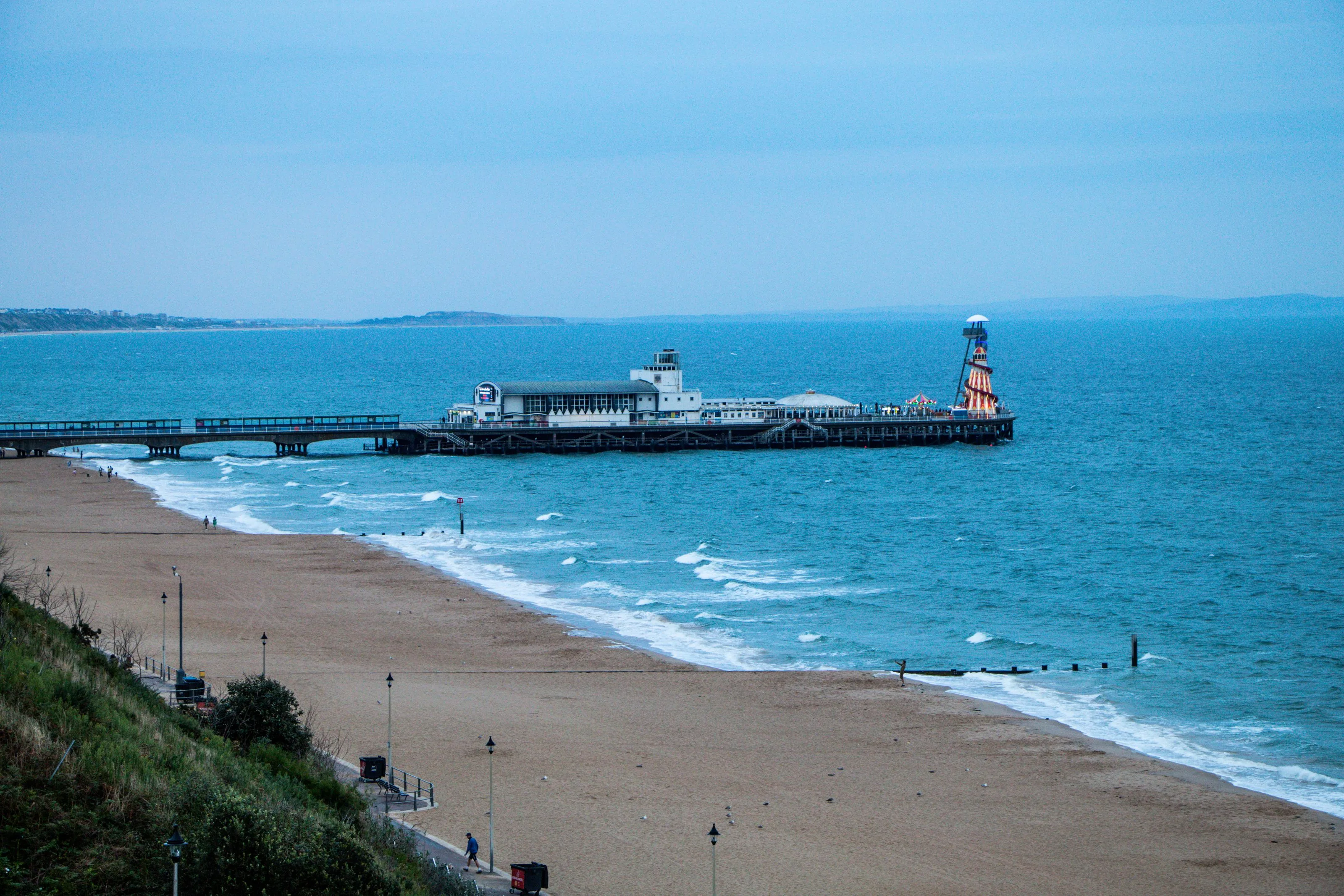
Bournemouth Pier and its beach
Bournemouth Pier runs out to sea from the middle of the beach. It began as a simple wooden jetty in 1856, was replaced in 1861 by a longer wooden pier and then by a cast-iron structure in 1880; extensions in 1894 and 1905 brought it to 305 m (Wikipedia EN). Wikivoyage (EN) mentions a small fair, boat trips and a cafe-bar on the pier.
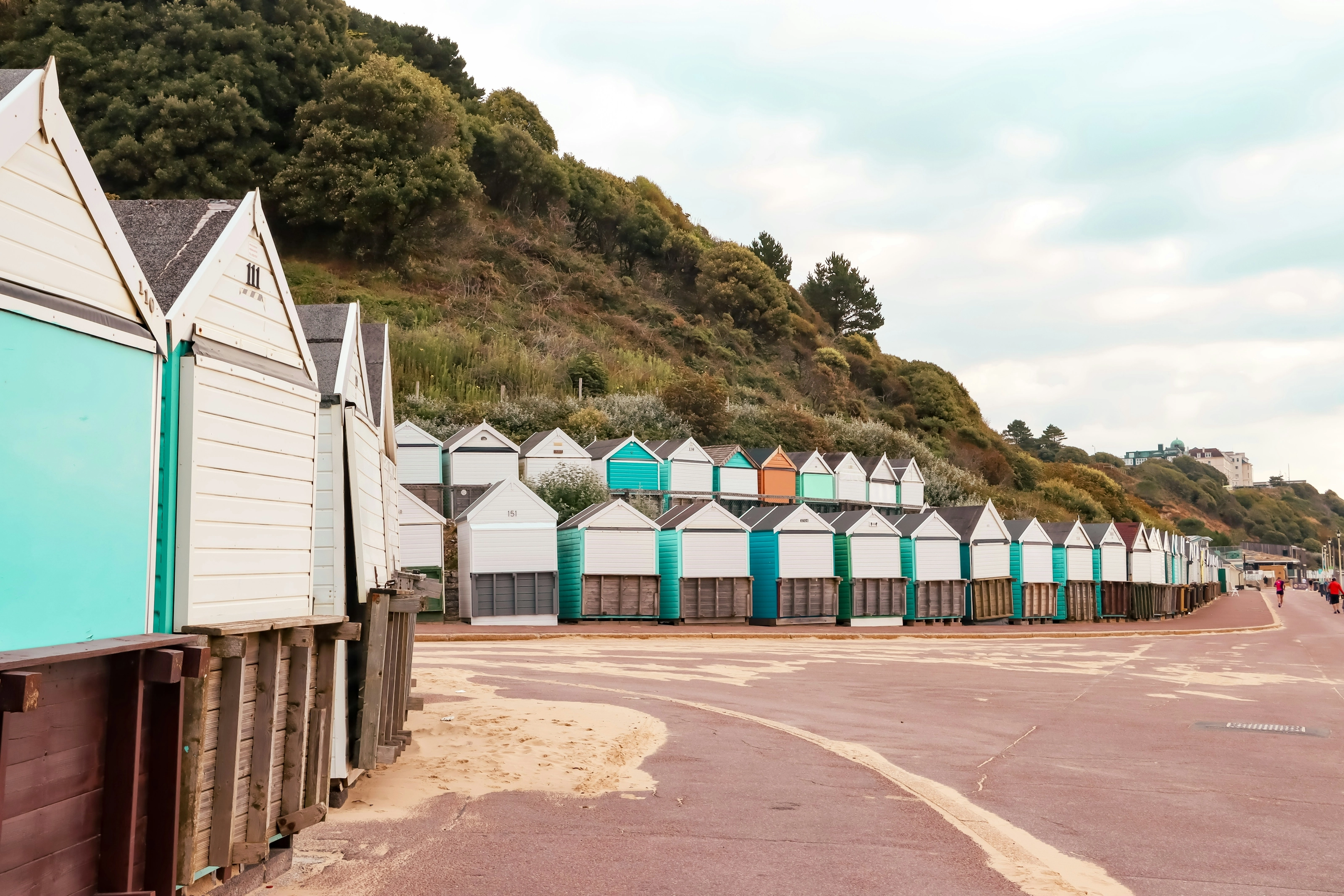
The colourful beach huts
Thousands of colourful beach huts line the foot of the cliff along the promenade (Wikivoyage FR). Wikivoyage (FR) mentions about 250 huts that the council rents out and an 11 km path for walkers and cyclists running alongside them. Beach huts are a classic backdrop of British seaside resorts.
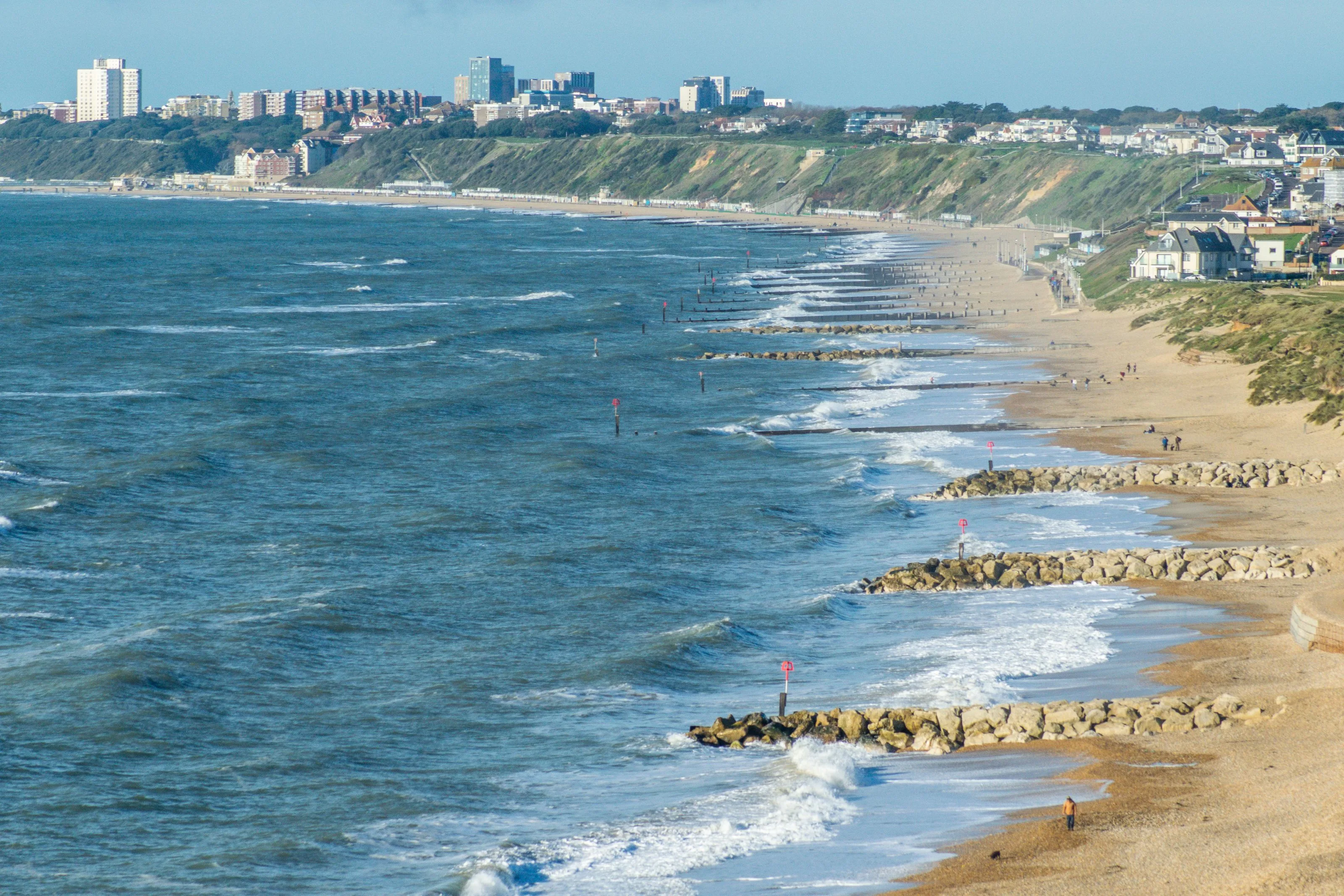
The coast of cliffs and sand
Bournemouth's coastline runs from Sandbanks to Christchurch Harbour, mostly sandy beaches backed by gravel and sandy-clay cliffs (Wikipedia EN). Groynes protect the beach and small ravines, the chines, cut into the cliff; Wikivoyage (EN) suggests exploring them on a walk along the seafront. The town's skyline appears in the distance.
Brownsea Island and its red squirrels
Brownsea Island, in Poole Harbour, is the largest island in the harbour; it belongs to the National Trust, with the northern half managed by the Dorset Wildlife Trust (Wikipedia EN). It is one of the few places in southern England where native red squirrels survive, because grey squirrels have never been introduced there (Wikipedia EN, DE). Baden-Powell held his experimental scout camp there in 1907. You reach the island by public ferry or private boat (Wikipedia EN).

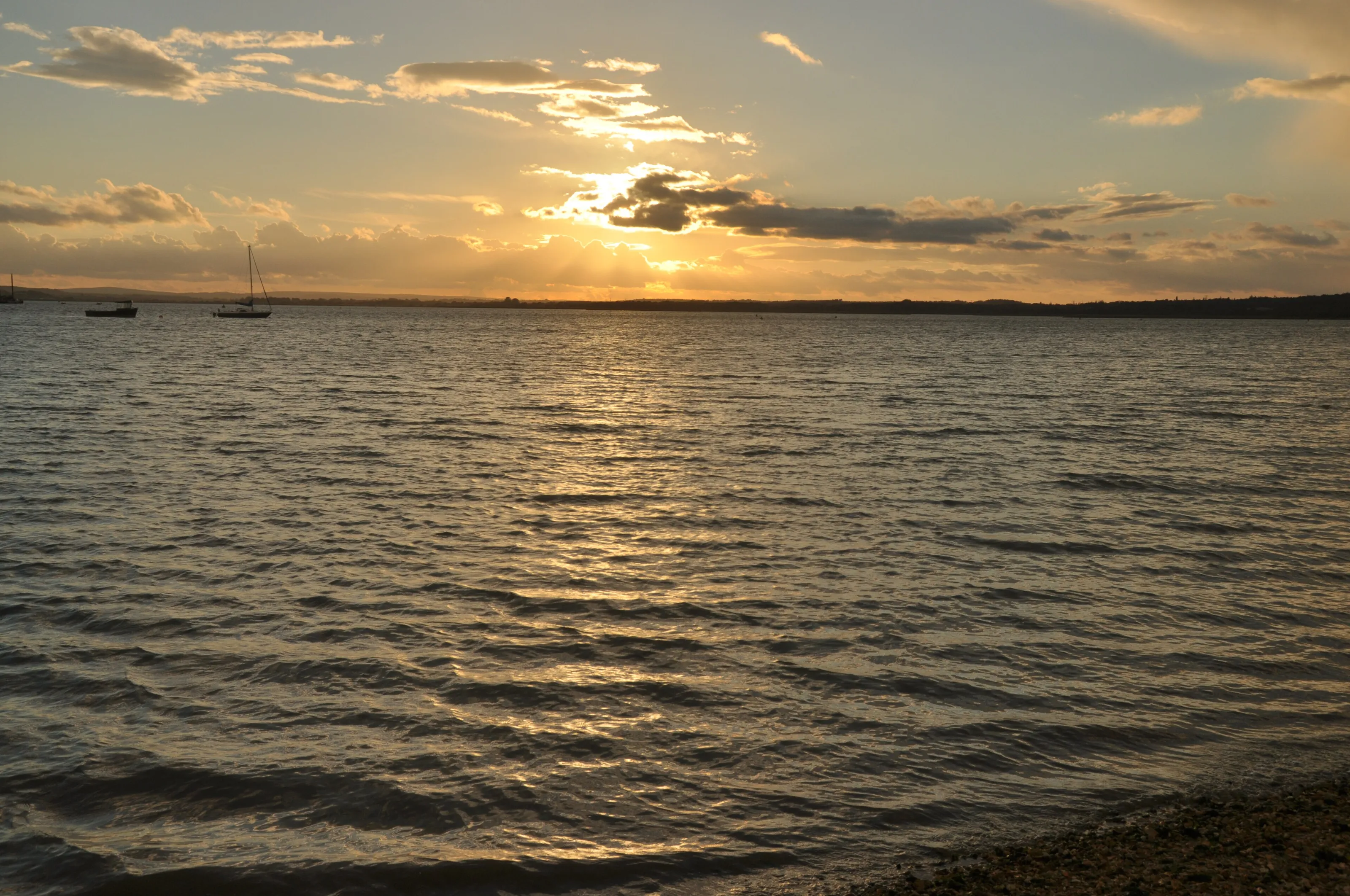
Poole harbour at sunset
Poole has a large natural harbour, an arts centre called the Lighthouse and Blue Flag beaches (Wikipedia EN). This photo shows the calm water of the harbour at dusk, near Rockley. Poole lies about ten kilometres west of Bournemouth, and its port is the departure point for ferries to Cherbourg and the Channel Islands (Wikivoyage DE).
In town: the Lower, Central and Upper Gardens, Grade II* listed parks, run down the valley of the River Bourne to the sea; the Pine Walk recalls the time when pine-scented air was thought to be healthy (Wikipedia EN, Wikivoyage EN). Boscombe Pier, opened in 1889, is shorter but architecturally important (Wikipedia EN). To the east, Old Harry Rocks mark the end of the Jurassic Coast, 155 km of coastline listed by UNESCO in 2001 (Wikipedia EN).
Museums and culture
Museums and culture: a Victorian villa, an orchestra and literature
The Russell-Cotes museum
The Russell-Cotes Art Gallery & Museum fills a Grade II* listed Victorian villa of 1901 that houses objects and paintings gathered on their travels by the philanthropist Merton Russell-Cotes and his wife (Wikipedia EN). Wikivoyage (EN) notes 19th-century art and Japanese artefacts in a lavish interior. We give no opening hours or prices: they change regularly.
The symphony orchestra and venues
The Bournemouth Symphony Orchestra was founded in 1893; in 1896 it became the first municipal orchestra in the country (Wikipedia EN). The Bournemouth International Centre, built in 1984, hosts conferences and concerts (Wikipedia EN, DE).
A town of letters
Mary Shelley, author of Frankenstein, is buried in the churchyard of St Peter's, along with the heart of Percy Bysshe Shelley (Wikipedia EN; Wikivoyage EN). Thomas Hardy described Bournemouth as Sandbourne in Tess of the D'Urbervilles, a Mediterranean lounging place on the English Channel (Wikivoyage EN).
Food and drink
Fish and chips, seafood and world cuisines
A varied restaurant scene
Wikivoyage (EN) describes many restaurants for all tastes and budgets, with a string of affordable places and bars on Old Christchurch Road and more around the West Cliff. You will find Italian, Indian, Spanish, Japanese and Caribbean cooking. We name no brand and no specific address.
Fish and seafood
A seafood restaurant on the seafront by the pier and fish-and-chips places in the Westbourne district are noted by Wikivoyage (EN). In medieval Dorset, fish and seafood were an important part of the diet, because they could be eaten on Fridays and during Lent (Wikipedia EN, cuisine of Dorset).
Markets and local produce
Dorset cooking is characterised by simple dishes sourced from the county; today it reflects the shift towards organic and local produce, upheld by farmers' markets and farm shops (Wikipedia EN, cuisine of Dorset).
Getting around
On foot, by bus, train and boat
A resort that is easy to walk
Bournemouth is small enough to walk around; the station is about a 10 to 15 minute uphill walk from the centre, and a frequent bus network serves the centre (Wikivoyage EN). The Square, at the foot of the gardens, is the lowest point of the town centre and lies close to the pier (Wikivoyage EN).
Buses, trains and promenades
Several bus companies run between Bournemouth, Poole and Christchurch, at times without a shared ticket (Wikipedia DE): check before you buy. Wikivoyage (FR) mentions a small tourist land train along the seafront and an 11 km promenade. The stations of Bournemouth, Pokesdown and Branksome are on the London-Weymouth line (Wikipedia EN, DE).
Pitfalls to avoid
Wikivoyage (EN) warns that road journeys into town are slow when the sun is out, especially on the A31: arrive early or the evening before. We publish no fares.
Budget and precautions
Budget, formalities and precautions
Price level
Wikivoyage (EN) describes restaurants for every budget, from inexpensive to upmarket. We give no figures because we could not confirm them on two independent open sources.
Currency and payment
The currency is the pound sterling (GBP). Check the exchange and payment conditions of your card before you leave.
Flights, formalities and precautions
SniperAir monitors prices and alerts you; it does not sell or book tickets. The United Kingdom is not in the Schengen area: entry conditions depend on your nationality and have changed in recent years, so consult the official advice of the British government and of your own country before you book. On the beach, respect lifeguard flags and instructions.
When to go
A mild oceanic climate, among the sunniest in England
Winter (December to February)
Cool: temperatures can drop below zero in midwinter (Wikivoyage EN). Days are short: according to Wikivoyage (EN) the sun is up only from about 8 am to 4:15 pm in midwinter.
Spring (March to May)
Temperatures climb and the gardens come into bloom; May marks, according to Wikivoyage (EN), the start of the warmest months.
Summer (June to August)
This is beach season: July and August are the warmest months, with a range of about 12 to 22 C according to Wikipedia (EN). Roads into town are very busy on fine days (Wikivoyage EN).
Autumn (September to November)
September stays pleasant; crowds thin out, which makes walks along the coast calmer.
Bournemouth has a temperate oceanic climate with an annual mean of 10 to 11 C over 1991-2020 (Wikipedia EN). Its coast is among the warmest, driest and sunniest in England (Wikipedia DE), and Wikivoyage (EN) notes that annual rainfall is well below the national average. We give no other monthly averages because reference periods differ between sources.
By length of stay
What to do in Bournemouth depending on how long you stay
The essentials
The beach and the pier, the gardens, the Russell-Cotes museum and a seafood dinner on the seafront.
Poole and Brownsea
Add Poole and its harbour, a crossing to Brownsea Island and a walk along the coast towards Sandbanks.
Dorset and around
Use the town as a base for the New Forest, the Jurassic Coast or the Dorset countryside (Wikipedia ES), or combine it with Southampton.
In pictures
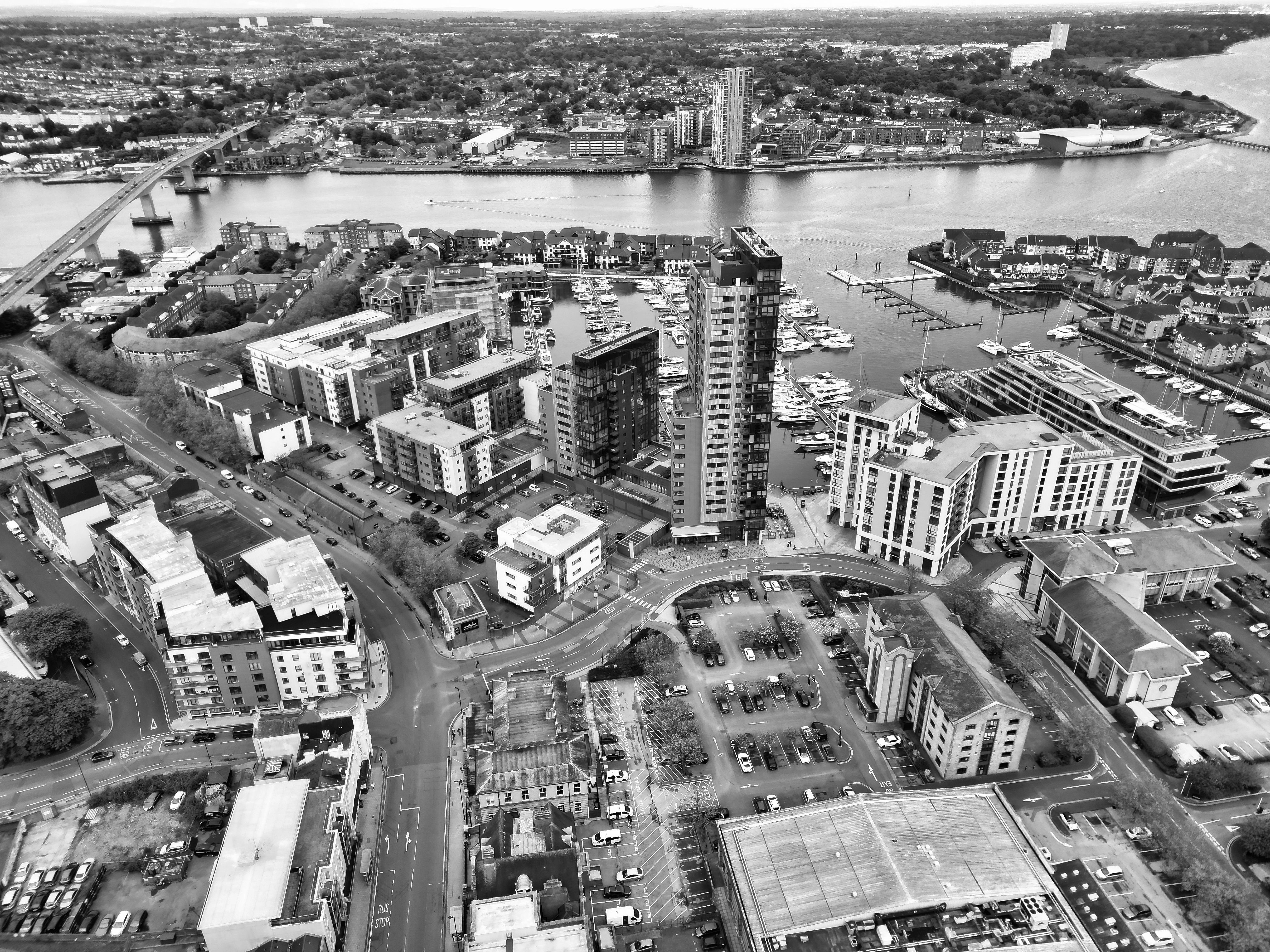
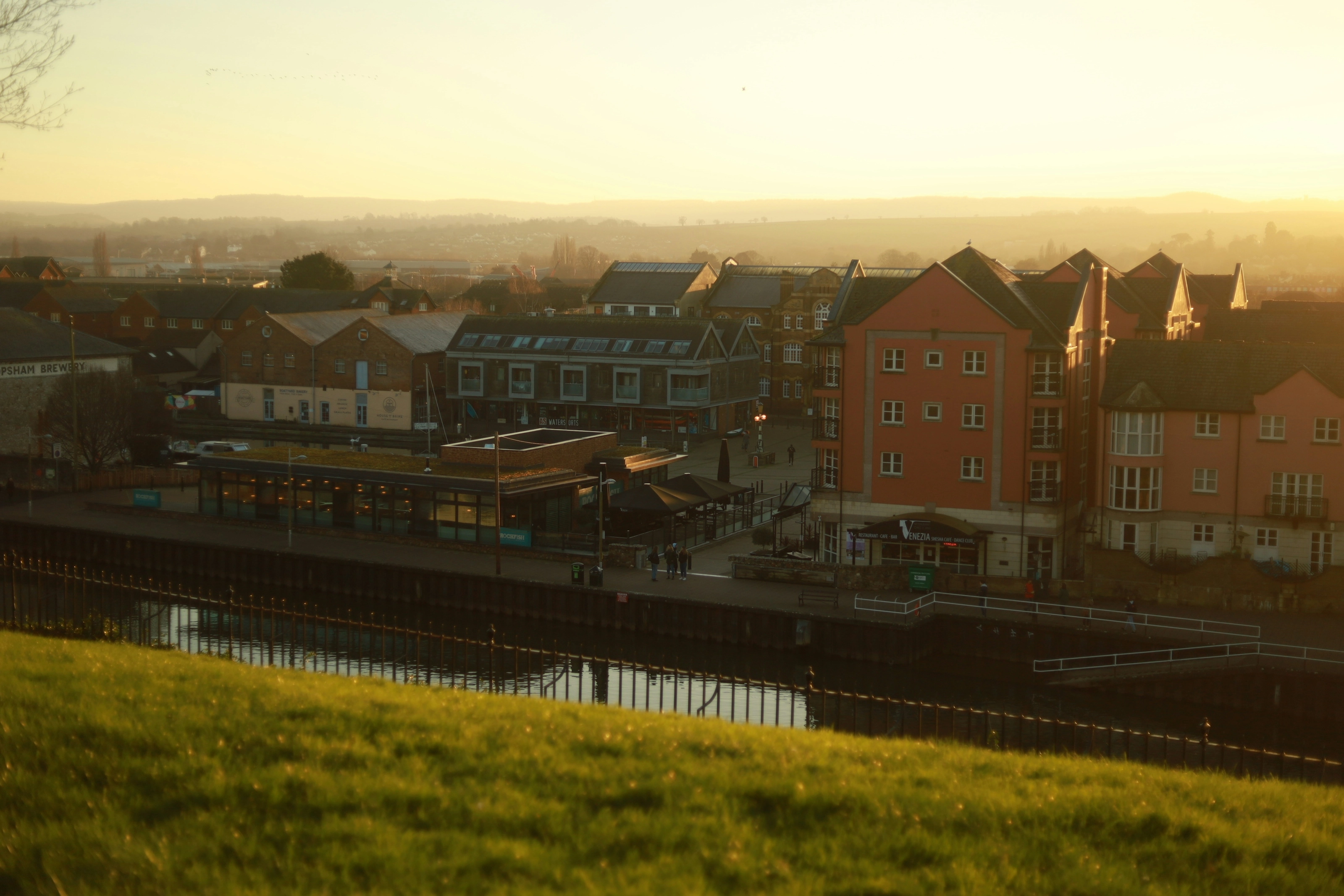
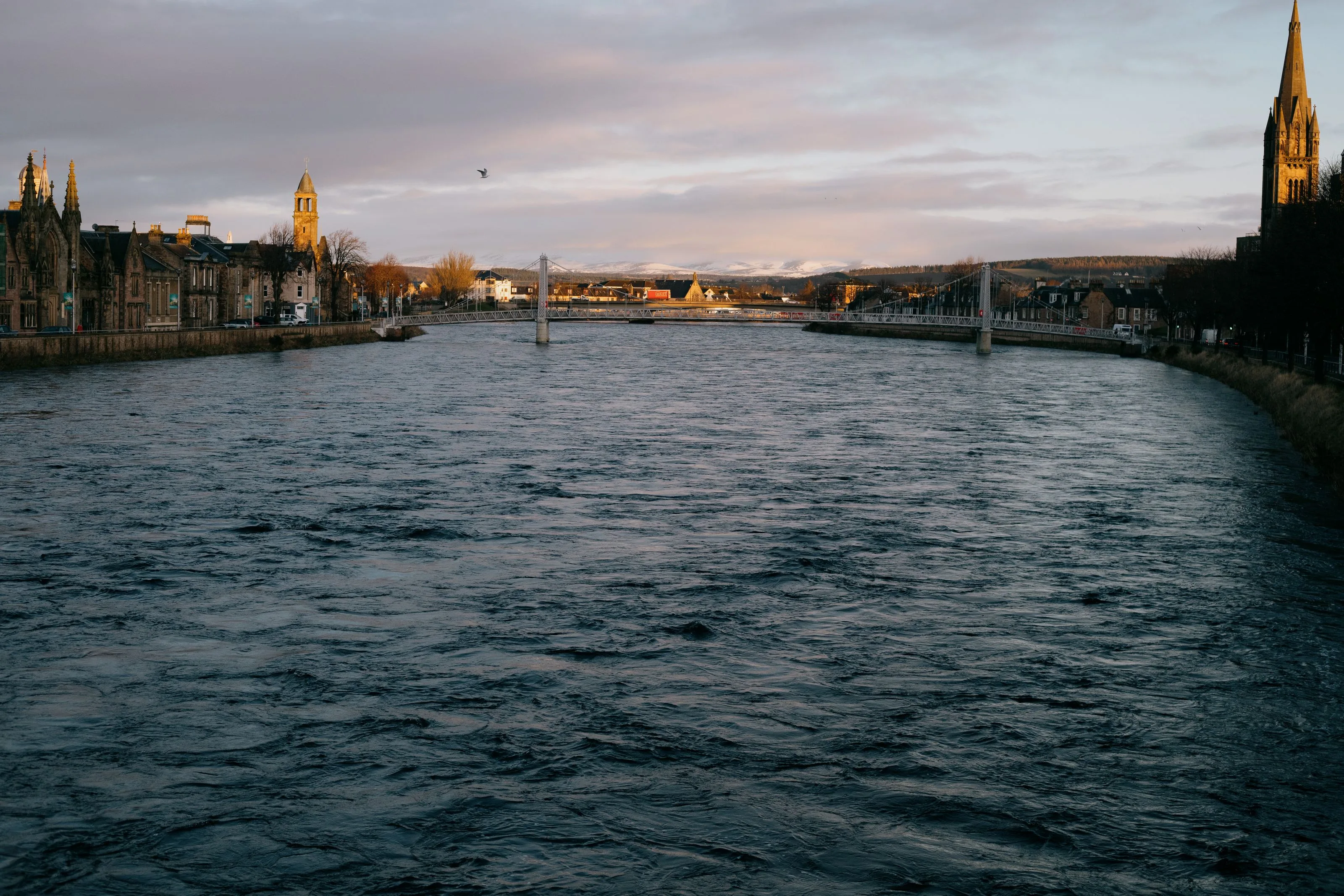
Bournemouth in pictures
You might also like
Similar destinations
FAQ
Frequently asked questions about flights to Bournemouth
How do I get from Bournemouth airport to the centre?
The airport (BOH) is about 5 to 6 km north of the town and has no station: shuttle buses link it to the centre and the station, according to Wikivoyage. Timetables change, so check them before you travel.
How long is Bournemouth beach?
About seven miles, roughly eleven kilometres, according to Wikipedia and the tourist office; other sources give slightly different figures.
When is the best time to visit Bournemouth?
From May to September for the beach and the gardens; winter is cool but the coast is fairly dry and sunny by English standards.
Can you visit Brownsea Island?
Yes: you reach it by public ferry or private boat, and it is one of the few places in southern England where native red squirrels live.
How long should I stay in Bournemouth?
One to two days for the beach, the pier and the gardens; three to four days to add Poole and Brownsea; longer to explore Dorset.
How do I get from London to Bournemouth?
By train from London Waterloo, about two to two and a half hours depending on the train, or by coach, about two and a half hours, according to Wikivoyage.
How much does a flight to Bournemouth usually cost?
The price depends mainly on your departure city, the time of year and how far ahead you book. The "opportunities" section above shows real examples of prices SniperAir has already detected to this destination.
How do I get alerted when a flight to Bournemouth drops below my budget?
Create an alert profile with your departure airport, Bournemouth (BOH) as the destination and your maximum budget. You are notified automatically as soon as a matching price is detected. SniperAir monitors and alerts, it does not sell or book tickets.
Ready to head to Bournemouth?
Set your budget and let SniperAir monitor fares for you.
Create my alert