
Cheap flights to Apia
Set your departure airport and maximum budget: SniperAir tracks prices to Apia and alerts you the moment a deal matching your criteria appears.
Quick summary
Country
Samoa
Continent
Oceania
Airport
APW
Currency
Samoan tala (WST)
Time zone
UTC+13
Deals already spotted to Apia
Real flight examples detected by SniperAir, with their reference price.
Loading examples…
Why track Apia with SniperAir
You do not need to compare prices every day
Choose your departure
Enter your departure airport and your maximum budget for a flight to Apia (APW).
SniperAir keeps watch
Our systems continuously compare new fares with the route's real price history. SniperAir tracks prices and alerts you: it does not sell or book tickets.
You get an alert
As soon as a fare matches your criteria you are notified, without having searched for anything yourself.
Apia is the capital of Samoa and its only real city, on the north coast of Upolu, on a natural harbour at the mouth of the Vaisigano River. The urban area had 35,974 residents at the 2021 census according to Wikipedia (EN). SniperAir tracks flight prices to APW, Faleolo airport, and alerts you; it does not sell or book tickets.
This page focuses on the capital: arriving, what to see in a day or two, and how to get around. Wikivoyage (EN) describes it as a modest, slightly shabby town that is very useful for getting your bearings, planning your stay on Upolu and recovering from jet lag; most of Samoa's highlights lie outside town, often a short drive away.
A general reminder: official travel advice differs by country of departure and can change, so read your own government's advice before setting an alert and again before booking. The cyclone season runs from November to April according to Wikivoyage (DE). For Samoa as a whole, see our country page.
Airport and getting into town
APW, Faleolo airport, west of the city
Faleolo International Airport (APW)
Samoa's international airport is at Faleolo, west of Apia on Upolu according to Wikipedia (EN, DE). The distance depends on the source: about 32 km according to Wikivoyage (EN), 35 km according to Wikipedia (DE) and 40 km according to Wikipedia (EN), which counts a 40-minute drive. Taxis wait outside, some hotels run shuttles and public buses exist according to Wikivoyage (EN); we publish no fares or timetables, which change.
Transfer times and fares are not cross-checked, so we publish none. Wikivoyage (EN) advises booking your accommodation's shuttle in advance, as a planeload of arrivals can make the pick-up area crowded. Flight schedules change, so check them.
The west coast road links the airport and the city; two other roads, the east coast road and the Cross Island Road, leave Apia according to Wikivoyage (DE). Ferries to Savai'i leave from Mulifanua wharf, a little beyond the airport according to Wikivoyage (DE), while those to Tokelau and American Samoa leave from Apia according to Wikipedia (EN).
For your alerts, also watch flights to larger neighbouring hubs (New Zealand, Fiji) and then a regional flight, since the result can differ from a direct one. No prices are quoted here.
Landmarks and sights
Waterfront, colonial buildings and views over the bay
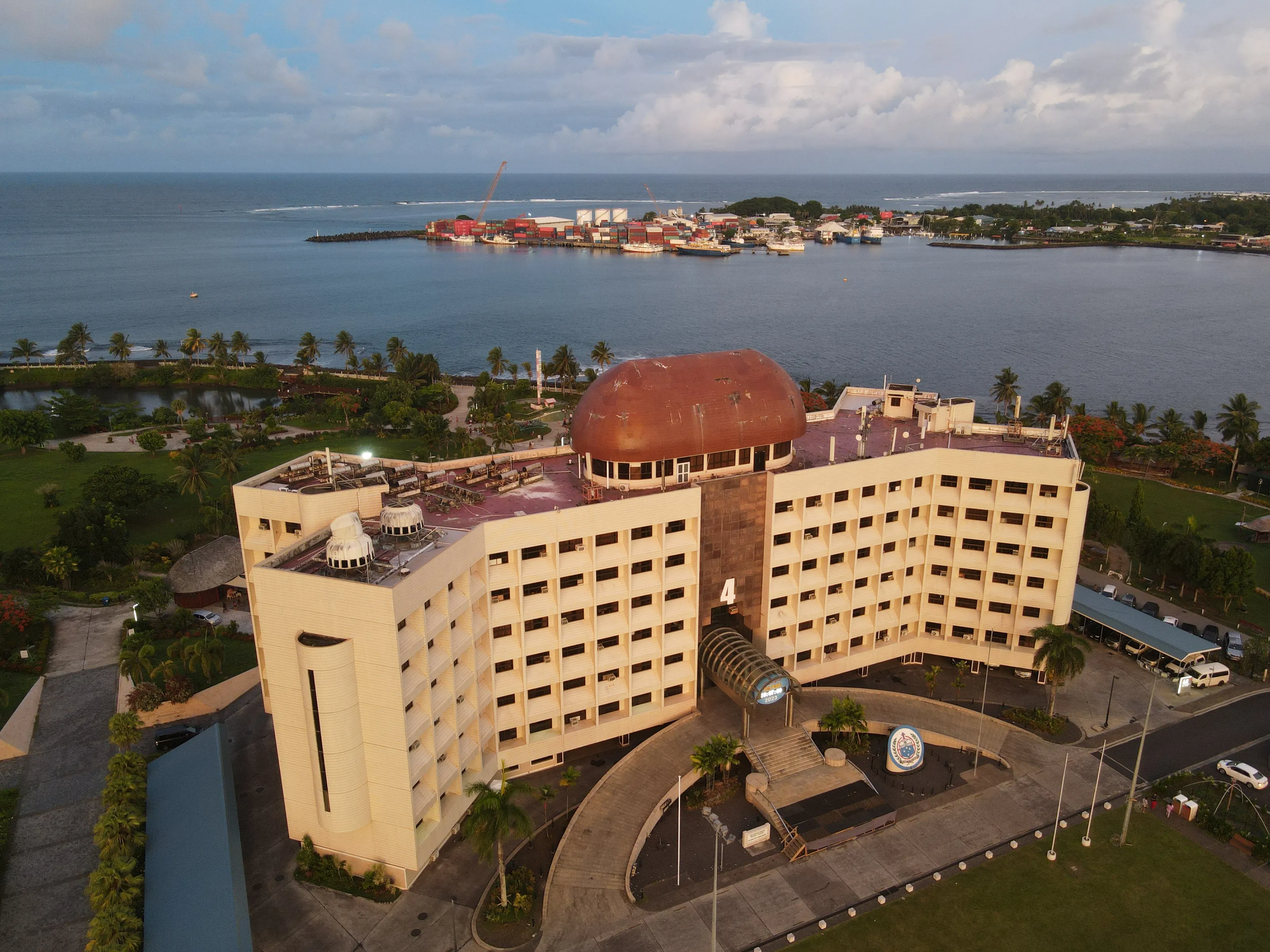
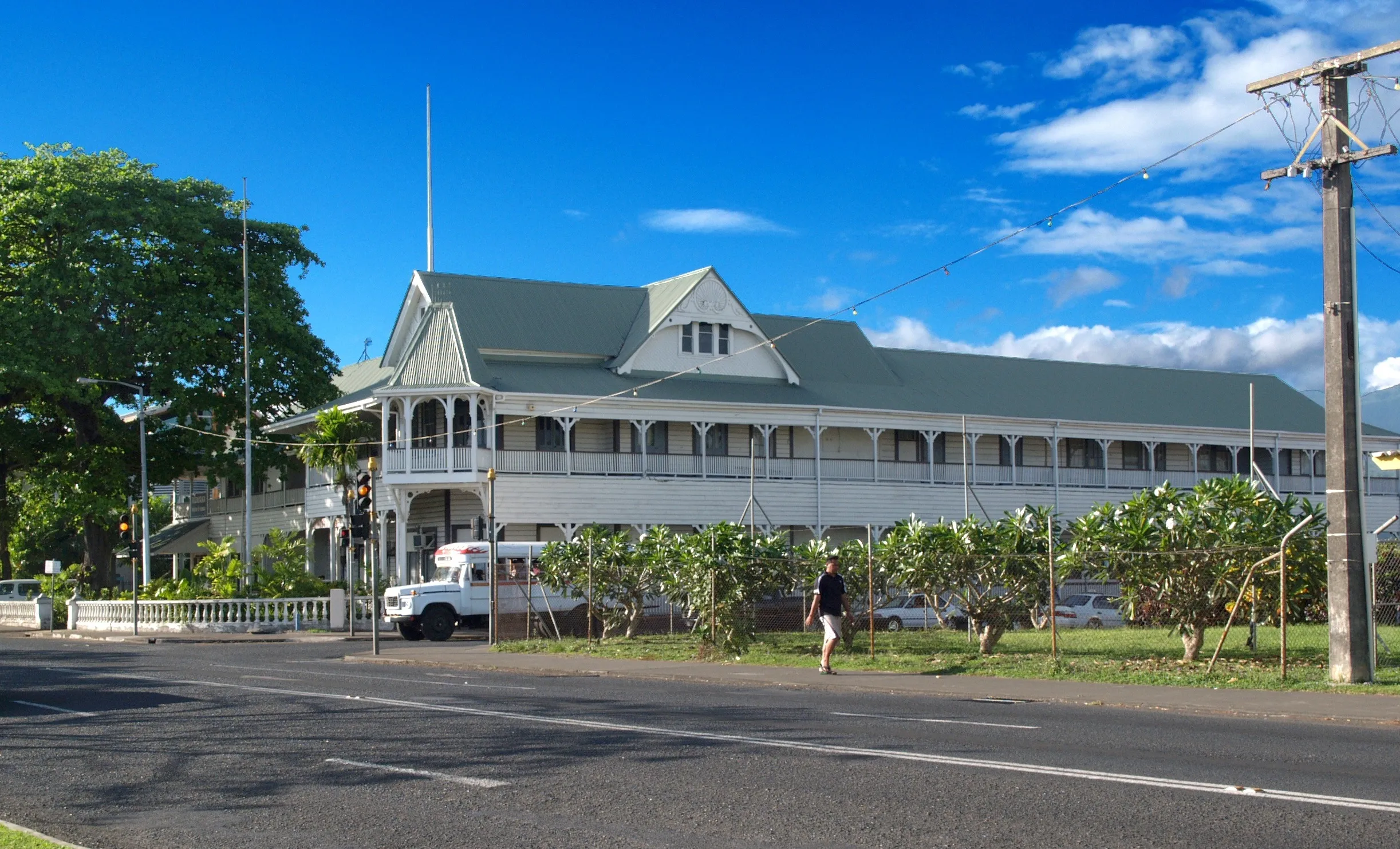
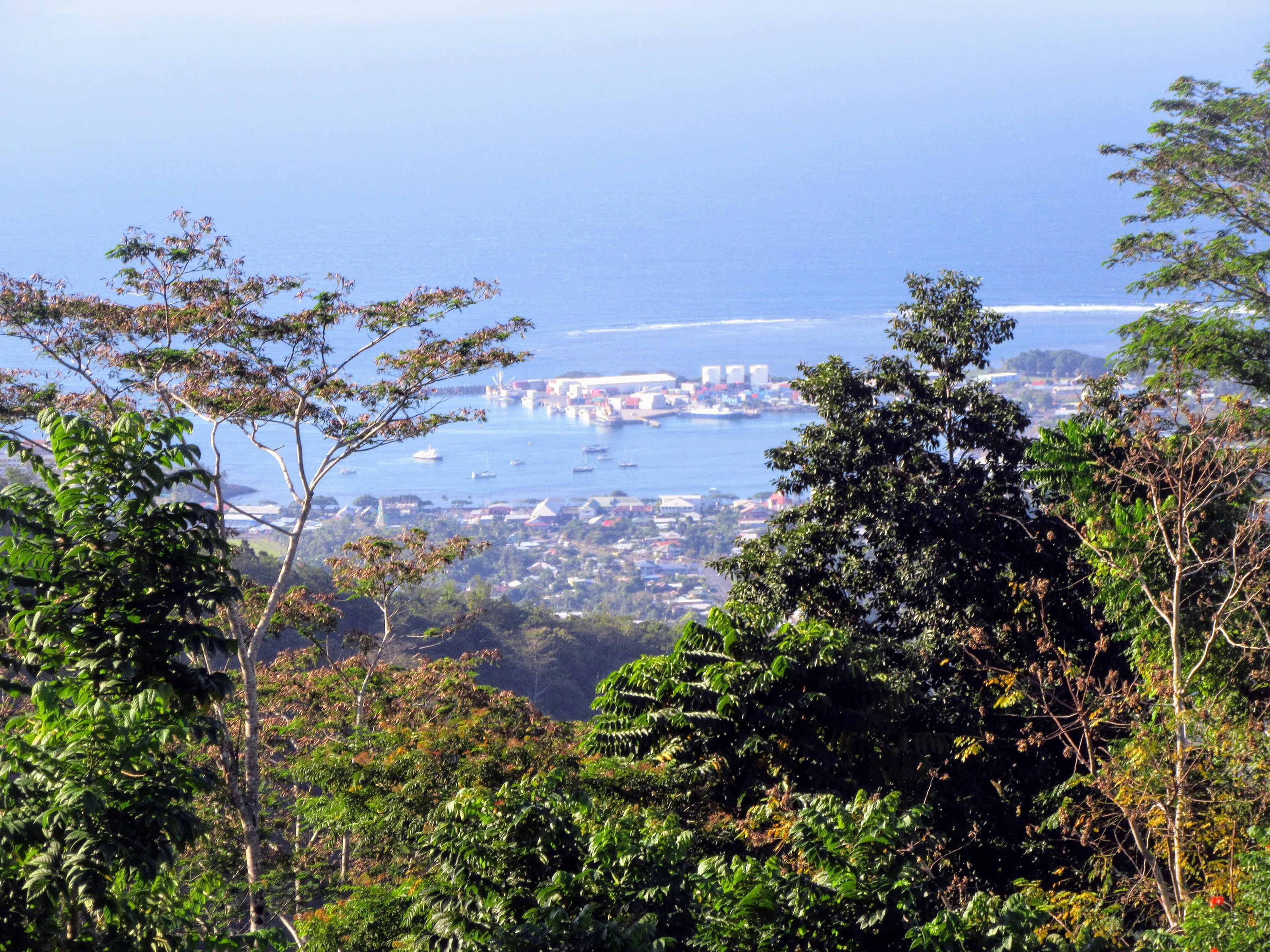
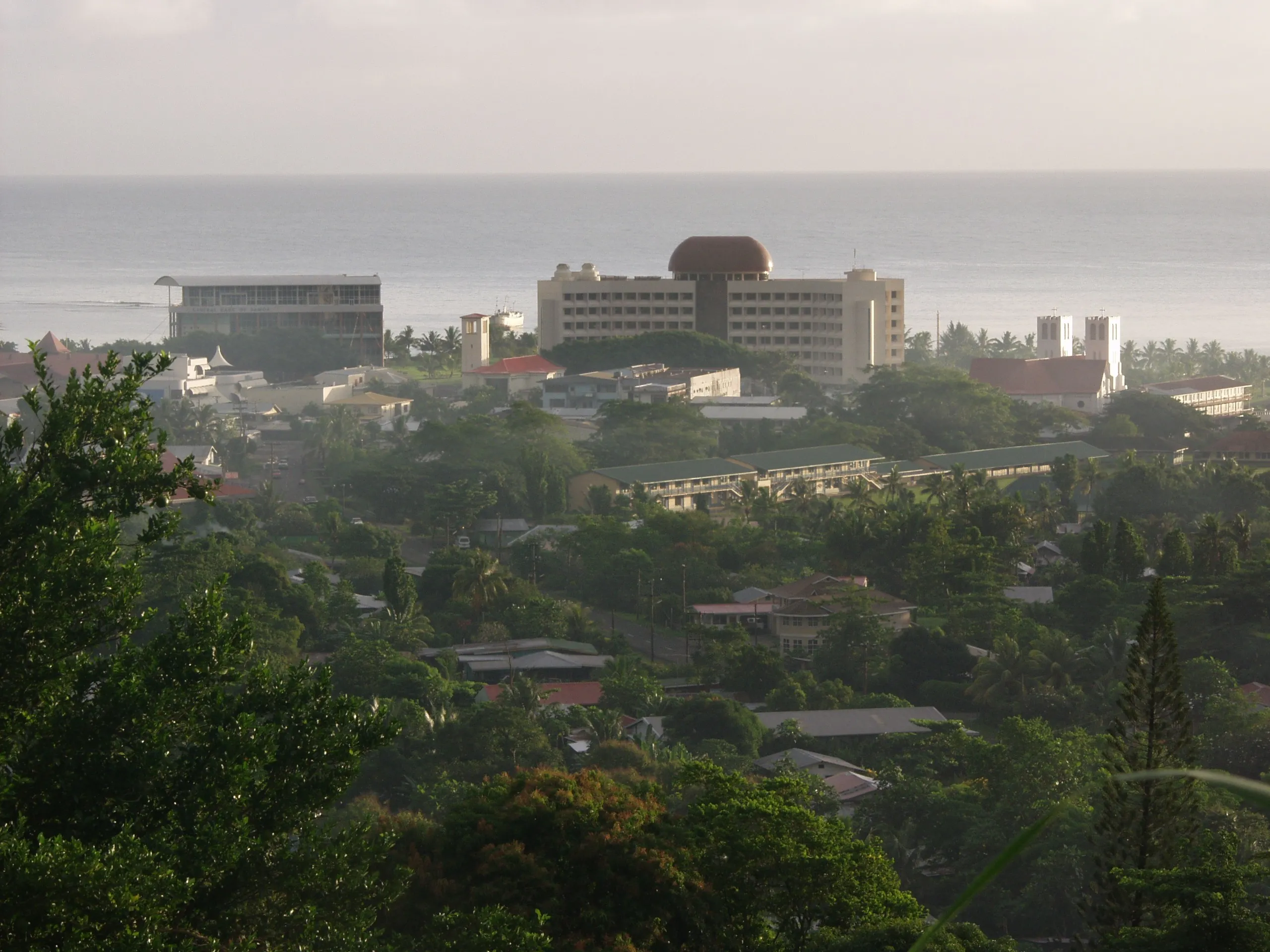
Apia can be seen on foot or by car, between the waterfront and the first slopes. Four photos illustrate the town; the other places are described in text.
Government offices facing the harbour
On land reclaimed from the sea near the harbour stand multi-storey government office buildings and the central bank according to Wikipedia (EN, FR). This view shows one of these large buildings, topped by a copper dome, with the commercial harbour behind it: Apia's harbour is by far the busiest in Samoa according to Wikipedia (EN, FR).
A colonial timber building
Apia has kept a few wooden buildings from the colonial period, including the courthouse, which houses a museum upstairs according to Wikipedia (EN, FR). Its white verandas and green roof recall island colonial architecture. Check hours before visiting: we give no prices.
The bay from the heights
From the slopes of Mount Vaea, which rises behind the town, you can see the bay and harbour: the city lies on a narrow coastal plain according to Wikipedia (EN, FR). Mount Vaea stands 472 m high according to Wikipedia (EN, FR, ES), and it is where the writer Robert Louis Stevenson lies; he spent his last four years in Apia according to Wikipedia (EN, FR, DE).
The town among the trees
This view from the hill shows how green Apia is: a fabric of villages, gardens and buildings between Mount Vaea and the bay according to Wikipedia (EN, DE). The city is in fact made up of many traditional villages, each with its own matai chiefs according to Wikipedia (EN).
Other landmarks: the clock tower, built as a war memorial and regarded as the central point of the city according to Wikipedia (EN, FR) and Wikivoyage (EN, DE); the Mulinu'u peninsula to the west, the old ceremonial capital, with Parliament House and the historic observatory according to Wikipedia (EN, FR); the Immaculate Conception Cathedral according to Wikipedia (EN, FR); and the Bahá'í House of Worship for the Pacific, a few kilometres south, opened in 1984 according to Wikipedia (EN, DE).
Museums and culture
Stevenson's home, the Museum of Samoa and colonial heritage
Robert Louis Stevenson Museum, Vailima
The house the writer had built at Vailima is now a museum according to Wikipedia (EN, FR, DE). Stevenson spent his last four years there and was given the Samoan name Tusitala, 'writer of tales', according to Wikipedia (EN). Hours and fees change, so ask before you go.
Mount Vaea and Stevenson's grave
As he wished, the writer is buried at the top of Mount Vaea according to Wikipedia (EN, FR, ES). The walk up takes about an hour according to Wikipedia (ES) and Wikivoyage (EN); it is best done in the morning and in dry weather, with water, according to Wikivoyage (EN).
Falemata'aga, the Museum of Samoa
The national museum occupies a former German-era school building according to Wikipedia (EN, FR) and Wikivoyage (EN). It shows Lapita pottery, stone adzes, historic photographs and information about tattooing according to Wikivoyage (EN). Hours change, so check them.
The colonial courthouse
This timber building from the German era has a museum upstairs according to Wikipedia (EN, FR). It recalls the years when Apia was the capital of German Samoa, from 1900 to 1914, before New Zealand administration and independence in 1962 according to Wikipedia (EN, ES).
A Pacific-wide history
On 15 March 1889 seven German, American and British ships refused to leave the bay as a cyclone approached; only HMS Calliope escaped, and nearly 200 sailors died according to Wikipedia (EN, FR, DE, ES). The episode is mentioned here with restraint.
Food and drink
Palusami, earth oven, markets and tropical fruit
The umu dishes
Food cooked in the umu, the traditional stone oven, includes roast pig and palusami, a dish of taro leaves baked in coconut cream with meat or fish according to Wikivoyage (EN, ES). Palusami goes well with taro. We name no restaurant, because places open and close.
Markets
The new market, Marketi Fou, is at Fugalei according to Wikipedia (EN) and Wikivoyage (EN); it sells tropical fruit (mango, papaya, pineapple, breadfruit, coconut), taro and several kinds of banana according to Wikivoyage (EN). The fish market is liveliest early on Sunday morning according to Wikivoyage (EN).
Drinks
Kava is sold by the cup in one section of the market according to Wikivoyage (EN, ES). Bottled water and factory-made ice are considered safe, while the purity of tap water is questionable according to Wikivoyage (EN, ES).
Meal times
Restaurants close early by Western standards, and on Sunday generally only those in the big hotels are open according to Wikivoyage (EN, ES): plan your Sunday meals.
Getting around
Taxis, private buses, walking and driving on the left
Taxis
They are plentiful and easy to hail according to Wikivoyage (EN); the fare is agreed before the ride, since the meter is optional according to Wikivoyage (DE). Wikivoyage (EN) advises women travelling alone to sit in the back. Ride-hailing apps are also in use.
Buses
A network of private buses serves Apia and the whole island according to Wikipedia (EN) and Wikivoyage (EN, DE). The simplest approach is to ask your accommodation for current stops and times.
On foot
Much of the centre can be done on foot, but heat and humidity can make walking tiring according to Wikivoyage (EN). The waterfront is pleasant at the coolest hours. Avoid walking in the outskirts after dark, as stray dogs are reported according to Wikivoyage (EN, ES).
By car and boat
Traffic drives on the left since 2009 according to Wikipedia (EN). The main road network is in good condition according to Wikipedia (EN). For Savai'i, ferries leave from Mulifanua according to Wikivoyage (DE).
Budget and precautions
Price level and precautions
Price level
Apia is a modest capital whose accommodation ranges from simple to upmarket according to Wikivoyage (DE, EN). We give no range, because we lack two independent, current sources. The currency is the Samoan tala (WST).
Flights and alerts
SniperAir tracks prices to APW and compares them with the route's history, but it does not sell or book tickets.
Precautions
Read your own government's official travel advice. Tap water is of questionable purity according to Wikivoyage (EN, ES), so prefer bottled water. Avoid swimming where currents are strong, as reported at Vaiala Beach according to Wikivoyage (DE), and check the tide before snorkelling according to Wikivoyage (EN).
Entry rules
Entry requirements for Samoa depend on your nationality: check official websites before buying a ticket.
When to go
A tropical climate with steady temperatures
December to March
The wettest period, with more than 300 mm of rain a month according to Wikipedia (EN) and Wikivoyage (EN). The cyclone season runs from November to April according to Wikivoyage (DE).
April to June
Temperatures stay steady around 26 degrees Celsius according to Wikipedia (EN, ES); the difference between seasons is mostly about rain.
July and August
The driest months according to Wikipedia (EN), which notes about 80 mm of rain; the southern winter is a little drier according to Wikivoyage (EN).
September to November
Temperatures stay steady; the cyclone season begins in November according to Wikivoyage (DE), so check forecasts before booking.
Apia has a tropical rainforest climate (Af) according to Wikipedia (EN), with steady temperatures all year, around 26 degrees Celsius according to Wikipedia (EN, ES). The trade winds dominate and cyclones are few according to Wikipedia (EN). We publish no annual rainfall total. To choose your dates, tracking prices to APW early helps you compare several periods.
By length of stay
What to do in Apia depending on the length of your stay
The capital
The waterfront, the clock tower, the Museum of Samoa or the courthouse, and a market.
Stevenson and the bay
Add the Vailima museum, the climb up Mount Vaea and snorkelling at the Palolo Deep Marine Reserve at Vaiala Beach according to Wikivoyage (EN, DE).
Beyond Apia
Extend with the rest of Upolu, using the Cross Island Road towards the south according to Wikivoyage (DE), or with Savai'i: see our Samoa page.
In pictures
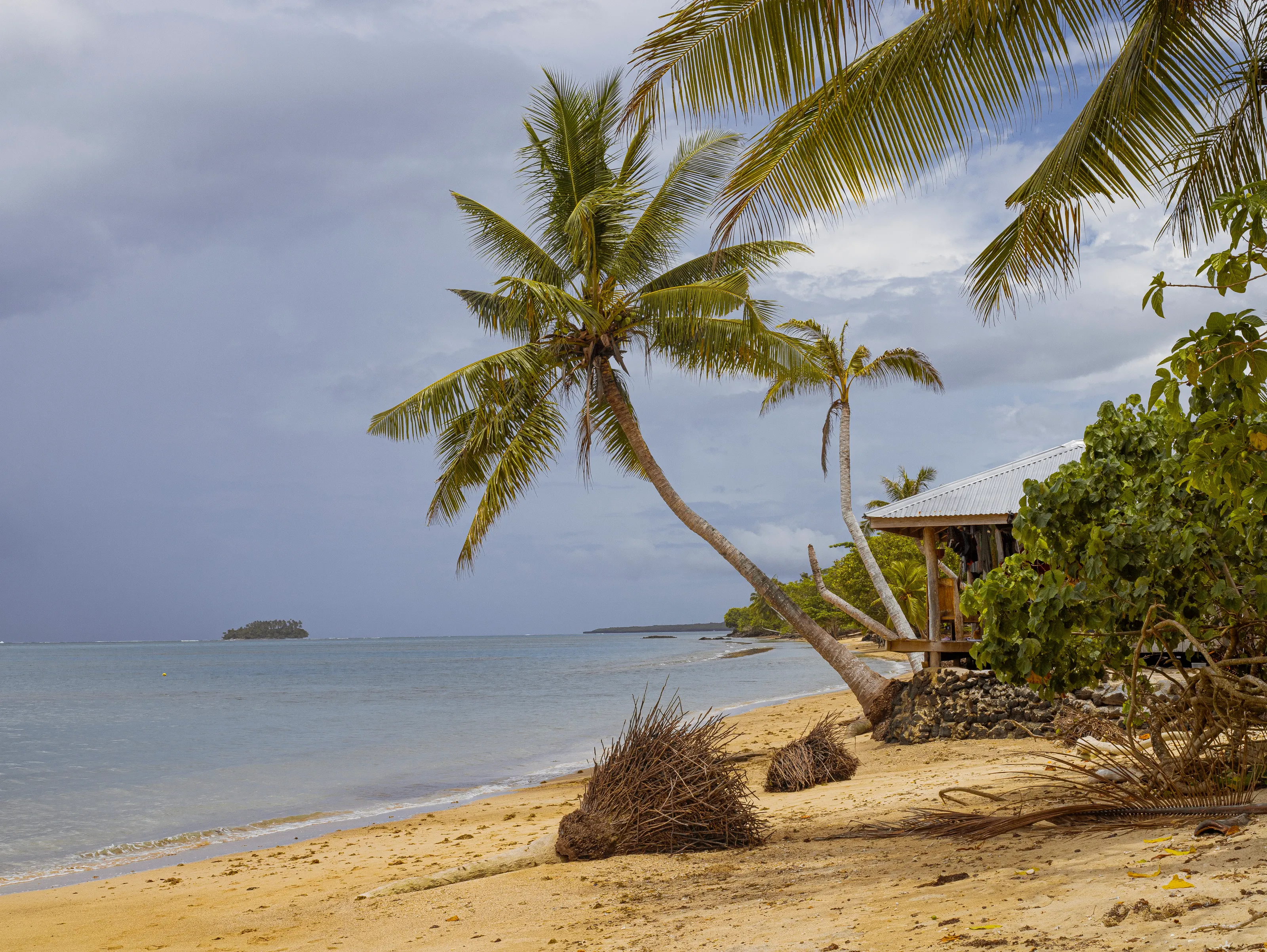
Apia in pictures
You might also like
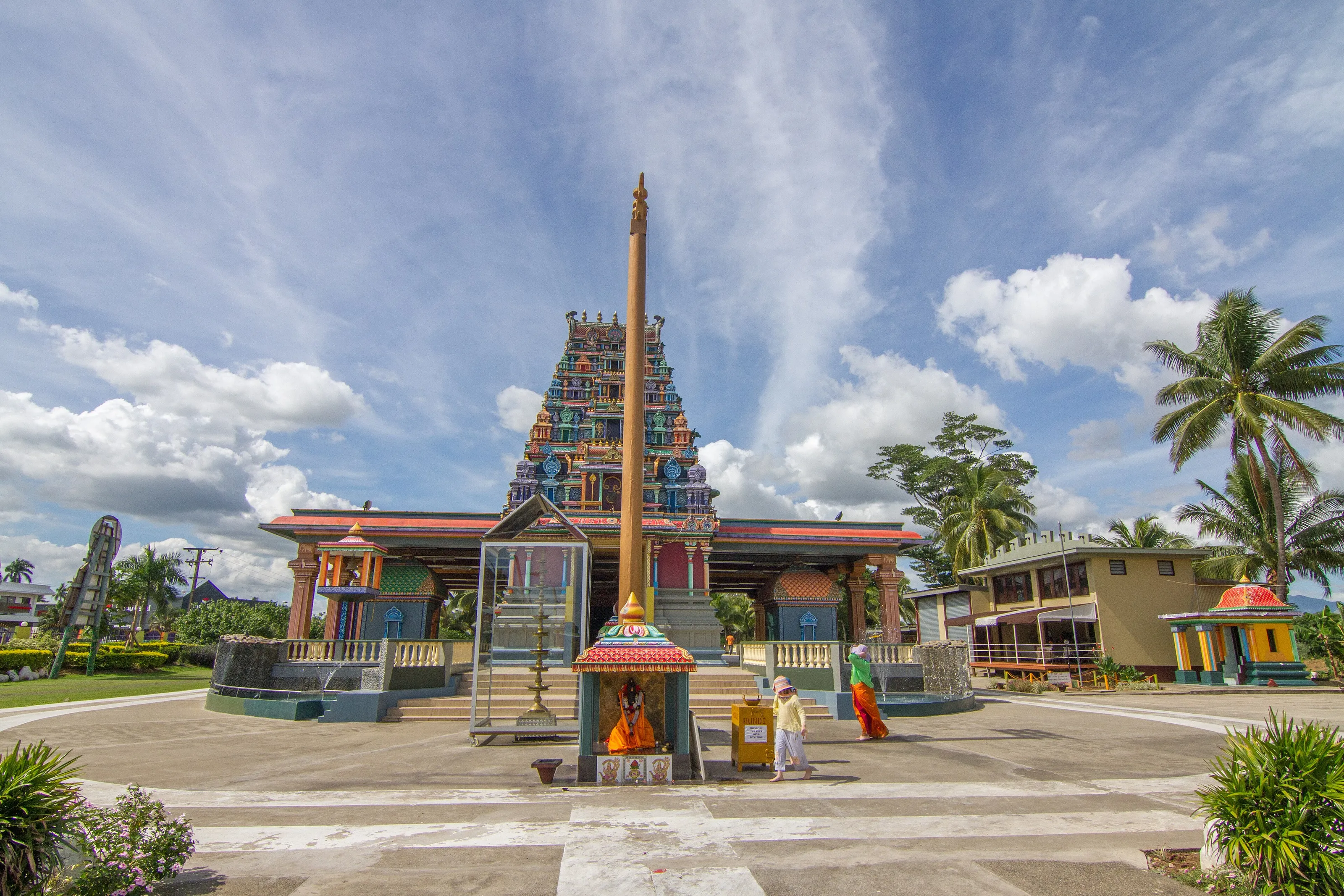
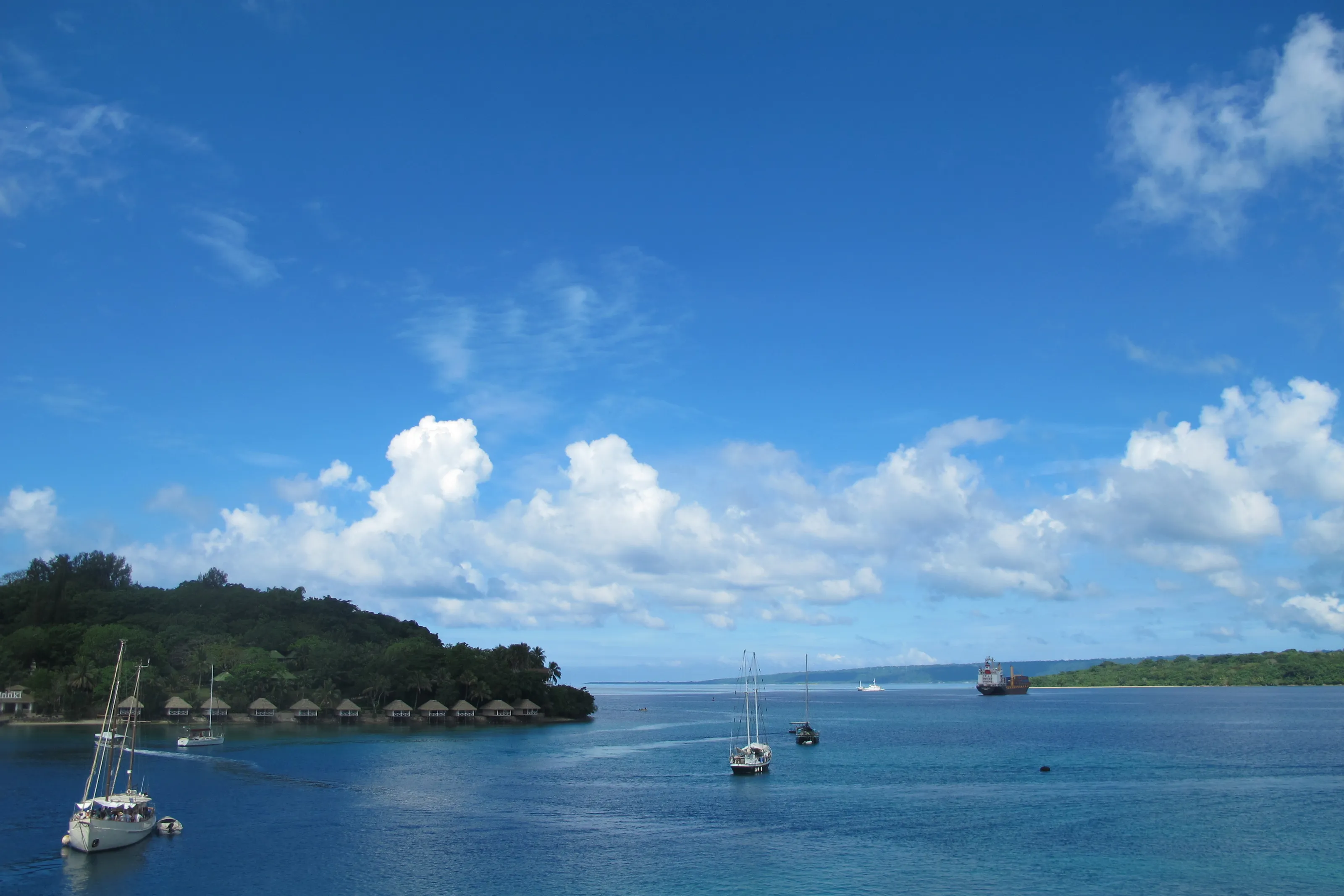
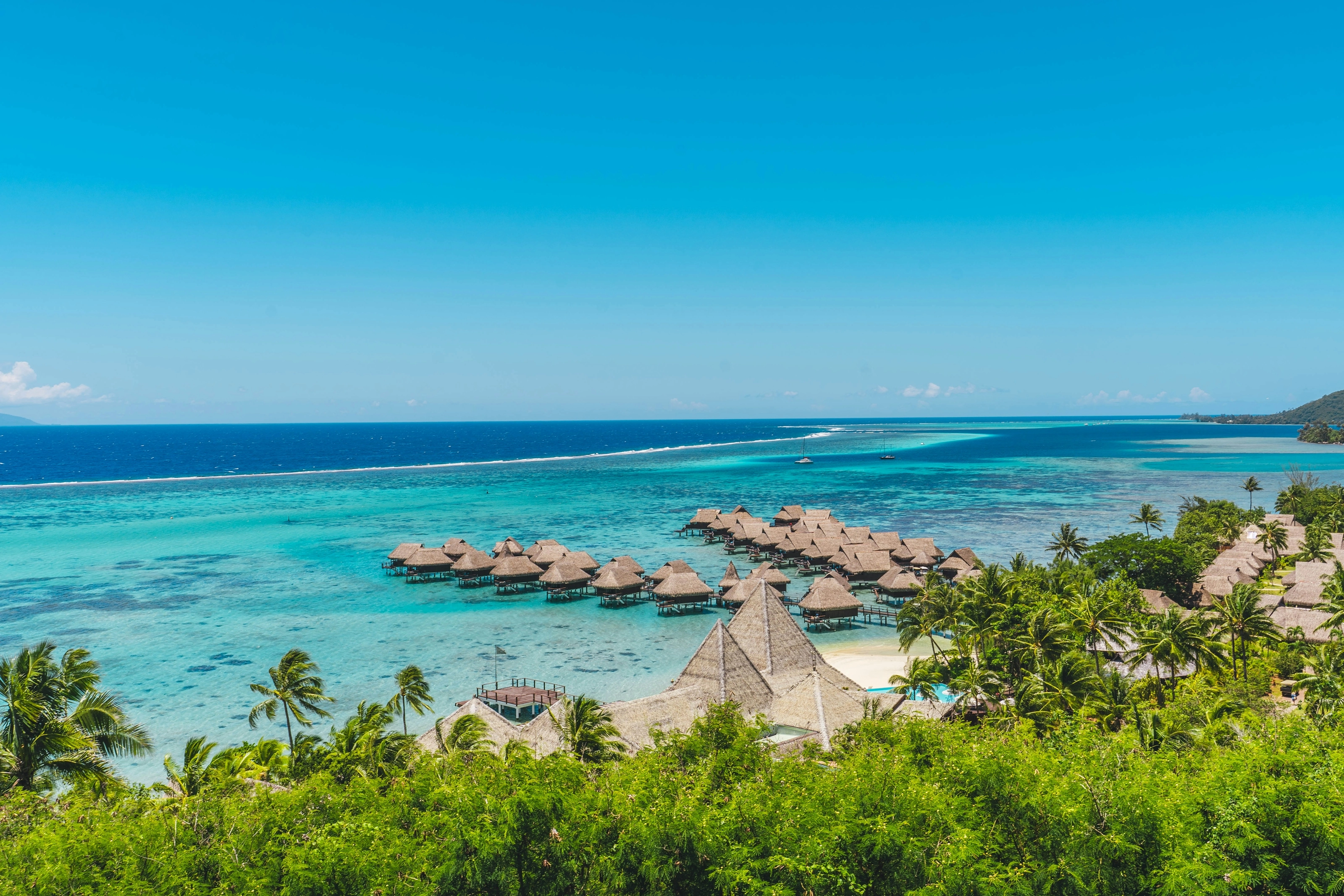
Similar destinations
FAQ
Frequently asked questions about flights to Apia
How far is Apia's airport from the city?
Faleolo International Airport is west of Apia, roughly 32 to 40 km depending on the source, about a 40-minute drive according to Wikipedia (EN, DE) and Wikivoyage (EN).
What is there to see in Apia?
The Vailima museum and Mount Vaea (Stevenson), the Museum of Samoa, the colonial courthouse, the clock tower and the markets according to Wikipedia (EN) and Wikivoyage (EN).
When is the best time to visit Apia?
Temperatures vary little. Rain is heaviest from December to March, and July and August are the driest months according to Wikipedia (EN). The cyclone season runs from November to April according to Wikivoyage (DE).
How do I get around Apia?
By taxi, with the fare agreed before the ride, by private bus, or on foot in the centre. Traffic drives on the left according to Wikipedia (EN).
What should I try in Apia?
Palusami, roast pig cooked in the umu, tropical fruit from the market and kava according to Wikivoyage (EN, ES).
How long should I stay in Apia?
One to two days for the town, three to add Vailima, Mount Vaea and the bay; most of Samoa lies beyond the city.
How much does a flight to Apia usually cost?
The price depends mostly on your departure city, the season and how early you book. The opportunities section above shows real examples of fares SniperAir has already detected to this destination.
How do I get alerted when a flight to Apia drops below my budget?
Create an alert profile with your departure airport, Apia as the destination and your maximum budget. You are notified automatically as soon as a matching fare is detected.
Ready to head to Apia?
Set your budget and let SniperAir monitor fares for you.
Create my alert