
Cheap flights to Maun
Set your departure airport and maximum budget: SniperAir tracks prices to Maun and alerts you the moment a deal matching your criteria appears.
Quick summary
Country
Botswana
Continent
Africa
Airport
MUB
Currency
Botswana pula (BWP)
Time zone
UTC+2 (CAT), no daylight saving
Deals already spotted to Maun
Real flight examples detected by SniperAir, with their reference price.
Loading examples…
Why track Maun with SniperAir
You do not need to compare prices every day
Choose your departure
Enter your departure airport and your maximum budget for a flight to Maun (MUB).
SniperAir keeps watch
Our systems continuously compare new prices with the real price history of the route. SniperAir monitors prices and alerts you: it does not sell or book tickets.
You receive an alert
As soon as a price matches your criteria, you are notified, without having searched for anything yourself.
Airport and getting into town
An airport close to the centre, and the starting point for small planes to the delta
Maun Airport (MUB)
Maun Airport is a few kilometres from the centre (2.5 to 5 km depending on the source), a few minutes by car. According to Wikivoyage, scheduled flights link it with Gaborone, Kasane, Victoria Falls and Johannesburg, as well as Cape Town and Windhoek; airlines and timetables change, so check them when you book. Wikipedia (DE) notes that it is among the busiest in the country thanks to the small aircraft carrying visitors and supplies to delta camps. 4x4 rental firms are based in town.
Approximate distances and times, per Wikivoyage (EN, FR, DE) and Wikipedia (EN, FR, DE, ES). Transport services change, so check them before you go. We do not quote fares.
Maun is regarded as the tourism capital of Botswana and the administrative centre of Ngamiland. Founded in 1915 as the capital of the Batawana, it stretches along the Thamalakane River at the south-eastern entrance to the Okavango Delta and the edge of the Kalahari. There is no town centre in the strict sense: the airport and its cafés, a few shopping centres and camps on the outskirts make up most of the town.
By road, daily buses link Gaborone in 9 to 10 hours and Francistown in about 5 to 6 hours, according to Wikivoyage; the A3 road passes through Nata. Distances are long and animals sometimes cross the road, so avoid driving after dark.
Landmarks
The Okavango Delta, the Thamalakane, elephants and the leopard
Maun is mainly a gateway: most of what you come for lies in and around the delta. The places below are illustrated; the Nhabe Museum and the Maun Education Park are described in text only.
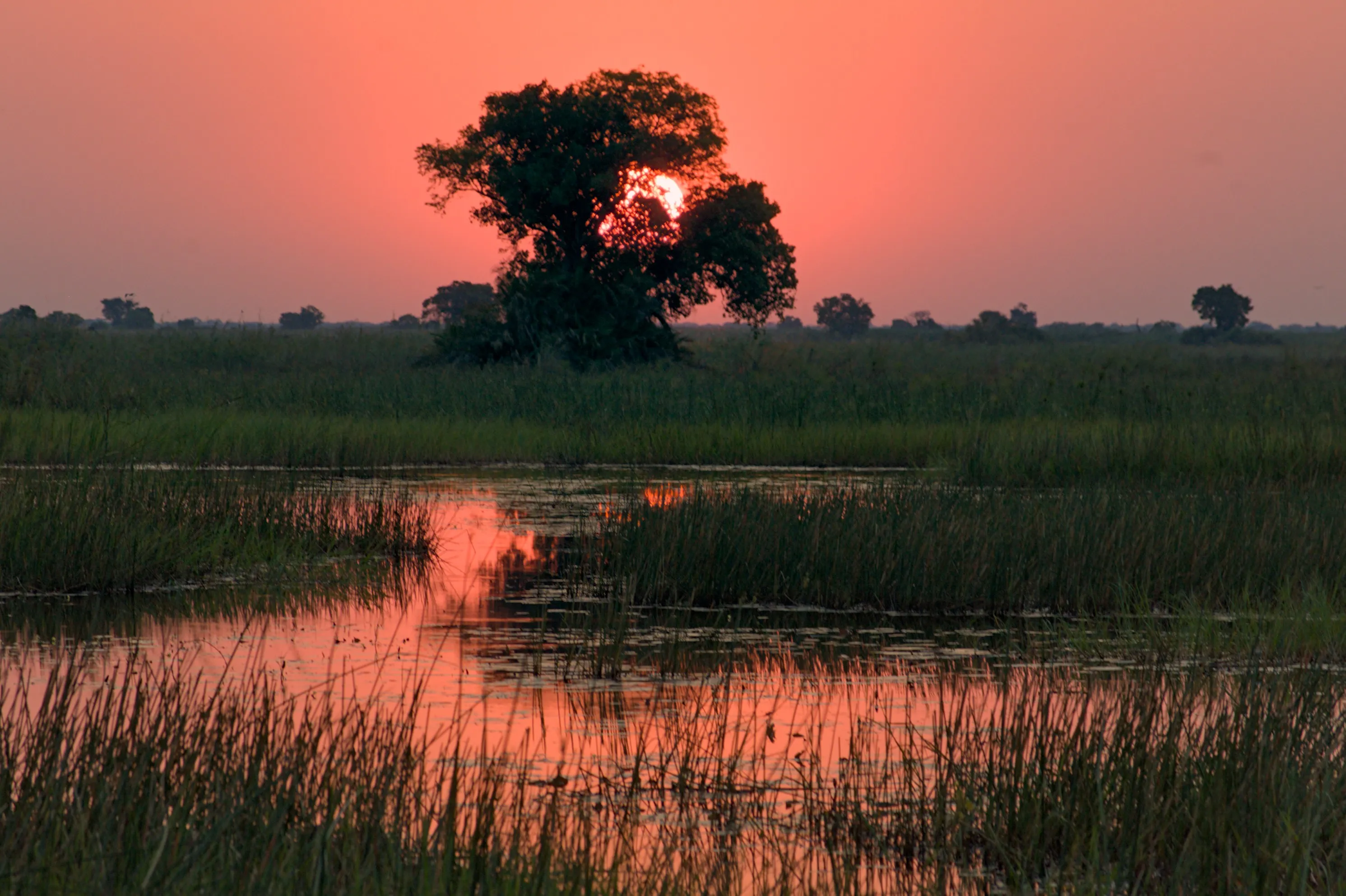
The Okavango Delta at dusk
Inscribed by UNESCO in 2014, the Okavango Delta is one of the world's largest inland deltas: the river disappears into the Kalahari instead of reaching the sea. Its waters come from the Angolan highlands and take about a month to arrive. At nightfall the pink and red light on reeds and big trees makes it a moment of calm.
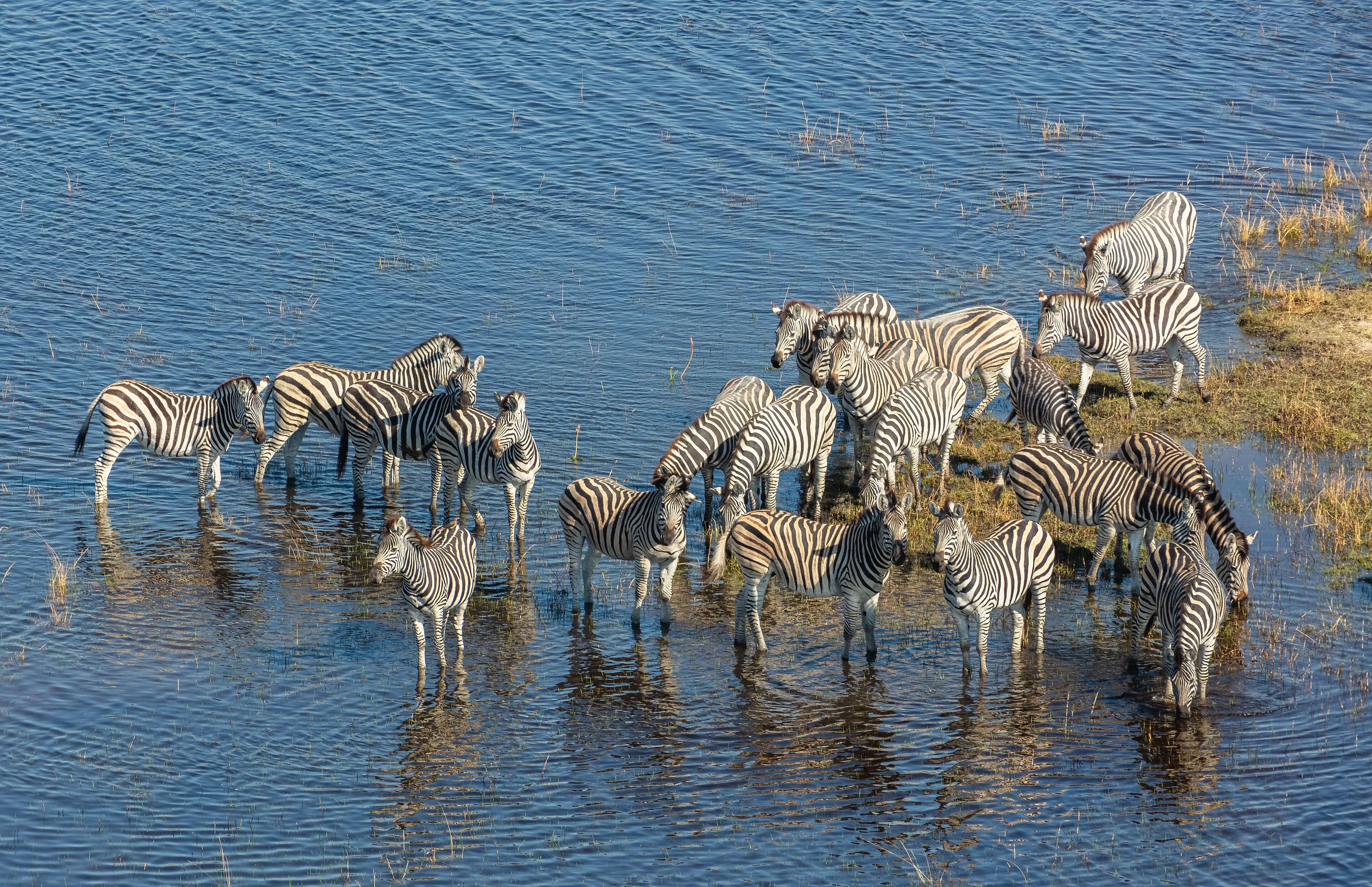
Zebras in the delta waters
The flood peaks from June to August, during Botswana's dry winter, which is when wildlife gathers around water. From the air the delta looks like a mosaic of channels, islands and lagoons where herds of zebra come to drink.
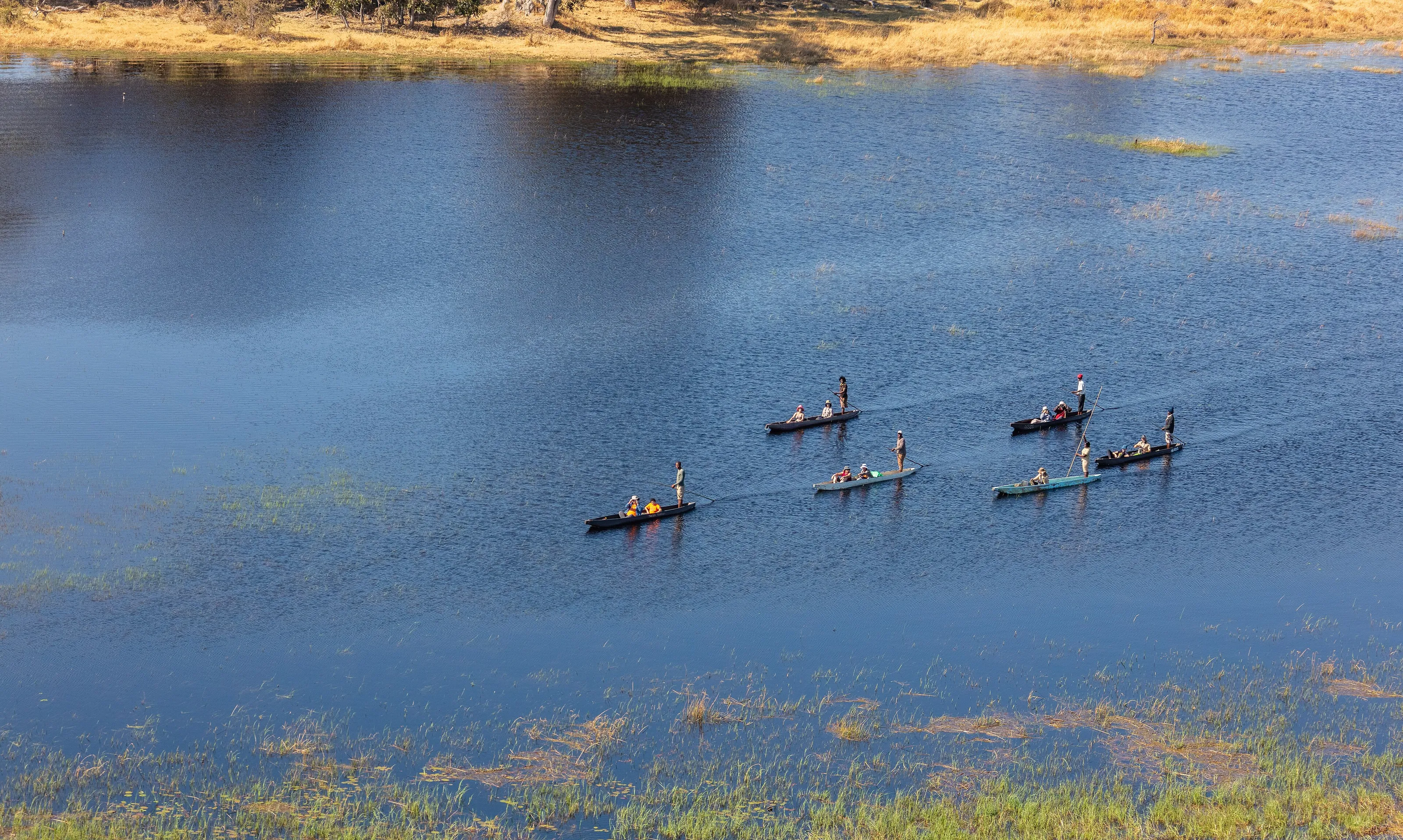
By mokoro along the channels
The mokoro, a traditional dugout canoe, is poled silently along shallow channels. It is the classic way to get close to the vegetation and birds, often combined with a walk on the islands. Delta camps are reached by small plane or by track; we do not name operators.
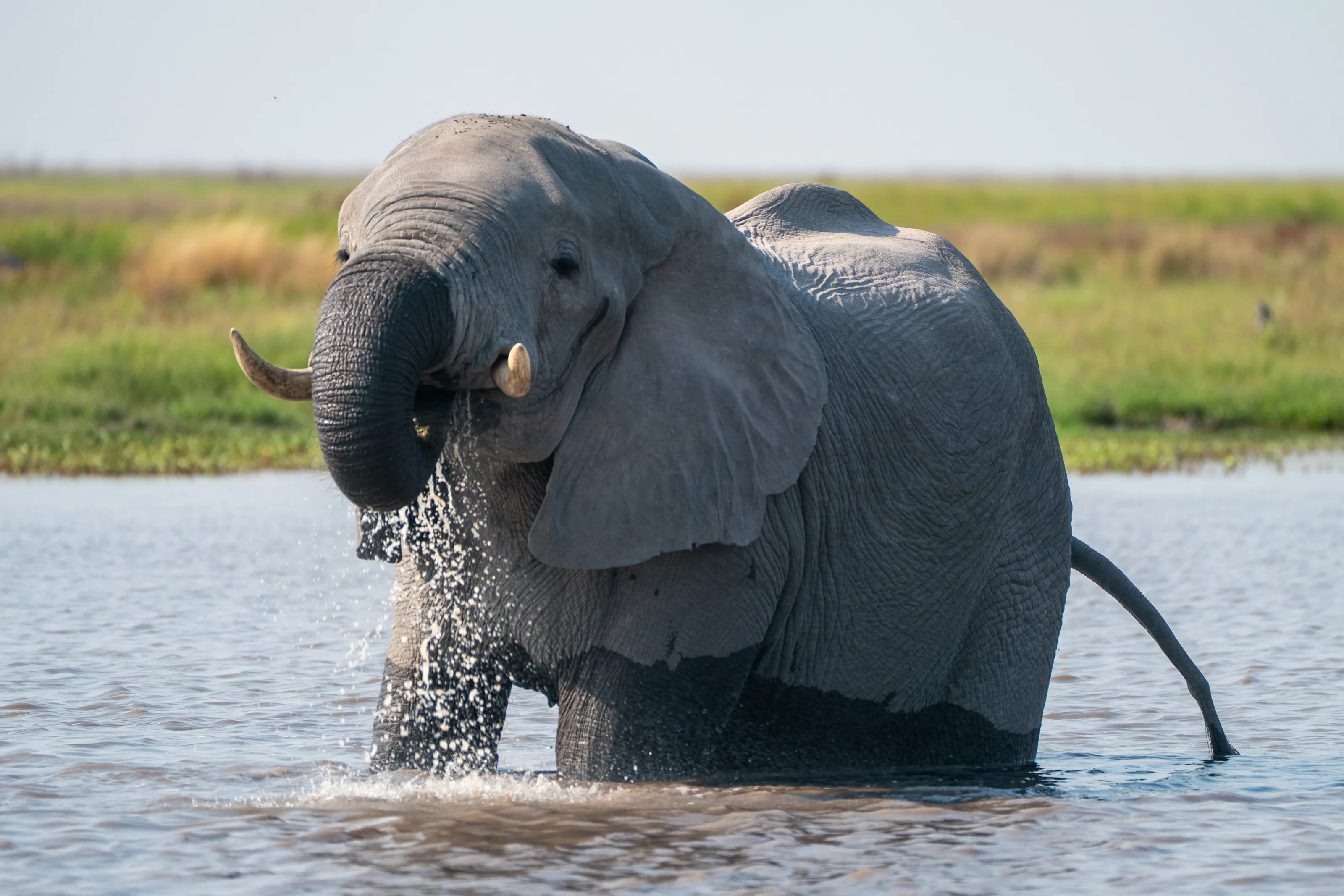
Elephants in the water
Elephants bathe and drink in the waters of the delta and its margins. Moremi Game Reserve, about 80 km from Maun according to Wikivoyage, is among the best-known places to see them. The animals are wild: keep your distance and follow guides' instructions.
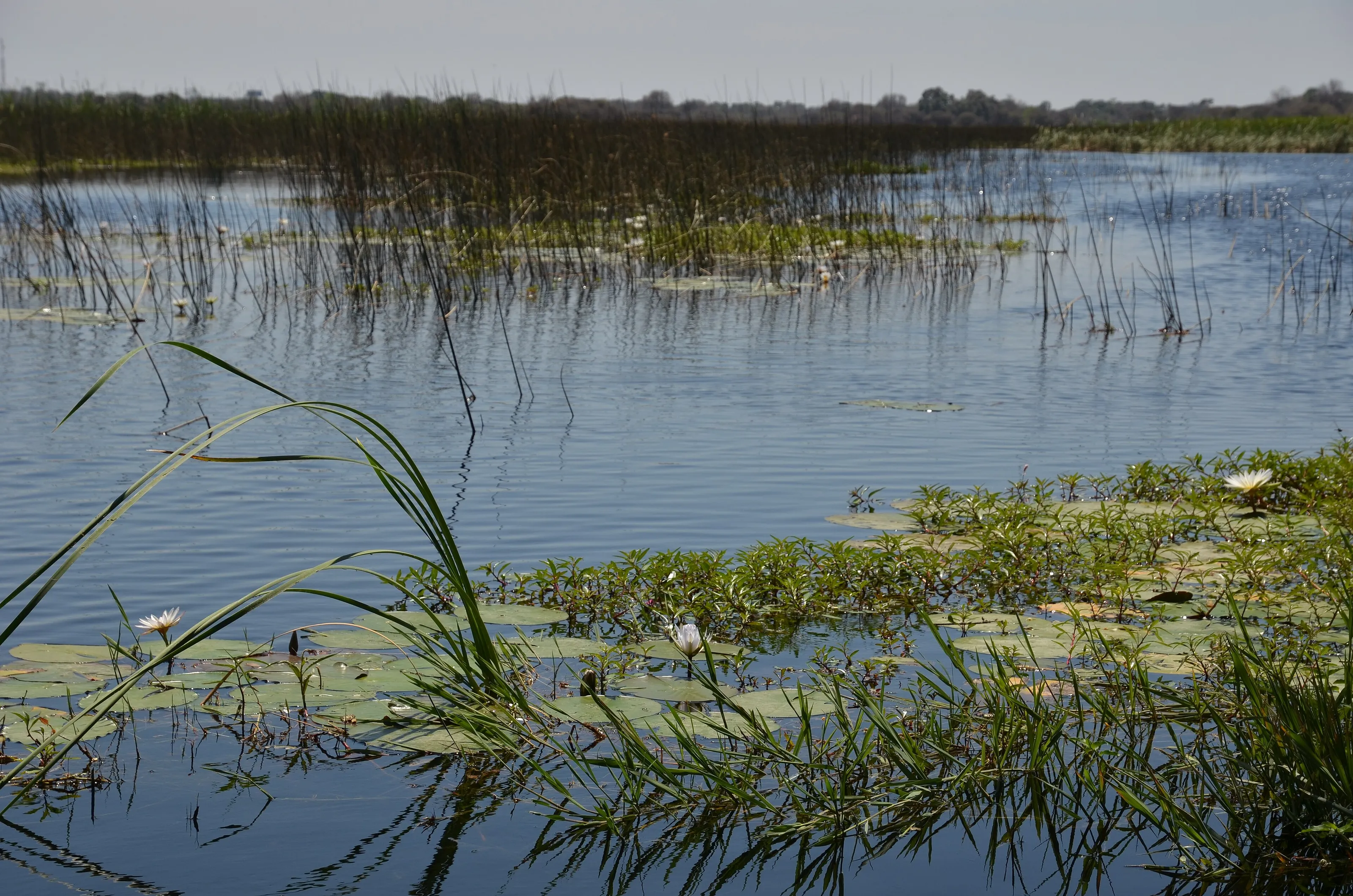
Water lilies, reeds and the Thamalakane
The name Maun is said to come from a word evoking the place of reeds. The Thamalakane River runs through the town, lined with reeds and water lilies; red lechwe sometimes graze there beside donkeys and goats that roam the streets freely.
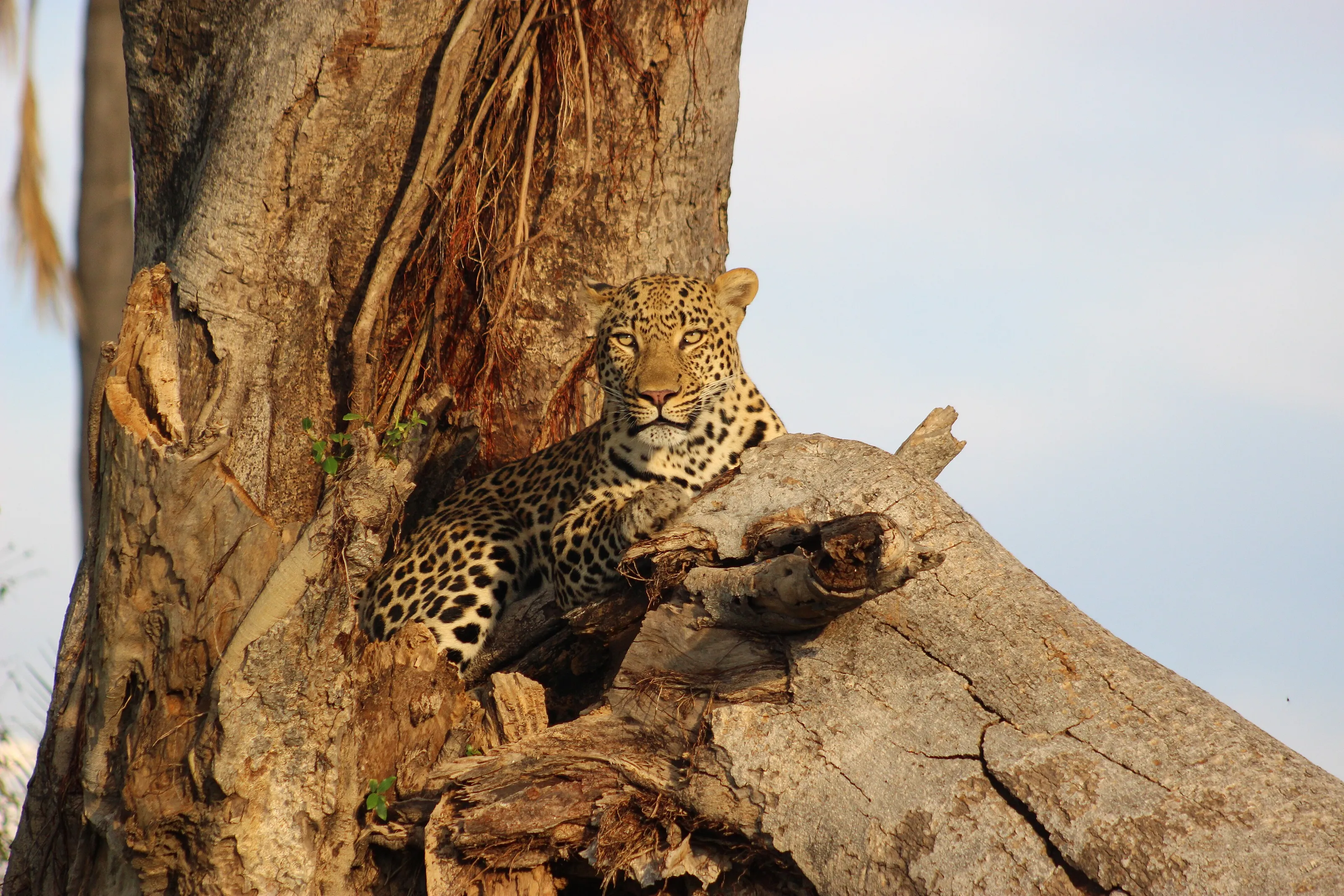
The leopard, a discreet animal
The leopard lives in the trees and island forests of the delta. It is rarely seen, mostly thanks to guides' sharp eyes and some luck, and never at touching distance. It stands for the wildest side of the delta.
In Maun itself, the Nhabe Museum holds regular exhibitions and the Maun Education Park, which you explore on foot, shelters giraffes, antelope and birds, according to Wikivoyage. From the town you can also reach the Makgadikgadi salt pans and the Tsodilo Hills, according to Wikipedia (FR). Access conditions and opening periods vary with the season: check before you go.
Museums and culture
Batawana culture, basketry and delta research
The Nhabe Museum
Maun's Nhabe Museum holds regular exhibitions, according to Wikivoyage, and a gift shop. It is the place to start for local history before heading to the delta. Hours and conditions change: we do not quote fares.
Basketry and crafts
The region's basketry is well known: you find it in the shops around the airport and in cultural centres on the outskirts, which also offer workshops. Woven palm-leaf baskets are classic souvenirs from Maun.
A research town for the Okavango
A University of Botswana field station and an Okavango research centre stand on the edge of town, according to Wikipedia (DE). Maun is also where the logistics of delta camps and conservation work are organised.
Food and drink
Papa, seswa and morogo: Botswana cooking
Staple dishes
The base of the diet is papa, a thick maize porridge. According to Wikivoyage, it is served with seswa (shredded beef or goat) and morogo, leafy greens similar to spinach. Magunya, fried dough balls, are eaten at any time of day.
A speciality to try
In season you will also find mopane worms, the caterpillars of the mopane moth, dried, salted, stewed or fried, according to Wikivoyage. This adventurous dish belongs to the traditional cooking of southern Africa.
Cafés and camps
Around the airport and along the road to Moremi, cafés and camp restaurants serve more international meals. At delta camps, meals are usually included in the stay. We do not name commercial addresses.
Getting around
On foot, by combi, by taxi or by 4x4
The centre on foot
Maun's core, between the airport and the shopping centre, can be walked, but it soon gets hot. Beyond that, especially towards the camps to the north-east, you need a vehicle.
Combis and taxis
Combis (minibuses) run on fixed routes from the bus station; taxis have no central dispatch, so you need a driver's number. You flag them down by hand, as Wikivoyage describes.
4x4 and small planes
Many visitors hire a 4x4 equipped for camping and the parks, or reach the delta camps by small plane. Driving at night is dangerous because of animals on the road, which US health authorities also warn about.
Budget and precautions
A budget that depends on the trip, malaria risk and caution
Price level
The cost of a stay in Maun and the delta depends mainly on the type of accommodation (camping, lodge, camp) and on small-plane transfers. The currency is the pula (BWP). We give no figures because we could not confirm them from two independent sources.
Flying
The flight is the most variable cost. SniperAir tracks prices to MUB and compares them with the route's history, but it does not sell or book tickets. Johannesburg (JNB), Cape Town (CPT), Windhoek (WDH) or Livingstone can be tracked in parallel.
Health and malaria
According to the US CDC, Ngamiland and Okavango are among the Botswana districts where malaria prophylaxis is recommended. Risk varies by region and season: see a doctor or a travel clinic before departure.
Safety and wildlife
Wikivoyage (DE) warns of thieves targeting passing tourists: keep your belongings close. Wild animals are unpredictable: do not approach them and follow instructions. Official advice differs by country of departure, so check your own government's guidance before you book.
When to go
A dry winter season and warm summer rains
Summer (December to February)
Strong heat, thunderstorms and humidity: this is the rainy season, lasting roughly December to April, with a green but less comfortable delta.
Autumn (March to May)
The rains withdraw and the flood reaches the delta: March to May is a transition period, already considered good for travel.
Winter (June to August)
Dry season: clear days, cold mornings, and peak flood from June to August, which draws wildlife. Dress in layers.
Spring (September to November)
August to October is the period most recommended by the tourist board; the heat builds towards October and November.
Maun has a hot semi-arid climate: hot, stormy summers and a dry winter with cool mornings. According to the tourist board (Visit Botswana), the best period runs from August to October, and March to November remains very good. We give no precise temperatures because we could not cross-check them; check the forecast before you travel.
By length of stay
What to do in Maun by length of stay
The essentials
A stop in Maun: Nhabe Museum, the Thamalakane River and preparations for the delta.
With the delta
Three to five days: a camp or a mokoro stay in the delta, with an excursion to Moremi.
Northern Botswana
Six days or more: add Chobe, the Makgadikgadi salt pans or Tsodilo, usually combining small planes and tracks.
In pictures
Maun and the delta in pictures
You might also like
Similar destinations
FAQ
Frequently asked questions about flights to Maun
How do I get from Maun airport to the centre?
The airport (MUB) is a few kilometres from the centre: a taxi or hire car takes a few minutes. Taxis have no central dispatch, so arrange a driver's number. Flight schedules change, so check them before you go.
When is the best time to visit Maun and the Okavango Delta?
The dry season, August to October, is the most recommended, and March to November remains good. The delta flood peaks from June to August. December to March is hot, stormy and humid.
Do I need malaria tablets?
The US CDC recommends prophylaxis for Ngamiland and Okavango. Risk varies by region and season, so see a doctor or a travel clinic before departure.
What is there to do in Maun itself?
Visit the Nhabe Museum, walk in the Maun Education Park, discover local basketry and watch the Thamalakane River. Most of what you come for, however, lies in the delta.
How do I get around Maun?
On foot in the central core, by combi on fixed routes or by taxi (no central dispatch). Many visitors hire a 4x4 or reach the camps by small plane. Avoid driving at night.
Is Maun safe?
Keep your belongings close, as in any tourist town, and respect wildlife. Official advice differs by country of departure, so check it before you book.
How much does a flight to Maun usually cost?
The price depends mainly on your departure city, the time of year and how far ahead you book. The "opportunities" section above shows real examples of prices SniperAir has already detected to this destination.
How do I get alerted when a flight to Maun drops below my budget?
Create an alert profile with your departure airport, Maun as the destination and your maximum budget. You are notified automatically as soon as a matching price is detected.
Ready to head to Maun?
Set your budget and let SniperAir monitor fares for you.
Create my alert