

Cheap flights to Cairo
Set your departure airport and your maximum budget: SniperAir tracks prices to Cairo and alerts you the moment an opportunity matches your criteria.
Quick summary
Country
Egypt
Continent
Africa
Airports
CAI · SPX
Greater Cairo population
20M+
Currency
Egyptian pound (EGP)
Time zone
UTC+2
Deals already spotted to Cairo
Real flight examples spotted by SniperAir, with their reference price.
Loading examples…
Identity
A vast historic city at the edge of the desert
Cairo is far more than the gateway to the pyramids. The Greater Cairo metropolitan area is home to well over 20 million people, making it one of the largest urban regions in Africa and the Arab world. The city stretches across both sides of the Nile and brings together several very different layers of Egyptian history within a single metropolitan area.
To the east, the old Islamic quarters preserve mosques, madrasas and streets shaped over centuries. Downtown Cairo reflects the ambitions of the 19th and early 20th centuries, with broad avenues and European-influenced architecture. Across the river, Giza leads towards one of the most extraordinary transitions in any major city: apartment blocks and busy roads gradually give way to the desert plateau where the pyramids have stood for roughly 4,500 years.
The Nile remains the geographical backbone of Cairo. Zamalek and Gezira sit on islands in the river, while districts such as Downtown, Islamic Cairo, Heliopolis, Dokki and Giza each offer a different atmosphere. That mixture is what makes visiting Cairo so distinctive — ancient Egypt, medieval Islamic architecture, Coptic heritage, modern urban life and contemporary museums coexist within the same enormous city. For travellers searching for things to do in Cairo, the challenge is therefore not finding enough attractions, but deciding how to organise them without spending too much time crossing the city.
Don't miss
The Pyramids of Giza and the Great Sphinx
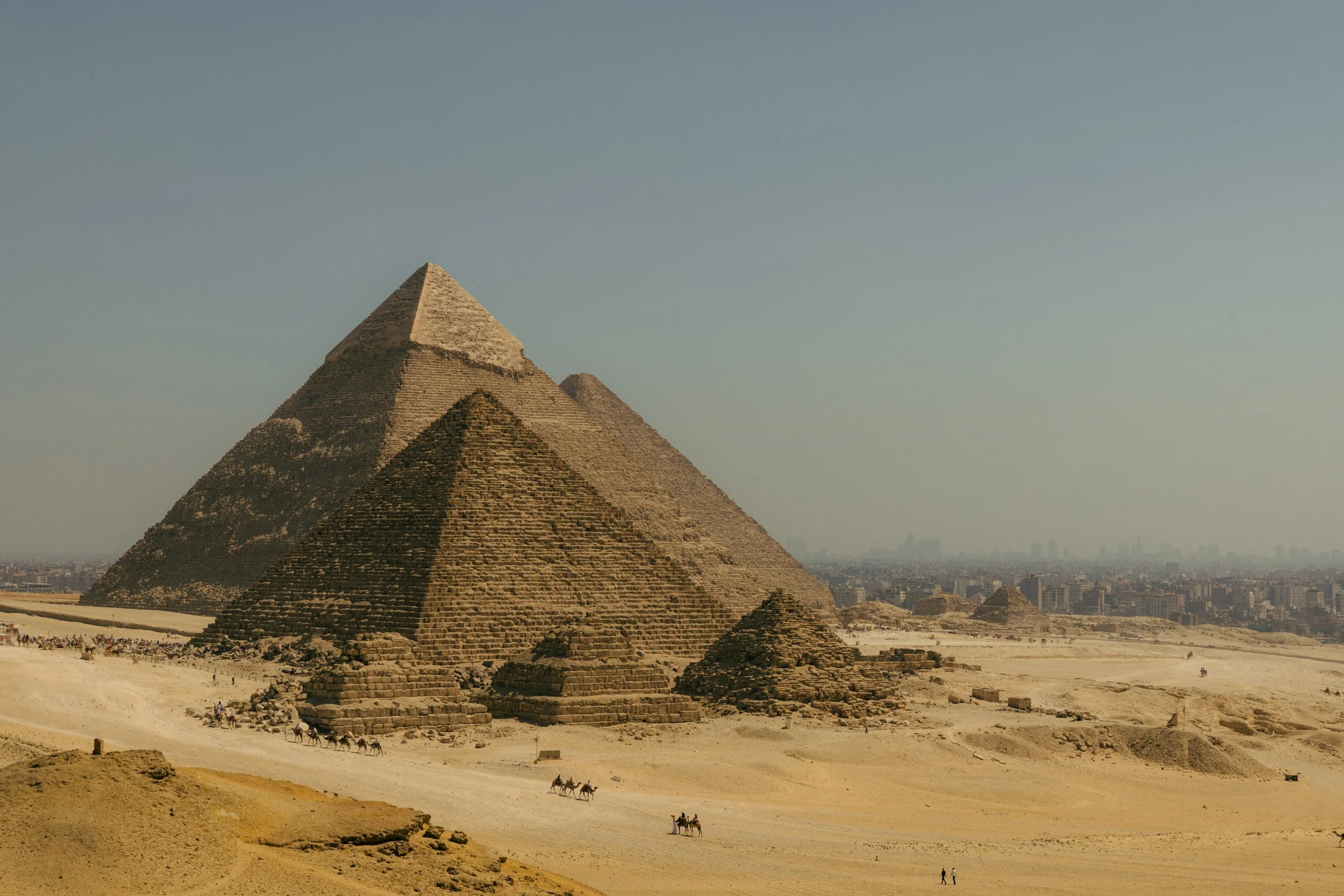
The Giza Plateau is home to the Great Pyramid of Khufu, the pyramids of Khafre and Menkaure, several smaller structures and the Great Sphinx. The Great Pyramid is the last surviving Wonder of the Ancient World and remains one of the most recognisable monuments on Earth.
A visit to Giza is much more rewarding when treated as an archaeological landscape rather than a quick photo stop. The three major pyramids belong to larger funerary complexes, and different viewpoints across the plateau reveal how the monuments relate to one another and to the surrounding desert. Depending on access conditions and the type of ticket purchased, visitors may also be able to enter the interior of certain pyramids. A guided Giza pyramids tour can be especially useful for understanding the history of the site, the Old Kingdom and the construction of the royal necropolis. Private and small-group excursions are also practical because of the size of the plateau and the distances between different viewpoints.
Discover
The Grand Egyptian Museum
The Grand Egyptian Museum has become one of the major cultural attractions in Greater Cairo. Located close to the Giza Plateau, the museum was designed to place the story of Ancient Egypt within a modern setting while maintaining a strong visual connection with the pyramids. The complex holds more than 100,000 artefacts and brings together the complete Tutankhamun collection in one institution.
Visitors enter through monumental spaces where large-scale pieces immediately establish the scale of the collection. Among the most impressive features is the colossal statue of Ramesses II, while the galleries devoted to Tutankhamun give the objects from the young pharaoh's tomb a far more extensive presentation than was previously possible.
For a first visit to Cairo, combining the Pyramids of Giza and the Grand Egyptian Museum across one full day or two half-days is one of the most logical ways to organise the western side of the city. Tickets, opening hours and timed-entry arrangements should always be checked before visiting.
Heritage
Islamic Cairo: centuries of architecture in one district
Historic Cairo is one of the richest urban heritage areas in the Middle East. Founded as a Fatimid capital in the 10th century, the city developed into a major political, religious, commercial and intellectual centre. Today, the old districts contain architecture from the Fatimid, Ayyubid, Mamluk and Ottoman periods.
One of the best places to begin is Al-Muizz Street. The street passes mosques, madrasas, mausoleums, historic houses, fountains and gates that reveal several centuries of urban history. Bab al-Futuh and Bab Zuweila still recall the period when Cairo was enclosed by defensive walls. Late afternoon and early evening can be especially atmospheric, when historic façades are illuminated and the streets become more animated. A guided Islamic Cairo tour is particularly worthwhile for visitors who want to understand the differences between the various architectural periods rather than simply walking past the monuments.
Discover
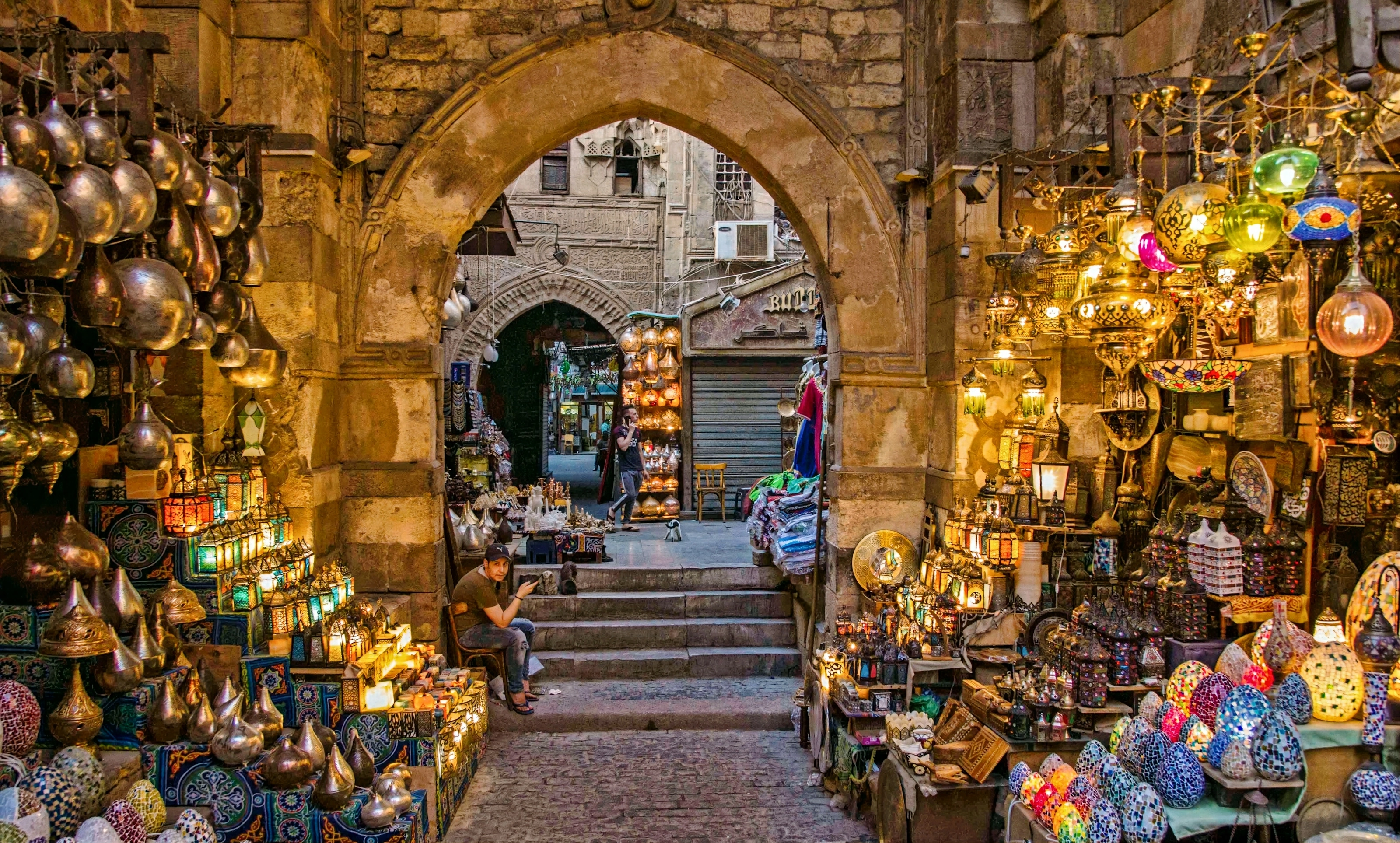
Khan el-Khalili: markets, workshops and historic cafés
Khan el-Khalili is one of Cairo's best-known historic market districts. Its roots go back to the Mamluk period, when the area developed into an important centre of trade. Today, its narrow streets are filled with jewellery shops, perfume sellers, spice stalls, textiles, lamps, copperware, souvenirs and traditional crafts. The experience changes noticeably once you move beyond the busiest tourist lanes: small workshops, old passageways and traditional cafés reveal a more local side of the district. The area around Al-Hussein Mosque and Al-Azhar becomes especially lively in the evening. For travellers interested in both food and history, Cairo food tours and guided walks through Khan el-Khalili can offer a more structured introduction to the neighbourhood.
Discover
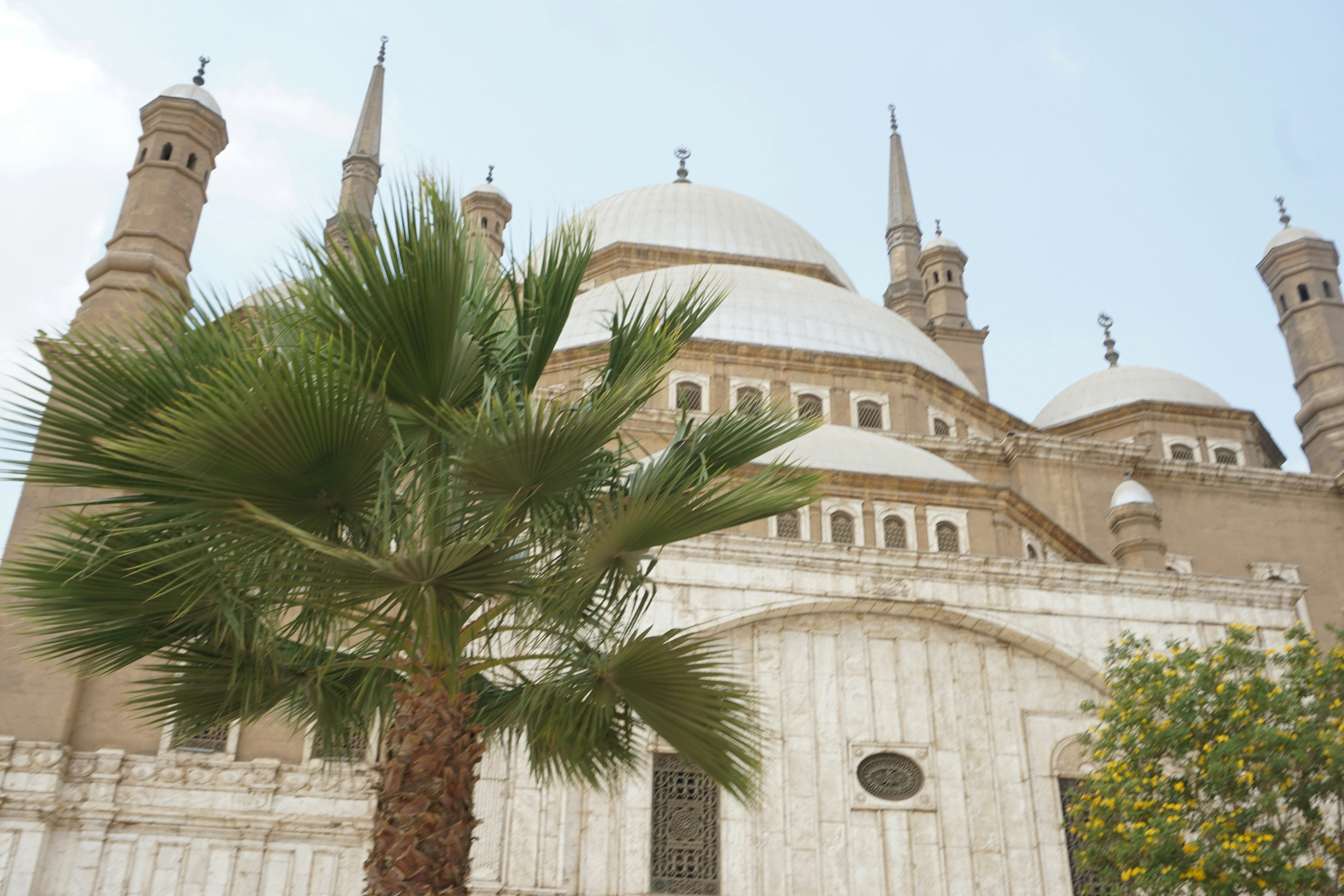
The Citadel of Saladin and the Mosque of Muhammad Ali
The Citadel of Saladin rises above Cairo from the Mokattam hills. Its origins date to the late 12th century, and for centuries the complex served as one of the main centres of political power in Egypt. Today, the most recognisable structure inside the Citadel is the Mosque of Muhammad Ali — often called the Alabaster Mosque because of the pale stone used in much of its interior and lower walls, it was built in the 19th century and shows strong Ottoman architectural influence, with its large central dome and slender minarets dominating the skyline. The terraces of the Citadel provide one of the best elevated views over Cairo; on clear days, the pyramids can sometimes be seen far in the distance, giving visitors a striking sense of the scale of the metropolitan area. The Citadel can easily be combined with the Sultan Hassan Mosque, Al-Rifa'i Mosque or a broader Islamic Cairo itinerary.
Discover
Coptic Cairo and the older layers of the city
Old Cairo offers a completely different atmosphere. This part of the city includes areas connected with ancient Fustat and some of the most important sites in the history of Egyptian Christianity. The Hanging Church, known as Al-Muallaqa, is one of the best-known landmarks — it was built above parts of the old Roman fortress of Babylon and remains a key site for Coptic Christian heritage. Nearby are the Church of Saints Sergius and Bacchus, the Coptic Museum and the Ben Ezra Synagogue. The concentration of Christian, Jewish and Islamic heritage in the same area makes Old Cairo one of the most interesting districts for travellers who want to understand how many different communities shaped the city over time.
Museum
The National Museum of Egyptian Civilization
The National Museum of Egyptian Civilization in Fustat takes a broader approach than most archaeological museums. Instead of focusing almost exclusively on Ancient Egypt, it follows the development of Egyptian civilisation from prehistoric periods through later historical eras and into modern times. One of its best-known sections is the Royal Mummies Gallery, presenting several royal mummies in a specially designed environment that explains burial traditions, preservation and the wider cultural context of ancient Egyptian funerary practices. The museum works particularly well as part of a day combining Coptic Cairo, Fustat and the southern historic districts.
Museums
The Egyptian Museum in Tahrir still matters
The opening of the Grand Egyptian Museum has not made the historic Egyptian Museum in Tahrir irrelevant. Opened in 1902, the building itself is part of Cairo's cultural identity. Although important collections have been moved or reorganised over the years, the museum still houses a vast range of archaeological material.
For visitors with a strong interest in Egyptology, Cairo's three major museums now offer different experiences rather than simply competing with one another: the Grand Egyptian Museum provides a modern, large-scale presentation and the complete Tutankhamun collection; the Egyptian Museum in Tahrir offers the atmosphere of a historic institution; the National Museum of Egyptian Civilization gives a broader chronological view and is especially known for the Royal Mummies Gallery.
Discover
Downtown Cairo and the Khedivial city
Central Cairo tells a very different story from the medieval quarters. During the 19th century, Egypt's rulers sought to modernise parts of the capital using urban models inspired by major European cities. Around Tahrir Square, Talaat Harb and the surrounding avenues, visitors can still see buildings with neoclassical, Art Deco and European-inspired façades. Wrought-iron balconies, old passageways, historic cafés and former cinemas reveal a Cairo associated with the late 19th and early 20th centuries. Travellers who only visit Giza and Khan el-Khalili miss this important layer of the city — a walk through Downtown helps explain how Cairo developed into the modern metropolis seen today.
The Nile
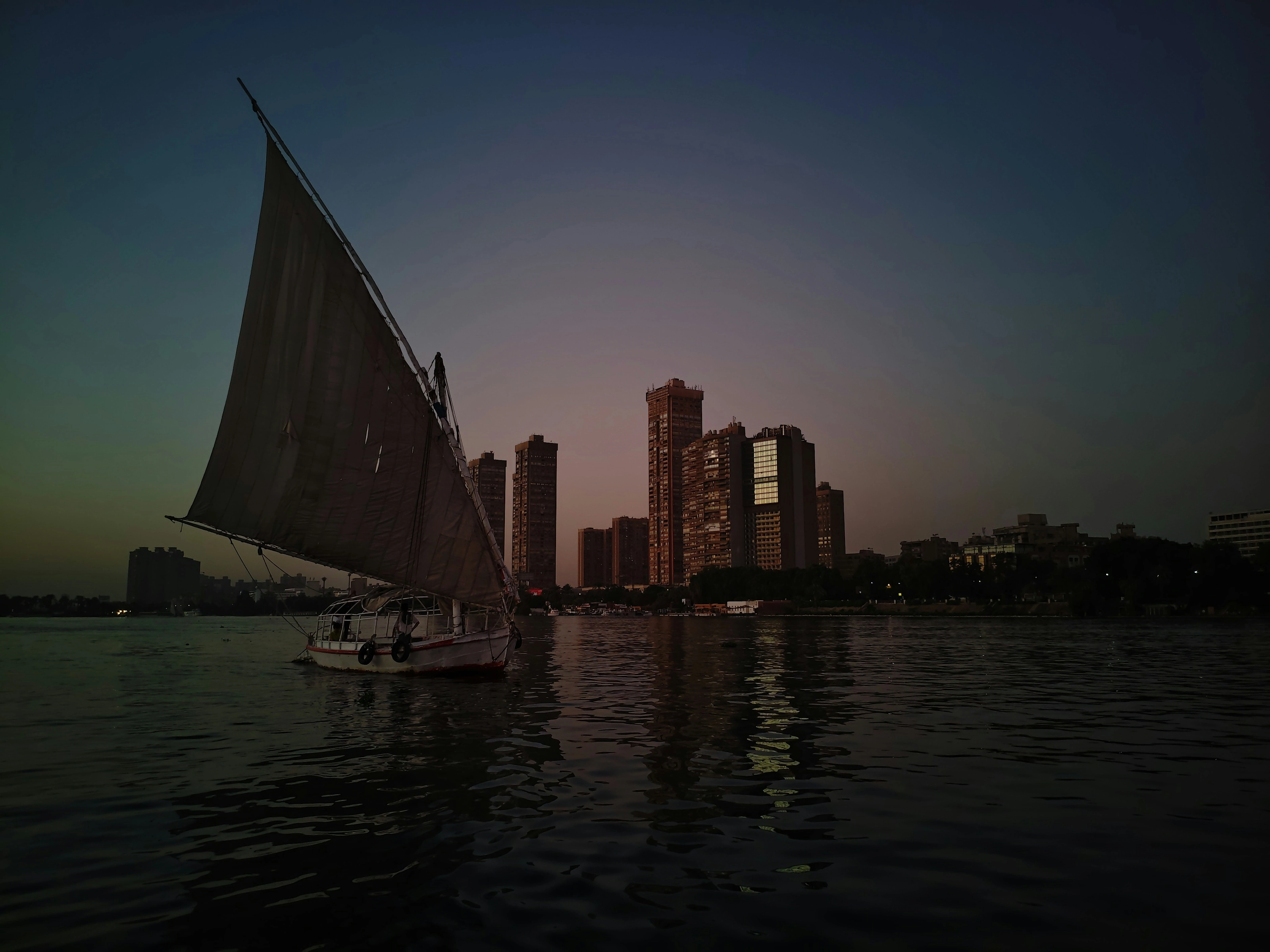
Zamalek, feluccas and sunset on the river
The Nile continues to shape everyday life in Cairo. On Gezira Island, Zamalek offers a calmer atmosphere than many of the city's busiest districts — embassies, galleries, restaurants, cafés and leafy streets make it a popular area for both residents and visitors. At the end of the day, a felucca ride on the Nile is one of the simplest ways to escape the traffic: these traditional sailing boats offer a quieter experience than larger cruise vessels and are particularly popular around sunset. Dinner cruises and other Nile experiences are also available, depending on the style of trip you are looking for.
Food
Koshari, taameya and everyday Cairo cuisine
Cairo's food culture is often at its best in simple local restaurants and street-food spots.
Koshari — a filling mixture of rice, lentils, pasta, chickpeas, fried onions and tomato sauce. It is one of Egypt's most recognisable everyday dishes.
Ful medames — slow-cooked fava beans are commonly eaten for breakfast and may be served with olive oil, lemon, spices, vegetables and bread.
Taameya — the Egyptian version of falafel is traditionally made with fava beans rather than chickpeas.
Feteer meshaltet — a layered Egyptian pastry that can be served in savoury or sweet versions.
Desserts — konafa, basbousa and om ali are among the sweets worth trying during a stay in Cairo.
Food tours, market walks and guided tasting experiences can be a good way to discover dishes that visitors might otherwise overlook.
Day trip
Saqqara, Memphis and Dahshur
Travellers interested in Ancient Egypt should not stop at Giza. South of Cairo, Saqqara is one of the most important archaeological areas in the country: the Step Pyramid of Djoser represents a major turning point in the development of monumental stone architecture. Further south, Dahshur contains the Bent Pyramid and the Red Pyramid — essential for understanding the architectural experiments that eventually led to the Great Pyramid of Giza. The ancient site of Memphis is often added to the same excursion. A full-day trip combining Saqqara, Memphis and Dahshur is one of the best ways to gain a deeper understanding of pyramid development and the history of the Old Kingdom.
Getting around
How to move around Cairo
Cairo is enormous, and traffic can be intense. The easiest way to organise sightseeing is by geographical area rather than attempting to cross the city several times in one day: Giza and the Grand Egyptian Museum belong naturally together, Islamic Cairo/Khan el-Khalili/the Citadel form another practical group, and Coptic Cairo/Fustat/the National Museum of Egyptian Civilization can also be combined.
The metro can be useful on routes served by the network and sometimes saves considerable time compared with road traffic. Ride-hailing services are also widely used. Walking works well within specific neighbourhoods such as Al-Muizz, Khan el-Khalili and parts of Zamalek, but Cairo is far too large to explore entirely on foot.
Good to know
Cairo is easier when planned neighbourhood by neighbourhood
A first visit to Cairo can feel intense: traffic, crowds, street vendors, noise and long distances all form part of the experience. Trying to see too much in one day usually makes the trip less enjoyable — a better strategy is to dedicate each day to one broad area of the city. For major attractions such as the Pyramids of Giza, the Grand Egyptian Museum and popular private tours, booking in advance can also save time.
Travel advice and local conditions can change, so visitors should always check current official guidance shortly before departure rather than relying on general claims that a particular district is always safe.
By trip length
What to do in Cairo depending on how long you stay
1-2 days — The essentials. Spend one day around the Pyramids of Giza and the Grand Egyptian Museum. Use the second day for Islamic Cairo, Al-Muizz, Khan el-Khalili and the Citadel.
3 days — Understand more of the city. Add Coptic Cairo, Fustat, the National Museum of Egyptian Civilization and an evening in Zamalek or on the Nile.
4-5 days — Go deeper into Egyptian history. Plan a full-day excursion to Saqqara, Memphis and Dahshur. Keep additional time for the Egyptian Museum in Tahrir and Downtown Cairo.
One week. A longer stay allows Cairo to become the starting point for a wider Egypt itinerary, with possible onward travel to Alexandria, Luxor, Aswan, Hurghada or Sharm el-Sheikh depending on the kind of journey you want.
When to go
What is the best time to travel to Cairo?
October to April
Generally the most comfortable period for outdoor sightseeing, with more moderate temperatures at Giza, Saqqara and the historic districts.
May & September
The heat is more noticeable, but sightseeing remains manageable if outdoor visits are concentrated in the morning and late afternoon.
Summer (June-August)
Hot and dry. For the pyramids and other exposed archaeological sites, an early start can make a substantial difference.
Winter
Days are often pleasant, while evenings can feel cooler than many travellers expect from a desert destination.
Cairo airports
Two airports to consider for Greater Cairo
Cairo International Airport
Egypt's main aviation hub, located northeast of the central city. It serves a wide network of destinations across Africa, Europe, the Middle East and beyond, and offers the broadest selection of routes to Cairo.
Sphinx International Airport
A second option, particularly for travellers whose itinerary is centred on Giza, the Grand Egyptian Museum or western Greater Cairo. Its route network is smaller than Cairo International's, but when a suitable flight is available it can be worth comparing both airports.
Travel time from CAI towards Downtown or Giza can vary greatly with traffic, so it's better not to rely on a fixed transfer duration.
Things to do in Cairo
Activities and tickets to book on site
A real selection, with up-to-date prices and reviews, provided by our partners.
Why track Cairo with SniperAir
You don't need to check flight prices every day
Choose your departure
Select your departure airport and set the maximum amount you are willing to pay for a flight to Cairo.
SniperAir monitors the route
Newly detected fares are compared with the actual historical pricing of the route, making it easier to spot a genuinely unusual price.
Get notified
When a fare matches your criteria, SniperAir can alert you without requiring you to repeat the same search every day.
For a destination such as Egypt, this can be particularly useful when your travel dates or departure airports are flexible. Once a flight starts to look interesting, you can also explore experiences available in Cairo: Giza pyramids tours, Saqqara and Dahshur excursions, Grand Egyptian Museum visits, Islamic Cairo walking tours, Khan el-Khalili experiences, private Old Cairo tours, Nile felucca rides, food tours and other activities.
FAQ
Frequently asked questions about flights and travel to Cairo
What is the main airport in Cairo?
Cairo International Airport, code CAI, is the main airport serving the Egyptian capital and the country's largest aviation hub. Sphinx International Airport, SPX, can also be useful for some itineraries, especially around Giza.
What is the difference between CAI and Sphinx Airport SPX?
CAI offers a much larger choice of international routes and is located northeast of central Cairo. SPX is west of the city and can be convenient for Giza and the Grand Egyptian Museum when the required flight route is available.
How many days do you need in Cairo?
Three days is a good minimum for a first visit. Four or five days provide enough time to add Saqqara, Dahshur, the major museums and different neighbourhoods without rushing.
Can you visit the Pyramids of Giza and the Grand Egyptian Museum on the same day?
Yes. They are located relatively close to one another and make a logical combination. A full day is preferable if you want to explore both properly rather than rushing through the sites.
Is the Grand Egyptian Museum fully open?
Yes. The museum is now fully open to visitors. Travellers should still check current opening hours, timed-entry rules and ticket availability before visiting.
What can you see in Cairo besides the pyramids?
Highlights include Islamic Cairo, Khan el-Khalili, the Citadel, Coptic Cairo, the Egyptian Museum in Tahrir, the National Museum of Egyptian Civilization, Downtown Cairo, Zamalek and the Nile.
What is the difference between the Grand Egyptian Museum, the Egyptian Museum and the NMEC?
The Grand Egyptian Museum offers a modern presentation of Ancient Egyptian collections and the complete Tutankhamun collection. The Egyptian Museum in Tahrir retains the atmosphere of Cairo's historic archaeological museum. The NMEC presents a broader view of Egyptian civilisation and is especially known for its Royal Mummies Gallery.
Are Saqqara and Dahshur worth visiting from Cairo?
Yes, especially for travellers interested in Ancient Egypt. They help explain how pyramid architecture evolved before the construction of the Great Pyramid at Giza.
What is the best time of year to visit Cairo?
October to April is generally the most comfortable period for sightseeing. Summer can be very hot, especially at exposed archaeological sites.
What is the best way to get around Cairo?
A combination of metro, ride-hailing services, private transfers and walking within individual neighbourhoods works best. Planning each day around one geographical area can save a great deal of time.
How can I find cheap flights to Cairo?
Compare several departure airports when possible, remain flexible with dates and monitor fare changes over time rather than relying on one search. The "deals" section above shows real prices already spotted by SniperAir for this destination.
How can I get notified when a flight to Cairo falls below my budget?
Set your departure airport and maximum budget in SniperAir. When a detected fare matches your criteria, the system can send an alert.
Can I find pyramid tours and activities in Cairo through SniperAir?
Yes. Alongside flight monitoring, SniperAir can surface bookable experiences such as Giza tours, museum visits, Nile activities, food tours and excursions around Cairo.
Ready to head to Cairo?
Set your budget and let SniperAir track the fares.
Create my alert