
Cheap flights to Tunis
Set your departure airport and your maximum budget: SniperAir tracks prices to Tunis and alerts you the moment an opportunity matches your criteria.
Quick summary
Country
Tunisia
Continent
Africa
Airport
TUN
Currency
Tunisian dinar
Time zone
UTC+1
Deals already spotted to Tunis
Real flight examples spotted by SniperAir, with their reference price.
Loading examples…
Identity
Three thousand years on one train line
Tunis is the capital of Tunisia and the main way into the country, and what sets it apart is how much fits along a single suburban railway. At one end is a living Arab medina on the UNESCO World Heritage List. Next to it runs the French-era "ville nouvelle" along Avenue Habib Bourguiba. Out on the coast are the ruins of Carthage and the blue-and-white hill village of Sidi Bou Said.
The history explains the layers. Carthage was a Phoenician city, destroyed at the end of the Third Punic War and redeveloped by Rome about a century later. Tunis itself was founded by the Arabs in 698, became the Hafsid capital in the 13th century, passed under Ottoman control in 1574 and under a French protectorate in 1881, before independence in 1956.
That makes a day here easy to picture: souks in the morning, Punic and Roman Carthage at midday, mint tea above the Gulf of Tunis at sunset. It is a city break that also works as a base for the north of the country.
Old town
The medina: 700 monuments and souks arranged by trade
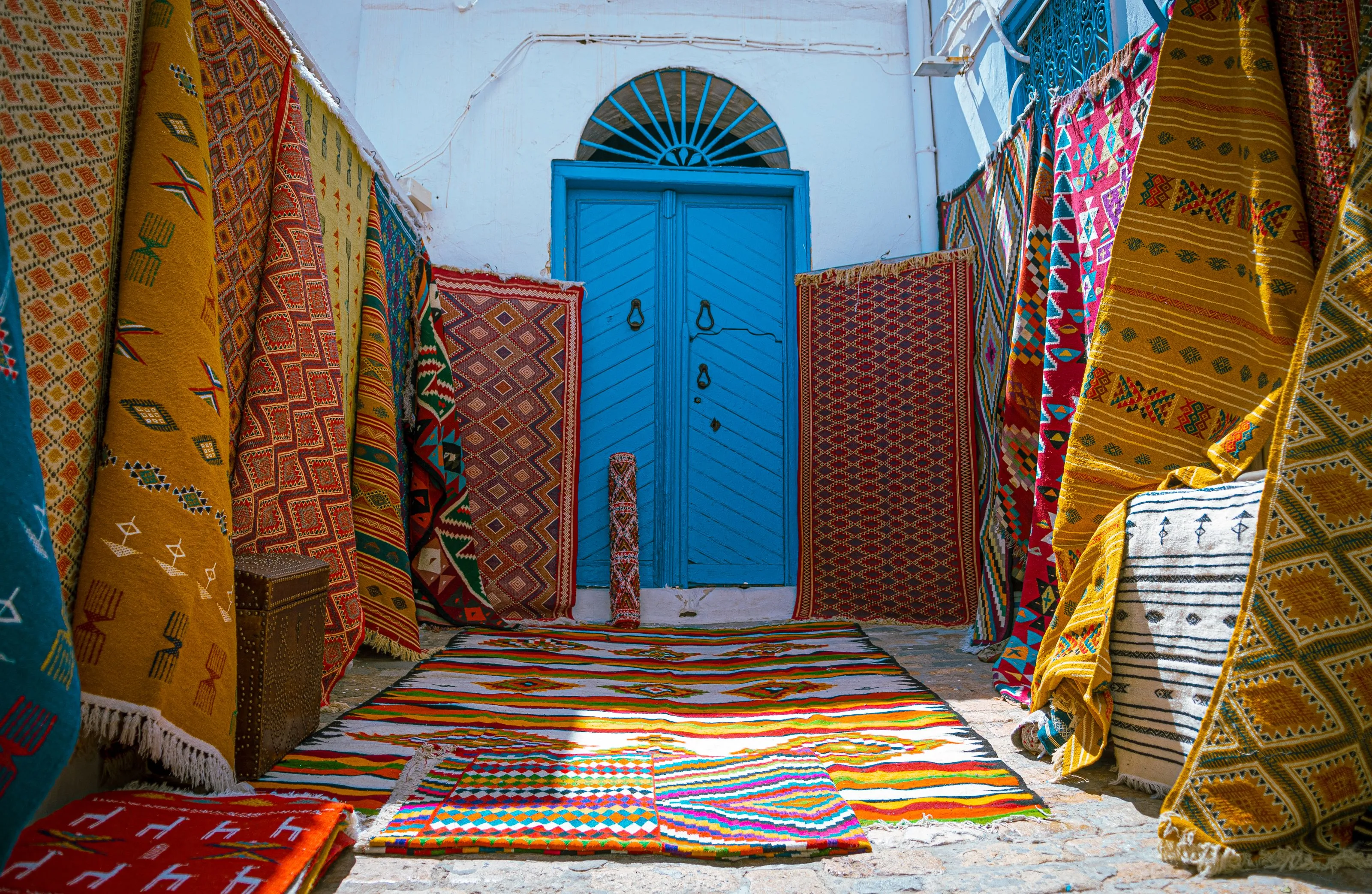
The Medina of Tunis has been a World Heritage site since 1979 and holds about 700 monuments: palaces, mosques, mausoleums, madrasas and fountains. At its heart is the Zitouna mosque, whose name means "olive tree". Its prayer hall rests on columns reused from Carthage, and its minaret dates from the 19th century. Non-Muslims see the courtyard from a gallery only.
Around it, the souks are narrow covered lanes organised by craft, with the goldsmiths near Bab Bnet. Other stops worth finding are the Sidi Youssef Dey mosque of 1631, the first Ottoman mosque in the city with its octagonal minaret, the Tourbet el-Bey, the 18th-century mausoleum of the Husainid beys, and Dar Ben Abdallah, an 18th-century palace turned folk museum with faience, stucco, costumes and furniture.
The medina meets the French-era city at Bab el Bhar, also called the Porte de France, one of only two original gates still standing. For the classic view over domes and minarets, climb to one of the rooftop cafés west of the Zitouna.
Museum and boulevard
Avenue Habib Bourguiba and the Bardo mosaics
Avenue Habib Bourguiba is the main boulevard of the ville nouvelle. Along it stand the Cathedral of St Vincent de Paul, the Art Nouveau and Art Deco municipal theatre and the clock tower on Place du 14 Janvier. The Parc du Belvédère is the city's main green space, with views over Tunis and its lake.
The Bardo National Museum opened in 1888 in a former beylical palace in the suburb of Le Bardo, on metro line 4. It holds one of the largest collections of Roman mosaics in the world. Look for the Virgil mosaic, a 3rd-century work from Sousse, the Neptune and zodiac mosaics, the bronzes and marbles recovered from the Mahdia shipwreck, leaves of the Blue Koran of Kairouan and the Punic stelae. Allow half a day, and check the opening days before you go.
Archaeology
Carthage: Punic and Roman ruins beside the sea
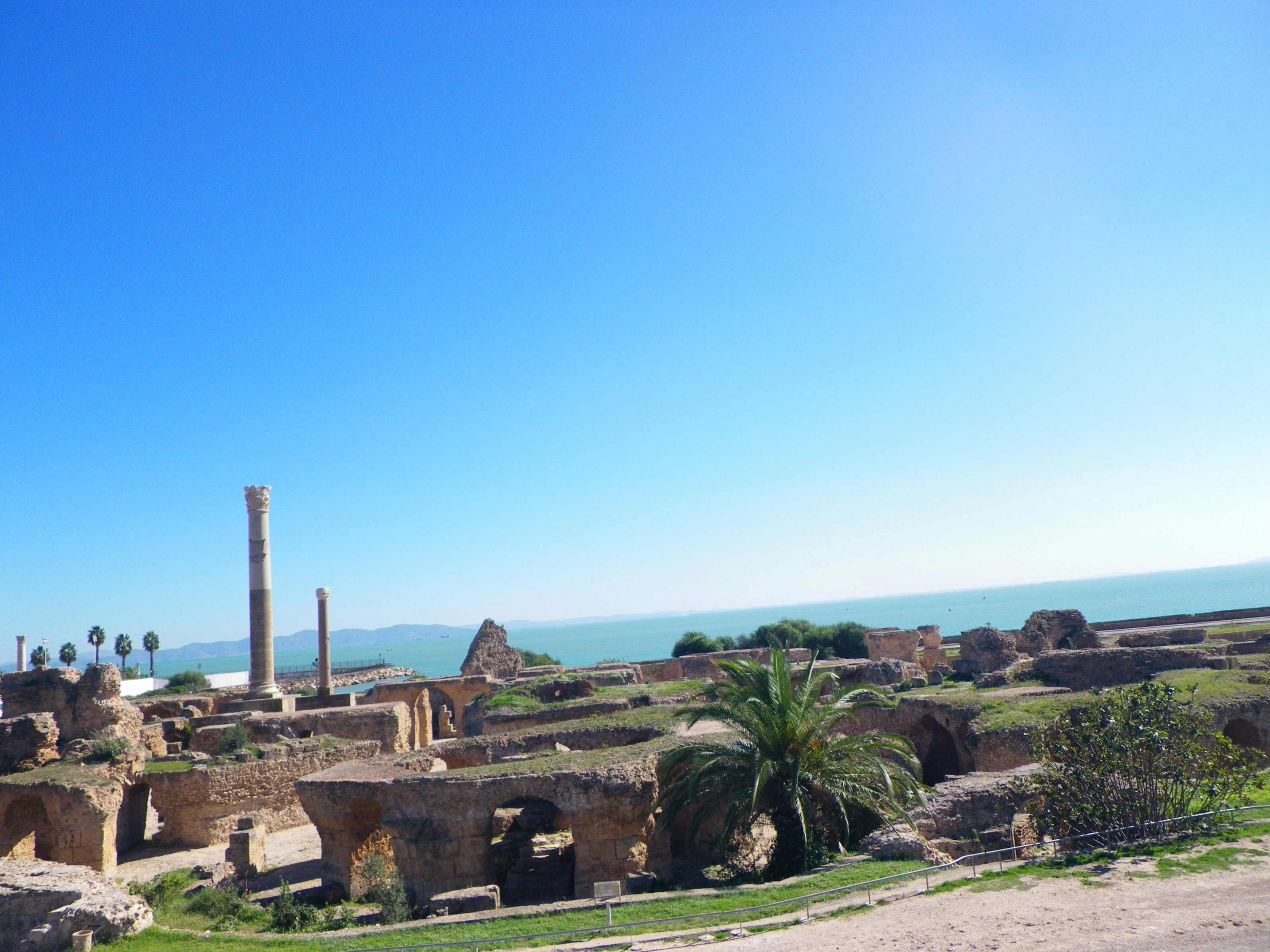
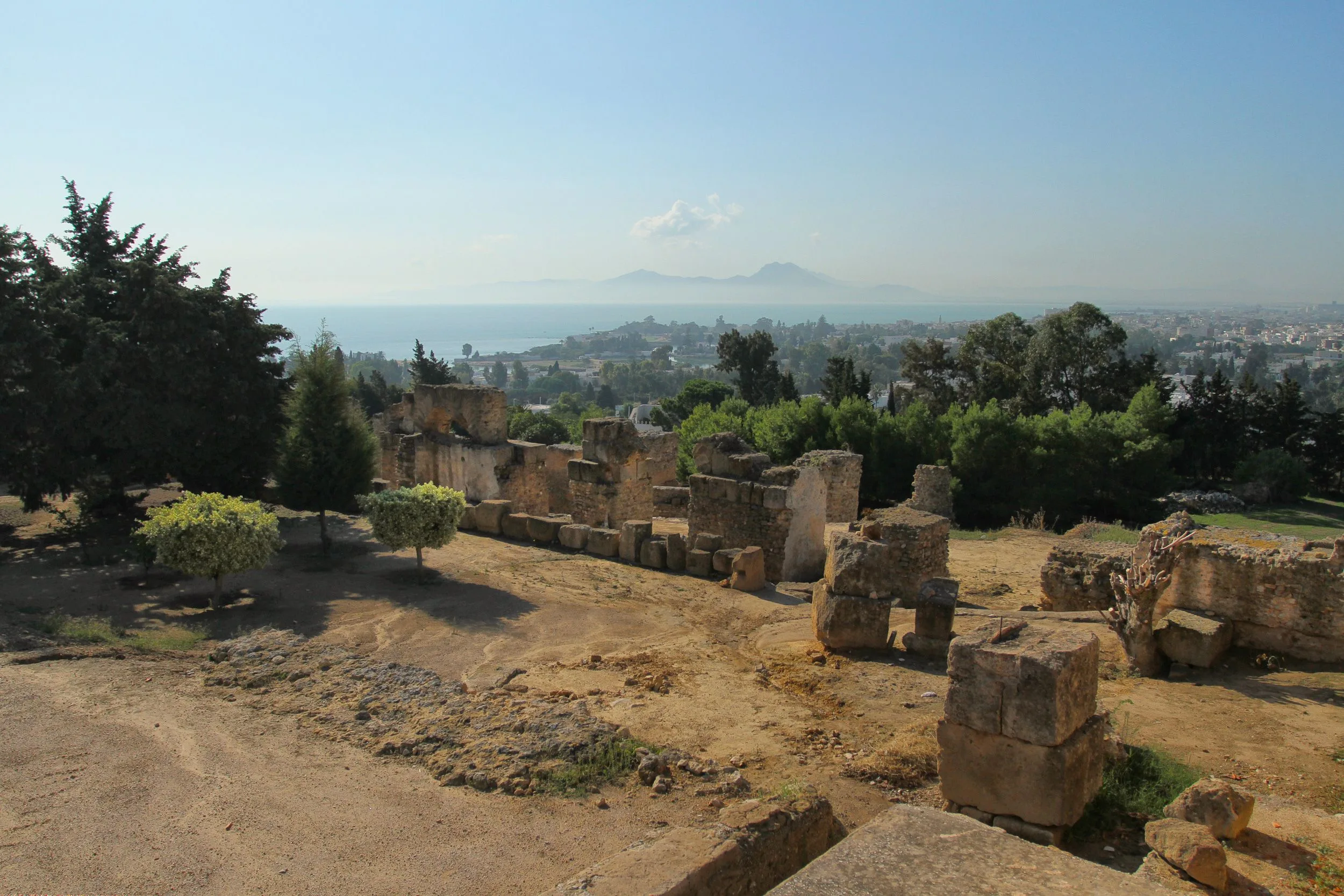
The archaeological site of Carthage is a UNESCO site in its own right and lies on the TGM suburban line, which has six stations with "Carthage" in their name. Carthage-Hannibal is the stop for the Antonine Baths, the Roman theatre and Byrsa hill.
The Antonine Baths are the ruins of the largest Roman baths outside Rome, set right on the seafront. Byrsa hill has a Punic quarter, the Carthage museum and the former St Louis cathedral, known as the Acropolium. Elsewhere are the Punic tophet with its stelae, the Punic ports, an amphitheatre, cisterns, Roman villas and the Odeon hill.
A single combined ticket covers the scattered sites. They are far apart, so plan on walking or short taxi hops and keep a full half-day for the visit. There is very little shade.
Coast
Sidi Bou Said, La Marsa and Gammarth
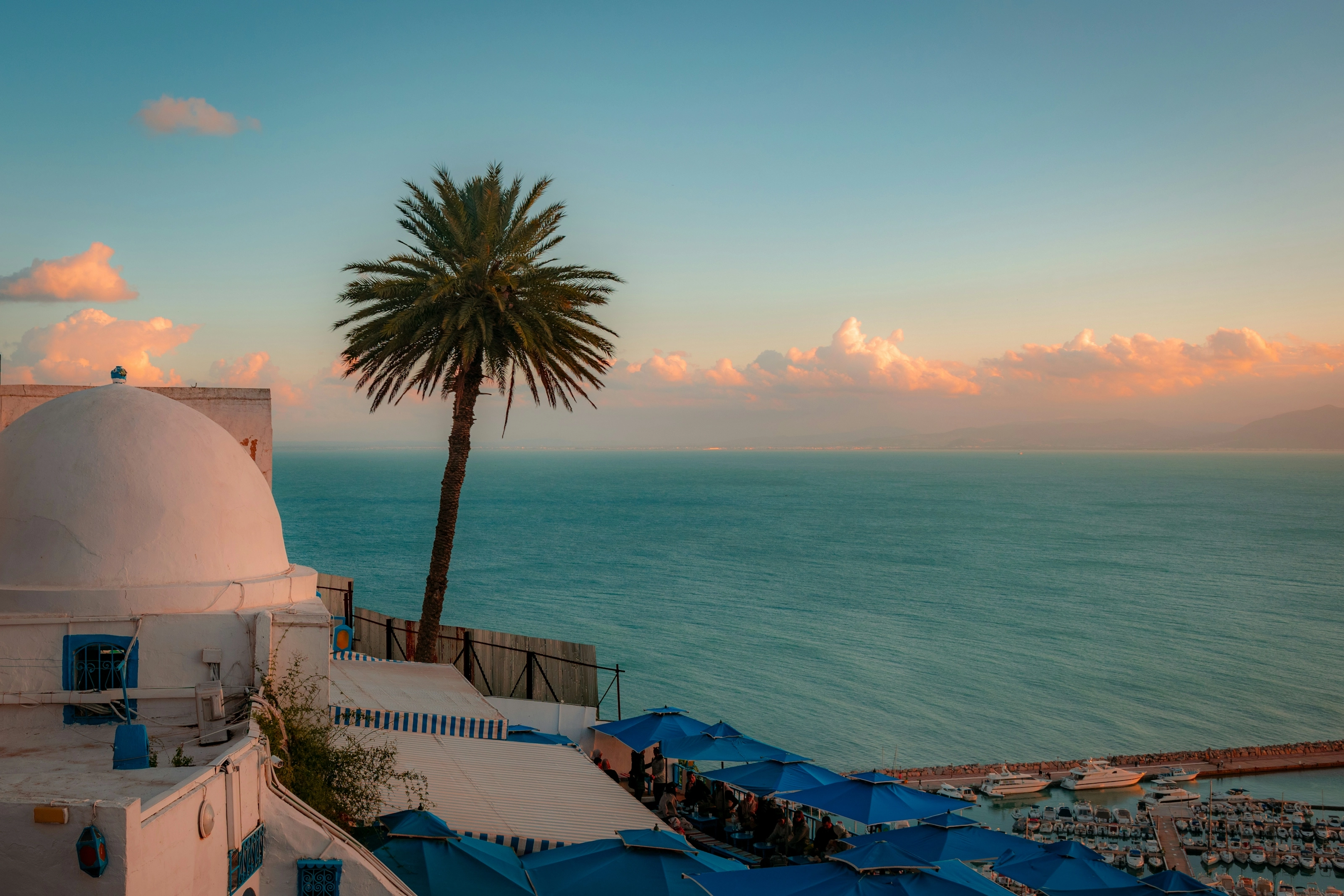
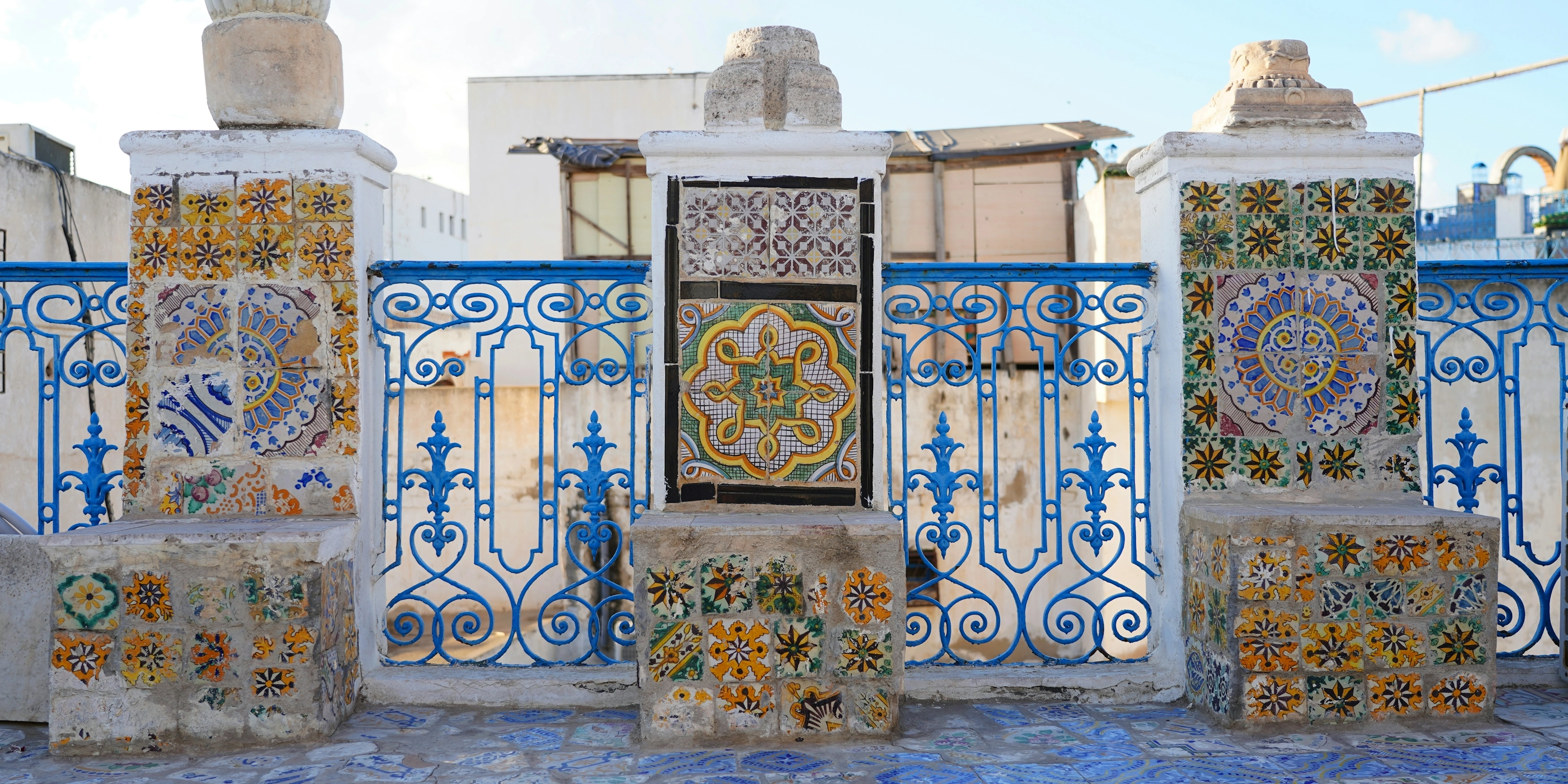
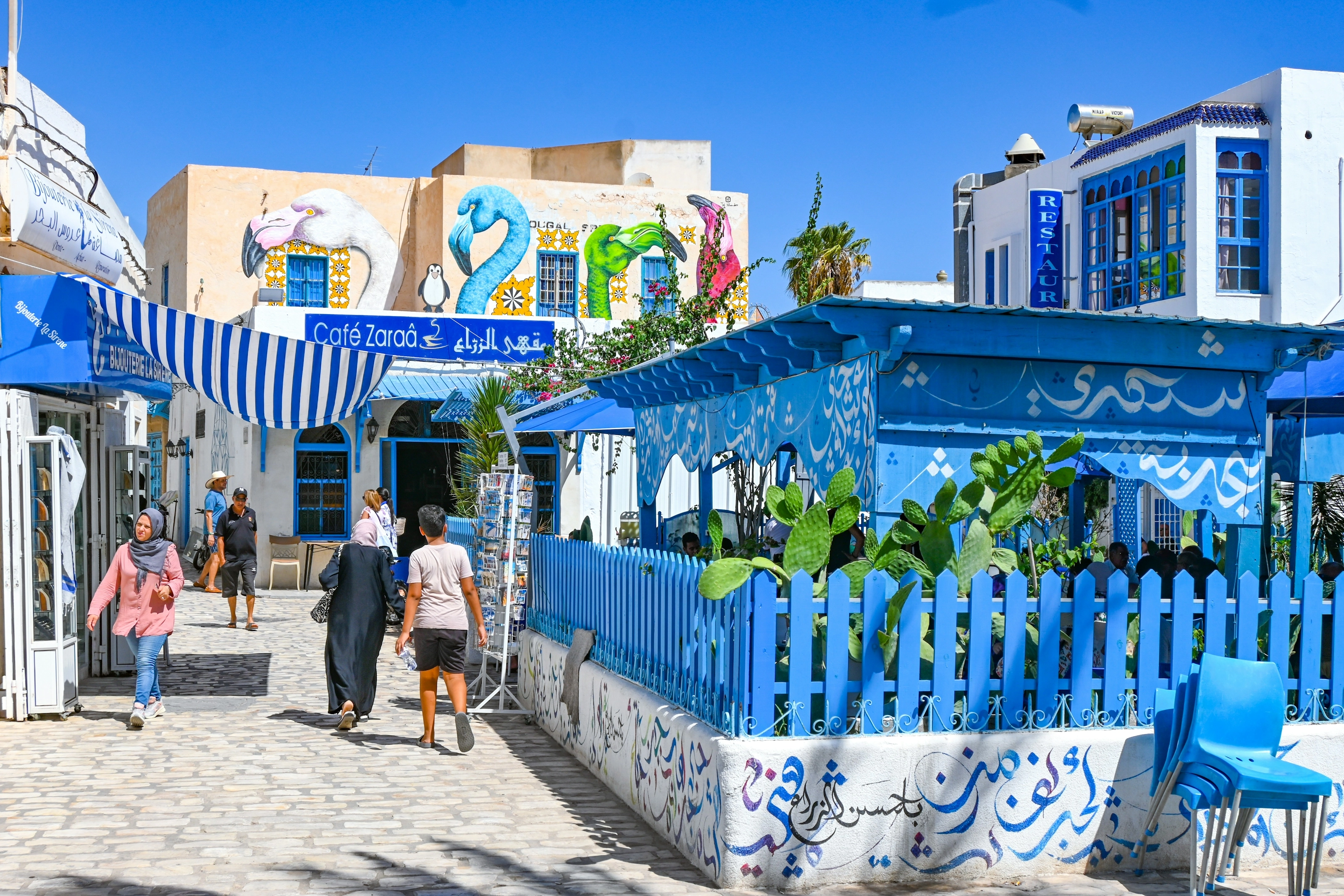
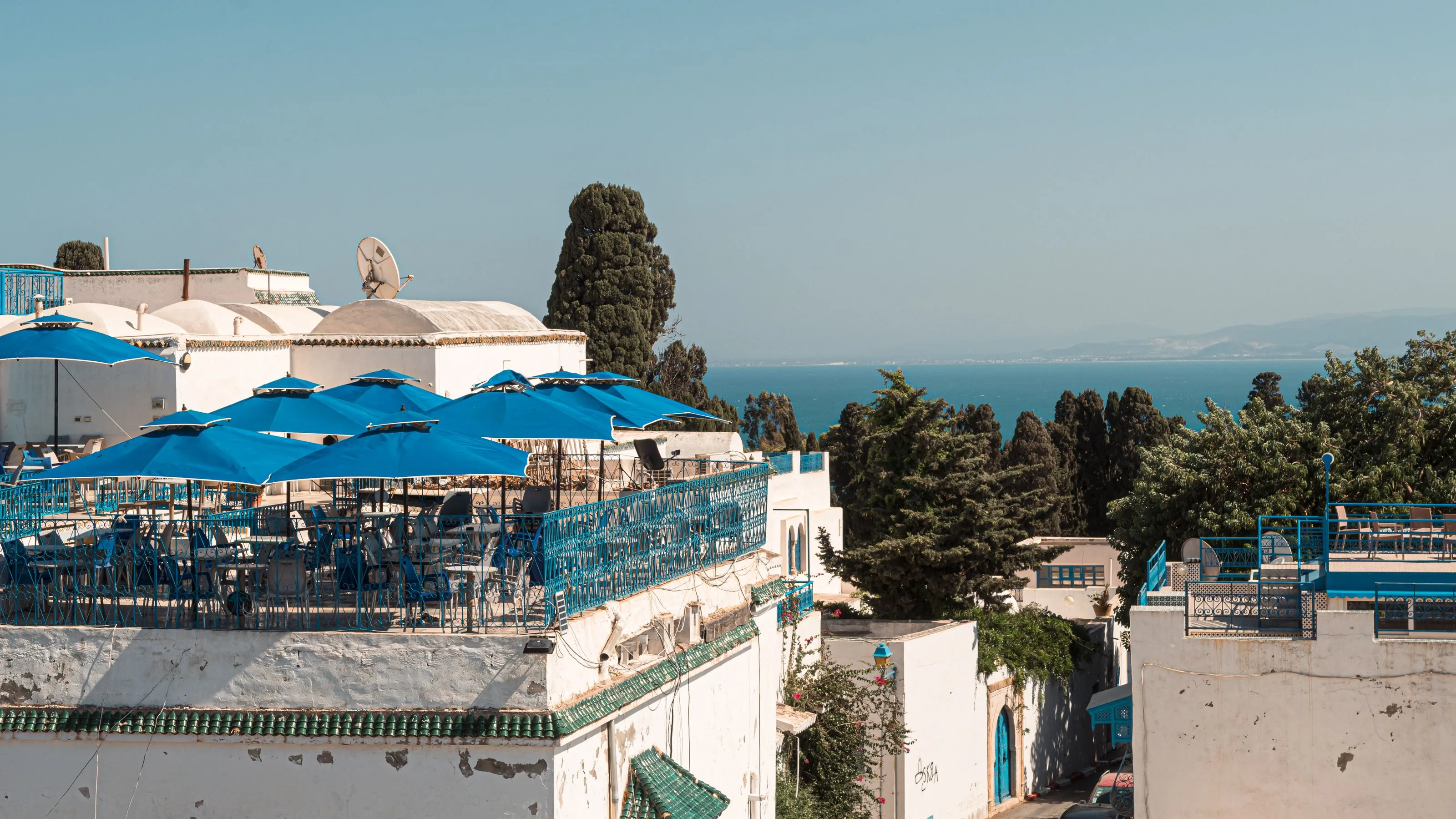
Sidi Bou Said is a hilltop village of white houses with blue doors and window grilles above the Gulf of Tunis, also on the TGM line. It is compact, and two to three hours are enough. Ennejma Ezzahra, the palace of Baron Rodolphe d'Erlanger, is now a museum and a centre for Arab and Mediterranean music. Dar El Annabi is an 18th-century family house shown as a museum of traditional life.
The Café des Nattes is associated with the painter Paul Klee. The street snack to try is bambalouni, a sugared ring of fried dough, and the local craft is the blue-and-white wire birdcage.
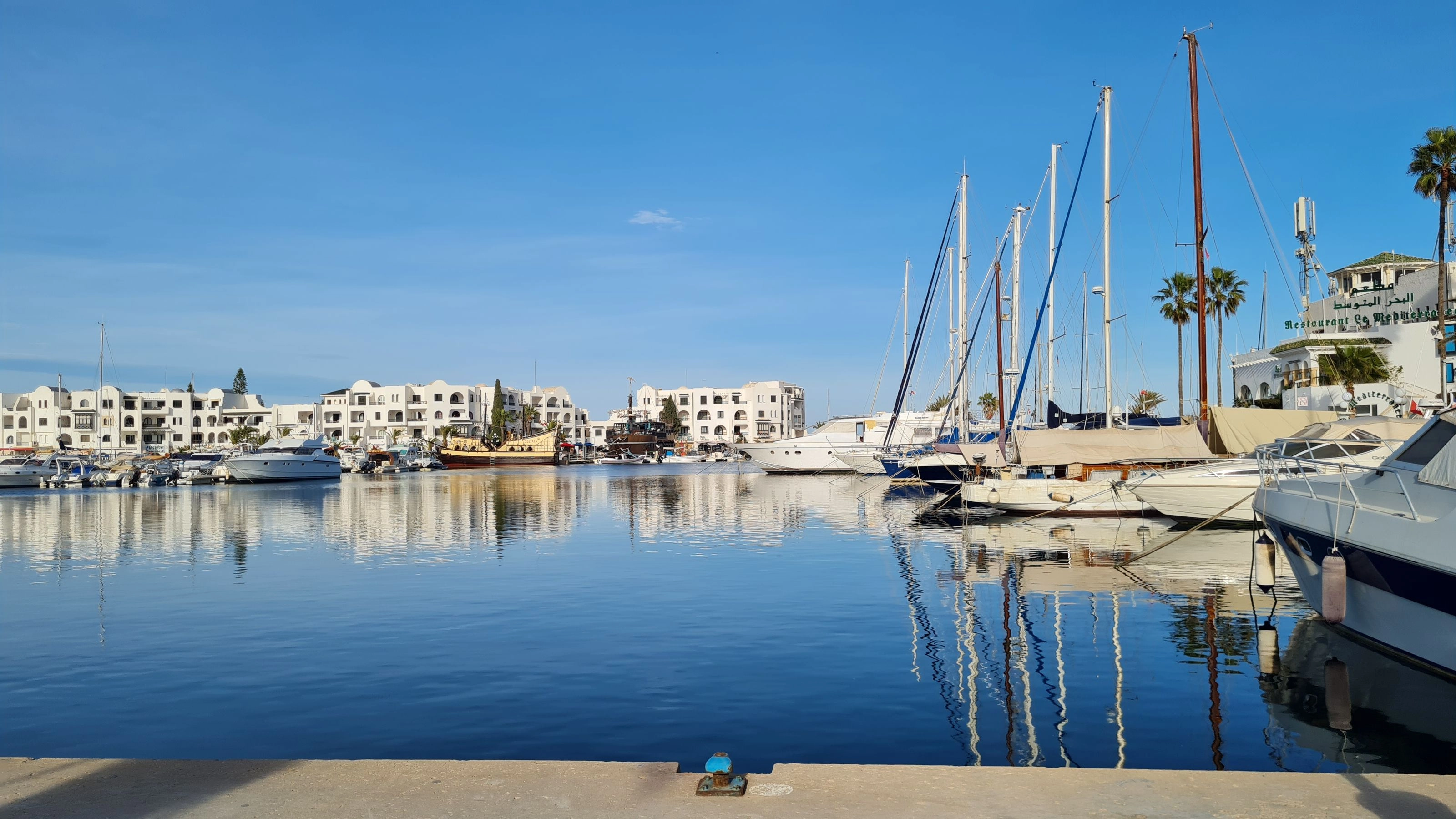
La Marsa is the terminus of the line. Its town beach is popular with people from Tunis at weekends, the Abdelliya Palace dates from the early 16th century, and seafood restaurants line the corniche. Just to the north, Gammarth is the upmarket resort strip, with large hotels, beach clubs, kitesurfing in season and nightlife.
Food and shopping
What to eat and what to buy in Tunis
Couscous is the national dish and in Tunis often comes with fish. Brik is a thin fried pastry wrapped around an egg, lablabi a garlicky chickpea soup, and ojja a pan of eggs poached in tomato, peppers and harissa, often with merguez. Mechouia salad combines grilled peppers and tomatoes with tuna and egg, and fricassé is a small fried sandwich with tuna and harissa. For something sweet, makroudh is a date-filled semolina cake.
Harissa has been on UNESCO's intangible heritage list since 2022. The cooking of the old Tunis families is described as milder than elsewhere. For fresh fish, go to La Goulette, where you choose the fish and it is grilled or fried to order. Three well-known addresses are Dar El Jeld, for refined Tunisian cuisine in a medina mansion, Café M'Rabet in Souk Trok, and the Café de Paris on Avenue Bourguiba. Alcohol is mostly served in hotels and licensed restaurants.
The souks sell chechias, the red felt caps, along with perfume and essential oils, leather, brass, wooden boxes inlaid with nacre and scarves. Bargaining is expected, and first prices are often two to three times the final one.
Why track Tunis with SniperAir
You don't need to compare prices every day
Choose your departure
Tell us your departure airport and your maximum budget for a flight to Tunis.
SniperAir watches
Our systems continuously compare new prices against the route's real history.
You get an alert
As soon as a price matches your criteria, you're notified — without searching yourself.
Tunis airport
A single, quick gateway from Europe
Tunis-Carthage
The country's main airport, about 8 km from downtown — generally 2 to 3 hours' flight from Europe.
From the airport, take a metered taxi and insist on the meter, bearing in mind that night fares are higher, or use the public bus to the Tunis Marine terminus. There is no luggage storage at the airport. Ferries arrive at the port of La Goulette, about 15 minutes from the centre.
In the city, the TGM suburban train from Tunis Marine to La Goulette, Carthage, Sidi Bou Said and La Marsa is the key line for visitors; check locally how it is running before you rely on it. The light metro has five tram lines with hubs at Place de Barcelone and Place de la République, and yellow taxis are metered. Shared taxis, called louages, leave from Bab Saadoun for the north and west, Bab Alioua for the south and Cap Bon, and Moncef Bey for central and southern Tunisia.
When to go
When to visit Tunis?
Spring
Mild temperatures, ideal for visiting the medina and Carthage without intense heat.
Summer
Strong heat, peak tourist season — better suited to the nearby coastal areas.
Autumn
Still pleasant temperatures, with milder crowds than summer.
Winter
Mild climate compared to the rest of Europe, often the most affordable period.
The climate is Mediterranean and warmer than on the European shore. Winter is the rainy season, yet nights rarely drop below 10 °C and frost is exceptional. Summer is hot and dry, with heatwaves above 40 °C. Spring and early autumn are the best periods, and March to early April and late October to November are the quiet, pleasant windows on the coast. July and August are the least comfortable months for walking the medina and the shadeless ruins of Carthage. In autumn the sea is still warm enough for swimming.
Day trips and planning
Bizerte, Ichkeul and how long to stay
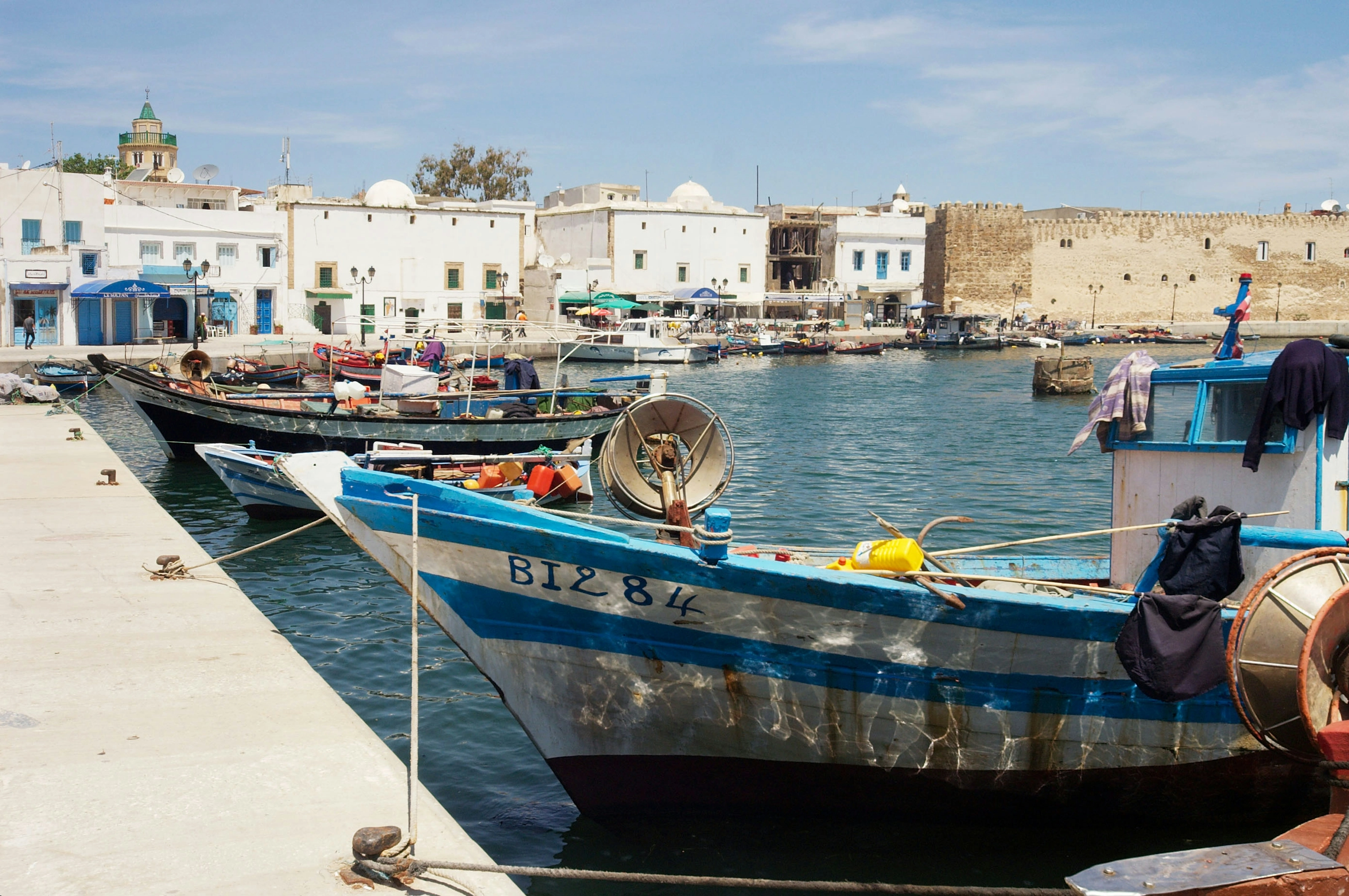
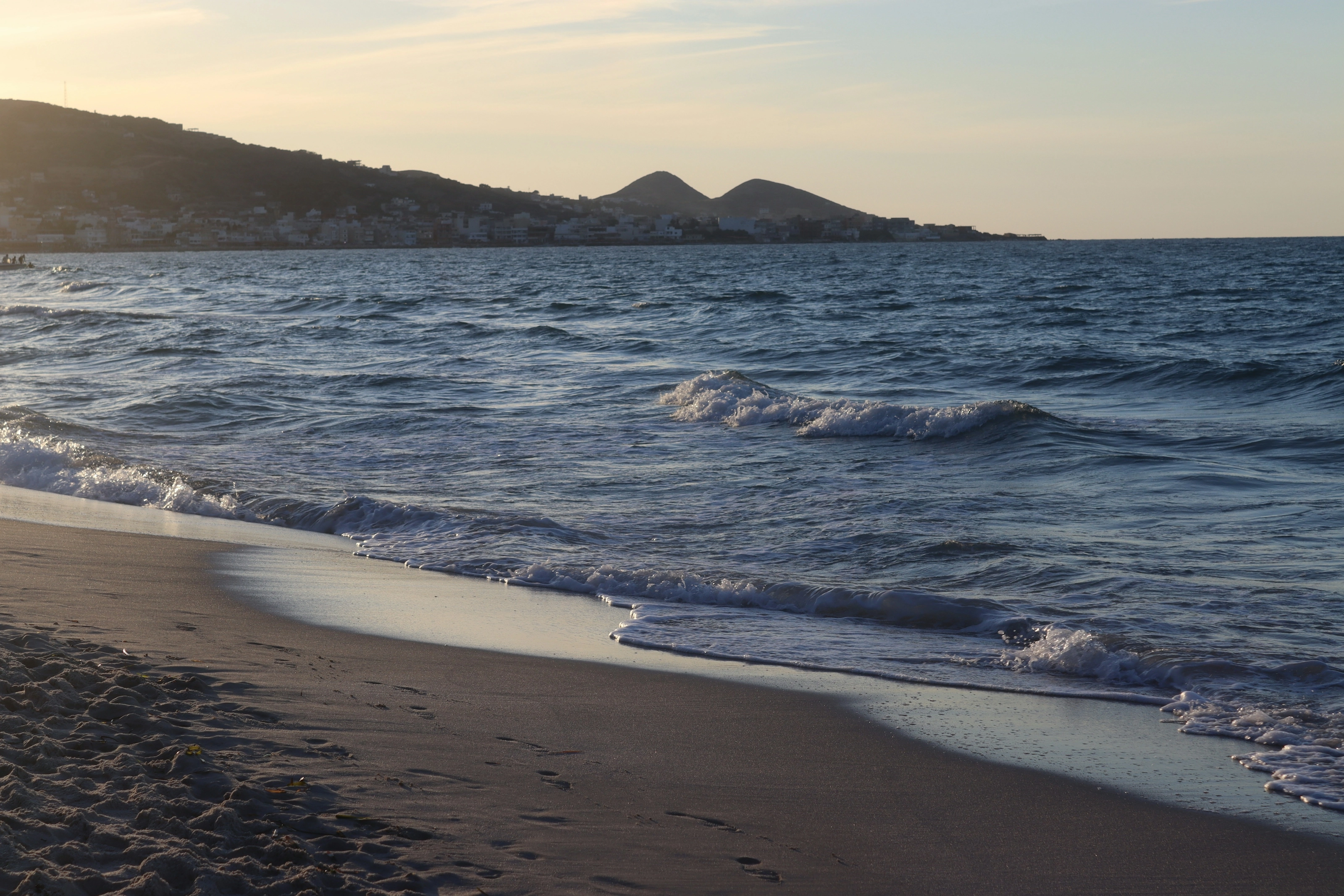
Bizerte is a port city on the north coast, with several trains a day from Tunis taking around two hours, as well as shared taxis. It has an old port lined with cafés, a kasbah that is a walled warren of houses with a mosque, the Spanish Fort on the hill north of town, a small oceanographic museum and a beach north of the kasbah. Nearby Ichkeul National Park is a freshwater lake with marshes, where migrating ducks, geese and flamingos gather in the cool season.
Other day trips named from Tunis are Uthina, a Roman city with an amphitheatre, cisterns and an aqueduct, as well as Dougga, Kerkouane, Kairouan and El Jem.
One day covers the medina, with the Zitouna, the souks, a rooftop and a mansion, plus Avenue Bourguiba. Two days let you add the Bardo in the morning, then Carthage and sunset at Sidi Bou Said. With three or four days you have beach time at La Marsa or Gammarth and one day trip. Watch for unsolicited "guides" on Avenue Bourguiba and at the medina gates, who steer visitors to shops.
You might also like
Similar destinations
FAQ
Frequently asked questions about flights to Tunis
What is the best airport for arriving in Tunis?
Tunis-Carthage (TUN) is the capital's only airport and handles the majority of direct flights from Europe.
How much does a flight to Tunis usually cost?
The price mainly depends on your departure city, the season and your booking date. The "deals" section above shows real prices already spotted by SniperAir for this destination.
How long is a flight to Tunis from Europe?
Generally between 2 and 3 hours from most major European cities.
Are Tunis and Djerba the same destination for SniperAir?
No — they are two separate airports (TUN for Tunis, DJE for Djerba), each tracked independently based on its own route and price history.
How do I get alerted when a flight to Tunis drops below my budget?
Create an alert profile with your departure airport, Tunis as the destination and your maximum budget. You'll be notified automatically as soon as a matching price is detected.
How many days do you need in Tunis?
One day covers the medina and Avenue Bourguiba. Two days add the Bardo museum, Carthage and Sidi Bou Said. Three or four days leave time for the beach at La Marsa or Gammarth and one day trip, for example to Bizerte and Ichkeul.
How do you get from Tunis to Carthage and Sidi Bou Said?
By the TGM suburban train from Tunis Marine, which runs to La Goulette, Carthage, Sidi Bou Said and La Marsa. Carthage-Hannibal is the station for the Antonine Baths, the Roman theatre and Byrsa hill.
Ready to head to Tunis?
Set your budget and let SniperAir track the fares.
Create my alert