
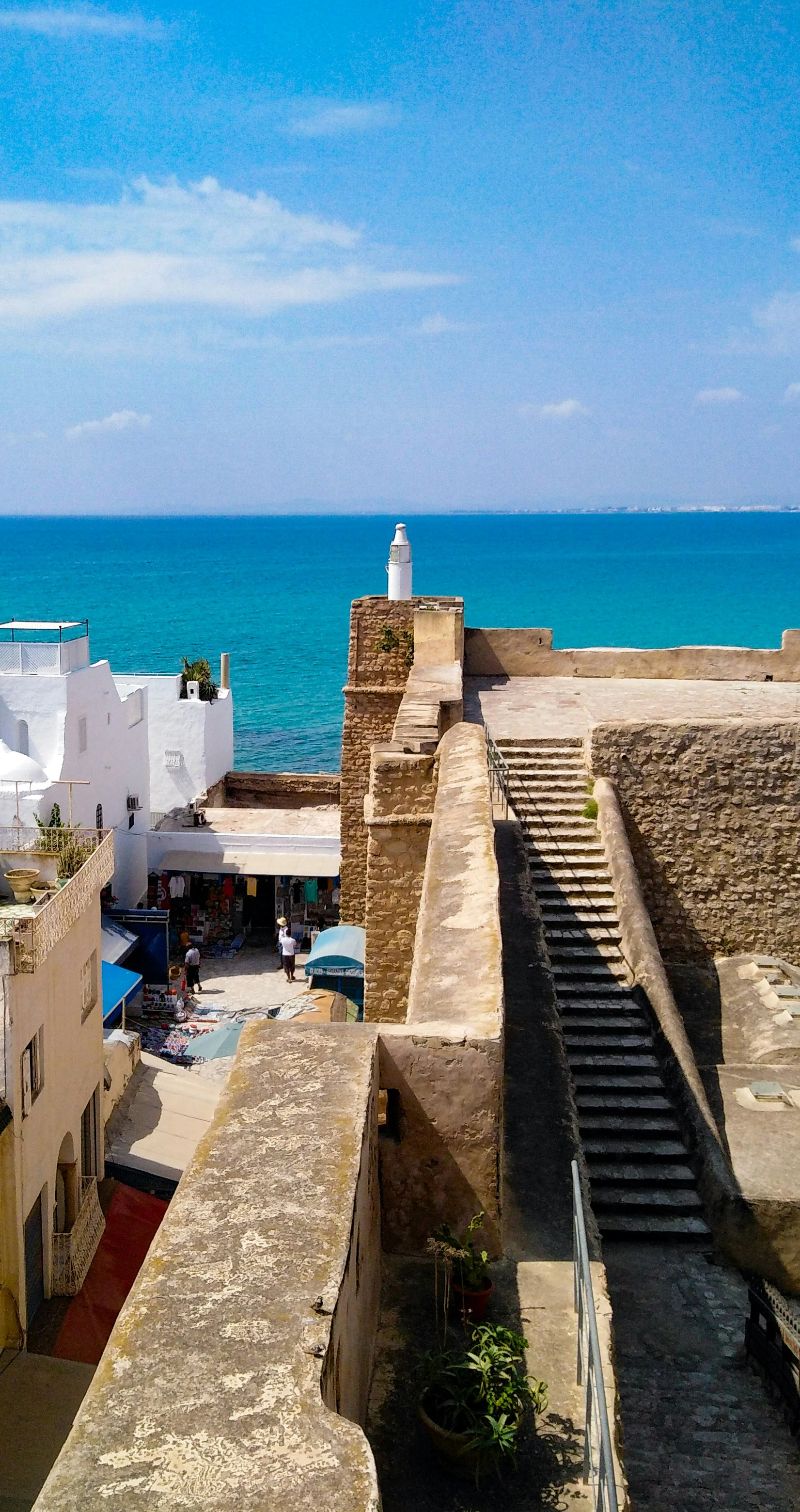
Cheap flights to Hammamet
Set your departure airport and your maximum budget: SniperAir tracks prices to Hammamet and alerts you the moment an opportunity matches your criteria.
Quick summary
Country
Tunisia
Continent
Africa
Airport
NBE
Currency
Tunisian dinar
Time zone
UTC+1
Deals already spotted to Hammamet
Real flight examples spotted by SniperAir, with their reference price.
Loading examples…
Identity
The jasmine resort that stayed low-rise
Hammamet is the oldest seaside resort in Tunisia and one of its primary tourist destinations. It sits on the south-east side of the Cap Bon peninsula, facing the Gulf of Hammamet. Its emblem is jasmine: posies of the flower are sold everywhere, and it gave its name to the purpose-built resort of Yasmine Hammamet.
The town is low-rise by rule. Houses, it is said, "must not be higher than the cypresses", so the resort has kept gardens instead of towers. The site has been settled since the 1st century, when it was called Pupput, a Roman colony by the 2nd century.
It suits families, couples and first-time visitors, and anyone who prefers a gentle resort with a real old town attached.
Old town
A small walled medina and a fort on the water
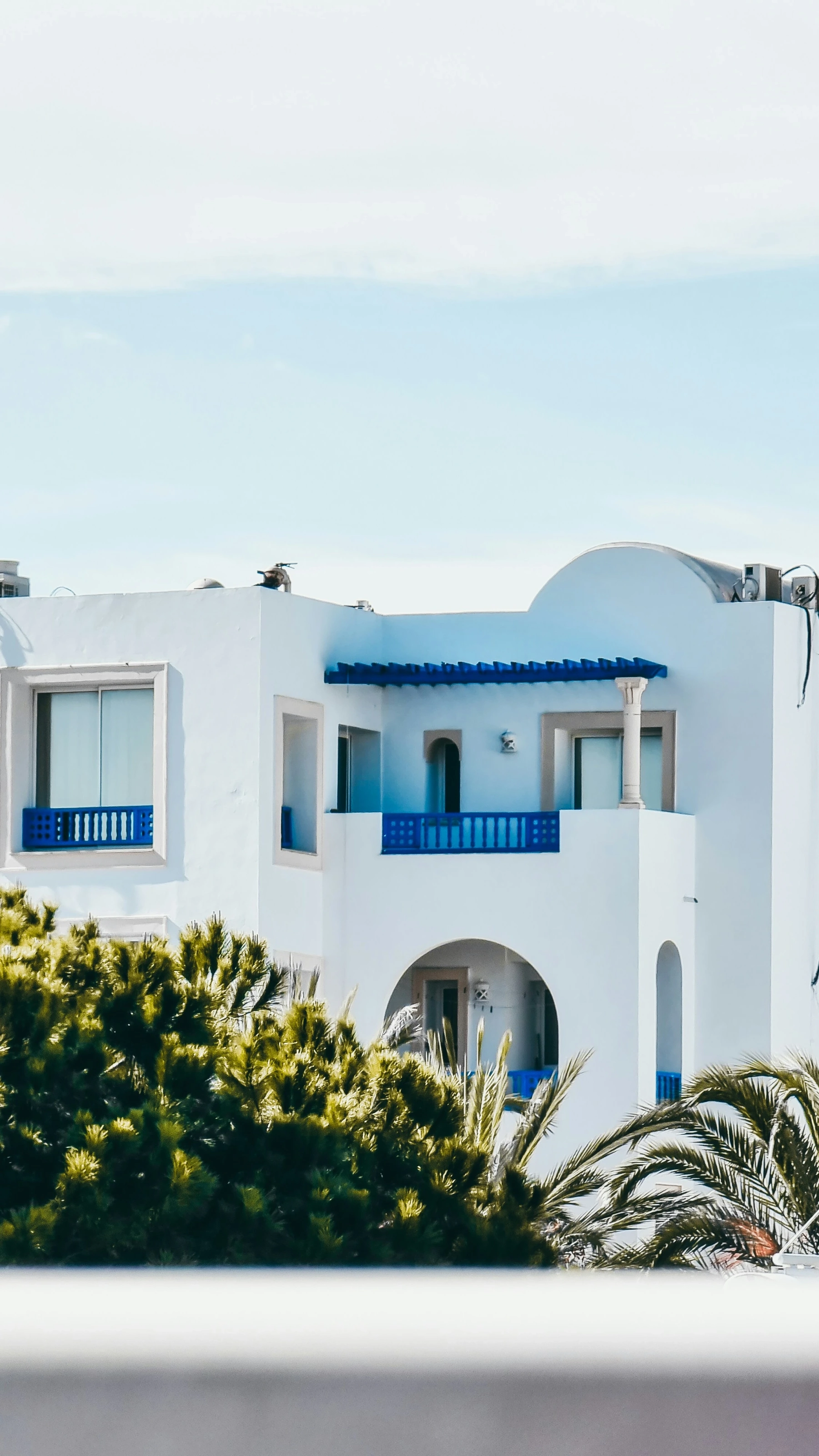
The medina is a small walled old town set directly on the sea, with whitewashed lanes and a souvenir souk. The town walls go back to the 13th century and the medina to the 15th.
At the harbour fort, the kasbah, you can walk the ramparts for the view over the roofs, the fishing boats and the bay. Explanatory panels are provided in several languages.
The International Cultural Centre, Dar Sébastien, is open to visitors, and the Hammamet International Festival takes place in summer. In the medina, bargaining is expected. Good things to bring home are Nabeul pottery and tiles, jasmine souvenirs and distilled flower waters.
Seaside
Beaches, Yasmine Hammamet and Roman Pupput
Hammamet is known above all for swimming and water sports. Hammamet Sud is the water-sports strip, with parasailing, jet-skis and tubing, as well as camel rides on the sand.
Yasmine Hammamet was created in the late 1990s as a purpose-built resort of 277 hectares, with five-star hotels and entertainment facilities. On the southern seafront, the ruins of Pupput recall the Roman colony.
Taxis link the medina, the hotel zones and Yasmine. Everyday costs such as taxis, shared taxis and simple meals are inexpensive, and lobster dinners are the costly exception.
Cap Bon
Nabeul, capital of Tunisian pottery
Behind the beach lies Cap Bon, Tunisia's garden, a peninsula of citrus groves and vineyards. Nabeul, the capital of the governorate, was founded in the 5th century BCE as Neapolis by Greeks from Cyrene. It later became a Roman centre for the production of garum, a fish sauce, and was wrecked by the tsunami of 365 CE.
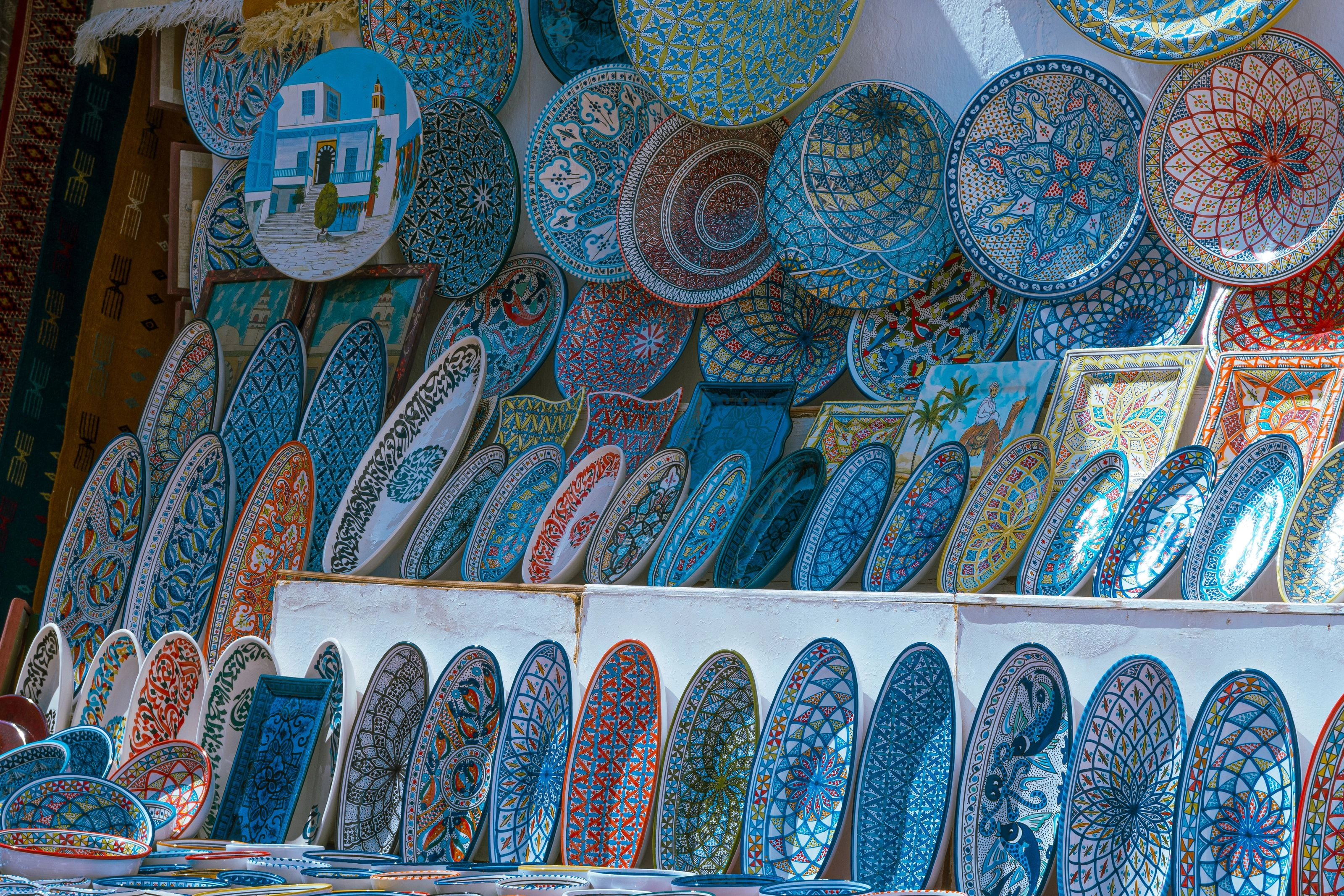
Today it is the pottery capital of Tunisia, known for painted dishes and wall tiles, a craft revived in the early 20th century. The souk is held on Fridays, and the archaeological museum shows Roman mosaics and Punic statuary.
Nabeul also distils bitter-orange blossom, geranium and rose. Harissa is a local speciality, said to date from the arrival of Andalusians in the 16th century. Shared taxis and buses run there from Hammamet.
Cap Bon
Kelibia and the Punic town of Kerkouane
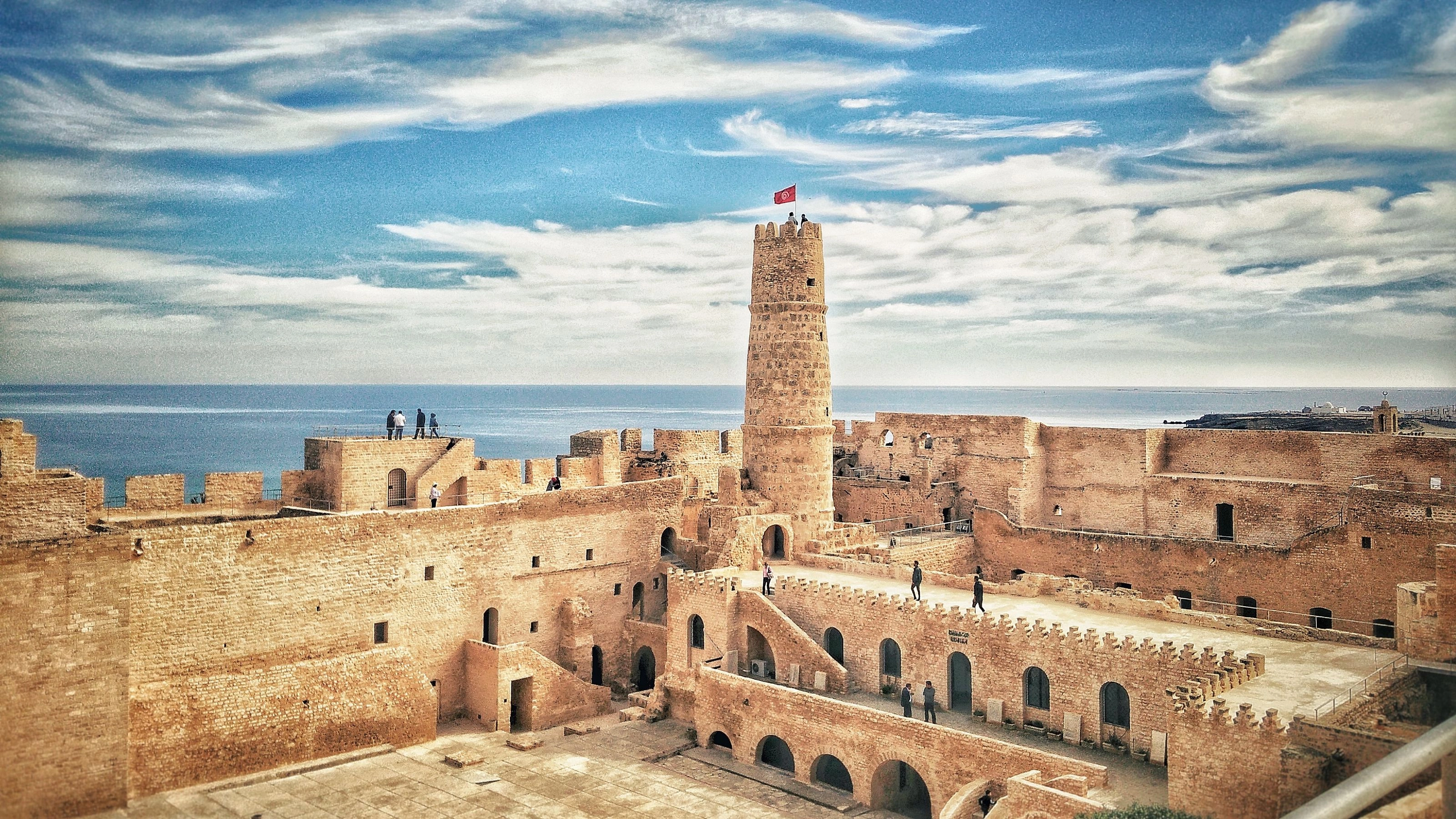
Kelibia is a fishing town near the tip of the peninsula, the Punic Aspis and Roman Clypea, and the scene of a siege in 255 BCE during the First Punic War. Its fort stands on a rocky promontory high above the sea, a citadel on older foundations with a Byzantine chapel inside.
The town is one of the country's leading fishing ports, and its boats fish at night by lamplight for sardines and mackerel. Its sand beaches are counted among the finest in the Mediterranean, and Muscat de Kélibia, a fruity white wine, is rated among the best in Tunisia.
Close by, Kerkouane is the only Punic city in the world never rebuilt by the Romans. It was probably abandoned around 250 BCE and never reoccupied, which is why its street grid, house plans, private baths and floors survive untouched. It probably never had more than about 1,200 inhabitants, fishermen and craftsmen who produced purple dye, salt and garum. Its ancient name is unknown, and it is a UNESCO World Heritage site.
Cap Bon
El Haouaria quarries and the hot springs of Korbous
El Haouaria is a small town at the northern end of the peninsula, the Greek Hermaea. About 3 km to the west are the seaside sandstone quarries of Ghar El Kebir, cut by the Carthaginians and later the Romans. The blocks were shipped across the gulf to build Carthage.
On the west coast, Korbous is a spa village in a deep ravine opening onto the sea. Its springs run at more than 50 °C and were known to the Romans as Aquae Calidae Carpitanae. The peninsula itself was the ancient "Cape of Mercury".
A hire car or a driver is the practical way to make the loop around Cap Bon.
Why track Hammamet with SniperAir
You don't need to compare prices every day
Choose your departure
Tell us your departure airport and your maximum budget for a flight to Hammamet.
SniperAir watches
Our systems continuously compare new prices against the route's real history.
You get an alert
As soon as a price matches your criteria, you're notified — without searching yourself.
Hammamet airport
Enfidha-Hammamet, about 40 to 50 km from town
Enfidha-Hammamet
Hammamet has no airport of its own — Enfidha-Hammamet, about 40 to 50 km away, is the most direct gateway.
Tunis-Carthage and Monastir airports are alternatives, each around an hour away by taxi. By rail, mainline trains stop at Bir Bou Regba, 6 km inland, and few services run to Hammamet itself. Shared taxis, called louages, run to Tunis from the Hammamet louage station.
Cap Bon
Three possible airports
Orders of magnitude — the actual trip depends on traffic and route.
| Tunis-Carthage | Enfidha | Monastir | |
|---|---|---|---|
| Hammamet | ~70 km | ~40-50 km | ~80-100 km |
| Nabeul | ~65-75 km | ~50-55 km | ~100 km |
| Kelibia | ~65 km | ~50 km | ~80 km |
When to go
When to visit Hammamet?
Spring
Mild temperatures, ideal for exploring the medina and the Kasbah without intense heat.
Summer
Strong heat and peak beach season — the resort town gets very busy.
Autumn
Sea still warm, milder temperatures than the height of summer.
Winter
Mild climate compared to the rest of Europe, often the most affordable time to book.
The climate is Mediterranean. Winter is mild and the wettest season, with the sea too cool for most people. Spring brings warm days and a cool sea. Summer is hot, dry and the peak season, when the population of the town is said to quadruple. Late spring and early autumn are best for touring Cap Bon, and high summer for a pure beach holiday. December to February is the least suitable period for swimming.
Food and planning
Cap Bon flavours and one way to organise three days
Fish features strongly in Cap Bon cooking: tuna, sardines, anchovies, mackerel and sea bass. Add harissa from Nabeul, couscous, brik and mechouia salad. The peninsula grows oranges, lemons and bitter oranges and makes orange-flower water. Local wines are easier to find here than in the restaurants of Tunis.
One way to organise three days: start with the medina and fort in the morning, Dar Sébastien and Pupput in the afternoon, and an evening at Yasmine Hammamet. On the second day, visit the potters and museum of Nabeul, then drive up the east coast to Kelibia for the fort, a fish lunch and the beach, with Kerkouane before closing time. On the third, see the El Haouaria quarries and the cape and return by the west coast through Korbous, or spend the day in Tunis, Carthage and Sidi Bou Said, about an hour away.
Three nights cover the town and Cap Bon. A week makes sense if you want Hammamet as a beach base.
Three days at a glance
Hammamet
Medina, beach, evening in Yasmine.
Nabeul & Kelibia
Market and crafts, then beach and fort.
El Haouaria & Korbous
Nature and relaxation.
You might also like
Similar destinations
FAQ
Frequently asked questions about flights to Hammamet
What is the airport for arriving in Hammamet?
Enfidha-Hammamet (NBE), about 40 to 50 km away. Hammamet has no airport within the town itself.
How much does a flight to Hammamet usually cost?
The price mainly depends on your departure city, the season and your booking date. The "deals" section above shows real prices already spotted by SniperAir for this destination.
How long is a flight to Hammamet from Europe?
Generally between 2 and 3 hours from most major European cities.
Are Hammamet and Tunis the same destination for SniperAir?
No — they are two separate airports (NBE for Hammamet, TUN for Tunis), each tracked independently based on its own route and price history.
How do I get alerted when a flight to Hammamet drops below my budget?
Create an alert profile with your departure airport, Hammamet as the destination and your maximum budget. You'll be notified automatically as soon as a matching price is detected.
What is there to see around Hammamet?
The Cap Bon peninsula: the potters of Nabeul, the clifftop fort and beaches of Kelibia, the Punic town of Kerkouane, the ancient quarries of El Haouaria and the hot springs of Korbous. Tunis, Carthage and Sidi Bou Said are about an hour away.
Ready to head to Hammamet?
Set your budget and let SniperAir track the fares.
Create my alert