
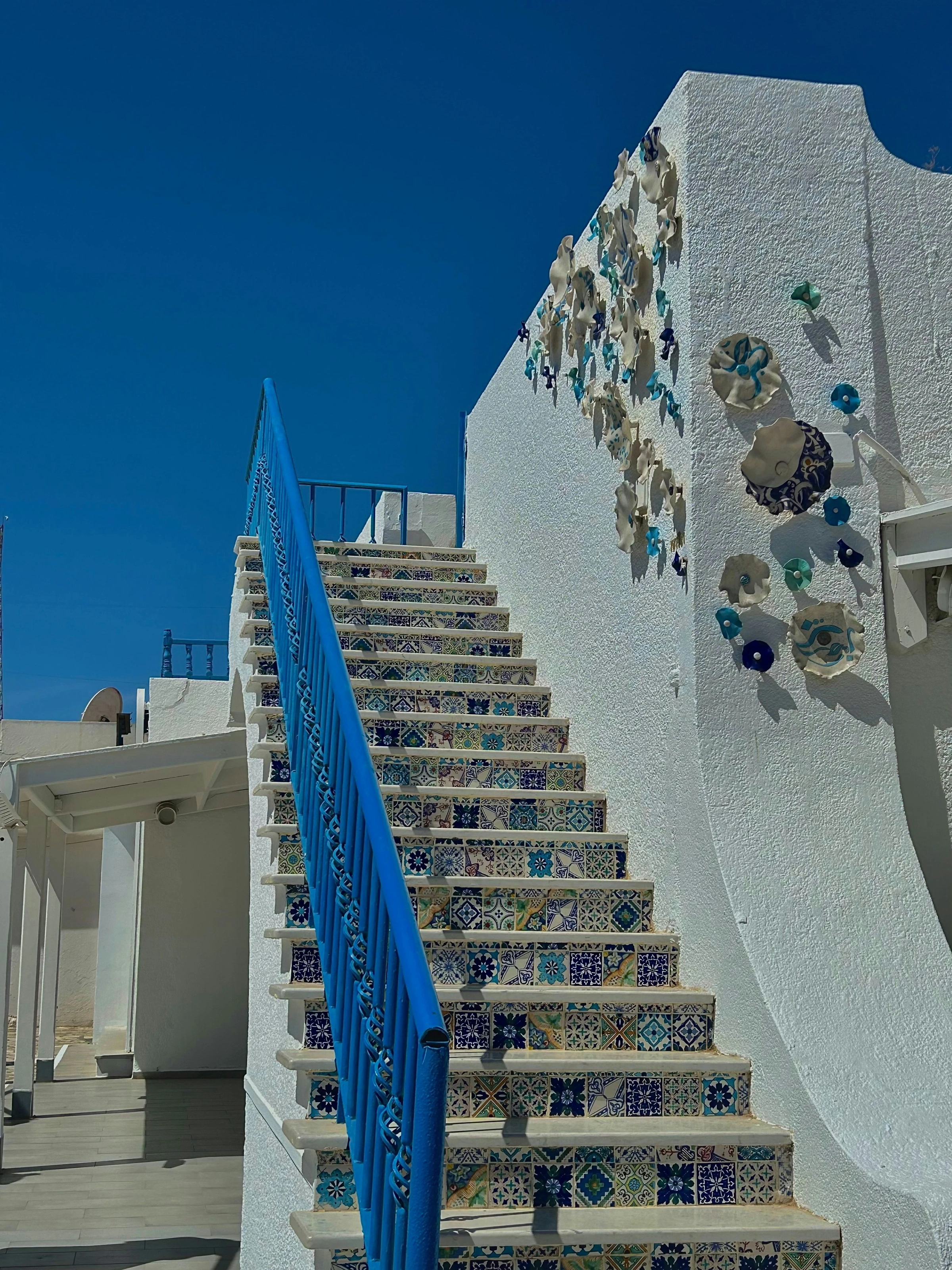
Cheap flights to Djerba
Set your departure airport and your maximum budget: SniperAir tracks prices to Djerba and alerts you the moment an opportunity matches your criteria.
Quick summary
Country
Tunisia
Continent
Africa
Airport
DJE
Currency
Tunisian dinar
Time zone
UTC+1
Deals already spotted to Djerba
Real flight examples spotted by SniperAir, with their reference price.
Loading examples…
Identity
A beach island with a World Heritage landscape
Djerba is the largest island of North Africa: 514 km2 in the Gulf of Gabès and about 164,000 inhabitants at the 2014 census (Wikipedia). A road about 7 km long, with Roman origins, links it to the mainland at El Kantara, and a car ferry runs between Ajim and Jorf. Since 2023 it has been on the UNESCO World Heritage List under the title "Djerba: Testimony to a settlement pattern in an island territory". The listing recognises scattered whitewashed farmsteads, small fortified mosques and a low-density way of building unlike any medina-centred Tunisian town.
Greek tradition made it the island of the Lotus-eaters visited by Odysseus, and the Romans called it Meninx, later Girba. Aragonese, Spanish and Ottoman rulers followed one another, and the Battle of Djerba in 1560 was a major Ottoman naval victory over a Holy League fleet. It is home to one of the last Jewish communities of the Arab world, and a Berber language is still spoken in some villages of the south (Wikipedia, Wikivoyage).
Main town
Houmt Souk: souks, fish auction and a seafront fort
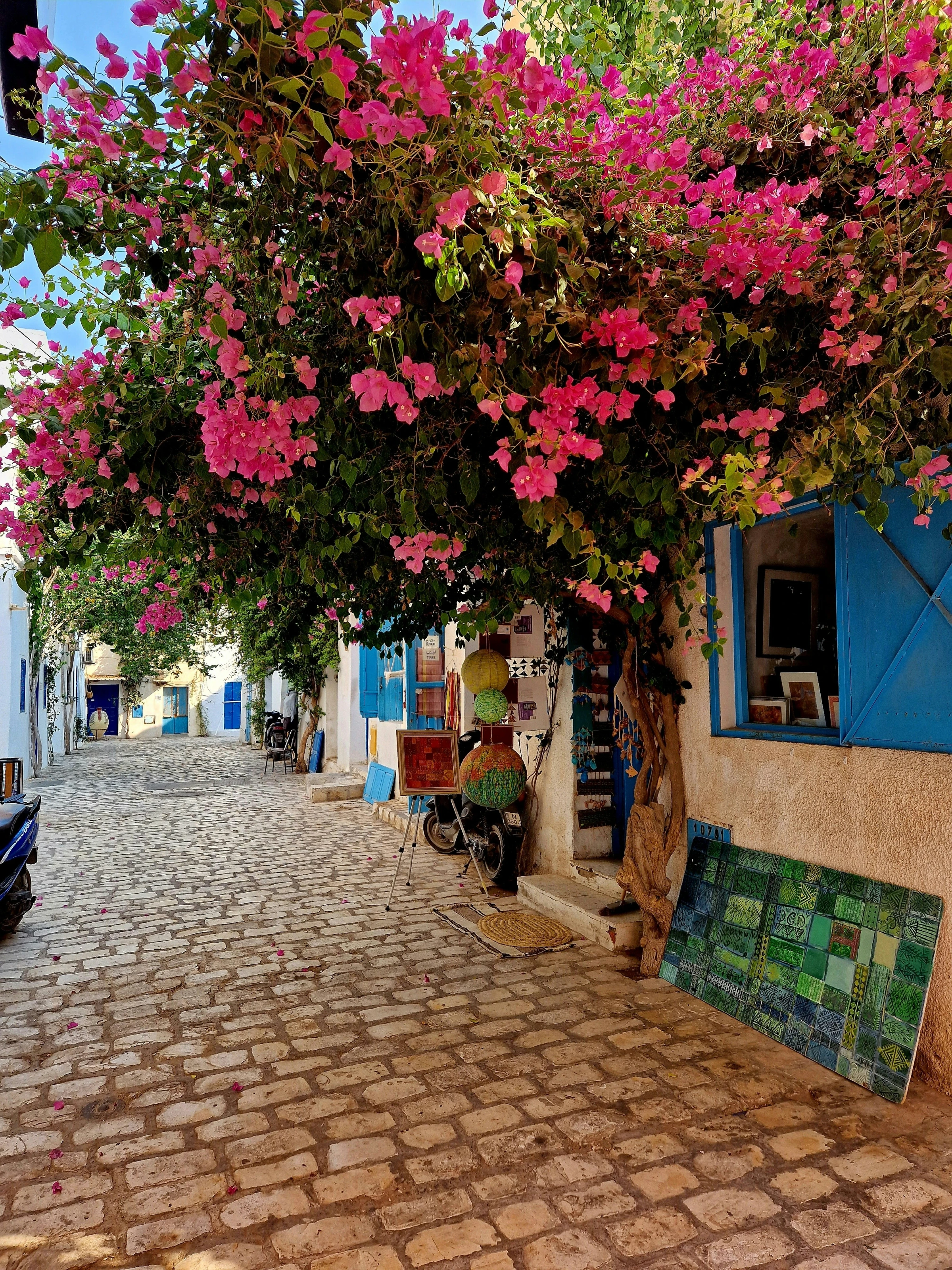
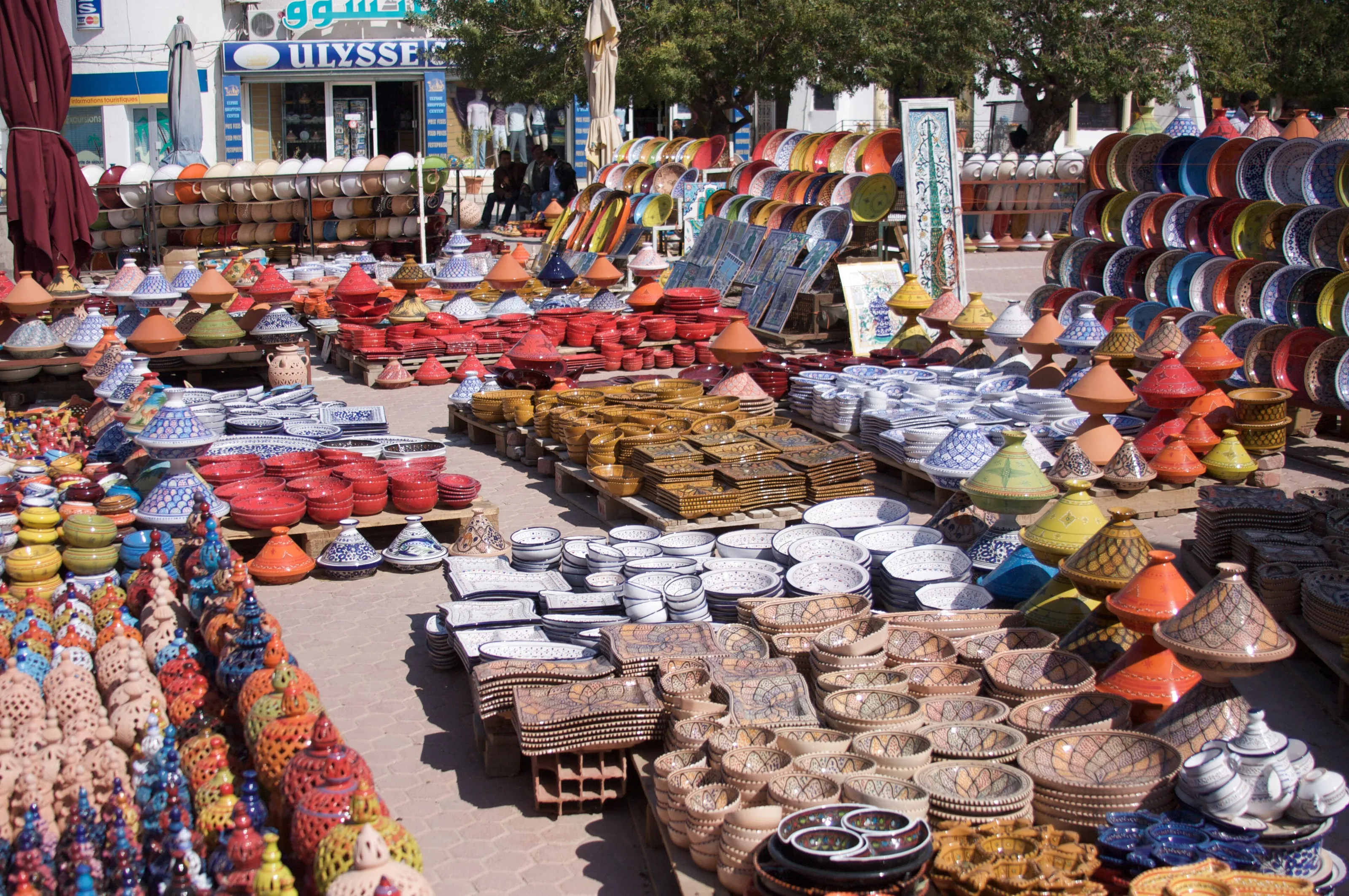
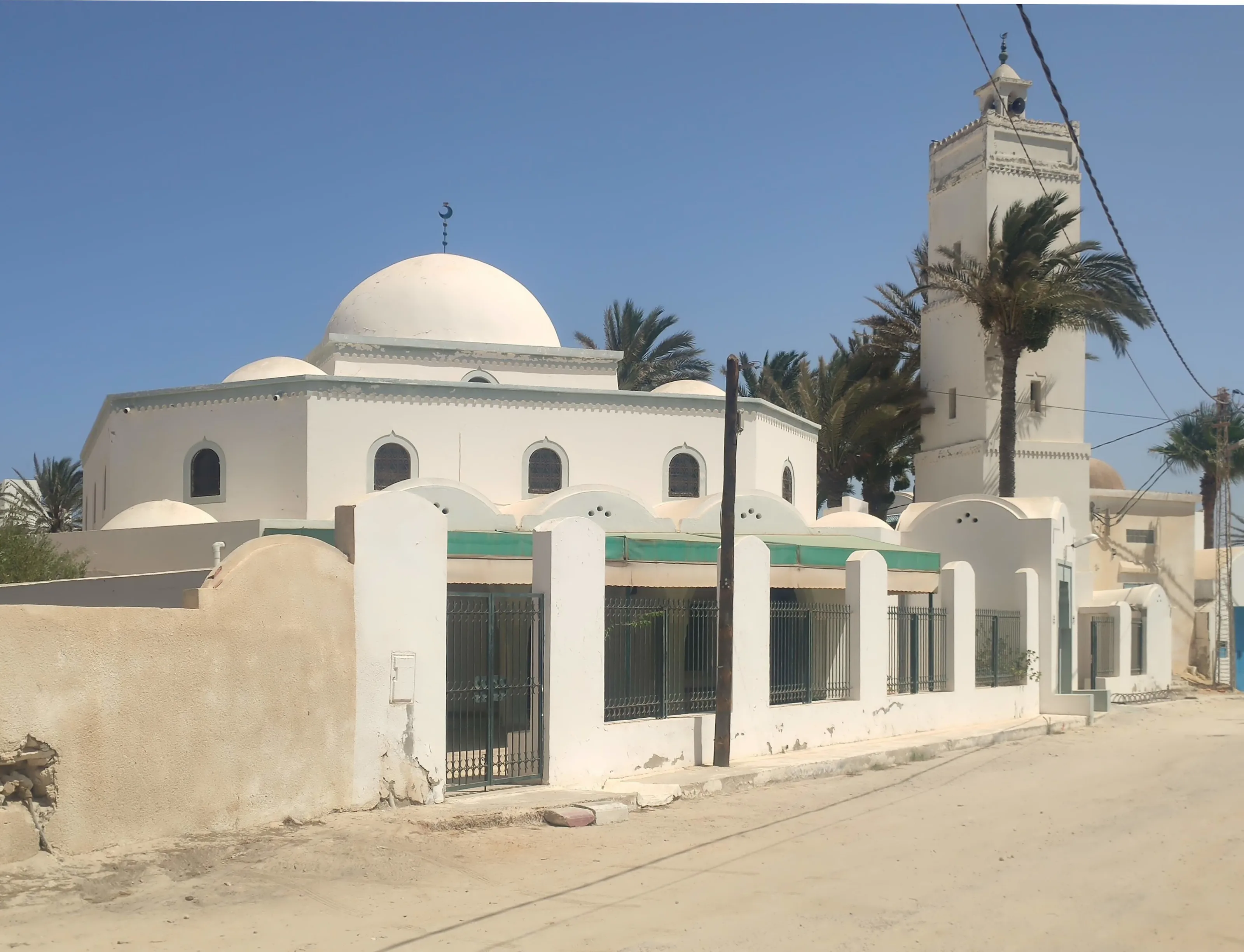
Houmt Souk, on the north coast, is the island's main town: a little under 43,000 people in the town itself at the 2014 census (Wikipedia). It is a whitewashed market centre with souks around Place d'Algérie, selling Guellala pottery, jewellery, basketry, woollen goods, spices, dates and traditional clothes (Wikivoyage). At the fish market, auctioneers sit on high blue stools and sell fish by the string. Bargaining is normal, and one guide suggests starting well below the asking price.
On the seafront, Borj El Kebir, a Hafsid fort built around 1392 and enlarged around 1450, is the biggest historic monument still standing on the island (Wikipedia). In the old Maltese quarter several funduks, former merchants' inns, have become small hotels or hostels.
Erriadh
Djerbahood and the El Ghriba synagogue
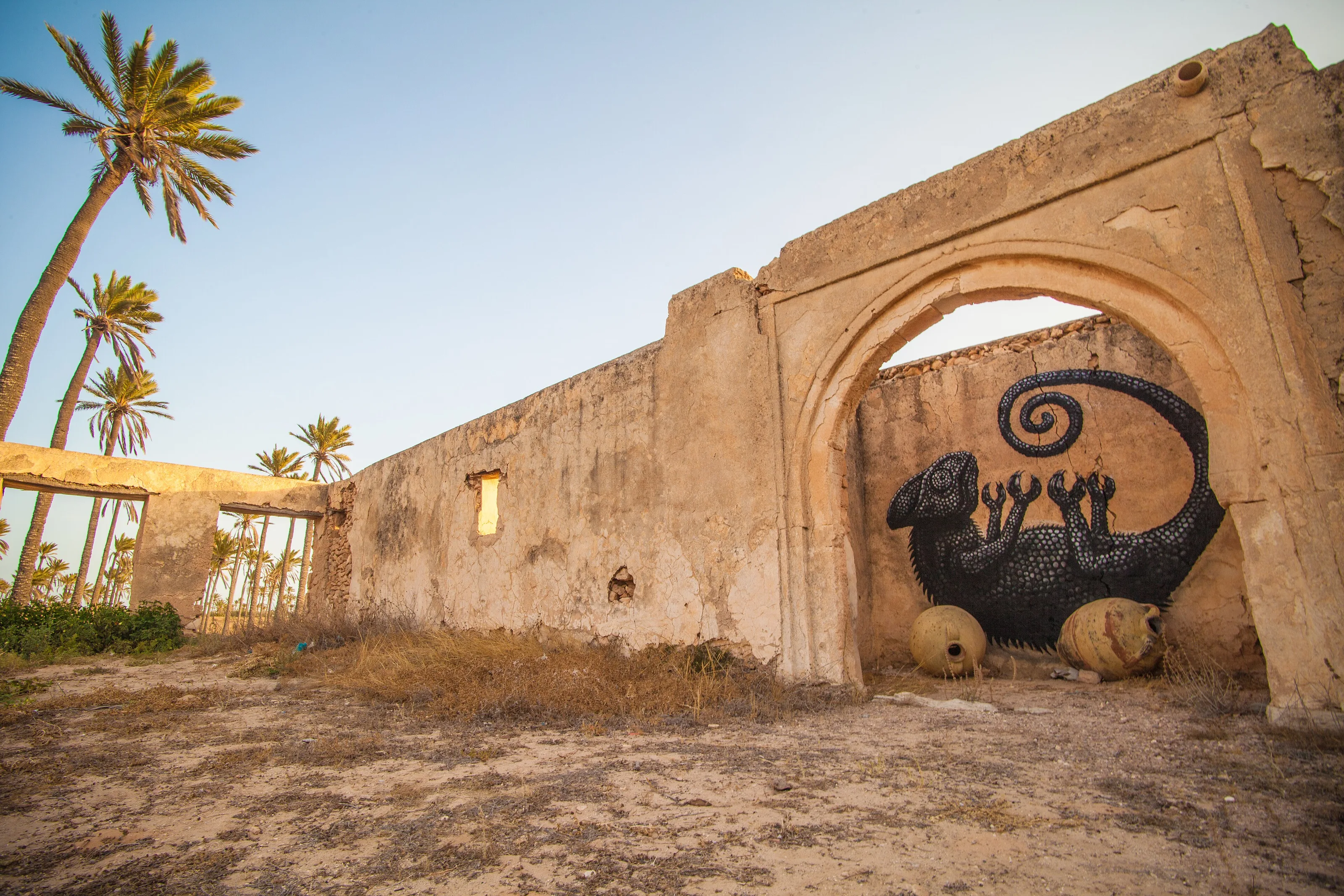
At Erriadh, the Djerbahood art project has turned the village walls into an open-air gallery: more than a hundred artists from many countries have painted the white façades, a striking contrast between old architecture and street art (Wikipedia DE).
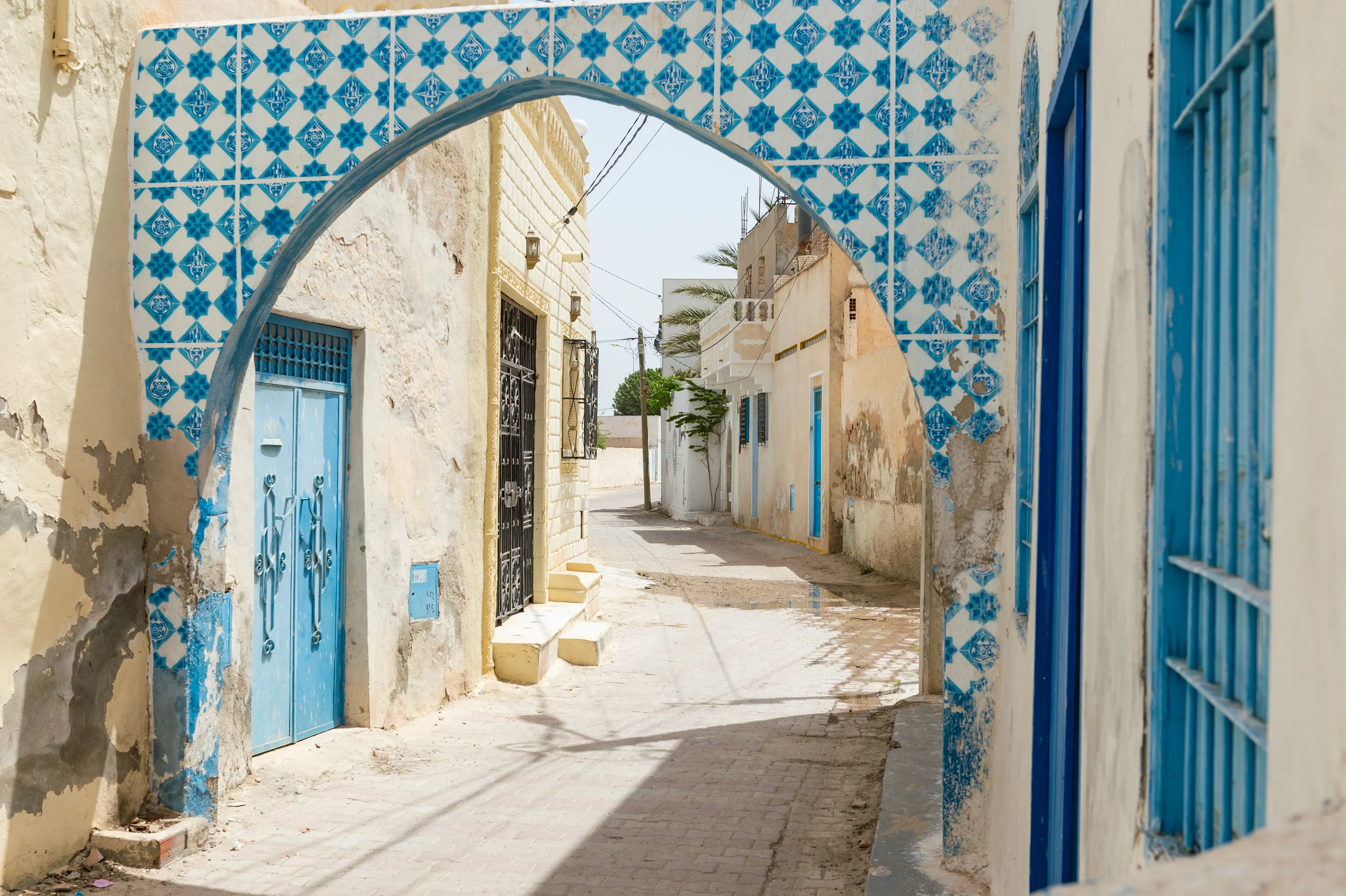
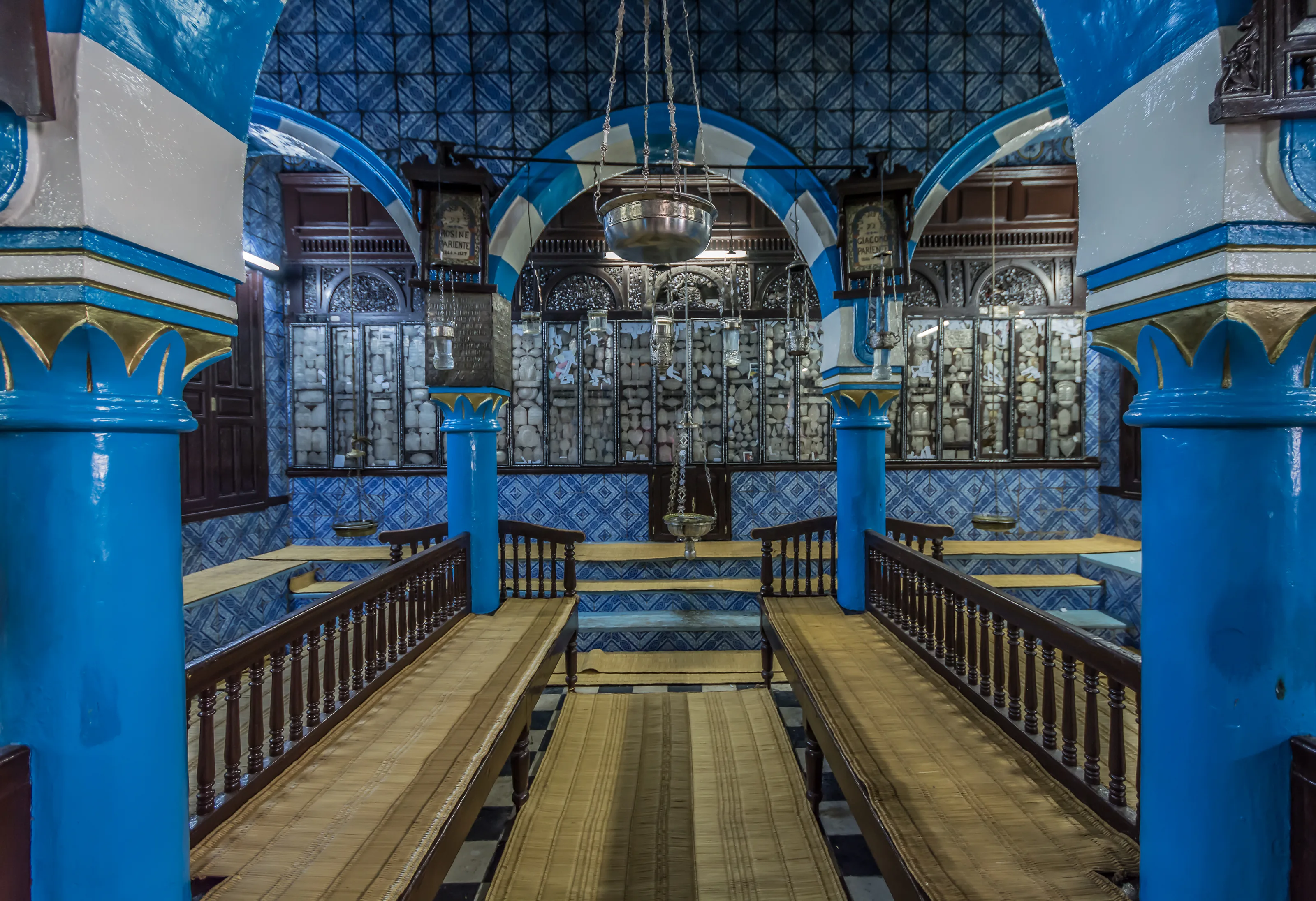
Erriadh is also home to the El Ghriba synagogue, a place of Jewish pilgrimage every spring at Lag BaOmer (Wikivoyage). The community was hit by an attack in 2002 and by a shooting in 2023 during the pilgrimage (Wikipedia). Check the conditions for visiting and read your government's travel advice before you go, as you would for any trip to Tunisia.
Museums and monuments
Island traditions, Guellala pottery and forts
The island has few large museums, but several places are easy to visit. Opening hours and fees change, so check them before you set out.
Djerba Traditional Heritage Museum. In Houmt Souk, it occupies the former zawiya of Sidi Zitouni (18th century) and reopened in 2008 after an extension. Costumes, jewellery, pottery, looms and a room devoted to weddings show island life (Wikipedia).
Guellala Museum. Opened in 2001 in a potters' village, it has more than 4,000 m2 of themed pavilions on festivals, traditions, crafts, myths and legends, music and mosaics (Wikipedia). The village is also a popular sunset viewpoint.
Djerba Explore and Lalla Hadria Museum. Near the Taguermess lighthouse, this twelve-hectare park combines a reconstructed traditional village, the Lalla Hadria Museum of Tunisian and Arab-Islamic art, and the largest crocodile farm in the Mediterranean (Wikipedia, Wikivoyage).
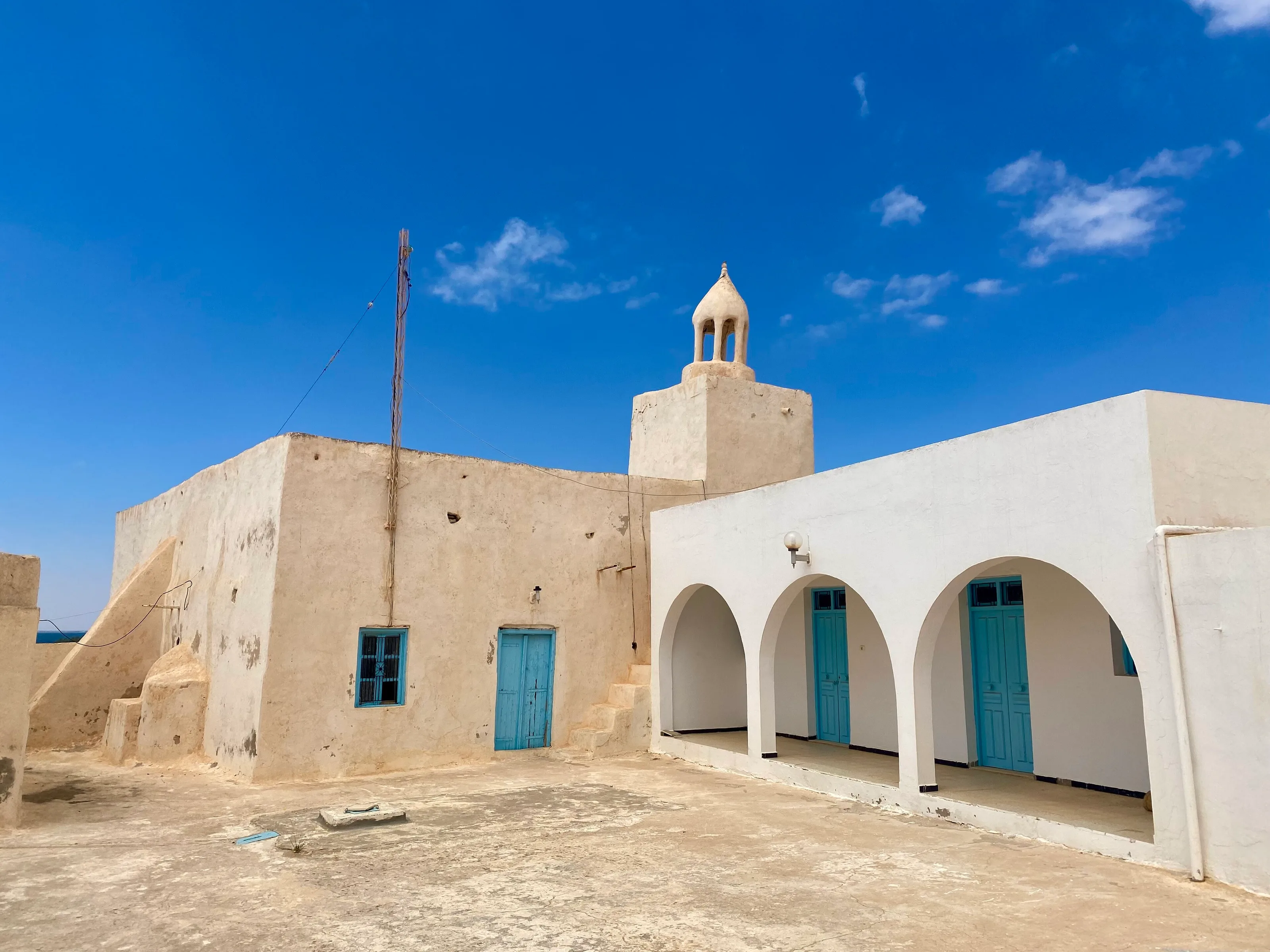
Fadhloun Mosque. On the Houmt Souk-Midoun road, this fortified mosque, said to date from the 11th century, is now a museum about how the island's mosques served as refuges (Wikipedia).
Borj El Kastil. A ruined fortress built in the late 13th century on the south-east coast by Admiral Roger de Lauria, in a lonely spot where access may need a suitable vehicle (Wikipedia).
Beaches and sea
Fine sand, the lagoon and Flamingo Island
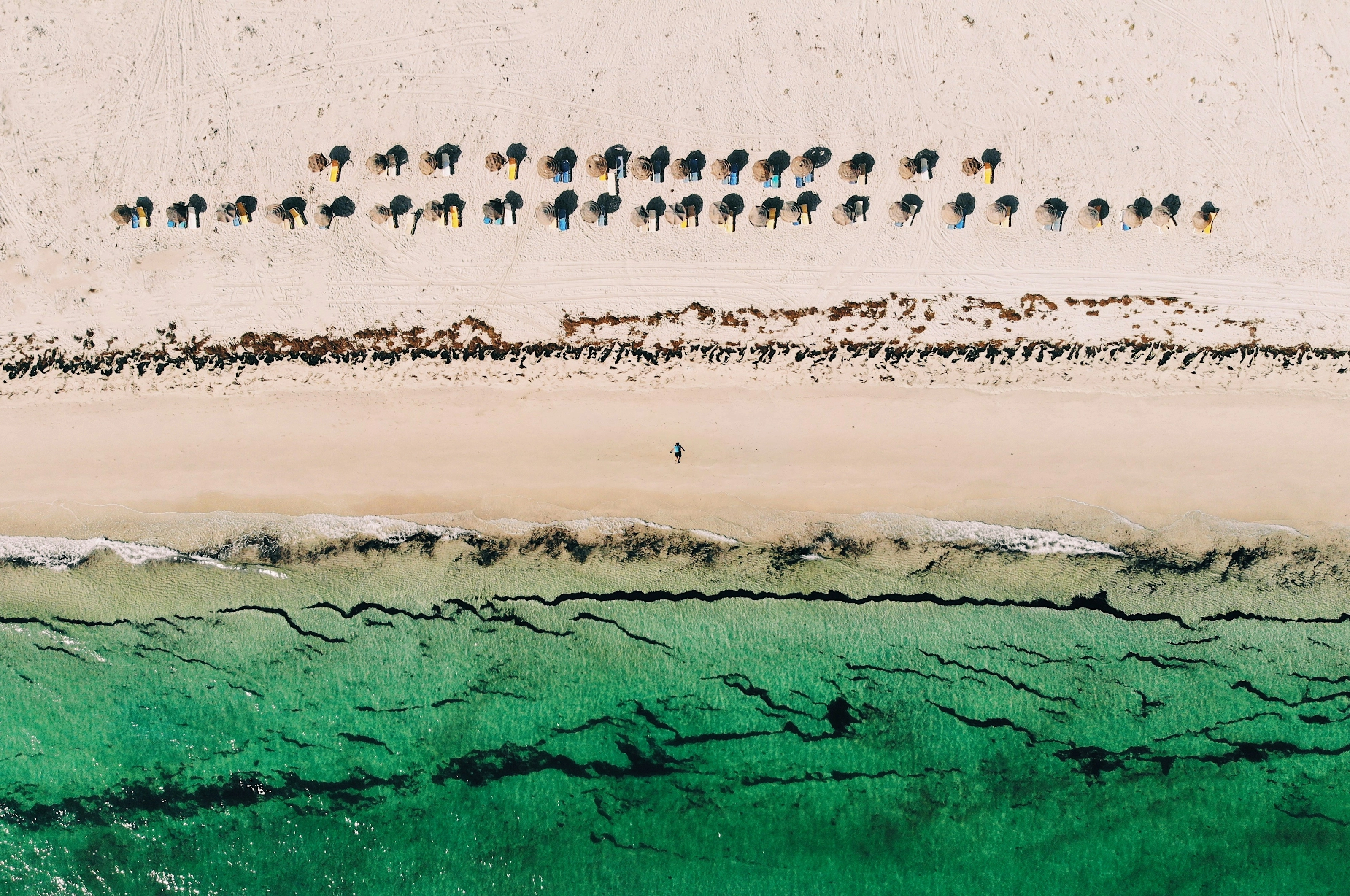
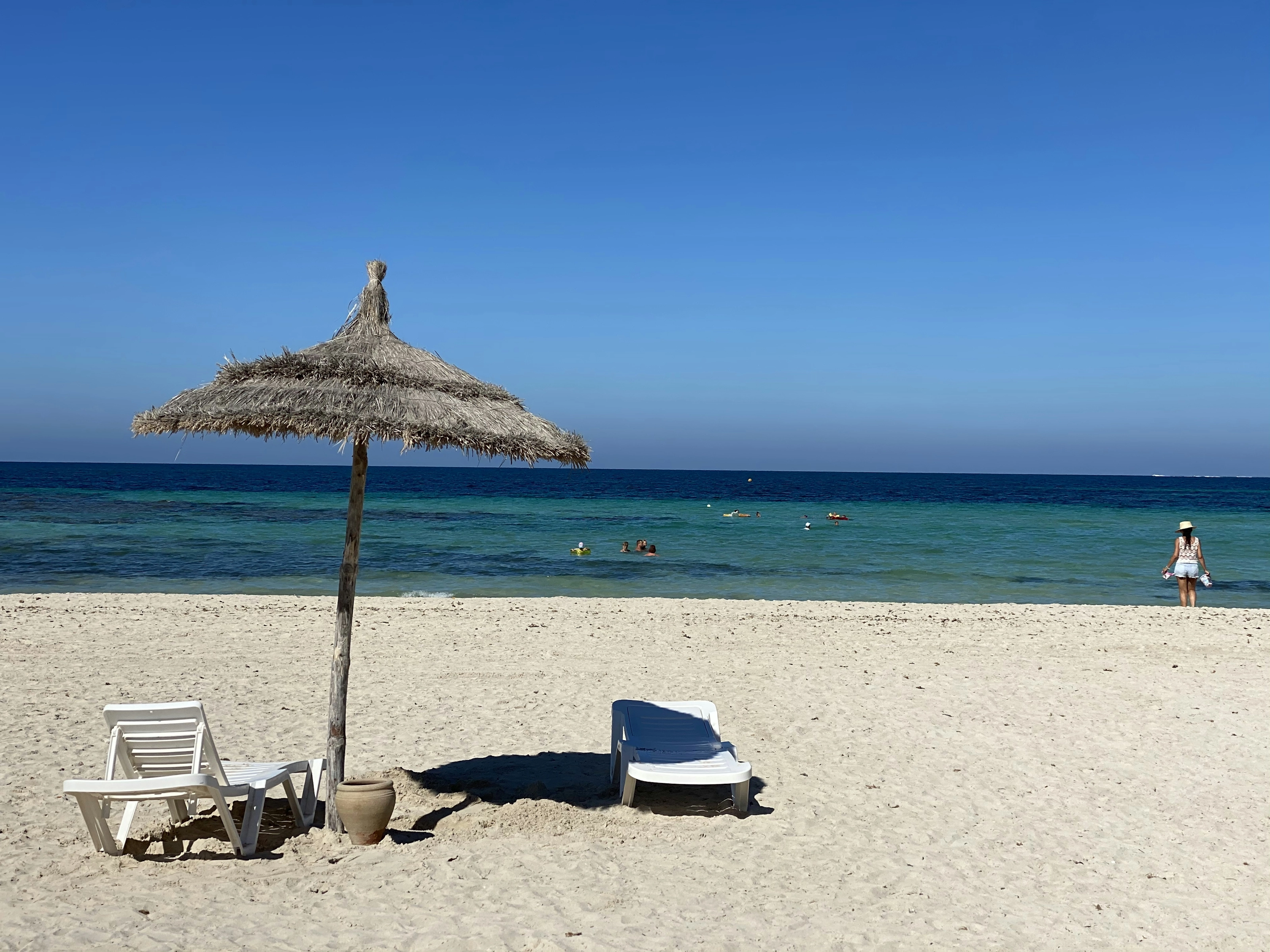
Djerba has about twenty kilometres of sandy beaches, mostly in the east and north-east: Sidi Mahrez, Sidi Hacchani, Sidi Bakkour and Aghir. Flaubert nicknamed it the "island of golden sands" (Wikipedia). Shallow water and a hotel zone stretching more than twenty kilometres between Aghir and Houmt Souk make the east coast a natural choice for families. In the east, the Lagoon has clear, shallow blue-green water, water sports and camel or horse rides (Wikivoyage).
Ras R'mal, nicknamed Flamingo Island, is a sand spit reached on boat trips from the port of Houmt Souk; the flamingos are there mainly in the cooler months, from October (Wikivoyage). The west coast, around Sidi Jmour and the Borj Djillidj lighthouse, is wilder and quieter, and lovely at sunset.
Tataouine, Chenini, Douiret
The land of the ksour
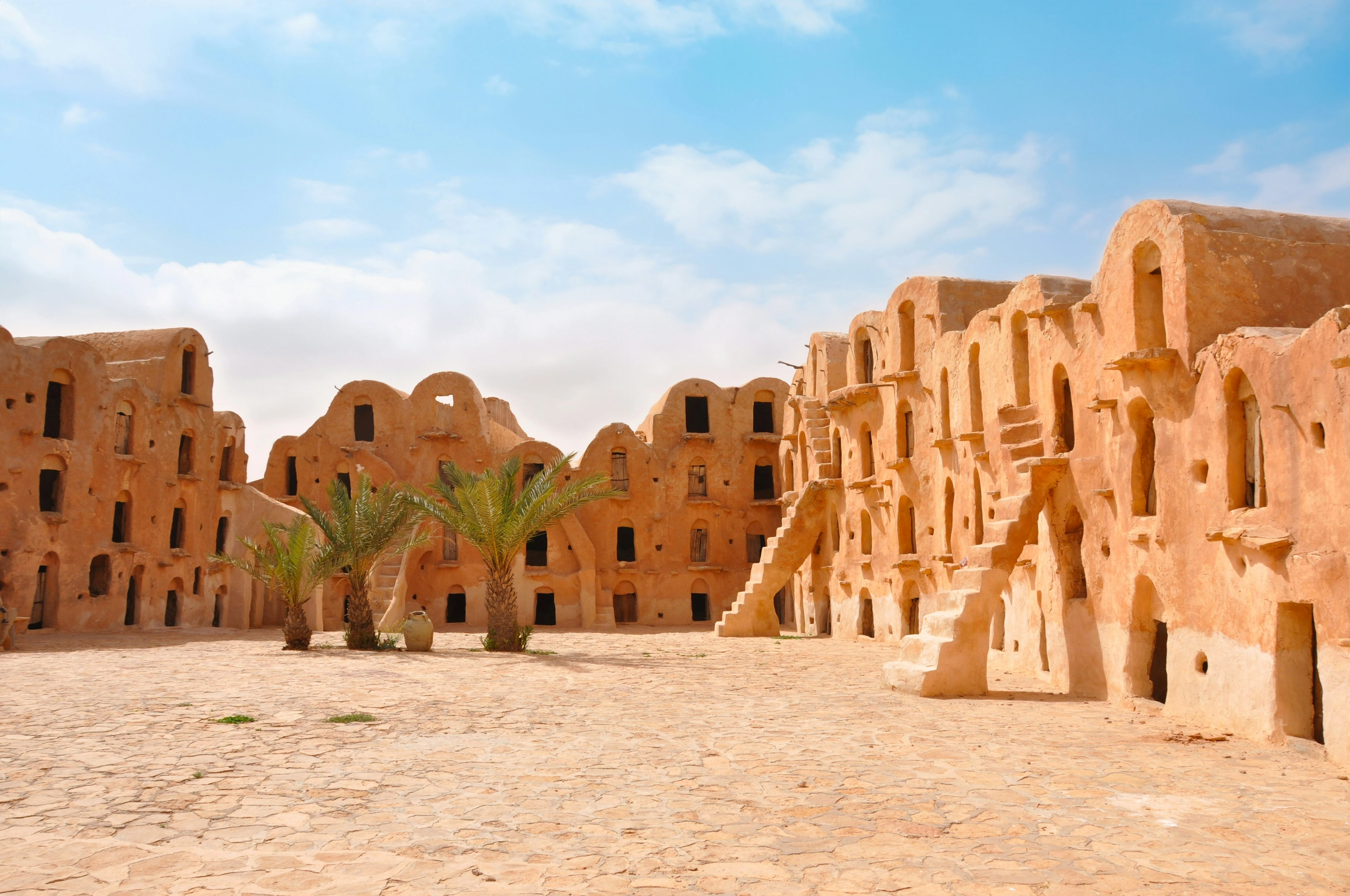
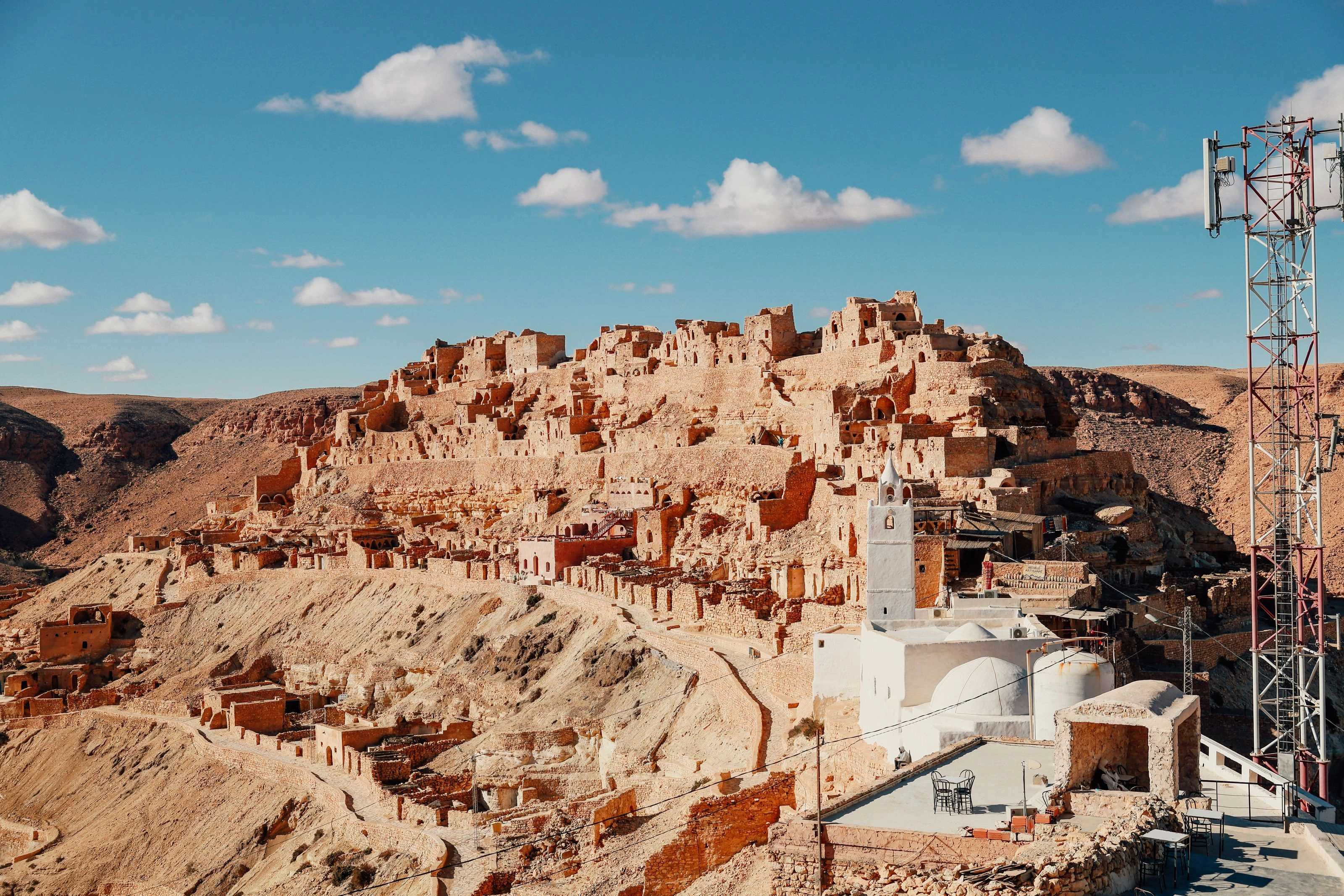
Fortified communal granaries, the ksour, characterise the architecture of the south-east. Their small vaulted cells, the ghorfas, were stacked around a courtyard to store the harvest. Ksar Ouled Soltane, with ghorfas piled up over several storeys, is the most spectacular example.
Chenini and Douiret, two Berber villages built on the mountainside, seem to melt into the rock. Douiret, about 20 km from Tataouine, is an almost abandoned village with well-preserved ruins (Wikivoyage). Public transport reaches these sites poorly: plan on a hired car or a taxi for the day.
Matmata
The troglodyte houses
The houses of Matmata are dug around a central courtyard, an architecture designed to keep cool in the desert heat.
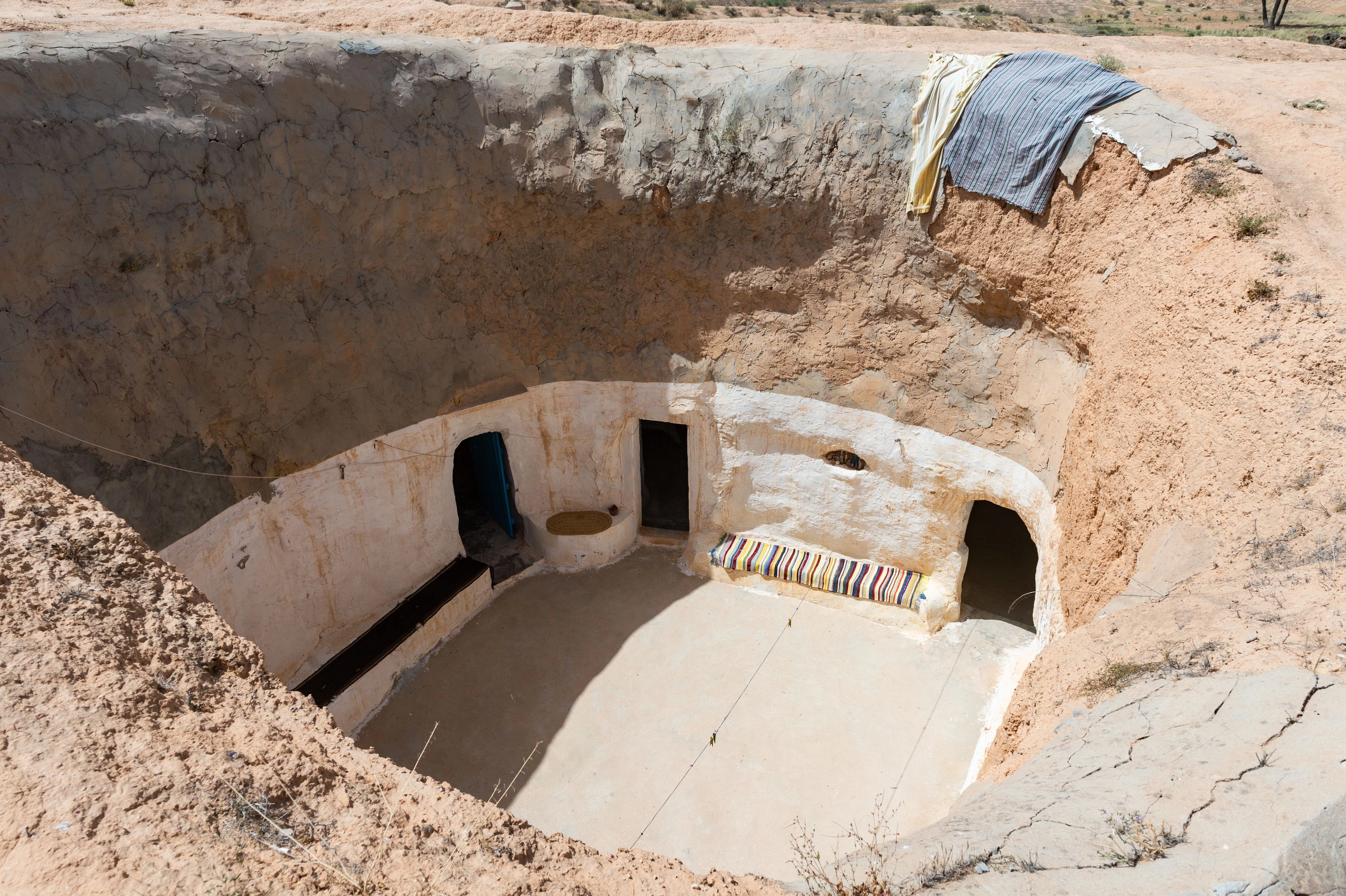
Matmata is about 45 minutes by car from Gabès on a sealed road, and about an hour and a half from Douz; the stone village of Tamezret lies 10 km west (Wikivoyage). The Hotel Sidi Driss, a cave converted into simple lodging, was a Star Wars set.
Not to miss
Southern Tunisia and Star Wars
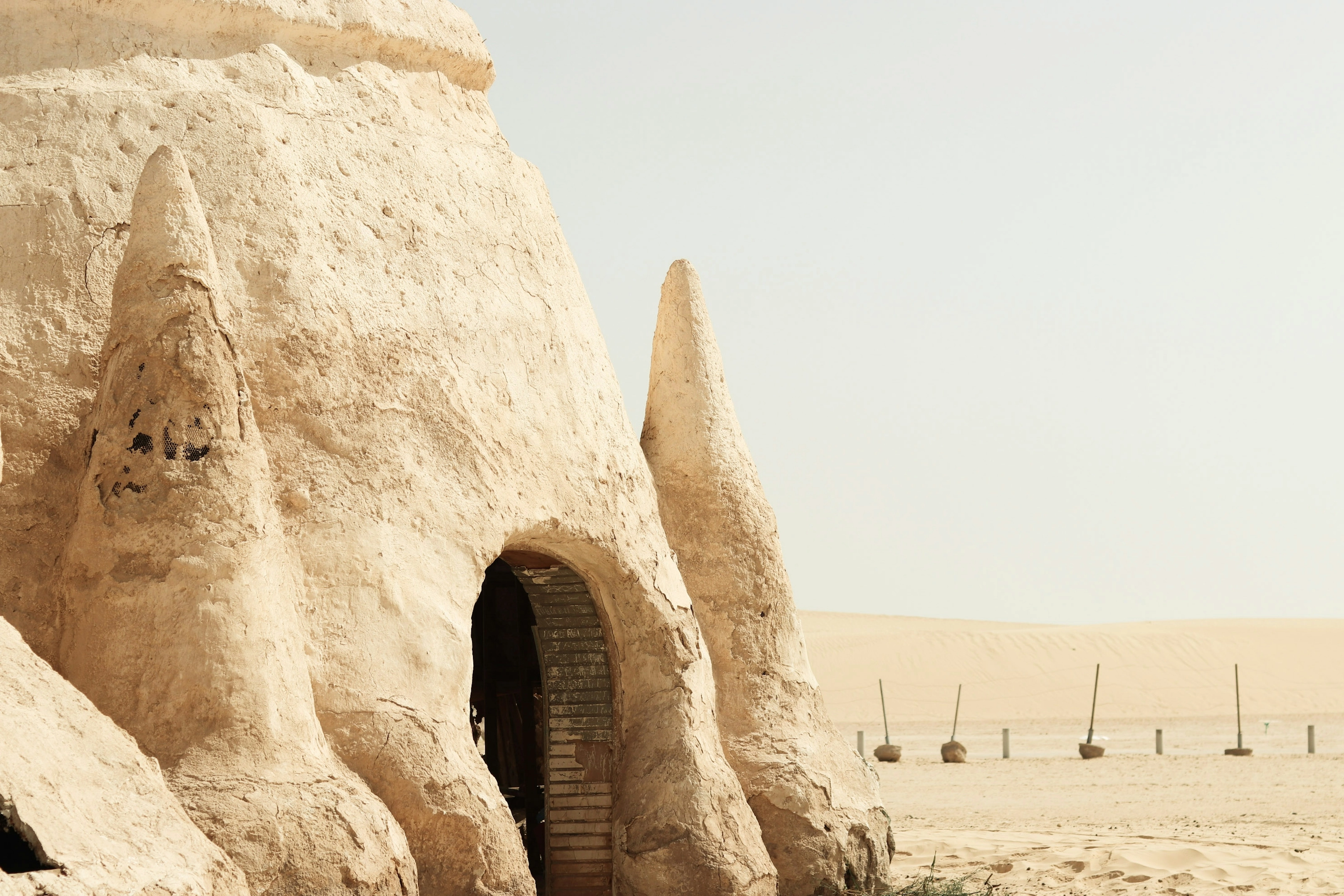
Several scenes of the saga were filmed in southern Tunisia, notably at Matmata, Tataouine and around Tozeur, where the Mos Espa set stands. The name of the fictional planet Tatooine echoes that of the town of Tataouine. On Djerba itself, streets in Ajim and the Sidi Jemour marabout were used in the 1976 shoot (Wikipedia). For film fans, a circuit in the south can double as a pilgrimage; save GPS coordinates for the sites, as taxi drivers do not always know them (Wikivoyage).
Tozeur and the oases
Palm groves, yellow brick and the Chott el Jerid
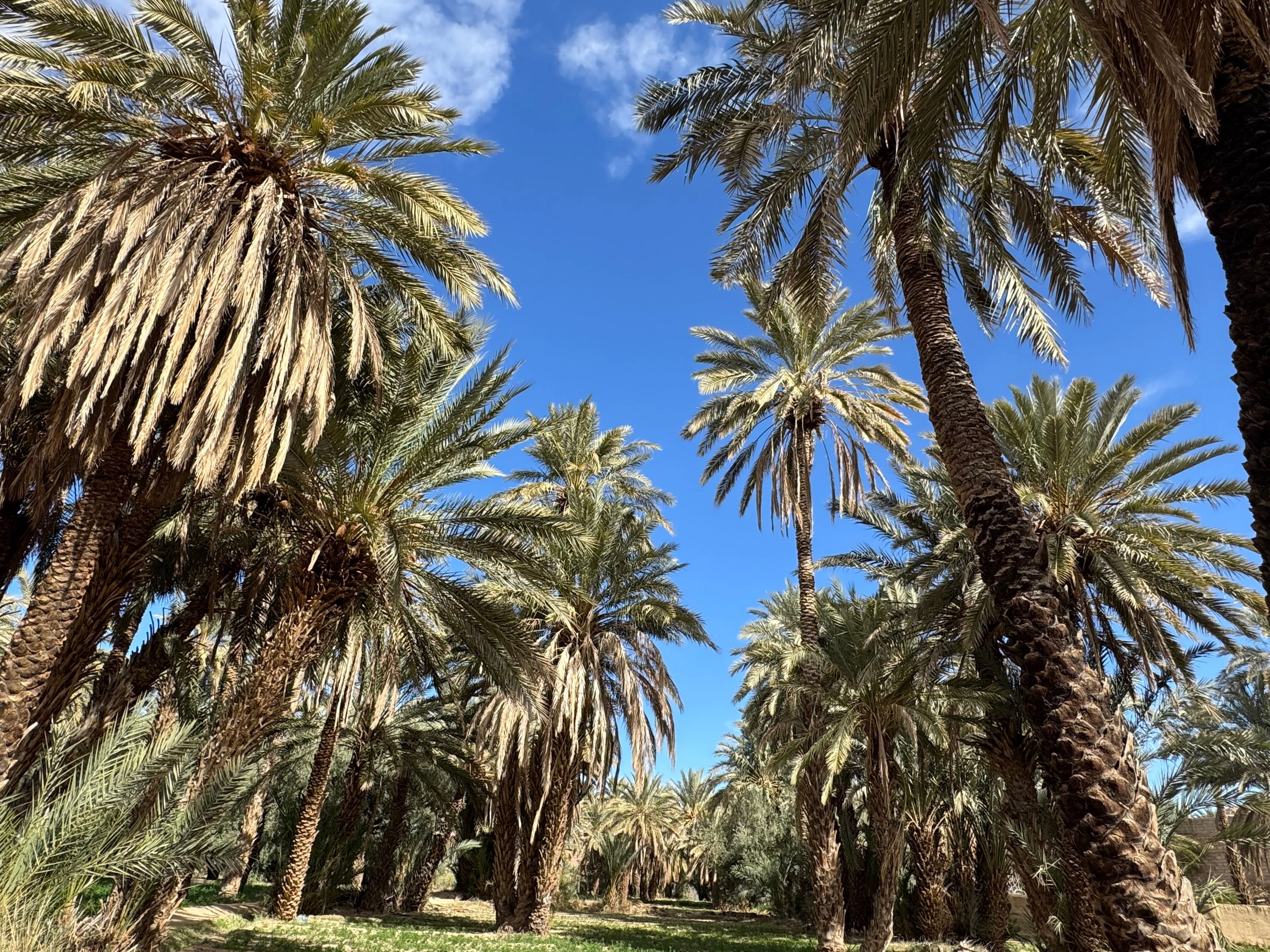
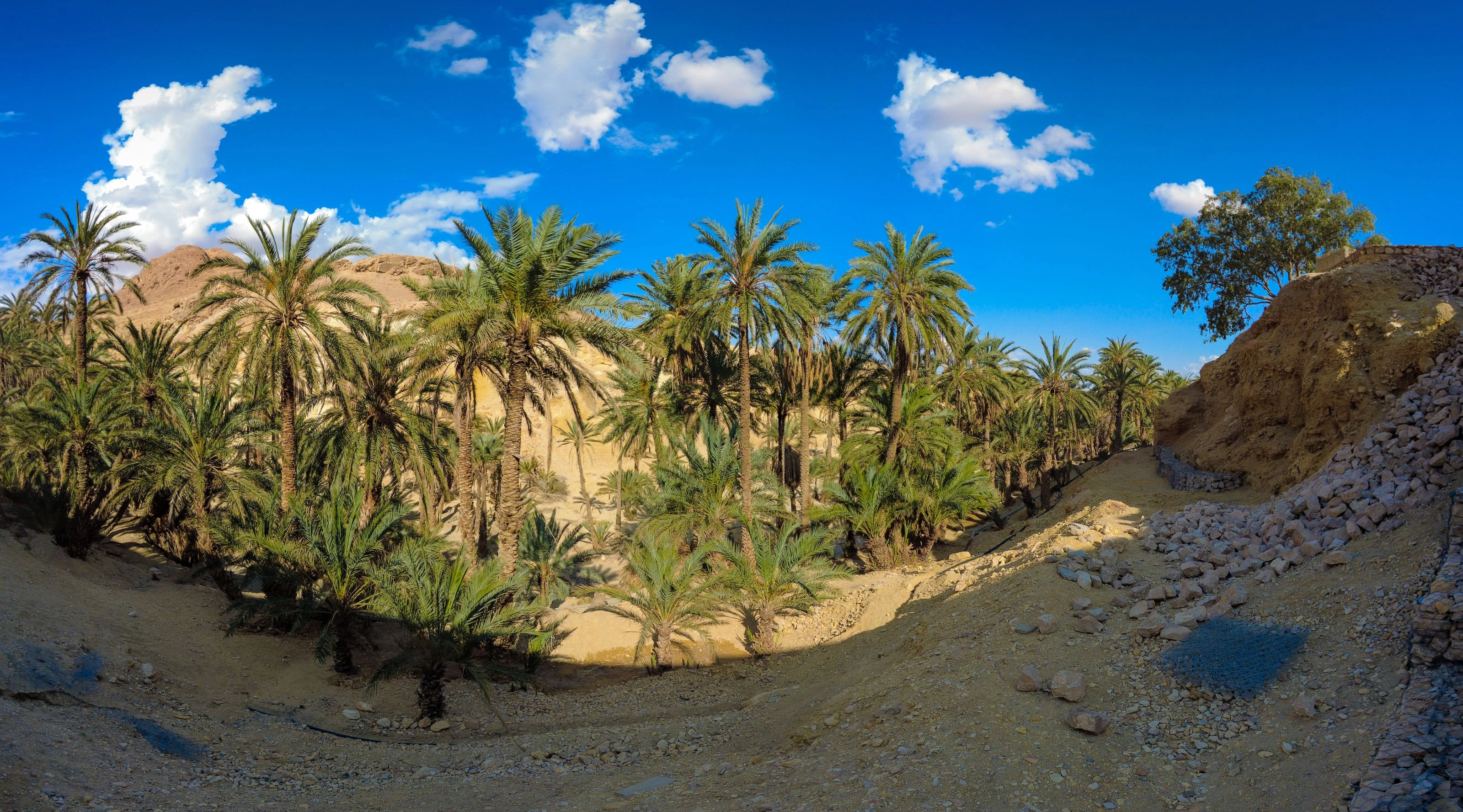
At the opposite end from the coast, Tozeur opens onto the palm groves of the south-west, its traditional brick architecture and the Chott el Jerid, a huge salt lake whose surface changes colour with the season and the light, an almost lunar landscape between Tozeur and Douz. The mountain oases of Chebika, Tamerza and Mides complete the circuit. Distances are long: Tozeur is not a comfortable day trip from Djerba, so allow at least two days.
Douz
The gateway to the Sahara
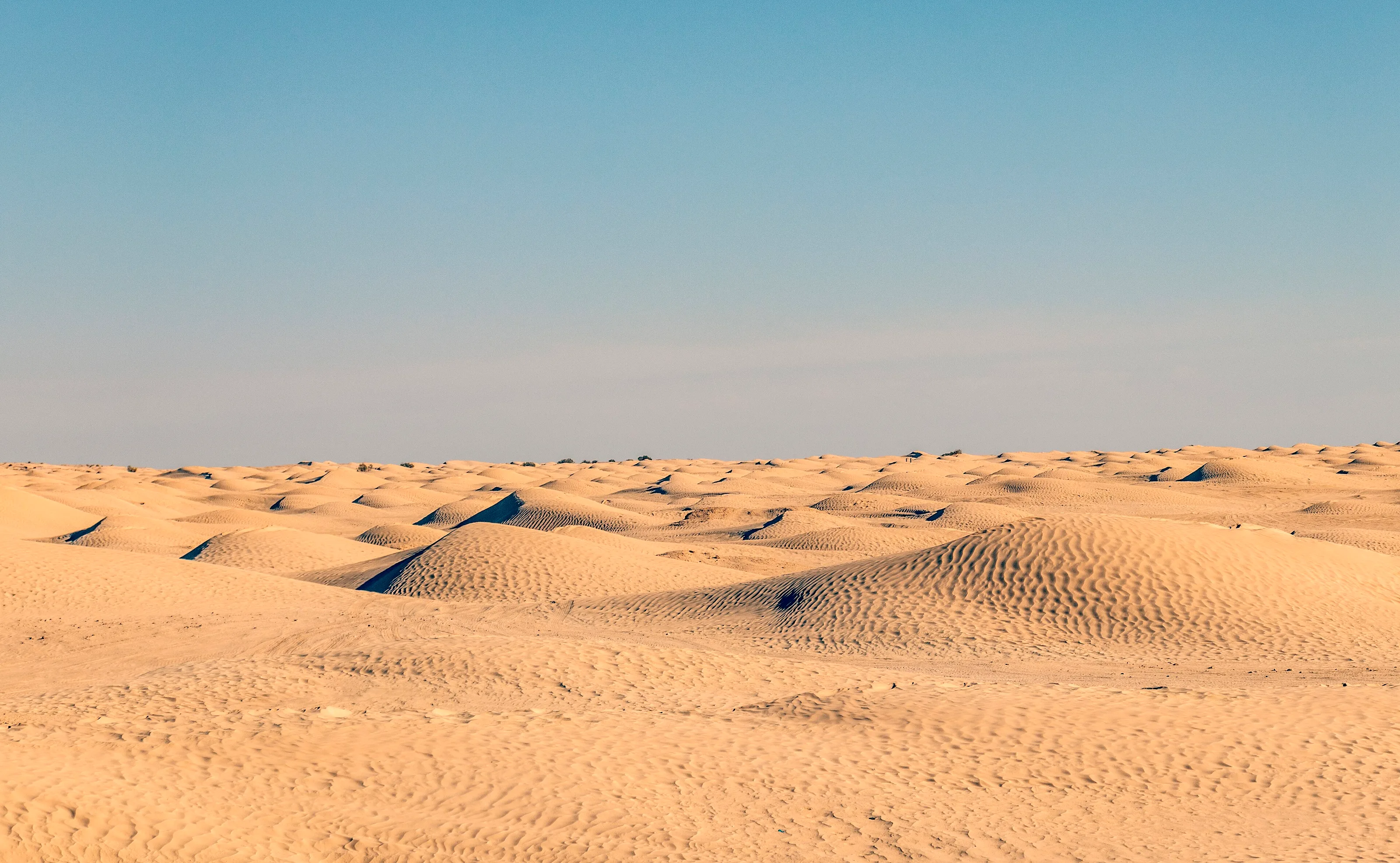
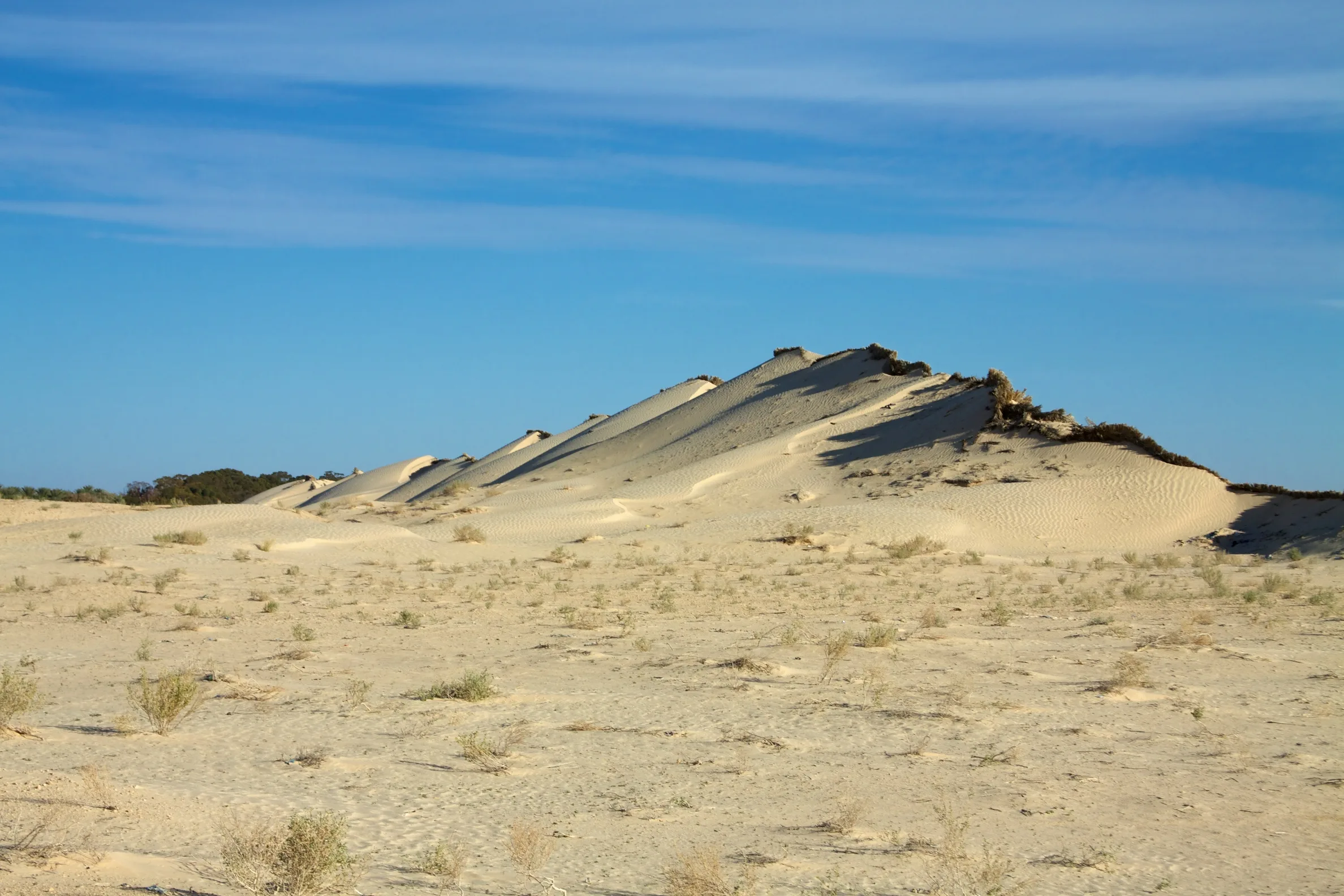
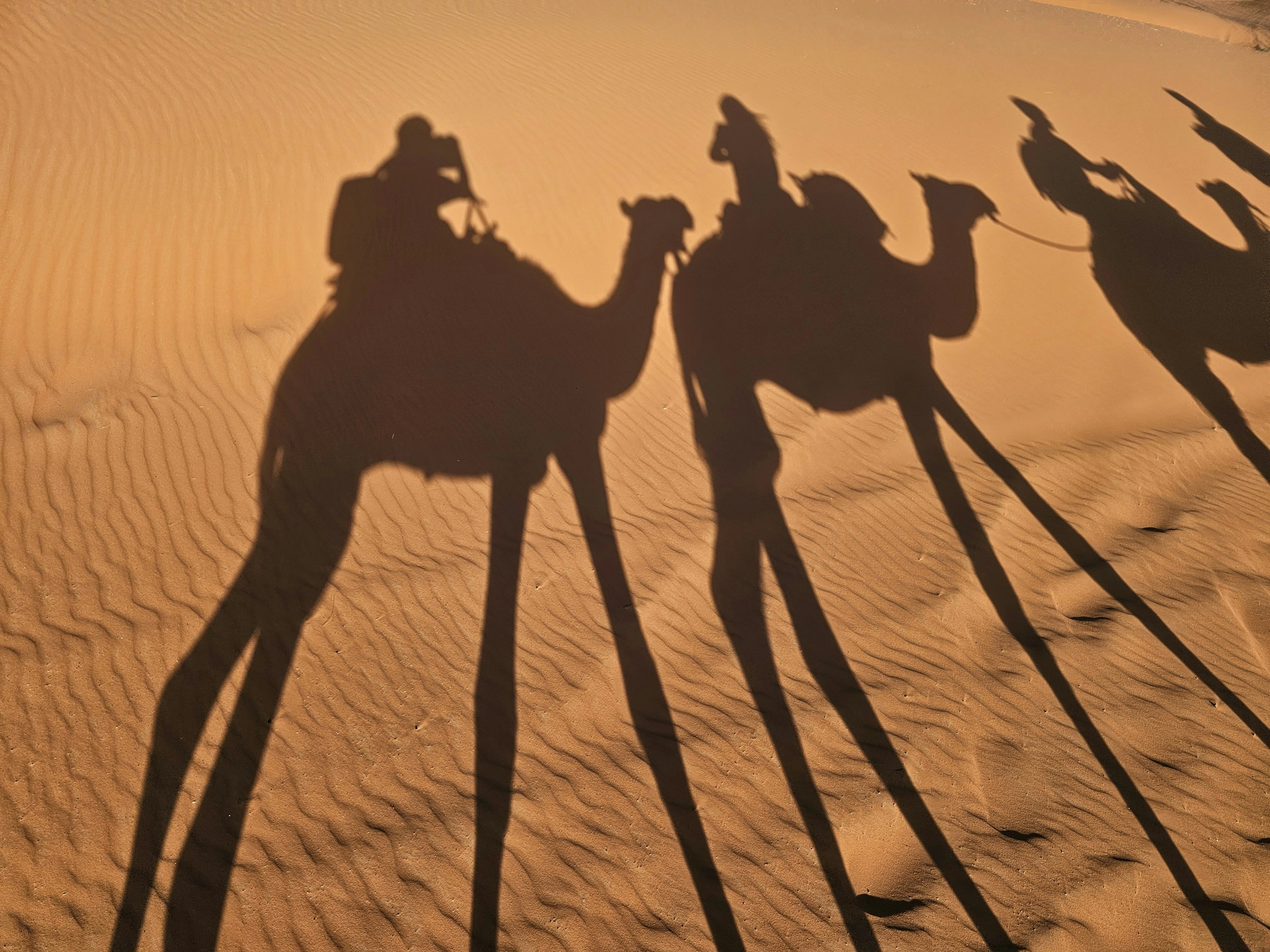
4x4, walking, camel rides or a night in a camp: Douz is the classic starting point for a dune excursion. After sunset, far from any light pollution, the starry Sahara sky is among the strongest memories of a trip to the south. For a desert tour, agree the programme in writing and pay only part of the price upfront.
Why track Djerba with SniperAir
You don't need to compare prices every day
Choose your departure
Tell us your departure airport and your maximum budget for a flight to Djerba.
SniperAir watches
Our systems continuously compare new prices against the route's real history.
You get an alert
As soon as a price matches your criteria, you're notified — without searching yourself.
Routes and distances
Three routes and a few reference points
| Route | Stages |
|---|---|
| South-East | Djerba → Zarzis → Tataouine → Chenini → Douiret |
| Ksour | Djerba → Tataouine → Chenini → Matmata |
| Sahara | Tozeur → Chott el-Jérid → Douz |
A few reference points on distances, from Wikipedia and Wikivoyage. Times vary with traffic and road conditions.
| Leg | Reference |
|---|---|
| Airport to Houmt Souk | about 8 to 9 km, west of the town |
| Ajim to Jorf ferry | about 2.5 km of sea |
| El Kantara Roman causeway | about 7 km to the mainland |
| Matmata to Gabès | about 45 min by car |
| Matmata to Douz | about 1 h 30 by car |
| Tataouine to Douiret | about 20 km |
Djerba airport
The direct gateway to southern Tunisia's beaches
Djerba-Zarzis
About 9 km west of Houmt Souk, near Mellita: generally 2 to 3 hours' flight from Europe.
The airport has existed since 1950 and was enlarged and renamed Djerba-Zarzis in 1970; a new terminal opened in 2007 (Wikipedia). It handles mainly seasonal leisure flights from Europe plus a few domestic services. The ride to Houmt Souk is short; hotels in the tourist zone in the east are a little further. Metered taxis wait outside.
Getting around
Taxis, bicycles and the ferry to the mainland
From the airport. Taxis are one of the few easy options, and they should use the meter (Wikivoyage). You can also hire a car at the airport or arrange a transfer with your accommodation.
On the island. Taxis are plentiful and metered fares stay moderate (Wikivoyage DE). Ride-hailing apps such as Uber or Bolt did not work on Djerba in early 2024. Bicycles and scooters can be hired in Houmt Souk and the Midoun area; main roads are good, but some small roads are unpaved and few are lit at night (Wikivoyage).
To the mainland. A ferry links Ajim to Jorf (about 2.5 km of sea), and the El Kantara causeway reaches Zarzis. Trains stop at Gabès, from where a bus or shared taxi goes to Jorf. Buses and shared taxis to the mainland leave from the Houmt Souk bus station (Wikivoyage).
When to go
Climate and best time to visit Djerba
Spring
Mild and dry, ideal for Houmt Souk and the pottery villages; the sirocco, a hot wind, can blow from March to mid-June.
Summer
Hot (average highs close to 33 °C), tempered by the sea breeze; peak beach season and very busy beaches.
Autumn
Sea still warm and milder temperatures; this is the season of what little rain falls, with a peak in October.
Winter
Mild (monthly averages above 12 °C) but the sea is too cool for many; often the most affordable time.
The climate is Mediterranean with a desert tendency: 19.8 °C annual mean and about 250 mm of rain a year, mostly between September and December (Wikipedia). To combine beach and desert, April-May and September-October are the best compromise; in summer, trips to the south become punishing.
Food and drink
Barley couscous, grilled fish and brik
Djerba's cooking is frugal and shaped by steaming: semolina, fish, vegetables and even meat. Barley has been the staple food of the island for centuries (Wikipedia).
Specialities. Barley couscous (malthoutha) with fish or dried meat, small dried anchovies (ouzaf), Djerban steamed rice, brik with egg, lablabi (chickpea soup), mechouia salad and fricassé (Wikivoyage).
Fish and markets. Grilled fish is chosen at the counter, notably in the restaurants by the ferry dock at Ajim; in Houmt Souk the small brik and fricassé stalls are popular with locals. Midoun holds a market on Fridays (Wikipedia DE).
Sweets and drinks. Dates, stuffed or in makroud, turn up everywhere. To drink: mint tea, fresh orange juice, l'ban (fermented milk), boukha, a fig spirit, and Celtia beer (Wikivoyage).
Budget and length of stay
A mid-priced beach destination
Djerba is a mid-priced destination, popular for all-inclusive stays and package holidays, with independent travel playing a smaller role (Wikivoyage DE). Outside the hotels, taxis, meals at local stalls and museum entry stay moderate. We do not publish precise prices, because they change and do not cross-check between sources.
Five to seven nights is a good length, with two or three of those days on the mainland. The island suits beach holidaymakers who want culture close at hand, families, Star Wars fans and photographers.
You might also like
Similar destinations
FAQ
Frequently asked questions about flights to Djerba
What is the airport for arriving in Djerba?
Djerba-Zarzis (DJE) is the island's only airport, about 9 km west of Houmt Souk. It serves many European cities directly, especially in tourist season.
How long is a flight to Djerba from Europe?
Generally between 2 and 3 hours from most major European cities.
How much does a flight to Djerba usually cost?
The price mainly depends on your departure city, the season and your booking date. The "deals" section above shows real prices already spotted by SniperAir for this destination.
What is the best time to visit Djerba?
April-May and September-October to combine beach and excursions. Summer is hot and busy, winter is mild but too cool for many swimmers; avoid summer for the desert.
Do you have to choose between sea and desert?
No, that is the point of southern Tunisia: you can combine both on a single stay of 5 to 7 days, with two or three days on the mainland.
How do you get around Djerba?
By metered taxi, or by bicycle or scooter hired in Houmt Souk or Midoun. For the mainland, a ferry links Ajim to Jorf and a causeway reaches Zarzis; for the ksour, hire a car or take a taxi for the day.
What should you eat in Djerba?
Barley couscous with fish, grilled fish, brik with egg, lablabi and mechouia salad, with dates for dessert and mint tea.
Which museums should you visit in Djerba?
The Traditional Heritage Museum in Houmt Souk, the Guellala Museum and, near the Taguermess lighthouse, Djerba Explore with the Lalla Hadria Museum. Check opening hours before you go.
Where can you see Star Wars sets in southern Tunisia?
Mainly around Matmata, Tataouine and Tozeur (the Mos Espa site), and on Djerba around Ajim and at Sidi Jemour.
Is Djerba an expensive destination?
The price level is mid-range: all-inclusive packages dominate, and meals and transport on the spot stay moderate. We do not publish precise prices.
Are Djerba and Tunis the same destination for SniperAir?
No, they are two separate airports (DJE for Djerba, TUN for Tunis), each tracked independently based on its own route and price history.
How do I get alerted when a flight to Djerba drops below my budget?
Create an alert profile with your departure airport, Djerba as the destination and your maximum budget. You'll be notified automatically as soon as a matching price is detected.
Ready to head to Djerba?
Set your budget and let SniperAir track the fares.
Create my alert