
Cheap flights to Tbilisi
Set your departure airport and maximum budget: SniperAir tracks prices to Tbilisi and alerts you the moment a deal matching your criteria appears.
Quick summary
Country
Georgia
Continent
Asia
Airport
TBS
Currency
Georgian lari (GEL)
Time zone
UTC+4 (all year)
Deals already spotted to Tbilisi
Real flight examples detected by SniperAir, with their reference price.
Loading examples…
Why track Tbilisi with SniperAir
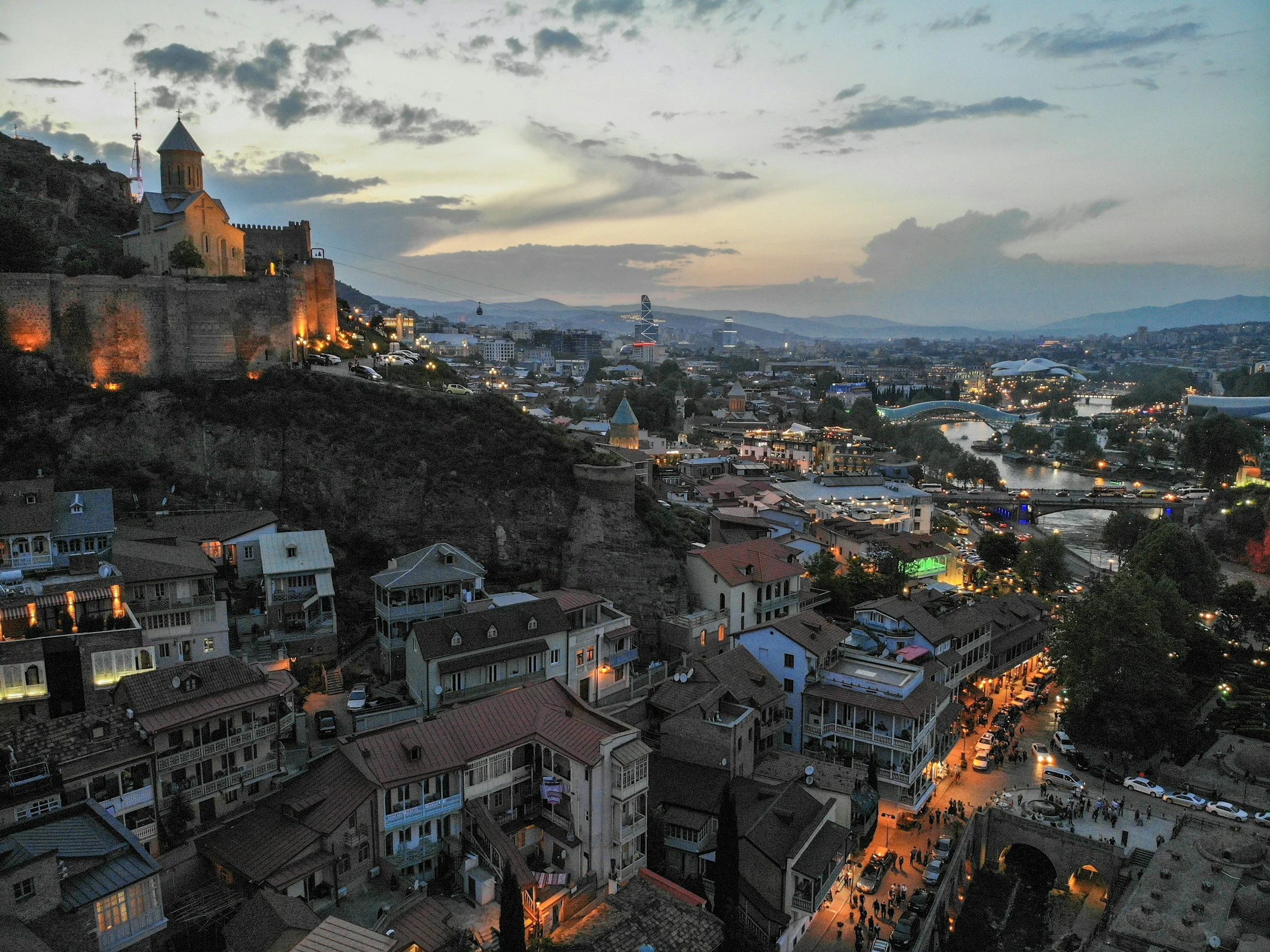
The Caucasus capital of wooden balconies
Choose your departure
Enter your departure airport and your maximum budget for a flight to Tbilisi (TBS).
SniperAir keeps watch
Our systems continuously compare new prices with the real price history of the route. SniperAir monitors prices and alerts you: it does not sell or book tickets.
You receive an alert
As soon as a price matches your criteria, you are notified, without having searched for anything yourself.
Tbilisi is the capital and largest city of Georgia, with more than 1.3 million inhabitants according to Wikipedia (EN), close to a third of the country. Its name comes from the Georgian word for warm, after the sulfur springs that, in legend, led King Vakhtang I to found the city in the 5th century. Set in the Kura valley between rocky hills, it layers medieval churches, balconied houses, brick-domed bathhouses, neoclassical avenues and strikingly modern architecture.
Flights to Tbilisi vary by season and by departure airport: a SniperAir alert saves you from comparing every day. You set your budget, we compare new prices with the route's real history and we let you know.
Airport and getting into town
Tbilisi Airport, about 17 km from the centre
Tbilisi Shota Rustaveli (TBS)
Shota Rustaveli Tbilisi International Airport (TBS) is about 17 km east of the centre according to Wikivoyage (EN); Wikipedia (FR) says south-east and Wikipedia (DE) says 20 km. The terminal is small but reasonably modern. Bus 337 runs between the airport, the centre and the main railway station, taking around 50 minutes according to Wikivoyage (EN); ride-hailing apps are usually cheaper than the taxis outside the arrivals hall. Kutaisi (KUT), about 4 hours away by road, is another gateway for low-cost flights.
Distance TBS to centre: about 17 to 20 km depending on the source (Wikivoyage EN, Wikipedia FR and DE). No transfer fares are published here.
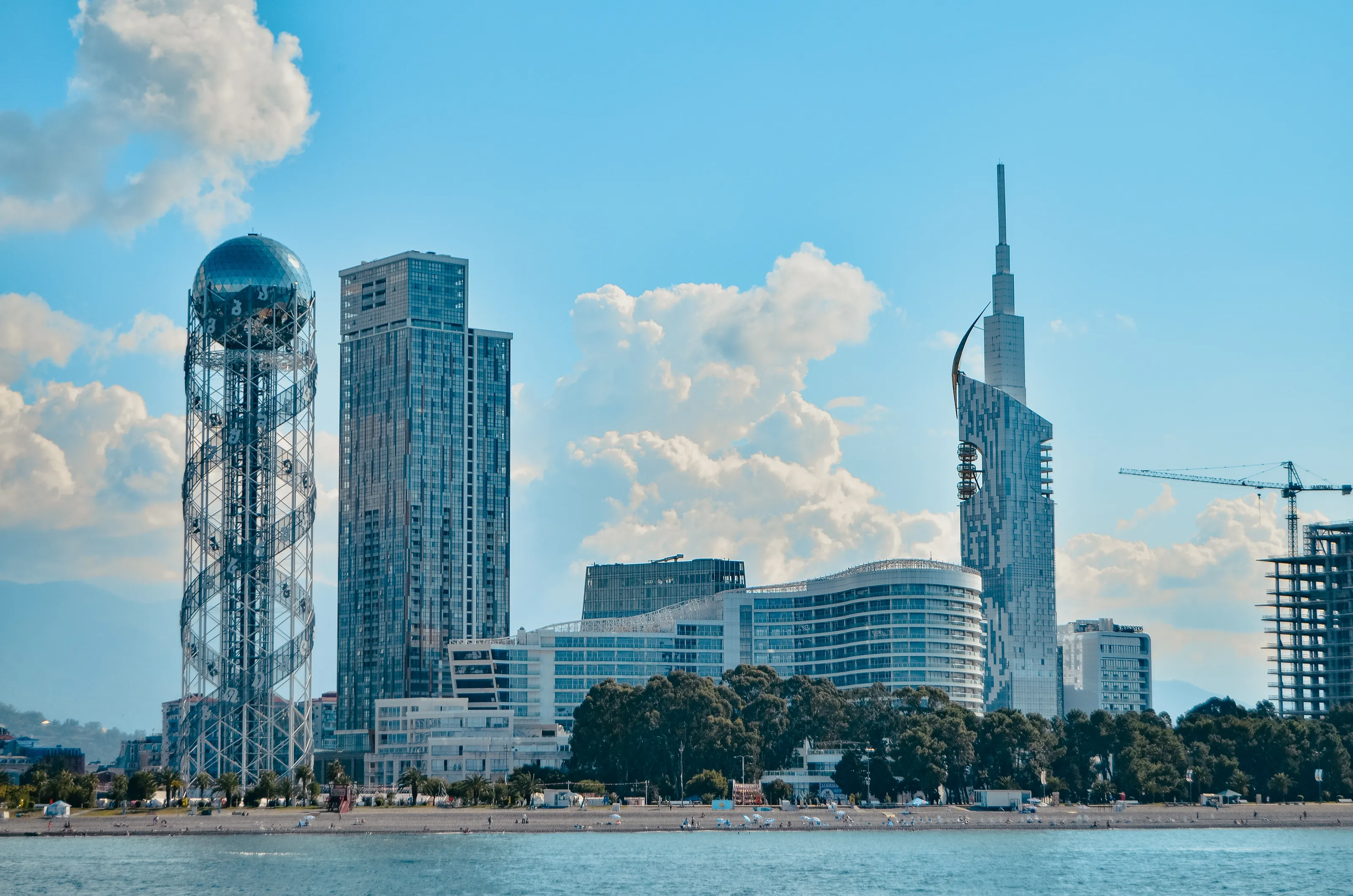
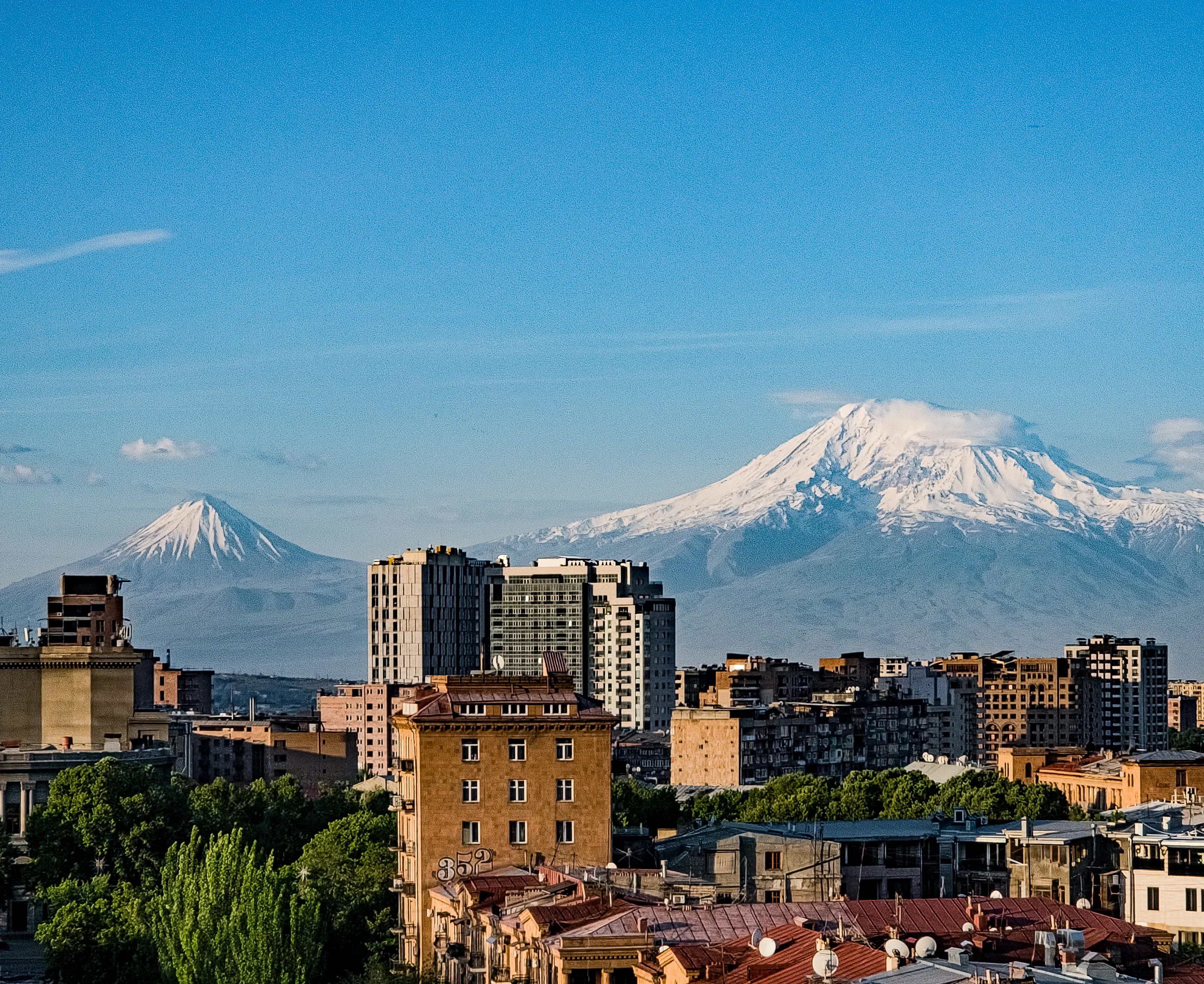
Wikivoyage (EN) warns about pushy unofficial taxi drivers after baggage claim: use an app or a pre-booked car. For a Caucasus trip you can also track Batumi (BUS), Yerevan (EVN) and Baku (GYD).
Landmarks
Narikala, Metekhi, Sameba and the Bridge of Peace
The historic heart is best explored on foot, from the Abanotubani baths up to the fortress. The six places below are illustrated with photos; others are described further down in text only.
The old town below Narikala
Narikala Fortress overlooks the rooftops of the old town, between the left bank of the Kura and lanes of wooden balconies. You can walk up or take the cable car from Rike Park according to Wikipedia (FR). Wikivoyage (EN) notes that the city has been destroyed and rebuilt 29 times, yet the layout of narrow alleys and courtyards is still readable.
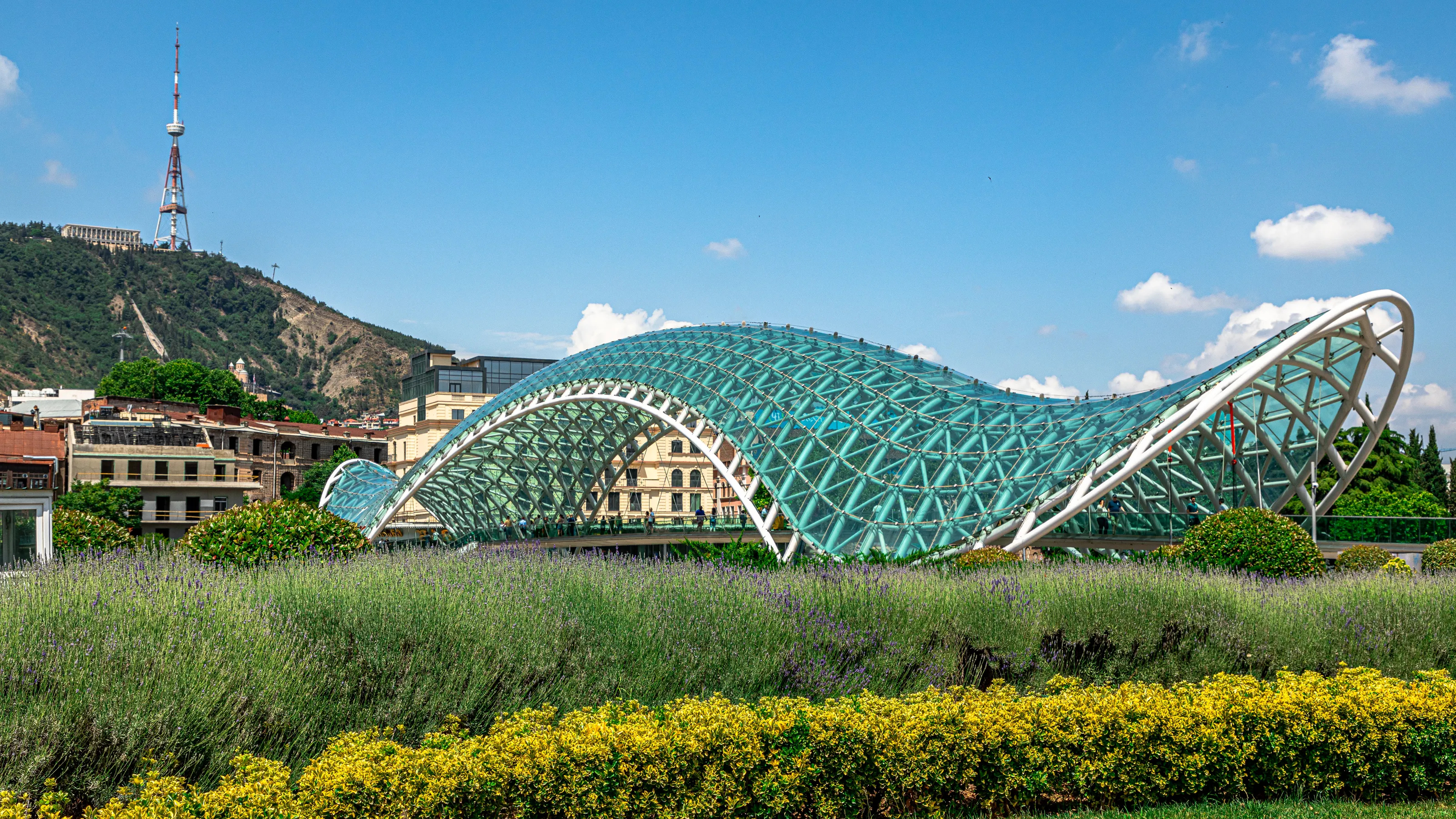
The Bridge of Peace
The Bridge of Peace is a pedestrian glass-and-steel footbridge over the Kura between the old town and Rike Park. Its wave shape contrasts with the old facades; it is at its best in the evening when the structure lights up. Wikivoyage (EN) confirms it is pedestrian-only.
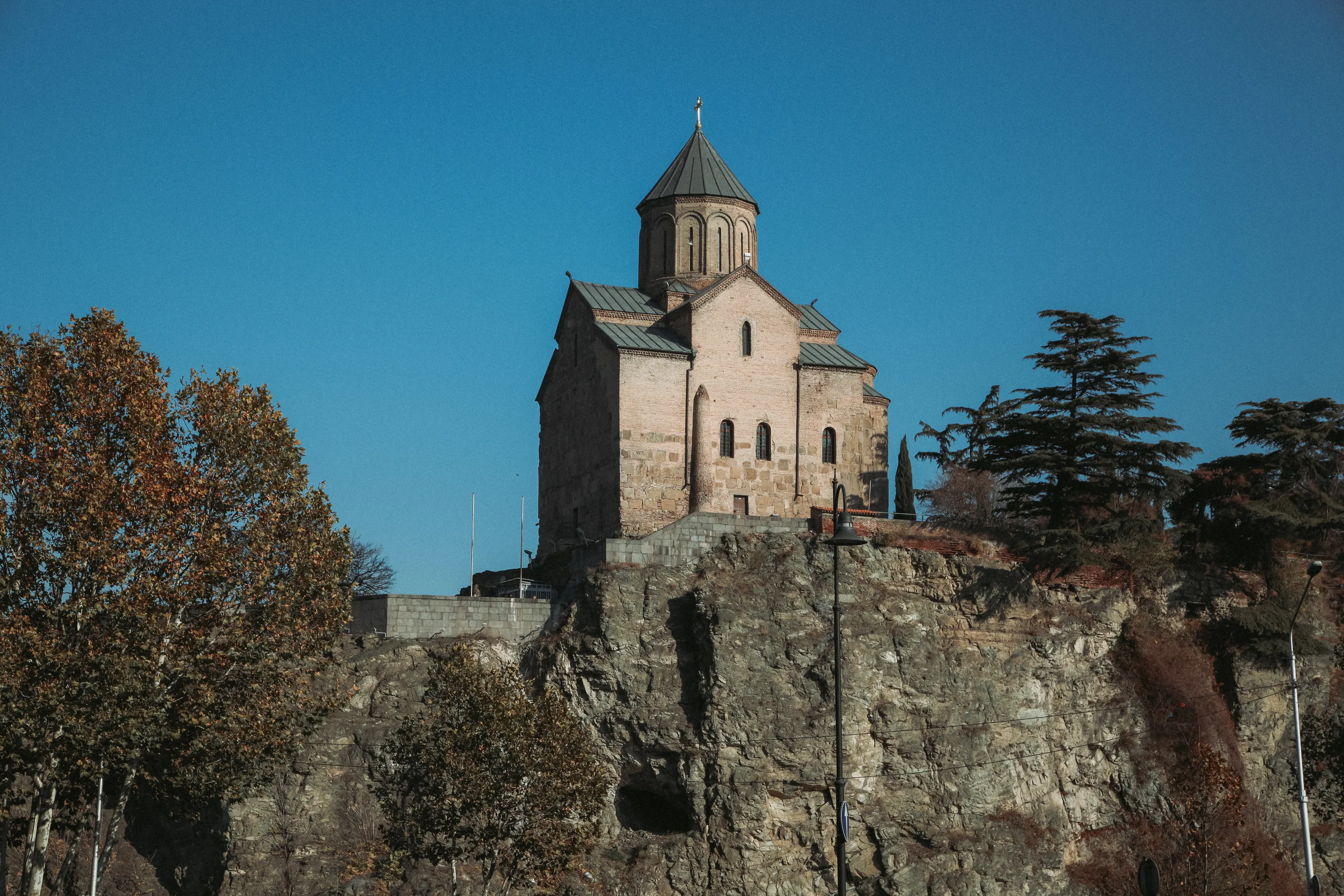
Metekhi Church
Perched on a rocky spur above the Kura, Metekhi Church dates from the late 13th century and was rebuilt in the 17th according to Wikivoyage (EN); Wikipedia (DE) links it to the Georgian kings. Its silhouette is one of the classic views of the city, especially from the opposite bank.
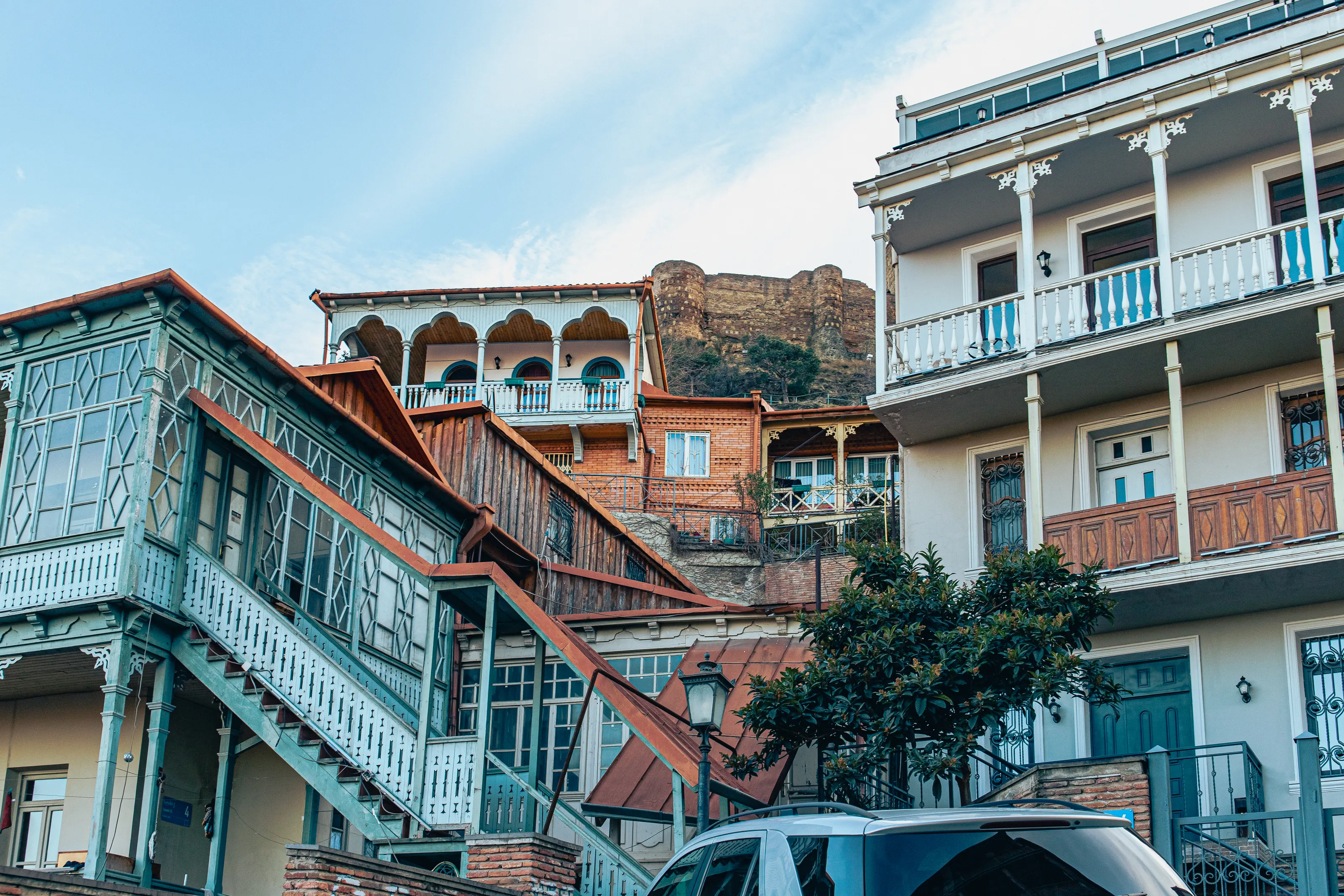
Wooden balconies
Carved wooden balconies and glazed verandas, often painted, are one of Tbilisi's signatures. They line the old quarters below the fortress. Many houses are fragile: look and photograph, but respect private courtyards.
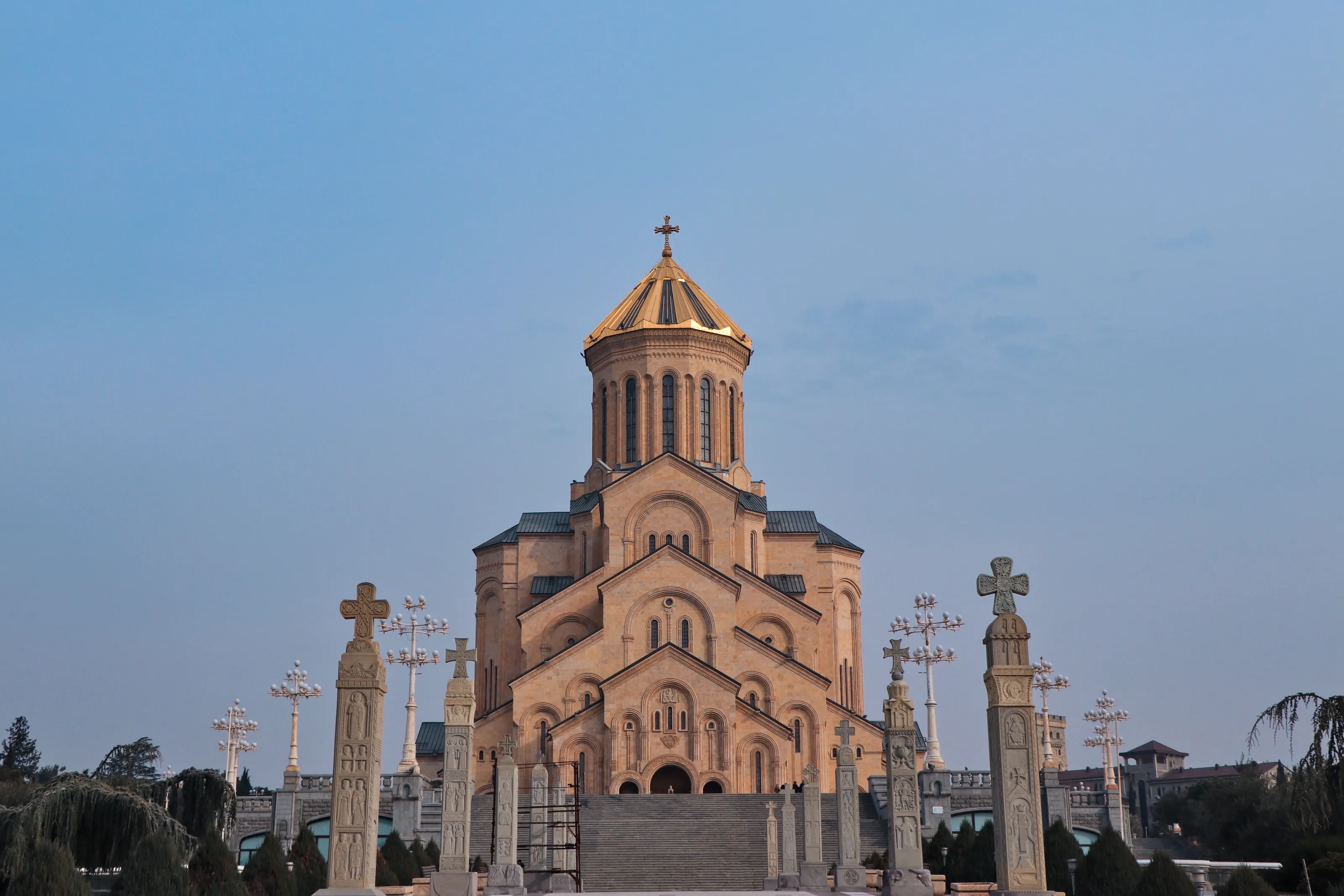
Holy Trinity (Sameba) Cathedral
Sameba was built between 1995 and 2004 and is described by Wikivoyage (EN) as one of the tallest Eastern Orthodox cathedrals in the world. It stands on Elia Hill, about 1 km north of Avlabari metro station. Dress modestly: shoulders and knees covered.
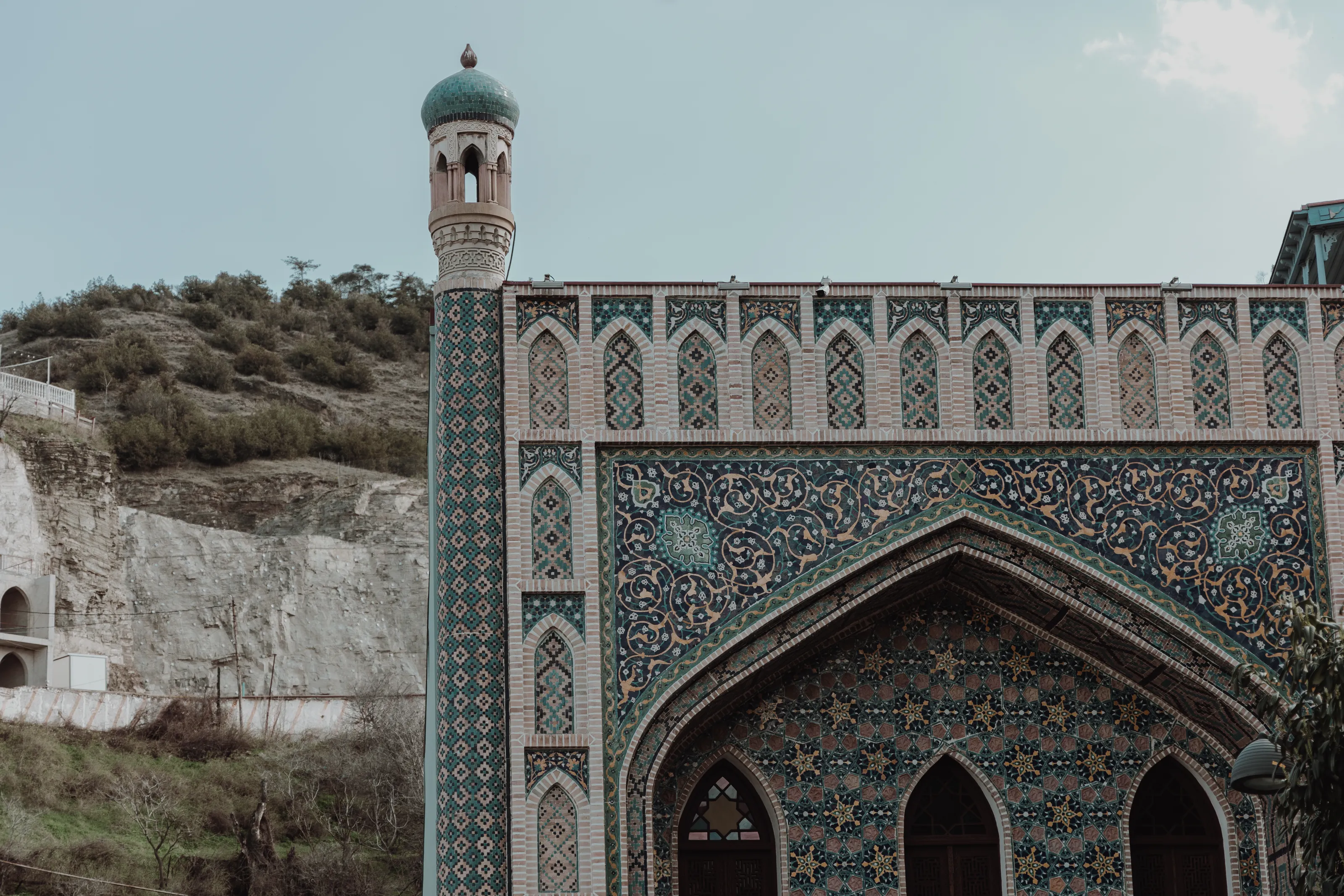
The Abanotubani baths
The Abanotubani quarter below Narikala owes its name to the sulfur springs that gave the city its name; Wikipedia (DE) mentions water up to 46.5 degrees. The brick-domed bathhouses and tiled facades are still in use. Prices and hours vary between houses: check on the spot.
Other places to look out for include Rustaveli Avenue with its neo-Moorish Opera and Ballet Theatre, Freedom Square, Sioni Cathedral and Anchiskhati Basilica in the old town, the funicular up to Mtatsminda and its Pantheon, and the Dry Bridge flea market. Mtskheta, the former capital, is a classic day trip a short distance north of the capital.
Museums and culture
Museums: art, history, ethnography and puppets
The Museum of Georgia (Simon Janashia)
It stands on Rustaveli Avenue and covers the archaeology and history of the country according to Wikipedia (DE). It belongs to the Georgian National Museum, an umbrella for about a dozen sites.
The Museum of Fine Arts and the National Gallery
The Museum of Fine Arts, near Freedom Square, holds goldwork and Georgian art according to Wikipedia (DE); the National Gallery on Rustaveli Avenue stages temporary exhibitions.
The Open Air Museum of Ethnography
Away from the centre, near Turtle Lake, it gathers houses from all over the country, about 70 according to Wikivoyage (EN). It is a good outing to understand rural Georgian building traditions.
The Jewish History Museum
Named after Rabbi David Baazov, it traces Jewish life in Georgia. Wikipedia (DE) notes that it opened in 1933 and also points out how closely churches, a synagogue and a mosque sit together in the old town.
The Gabriadze Theatre
Wikivoyage (EN) places this small puppet theatre on Shavteli Street in the old town; shows and hours change with the season, check the official site.
Food and drink
Food and drink: khinkali, khachapuri and wine
Dishes to try
Khinkali are large dumplings stuffed with meat, picked up by the knot and eaten after sipping the broth. Khachapuri is cheese bread in many regional shapes, and lobiani is filled with kidney beans. Grilled skewers, aubergine with walnuts and fresh salads round out a Georgian meal, which is always generous.
Wine and drinks
Georgia calls itself the cradle of wine, and the qvevri jar tradition is listed by UNESCO. Wines from Kakheti are the best known. Wikivoyage (EN) also mentions Laghidze waters, sweet sodas made with fruit and herb syrups that are part of the country's intangible heritage.
Where to eat
Restaurants cluster in the old town and in the Sololaki district, while nightlife leans north and west of the centre. No addresses are named here because venues open and close quickly.
Getting around
Getting around Tbilisi
Metro and buses
The metro has two lines and runs roughly from 6 am to midnight according to Wikivoyage (EN); signs are in Georgian and English. A rechargeable transport card allows changing between modes without paying again within a limited time, according to Wikivoyage (EN) and (DE).
Marshrutkas and taxis
Marshrutkas are minibuses whose routes are often written in Georgian only. Ride-hailing apps show the price up front, which avoids haggling.
On foot and uphill
The centre is walkable, but pavements are uneven and streets steep. The Narikala cable car and the Mtatsminda funicular save the climb.
To Batumi and Yerevan
According to Wikivoyage (EN), trains link Tbilisi and Batumi in about 5 hours with several departures a day; buses take 6 to 7 hours. For Yerevan allow roughly 5 to 6 hours by marshrutka and 11 to 12 hours by overnight train. Check current timetables.
Budget and precautions
Budget and precautions
Price level
Tbilisi is generally cheaper than Western European capitals for meals, transport and accommodation, with differences by district and season. No figures are published here because prices move quickly and sources differ.
Everyday safety
Wikivoyage (EN) describes the city as safe, with the usual big-city care: heavy traffic, unofficial taxis at the airport. Avoid political gatherings.
Regional context
The Caucasus is a sensitive region: some areas on Georgia's edges are not administered by the central government, and several borders in the region are closed. Check your own government's travel advice before you go.
When to go
When to go to Tbilisi
Spring (March to May)
Mild, then warm; May is the wettest month according to Wikipedia (EN), with thunderstorms. The hills turn green.
Summer (June to August)
Hot: the July mean is about 24 to 25 degrees depending on the reference period, and around 22 days a year reach 32 degrees or more according to Wikipedia (EN).
Autumn (September to November)
Pleasant in September and October, when the grape harvest takes place in Kakheti; November cools down.
Winter (December to February)
Cool and fairly dry: the January mean is close to 0 to 3 degrees, with snow on 15 to 25 days a year according to Wikipedia (EN).
Wikipedia (EN) classes Tbilisi's climate as humid subtropical with continental influences. May-June and September-October are the most comfortable times to walk the old town.
By length of stay
How many days in Tbilisi
Old town and riverbanks
Two days cover Narikala, Abanotubani, Metekhi, the old town and Rustaveli Avenue.
Museums and viewpoints
With three days, add a museum or two, Sameba and the Mtatsminda funicular.
Mtskheta, Kakheti and the mountains
With five days, add Mtskheta, a day in Kakheti for wine, or Kazbegi in the Greater Caucasus.
In pictures
Tbilisi in pictures
You might also like
Similar destinations
FAQ
Frequently asked questions about flights to Tbilisi
Where is Tbilisi Airport?
Shota Rustaveli Airport (TBS) is about 17 to 20 km from the centre depending on the source; bus 337 and ride-hailing taxis link it to the city.
What currency is used in Tbilisi?
The Georgian lari (GEL). Check payment methods and exchange fees before you travel.
What should I see first in Tbilisi?
The old town and Narikala Fortress, the Abanotubani baths, Metekhi Church, the Bridge of Peace, Sameba Cathedral and Rustaveli Avenue.
Is Tbilisi safe for tourists?
Wikivoyage (EN) describes it as safe, with the usual precautions. For anything about the wider region, refer to your own government's official advice.
When is the best time to visit Tbilisi?
May to June and September to October for walking; summer is hot and winter is cool with some snow.
Can I get from Tbilisi to Batumi or Yerevan?
Yes, by train, bus or marshrutka: roughly 5 to 7 hours to Batumi and 5 to 6 hours by road to Yerevan according to Wikivoyage (EN). Check timetables.
How much does a flight to Tbilisi usually cost?
The price depends mainly on your departure city, the time of year and how far ahead you book. The "opportunities" section above shows real examples of prices SniperAir has already detected to this destination.
How do I get alerted when a flight to Tbilisi drops below my budget?
Create an alert profile with your departure airport, Tbilisi (TBS) as the destination and your maximum budget. You are notified automatically as soon as a matching price is detected. SniperAir monitors and alerts, it does not sell or book tickets.
Ready to head to Tbilisi?
Set your budget and let SniperAir monitor fares for you.
Create my alert