
Cheap flights to Bali
Set your departure airport and your maximum budget: SniperAir tracks prices to Bali and alerts you as soon as a deal matching your criteria shows up.
Quick summary
Country
Indonesia
Continent
Asia
Airport
DPS
Currency
Indonesian rupiah (IDR)
Time zone
UTC+8
Opportunities already detected to Bali
Real flight examples spotted by SniperAir, with their reference price.
Loading examples…
Things to do in Bali
Activities and excursions to book on the spot
A real selection, with up-to-date prices and reviews, from our partners.
Identity
The Island of the Gods
Bali is unique within Indonesia. While the country is overwhelmingly Muslim, Bali has preserved a predominantly Hindu culture that shapes almost every aspect of daily life and the landscape. Thousands of pura, or Balinese temples, are scattered across the island, from small shrines beside rice fields to major coastal sanctuaries and temple complexes built on volcanic slopes.
One of the ideas most often associated with Balinese culture is Tri Hita Karana: harmony between people, nature and the spiritual world. This principle can be seen in traditional village life, religious ceremonies and the ancient subak irrigation system that distributes water through Bali's rice terraces. The cultural landscape linked to the subak system is recognised by UNESCO.
Another familiar sight is the canang sari, the small handmade offerings of flowers, leaves and incense placed every morning outside homes, shops, temples and even beside parked scooters.
For travellers searching for things to do in Bali, this cultural identity is as important as the beaches. Temples, rice terraces, volcano hikes, waterfalls, surf lessons, snorkelling trips and island excursions can all form part of the same journey.
History
From Hindu kingdoms to Dutch colonial rule
Many of Bali's religious and social traditions are linked to the influence of the Majapahit kingdom, which expanded from Java into Bali during the 14th century. After the decline of Majapahit and the spread of Islam through much of the Indonesian archipelago, Bali remained predominantly Hindu and developed a distinctive religious culture that continues today.
The kingdom of Gelgel became one of the island's most influential political centres. During this period, Balinese court culture, temple architecture, dance and performance traditions developed further. Later, Bali fragmented into several rival kingdoms, including Badung, Gianyar and Klungkung.
Dutch colonial expansion intensified during the 19th century and culminated in the early 20th century. Several Balinese royal courts resisted through the puputan, ritual acts of collective resistance in which surrender was rejected even in the face of overwhelming military force. These events remain an important part of Bali's historical memory.
Don't miss
Bali's cliffside and sea temples
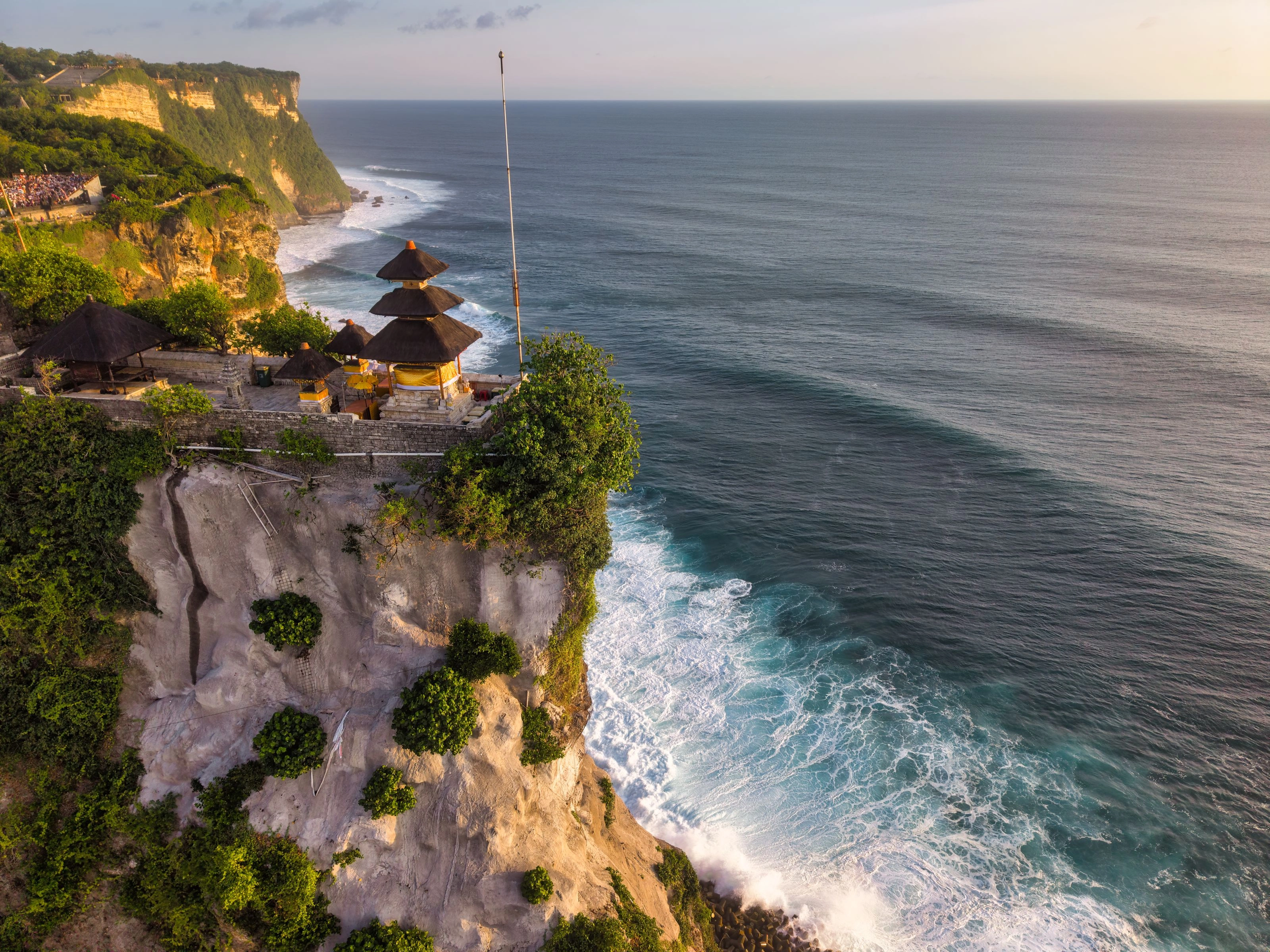
Some of Bali's most spectacular temples stand directly beside the ocean. Tanah Lot rises from a rocky formation surrounded by waves and becomes especially dramatic around sunset. Further south, Uluwatu Temple stands on cliffs high above the Indian Ocean on the Bukit Peninsula. One of the most popular experiences is the evening Kecak performance, staged outdoors as the sun drops behind the cliffs. Further inland, on the slopes of Mount Agung, Besakih Temple forms the largest temple complex on the island and is often described as the mother temple of Balinese Hinduism. Travellers can visit these places independently, but guided temple tours in Bali can make it easier to understand the rituals, architecture and cultural rules surrounding each site.
Where to stay
One island, several completely different experiences
Choosing where to stay in Bali can change the entire trip. Traffic can be heavy, especially in the south, so moving between the island's main areas can take considerably longer than the map suggests.
Seminyak & Canggu
The more fashionable side of southern Bali. Canggu is known for surf, cafés, beach clubs and a large international community, while Seminyak offers restaurants, boutiques, nightlife and a more polished resort atmosphere.
Ubud
The cultural centre of inland Bali. Rice fields, yoga studios, art galleries, temples, traditional crafts and the Sacred Monkey Forest make Ubud particularly attractive to travellers looking for culture and nature rather than beach life.
Nusa Dua
A more organised resort area with protected beaches, larger hotels and family-oriented infrastructure — a good choice for comfort and a quieter stay.
Uluwatu
The Bukit Peninsula is known for limestone cliffs, surf breaks, beach clubs and small beaches hidden below dramatic headlands.
Discover
Bali's rice terraces
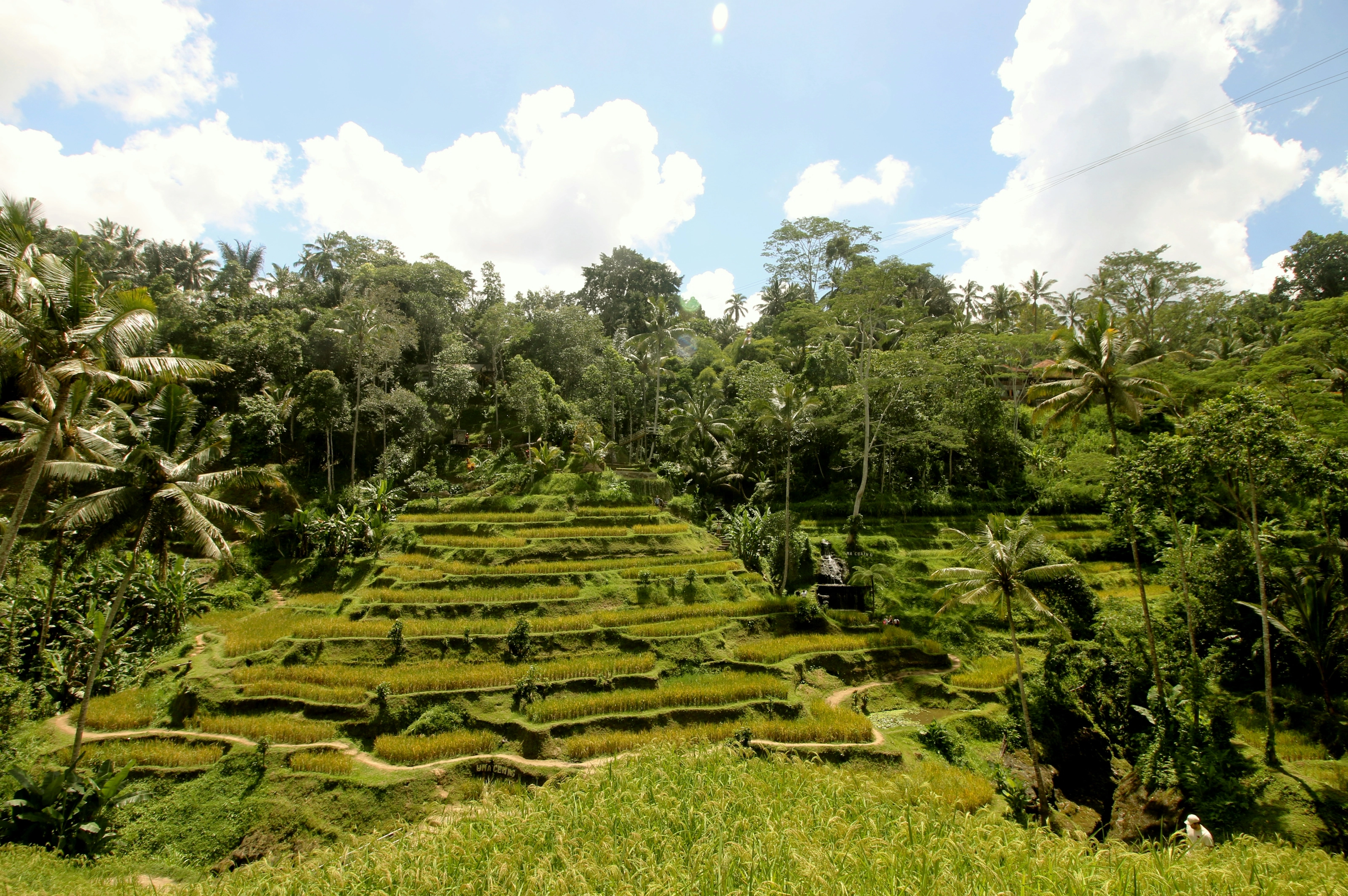
The rice terraces around Tegallalang, north of Ubud, are among the most visited on the island. The steep green slopes have become one of Bali's most recognisable landscapes, with walking paths, viewpoints and several attractions overlooking the terraces.
For a quieter and more extensive landscape, Jatiluwih offers broad rice terraces shaped by the traditional subak irrigation system. The area forms part of Bali's UNESCO-recognised cultural landscape and provides a better sense of how rice cultivation, water management and village cooperation have shaped the island for generations. Guided rice terrace tours from Ubud often combine these landscapes with temples, waterfalls or local villages.
Experience
Sunrise from Mount Batur
A sunrise hike on Mount Batur is one of Bali's most popular outdoor experiences. Most excursions begin during the night so hikers can reach the upper slopes before sunrise. The climb is not technically difficult for experienced walkers, but it takes place in darkness and on uneven volcanic terrain, which is why organised excursions typically include a local guide.
At the top, the reward is a wide view across the caldera and Lake Batur, with Mount Agung sometimes visible in the distance when the weather is clear. Most tours return by late morning, leaving the rest of the day free for Ubud, temples or the surrounding rice fields. SniperAir can surface Mount Batur sunrise tours and guided hiking experiences directly alongside other Bali activities.
Excursions
Nusa Penida and the Gili Islands
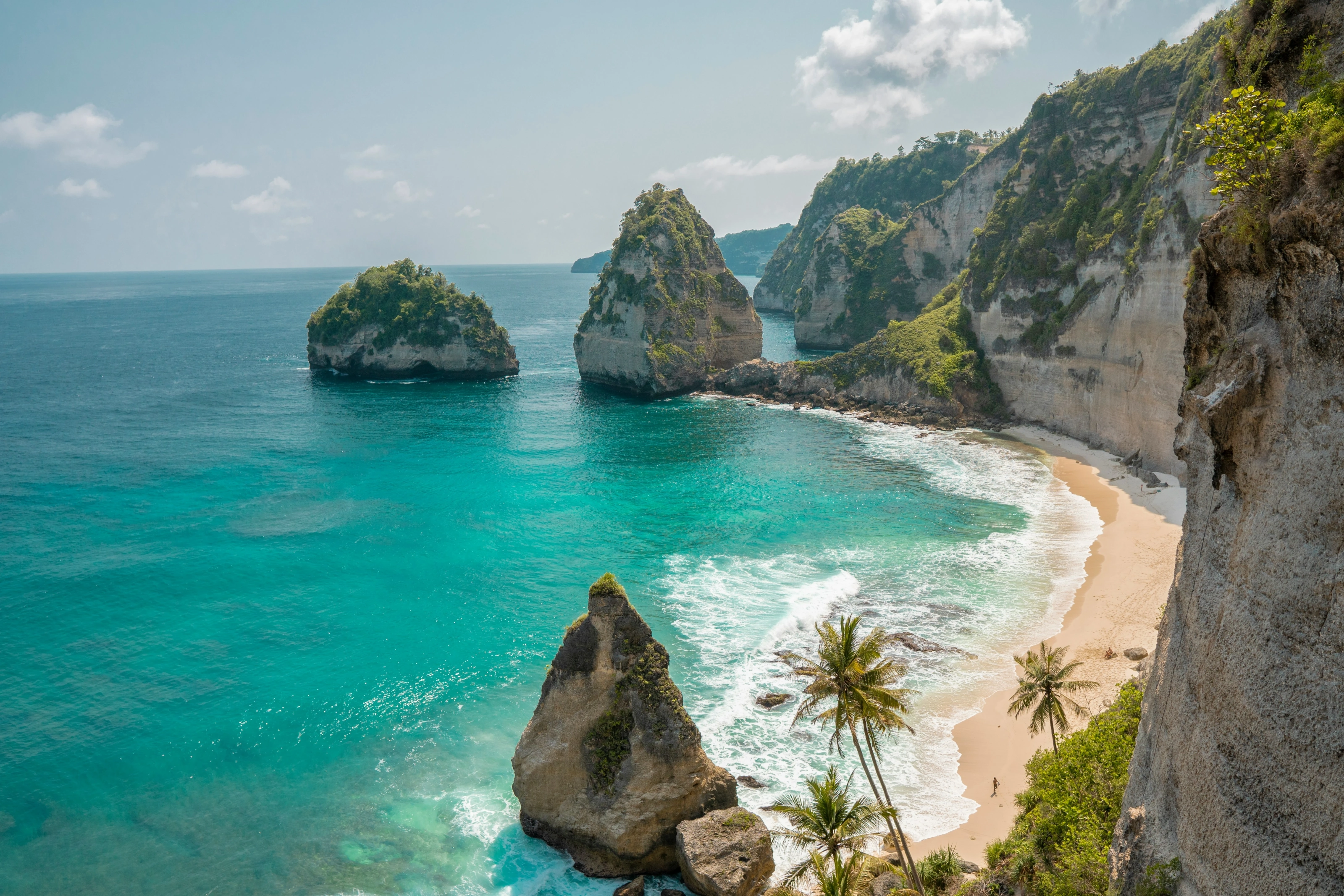
A fast boat from Sanur provides access to Nusa Penida, one of the most popular island excursions from Bali. The island is known for dramatic cliffs, coves and viewpoints such as Kelingking Beach, Diamond Beach, Broken Beach and Angel's Billabong. Boat and snorkelling tours are also popular, particularly around areas where manta rays may be encountered.
Further east, off Lombok, the Gili Islands — Gili Trawangan, Gili Air and Gili Meno — offer a slower island atmosphere. Motorised road traffic is extremely limited, and bicycles remain one of the main ways to move around. Snorkelling, diving, boat trips and beach stays are central to the experience.
Bali Airport
The main gateway to the island
I Gusti Ngurah Rai International Airport
Located in the south of the island, close to Kuta. Transfer times to Ubud, Canggu or Uluwatu can take significantly longer during busy periods.
Getting around
How to move between Bali's different areas
Grab & Gojek
Ride-hailing apps are widely used in many parts of Bali and are often the simplest option for short journeys.
Scooter rental
Scooters are extremely common, but Bali's traffic can be intense. Only ride if properly licensed, insured and confident in local road conditions.
Private driver
Hiring a private driver for a day is one of the most practical ways to visit several temples, waterfalls or rice terraces without arranging each transfer separately.
Sport
Bali and the culture of surfing
Surfing is deeply associated with Bali's southern and western coasts. Different beaches suit very different levels.
| Spot | Level | Why go |
|---|---|---|
| Kuta Beach | Beginner to intermediate | Sandy beach, frequent surf schools and relatively accessible conditions for first lessons. |
| Canggu – Batu Bolong | Beginner to intermediate | Popular longboard area surrounded by cafés and surf culture. |
| Uluwatu | Advanced | Powerful reef breaks beneath the cliffs, better suited to experienced surfers. |
Sacred place
Tirta Empul and the purification ritual
Tirta Empul is one of Bali's most important water temples. The complex is built around a natural spring considered sacred in Balinese Hinduism. Visitors may observe or, when appropriate, participate in melukat, a purification ritual involving a sequence of water fountains. Respectful clothing and behaviour are essential, and local guidance is useful for understanding which fountains are used for which purposes.
The nearby Tampaksiring presidential palace overlooks the area. Guided tours often combine Tirta Empul with nearby temples, rice terraces and Ubud.
Food
What to eat in Bali
| Dish | Description |
|---|---|
| Babi guling | Balinese-style roast suckling pig seasoned with a complex spice mixture, traditionally prepared for ceremonies and celebrations. |
| Sate lilit | Minced meat or fish mixed with coconut and spices, wrapped around a skewer or lemongrass stalk before grilling. |
| Nasi goreng | Indonesian fried rice commonly prepared with aromatics, sweet soy sauce and egg. |
Bali also offers numerous food tours, market visits and Balinese cooking classes, particularly around Ubud, Seminyak and Canggu.
Wellness
Yoga, spas and slow travel in Ubud
Ubud has become one of Asia's best-known destinations for yoga and wellness. The area combines studios, retreats, traditional spas, cooking classes, art galleries and cafés within a landscape of forest and rice fields. Visitors can choose between single yoga sessions and multi-day retreats.
Balinese massage, flower baths and traditional spa treatments are also widely available. During the wetter months, rainfall often becomes part of the atmosphere rather than preventing activities, particularly at spas and wellness centres surrounded by tropical vegetation.
Travel budget
Bali can suit very different budgets
Bali remains attractive because the island offers everything from inexpensive local warungs and simple guesthouses to luxury villas, beach clubs and high-end resorts. Prices vary considerably by area — Canggu, Seminyak and Uluwatu can be substantially more expensive than smaller inland towns, while local food remains much more affordable than international restaurants.
For long-haul travellers, the flight to Bali can represent a significant part of the total travel budget. That is why monitoring airfare rather than booking the first available fare can be particularly useful. With SniperAir, travellers can follow flight prices to Bali, compare opportunities and then explore activities and experiences once their trip begins to take shape.
Book with SniperAir
Flights, activities and experiences in Bali
SniperAir can help travellers go beyond destination inspiration. Alongside cheap flights to Bali, visitors can discover bookable experiences such as temple tours, Nusa Penida excursions, Mount Batur sunrise hikes, snorkelling trips, surf lessons, waterfalls, rice terrace tours, food tours, cooking classes, tickets, attractions and guided experiences.
The traveller can explore Bali, compare what to do and access the relevant booking offer once ready.
When to go
When to visit Bali?
April to June
The beginning of the drier period and a popular time for travel.
July and August
One of the busiest periods of the year, with high visitor numbers.
September and October
Often still attractive for drier weather while the peak summer rush begins to ease.
November to March
The wetter part of the year, with higher humidity, tropical showers and especially lush landscapes.

FAQ
Frequently asked questions about flights to Bali
What's Bali's airport?
Bali-Denpasar (DPS), also known as I Gusti Ngurah Rai International Airport, the island's main air gateway.
How much does a flight to Bali usually cost?
The price mostly depends on your departure city, the season, and how far ahead you book. The "opportunities" section above shows real price examples already detected by SniperAir for this destination.
How long is a flight to Bali from Europe?
Generally between 15 and 18 hours depending on your departure city and any layovers.
Which area of Bali should I choose for a first trip?
Seminyak or Canggu for beaches and a lively atmosphere, Ubud for culture and nature, Nusa Dua for a family resort stay, Uluwatu for surf and cliffs. Many travellers combine several areas in the same trip.
What's the best time to book a flight to Bali?
There's no universal rule — the best price depends on your specific route. That's exactly why SniperAir tracks prices for you instead of giving generic advice.
Do I need to know how to surf to visit Bali?
No — Kuta and Canggu offer beginner lessons on gentle waves, while Uluwatu is reserved for experienced surfers. Many travellers come only for the temples, rice terraces or wellness scene in Ubud.
How do I get around between Bali's areas?
Grab and Gojek apps cover the whole south of the island at low prices, scooters remain the most common mode of transport, and hiring a private driver for the day is a common way to combine several sites without worrying about timing.
Can I book activities and tours in Bali through SniperAir?
Yes. Alongside tracking cheap flights to Bali, SniperAir lets you discover bookable activities on the island: temple tours, Nusa Penida excursions, Mount Batur sunrise hikes, surf lessons, rice terrace visits and food tours.
How do I get alerted when a flight to Bali drops below my budget?
Create an alert profile with your departure airport, Bali as the destination, and your maximum budget. You'll be automatically notified as soon as a matching price is detected.
Ready to head to Bali?
Set your budget and let SniperAir track the prices.
Create my alert