
Cheap flights to Kota Kinabalu
Set your departure airport and maximum budget: SniperAir tracks prices to Kota Kinabalu and alerts you the moment a deal matching your criteria appears.
Quick summary
Country
Malaysia
Continent
Asia
Airport
BKI
Currency
Malaysian ringgit (MYR)
Time zone
UTC+8, all year
Deals already spotted to Kota Kinabalu
Real flight examples detected by SniperAir, with their reference price.
Loading examples…
Why track Kota Kinabalu with SniperAir
You do not need to compare prices every day
Choose your departure
Enter your departure airport and your maximum budget for a flight to Kota Kinabalu (BKI).
SniperAir keeps watch
Our systems continuously compare new prices with the real price history of the route. SniperAir monitors prices and alerts you: it does not sell or book tickets.
You receive an alert
As soon as a price matches your criteria, you are notified, without having searched for anything yourself.
Airport and getting into town
A large airport about 8 km from the centre, the second busiest in the country
Kota Kinabalu International Airport (BKI)
Kota Kinabalu International Airport is the second busiest in the country and the main gateway to Sabah; it is about 7 to 8 km from the centre according to Wikipedia (FR) and Wikivoyage (EN). It has two terminals a good distance apart, so tell your driver which one you are leaving from. Grab, taxis and minibuses reach the centre in a few minutes. Direct flights link Kota Kinabalu with Kuala Lumpur, Penang and several Borneo towns, and with Hong Kong, Manila, Seoul or Brunei according to Wikivoyage (EN). The city is stretched between the sea and the mountains, so planes pass very low over the centre.
Distances and times are approximate, from Wikipedia (FR, DE, ES) and Wikivoyage (EN, DE); flight and transport timetables change, so check them before you travel. We do not quote fares.
Kota Kinabalu, known as KK, is the capital of Sabah, in the north of the island of Borneo. Formerly Jesselton, it was founded in 1899 on its present site and renamed Kota Kinabalu in the late 1960s. Almost entirely destroyed in 1945, it was rebuilt without a large old town: people come here mainly for the sea, the islands and the mountain.
The city stretches along a narrow plateau between the South China Sea and the Crocker Range, facing five islands of the Tunku Abdul Rahman marine park. SniperAir tracks prices to BKI, often via Kuala Lumpur, and compares them with the route's history.
Waterfront, islands and mountain
Sunsets, marine-park islands and Mount Kinabalu
Kota Kinabalu is best discovered at the water's edge at sunset, then through its islands and its mountain. The places below are illustrated; the mosques, Gaya Street, Atkinson Tower and the Sabah Museum are described in text only.
Sunsets over the sea
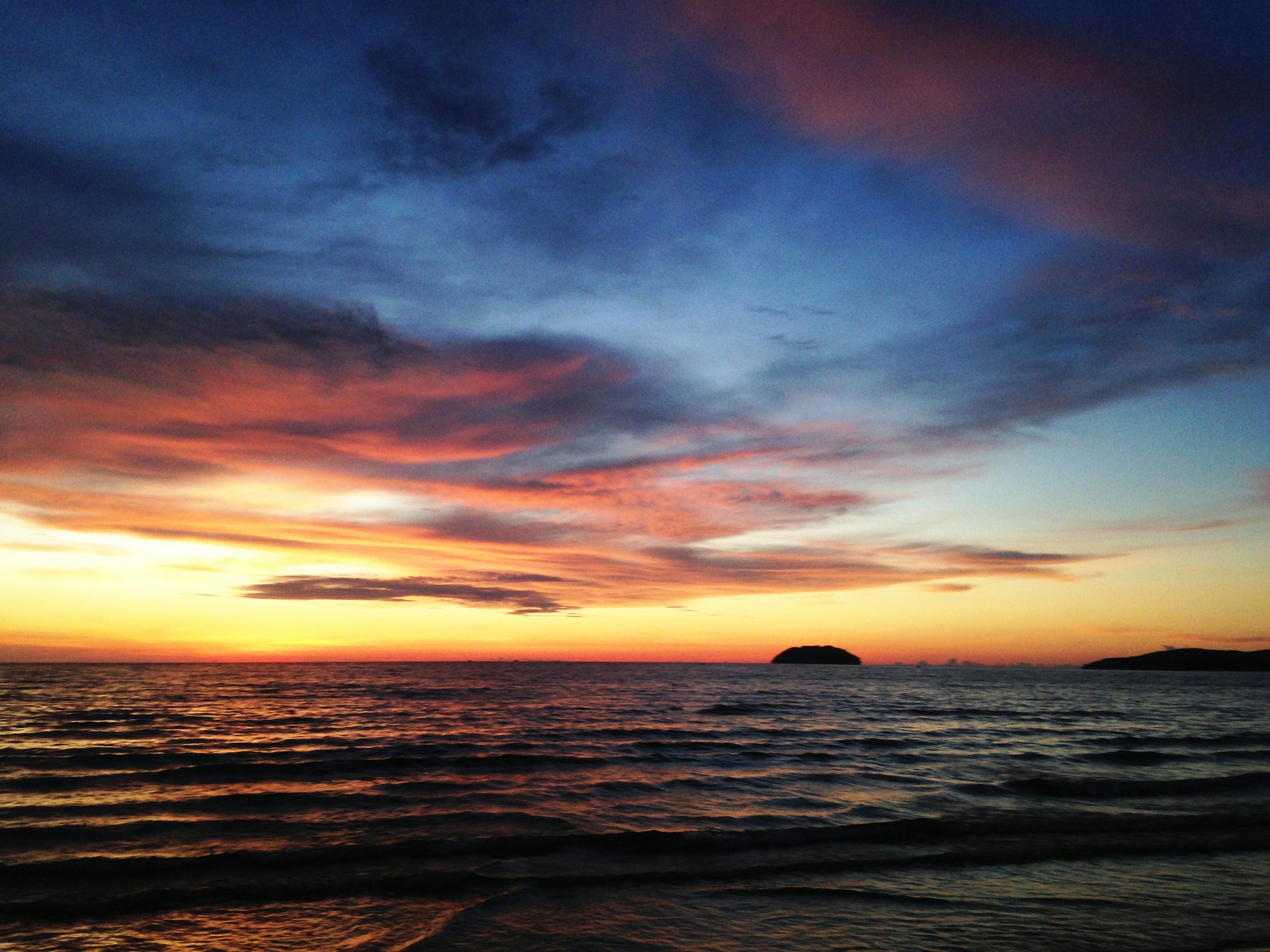
The city is famous for its evenings: the sky shifts from blue to orange and pink over the South China Sea, with the marine-park islands in silhouette. The beaches of Tanjung Aru, to the south, are a favourite meeting place for locals to picnic and watch the sunset.
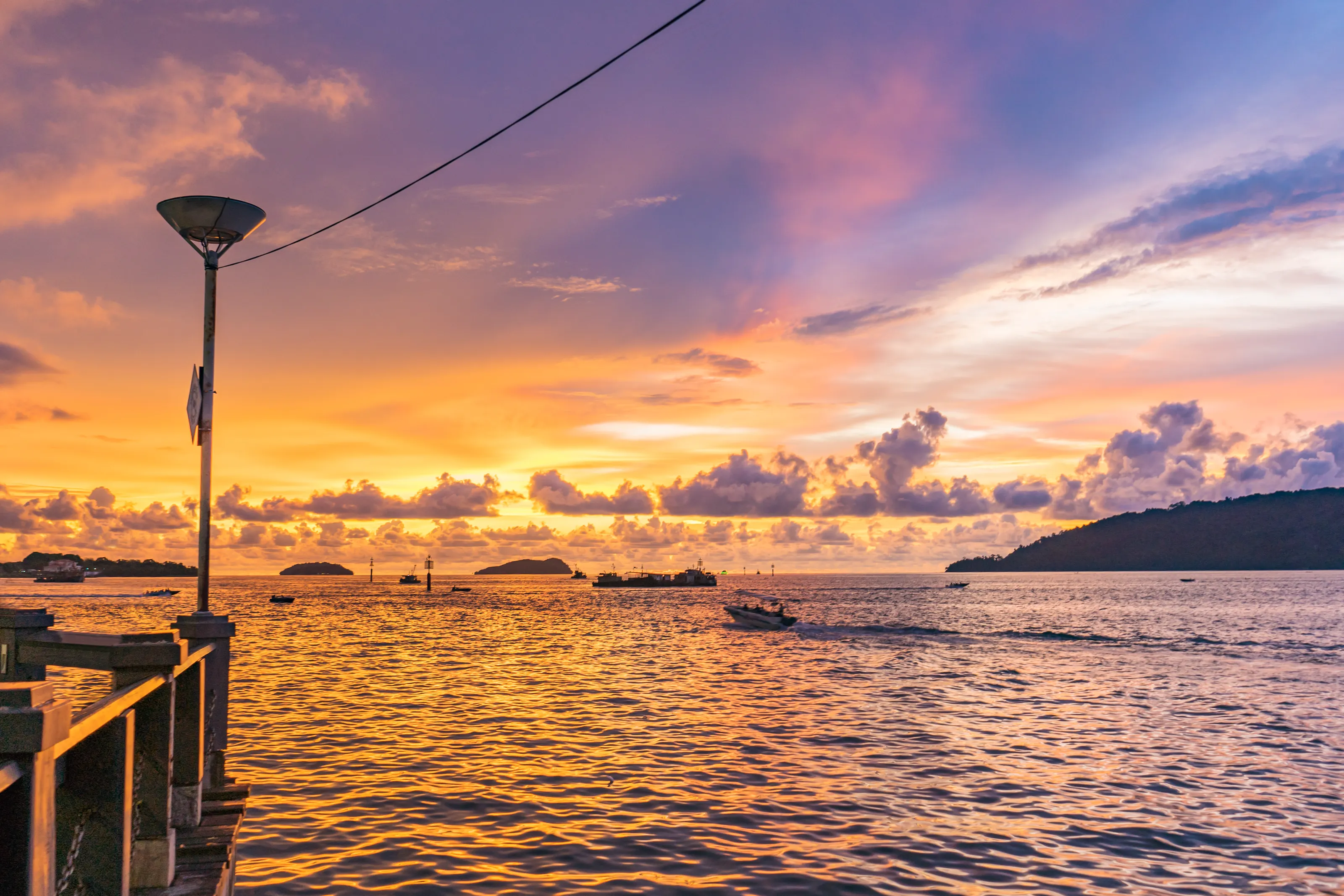
A jetty facing the setting sun
Jetties and piers along the waterfront, notably around Jesselton Point, where boats leave for the islands, offer another view of the evening light. The sky reflects on the water and boats head back to port. Take care on jetties: some are slippery.
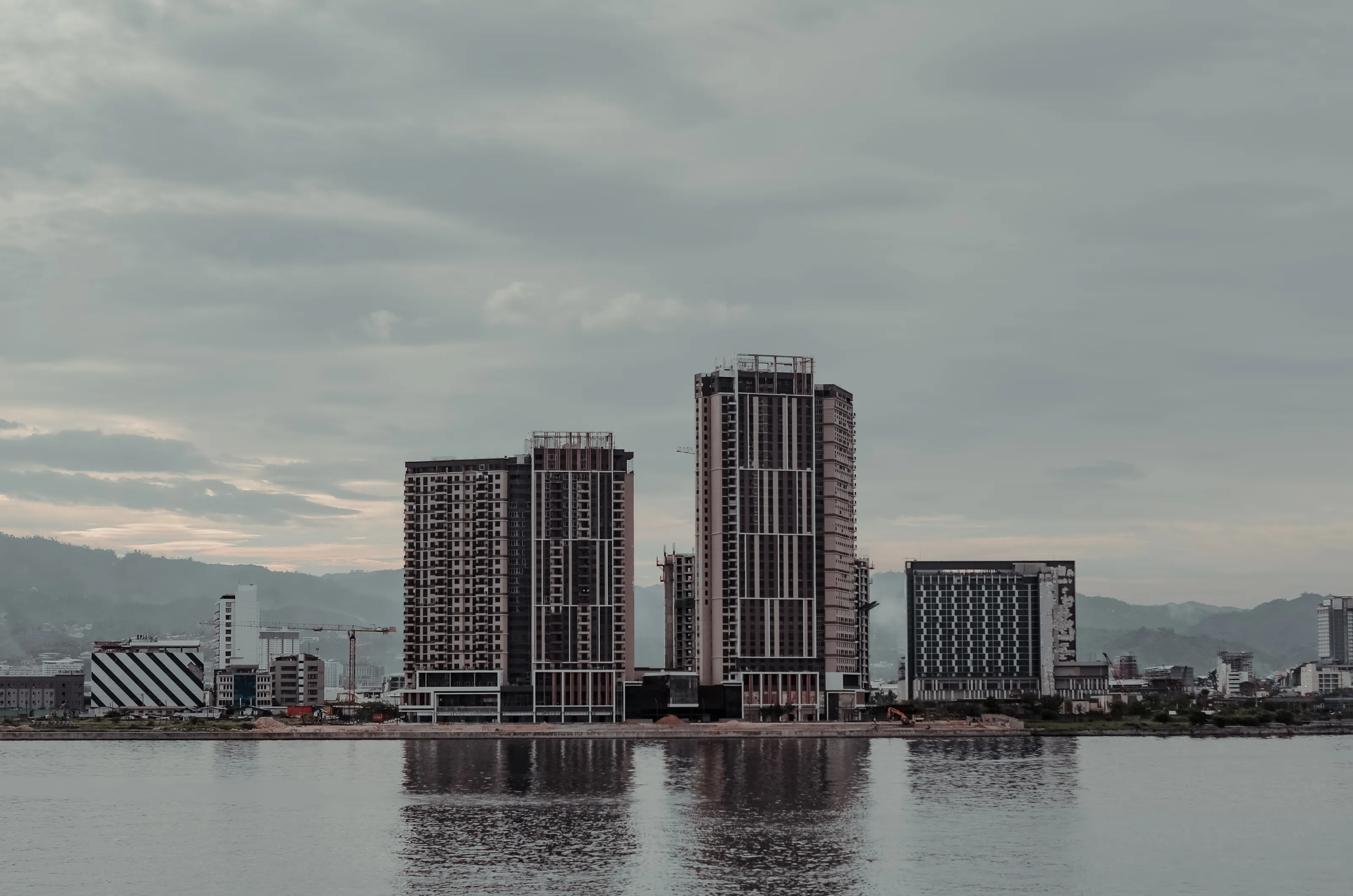
The waterfront and its buildings
The centre is stretched along the coast, between sea and hills. Modern waterfront buildings reflect the rapid rebuilding after 1945; building height is limited because of flight paths. The centre is small enough to cross on foot in under half an hour.
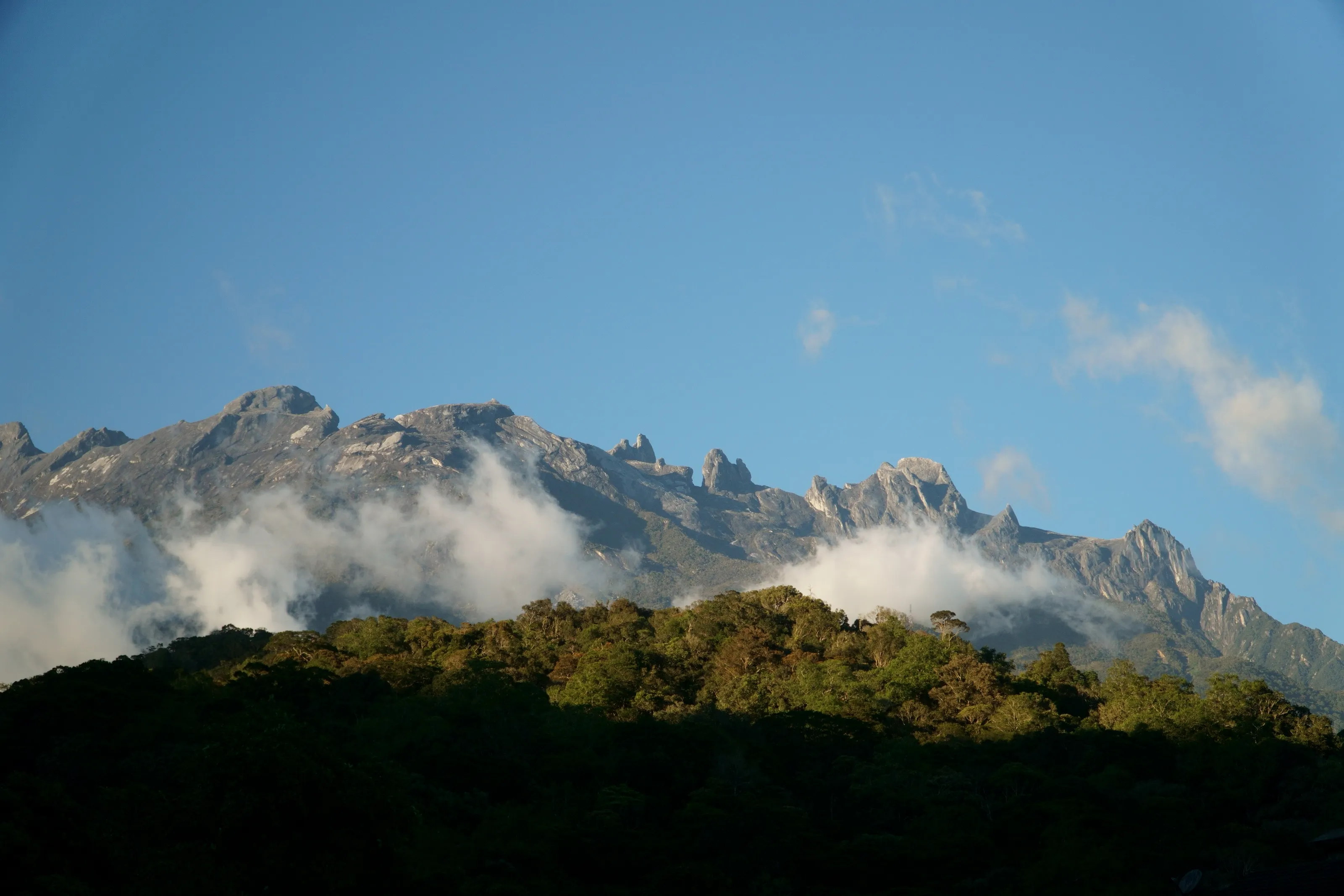
Mount Kinabalu, the region's high point
About 90 km away by road, Kinabalu National Park protects the mountain, which rises above 4,000 metres and dominates northern Borneo. Day trips from Kota Kinabalu are possible, and climbing to the summit requires booking and a permit, to be checked well in advance with the official bodies.
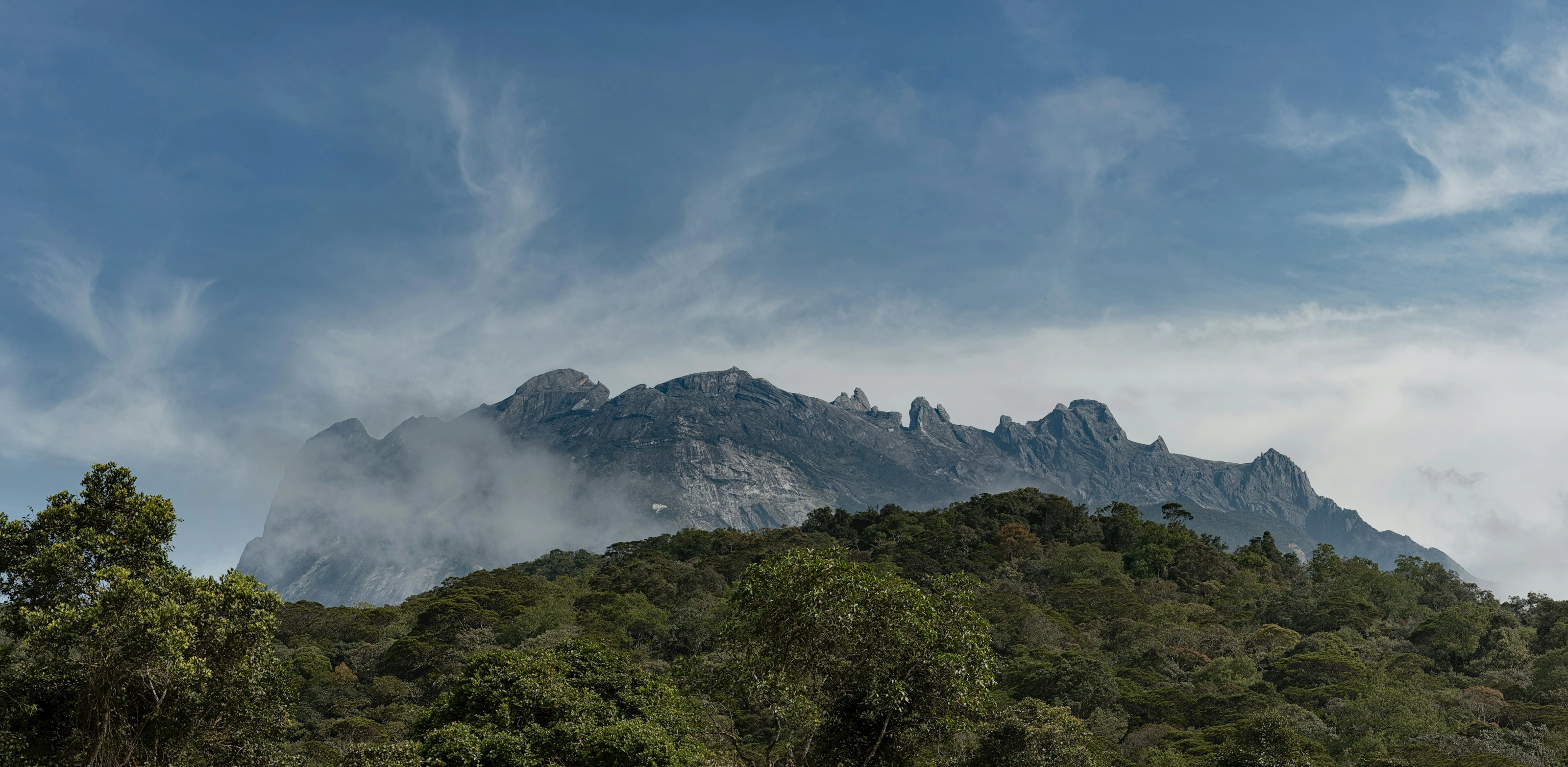
A ridge in the mist
From the coast, the hinterland appears as wooded, rocky ridges often wrapped in mist. The region is known for its species-rich rainforest, and Kota Kinabalu serves as a base for the Poring hot springs and the mountain's parks.
Mosques, Gaya Street and Atkinson Tower, in text
The Kota Kinabalu City Mosque, which seems to float above Likas Bay, and the Sabah State Mosque are the main religious landmarks. Gaya Street, in the heart of Chinatown, hosts a market on Sunday morning. Atkinson Tower, from 1902, is one of the few structures to have survived 1945. The stilt villages by the water are home to Bajau and other coastal peoples.
Museums and culture
Sabah, the peoples of Borneo and wartime memory
The Sabah Museum Complex
The Sabah Museum Complex brings together the main museum, on natural history, ethnography and the state's history, and a heritage village showing traditional houses of several peoples. It is the best introduction to Borneo's cultures. Check opening hours before you go; we do not quote ticket prices.
Living culture
The Mari Mari Cultural Village, near Inanam, offers demonstrations of the traditions of Sabah's peoples. Street markets around Gaya Street, on Sunday morning and weekend evenings, let you discover crafts and local products. The Chinese temples on Jalan Tuaran and the Sacred Heart Cathedral reflect the city's religious diversity.
Wartime memory
Kota Kinabalu was almost entirely destroyed at the end of the Second World War. The Petagas memorial honours the Kinabalu Guerrillas. It is a place of remembrance rather than an attraction: find out about it before visiting.
Food and drink
Seafood, markets and the cooking of Borneo
From sea to plate
Along the waterfront, many restaurants serve fresh fish and seafood, often grilled or steamed, with rice. Ask the price before ordering if fish is sold by weight. Waterfront restaurants facing the islands are especially lively at sunset.
Street markets
The Gaya Street area hosts a market on Sunday morning and a night market at weekends, where you eat and snack as you stroll. There are crafts, tropical fruit and snacks. Hours change, so check on the spot.
A blended cuisine
Sabah's population mixes indigenous peoples, Chinese, Malays and communities from the southern Philippines, and the cooking reflects it. You also find Chinese, Indian and Malay food in most neighbourhoods.
Getting around
Centre on foot, Grab, buses and boats to the islands
In the centre
The centre is small and can be crossed on foot in under 30 minutes, with sometimes uneven pavements. City buses and minibuses work like shared taxis. Grab is often simpler and cheaper than taxis, whose meter is not always used.
To the islands
Speedboats leave from Jesselton Point and other jetties for the marine-park islands; the trip takes fifteen to twenty minutes depending on the island. Timetables and sea conditions vary: book with a licensed operator and follow safety instructions.
Inland
Long-distance buses leave from the north and south terminals for Kundasang and Ranau (about 1.5 to 2 hours), Sandakan and Tawau. A rental car makes excursions easier. The Sabah railway may be suspended for renovation, so check before planning.
Budget and precautions
A variable budget: excursions weigh the most
Price level
Kota Kinabalu is generally affordable for food and local transport; excursions to the islands and Mount Kinabalu weigh more in the budget. The currency is the ringgit (MYR). We give no amounts because we could not cross-check them on two independent open sources.
Flights
The flight remains the most variable item. SniperAir tracks prices to BKI and compares them with the route's history, but it does not sell or book tickets. Kuala Lumpur (KUL) is a common stopover, followed by a domestic flight.
Entry and precautions
Entry rules depend on your nationality: check official sources and your home country's travel advice. Follow safety rules at sea and in the mountains, protect yourself from the sun and check conditions before you go. Keep an eye on your belongings in busy places.
When to go
Hot all year, more rain from September to November
January to April
Rainfall is lower according to Wikivoyage (EN), with good days for the sea and the islands.
May to August
Rain increases gradually; evenings stay warm and sunsets are spectacular on clear days.
September to November
The wettest period according to Wikivoyage (EN): pack an umbrella and be flexible with excursions.
December
Rain eases; the season varies by year and by source.
Kota Kinabalu has an equatorial climate: constant heat, high humidity and about 2,400 mm of rain a year according to Wikipedia (FR). Wikivoyage (EN) gives average highs of 32 C and lows of 22 C. Two monsoons, northeast and southwest, shape the year. Morning is often the best time for sea and mountain excursions.
By length of stay
What to do in Kota Kinabalu depending on the length of your stay
The essentials
The waterfront at sunset, Gaya Street, a market, a mosque and a seafood meal.
Islands and mountain
A day on the marine-park islands, the Sabah Museum, an excursion towards Mount Kinabalu and Kundasang.
Further into Borneo
Flights or buses to Sandakan, Sepilok or Semporna, or a continuation to Kuala Lumpur.
In pictures
Kota Kinabalu in pictures
You might also like
Similar destinations
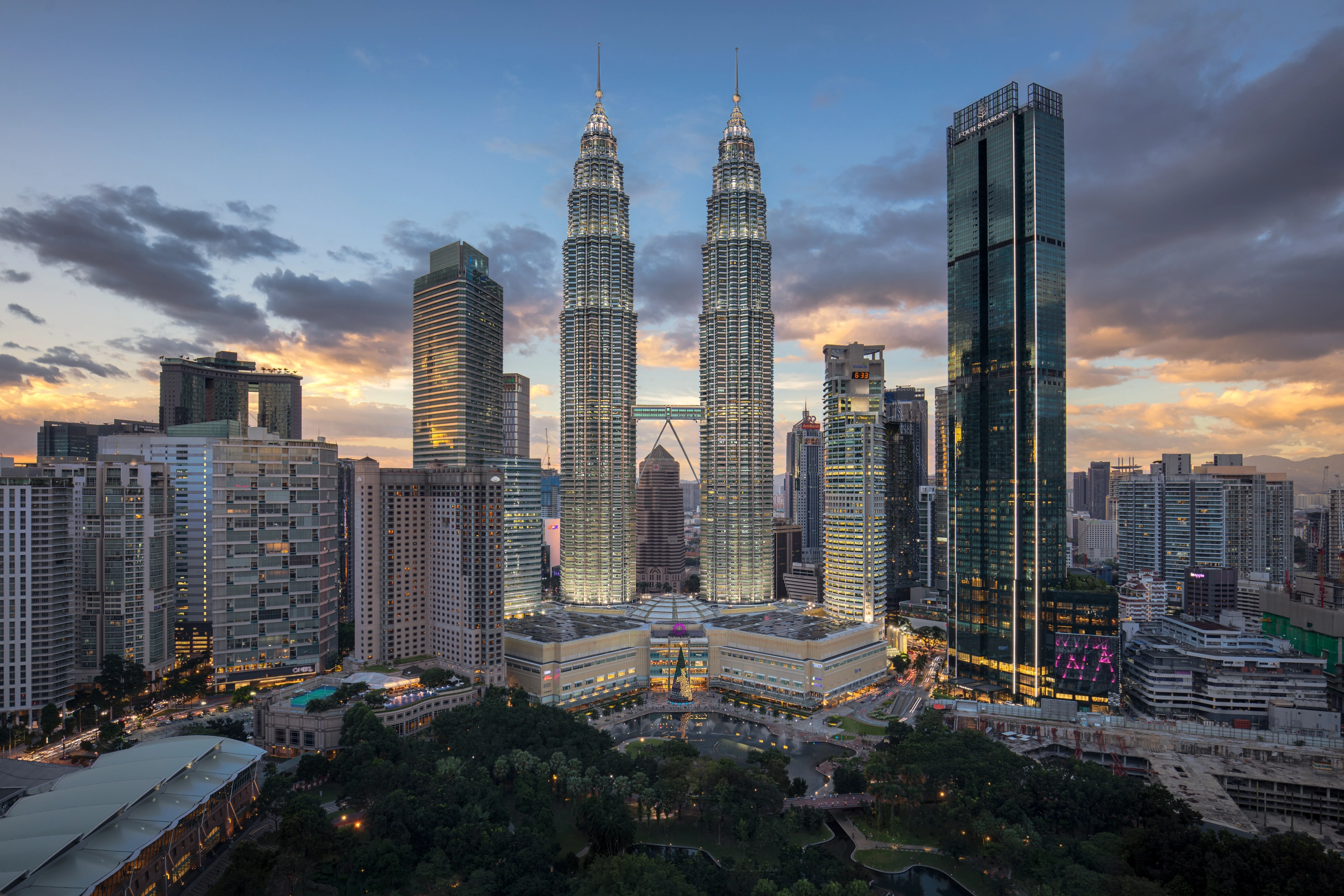
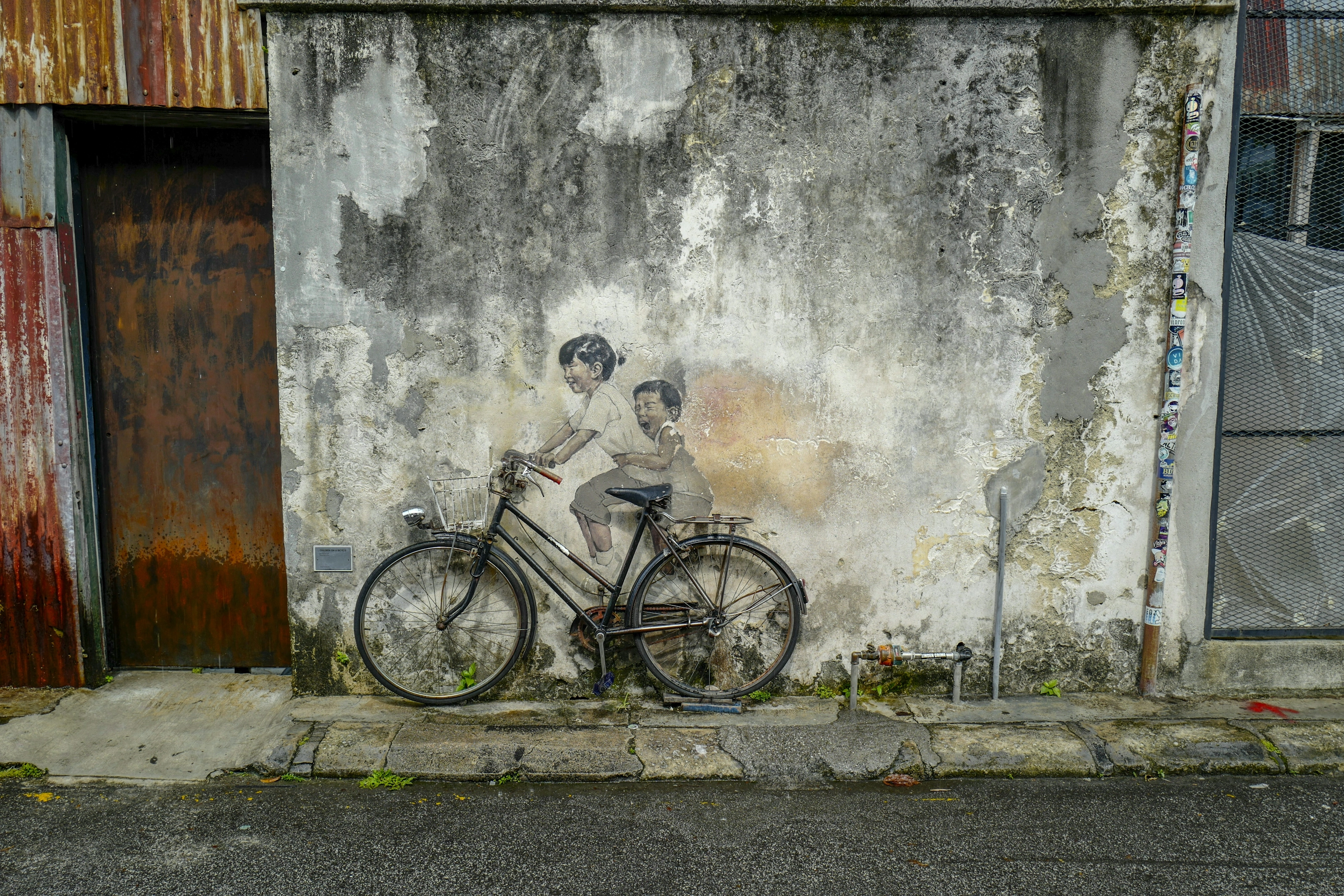
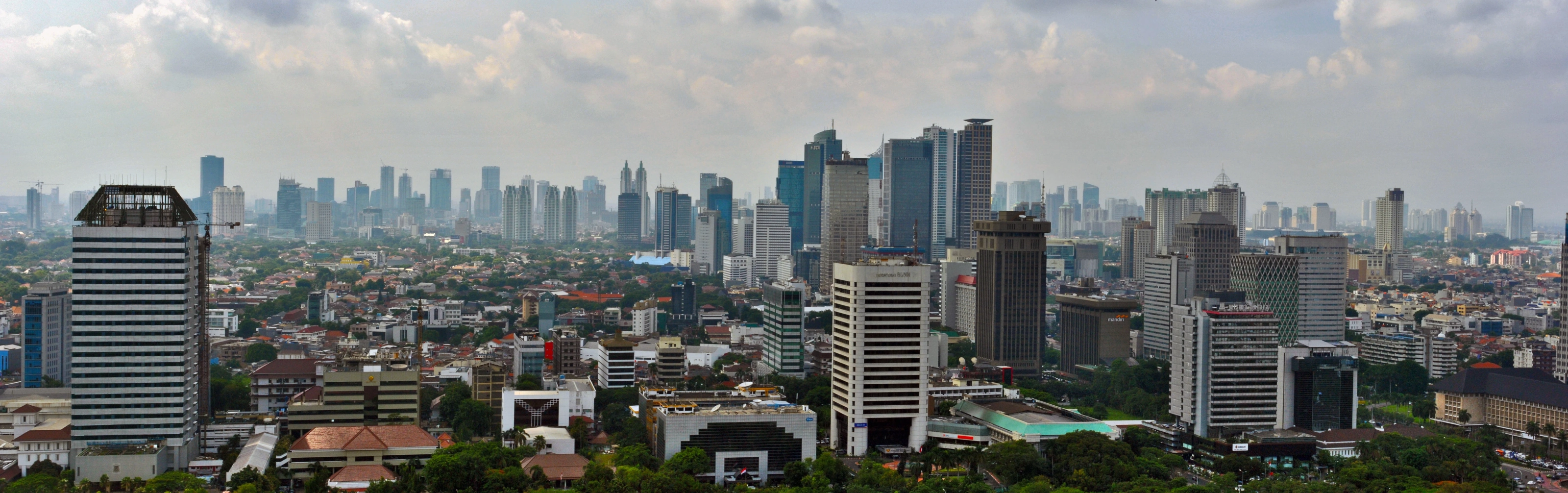
FAQ
Frequently asked questions about flights to Kota Kinabalu
How do I get from Kota Kinabalu airport to the centre?
The airport (BKI) is about 8 km from the centre. Grab, taxis and minibuses make the trip in a few minutes. The airport has two terminals a good distance apart: tell your driver which one you need. Check timetables before you travel.
When is the best time to visit Kota Kinabalu?
Heat is constant. Rainfall is lower from January to April according to Wikivoyage (EN) and heavier from September to November. Check forecasts before booking sea or mountain excursions.
Is Kota Kinabalu expensive?
It is generally affordable for meals and local transport; excursions weigh more. We do not give amounts because we could not cross-check them.
How long should I stay in Kota Kinabalu?
Two to three days for the city, markets and sunsets; four to five days if you add the islands and Mount Kinabalu; six days or more for other parts of Borneo.
How do I get around Kota Kinabalu?
On foot in the centre, by bus and minibus, by Grab, and by boat to the islands. For the interior, buses leave from the north and south terminals, and a rental car makes excursions easier.
What is there to do around Kota Kinabalu?
The islands of the Tunku Abdul Rahman marine park, fifteen to twenty minutes by boat, Mount Kinabalu, hot springs and rainforest. Excursions should be prepared in advance with licensed operators.
How much does a flight to Kota Kinabalu usually cost?
The price depends mainly on your departure city, the time of year and how far ahead you book. The "opportunities" section above shows real examples of prices SniperAir has already detected to this destination.
How do I get alerted when a flight to Kota Kinabalu drops below my budget?
Create an alert profile with your departure airport, Kota Kinabalu as the destination and your maximum budget. You are notified automatically as soon as a matching price is detected.
Ready to head to Kota Kinabalu?
Set your budget and let SniperAir monitor fares for you.
Create my alert