
Cheap flights to Kuala Lumpur
Set your departure airport and maximum budget: SniperAir tracks prices to Kuala Lumpur and alerts you the moment a deal matching your criteria appears.
Quick summary
Country
Malaysia
Continent
Asia
Airport
KUL
Currency
Malaysian ringgit (MYR)
Time zone
UTC+8, all year
Deals already spotted to Kuala Lumpur
Real flight examples detected by SniperAir, with their reference price.
Loading examples…
Why track Kuala Lumpur with SniperAir
You do not need to compare prices every day
Choose your departure
Enter your departure airport and your maximum budget for a flight to Kuala Lumpur (KUL).
SniperAir keeps watch
Our systems continuously compare new prices with the real price history of the route. SniperAir monitors prices and alerts you: it does not sell or book tickets.
You receive an alert
As soon as a price matches your criteria, you are notified, without having searched for anything yourself.
Airport and getting into town
A large airport about 50 km away, linked to the centre by a 28-minute express train
Kuala Lumpur International Airport (KUL)
Kuala Lumpur International Airport (KLIA) is in Sepang, about 50 km south of the city centre according to Wikivoyage. The KLIA2 terminal handles low-cost carriers. The KLIA Ekspress train runs non-stop to KL Sentral station in about 28 minutes, roughly every 15 to 20 minutes; the KLIA Transit stops along the way and takes a little longer. Express buses and taxis also make the trip, with travel times that vary a lot with traffic. A second airport, Subang (SZB), is closer to the centre and handles mostly regional flights.
Distances and times are approximate, from Wikipedia and Wikivoyage; train and bus timetables change, so check them before you travel. We do not quote fares.
Kuala Lumpur, known as KL, is Malaysia's capital and largest city: more than 1.6 million people inside the Federal Territory and a much larger metropolitan area. Its Malay name means "muddy confluence": the city grew where the Gombak and Klang rivers meet, around tin mining that took off around 1857.
SniperAir tracks prices to KUL and compares them with the route's history. The capital is also the gateway to Penang, Langkawi and Kota Kinabalu, all reachable by domestic flight, so consider tracking several destinations to build a circuit.
Towers, squares and temples
Twin towers, colonial buildings, Chinese temples and parks
Kuala Lumpur is a constant contrast: glass skyscrapers a few minutes from neo-Moorish arcades, mosques and temples. The places below are illustrated; Merdeka 118, KL Tower, Chinatown and Batu Caves are described in text only.
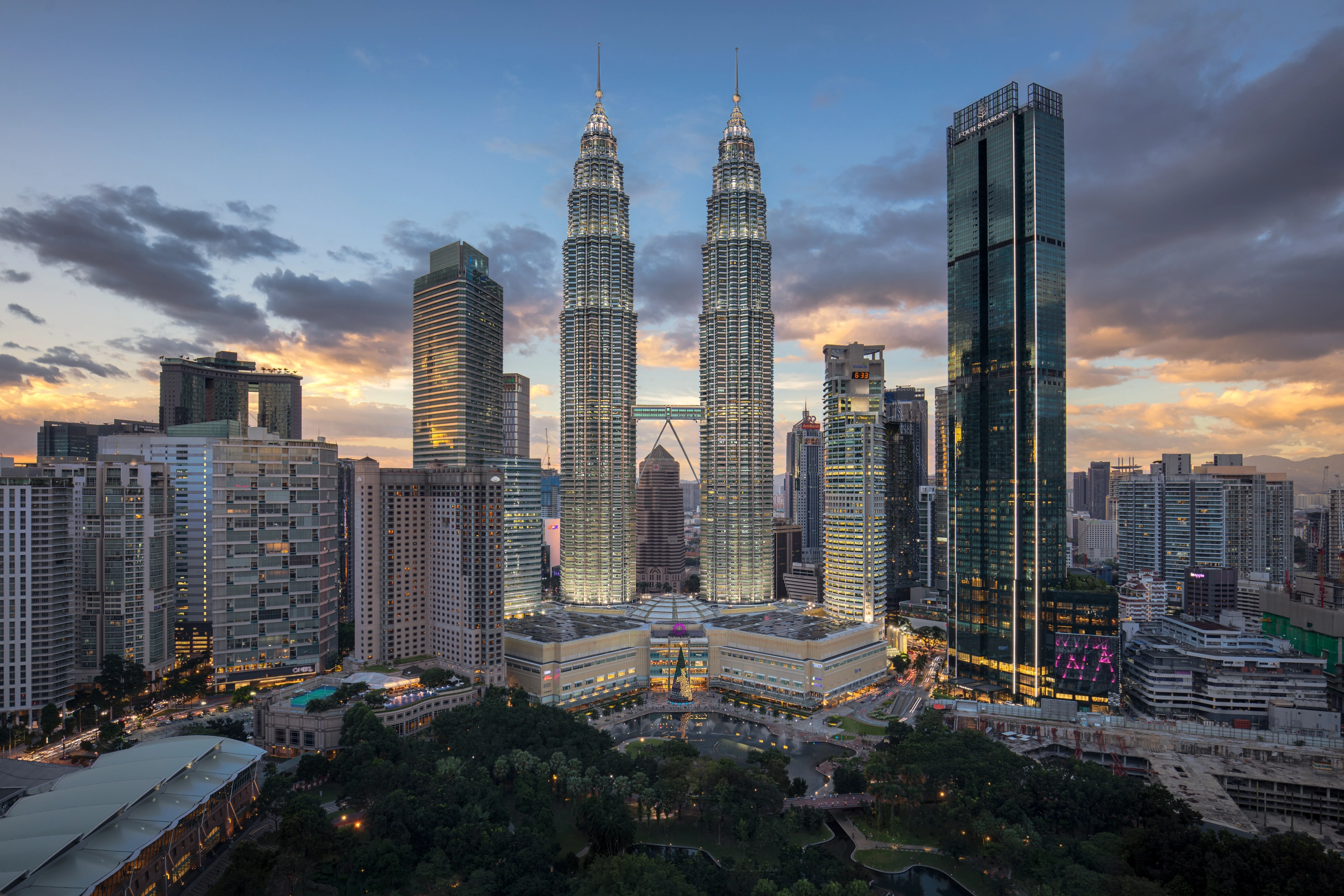
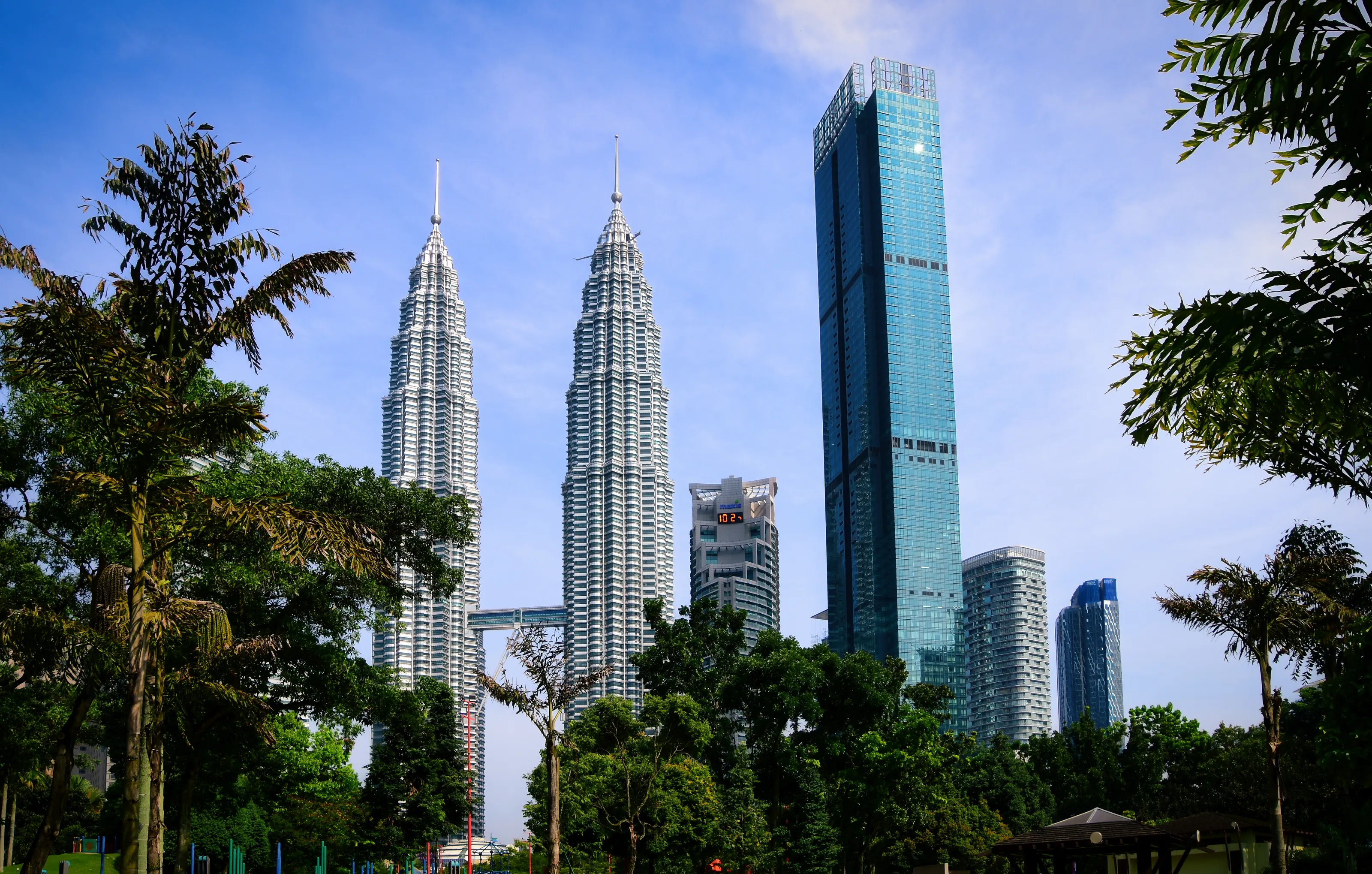
The Petronas Towers at dusk
Opened in 1998, the Petronas Towers (452 m, 88 floors) were the world's tallest buildings until 2004 and are still the tallest twin towers. Their design draws on Islamic art motifs. At their feet, KLCC Park has fountains and shaded paths, very pleasant at the end of the day.
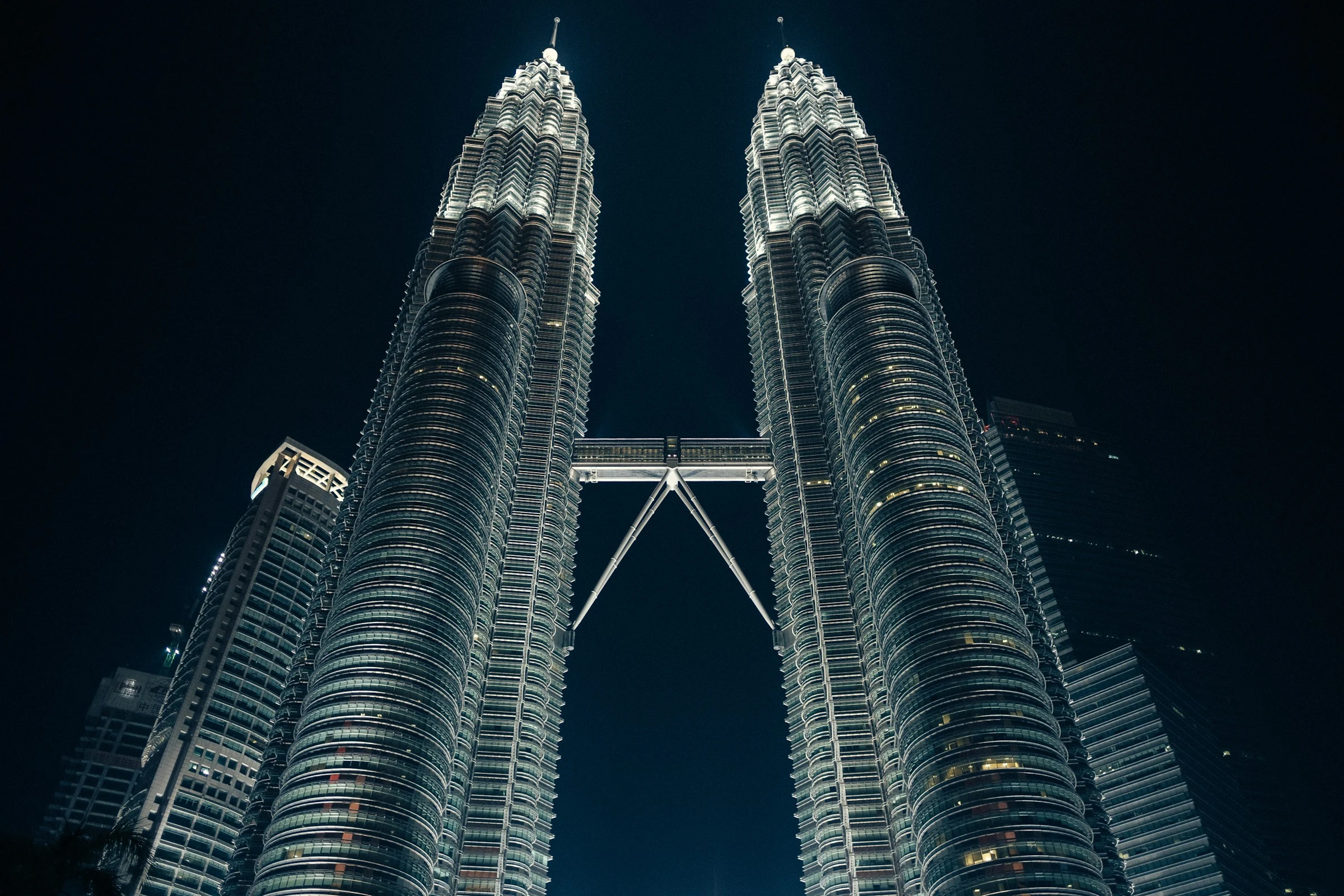
The sky bridge, at night
A bridge links the two towers at mid-height; visitors can go up with a reservation and look out over the city. At night, the lit-up towers dominate the business district. Check visiting conditions before you go; we do not quote ticket prices.
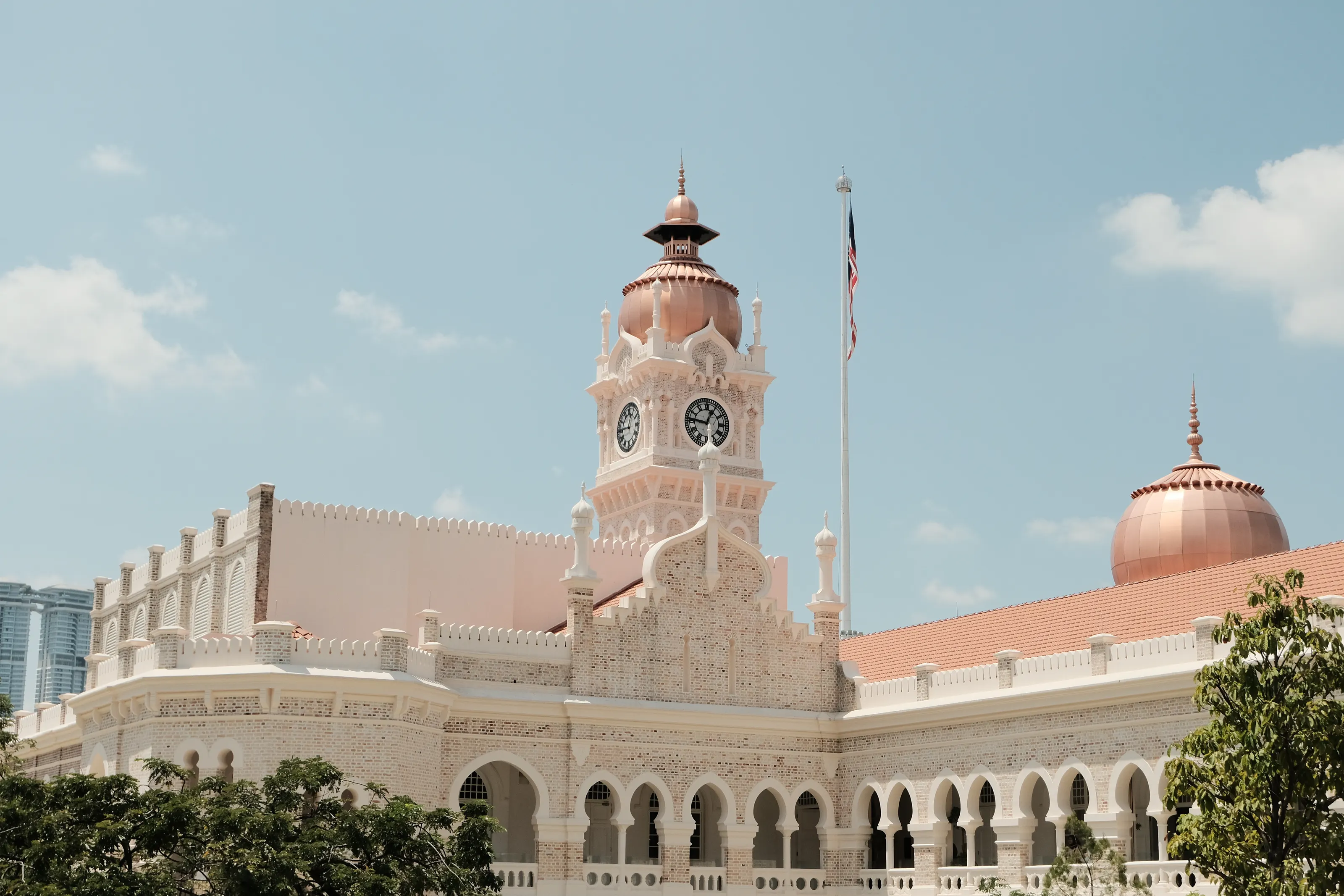
The Sultan Abdul Samad Building
Built in the late 19th century in Indo-Saracenic style, facing Merdeka Square (Dataran Merdeka), this building with its arcades and copper domes housed the British colonial administration. The Malaysian flag was raised here for the first time on 31 August 1957, the day of independence.
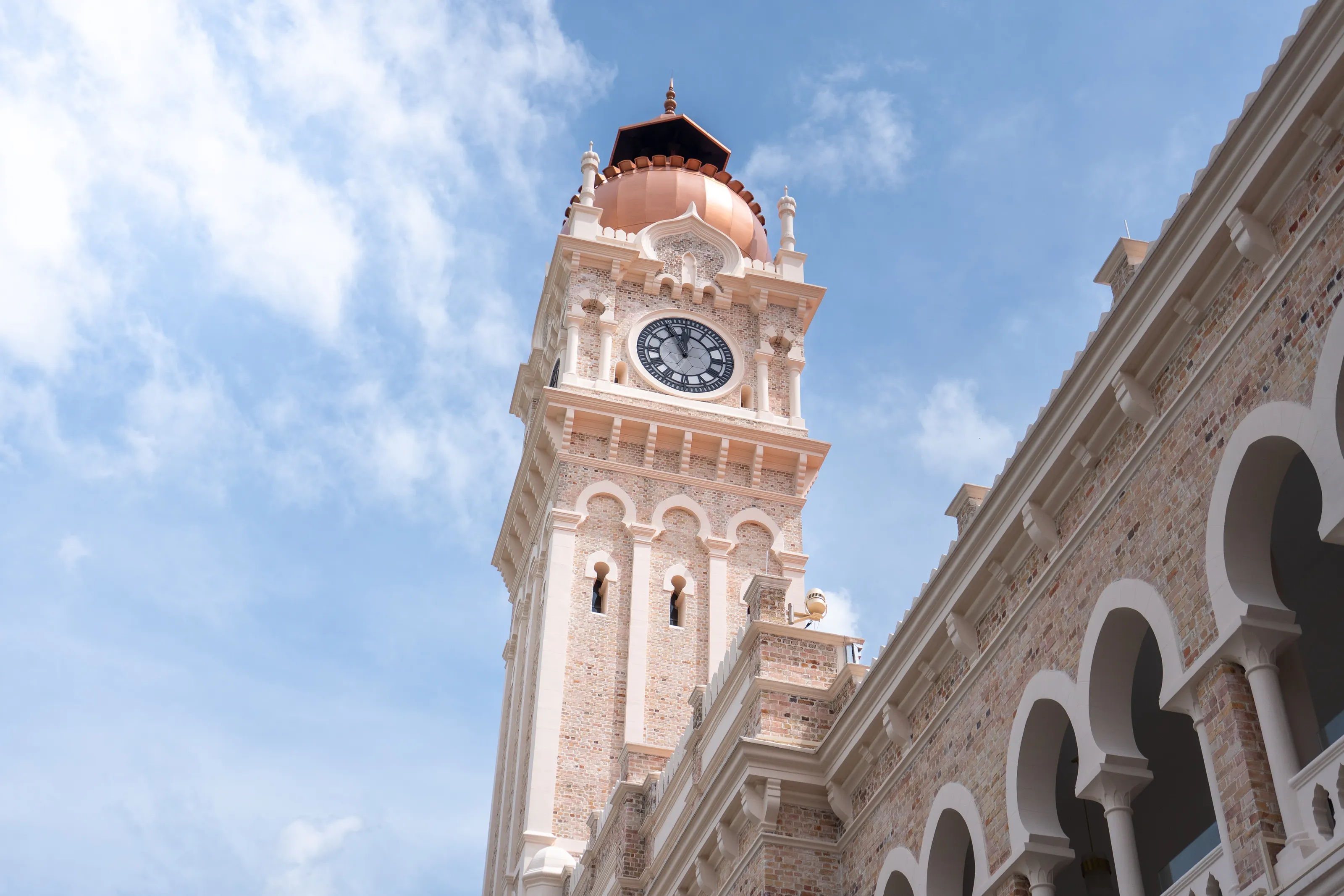
The clock tower and the arcades
Its clock tower is one of the old town's symbols. Around the square, other colonial buildings, the Masjid Jamek mosque at the river confluence and the old British-style railway station are best explored on foot, early in the morning or late in the afternoon, before the heat and the showers.
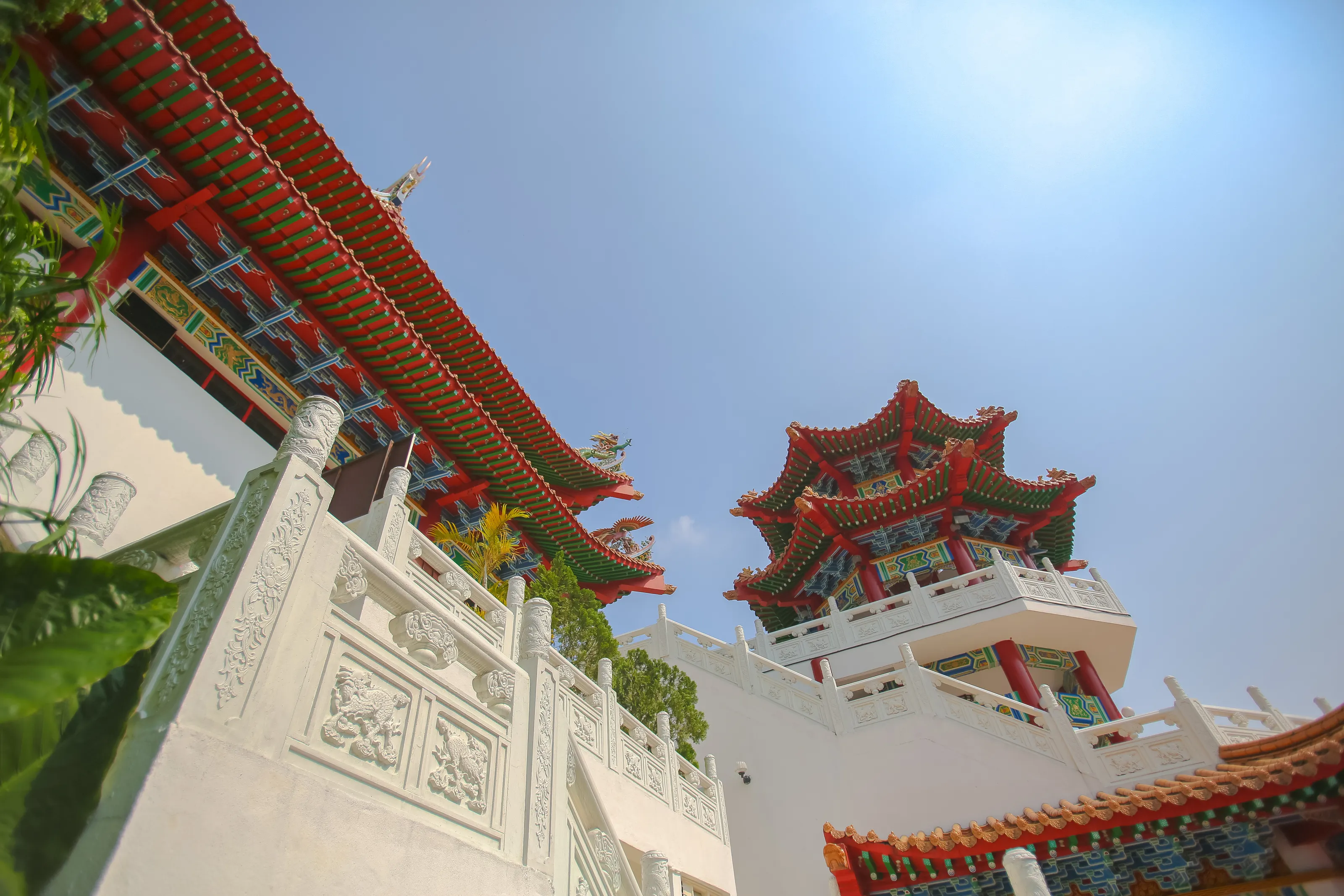
Thean Hou Temple
On a hill on the edge of the centre, this large traditional Chinese temple has red roofs, dragons and lanterns. It reflects the strong Chinese community, which makes up more than half of the city's population according to Wikivoyage. Dress modestly, as at any place of worship.
KLCC Park and the towers
At the foot of the towers, the park gives the classic view of their silhouettes, between palms and lawns. People come to walk, cool off by the fountains and take photos before heading for an air-conditioned mall or the nearby metro.
Merdeka 118, KL Tower, Chinatown and Batu Caves, in text
Merdeka 118 is a recently opened supertall skyscraper that rivals the Petronas Towers. KL Tower, a telecommunications tower on a hill, offers one of the best panoramas and rises beside the Bukit Nanas forest reserve. Chinatown, around Petaling Street, mixes stalls, temples and snacks; the Central Market sells batik and crafts. The Batu Caves, to the north, hold a Hindu temple beneath a large golden statue and are reached by commuter train.
Museums and culture
History, Islamic art, textiles and music
The National Museum
The Muzium Negara traces Malaysia's history from prehistory to independence, with objects, models and paintings from across the country. It is a good starting point for understanding the peoples who make up the nation. Check opening hours before you go.
The Islamic Arts Museum Malaysia
Next to the National Mosque, this museum shows several thousand objects linked to Islamic art and civilisations, including manuscripts, architectural models and textiles. Its building, with decorated domes, is a visit in itself. The exact number of objects varies by source, so we do not give one.
Textiles, galleries and music
The National Textile Museum, near Independence Square, shows fabrics, batik and songket. The Tangsi Gallery near Dataran Merdeka shows local and foreign artists. For music, Petronas Philharmonic Hall hosts the Malaysian Philharmonic Orchestra. We do not quote ticket prices.
Food and drink
Nasi lemak, roti canai, Chinese and Indian cooking
Stalls and neighbourhood coffee shops
Much of Kuala Lumpur's cooking is eaten at street stalls and kedai kopi, neighbourhood coffee shops where several cooks share one room. Nasi lemak, coconut rice served with fried anchovies, peanuts and egg, is the national dish; roti canai, a crisp flatbread with dhal and curry, is eaten at any hour at "mamak" stalls, some of which stay open all night.
A crossroads of cuisines
The city brings Malay, Chinese and Indian cooking together. Chinatown and Jalan Alor in Bukit Bintang are known for Chinese food, notably Cantonese, in the evening; the Jalan Masjid India and Kampung Baru area for Malay cooking; many restaurants serve South Indian food. Kopitiam, modern takes on the Chinese coffee shop, serve coffee, tea and toast.
Markets and malls
For fruit and fresh produce, Chow Kit market is a benchmark. Shopping malls have air-conditioned food courts, more comfortable but a little pricier than the street. Most restaurants close around 10 pm, which is why late-night stalls matter.
Getting around
Metro, monorail, trains and Grab
Urban rail
The rail network combines light rail, monorail, MRT and commuter trains run by several operators; some lines are not interconnected and need a separate ticket. The reloadable Touch 'n Go card works on most transport. KL Sentral is the main interchange. The KTM Komuter commuter train serves Batu Caves.
Buses, taxis and apps
Free GO KL buses circulate in the centre. Ride-hailing apps such as Grab are often the simplest option and the clearest on price. Ordinary taxis exist, but the meter is not always used at rush hour. Traffic is heavy, so mix public transport with short rides.
On foot and beyond the city
The colonial centre can be walked, but heat and humidity call for breaks. Long-distance buses and trains link Kuala Lumpur with Malacca, Penang, Singapore and Hat Yai; ETS trains run along the west coast. Check timetables on official sites.
Budget and precautions
A gentle budget for a capital, especially at the table
Price level
Kuala Lumpur is an affordable destination for a world capital: street meals, transport and accommodation are cheap compared with Europe, and the city is known for high-end hotels at moderate prices. The currency is the ringgit (MYR). We give no amounts because we could not cross-check them on two independent open sources.
Flights
The flight remains the most variable item. SniperAir tracks prices to KUL and compares them with the route's history, but it does not sell or book tickets. Also watch domestic flights to Penang, Langkawi or Kota Kinabalu if you plan a circuit.
Entry and precautions
Entry rules depend on your nationality: check official sources and your home country's travel advice. As in any big city, watch your belongings in crowds. Mosques and some temples ask for covered clothing, sometimes lent at the entrance. Haze from forest fires in Sumatra can be a nuisance between May and October.
When to go
Hot and humid all year, more rain from October to March
October to March
Northeast monsoon: rain is heavier, with strong afternoon downpours. The city stays hot and green.
April and May
Humid heat and frequent late-day thunderstorms; a transition between the two monsoons.
June to August
Somewhat less rain and often clearer skies; haze from Sumatra is possible depending on the year.
September
Showers gradually return; prices and crowds depend on holidays and religious festivals.
Kuala Lumpur has an equatorial climate: temperatures vary little, with highs around 32 to 34 C and lows near 23 C according to Wikipedia (DE, ES), and rain all year. Showers are short but fierce, so pack an umbrella, light clothes and water. Festivals such as Chinese New Year or Thaipusam make the city livelier, but also pricier.
By length of stay
What to do in Kuala Lumpur depending on the length of your stay
The essentials
The Petronas Towers and KLCC Park, Dataran Merdeka, Chinatown, Thean Hou Temple, a night market and a street-food meal.
Museums and day trips
The National Museum, the Islamic Arts Museum, KL Tower and Bukit Nanas, Batu Caves, the FRIM forest or Putrajaya.
A Malaysian circuit
Malacca, Penang, Langkawi or Kota Kinabalu, by domestic flight or train, to round out the capital.
In pictures
Kuala Lumpur in pictures
You might also like
Similar destinations
FAQ
Frequently asked questions about flights to Kuala Lumpur
How do I get from Kuala Lumpur airport to the centre?
The airport (KUL) is about 50 km south of the centre. The KLIA Ekspress train reaches KL Sentral in about 28 minutes non-stop; the KLIA Transit stops along the way. Buses and taxis also run. Timetables change, so check them before you travel.
When is the best time to visit Kuala Lumpur?
Temperatures hardly change through the year. Rain is heavier from October to March; June to August is often a little drier, but haze may drift in from Sumatra. Always carry an umbrella.
Is Kuala Lumpur expensive?
It is affordable for a capital: street meals, transport and accommodation cost little compared with Europe. We do not give amounts because we could not cross-check them.
How long should I stay in Kuala Lumpur?
Two to three days for the towers, historic districts, temples and food; four to five days if you add the museums and day trips such as Batu Caves or Putrajaya.
How do I get around Kuala Lumpur?
By light rail, monorail and commuter train with a Touch 'n Go card, and by ride-hailing such as Grab. The centre can be walked in short stretches, but heat and traffic mean you should combine modes.
What should I eat in Kuala Lumpur?
Nasi lemak, roti canai with dhal or curry, Chinese dishes from Jalan Alor and Chinatown, South Indian cooking and kopitiam coffee. Street stalls are a good way in.
How much does a flight to Kuala Lumpur usually cost?
The price depends mainly on your departure city, the time of year and how far ahead you book. The "opportunities" section above shows real examples of prices SniperAir has already detected to this destination.
How do I get alerted when a flight to Kuala Lumpur drops below my budget?
Create an alert profile with your departure airport, Kuala Lumpur as the destination and your maximum budget. You are notified automatically as soon as a matching price is detected.
Ready to head to Kuala Lumpur?
Set your budget and let SniperAir monitor fares for you.
Create my alert