
Cheap flights to Taipei
Set your departure airport and maximum budget: SniperAir tracks prices to Taipei and alerts you the moment a deal matching your criteria appears.
Quick summary
Country
Taiwan
Continent
Asia
Airport
TPE
Currency
New Taiwan dollar (TWD)
Time zone
UTC+8
Deals already spotted to Taipei
Real flight examples detected by SniperAir, with their reference price.
Loading examples…
Why track Taipei with SniperAir
Taiwan's main city, where skyscrapers meet temples
Choose your departure
Enter your departure airport and your maximum budget for a flight to Taipei (TPE).
SniperAir keeps watch
Our systems continuously compare new prices with the real price history of the route. SniperAir monitors prices and alerts you: it does not sell or book tickets.
You receive an alert
As soon as a price matches your criteria, you are notified, without having searched for anything yourself.
Taipei is the main city in the north of the island of Taiwan. Wikipedia (EN) calls it the political, cultural and economic centre of the island, with about 2.5 million people in the city proper and about 7 million across Greater Taipei, which wraps around it on all sides. Wikivoyage (EN) describes a city set in a basin between the Yangming and Central mountains, where Chinese heritage mixes with strong Japanese and American influences and where life feels refreshingly unhurried for a global city. Visitors come for Taipei 101, Longshan Temple and the National Palace Museum, for the night markets and tea houses, and for how easily the metro leads to hot springs, hills and former mining towns beyond the city. Fares to TPE move with the season, the airline and the number of stops; SniperAir compares them with the real price history of the route and alerts you when one falls below your budget.
Airport and getting into town
Two airports: Taoyuan (TPE) for international flights, Songshan (TSA) in town
Taipei – Taiwan Taoyuan International Airport (TPE)
Taiwan Taoyuan (TPE) handles most international flights. It lies in the city of Taoyuan, between about 30 and 50 km from Taipei depending on the source: Wikivoyage (EN, DE) says 30 km, the tourism site taipeitourism.org says 40 km and Wikivoyage (FR) says 50 km. An express train on the airport metro line reaches Taipei Main Station in roughly 35 to 39 minutes according to taipeitourism.org (Wikivoyage EN: about 38 minutes). Songshan (TSA), the smaller airport in the city itself, mostly serves domestic flights and a few regional routes, including shuttles to Tokyo-Haneda, Seoul-Gimpo and Shanghai-Hongqiao (Wikivoyage EN, Wikipedia FR).
Distance per taipeitourism.org and Wikivoyage (EN, DE, FR): between 30 and 50 km. Express train time: roughly 35 to 39 minutes. We do not publish transport fares, which change; check them with the operator before you travel.
Wikivoyage (EN) adds that some airlines let you check in and drop your bags at Taipei Main Station ahead of time, and warns against mixing up Songshan and Taoyuan when you tell a taxi driver where to go. Express buses also link the airport and the city in 50 to 70 minutes depending on traffic (Wikivoyage EN). Entry rules depend on your nationality: check official sources before you travel.
Landmarks
Taipei 101, Longshan Temple, Beitou and Maokong
Taipei comes down to a few big ideas: the skyline, a neighbourhood temple, a hot bath and tea in the hills. The five views below are followed by more places described in the text.
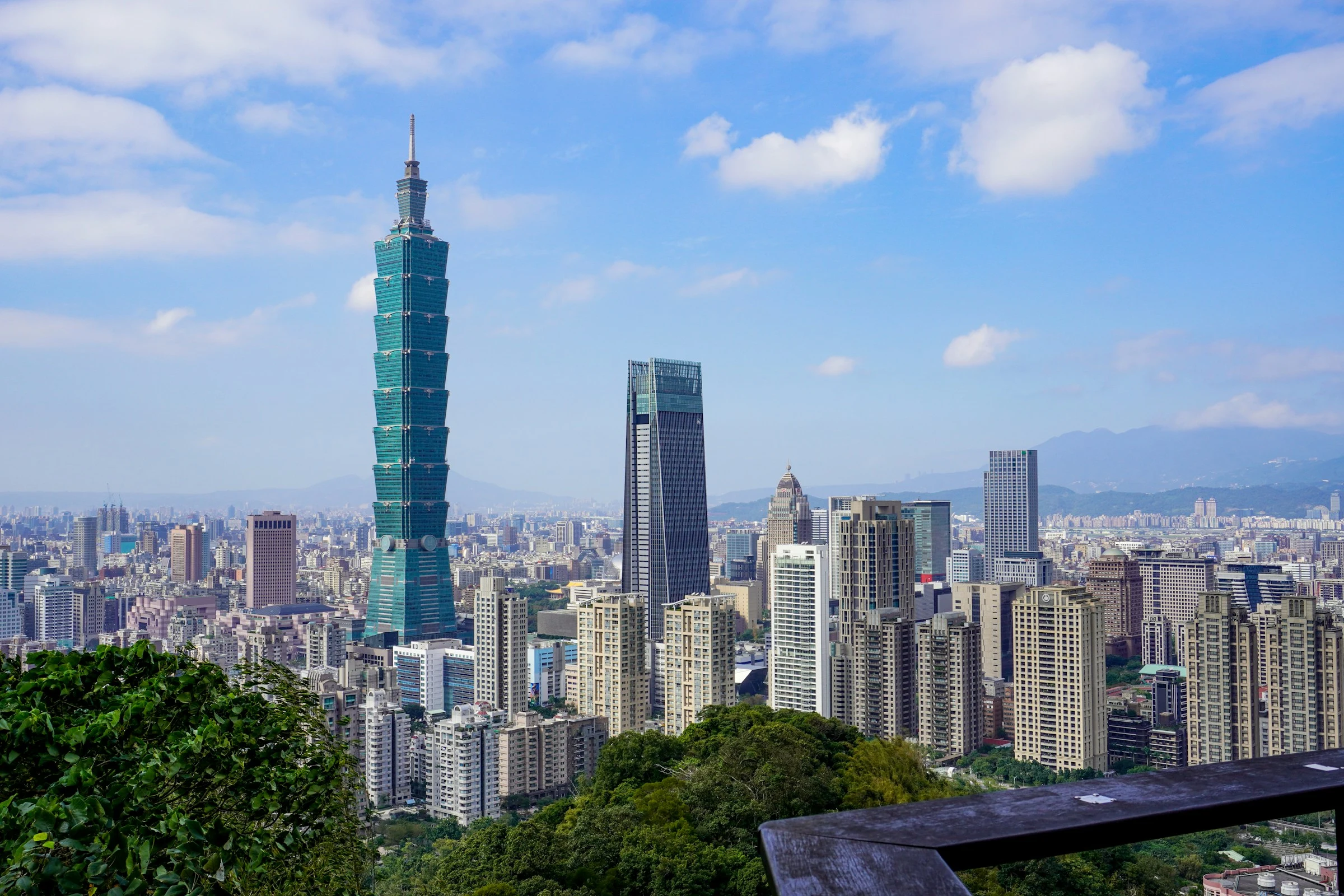
Taipei 101 and the daytime skyline
The 101-storey tower rises above the Xinyi district. Wikipedia (EN, FR, DE) notes that it was once the tallest building in the world, and Wikivoyage (EN) that it remains a popular stop for its architecture and observation deck. The hills and parks around the city, mentioned by Wikivoyage (EN), give good vantage points over the whole skyline.
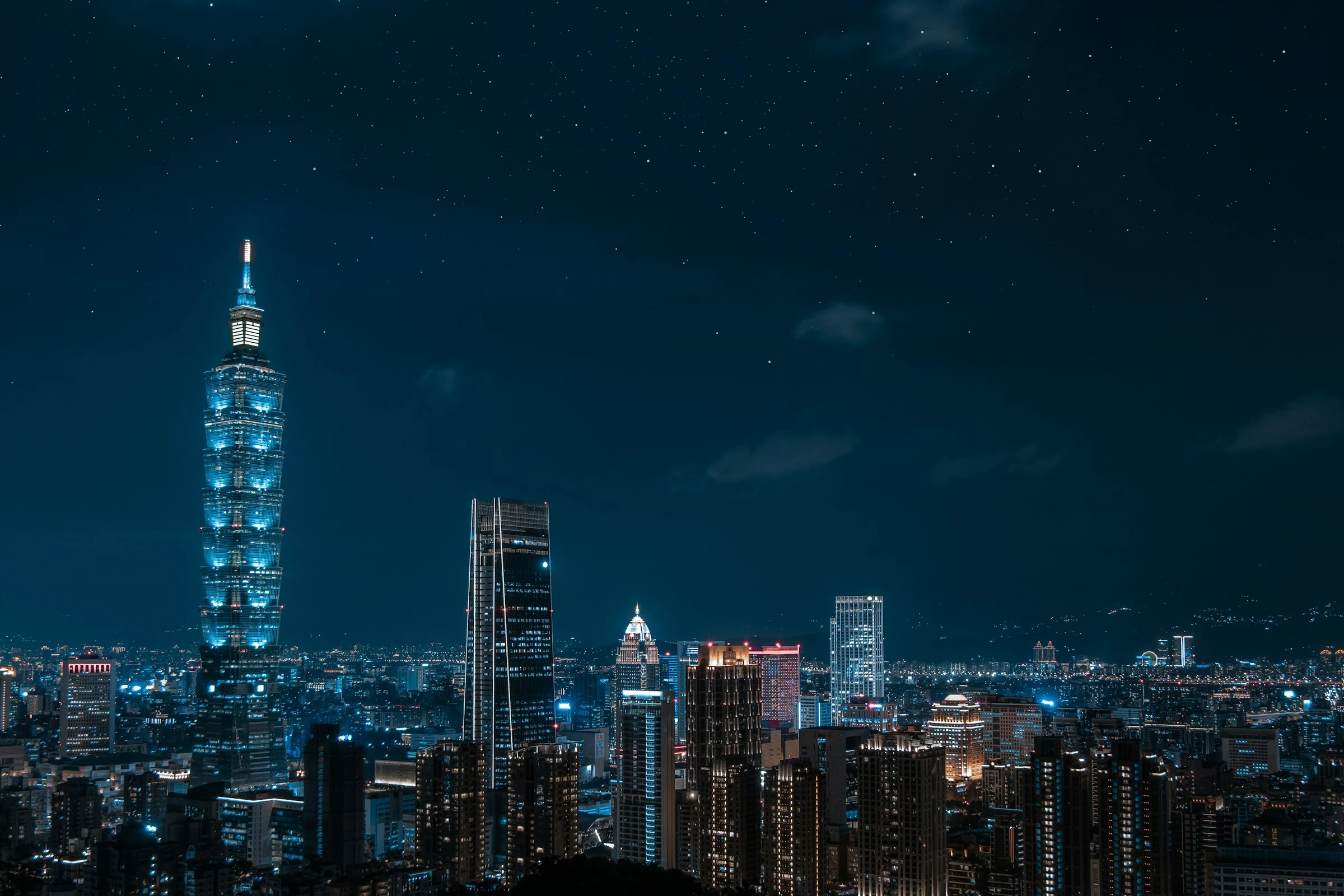
The skyline at night
After dark the tower lights up among the surrounding buildings. Wikivoyage (EN) says that on New Year's Eve Taipei 101 becomes a beacon of lights and fireworks, while Wikivoyage (DE) suggests going up in time for sunset and staying on for the coloured lights of the city's most modern district.
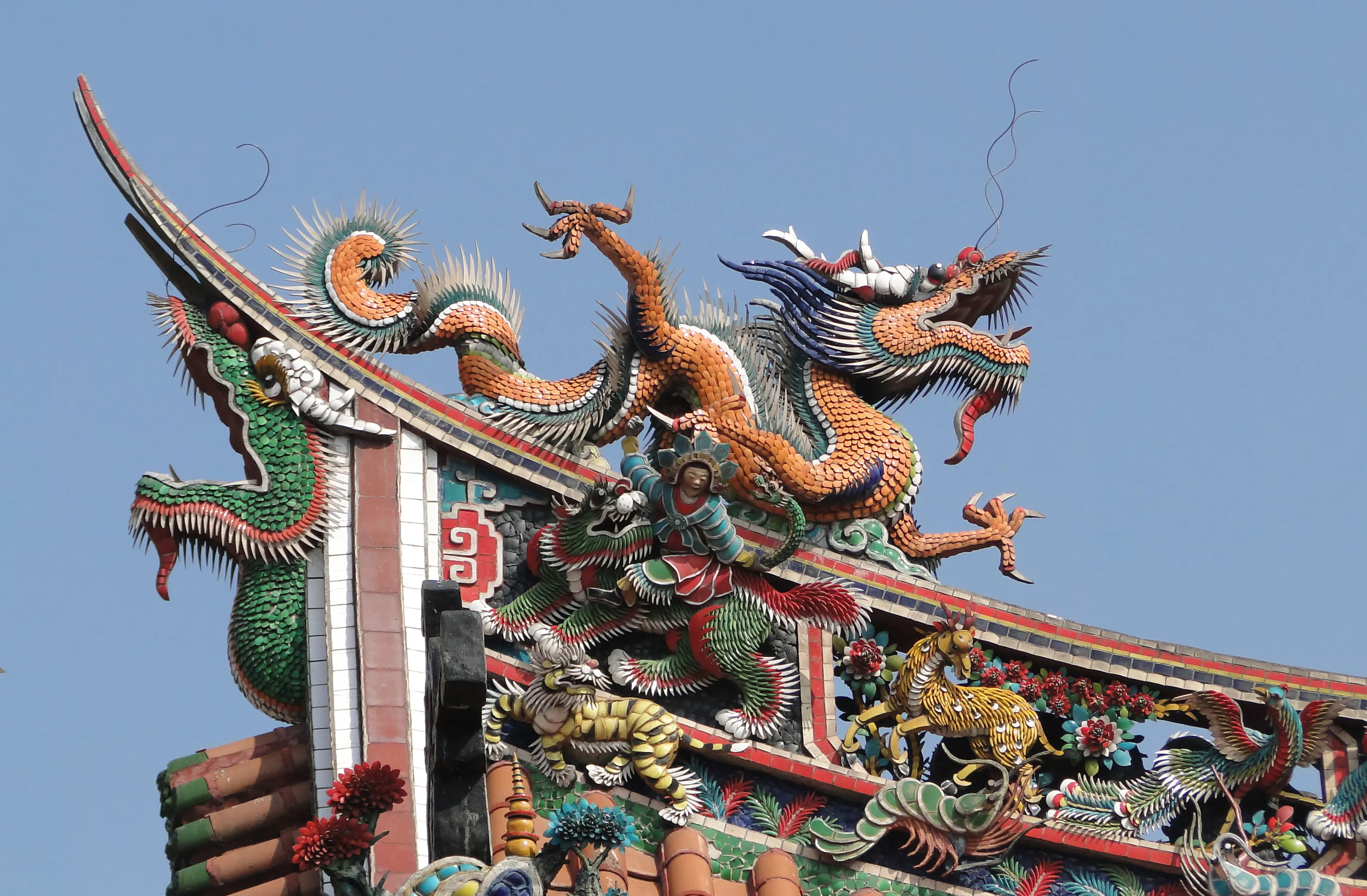
Longshan Temple and its carved roofs
Built in 1738 in the Wanhua district according to Wikivoyage (FR) and Wikipedia (DE), Longshan Temple has been rebuilt after an earthquake, a typhoon and wartime bombing. Wikivoyage (EN) notes that Taoist and Buddhist temples in the older districts, such as Longshan and Bao'an, still draw locals who keep the old rituals. The ridges covered in ceramic dragons are among its most photographed details.
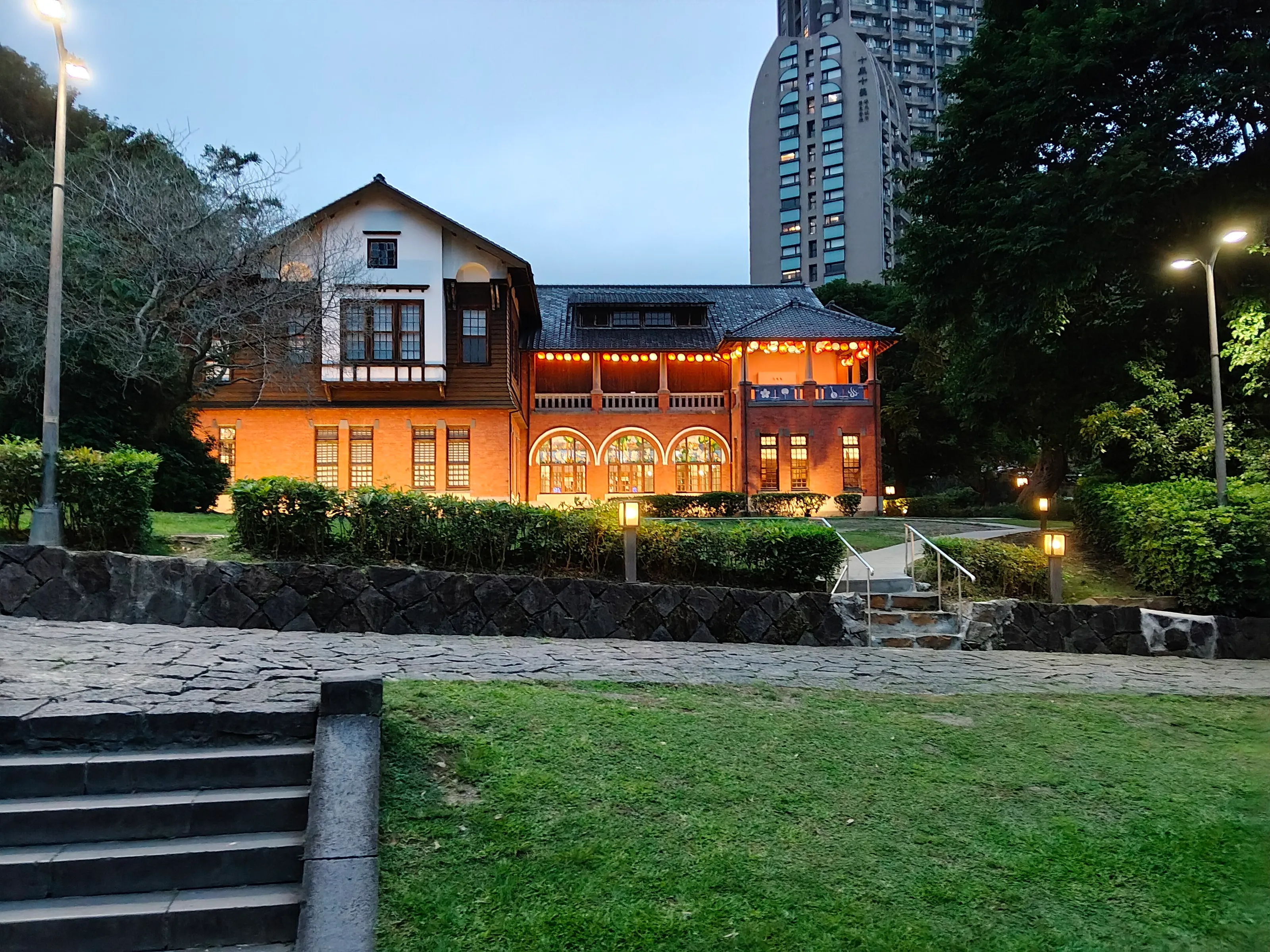
Beitou and its hot springs
In the north of the city, Beitou is known for its hot springs; Wikivoyage (EN) says that Taipei's baths range from basic natural pools to plush spas in luxury hotels. The photo shows the Beitou hot spring museum, a red-brick and timber building set in a lawn. We do not quote any admission fee or opening hours.
Maokong, tea and city views
In the Wenshan district to the south, Maokong has dozens of teahouses, many with panoramic views, especially spectacular on a clear evening (Wikivoyage EN). A gondola climbs up from the Taipei Zoo station, with a few glass-floor cabins. Wikipedia (DE) also lists Zhinan Temple among the sights of these hills.
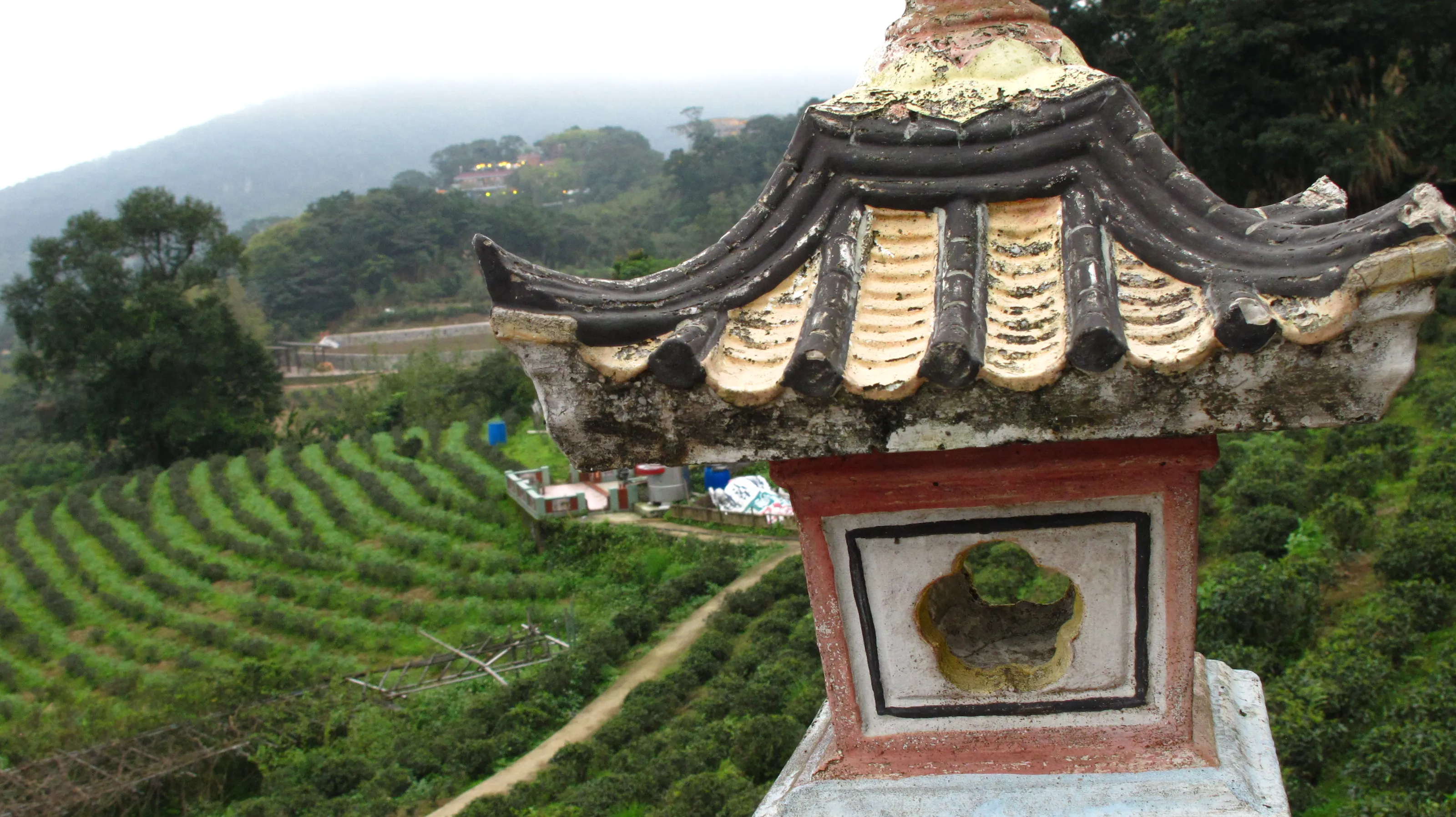
More places in Taipei: Chiang Kai-shek Memorial Hall, set in large gardens and plazas, and Sun Yat-sen Memorial Hall, where an honour guard changes at set hours (Wikivoyage EN); Bao'an Temple, built in 1760, and the Confucius Temple next door (Wikipedia DE); Daan Park, nicknamed Taipei's Central Park (Wikivoyage EN); and the North Gate of the old city wall, the only gate to keep its original Qing look (Wikivoyage EN). Yangmingshan National Park to the north offers hot springs, steam vents and cherry blossoms (Wikipedia DE).
Museums and culture
National Palace Museum, history, fine art and memorials
The National Palace Museum
The National Palace Museum in Shilin holds much of the imperial Chinese collection, brought to the island during the civil war (Wikivoyage FR). Wikivoyage (EN) says only about one percent is on display at any time, with paintings, scrolls, books and ceramics spanning more than 5,000 years, and that exhibitions rotate. It should not be mistaken for the Palace Museum in Beijing, with which it shares its origin. We do not quote admission fees or opening hours.
History, fine art and contemporary art
The National Museum of History also holds valuable relics (Wikivoyage EN). The Taipei Fine Arts Museum shows classical and contemporary art, mostly by Taiwanese artists (Wikipedia DE), and MOCA Taipei, housed in the former city hall, mainly runs changing temporary exhibitions (Wikivoyage FR). Huashan Creative Park serves as an informal creative space (Wikivoyage EN).
Memorials and 228 Peace Park
Chiang Kai-shek and Sun Yat-sen memorial halls stand in the middle of large parks, good for a quiet stroll (Wikivoyage EN). 228 Peace Park in Zhongzheng commemorates the incident of 28 February 1947 and contains the National Taiwan Museum and a memorial museum (Wikivoyage EN).
Food and drink
Night markets, beef noodle soup and tea houses
The night markets
French Wikipedia sees the night markets as an expression of Taiwanese identity, and Wikivoyage (EN) says that each district has several, all open until around midnight: Shilin, Raohe, Ningxia, Tonghua, Liuhe and Shida are among the best known. Its advice is to go with friends and share dishes, and to join the longest queue. Classics include oyster vermicelli and oyster omelette, fried chicken cutlet, aiyu jelly and stinky tofu, whose smell is very strong.
Soup dumplings and beef noodles
Xiaolongbao, the steamed soup dumplings of Shanghainese origin, are a city speciality (Wikivoyage EN, FR). Beef noodle soup is a national icon, with a yearly judging event every September (Wikivoyage EN). The arrival of refugees from the mainland after 1949 explains why Taipei is one of the best places to sample regional Chinese cooking.
Tea and casual dining
The teahouses of Maokong and other districts show the other side of local food culture, from high-mountain teas to snacks. Wikivoyage (EN) also points to the noisy, very local hot fry restaurants where people eat Taiwanese dishes with beer. We do not name addresses or brands.
Getting around
Metro, buses, bike share and fast trains
The Taipei metro
Opened in 1996, the metro has 131 stations and carried about 2.1 million passengers a day in 2019 (Wikipedia FR). Wikivoyage (EN) calls it clean, reliable and safe, with stops announced in six languages: Mandarin, English, Japanese, Korean, Taiwanese and Hakka. The rechargeable EasyCard simplifies trips; we publish no fares.
Buses and bikes
A dense bus network complements the metro, with English information on board (Wikivoyage EN). The YouBike bike-share system and a good network of cycle paths also exist (Wikipedia FR).
Trains to the rest of the island
Taipei Main Station brings together express and intercity trains and the high-speed line to Kaohsiung (Wikipedia FR, DE). It also makes day trips possible to Jiufen, Tamsui, Yingge or Fulong (Wikivoyage EN).
Budget and precautions
Budget, health and safety
Price level
Street food, night markets and urban transport stay affordable, while central accommodation and upmarket restaurants weigh more heavily on a budget. The currency is the new Taiwan dollar (TWD). We publish no amounts, because we could not cross-check them on two independent, current sources.
Flights
SniperAir monitors fares to TPE and compares them with the route's history, but it does not sell or book tickets. Prices vary with the season, the airline and the number of stops.
Health
Ask a doctor or travel clinic for advice before you leave and take out travel insurance. Wikivoyage (EN) says street food is generally safe, with common sense if your stomach is sensitive.
Safety
Wikivoyage (EN) rates Taipei as very safe, with extremely rare violent crime but possible pickpockets in crowded places, especially night markets. Official advice differs by country of departure: check your own government's before booking, and follow local instructions during a typhoon or earthquake.
When to go
A humid subtropical climate, with typhoons in summer
October to December
Wikivoyage (EN) calls autumn the most comfortable season, with the least rainfall and pleasant temperatures.
February to April
Damp and rather grey according to Wikivoyage (EN), after a short, mild, foggy winter; Wikipedia (EN) adds that cold fronts can push temperatures below 10 °C.
May to October
Long, very hot and humid summers with thunderstorms; the typhoon season runs from June to October according to Wikipedia (FR) and from May to October, peaking in August and September, according to Wikivoyage (EN).
Wikipedia (EN, FR, ES) classes Taipei's climate as humid subtropical (Cfa). The average annual temperature is 23.4 °C according to Wikipedia (FR) and 23.6 °C according to Wikipedia (ES): we do not settle the difference and publish no decimal. No snow has been recorded in the city; it is extremely rare even on the heights of Yangmingshan (Wikipedia EN, Wikivoyage EN).
By length of stay
What to do in Taipei depending on your stay
The essentials
Taipei 101, Longshan Temple, the National Palace Museum and a night market: Wikivoyage (DE) reckons you need at least three days for the main sights.
Taipei in depth
Beitou and its hot springs, Maokong and its teas, the memorials, the art museums and the city's neighbourhoods.
Beyond Taipei
Tamsui, Jiufen and Yangmingshan, then Taroko or Sun Moon Lake by train; the Taiwan page covers the rest of the island.
In pictures
Taipei in pictures
You might also like
Similar destinations
FAQ
Frequently asked questions about flights to Taipei
How far is TPE airport from Taipei?
Taiwan Taoyuan (TPE) is about 30 to 50 km from Taipei depending on the source, with an express metro train taking roughly 35 to 39 minutes according to taipeitourism.org. Road traffic can lengthen a bus trip.
TPE or Songshan: which airport should I choose?
TPE handles most international flights. Songshan (TSA), closer to the centre, mostly serves domestic flights and a few regional routes to Japan, South Korea and mainland China (Wikipedia FR).
What should I see in Taipei?
Taipei 101, Longshan Temple, the National Palace Museum, the memorials and the night markets and, a little further out, Beitou, Maokong and Yangmingshan National Park, according to Wikipedia (FR, DE) and Wikivoyage (EN).
When is the best time to visit Taipei?
Autumn is the most comfortable season according to Wikivoyage (EN). Typhoons mostly affect summer and early autumn, and spring is often damp: keep an eye on fares well in advance.
Is Taipei safe and expensive?
Wikivoyage (EN) rates it very safe, with possible pickpockets in crowds. Street food and urban transport are affordable; central accommodation costs more. We publish no amounts.
How many days do I need in Taipei?
Wikivoyage (DE) advises at least three days for the main sights; two days cover the essentials, and a trip to Beitou or Maokong takes half a day to a day.
How much does a flight to Taipei usually cost?
The price depends mainly on your departure city, the time of year and how far ahead you book. The "opportunities" section above shows real examples of prices SniperAir has already detected to this destination.
How do I get alerted when a flight to Taipei drops below my budget?
Create an alert profile with your departure airport, Taipei (TPE) as the destination and your maximum budget. You are notified automatically as soon as a matching price is detected. SniperAir monitors and alerts, it does not sell or book tickets.
Ready to head to Taipei?
Set your budget and let SniperAir monitor fares for you.
Create my alert