
Cheap flights to Istanbul
Set your departure airport and your maximum budget: SniperAir tracks prices to Istanbul and alerts you as soon as an opportunity matching your criteria appears.
Quick summary
Country
Turkey
Continent
Asia
Airport
IST
Currency
Turkish Lira (TRY)
Time zone
UTC+3
Opportunities already spotted to Istanbul
Real flight examples spotted by SniperAir, with their reference price.
Loading examples…
Identity
From Byzantium to Istanbul, 2,700 years spanning two continents
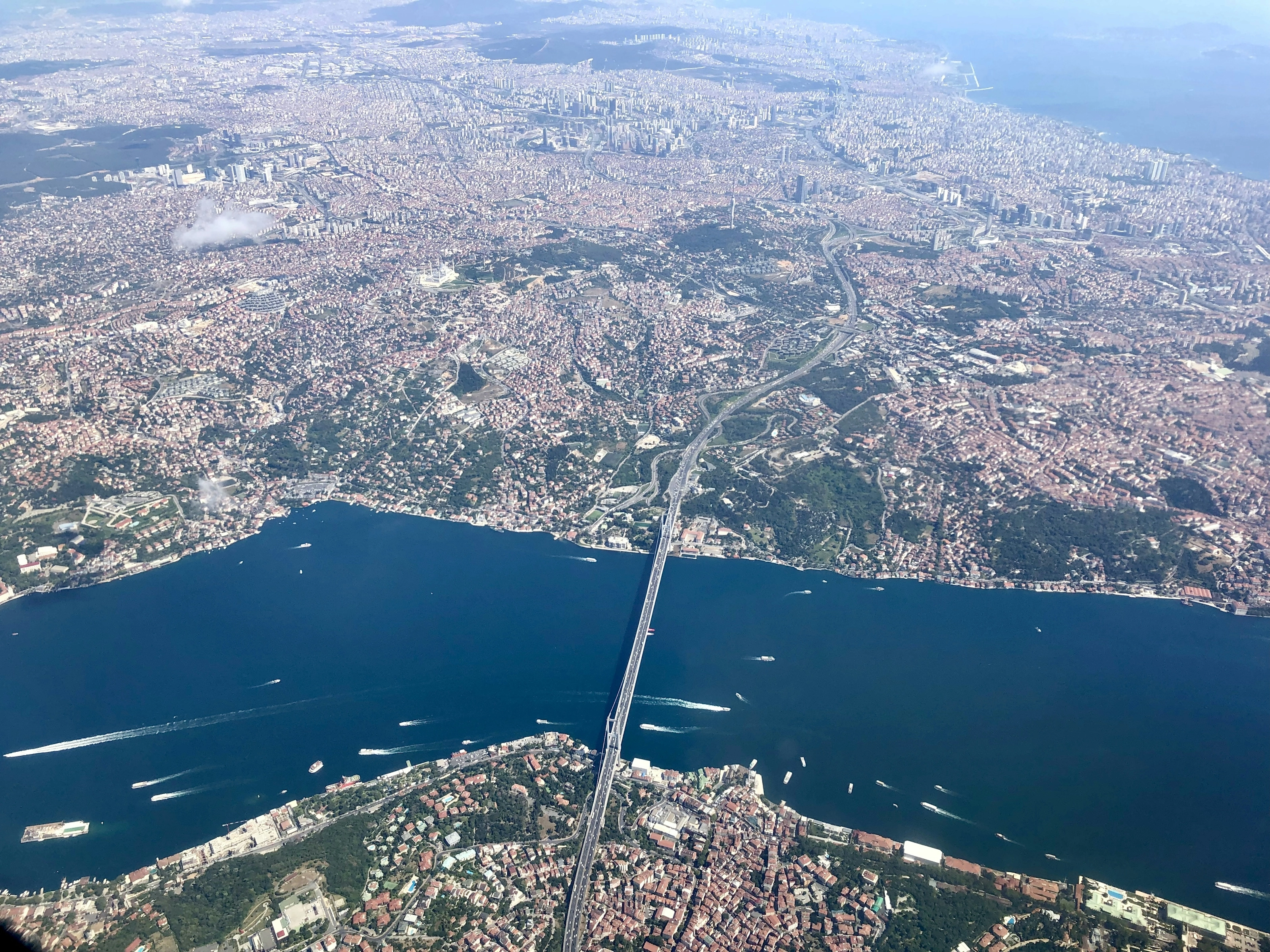
Founded around 660 BC by Greek settlers as Byzantium, the city was refounded in 330 by Emperor Constantine I as Constantinople and conquered in 1453 by Sultan Mehmed II, who made it the capital of the Ottoman Empire. It remained the capital until 1923, when the role passed to Ankara. Istanbul spreads on both sides of the Bosphorus, between the Black Sea and the Sea of Marmara, and the Golden Horn further separates the historic peninsula from the northern districts, so ferries are part of everyday life.
With more than 15 million inhabitants spread over 39 districts it is Europe's most populous city, and roughly two thirds of residents live on the European side (Wikipedia, Wikivoyage DE). Expect distances: plan on getting around, not only walking.
Not to be missed
Sultanahmet: Hagia Sophia, the Blue Mosque and Topkapı Palace
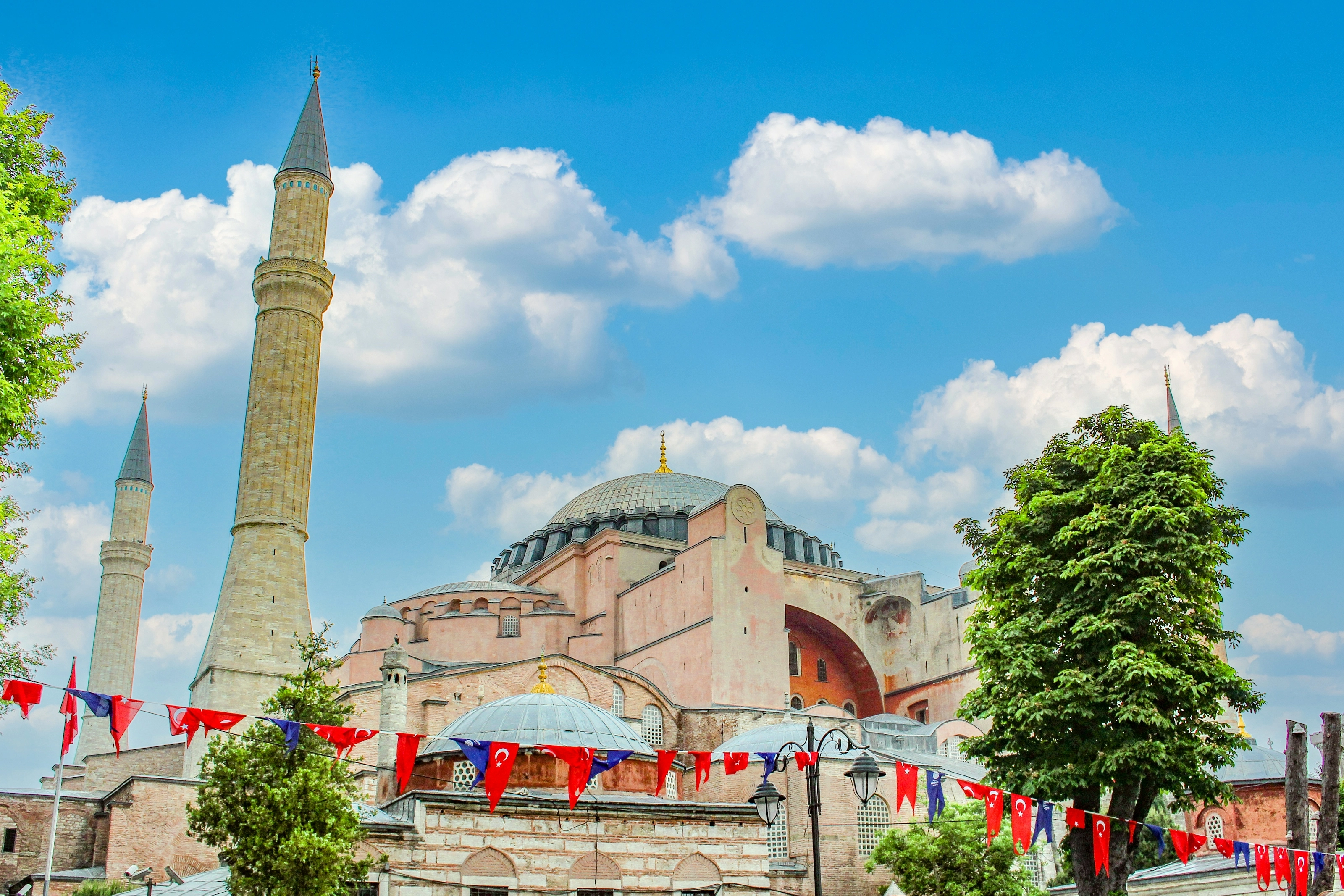
The old quarter of Sultanahmet packs the main monuments within walking distance. Hagia Sophia, completed in AD 537 under Justinian I, was a cathedral for nearly a thousand years, a mosque after 1453, a museum from 1935 to 2020 and is again a mosque; foreign visitors mostly see the upper gallery (Wikivoyage DE). Opposite stands the Blue Mosque, built between 1609 and 1616 for Ahmed I and recognisable by its six minarets; entry is free, but the security queue can take from 30 minutes to an hour depending on season, according to Wikivoyage DE.
Topkapı Palace, begun in 1459 under Mehmed the Conqueror, served as the administrative centre and the sultans' main residence until the 19th century. The harem needs an extra ticket and the palace closes one day a week (Tuesday according to Wikivoyage DE): check opening hours before you go.
Museums and monuments
Five places to add to your list
Istanbul has far more museums than its best-known monuments suggest. Hagia Sophia, now a working mosque, and the Blue Mosque are not museums; several other sites are nearby and within walking distance of Sultanahmet.
Istanbul Archaeology Museums. Three museums next to Gülhane Park and Topkapı Palace holding over a million objects from nearly all periods: the Archaeological Museum, the Museum of the Ancient Orient and the Museum of Islamic Art (Wikipedia EN).
Basilica Cistern (Yerebatan). Built in the 6th century under Justinian I, about 150 m south-west of Hagia Sophia, it is the largest of several hundred ancient cisterns beneath the city and is kept with little water for visitors (Wikipedia EN).
Chora (Kariye). A Byzantine church famous for its late Byzantine mosaics and frescoes, a museum from 1945 and a mosque again since 2020 (Wikipedia EN): visiting conditions depend on worship times, so check ahead.
Istanbul Modern. Turkey's first modern and contemporary art museum, opened in 2004 and now housed in the Galataport complex in Karaköy (Wikipedia EN).
Galata Tower. Built by the Genoese between 1335 and 1349, it has been used as a museum and viewpoint since 2020 (Wikipedia EN). Most state museums close one day a week, Monday or Tuesday depending on the site.
A national museum pass exists for a set of sites, but its price and list change often and Hagia Sophia is not included: compare it with the cost of the visits you actually plan.
Bazaars and hammams
The Grand Bazaar, the Spice Bazaar and a historic hammam
The Grand Bazaar has 61 covered streets and over 4,000 shops on about 30,700 m² (Wikipedia EN). It is open Monday to Saturday; bargaining is part of the deal, with a common rule of thumb of opening at 60 to 70 per cent of the first price quoted (Wikivoyage DE, ES). The Spice Bazaar, open since 1660, is the other great historic market.
For a hammam the tradition is old: the Çemberlitaş hammam has operated since 1584 and the Kılıç Ali Paşa in Karaköy is another well-known address. Packages range from simple entry to a bundle with scrub, foam and massage; prices vary widely, so compare before choosing. For modern shopping, Istinye Park has around 300 shops, with Nişantaşı and Galataport as other options.
The Bosphorus
A cruise or just a ferry between Europe and Asia
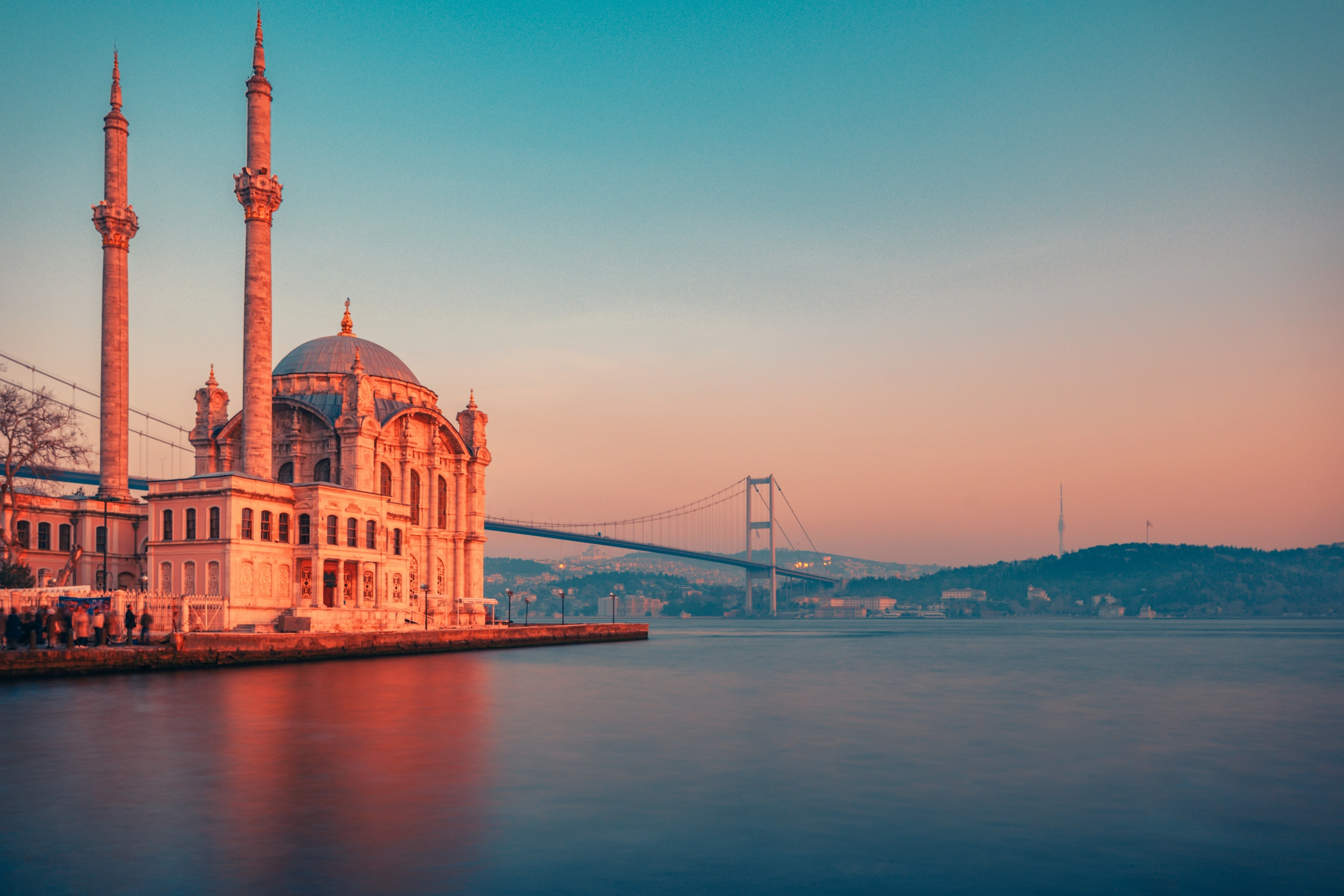
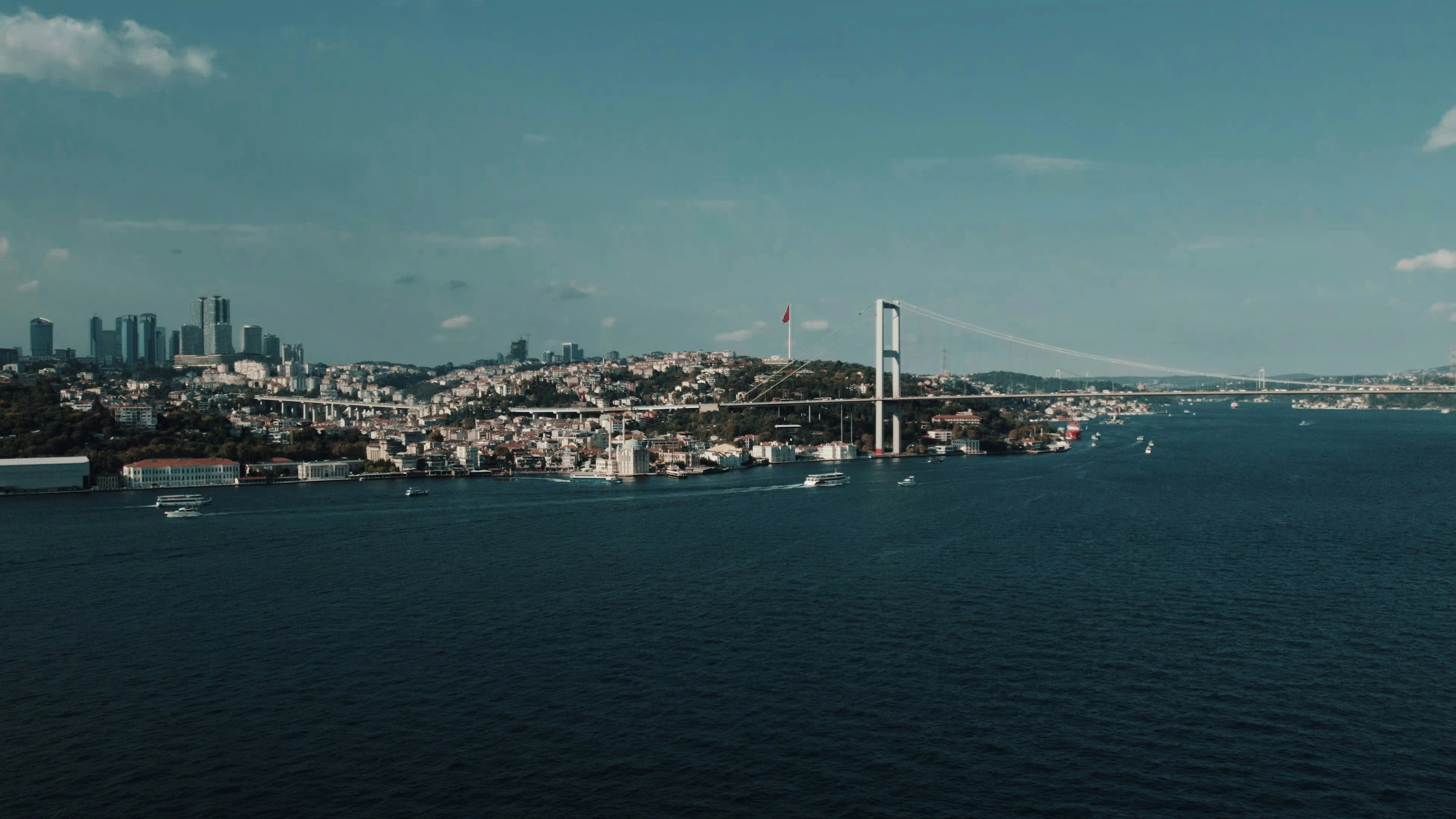
The Bosphorus is best seen from the water: Ottoman palaces, wooden waterfront villas (yalı), fortresses and suspension bridges. Two bridges span the strait, the Bosphorus Bridge of 1973 and the Fatih Sultan Mehmet Bridge of 1988, and the 13.6 km Marmaray rail tunnel has linked the two shores since 2013 (Wikipedia, Wikivoyage ES).
The simplest option is the public Şehir Hatları ferry from Eminönü to Anadolu Kavağı, about six hours return; a short two-hour trip runs in summer and private operators offer sunset cruises. For a plain crossing, a ferry between Eminönü and Kadıköy or Üsküdar takes you from one continent to the other in a few dozen minutes.
Neighbourhoods
Balat, Karaköy, Beyoğlu and Kadıköy
Balat and Fener. Districts of coloured houses on the Golden Horn, with the Church of St George at the Phanar and the Greek High School of Fener (Wikivoyage DE, ES).
Karaköy and Galata. A district of cafés and street food at the foot of the Galata Tower, and the home of Istanbul Modern.
Beyoğlu and İstiklal. A lively pedestrian avenue between Tünel and Taksim Square, known for restaurants, cafés, bars and live music (Wikivoyage DE).
Kadıköy. On the Asian side, a short ferry ride away: a fish market by the harbour and Bahariye Street.
Districts are easy to link by ferry, tram or metro; the atmosphere changes a lot from one to the next.
Why track Istanbul with SniperAir
You don't need to compare prices every day
Choose your departure
Enter your departure airport and your maximum budget for a flight to Istanbul.
SniperAir keeps watch
Our systems continuously compare new prices against the route's real history.
You get an alert
As soon as a price matches your criteria, you're notified — without having searched anything yourself.
In pictures
Istanbul on the Bosphorus
Food
Tea, simit, kebab, fish and baklava
Istanbul is often eaten on the go: simit, a sesame bread ring, is sold on every corner at a very low price, as are döner, roasted chestnuts, corn and freshly squeezed orange or pomegranate juice; around the Golden Horn there are also mussels and fish sandwiches (Wikivoyage DE). Black tea (çay), served in small glasses, sets the rhythm of the day.
Specialities to try. İskender kebab, from Bursa, combines lamb, bread, tomato sauce, butter and yoghurt; mantı are small meat dumplings with yoghurt and spicy butter; pide is a baked flatbread with toppings and lahmacun a thin dough with minced meat, sometimes called Turkish pizza (Wikivoyage ES).
Where to eat. The waterfronts of Karaköy and Kadıköy, neighbourhood markets and fish restaurants along the Bosphorus; on İstiklal and in Beyoğlu choices range from fast food to terraces. Baklava, a flaky pastry with honey and pistachios, remains the city's emblematic dessert. Check the freshness of street food.
By length of stay
What to do in Istanbul depending on how long you stay
The essentials
Sultanahmet: Hagia Sophia, the Blue Mosque and the Basilica Cistern; then a ferry crossing on the Bosphorus.
Going deeper
Topkapı, the Grand Bazaar, the Spice Bazaar, the Galata Tower and İstiklal; Chora or Istanbul Modern depending on your taste.
Two continents
Kadıköy on the Asian shore, Balat, a hammam, and the Princes' Islands, about 90 minutes by ferry to car-free Büyükada.
Getting to Istanbul
Two airports and their distances
Istanbul (IST) and Sabiha Gökçen (SAW)
Istanbul Airport lies to the north-west, 35 to 50 km from the centre depending on the reference point (about 50 km to Sultanahmet, according to Wikivoyage EN and DE). Metro line M11 links the airport to Gayrettepe, with a connection to M2 (Wikipedia EN), in roughly half an hour (Wikivoyage DE); the Havaist bus takes 60 to 90 minutes depending on traffic, and a taxi about 50 minutes to Sultanahmet when roads are clear (Wikivoyage EN). Sabiha Gökçen, on the Asian side, is about 40 km from Taksim: the M4 reaches Kadıköy in 52 minutes (Wikivoyage DE) and Havaist buses serve Taksim.
| Landmark | Indicative distance or time |
|---|---|
| IST airport to Sultanahmet | about 50 km, around an hour by taxi without traffic |
| SAW airport to Taksim | about 40 km, 60 to 90 minutes by bus |
| Sultanahmet to Taksim | a few kilometres, by tram and funicular |
| Istanbul to the Princes' Islands | about 90 minutes by ferry |
| Istanbul to Bursa | about 157 km, just under two hours by car |
| Istanbul to Edirne | about 2.5 to 3 hours by car |
Avoid unofficial taxis; book a car by app or use the official ranks (Wikivoyage EN).
Getting around
Istanbulkart, tram, metro, Marmaray and ferries
The Istanbulkart is the single transport card for buses, trams, metro, suburban trains and local ferries; it can be topped up at machines and some kiosks. One card can serve several travellers by tapping it once per passenger (Wikivoyage EN). Transfer discounts require a personalised card, which in practice excludes most visitors.
Tram T1. The most useful line for visitors: Bağcılar - Zeytinburnu - Aksaray - Grand Bazaar - Sultanahmet - Eminönü - Karaköy - Kabataş, every few minutes from about 6 am to midnight (Wikivoyage DE).
Marmaray and metro. The Marmaray crosses the Bosphorus underwater; several metro lines serve the centre. Ferries link both shores every 15 to 30 minutes or so by day (Wikivoyage DE).
Taxis and traffic. Taxis are handy but caught in heavy traffic, especially along the Bosphorus shore in summer. On foot, the historic centre is compact; between distant districts prefer the ferry or metro.
When to go
When to visit Istanbul?
Spring (April-June)
Often the best season, mild; Wikivoyage DE names the tulip bloom as the loveliest moment of spring.
Summer (July-August)
Hot, humid and busy: a daytime average of about 28 °C and few rainy days per month (Wikipedia EN), often with a cooling breeze on the Bosphorus.
Autumn (September-November)
Pleasant until the end of October, sometimes still in November; crowds thin out.
Winter (December-March)
Cool, rainy and cloudy, with 5 to 10 °C by day; snow is sporadic but falls almost every winter and disrupts transport (Wikipedia EN).
Depending on the classification the climate is Mediterranean or humid subtropical (Wikipedia EN); winter months receive at least twice the rainfall of summer months. Best time: April to June, plus September and October.
Budget
A mid-range stay, with big differences by neighbourhood
Istanbul sits in the mid to affordable range for a European city break: public transport, street food and ferries are cheap, whereas hotels in Sultanahmet, Beyoğlu or on the Bosphorus, restaurants with a view and guided excursions cost noticeably more. Turkish inflation is high: Wikivoyage DE notes that museum prices rise every year, which makes older figures unreliable. We therefore do not publish precise prices here.
Keeping costs down. Walk around the historic quarter, use the Istanbulkart, eat at small local places and book paid sites according to your real interest rather than trying to see everything.
You might also like
Similar destinations
FAQ
Frequently asked questions about flights to Istanbul
What is the airport for Istanbul and how far is it from the centre?
Istanbul Airport (IST) is 35 to 50 km north-west of the centre depending on the reference point; Sabiha Gökçen (SAW), on the Asian side, is about 40 km from Taksim. Metro M11, Havaist buses and taxis serve the city.
How much does a flight to Istanbul usually cost?
The price depends mainly on your departure city, the period and the booking date. The opportunities section above shows real examples of prices already spotted by SniperAir for this destination.
How long is the flight to Istanbul from Europe?
Generally between 2 and 4 hours depending on your departure city.
When is the best time to visit Istanbul?
April to June and September-October, with mild temperatures; summer is hot and humid, winter cool, rainy and sometimes snowy.
How many days should I plan?
Two days cover Sultanahmet and the Bosphorus; three to five days let you add museums, neighbourhoods and a day on the Asian shore or the Princes' Islands.
Which museums should I visit in Istanbul?
The Archaeology Museums, the Basilica Cistern, Topkapı, Chora (now a mosque), Istanbul Modern and the Galata Tower; check each site's weekly closing day.
How do I get around?
With the Istanbulkart: tram T1 for the old city, metro, Marmaray and ferries to cross the Bosphorus.
What should I eat in Istanbul?
Simit, döner, İskender kebab, mantı, pide, lahmacun, fish along the Bosphorus and baklava, with black tea.
How can I be alerted when a flight to Istanbul drops below my budget?
Create an alert profile with your departure airport, Istanbul as destination and your maximum budget. SniperAir monitors prices and warns you as soon as a matching price is detected; we do not sell or book tickets.
Ready to head to Istanbul?
Set your budget and let SniperAir track the fares.
Create my alert