
Cheap flights to Ikaria
Set your departure airport and maximum budget: SniperAir tracks prices to Ikaria and alerts you the moment a deal matching your criteria appears.
Quick summary
Country
Greece
Continent
Europe
Airport
JIK
Currency
Euro
Time zone
UTC+2
Deals already spotted to Ikaria
Real flight examples detected by SniperAir, with their reference price.
Loading examples…
The island that refuses to rush
Ikaria, a Blue Zone in the North Aegean
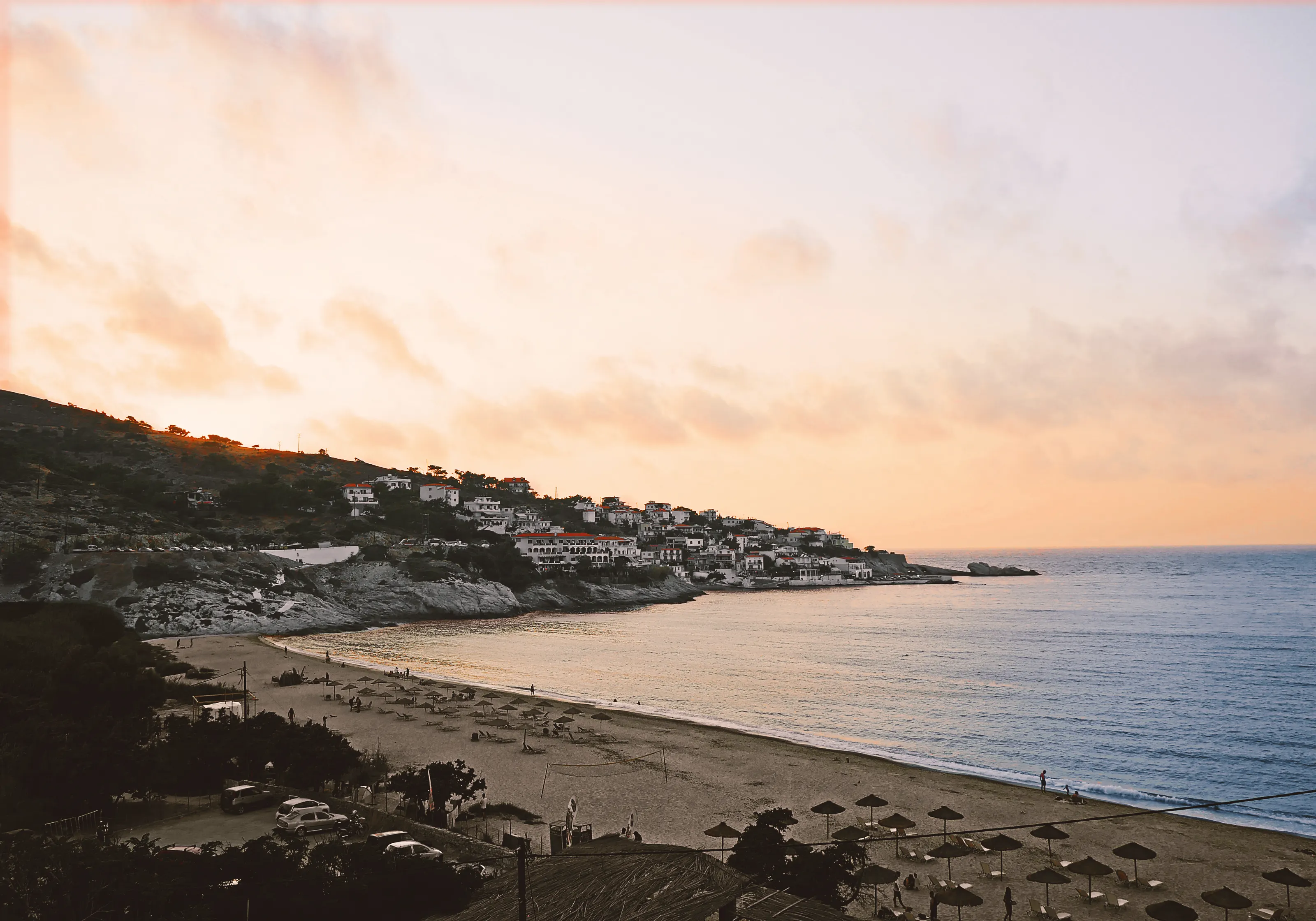
Ikaria is one of the world's five Blue Zones, the places where people live unusually long lives. According to Wikipedia, one in three islanders make it to their 90s. Visitors come for that slower rhythm as much as for the island itself: wild beaches such as Seychelles and Nas, hot springs, mountain walks and the summer village festivals known as panigiria.
The Ikaria Blue Zone way of life
Islanders follow a Mediterranean diet with plenty of vegetables, more potatoes than elsewhere and little meat. Afternoon naps, red wine shared daily with friends, late-night games of dominoes and a low-stress pace of life are among the habits most often cited.
A long, mountainous island
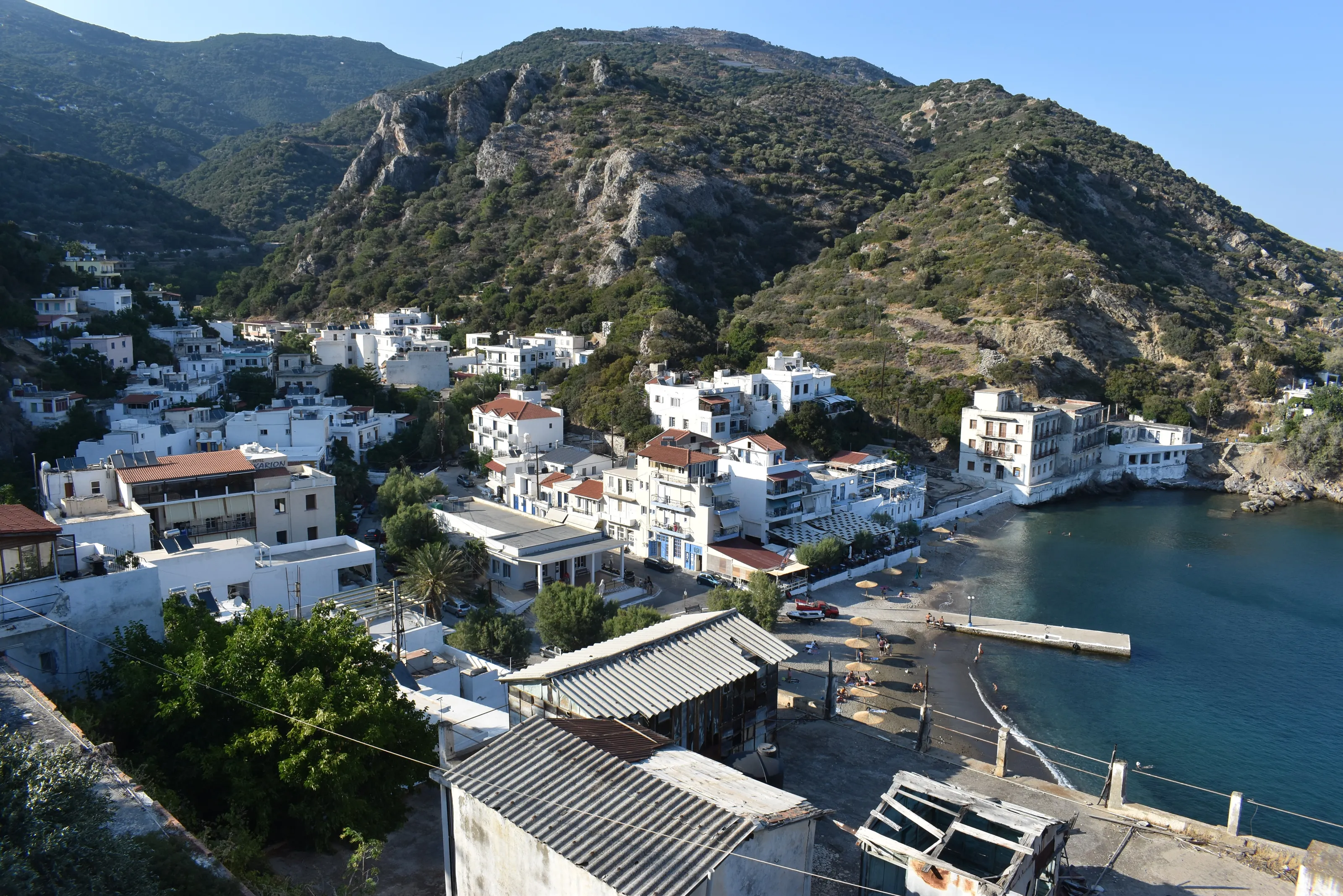
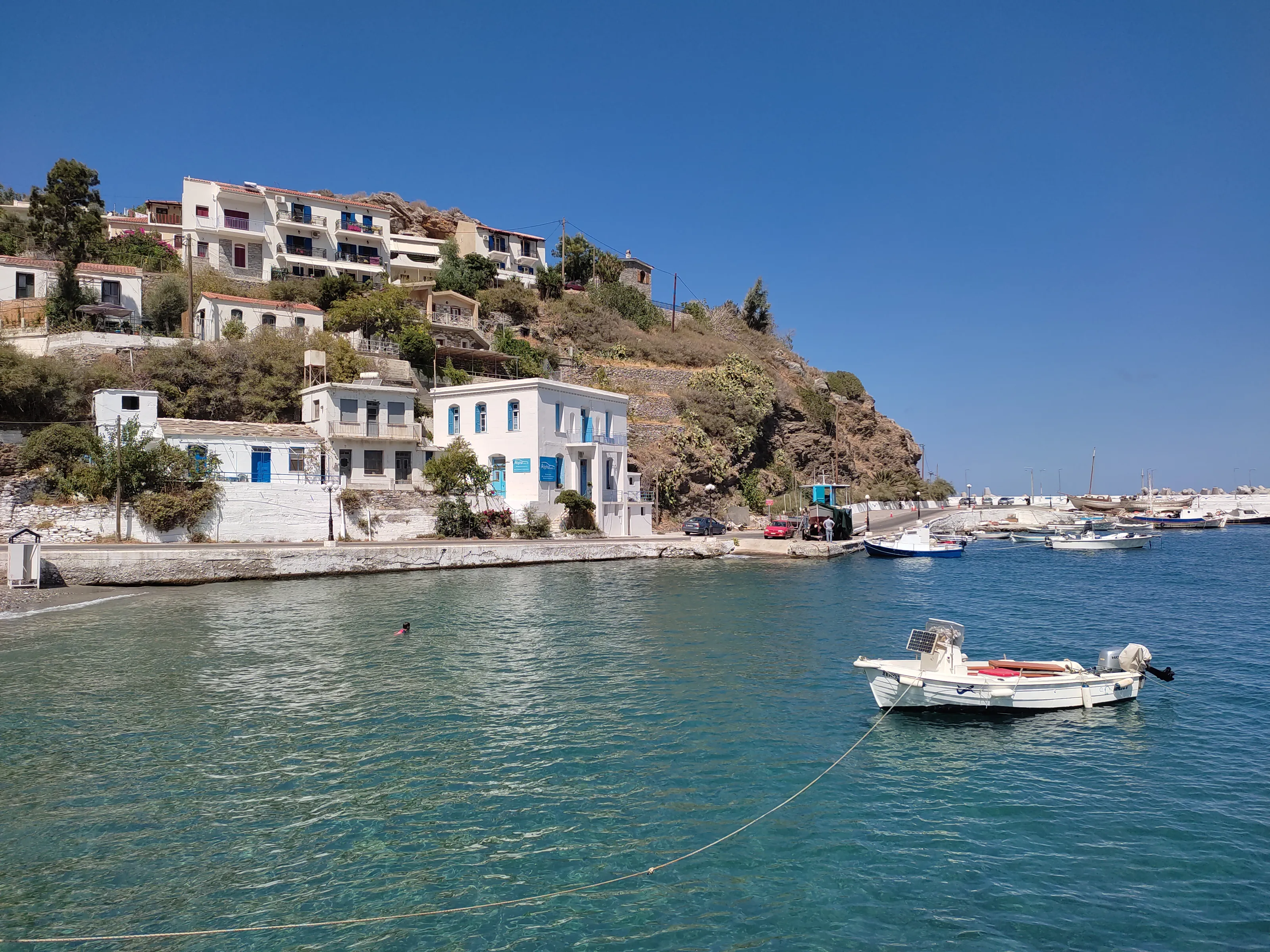
Ikaria stretches about 40 km over roughly 255 square kilometres, with the Atheras range reaching about 1,040 m. It has around 8,400 inhabitants (2011 census), spread between Agios Kirykos, the capital in the south-east, Evdilos in the north and Armenistis, the main tourist hub. By tradition the Icarian Sea around it is named after Icarus, who fell into the water nearby.
A free state
From the Neolithic to the Free State of Ikaria
The island has been inhabited since about 7000 BC and was colonised by the Greeks around 750 BC; Ottoman rule followed in the 16th century. On 17 July 1912 the islanders expelled the Ottoman garrison and, the next day, declared the Free State of Ikaria. After about five months of independence, on 4 November 1912, the island joined Greece (Wikipedia). After the civil war it also received thousands of exiled communists, which earned it the nickname of the red island.
Why watch Ikaria with SniperAir
You don't need to compare prices every day
Pick your departure
Enter your departure airport and your maximum budget for a flight to Ikaria (JIK).
SniperAir watches
Our systems continuously compare new prices with the real price history of the route. SniperAir watches prices and alerts you: it does not sell or book tickets.
You get an alert
As soon as a price matches your criteria you are notified, without having searched anything yourself.
Hot springs
Bathing in Therma
About 2 km from the capital, Agios Kirykos, the village of Therma is built around hot, naturally radioactive springs rich in sulphur, radium and radon. The open-air springs are free and accessible day and night, while the Apollon municipal spa and the Spilia spa offer a more organised soak. The water reaches roughly 50 to 60 degrees depending on the spring, and the Lefkada springs are also well known.
Good to know
Because of the radioactivity, the recommended bathing time is about 20 minutes. About ten minutes east of Therma, a cove reached by a marked path hides hot springs in the sea itself; the start of the path is hard to find (Wikivoyage).
Nas
A river mouth, a gorge and a temple
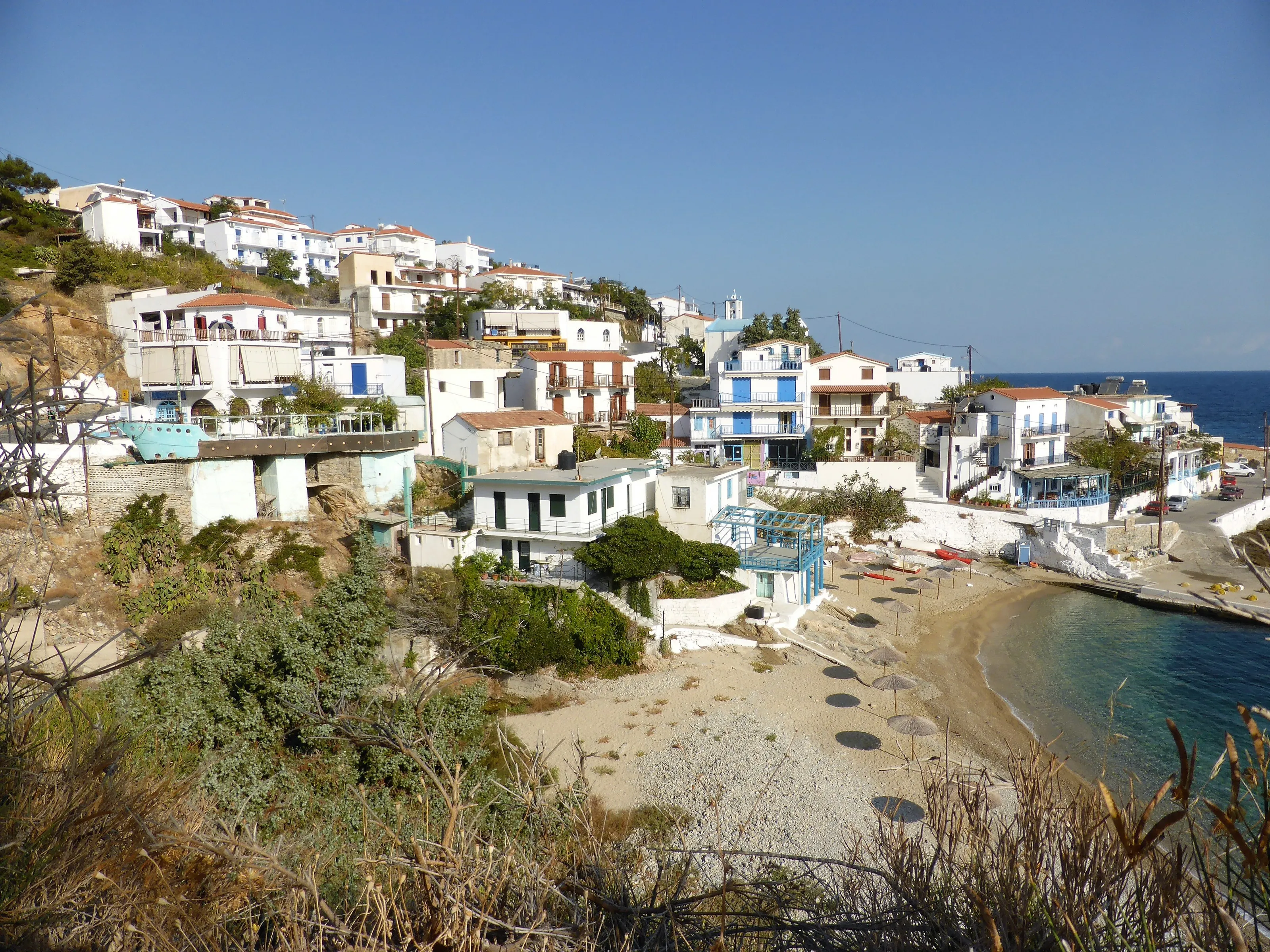
The little beach of Nas
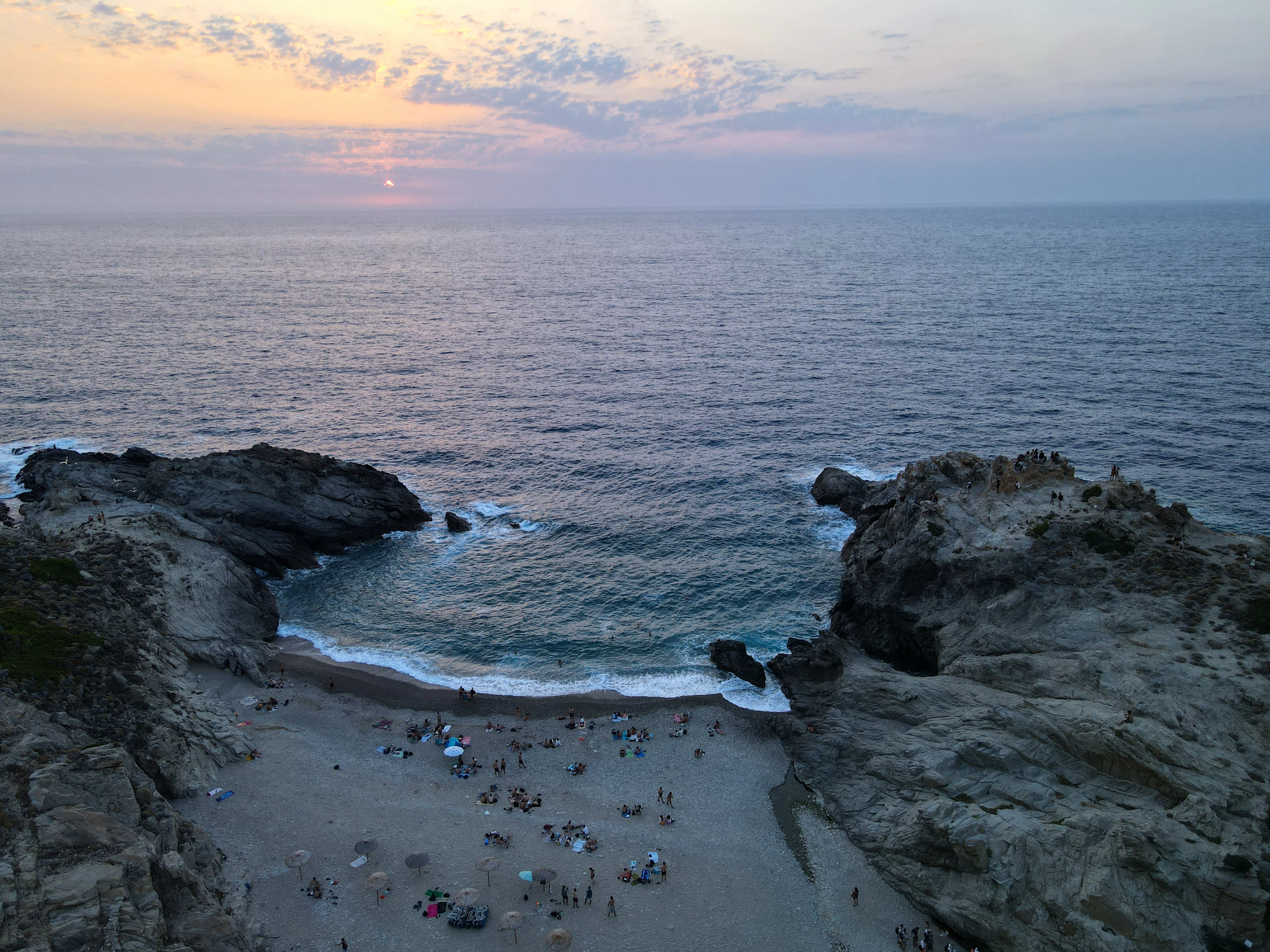
About 3.5 km west of Armenistis, the Chalaris river meets the sea in a small cove, forming natural pools. Nearby stand the ruins of the Temple of Artemis Tauropolos, and the Chalaris gorge hides a waterfall and more pools. Beware of dangerous currents in heavy swell.
Beaches
Seychelles, Messakti, Livadi: the beaches of Ikaria
Seychelles beach
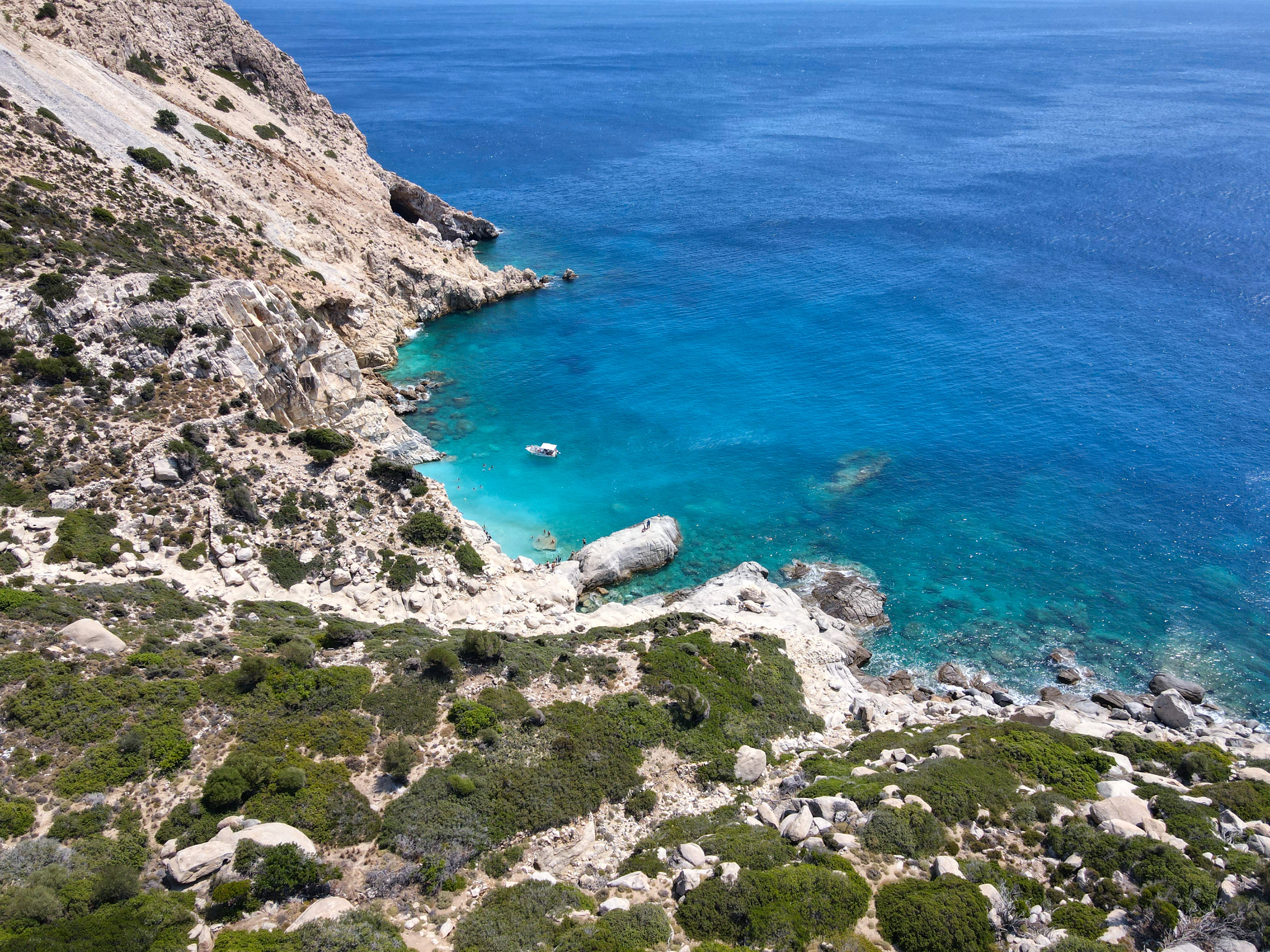
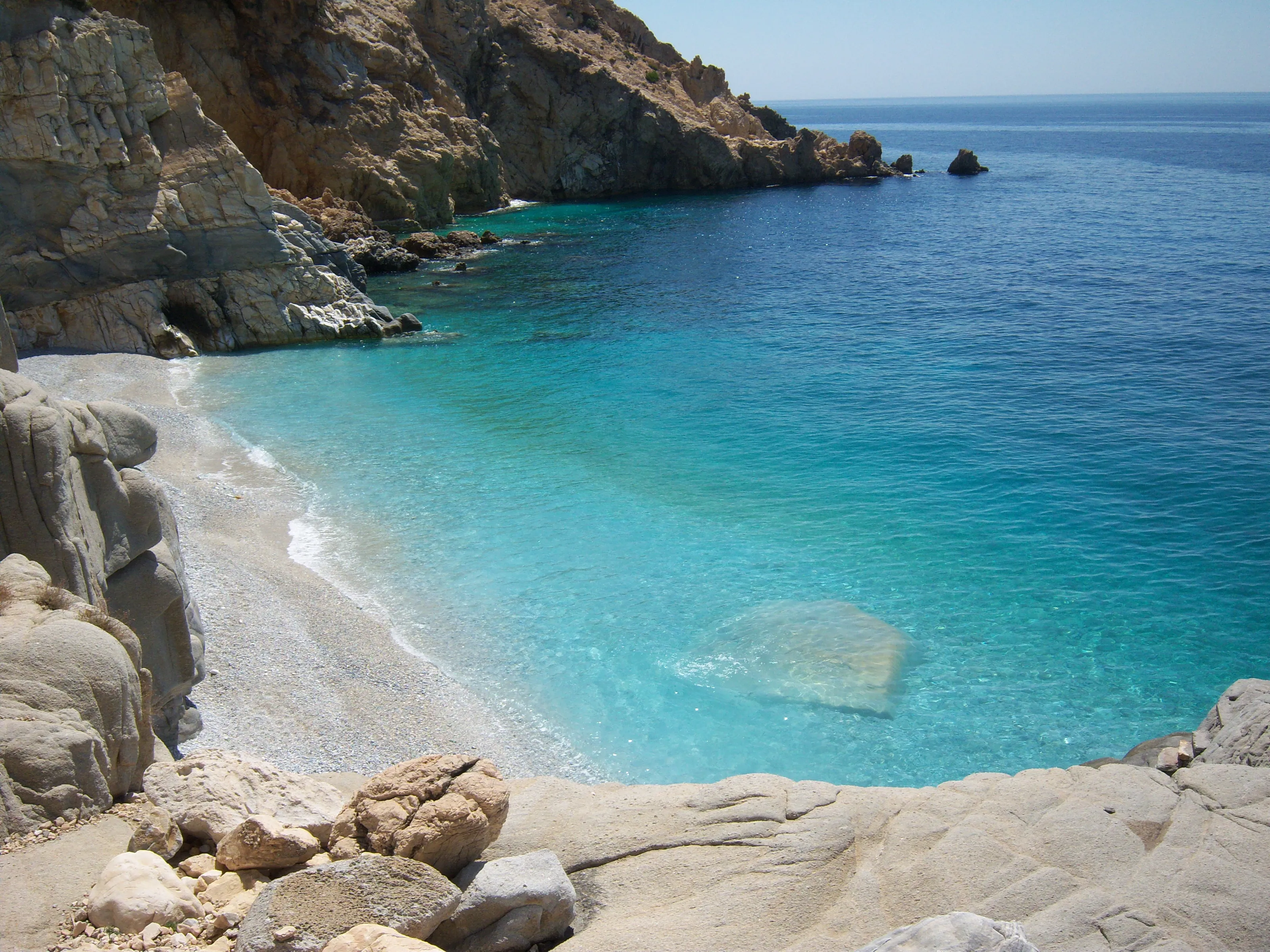
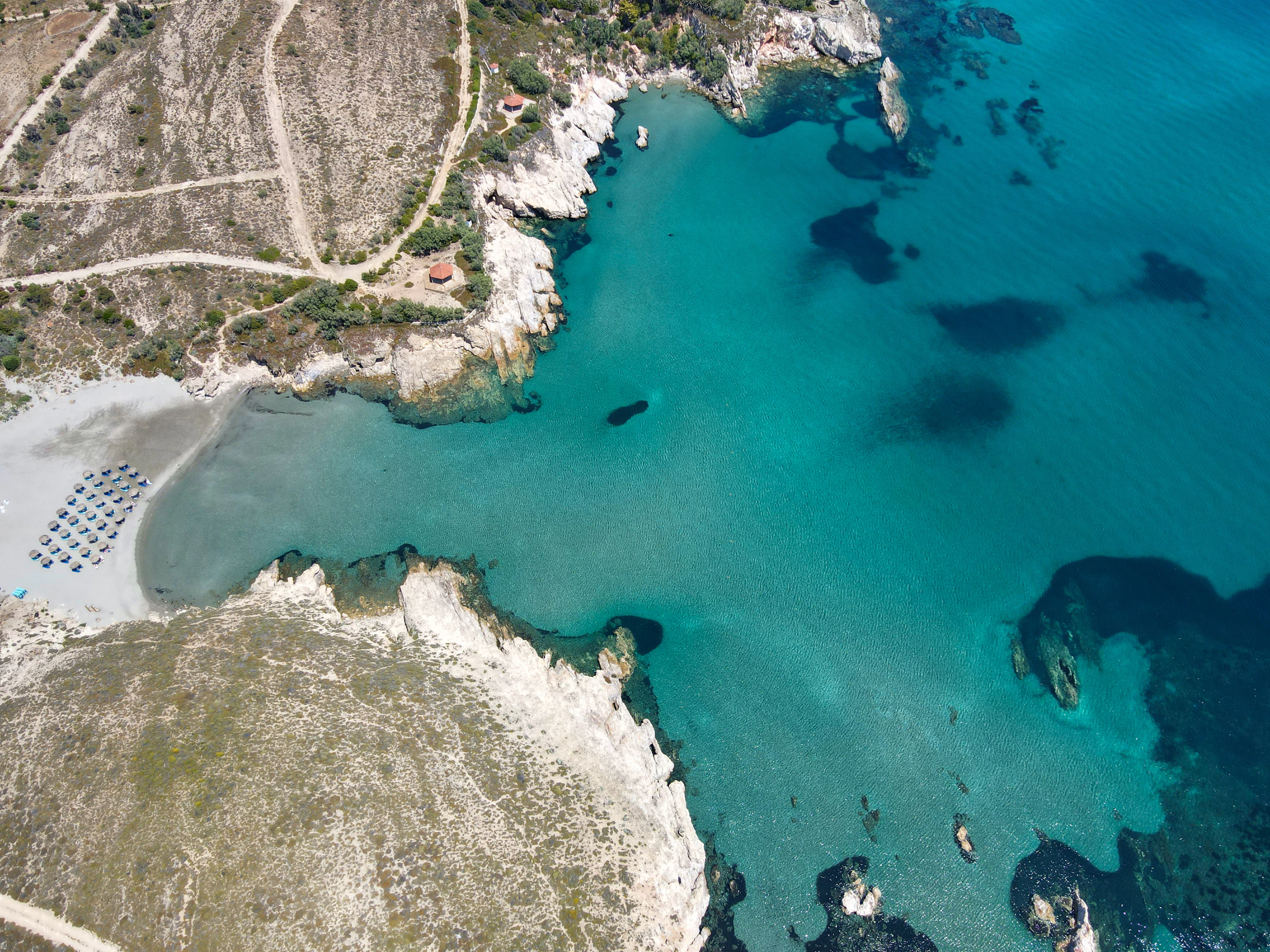
Seychelles is a cove of white pebbles and turquoise water under the cliffs. It is reached by a short walk down from the road, about ten minutes, or by water taxi from the village of Magganitis. For fewer crowds, come in spring or early autumn.
| Beach | Highlight |
|---|---|
| Messakti | The longest on the island, more than 1.5 km of golden sand, popular with windsurfers |
| Livadi | About 2 km east of Armenistis, one of the two big sandy beaches |
| Faros | Sand and pebbles with tavernas and a small pier, near the airport |
| Nas | A small pebble cove beside the ruins of the temple of Artemis |
Inland
Hikes, monasteries and mountain villages
| Place | Why go |
|---|---|
| Chalares gorge | A waterfall and natural pools |
| Vrakades to Kouniadi | A circular walk of about 6.5 km, roughly 2 hours |
| Theoktisti monastery | A troglodyte chapel dating from 1688 |
| Drakano tower | About an hour there and back on foot |
| Raches (Christos Raches) | The district of the highest mountain villages, known for lively nights |
A trail map is published by Anavasi for walkers. Paths are sometimes poorly maintained, so bring sturdy shoes, water and a charged phone.
Museums and monuments
Small free museums and ancient remains
Museums on the island
Wikivoyage lists four free museums with varying hours: the archaeological museums of Kampos and Agios Kirykos, and the folklore museums of Perdiki and Vrakades. The Kampos museum holds more than 250 objects, and the Folk and Historical Museum of Agios Kirykos, opened in July 2010, over 1,500 items (Wikipedia). The museum at Oianades is also worth a visit.
The Drakano tower
This Hellenistic tower of the 4th century BC overlooks the south-east coast; it can be reached on foot in about an hour there and back.
Fortress and temple
Koskinas castle dates from the 10th century AD. At Nas the temple of Artemis Tauropolos goes back to around the 6th century BC (dates vary between sources). The Theoktisti monastery, with its troglodyte chapel, is mentioned from 1688.
Panigiria
Village festivals under the summer sky
From July to September, villages hold their panigiria, the traditional festivals that are a highlight of the summer, with grilled goat kid, wine and live traditional orchestras, where people dance the ikariotikos until dawn. The biggest, in Langada on 15 August, draws several thousand people. The mountain village of Christos Raches is known for its August panigiria.
Good to know
Panigiria are mostly held in church courtyards and village squares, in a family atmosphere. Hours are late: people dine late and head home after midnight.
On the table
Soufiko, honey, goat and Pramnos wine
Ikarian cooking follows a Mediterranean diet in which potatoes matter more than elsewhere and meat is scarce. The typical summer dish is soufiko, also called briam, a vegetable stew cooked in olive oil, a kind of Ikarian ratatouille, sometimes with fresh goat cheese.
Honey, goat and bread
Local honey, especially heather honey and the honey of Anama, is highly regarded. Mountain goat is the favourite meat, with cheeses such as kathoura. A typical breakfast pairs sourdough bread with honey and tahini.
Drinks
Pramnos red wine, known since antiquity, can exceed 16 percent alcohol. Islanders also drink herbal infusions of mountain plants such as oregano, thyme, sage, fennel and mint throughout the day.
Getting there
Flights, ferries and distances to Ikaria
Ikaria airport
Opened on 14 June 1995, the airport lies in the east of the island near Faros, about 12 km from Agios Kirykos. It has a single runway of about 1,380 m and handles domestic flights only: Olympic Air and Sky Express from Athens, about 35 minutes by air according to Wikivoyage (Wikipedia: more than 41,000 passengers in 2017).
By ferry
Ferries from Piraeus take several hours (around seven according to booking sites) and call at Agios Kirykos in the south-east or Evdilos on the north coast, about an hour apart by road. From Samos, sailings take 1.5 to 2.5 hours depending on the vessel (Wikivoyage).
An alternative
Flying is the fastest way from Athens, but seats are limited: book early in summer.
| Reference | Approximate distance or time |
|---|---|
| Airport to Agios Kirykos | about 12 km |
| Agios Kirykos to Evdilos | about 1 hour by road |
| Athens to Ikaria by air | about 35 minutes |
| Piraeus to Ikaria by ferry | several hours, around 7 |
| Samos to Ikaria by ferry | 1.5 to 2.5 hours |
On the island
Car, scooter and bus: getting around Ikaria
A car or scooter is essential on an island about 40 km long: local buses mainly serve residents and run infrequently. Rental companies are found in Agios Kirykos, Evdilos and Armenistis (Wikivoyage); in July and August renting costs more and you should book several days ahead.
Roads
Few roads are fully paved, and some tracks are gravel, so drive carefully, especially at night and on a scooter.
On foot
Old paths link some villages. Allow plenty of time for every journey, since the island is narrow but mountainous.
Budget
A moderate-budget island, pricier in midsummer
Ikaria is not a mass-tourism destination: accommodation ranges from rooms in private homes to small hotels, and taverna meals stay moderately priced. The budget rises mainly in July and August with car rental, the ferry and lodging. We do not publish prices we cannot cross-check.
Ways to save
Come in May, June or September, book your rental car early, stay near the beaches of Armenistis, and use the free open-air hot springs.
When to go
When to visit Ikaria?
Spring
The dry season begins in late April; beaches are less crowded.
Summer
Temperatures of 23 to 31 degrees C make it the season of beaches and panigiria, from July to September.
Autumn
The dry season lasts until early October; the sea stays pleasant and prices drop.
Winter
Around 10 to 14 degrees C and wetter, with fewer ferry sailings than in summer.
Ikaria has a Mediterranean climate with hot summers and wet winters, and occasional snow on the peaks (Wikipedia). The best period runs from May to September, according to German Wikivoyage.
By length of stay
How many days on Ikaria?
The essentials
Therma, one beach such as Seychelles or Nas, and a meal in Armenistis.
Go deeper
Add a hike, a museum, a panigiri and an evening in Raches.
At the island's pace
Five to seven days suit travellers who want calm and nature.
In pictures
Ikaria in pictures
You might also like
Similar destinations
FAQ
Frequently asked questions about flights to Ikaria
Why is Ikaria called a Blue Zone?
Ikaria is one of the world's five Blue Zones, places where people live unusually long lives. According to Wikipedia, one in three islanders reach their 90s.
How do I get to Ikaria?
By air from Athens, about 35 minutes with Olympic Air or Sky Express, or by ferry from Piraeus, which takes several hours. Ferries call at Agios Kirykos or Evdilos.
Which airport serves Ikaria?
Ikaria airport (JIK), in the east of the island, about 12 km from Agios Kirykos; it handles domestic flights only.
When is the best time to visit Ikaria?
From May to September. July and August are peak season and the time of the panigiria; May, June and September are quieter.
How many days should I spend on Ikaria?
Five to seven days let you enjoy the beaches, hot springs and walks without rushing.
How do I get around Ikaria?
By rental car or scooter, since buses are infrequent. In summer, book the vehicle ahead.
Which museums and monuments should I visit on Ikaria?
The archaeological museums of Kampos and Agios Kirykos, the folk museum of Agios Kirykos, the Drakano tower, Theoktisti monastery and the temple of Artemis at Nas.
What should I eat on Ikaria?
Soufiko, local honey, goat cheese and meat, and Pramnos wine, plus herbal infusions of mountain plants.
Is Ikaria an expensive island?
It is a moderate-budget island, with higher prices in July and August for lodging, car rental and ferries.
How much does a flight to Ikaria usually cost?
It mostly depends on your departure city, the season and how far ahead you book. The "opportunities" section above shows real price examples already detected by SniperAir for this destination.
How do I get alerted when a flight to Ikaria drops below my budget?
Create an alert profile with your departure airport, Ikaria as the destination and your maximum budget. You are notified automatically as soon as a matching price is detected; SniperAir does not sell or book tickets.
Ready to head to Ikaria?
Set your budget and let SniperAir monitor fares for you.
Create my alert