
Cheap flights to Lesbos
Set your departure airport and maximum budget: SniperAir tracks prices to Lesbos and alerts you the moment a deal matching your criteria appears.
Quick summary
Country
Greece
Continent
Europe
Airport
MJT
Currency
Euro (EUR)
Time zone
UTC+2 (UTC+3 during summer time)
Deals already spotted to Lesbos
Real flight examples detected by SniperAir, with their reference price.
Loading examples…
Why track Lesbos with SniperAir
You do not need to compare prices every day
Choose your departure
Enter your departure airport and your maximum budget for a flight to Lesbos (MJT).
SniperAir keeps watch
Our systems continuously compare new fares with the route's real price history. SniperAir tracks prices and alerts you: it does not sell or book tickets.
You get an alert
As soon as a fare matches your criteria you are notified, without having searched for anything yourself.
Lesbos, also spelled Lesvos, is Greece's third-largest island, in the northeast Aegean and only a few kilometres from the Turkish coast. Its capital and main port is Mytilene in the southeast. The island is green (millions of olive trees), volcanic, and rich in stone villages, hot springs and traditions: Plomari ouzo, Agiasos pottery, the poetry of Sappho. SniperAir monitors fares to MJT airport and alerts you when a price drops under your budget; it does not sell or book tickets.
This page focuses on the island and on Mytilene: sights, museums, villages, beaches, local specialities and access by air or sea. We publish no timetables or prices, which change from season to season.
Because of its position, Lesbos saw many people arrive as migrants from 2015, a period that remains present in local memory. Tourism today centres mostly on Mytilene and the villages of the north and west. Check your government's travel advice before setting up an alert and again before booking.
Airport and getting into town
An airport south of Mytilene, and a port open to the Aegean
Mytilene airport 'Odysseas Elytis' (MJT)
The airport lies south of Mytilene, less than ten kilometres from the centre: a short transfer by taxi, bus or rental car. Scheduled flights link it with Athens, Thessaloniki and other Aegean islands, and seasonal flights arrive from several European cities. We publish no airlines or prices.
We publish no detailed journey times or prices. Compare flights to Athens or Thessaloniki followed by a connection, and check timetables before you go.
By sea, Mytilene port is linked with Piraeus and several Aegean islands; a boat service also runs to the Turkish town of Ayvalik. Frequencies and durations vary with season and weather: check timetables, we name no operators.
On the island, a rental car is the most practical way to reach Molyvos, Eresos, Sigri or Plomari; intercity buses exist but are infrequent.
Landmarks and sights
Molyvos, Mytilene, Eresos: the island in pictures
Lesbos is discovered village by village. Here are six pictures, then more places in text.
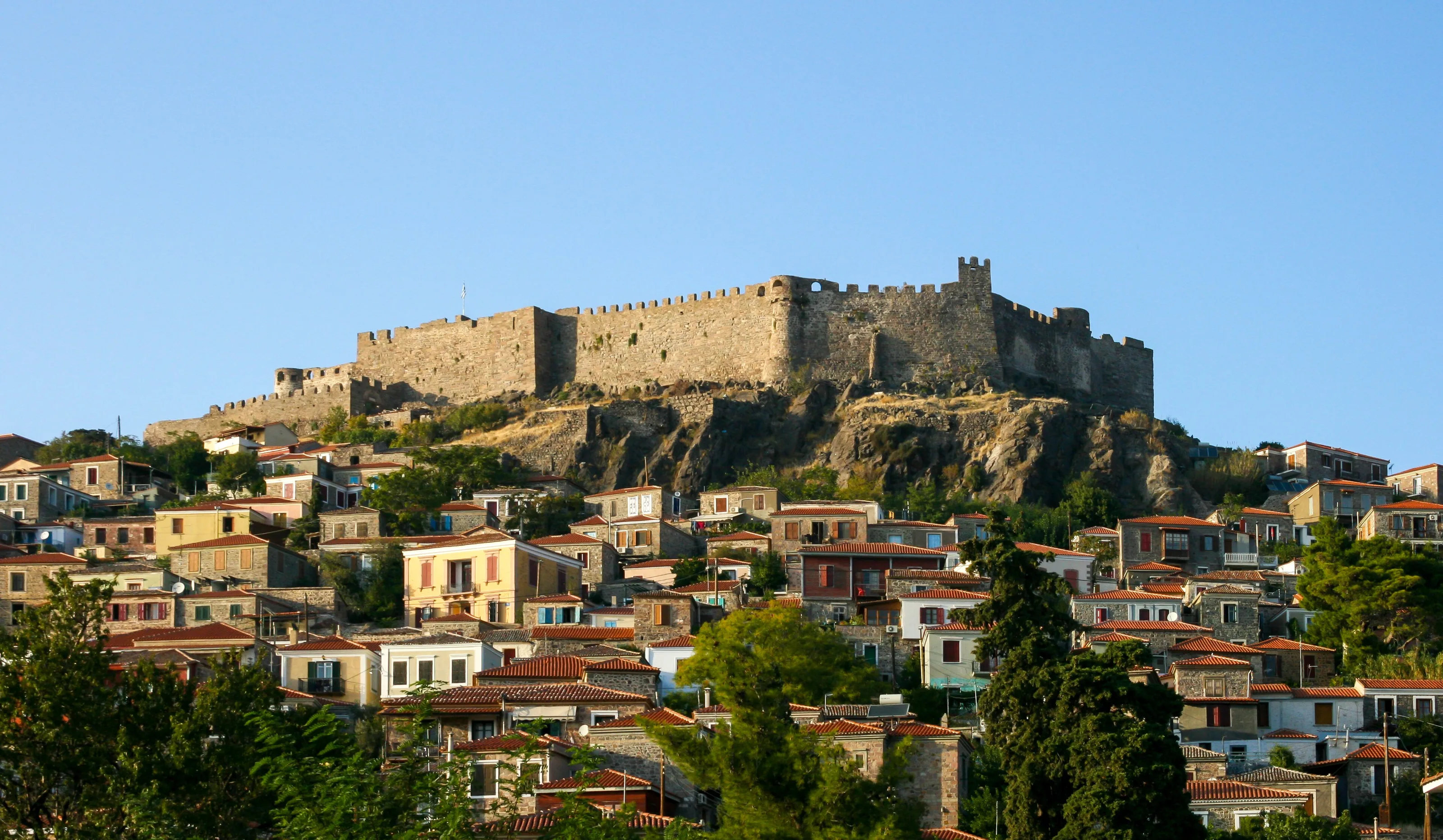
Molyvos and its fortress
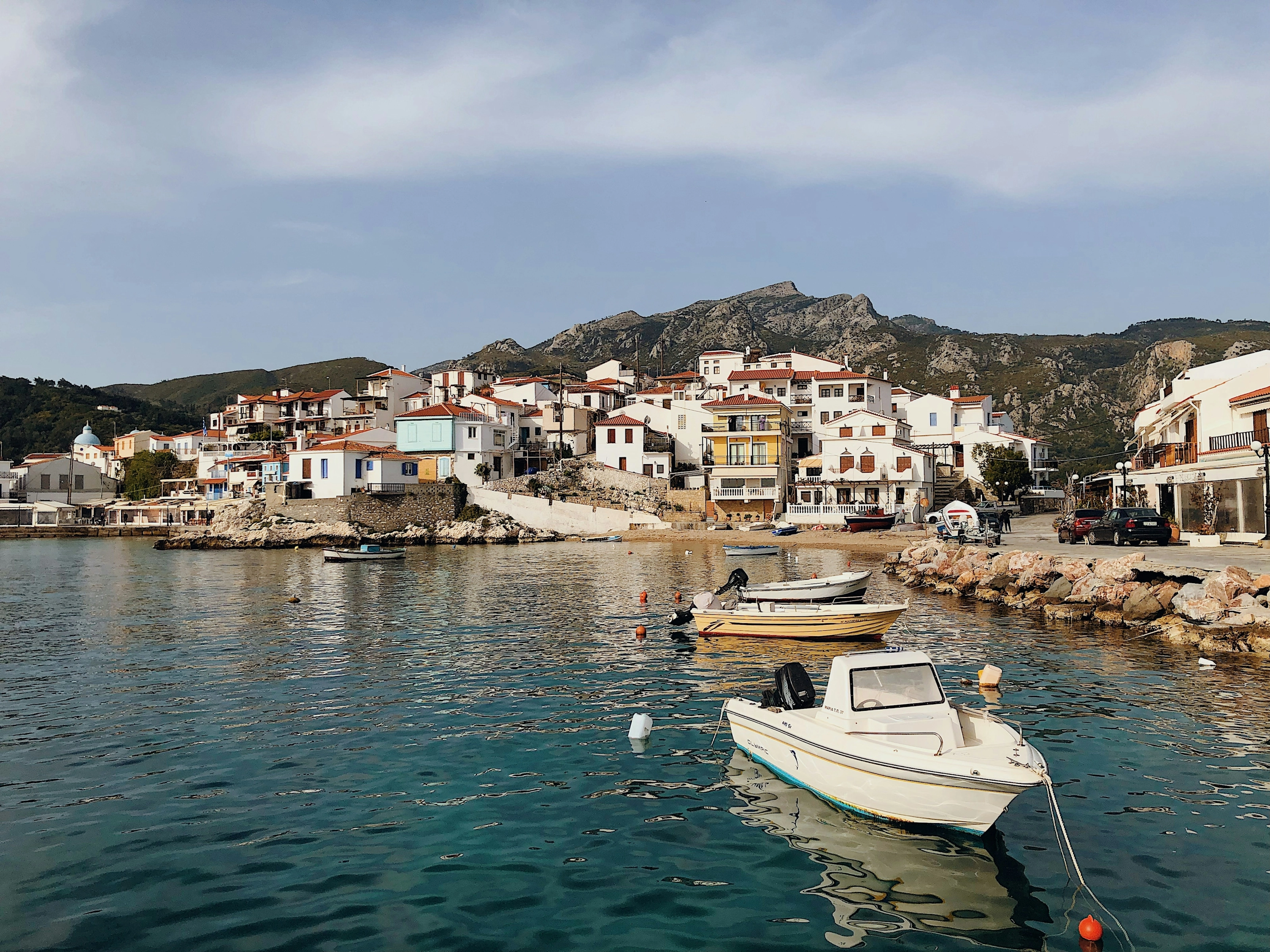
Molyvos (or Mithymna), in the north, is one of the island's prettiest villages: stone houses with tiled roofs step down to the sea from a medieval fortress built on a lava dome. You wander cobbled lanes and climb to the castle for the view. The Eftalou hot springs are about 5 km away, with Anaxos beach and the village of Petra close by.
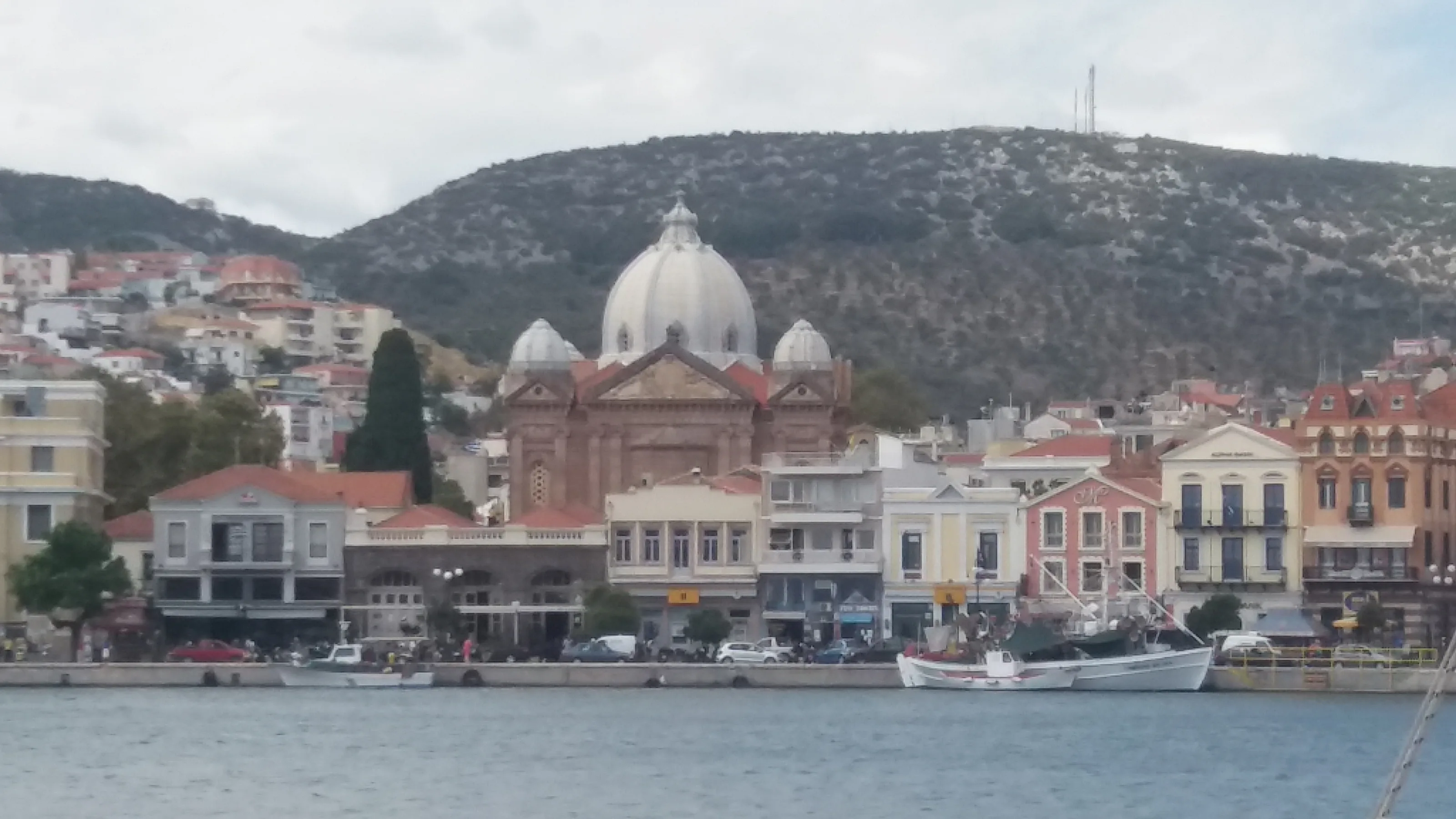
Mytilene's waterfront
Mytilene, the island's capital, is a busy port with neoclassical facades and the large church of Saint Therapon, whose domes dominate the centre. The shopping street Ermou, behind the quay, has cafes, shops and restaurants; the older district of Epano Skala bears traces of the Ottoman era.
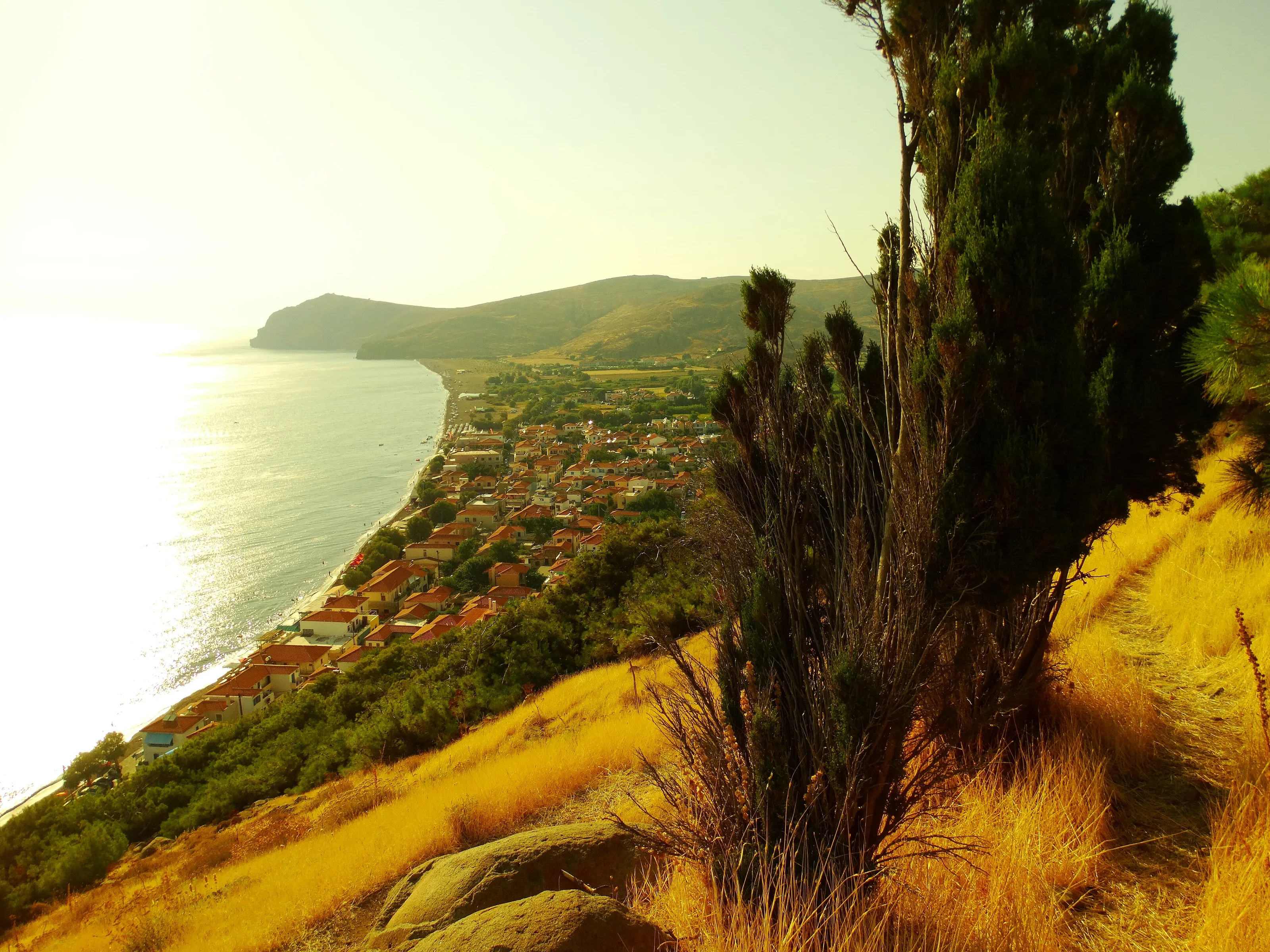
Skala Eresou and its beach
In the west, Skala Eresou is a seaside village beside a long sand beach, with lovely late-day light. Eresos is the supposed birthplace of the poet Sappho, which draws visitors from around the world; it is a good base for the petrified forest.
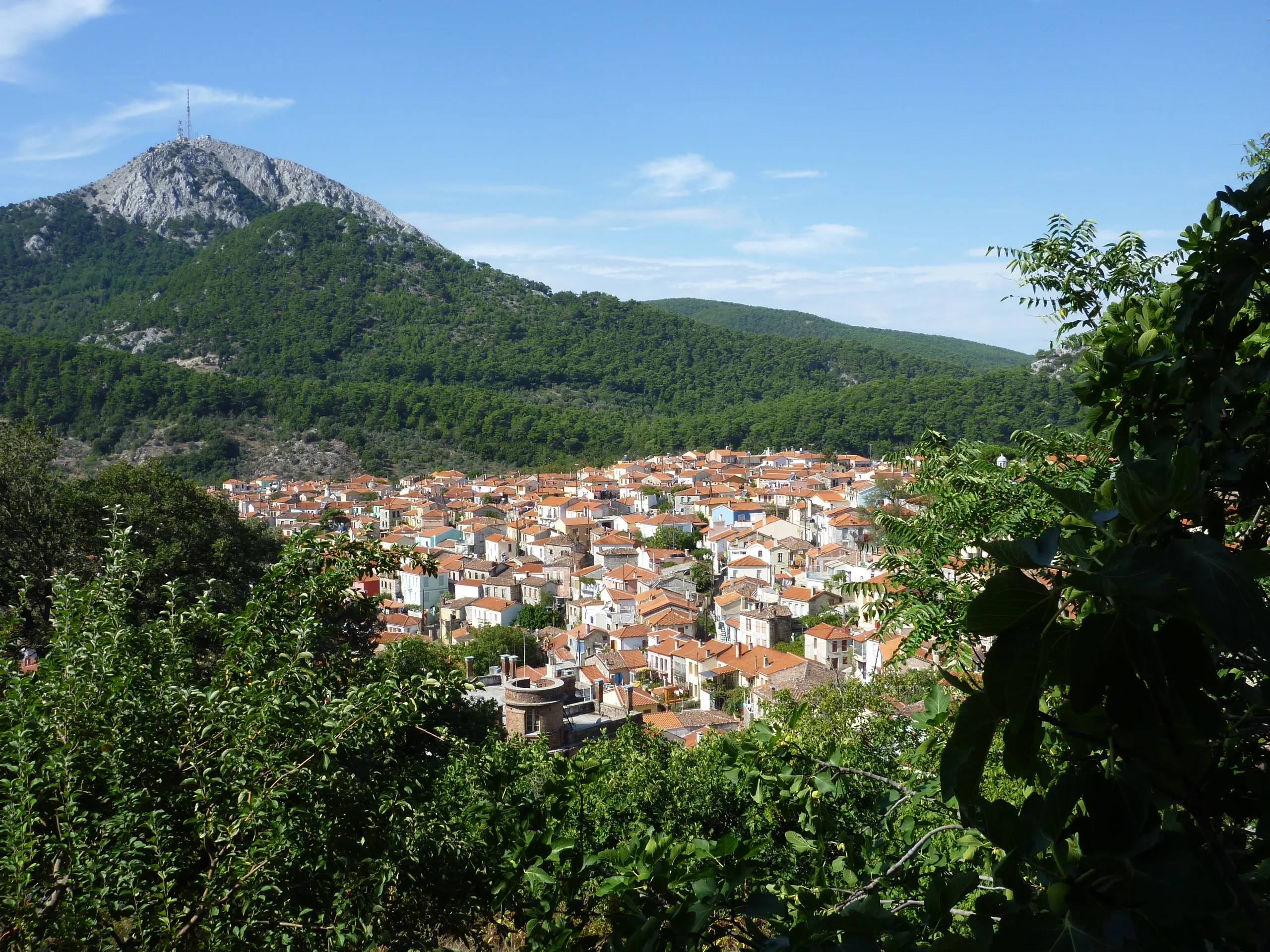
Agiasos, below Mount Olympos
Agiasos is a mountain village of tile-roofed houses on the slopes of Mount Olympos (967 m). It is known for its pottery and crafts; you stroll in the shade of trees along small streets lined with workshops.
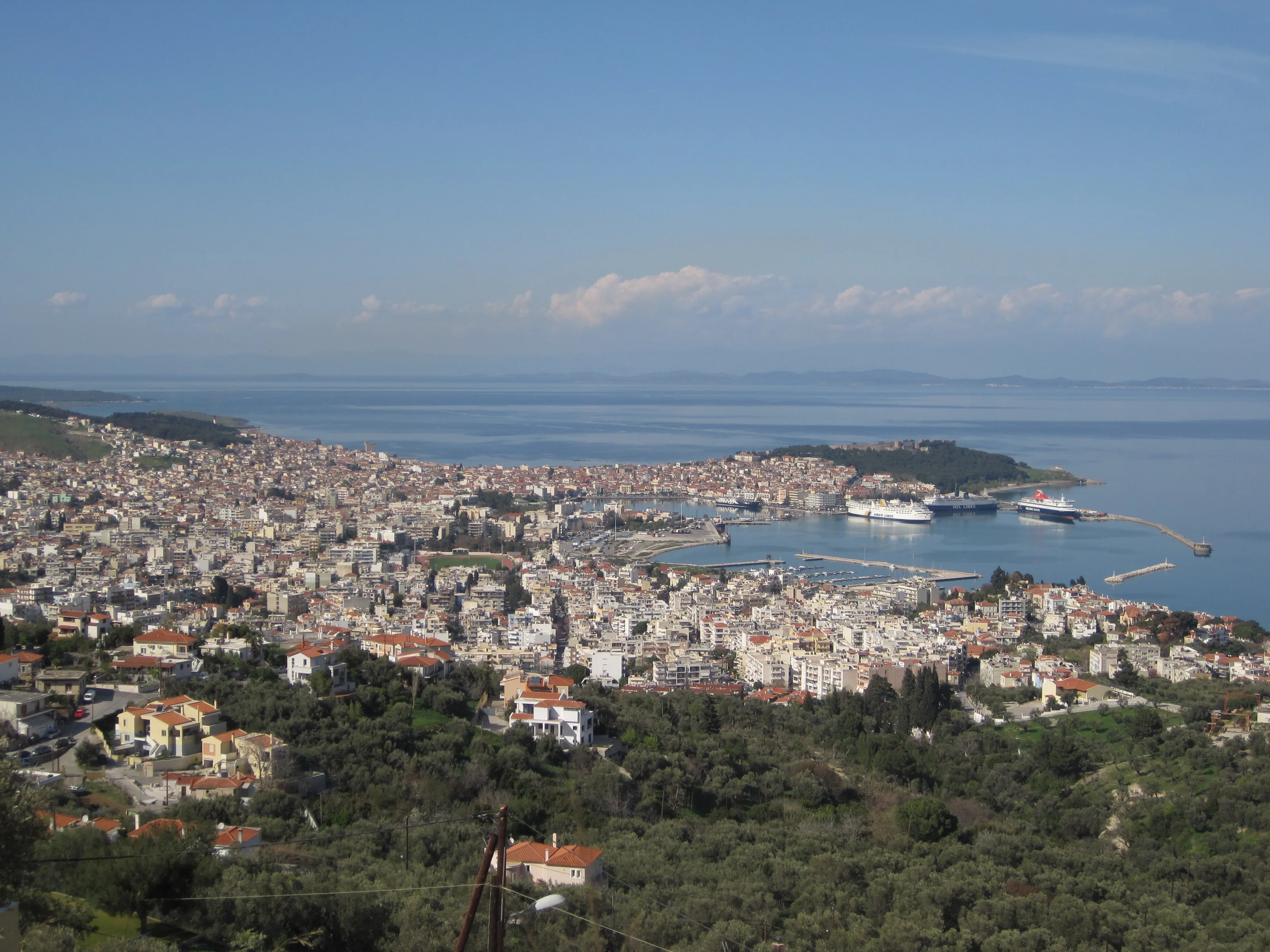
Mytilene from afar
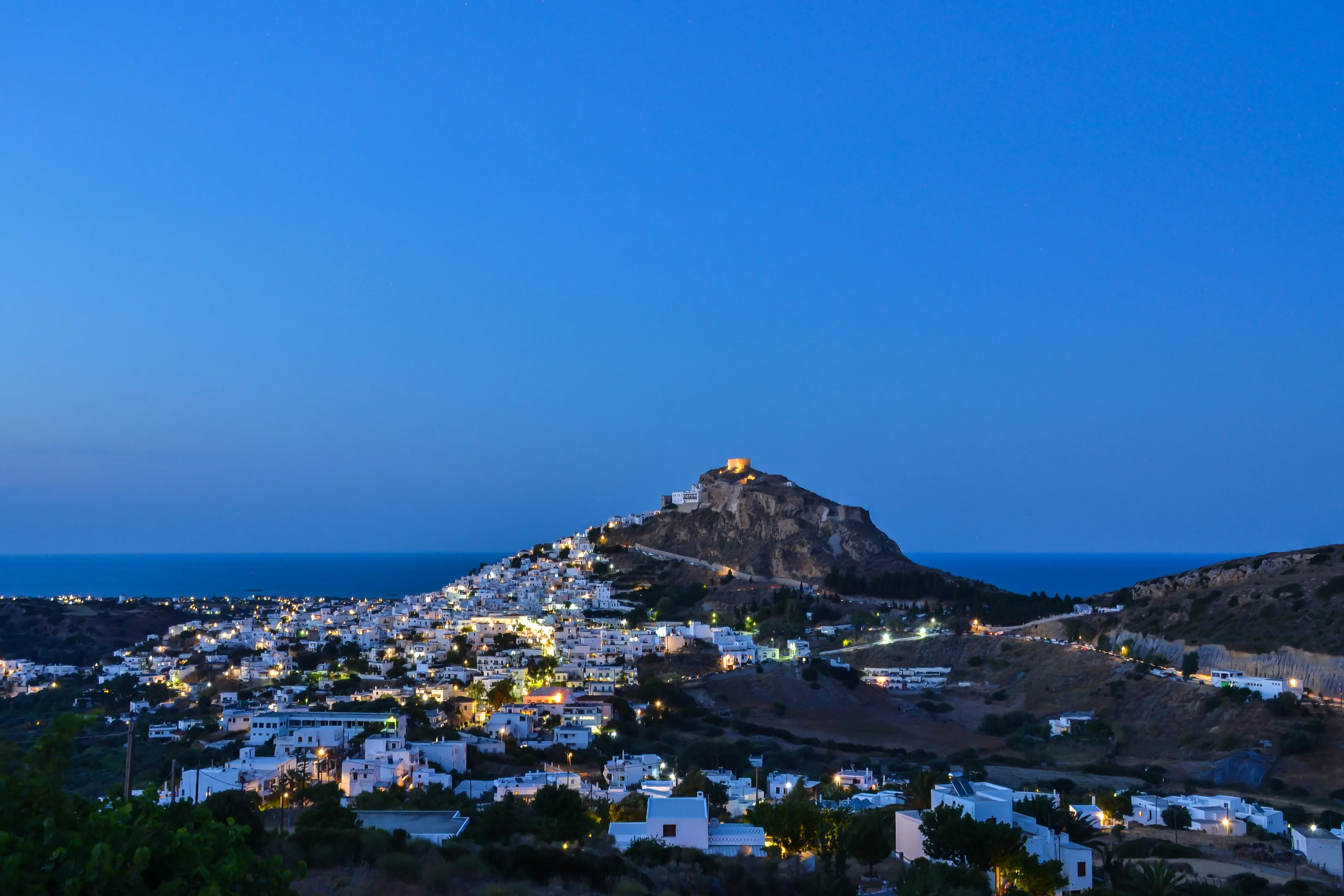
Seen from the heights, Mytilene occupies a peninsula in the southeast of the island, with its harbour, the Gattilusi Genoese fortress on a wooded hill and olive groves all around. The airport is close, making the town easy to reach for a short stay.
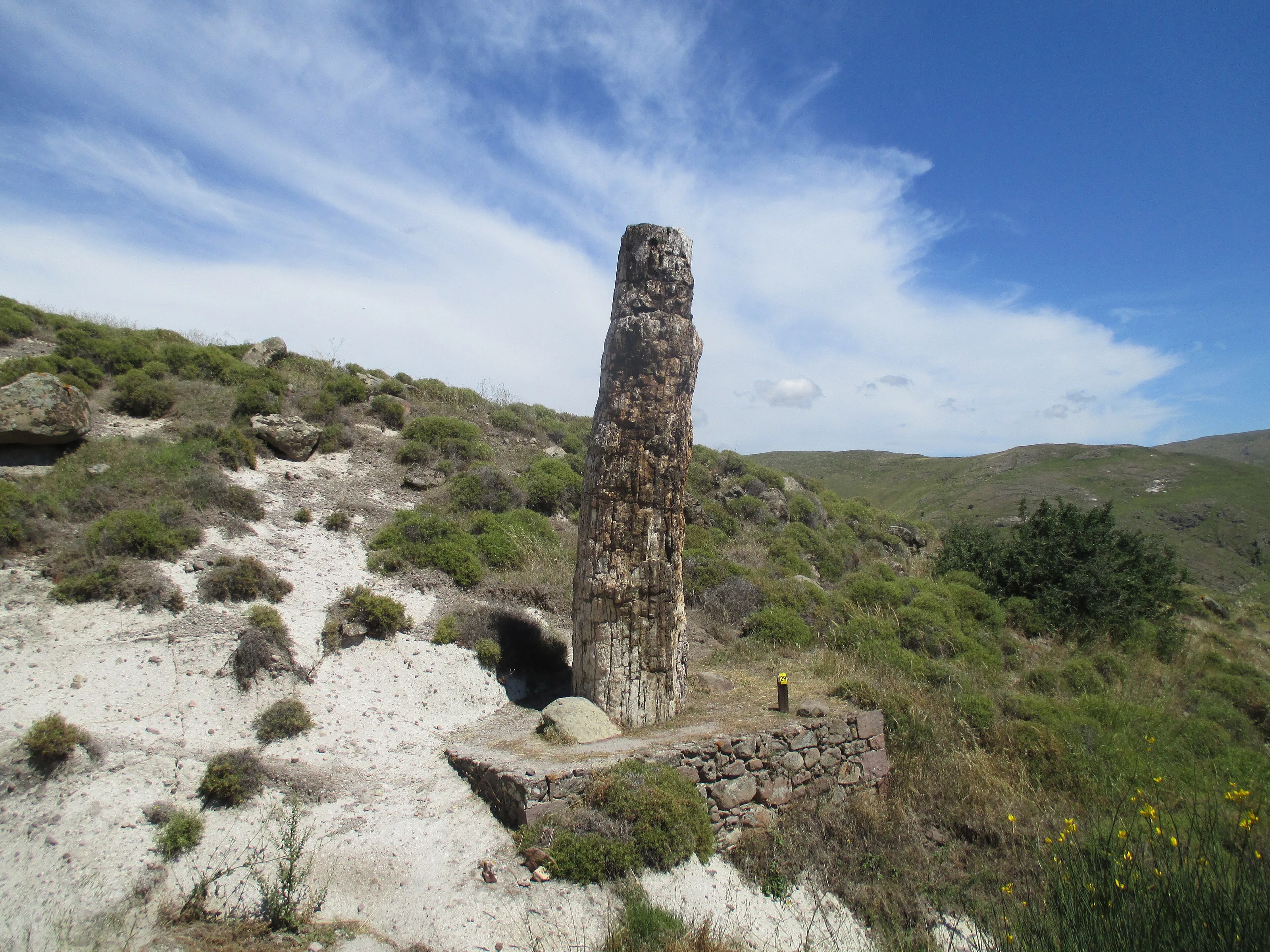
The petrified forest
In the west, between Sigri and Eresos, the petrified forest is a vast set of tree trunks fossilised by volcanic ash some 18 million years ago. The whole island is a geopark, a member of the UNESCO Global Geoparks network. A natural history museum in Sigri explains how it formed.
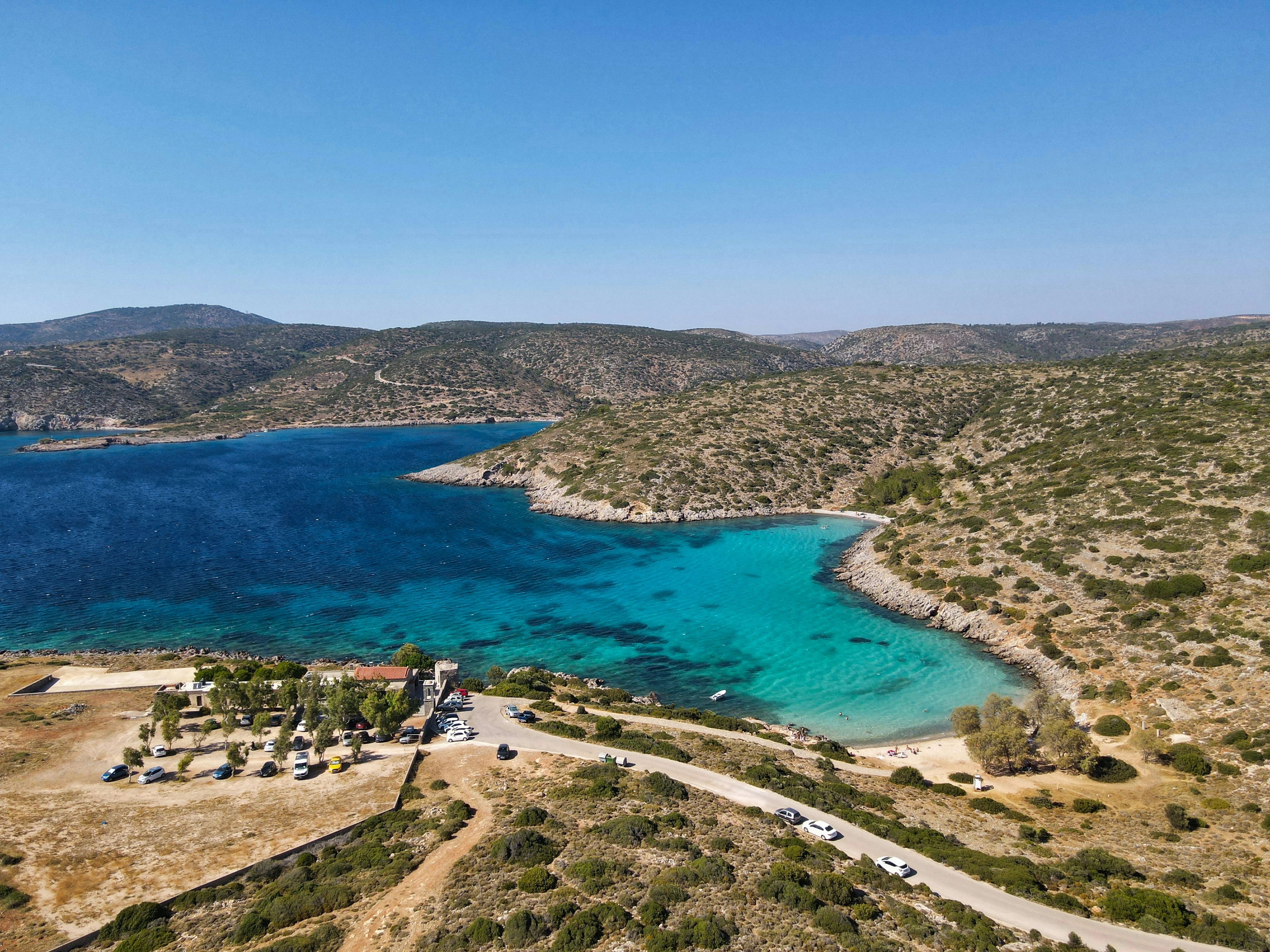
Other places: the Eftalou hot springs near Molyvos; Plomari, the capital of ouzo, and Vatera beach, one of the longest in the country; the small harbour of Skala Sykamnias and its Mermaid Madonna chapel; the Gulf of Kalloni, loved by birdwatchers; and Pyrgi Thermis, north of Mytilene, for its springs and beach.
Museums and culture
Museums, castles and poetry: the culture of Lesbos
Mytilene: archaeology and Byzantine art
The Archaeological Museum occupies two buildings, a neoclassical villa of 1912 near the harbour and a modern building opened in 1995, tracing the island's history from prehistory to Roman times. The Museum of Byzantine Art, opposite the church of Saint Therapon, shows icons, manuscripts and liturgical objects. The Gattilusi fortress, one of the largest in the archipelago, can be visited on foot.
Theofilos and Teriade
At Varia, about 4 km from Mytilene, two museums go well together: that of the naive painter Theofilos and that of the art critic Teriade, who kept his collection of modern works. Check hours and access before you come; we publish no ticket prices.
Sigri, Plomari and the villages
At Sigri, the natural history museum of the petrified forest shows the island's fossils. At Plomari, ouzo museums explain how the spirit is made. The villages of Agiasos and Mandamados are known for ceramics, and antiquity is present through the poets Sappho and Alcaeus.
Food and drink
Ouzo, sardines, cheese and olive oil
Ouzo and drinks
Lesbos is one of the homelands of ouzo, and Plomari hosts many distilleries. It is served with fish and seafood meze. Coffee, everywhere, accompanies life on village squares. We name no brand.
Fish, cheese and oil
Sardines from the Gulf of Kalloni, salted or grilled, are known throughout Greece, as is ladotyri, a cheese kept in olive oil. Olive oil is the island's main agricultural wealth, with millions of olive trees.
Where to eat
In Mytilene, Ermou street and the quay offer cafes and tavernas; in Skala Sykamnias and Molyvos the waterside fish tavernas are well known. We name no particular address.
Getting around
Car, bus, taxi: getting around
By rental car
The island is large (about 1,630 km2): a car is the most practical way to link Mytilene, Molyvos, Eresos, Sigri and Plomari. Mountain roads can be winding.
By bus and taxi
Intercity buses (KTEL) leave Mytilene for the main places but not often; taxis help for short journeys and the airport.
In Mytilene
The centre and port are explored on foot; the fortress stands on a hill north of the port, and the Varia museums are about 4 km from the centre.
Budget and precautions
Price level: no unverified figures
What we know
Lesbos is a mid-range destination, less overrun by mass tourism than some neighbouring islands. Accommodation remains the biggest cost, especially in high season; village tavernas, beaches and buses stay affordable.
What we do not publish
Ferry, museum, meal or rental prices are not backed by two independent sources, so we publish no ranges. The currency is the euro.
Precautions
Learn about local conditions before you go and check your government's travel advice. Check ferry timetables: wind can disrupt them.
When to go
A mild, very sunny Mediterranean climate
Spring (April to June)
The island is green and flowery, with orchids in the olive groves; it is the best time for walking and birdwatching.
Summer (July to August)
Hot and dry with plenty of sun. Beaches are busiest, and the northerly wind can blow on the north coast.
Autumn (September to November)
September and October stay mild with a still-warm sea, then rain returns.
Winter (December to March)
Mild and wet, with rare snow. Villages slow down and some seasonal businesses close.
The annual average is about 18 C with about 750 mm of rain a year, according to Wikipedia. These are guidelines; weather changes from year to year.
By length of stay
How many days in Lesbos?
A short stay
Mytilene, its museums and fortress, then Molyvos with the Eftalou hot springs.
Taking your time
Add Agiasos, the Sigri petrified forest, Skala Eresou and a visit to Plomari.
Around the island
Range between north, west and south, with the Gulf of Kalloni, Vatera and several beaches.
In pictures
Lesbos in pictures
You might also like
Similar destinations
FAQ
Frequently asked questions about flights to Lesbos
Which airport serves Lesbos?
The island is served by Mytilene airport 'Odysseas Elytis' (MJT), south of the town. Scheduled flights link Athens and Thessaloniki, and seasonal flights arrive from other European cities.
What should I see first in Lesbos?
Mytilene and its fortress, Molyvos, Agiasos, Skala Eresou, the Sigri petrified forest and Plomari, the capital of ouzo.
How do I get around Lesbos?
Preferably by rental car, as the island is large. Intercity buses are infrequent, and taxis serve short journeys.
Can I arrive by boat?
Yes: Mytilene port is linked with Piraeus and other Aegean islands, and with Ayvalik in Turkey. Timetables vary; we name no operator.
When is the best time to go?
May, June, September and early October, for pleasant weather and fewer visitors than in July and August.
What are the local specialities?
Plomari ouzo, sardines from the Gulf of Kalloni, ladotyri cheese, olive oil and Agiasos pottery.
How much does a flight to Lesbos usually cost?
The price depends mostly on your departure city, the season and how early you book. The opportunities section above shows real examples of fares SniperAir has already detected to this destination.
How do I get alerted when a flight to Lesbos drops below my budget?
Create an alert profile with your departure airport, Lesbos as the destination and your maximum budget. You are notified automatically as soon as a matching fare is detected.
Ready to head to Lesbos?
Set your budget and let SniperAir monitor fares for you.
Create my alert