
Cheap flights to Milan
Set your departure airport and maximum budget: SniperAir tracks prices to Milan and alerts you the moment a deal matching your criteria appears.
Quick summary
Country
Italy
Continent
Europe
Airport
MXP
Currency
Euro (EUR)
Time zone
UTC+1 (UTC+2 during summer time)
Deals already spotted to Milan
Real flight examples detected by SniperAir, with their reference price.
Loading examples…
Why track Milan with SniperAir
You do not need to compare prices every day
Choose your departure
Enter your departure airport and your maximum budget for a flight to Milan (MXP).
SniperAir keeps watch
Our systems continuously compare new prices with the route's real history. SniperAir tracks prices and alerts you: it does not sell or book tickets.
You receive an alert
As soon as a price matches your criteria, you are notified without having searched anything yourself.
Airport and getting into town
Three airports for one city: Malpensa, Linate and Bergamo
Milan Malpensa (MXP)
Malpensa is Milan's main international airport, about 40 km north-west of the centre, according to Wikivoyage (EN). The Malpensa Express train reaches Milano Centrale station without a change, in about an hour with a departure every 30 minutes, says Wikivoyage (FR). Shuttle buses and taxis also serve the city. It is the airport to look at first for long-haul flights.
Milan Linate (LIN)
Linate is a small one-runway airport about 7 km from the centre, focused on domestic and intra-European flights and business travellers, according to Wikivoyage (EN). Metro line M4 links it to the city, with a train roughly every 7 minutes, and a shuttle bus runs to the central station. It is the quickest way to save time once you land.
Bergamo Orio al Serio (BGY)
Orio al Serio lies near Bergamo, about 45 km east of Milan, and mostly hosts low-cost airlines, some of which market it as Milan Bergamo, says Wikivoyage (EN). Coaches reach Milano Centrale in a little over an hour; you can also go to Bergamo station and continue by train. Leave a margin at rush hour.
Distances and times are approximate, from Wikivoyage (EN, FR, DE) and Wikipedia (EN); timetables and fares change, so check them before you travel. We do not quote transport fares.
Milan is Italy's economic capital, with about 1.4 million inhabitants within the city limits according to Wikipedia (EN), at the heart of the country's largest urban area. Because SniperAir tracks MXP, LIN and BGY, you can compare all three gateways: a slightly dearer flight into one may be offset by a shorter transfer than from another. High-speed trains link Milan with Turin, Venice, Bologna, Florence and Rome.
Landmarks
Duomo, Galleria, Sforza Castle, Navigli and Porta Nuova
Milan combines old heritage with very contemporary architecture. Wikivoyage (EN) lists among its emblems the Duomo, one of the biggest Gothic cathedrals in the world, La Scala, the Galleria Vittorio Emanuele, the Sforza Castle and the Pirelli tower. Five places are illustrated below.
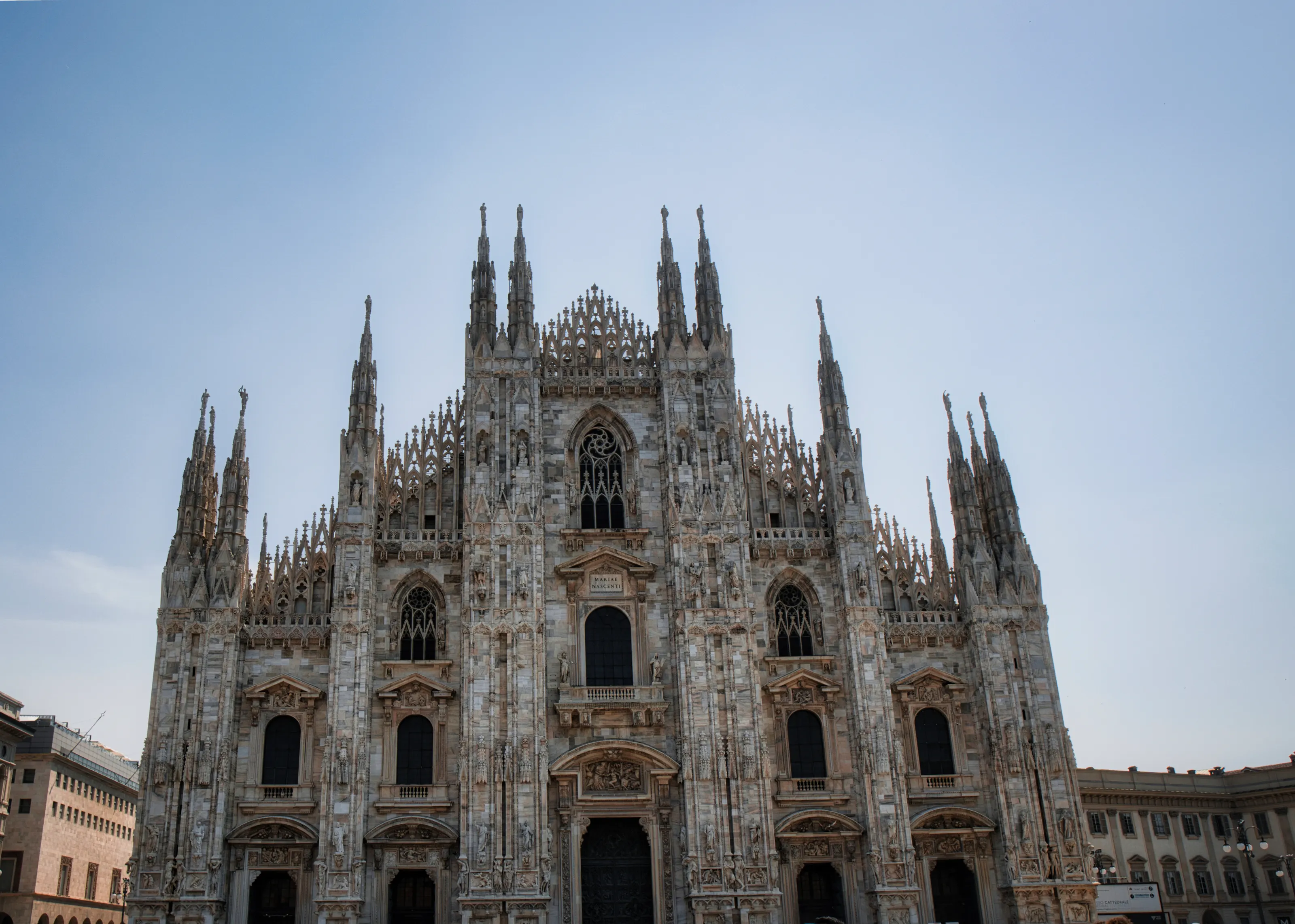
The Duomo
Milan Cathedral stands out for its pale marble façade covered in spires and statues; building began in the late 14th century. Wikivoyage (EN) ranks it among the largest Gothic cathedrals in the world. You can reach the roof terraces and see the pinnacles up close: check opening hours and tickets before you go.
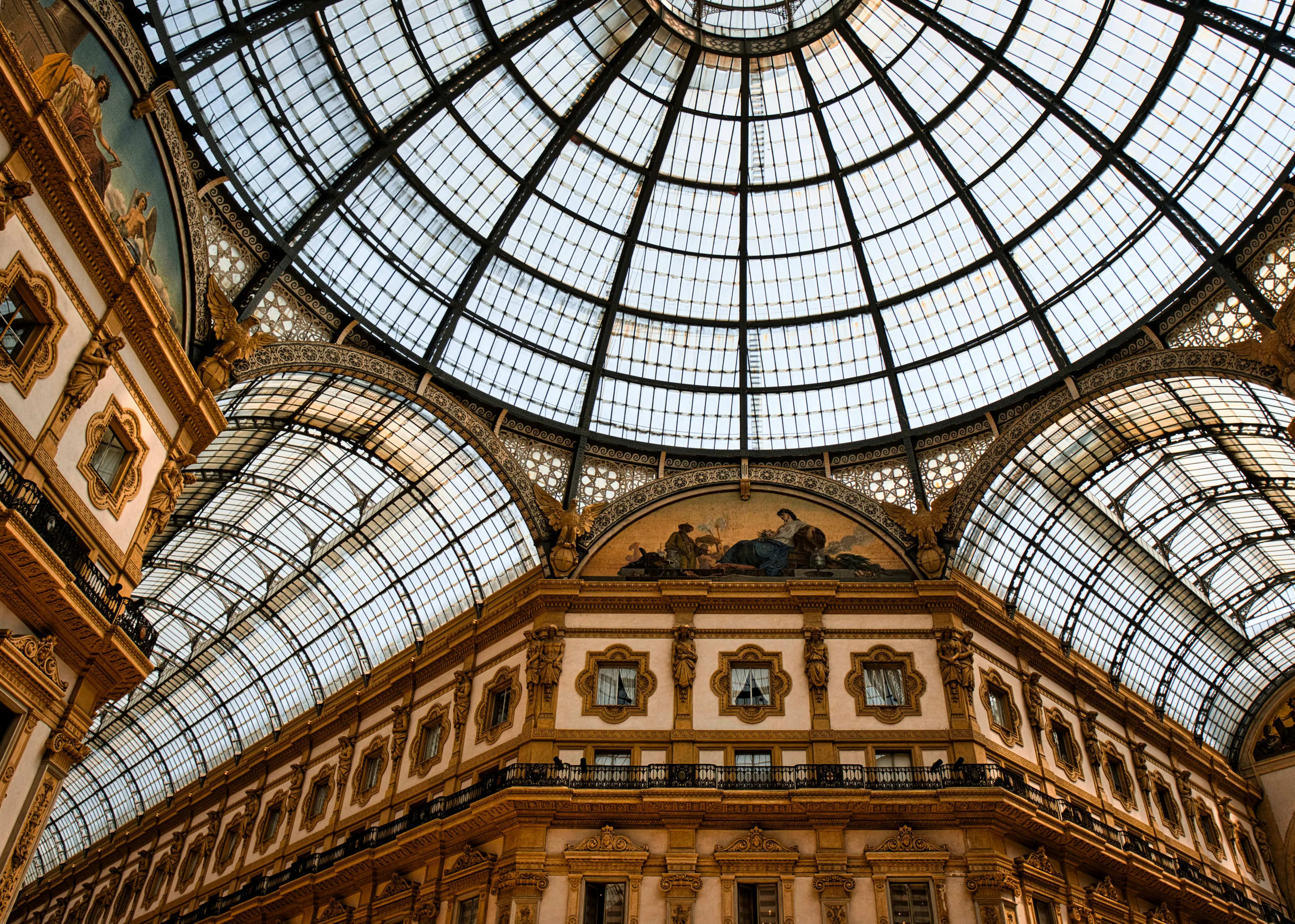
The Galleria Vittorio Emanuele II
This 19th-century covered arcade links the Piazza del Duomo to La Scala under an iron-and-glass roof. Wikivoyage (EN) calls it a glamorous shopping gallery; people come above all for the architecture, the floor mosaics and the atmosphere, even without buying anything.
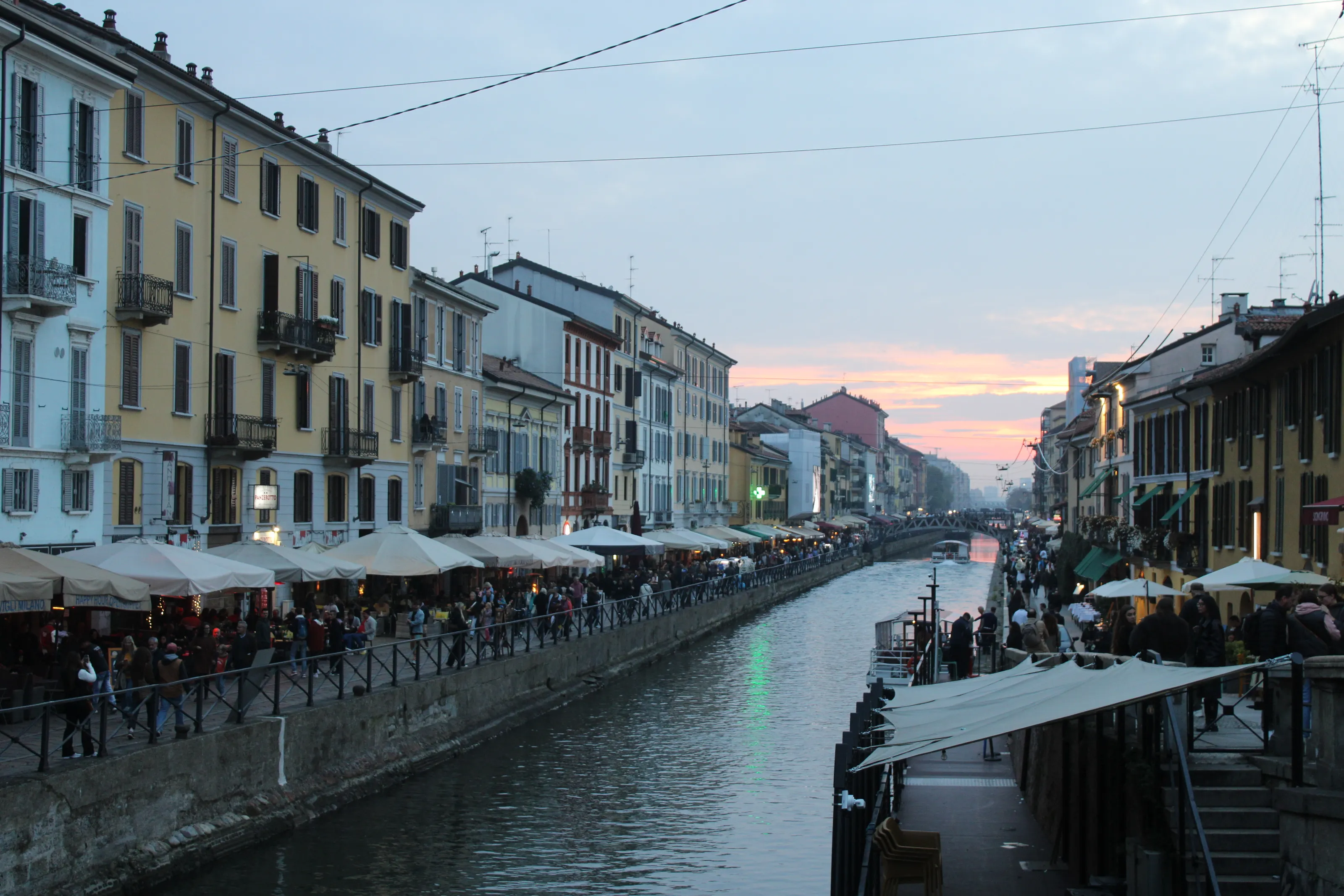
The Navigli
The Navigli canals are a reminder that Milan was once a city of water. In the evening the banks fill with terraces, bars and restaurants, and Wikivoyage (EN, FR, DE) singles out this district, along with Brera, for aperitivo: a drink served with a buffet of small bites. Wikivoyage (EN) also recommends the Navigli as a pretty, less obvious area to stroll.
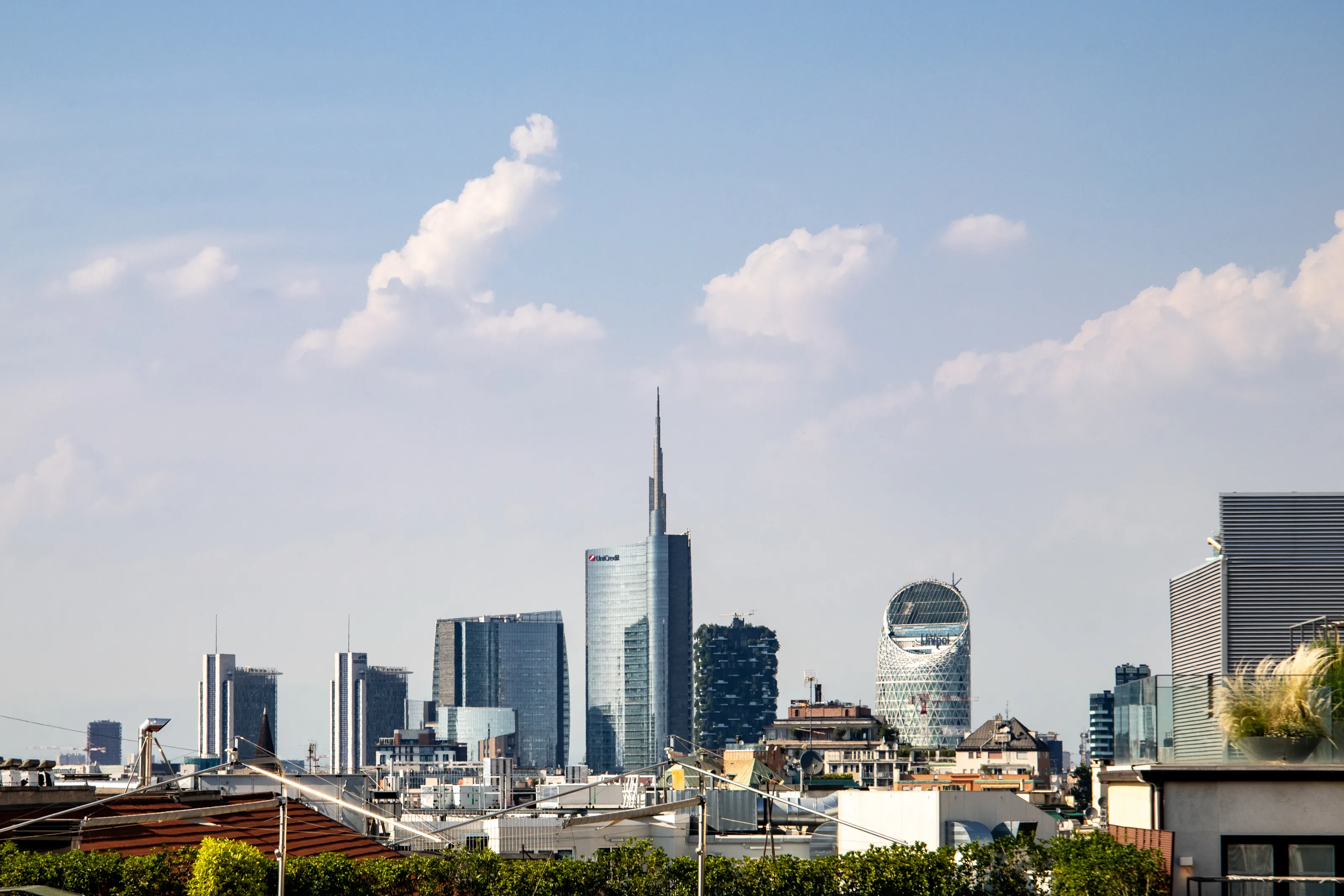
Porta Nuova and the skyscrapers
The Porta Nuova district shows the modern side of the city, with glass towers, squares and raised gardens. It contrasts with the historic centre and has been part of the skyline since the 2010s. Walking from Garibaldi station to Piazza Gae Aulenti takes you through it.
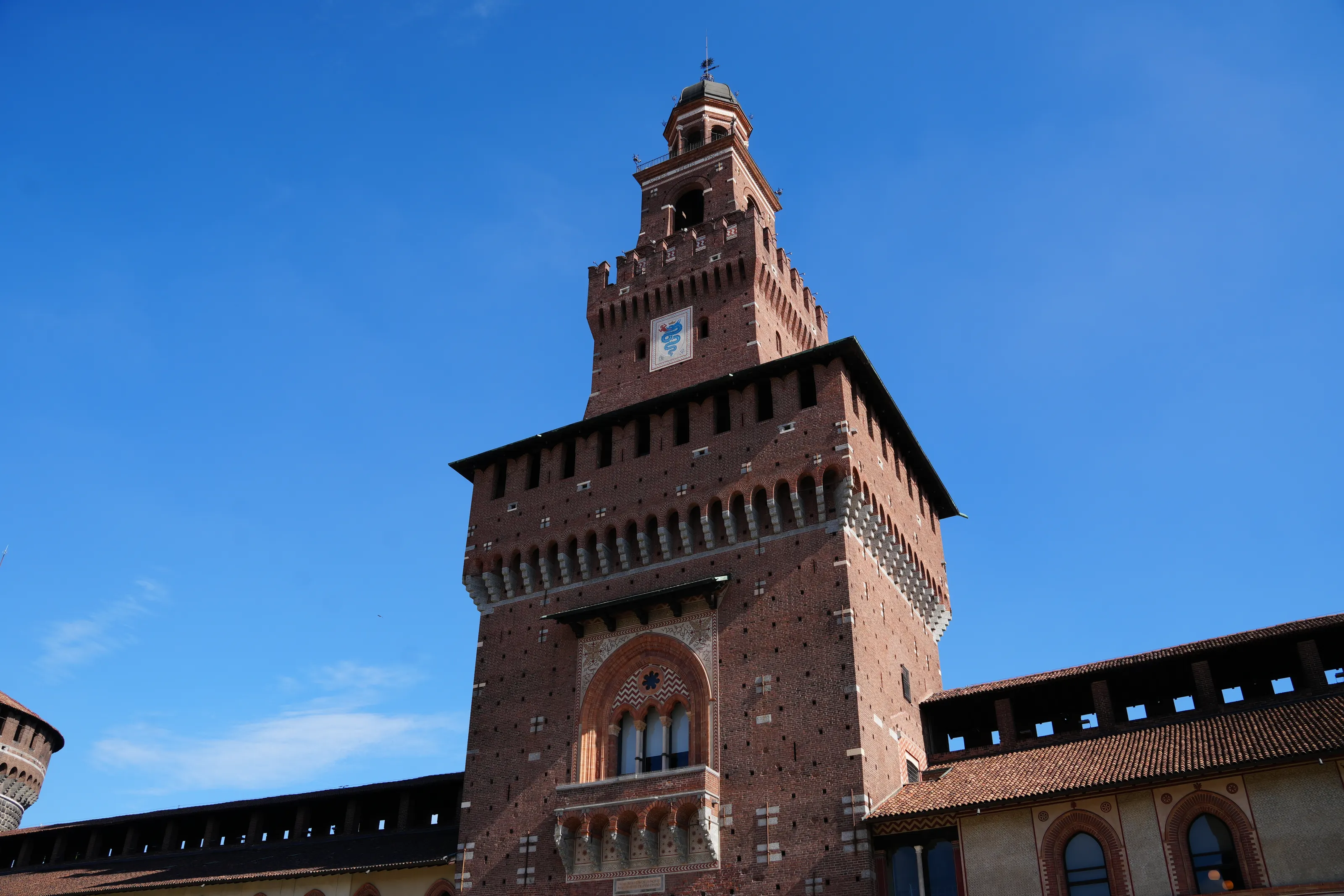
The Sforza Castle
The Castello Sforzesco is a large medieval red-brick castle, the seat of the Dukes of Milan in the Renaissance, which Wikivoyage (EN) lists among the city's main monuments. Its courtyards can be walked freely and it opens onto Parco Sempione, which leads to the Arco della Pace. Several municipal museums are housed inside.
La Scala, Brera and the Last Supper
La Scala opera house, one of the best established in the world according to Wikivoyage (EN), can be admired from outside or at a performance. In the Brera district, lanes, boutiques and bars make up one of the most pleasant corners of the city. As for Leonardo da Vinci's Last Supper, painted at the convent of Santa Maria delle Grazie and a UNESCO site since 1980, it is seen by reservation: tickets are obtained in advance, says Wikivoyage (DE).
Museums and culture
Leonardo, Brera, Novecento and science
The great collections
The Pinacoteca di Brera holds some of the finest works of art in Europe, according to Wikivoyage (EN). The Ambrosiana, the Poldi Pezzoli museum and the Museo del Novecento, facing the Duomo, round out a visit to old and modern art.
Science and design
The Leonardo da Vinci National Museum of Science and Technology shows models drawn from the master's notebooks. The Triennale and Hangar Bicocca present design and contemporary art, two fields where Milan plays a central role.
Fashion, opera and football
The city is the shop window of Italian fashion: two weeks of shows a year, in spring and autumn, according to Wikivoyage (EN). The Teatro alla Scala museum and the San Siro stadium and its tours round off a cultural stay. We do not quote admission prices.
Food and drink
Saffron risotto, Milanese cutlet, panettone and aperitivo
Traditional dishes
Milanese cooking is rich and more Lombard than Mediterranean. Look for risotto alla milanese coloured with saffron, osso buco, cotoletta alla milanese (a breaded veal cutlet) and, among cheeses, gorgonzola, according to Wikivoyage (DE). Panettone, the domed Christmas cake, is a local invention.
Aperitivo
Between about 6 and 9 pm, bars serve a cocktail with a buffet, a very Milanese habit. Brera and the Navigli are the areas most often named by Wikivoyage (FR, DE); book ahead in the popular places in the evening.
Neighbourhoods
The Navigli terraces, the bars of Brera and the trattorias in the small streets of the centre offer different moods. Restaurant prices vary a lot by district, and service is not always included: check the bill.
Getting around
Metro, trams, trains and airport shuttles
The metro
The metro has five lines, M1 (red), M2 (green), M3 (yellow), M4 (blue) and M5 (lilac), and is the best way to get around according to Wikivoyage (ES). M4 serves Linate. Tickets are sold at machines, tobacconists or online.
Trams and walking
Trams, including some historic carriages, complement the metro and cross the city; Wikivoyage (EN) calls them convenient and fun. The centre is largely walkable: the Duomo, the Galleria, La Scala and Brera are close together.
Trains and excursions
Milano Centrale is the hub for high-speed trains to Turin, Venice, Bologna, Florence and Rome, and for Trenord regional services. From Milan, Lake Como, Bergamo or Pavia can be done as day trips.
Budget and precautions
A high budget in fair season, to adjust by month
Price level
Milan is expensive by Italian standards, above all for accommodation. We do not quote figures, because we could not cross-check them against two independent open sources. Transport, museum and hotel rates change every year.
Fashion weeks and trade fairs
During Fashion Week, taxis get scarce and accommodation fills up, according to Wikivoyage (EN). If that is not why you are coming, aim for a quieter period: flight and hotel prices are often lower.
Flights and formalities
SniperAir tracks prices to MXP, LIN and BGY and compares them with each route's history, but it does not sell or book tickets. Italy is in the Schengen area: check entry rules for your nationality. As in any big city, watch for pickpockets on the metro and near stations.
When to go
Foggy winters, sticky summers, spring and autumn at their best
Winter (December to February)
Cold and often foggy, according to Wikipedia (EN): pack a good coat.
Spring (March to May)
Terraces reopen and the parks bloom: one of the most pleasant seasons for walking.
Summer (June to August)
Hot and humid, says Wikipedia (EN); in August many shops close for the holidays.
Autumn (September to November)
Mild at first, rainier later; September and October suit sightseeing well.
Milan has a humid subtropical climate (Cfa), with hot, humid summers and cold, foggy winters, according to Wikipedia (EN, FR). The Alps and the Apennines shelter the plain from the main air flows coming from northern Europe. We do not give monthly averages, because they vary with the reference period.
By length of stay
What to do in Milan depending on how long you stay
The essentials
The Duomo and its roofs, the Galleria Vittorio Emanuele II, La Scala, the Sforza Castle and an aperitivo in the Navigli or Brera.
Museums and districts
The Last Supper by reservation, the Pinacoteca di Brera, the Museo del Novecento, the Porta Nuova district and a match or tour at San Siro.
Beyond the city
Lake Como, Bergamo or Pavia as excursions, with Milan as a base and the three airports as return options.
In pictures
Milan in pictures
You might also like
Similar destinations
FAQ
Frequently asked questions about flights to Milan
Which airport should I choose for Milan?
Three airports serve it: Malpensa (MXP) for long-haul flights, Linate (LIN) for its quick metro link, and Bergamo Orio al Serio (BGY) for low-cost flights. SniperAir can track all three.
How do I get from Malpensa to central Milan?
The Malpensa Express train reaches Milano Centrale without a change in about an hour, with a departure every 30 minutes according to Wikivoyage (FR). Timetables change: check them before you travel.
When is the best time to visit Milan?
Spring and early autumn. Summer is hot and humid and many shops close in August; winter is cold and often foggy.
Is Milan expensive?
More than other Italian cities, especially accommodation during fairs. We do not quote figures because we could not cross-check them on two independent sources.
How long should I stay in Milan?
Two days for the Duomo, the Galleria, La Scala and the castle; four days adding the Last Supper, Brera and the museums; five or more with Lake Como or Bergamo.
Do I need to book Leonardo's Last Supper?
Yes: the visit is by ticket, obtained in advance according to Wikivoyage (DE). Check available slots well before your trip.
How much does a flight to Milan usually cost?
The price depends mainly on your departure city, the time of year and how far ahead you book. The "opportunities" section above shows real examples of prices SniperAir has already detected to this destination.
How do I get alerted when a flight to Milan drops below my budget?
Create an alert profile with your departure airport, Milan as the destination and your maximum budget. You are notified automatically as soon as a matching price is detected.
Ready to head to Milan?
Set your budget and let SniperAir monitor fares for you.
Create my alert