
Cheap flights to Venice
Set your departure airport and maximum budget: SniperAir tracks prices to Venice and alerts you the moment a deal matching your criteria appears.
Quick summary
Country
Italy
Continent
Europe
Airport
VCE
Currency
Euro (EUR)
Time zone
UTC+1 (UTC+2 during summer time)
Deals already spotted to Venice
Real flight examples detected by SniperAir, with their reference price.
Loading examples…
Why track Venice with SniperAir
You do not need to compare prices every day
Choose your departure
Enter your departure airport and your maximum budget for a flight to Venice (VCE).
SniperAir keeps watch
Our systems continuously compare new prices with the real price history of the route. SniperAir monitors prices and alerts you: it does not sell or book tickets.
You receive an alert
As soon as a price matches your criteria, you are notified, without having searched for anything yourself.
Airport and getting into town
A mainland airport, then a bus or boat across the lagoon
Venice Marco Polo (VCE)
Marco Polo Airport is at Tessera on the mainland, about 8 km north of Venice according to Wikivoyage (FR). The ATVO express bus and the ACTV city bus reach Piazzale Roma, the road terminus at the edge of the island, in roughly 20 to 25 minutes, per Wikivoyage (EN). Alilaguna water buses serve Murano, the Lido and San Marco but take far longer, up to about 90 minutes to San Marco, while a water taxi takes around 30 minutes and is the comfortable choice with heavy luggage. Low-cost carriers also use Treviso (TSF), roughly 25 to 30 km away, linked by ATVO shuttle in about 55 to 70 minutes. Bologna and Verona, followed by a train, are other gateways worth watching.
Distances and times are approximate, based on Wikivoyage (EN, FR); timetables change by season, so check them before you travel. We do not quote fares.
Venice is the capital of the Veneto region. The municipality has about 250,000 inhabitants, but fewer than 60,000 live in the historic island city; most of the rest are on the mainland (Mestre, Marghera) or on other lagoon islands, according to Wikipedia (EN, DE). The old city is split into six sestieri: Cannaregio, Castello, Dorsoduro, San Polo, Santa Croce and San Marco. Addresses use the sestiere and a number rather than a street name, which confuses first-time visitors.
Landmarks
The Grand Canal, St Mark's Square, the Doge's Palace and the Rialto
Venice and its lagoon have been on the UNESCO World Heritage list since 1987, according to Wikipedia (DE, ES). The city was the capital of the Republic of Venice until 1797, a maritime and trading power whose palaces, churches and Arsenal still bear its mark. The places below are illustrated; Murano, Burano and Torcello are covered at the end of the section.
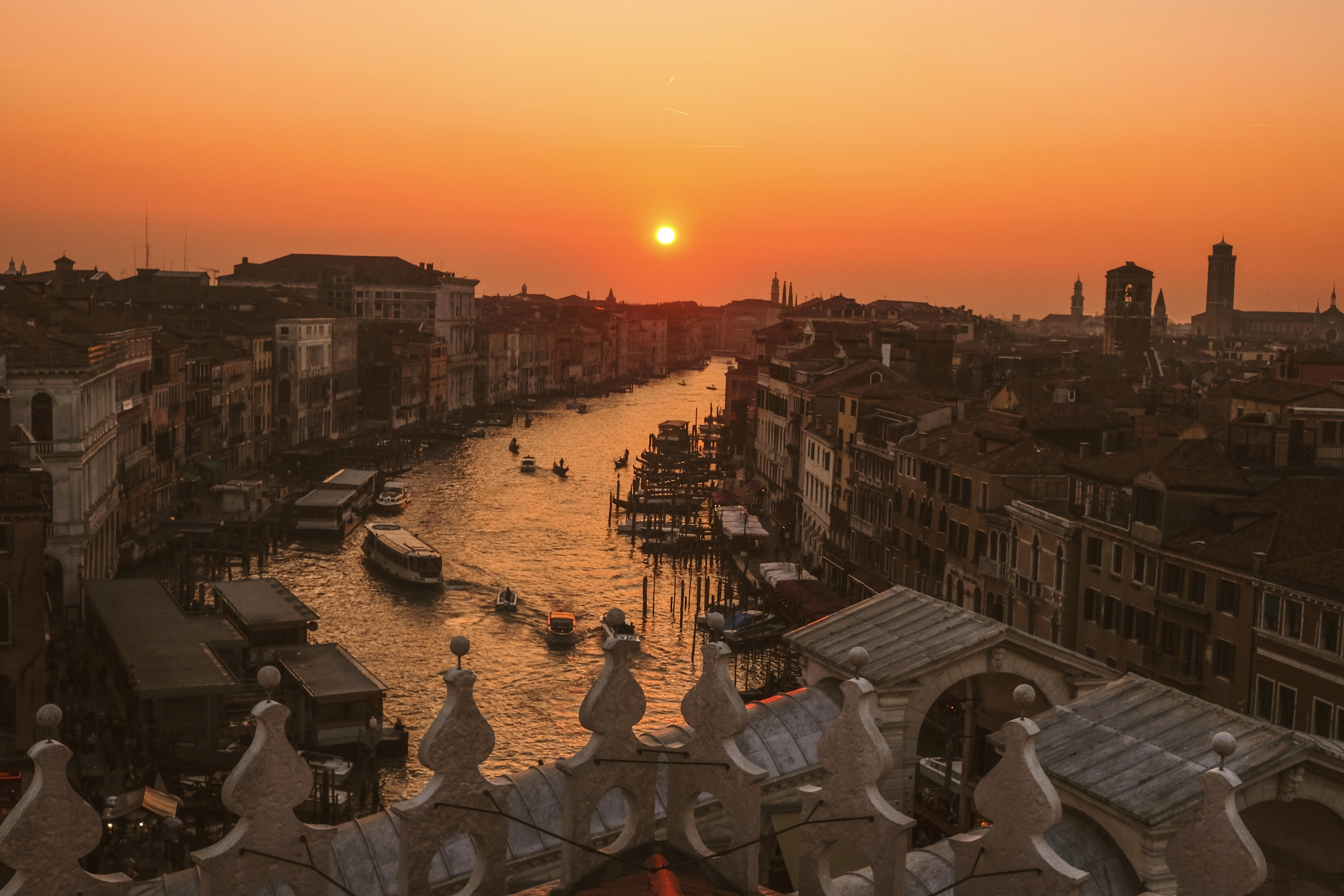
The Grand Canal
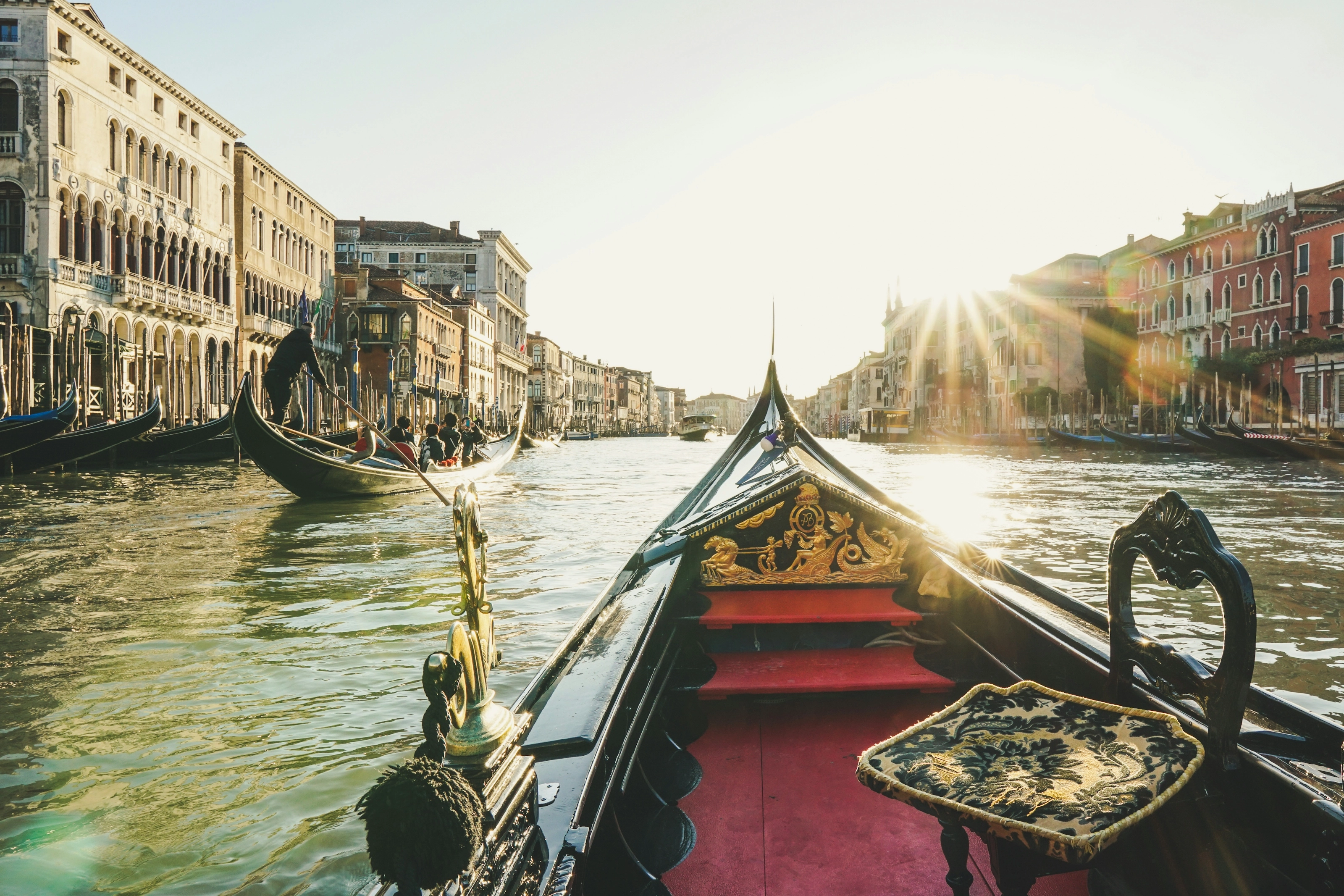
The Grand Canal is the city's main street: Gothic, Renaissance and Baroque palaces line both banks, many dating from the late Middle Ages. Vaporetto line 1 runs its full length and stops at every landing, which makes it the cheapest way to see it, though it is crowded during the day. Late-afternoon light is the most flattering.
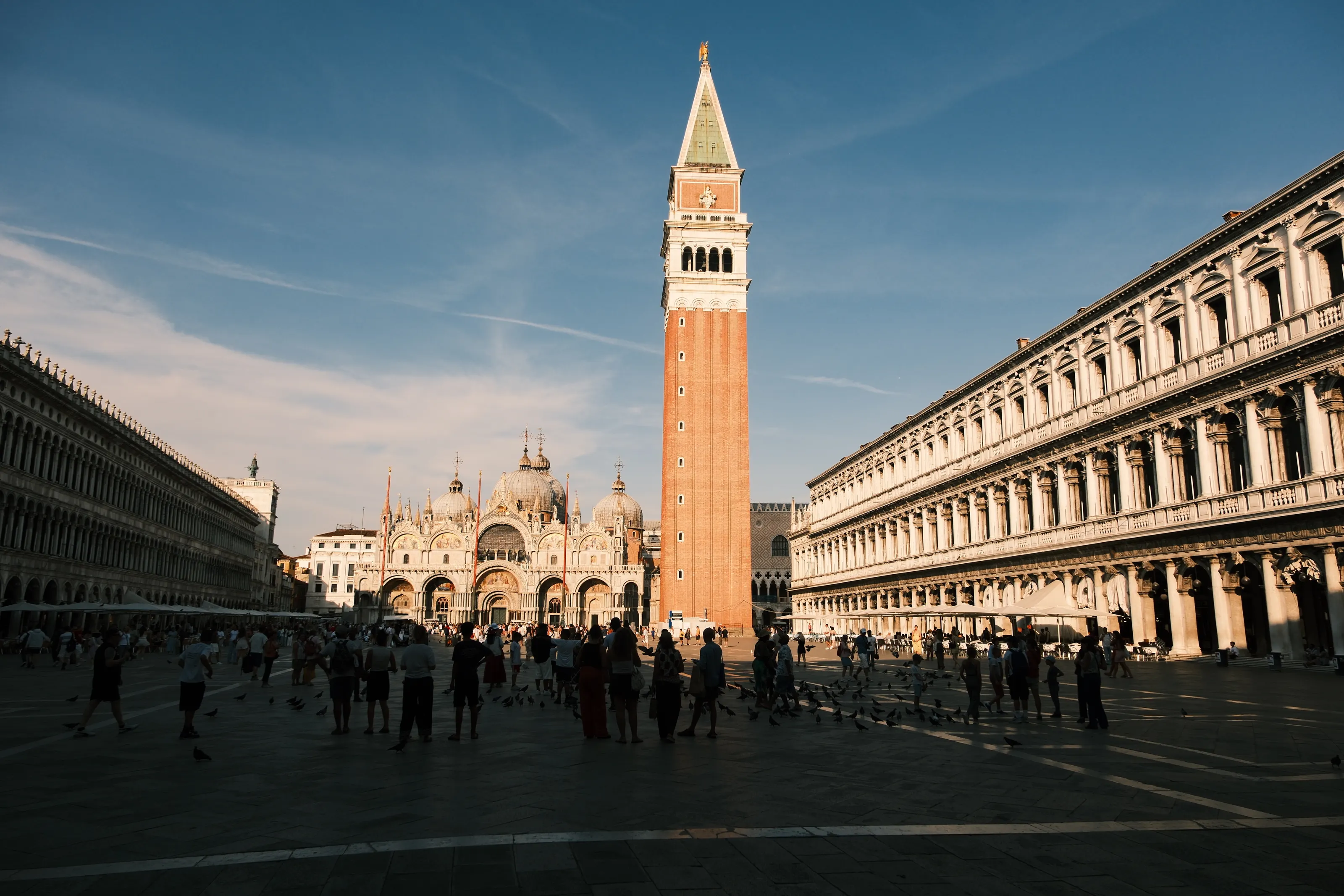
St Mark's Square
The heart of the city is dominated by the Byzantine-style basilica, built to house the relics of St Mark brought from Alexandria, and by the red-brick bell tower. The Piazzetta leads from the square down to the lagoon and the Doge's Palace. It is the busiest place in Venice: come early in the morning or in the evening to see it uncrowded.
The Doge's Palace
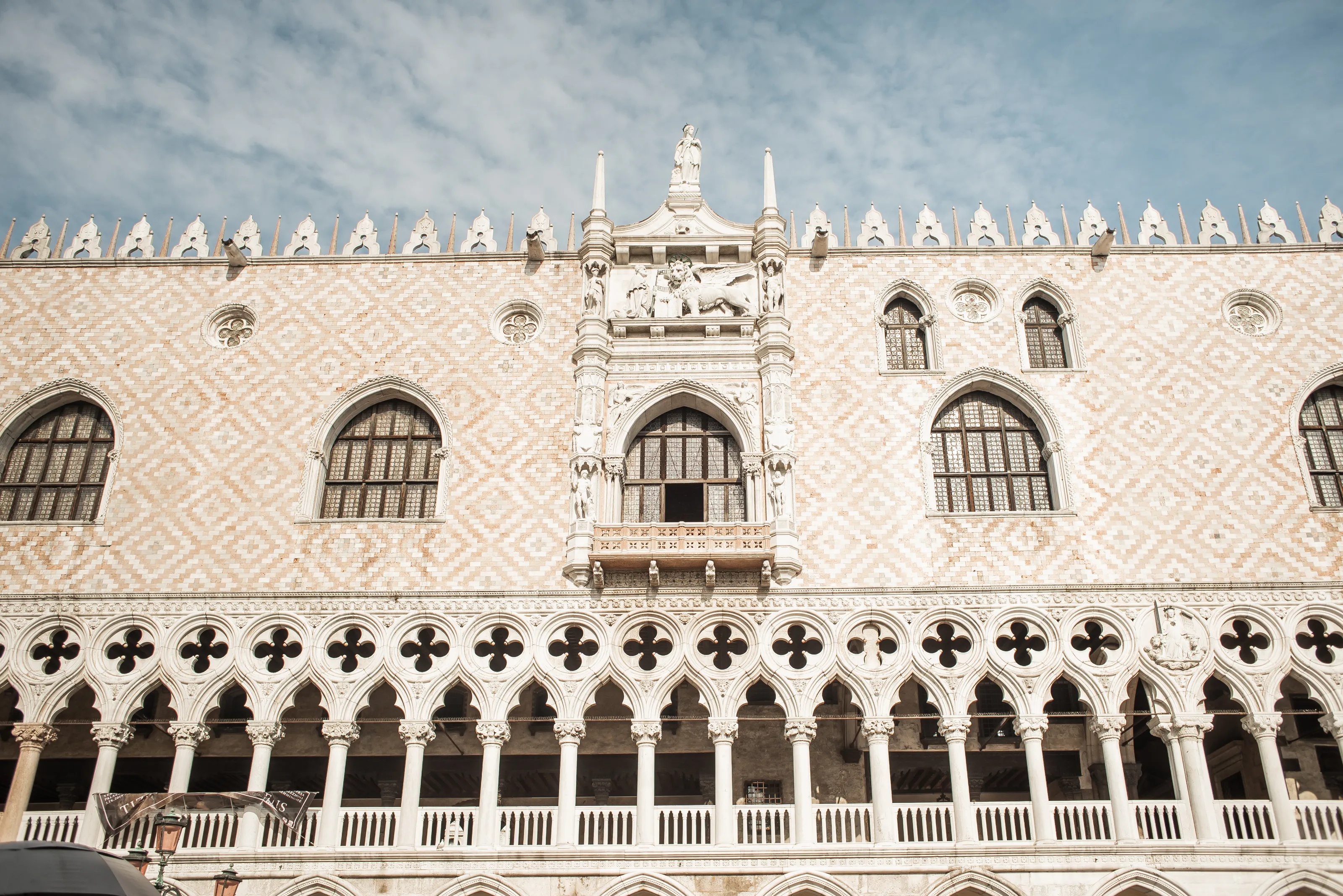
Once the seat of the Republic's government, the Doge's Palace presents a Gothic facade of two tiers of arcades and pale patterned brickwork to the Piazzetta. A visit takes in the state rooms and the old prisons. Book ahead in high season, as queues can be long.
The Rialto Bridge
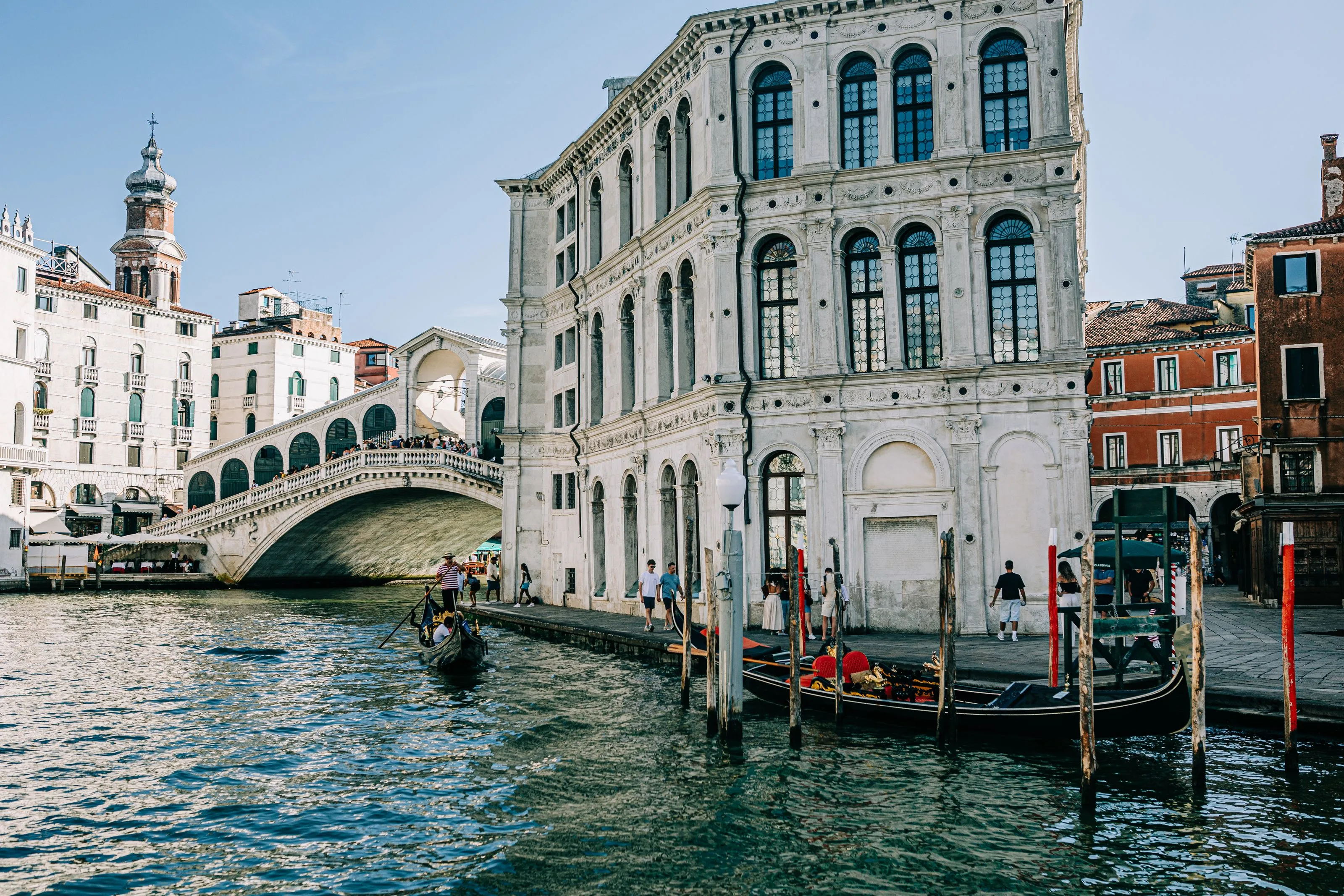
For centuries the Rialto was the only crossing of the Grand Canal; the present stone bridge dates from the late 16th century, according to Wikipedia (ES). The Rialto district was the city's commercial centre and its market is still active. There are shops on the bridge and a view along the canal from the top, but also crowds.
By gondola on the water
Today the gondola is used mostly by visitors and for weddings and ceremonies, while Venetians travel by vaporetto, according to Wikipedia (ES). Traghetti, small gondola ferries, cross the Grand Canal at several points for a modest fare. Agree the route and price before boarding.
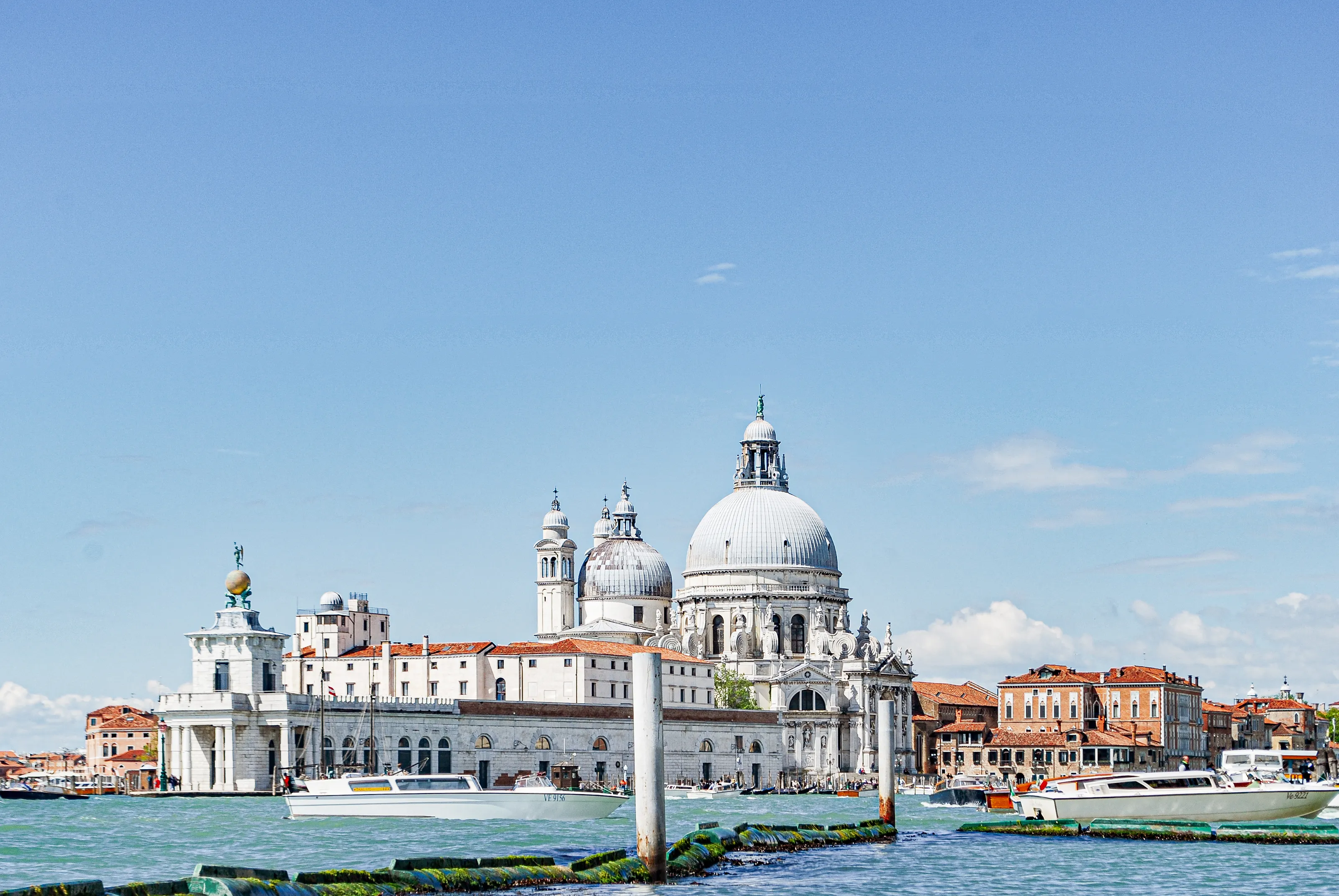
Santa Maria della Salute
This large Baroque church with a white dome marks the mouth of the Grand Canal opposite St Mark's. It is best admired from the water, from the Accademia Bridge or from the Dogana point, where a contemporary art centre stands.
Murano, Burano, Torcello and the Arsenal
Murano is known for glass and Burano for lace and colourful houses, two crafts that still matter to the local economy according to Wikipedia (EN). Vaporetti link Fondamente Nove with these islands and Torcello. The Arsenal, the Republic's former shipyard, is regarded by several historians as the first factory in history; it now hosts Biennale exhibitions.
Museums and culture
Venetian painting, modern art, Murano glass and opera
The main art museums
Wikivoyage (EN) calls the Gallerie dell'Accademia the city's most significant art museum, covering art from before the 19th century. In Dorsoduro, the Peggy Guggenheim Collection shows modern art with a sculpture garden, and Punta della Dogana houses contemporary art in a former customs house renovated by Tadao Ando. The Museo Correr on St Mark's Square and the Ca' d'Oro, a Gothic palace in Cannaregio, round out the list.
Glass, naval history and lace
The Glass Museum is on Murano, the Naval History Museum is in Castello near the Arsenal, and Burano has a lace museum. We do not quote ticket prices: combined tickets and visitor passes change regularly and opening hours vary by season.
La Fenice, the Biennale and Carnival
La Fenice is one of the world's great opera houses according to Wikivoyage (EN); concerts are also held in churches, including the Pietà where Vivaldi taught. The Art Biennale runs in even-numbered years and the Architecture Biennale in odd-numbered years, at the Giardini and the Arsenal. Carnival lasts about two and a half weeks in January or February, with masks and costumes; banned under the fascist regime in the 1930s, it was relaunched in the late 1970s and 1980s, according to Wikipedia (DE).
Food and drink
Cicchetti, sarde in saor, cuttlefish ink and lagoon artichokes
Bacari and cicchetti
The cicchetto is Venice's answer to tapas: a small slice of bread with a topping, a meatball, sarde in saor (fried sardines marinated with onions, raisins, pine nuts and vinegar), salt cod or cheese. You eat it standing in a bacaro, a wine bar, with a small glass of wine called an ombra. Hopping between several bacari is the most Venetian and cheapest way to dine.
Lagoon dishes
Typical dishes include risotto, pasta or polenta made with cuttlefish ink, calf's liver Venetian style with white polenta, spaghetti with clams and Adriatic fish. In spring the violet artichoke of Sant'Erasmo, especially its first buds, the castraure, is prized, according to Wikivoyage (DE). Venice is not known for pizza.
Traps to avoid
Wikivoyage (EN) advises steering clear of any restaurant where a waiter tries to lure you in from the street. Fish and meat are sometimes charged by the etto, per 100 grams, so ask for the weight before ordering. Cheaper places are found in Cannaregio and away from the big squares; students gather around Campo Santa Margherita.
Getting around
On foot first, then vaporetto, traghetto and water taxi
No cars, no bikes
Venice is the only major city that is entirely pedestrian: bicycles are banned in the historic centre and cars stop at Piazzale Roma or Tronchetto, where the big car parks are, according to Wikivoyage (EN). You can walk from one end of the island to the other in about an hour if you do not get lost. GPS is unreliable in the alleys; follow the signs pointing to Rialto, San Marco, the station or Piazzale Roma.
Vaporetti and traghetti
Vaporetti, the water buses run by ACTV, serve the Grand Canal, the Lido and the lagoon islands. Tourist passes valid for 24 hours up to 7 days exist; we do not quote fares. Line 1 follows the whole Grand Canal and stops everywhere. Traghetti cross it at several points.
Water taxis and accessibility
Water taxis have a fare framework set by the city but remain the most expensive option. Stepped bridges make the city hard for wheelchairs and heavy suitcases, so pick accommodation close to a landing stage. Vaporetti are in principle accessible, though sometimes packed.
Budget and precautions
An expensive destination, with an access fee for day visitors
Price level
Venice is one of the priciest cities in Italy: accommodation, restaurants around St Mark's and gondola rides all reflect that. The city is quieter from November to January, outside Carnival. To limit costs, many travellers sleep in Mestre on the mainland and commute by train or bus. We do not quote figures because we could not cross-check them across two independent open sources.
Access fee and stay tax
Since 25 April 2024, day visitors must pay an access fee on busy days, according to Wikipedia (EN); people staying overnight are exempt but pay the tourist tax. The calendar and amount change from year to year and several categories of visitors are waived: check the city's official site before you go.
Flights and precautions
SniperAir tracks prices to VCE and compares them with the route's history, but it does not sell or book tickets. Also watch Treviso (TSF), Bologna (BLQ) and Verona. Italy is in the Schengen area: check entry rules for your nationality and your government's travel advice. The city is very safe according to Wikivoyage (FR), but beware of pickpockets in crowds and of souvenir shops selling copies of local crafts.
When to go
Hot, humid summers, cold and foggy winters, acqua alta in the colder months
Winter (December to February)
Cold, damp and grey: the January average is about 4 C according to Wikipedia (EN) and Wikivoyage (FR). Fog is common and the city is very quiet outside Carnival.
Spring (March to May)
Rather rainy and changeable at first, steadier from the second half of April. With September it is among the best times to go, per Wikivoyage (FR).
Summer (June to August)
Hot and humid, rarely above 35 C, with late-afternoon thunderstorms; July and August combine heat, crowds and mosquitoes according to Wikivoyage (EN). The sea reaches 25 to 26 C in July and August, per Wikivoyage (FR).
Autumn (September to November)
Pleasant in September, then increasingly grey and wet. Acqua alta, high tides that flood the lowest streets, happens mostly in the colder season.
Venice has a humid subtropical climate, with cold winters and warm summers, according to Wikipedia (EN, ES). Rain is spread through the year, with peaks in spring and autumn. The Mose mobile barriers, in service since November 2020 per Wikivoyage (FR), are meant to protect the lagoon from exceptional tides; raised walkways are set out when acqua alta strikes. We do not give monthly averages because the sources differ slightly.
By length of stay
What to do in Venice depending on how long you stay
The essentials
St Mark's Square with the basilica and the Doge's Palace, a vaporetto ride along the Grand Canal, the Rialto Bridge and a cicchetti crawl through a bacaro.
Districts and museums
The Gallerie dell'Accademia, the Peggy Guggenheim Collection, the Ca' d'Oro, Santa Maria della Salute, then a day on Murano, Burano and Torcello.
Lagoon and mainland
The Lido, an evening at La Fenice, and train day trips to Padua, Verona or Treviso, using Venice or Mestre as a base.
In pictures
Venice in pictures
You might also like
Similar destinations
FAQ
Frequently asked questions about flights to Venice
How do I get from Venice airport to the city?
Marco Polo (VCE) is on the mainland, about 8 km north. The ATVO or ACTV bus reaches Piazzale Roma in roughly 20 to 25 minutes; the Alilaguna boat takes longer and a water taxi about 30 minutes. Timetables change: check before you travel.
When is the best time to visit Venice?
From the second half of April to June and in September. July and August are hot, humid and crowded; from November to January the city is quieter but cold, with a risk of acqua alta.
Is Venice expensive?
Yes, it is one of Italy's priciest cities, especially around St Mark's. Day visitors pay an access fee on certain days. We do not quote figures because we could not cross-check them.
How long should I stay in Venice?
Two days for St Mark's, the Grand Canal and the Rialto; four days if you add the museums and the lagoon islands.
How do I get around Venice?
On foot, by vaporetto and by traghetto; cars and bicycles do not run in the historic centre. Water taxis are the most expensive option.
What should I eat in Venice?
Cicchetti in a bacaro, sarde in saor, risotto with cuttlefish ink, Venetian-style liver and, in spring, violet artichokes from Sant'Erasmo.
How much does a flight to Venice usually cost?
The price depends mainly on your departure city, the time of year and how far ahead you book. The "opportunities" section above shows real examples of prices SniperAir has already detected to this destination.
How do I get alerted when a flight to Venice drops below my budget?
Create an alert profile with your departure airport, Venice as the destination and your maximum budget. You are notified automatically as soon as a matching price is detected.
Ready to head to Venice?
Set your budget and let SniperAir monitor fares for you.
Create my alert