
Cheap flights to Palermo
Set your departure airport and maximum budget: SniperAir tracks prices to Palermo and alerts you the moment a deal matching your criteria appears.
Quick summary
Country
Italy
Continent
Europe
Airport
PMO
Currency
Euro (EUR)
Time zone
UTC+1 (UTC+2 during summer time)
Deals already spotted to Palermo
Real flight examples detected by SniperAir, with their reference price.
Loading examples…
Why track Palermo with SniperAir
You do not need to compare prices every day
Choose your departure
Enter your departure airport and your maximum budget for a flight to Palermo (PMO).
SniperAir keeps watch
Our systems continuously compare new prices with the real price history of the route. SniperAir monitors prices and alerts you: it does not sell or book tickets.
You receive an alert
As soon as a price matches your criteria, you are notified, without having searched for anything yourself.
Airport and getting into town
An airport about thirty kilometres out, linked by bus and train
Palermo Falcone-Borsellino (PMO)
Falcone-Borsellino Airport is at Punta Raisi, about 30 km west of the centre, or 25 minutes by car or taxi according to Wikivoyage (FR); Wikivoyage (EN, DE) gives 32 km. Half-hourly shuttle buses reach the central station in about 50 minutes, per Wikivoyage (EN). The Trinacria Express train also runs to the central station every hour per Wikivoyage (ES), and the metropolitan rail network serves the airport (line A, Wikivoyage DE): allow a little under an hour either way. The train is also the way on to Cefalù, Trapani or Agrigento.
Distances and times are approximate, from Wikivoyage (EN, FR, DE, ES); timetables change, so check them before you travel. We do not quote fares.
Palermo is the capital of Sicily, with 626,273 residents per Wikipedia (EN, DE) and about 1.2 million in the metropolitan city, the fifth largest in Italy. It spreads across the Conca d'Oro, a plain between the sea and mountains including Monte Pellegrino, which rises to about 600 m according to Wikipedia (DE). The city was founded in the 8th century BC by the Phoenicians, then became in turn Carthaginian, Roman, Arab and Norman.
Landmarks
Arab-Norman cathedral, Teatro Massimo, Quattro Canti and Monreale
Palermo has been on the UNESCO World Heritage list since 2015, together with the cathedrals of Cefalù and Monreale, under the Arab-Norman ensemble: the Palace of the Normans and Palatine Chapel, San Giovanni degli Eremiti, La Martorana, San Cataldo, the cathedral, the Zisa and the Admiral's Bridge, per Wikipedia (ES, FR). The places below are illustrated; the Palace of the Normans, Piazza Pretoria and the markets are covered at the end of the section.
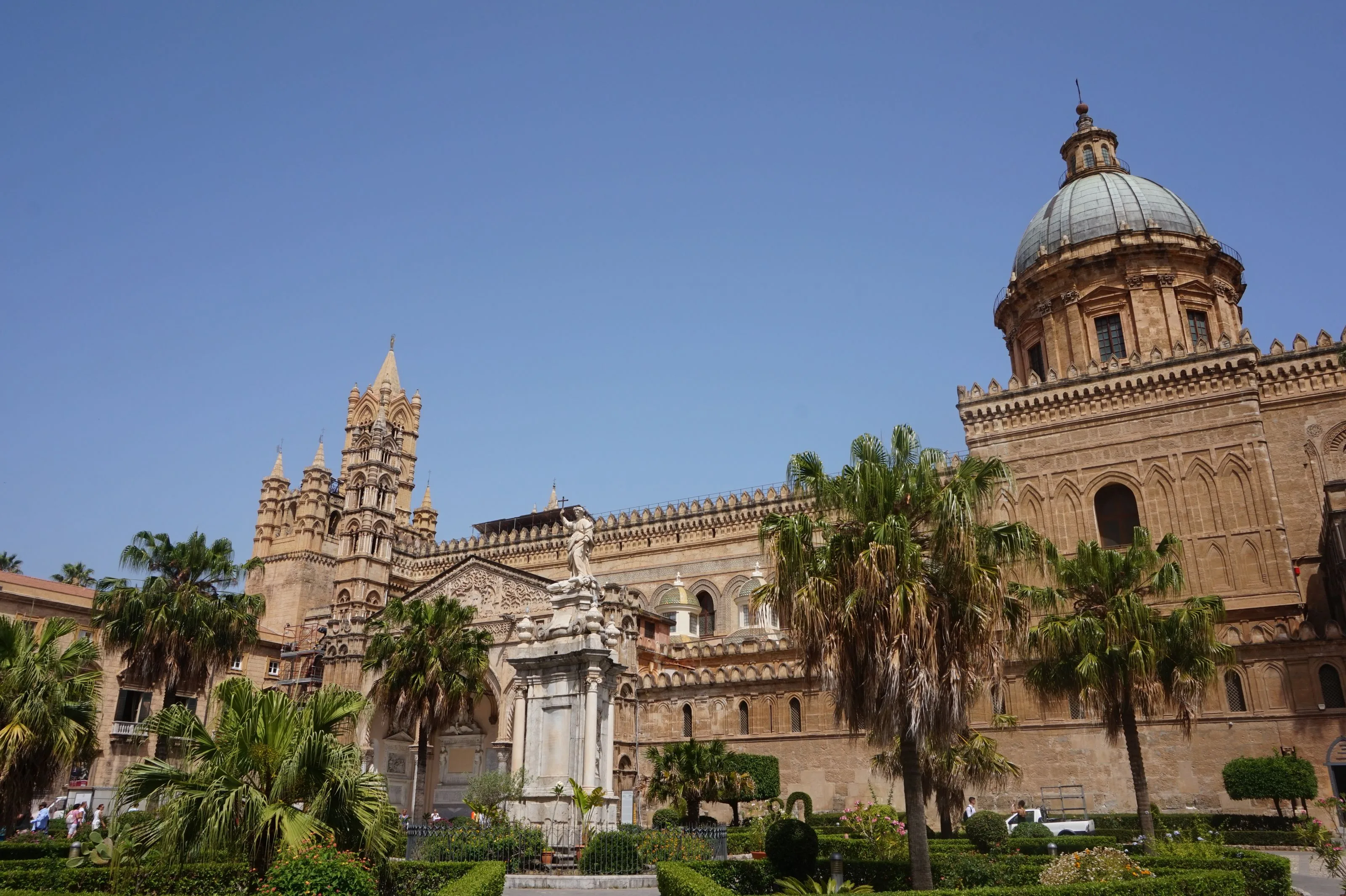
Palermo Cathedral
The cathedral, honey-coloured and Catalan-influenced according to Wikivoyage (EN), blends styles added over the centuries: crenellated towers, a Baroque dome, Gothic porches. It holds the tomb of Frederick II, who died in 1250, in a porphyry sarcophagus. The palm-planted gardens around it are a good place for a pause in the shade.
A cathedral of many eras
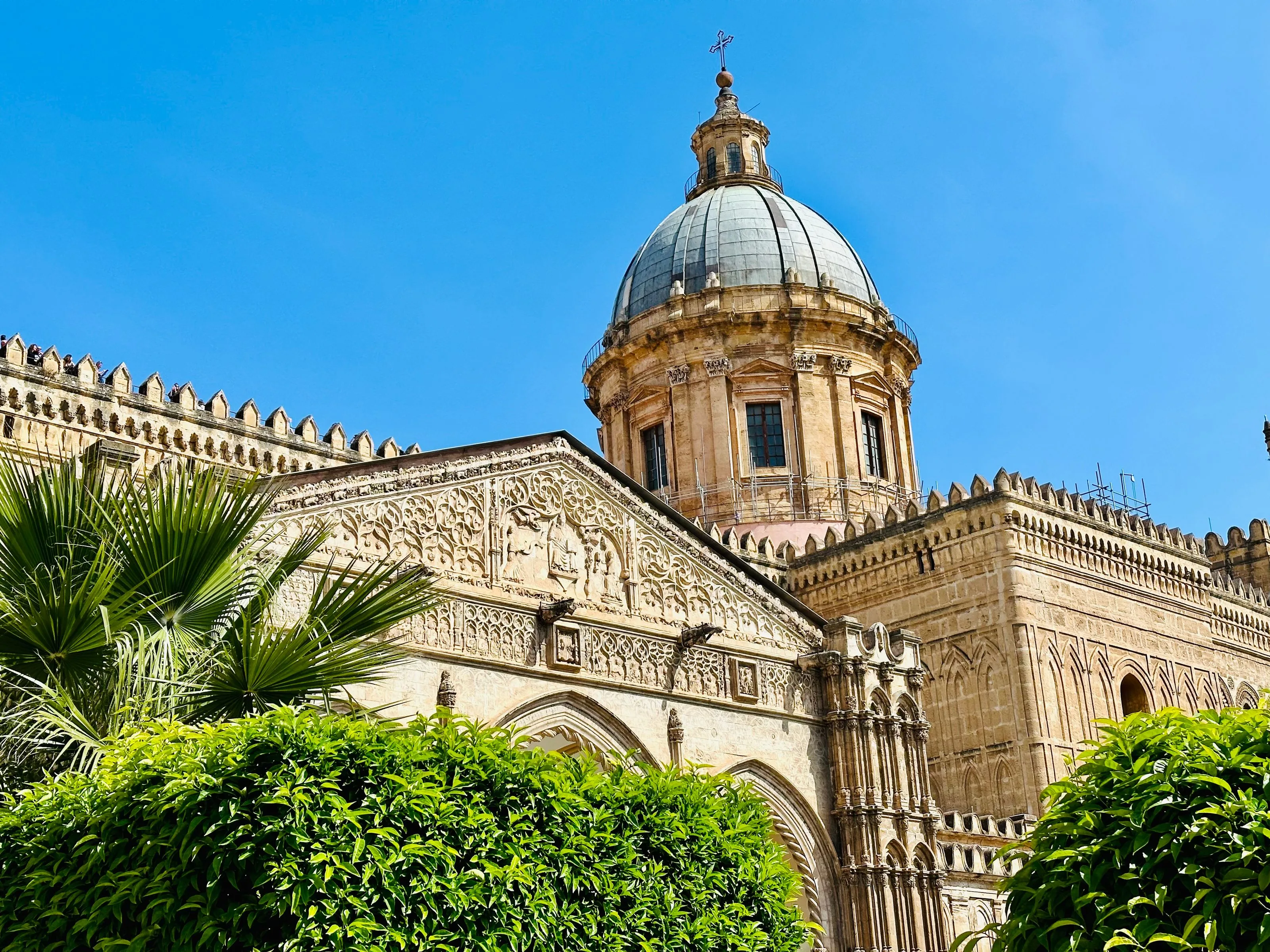
Close up, the cathedral shows its carved decoration: ornamental battlements, pointed arches, a stone frieze and a lantern dome. It sums up Palermo's history, with Arab influence, Norman tradition, Catalan Gothic and Baroque additions.
The Teatro Massimo
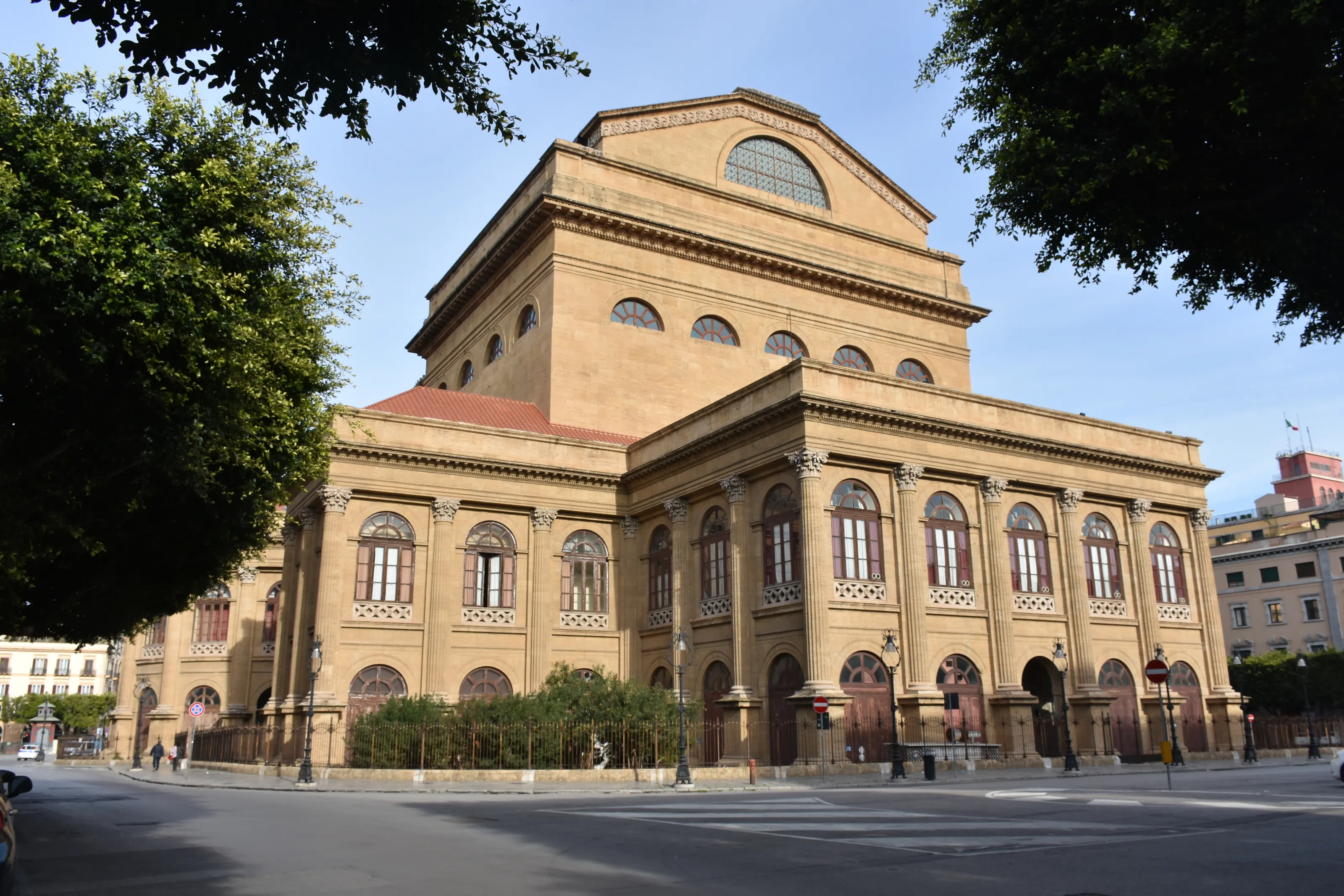
Opened in 1897, the Teatro Massimo is the biggest opera house in Italy and one of the largest in Europe, renowned for its acoustics, per Wikipedia (EN). It reopened in 1997 after restoration, according to Wikipedia (DE), and stages opera and concerts. The Teatro Politeama was built between 1867 and 1874.
The Quattro Canti
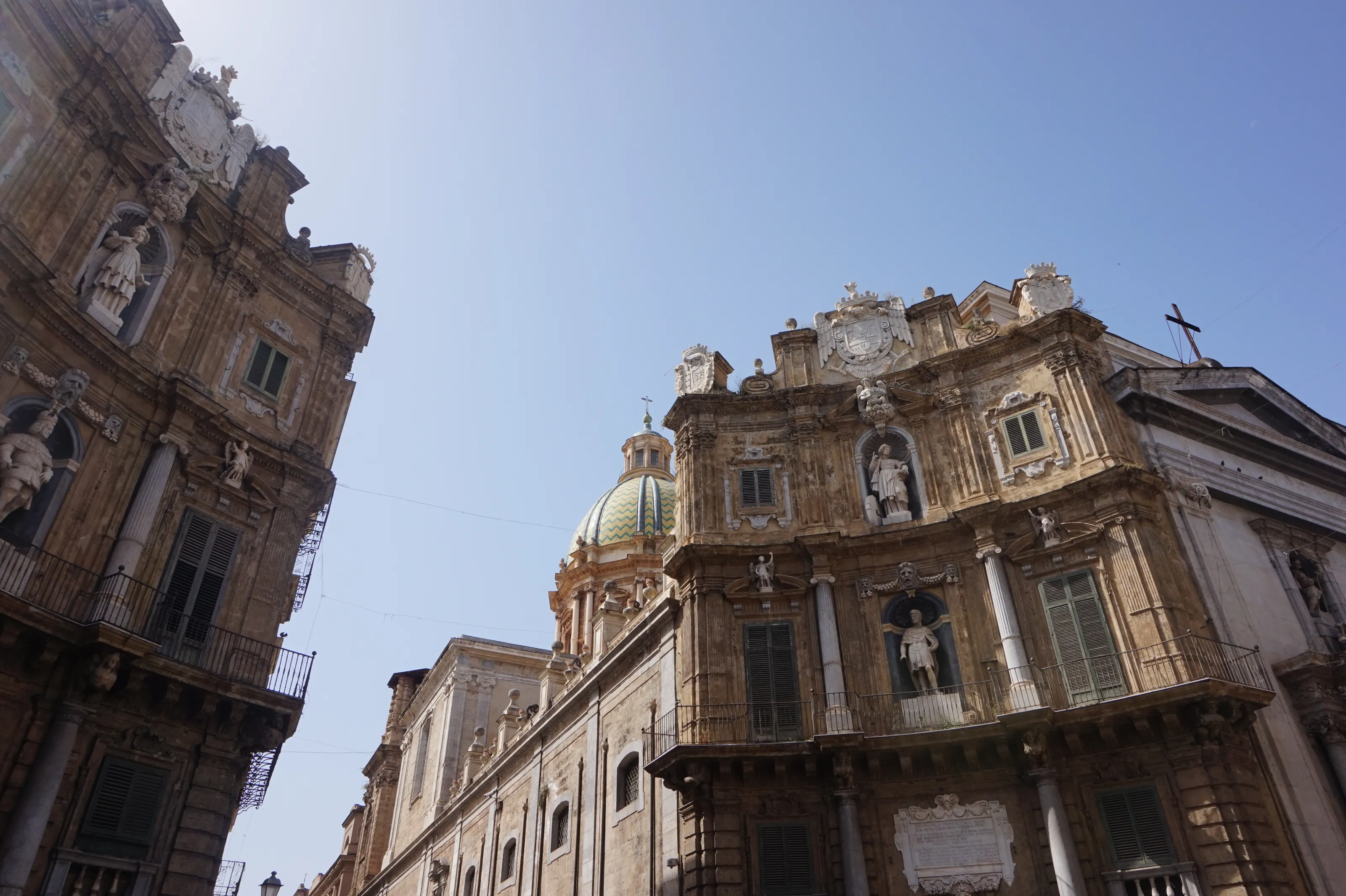
The Quattro Canti is the symbolic crossroads of the centre, where Corso Vittorio Emanuele meets Via Maqueda. The four Baroque palaces with curved facades, decorated with fountains and statues, depict the four seasons, the Spanish kings and the patron saints of the old districts, according to Wikipedia (DE). La Martorana, with Byzantine mosaics, is a few steps away.
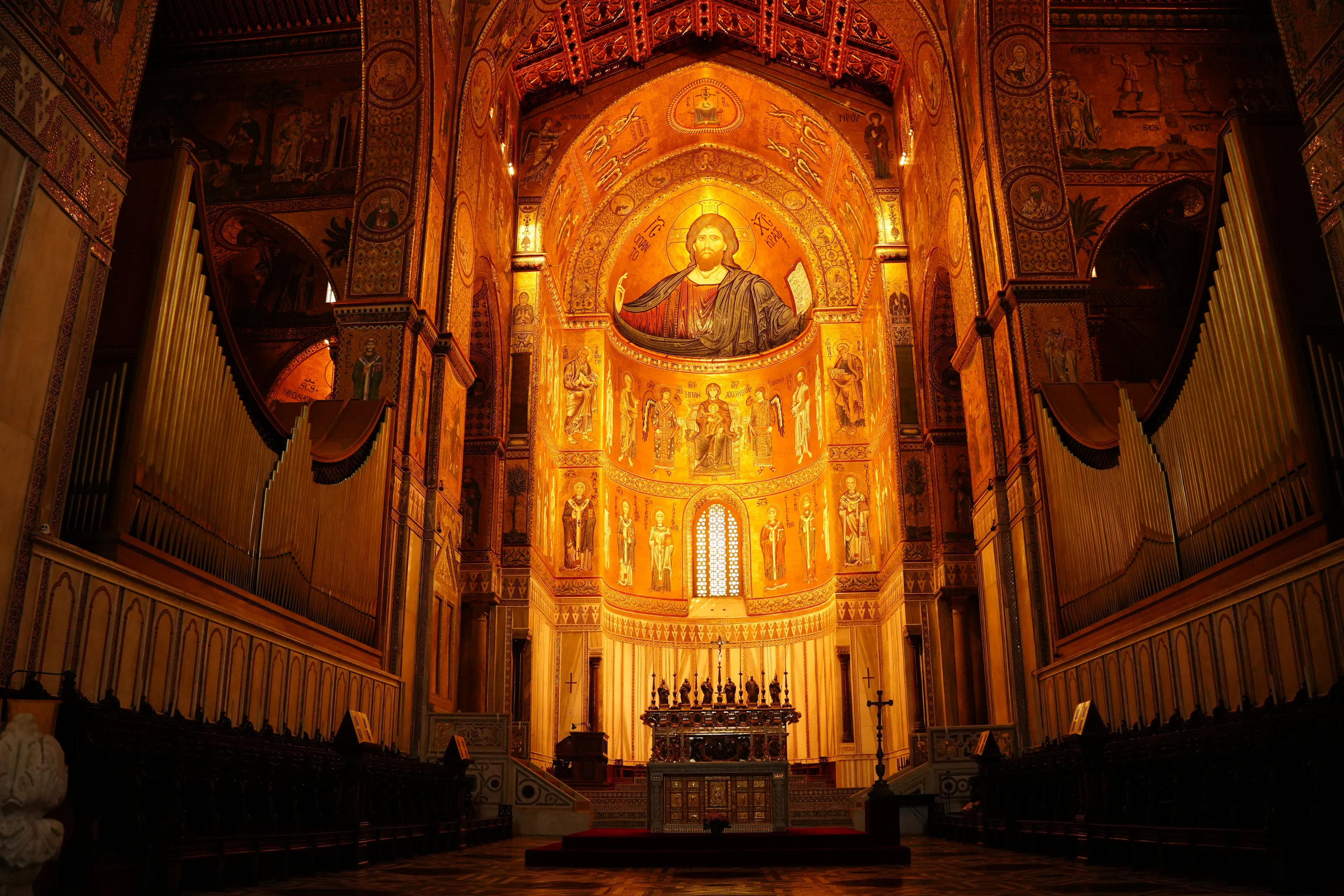
Monreale and its mosaics
Eight kilometres to the west, Monreale Cathedral, begun in 1174 under William II, is one of the greatest examples of Norman architecture according to Wikivoyage (EN). Its interior is covered in Byzantine mosaics and its cloister has 228 small columns, each different. Monreale is part of the Arab-Norman UNESCO site.
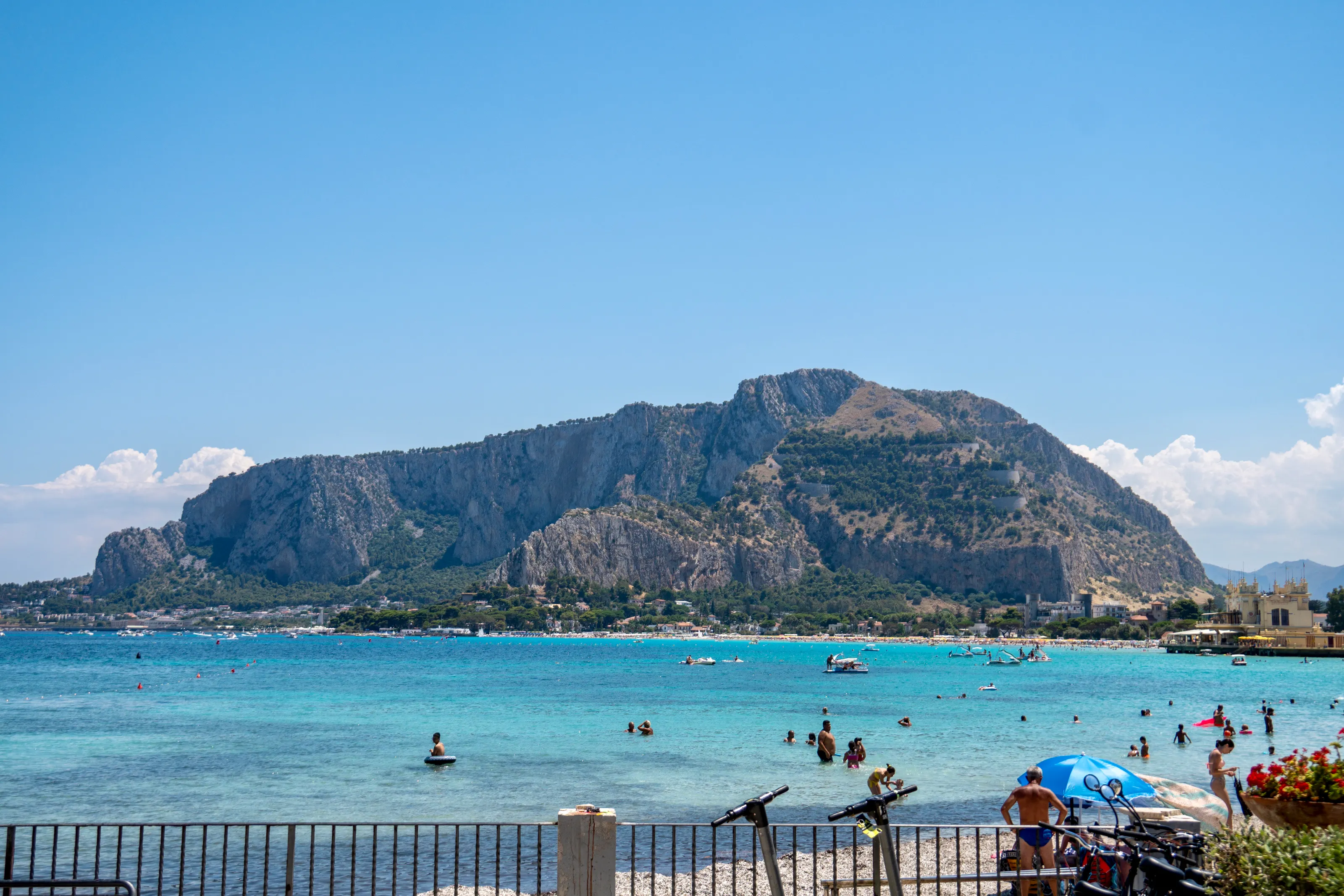
Mondello and Monte Pellegrino
The seaside resort of Mondello, with its beach and Liberty-style villas, lies north of the city; bus 806 goes there from the centre per Wikivoyage (EN). Monte Pellegrino, Palermo's own mountain, overlooks the bay and holds a nature reserve and a pilgrimage sanctuary.
Palace of the Normans, Piazza Pretoria, markets
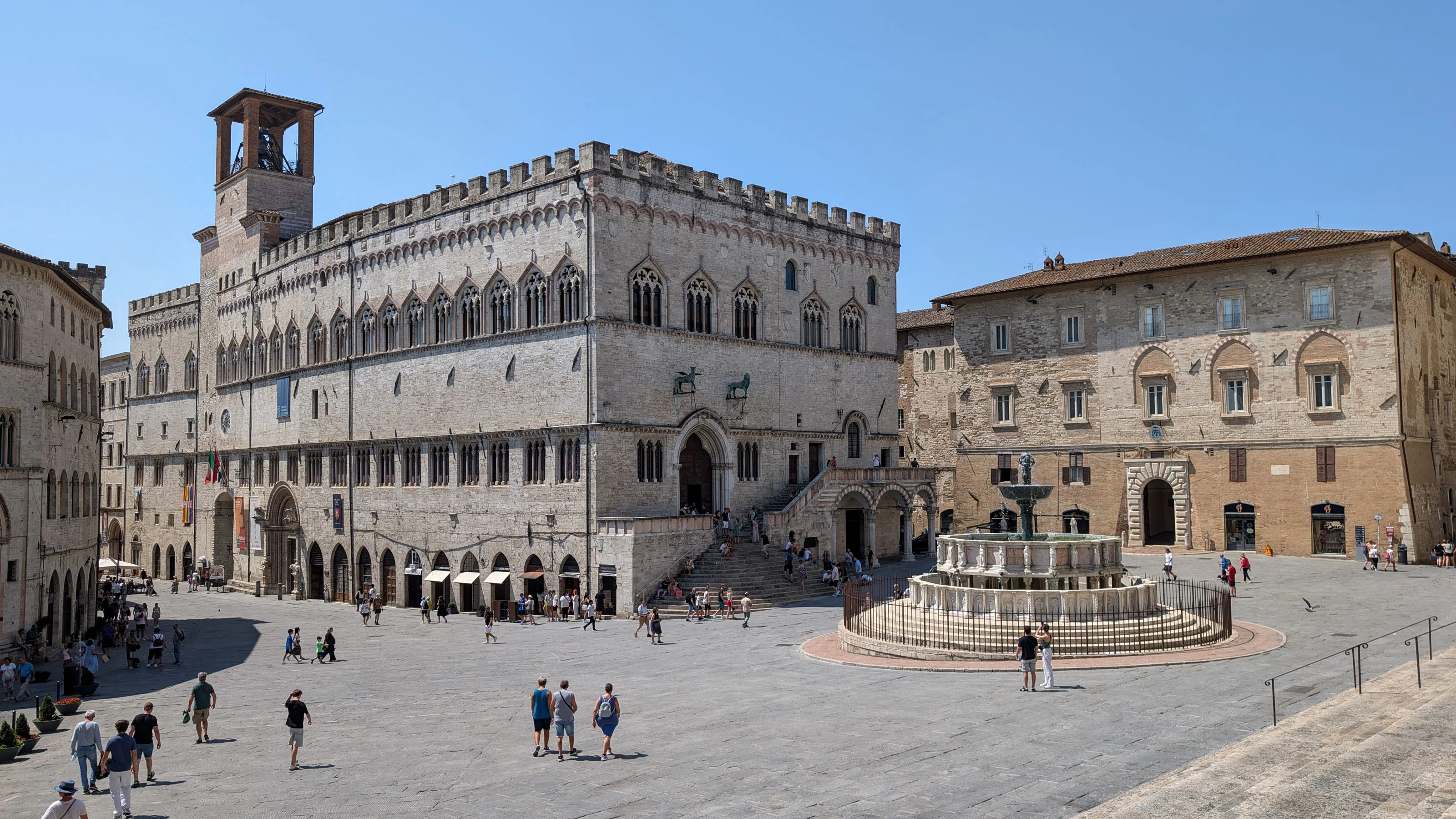
The Palace of the Normans, called the oldest royal residence in Europe by Wikivoyage (EN), houses the Palatine Chapel and its mosaics. Piazza Pretoria features a large fountain bought in 1573 and nicknamed the Square of Shame. The Ballarò, Vucciria and Capo markets are classic visits, mixing stalls of fruit, fish and street food.
Museums and culture
Palatine Chapel, archaeology, botanical garden and opera
The Palatine Chapel and Palazzo dei Normanni
The Palatine Chapel, inside the Palace of the Normans, is one of Palermo's artistic gems: magnificent mosaics and Arabian-style decoration among the most beautiful in the world, per Wikivoyage (EN). The palace is now the seat of the Sicilian Parliament.
Archaeology, catacombs and gardens
The Regional Archaeological Museum, the botanical garden attached to the university and a maiolica museum open by appointment complete the offer. The Capuchin Catacombs hold over 8,000 mummies according to Wikivoyage (EN): a curious visit, to consider carefully with young children. We do not quote fees.
Opera and theatres
The Teatro Massimo stages opera and concerts through the year, and the Politeama hosts performances. Palermo also has oratories decorated by Giacomo Serpotta, per Wikipedia (ES).
Food and drink
Street food, arancine, sfincione and markets
Palermo street food
Wikivoyage (EN) suggests trying panino con la milza and panelle at the many sandwich stands of the old centre. Panelle are chickpea fritters; the arancina, a stuffed rice ball, is a Sicilian speciality that is especially Palermitan per Wikivoyage (ES).
Sfincione and markets
Sfincione is a soft Sicilian pizza topped with tomato sauce, onion and anchovies per Wikivoyage (ES). The historic markets of Vucciria, Ballarò and Il Capo are the best place to taste and buy fruit, vegetables, fish and local produce; the Vucciria grew from a meat market into a fish and vegetable market (Wikivoyage DE).
Wine and pastries
The city is home to major Sicilian wine companies according to Wikivoyage (EN). Pastry shops and cafes in the centre offer Sicilian sweets; we do not recommend specific addresses or quote prices.
Getting around
On foot in the centre, bus, tram and train
Walking and buses
Most sights in the centre can be reached on foot, per Wikivoyage (EN). A 24-hour bus ticket exists; the Free Centro Storico bus serves the main tourist areas and bus 806 goes to Mondello. The Moovit app helps plan trips.
Tram, train and day trips
A tram and metropolitan rail system links the city to the airport (Wikivoyage DE). Trains go on to Cefalù, Trapani or Agrigento; twenty minutes by train reaches Santa Flavia for the Greek ruins of Solunto (Wikivoyage EN). Bagheria and its villas lie to the east.
Driving
Driving and crossing the street in Palermo are dangerous per Wikivoyage (EN), because the rules of the road are not always followed. If you rent a car, prefer a secure car park, as your insurance may not cover theft on the street.
Budget and precautions
A destination reputed to be affordable, to approach with common sense
Price level
Wikivoyage (EN) judges accommodation cheap by Italian and European standards, even in the best areas. We do not quote figures because we could not cross-check them across two independent open sources; transport, museum and hotel prices change from year to year.
Safety
The city is quite safe by day but can feel intimidating at night, away from the main streets, per Wikivoyage (EN). Crimes against visitors are rare, but watch for pickpockets on streets and buses and for motorbike thieves targeting bags and phones. Stay in the centre: transport to the suburbs is unreliable at night.
Flights and entry
SniperAir tracks prices to PMO and compares them with the route's history, but it does not sell or book tickets. Also watch Catania (CTA), the main airport of eastern Sicily. Italy is in the Schengen area: check entry rules for your nationality and your government's travel advice.
When to go
Long, hot, dry summers, mild winters and warm seas into autumn
Winter (December to February)
Mild and changeable, with rain linked to the polar front per Wikipedia (EN). Snow is very rare: about a dozen episodes since 1945. The sea falls to about 14 C in February.
Spring (March to May)
Temperatures are mild and the city is pleasant to explore on foot; a good season for the Arab-Norman sites and Monreale.
Summer (June to August)
Very long, hot and dry; the sea breeze tempers daytime heat but nights stay warm, per Wikipedia (FR). The sea reaches about 26 C in August (Wikipedia EN), good for Mondello.
Autumn (September to November)
Autumn temperatures stay warm, with rains returning gradually; September and October suit city walking well.
Palermo has a hot-summer Mediterranean climate (Csa) and is one of the warmest cities in Italy and Europe, largely thanks to its warm nights, according to Wikipedia (EN, FR). Sources disagree on the annual mean (18 or 19 C) and on sunshine hours, so we give no annual figures. Spring and early autumn are generally the most comfortable seasons to visit.
By length of stay
What to do in Palermo depending on how long you stay
The essentials
The cathedral, the Palace of the Normans and the Palatine Chapel, the Quattro Canti, Piazza Pretoria and a street-food tour of a market.
Monreale and theatres
Monreale and its cloister, San Giovanni degli Eremiti, the Teatro Massimo, the Capuchin Catacombs and a day at Mondello.
Around Palermo
Cefalù or Bagheria, the ruins of Solunto, Monte Pellegrino, using Palermo as a base.
In pictures
Palermo in pictures
You might also like
Similar destinations
FAQ
Frequently asked questions about flights to Palermo
How do I get from Palermo airport to the centre?
Falcone-Borsellino (PMO) is about 30 km west. A shuttle bus or the train reaches the central station in under an hour or so. Timetables change: check them before you travel.
When is the best time to visit Palermo?
In spring and autumn. Summer is long, hot and dry with warm nights; winter is mild and rainy.
Is Palermo expensive?
Wikivoyage (EN) judges accommodation cheap by Italian and European standards. We do not quote figures because we could not cross-check them across two independent sources.
How long should I stay in Palermo?
Two days for the Arab-Norman monuments, markets and street food; four days if you add Monreale and Mondello; five or more for day trips.
How do I get around Palermo?
On foot in the centre, by bus and tram for the rest; bus 806 goes to Mondello. Driving is described as dangerous.
What should I eat in Palermo?
Panino con la milza, panelle, arancine and sfincione, at the stands and markets of the old centre.
How much does a flight to Palermo usually cost?
The price depends mainly on your departure city, the time of year and how far ahead you book. The "opportunities" section above shows real examples of prices SniperAir has already detected to this destination.
How do I get alerted when a flight to Palermo drops below my budget?
Create an alert profile with your departure airport, Palermo as the destination and your maximum budget. You are notified automatically as soon as a matching price is detected.
Ready to head to Palermo?
Set your budget and let SniperAir monitor fares for you.
Create my alert