
Cheap flights to Bergen
Set your departure airport and maximum budget: SniperAir tracks prices to Bergen and alerts you the moment a deal matching your criteria appears.
Quick summary
Country
Norway
Continent
Europe
Airport
BGO
Currency
Norwegian krone
Time zone
UTC+1
Deals already spotted to Bergen
Real flight examples detected by SniperAir, with their reference price.
Loading examples…
Why watch Bergen with SniperAir
You don't need to compare prices every day
Pick your departure
Enter your departure airport and your maximum budget for a flight to Bergen (BGO).
SniperAir watches
Our systems continuously compare new prices with the real price history of the route. SniperAir watches prices and alerts you: it does not sell or book tickets.
You get an alert
As soon as a price matches your criteria you are notified, without having searched anything yourself.
Airport and distances
An airport about 18 km out, linked to the centre by light rail
Bergen Airport, Flesland
Flesland lies 17 to 19 km south-west of the centre according to Wikivoyage EN and DE. It is Norway's second airport and the logistics base for Flåm and the Sognefjord. The Bybanen light rail now runs to the airport.
From the airport, the Bybanen light rail takes about 45 minutes to Byparken in the heart of the city and runs from early morning to past midnight with up to twelve departures an hour (Wikivoyage EN). A single ticket costs about 49 kroner (Wikivoyage EN, DE). The Flybussen airport bus stops near Bryggen, the fish market and the bus terminal: allow 30 to 40 minutes, for about 179 kroner one way (Wikivoyage EN, DE). Fares change, so check before you travel.
From Oslo and by sea
The Bergen Line reaches Oslo in about 7 hours (6.5 to 7.75 hours according to German Wikivoyage). Bergen is the southern terminus of the Hurtigruten coastal express, and Fjord Line ferries sail to Denmark via Stavanger (Wikivoyage EN).
| Landmark | Indicative distance or time |
|---|---|
| Airport to the centre | about 17 to 19 km; roughly 30 to 45 minutes depending on the mode |
| Walking across the centre | about 20 minutes |
| Bergen to Oslo by train | about 7 hours |
| Bergen to Oslo by car | 7 to 9 hours depending on the route |
Bryggen
The old Hanseatic wharf, UNESCO-listed
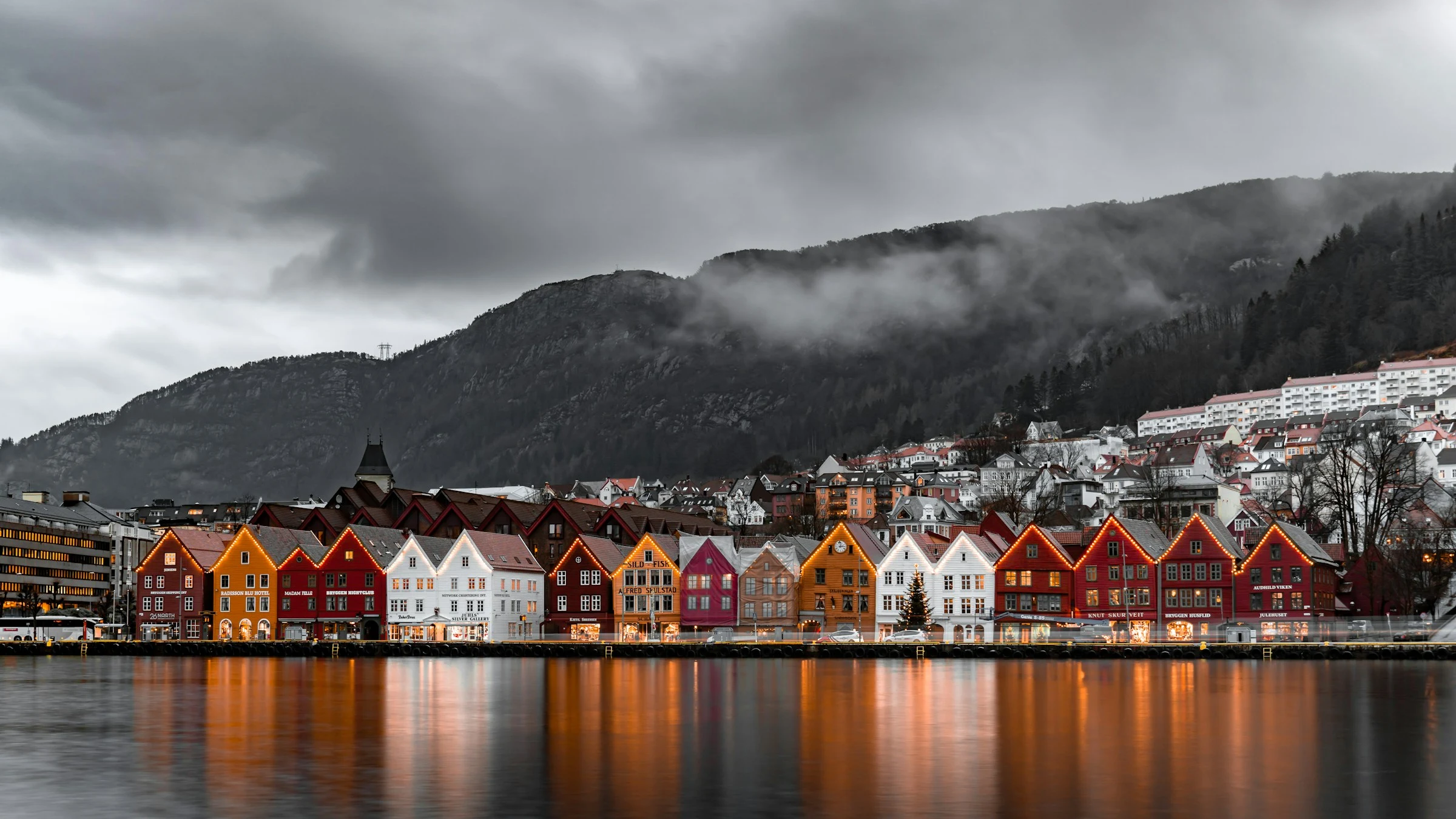
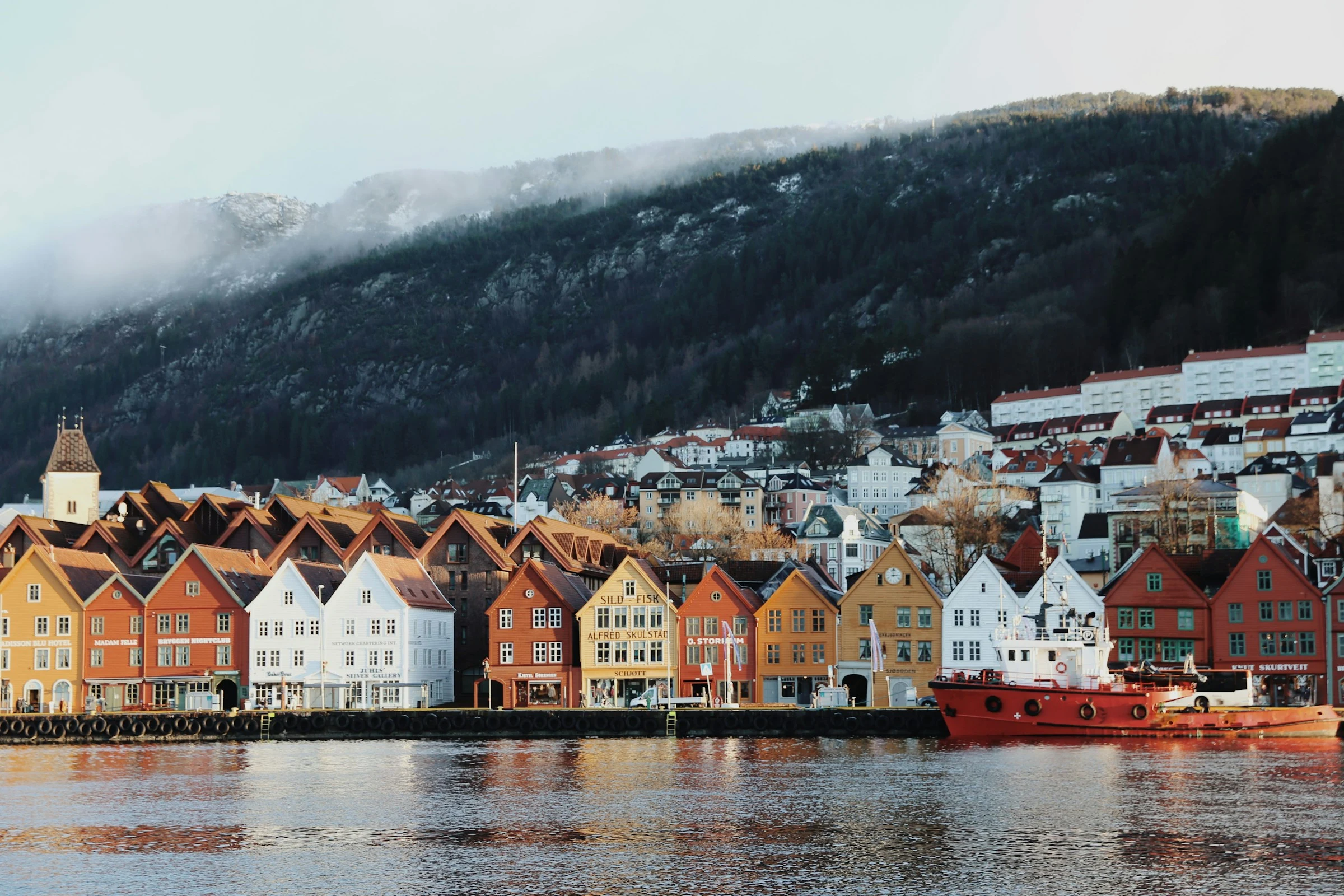
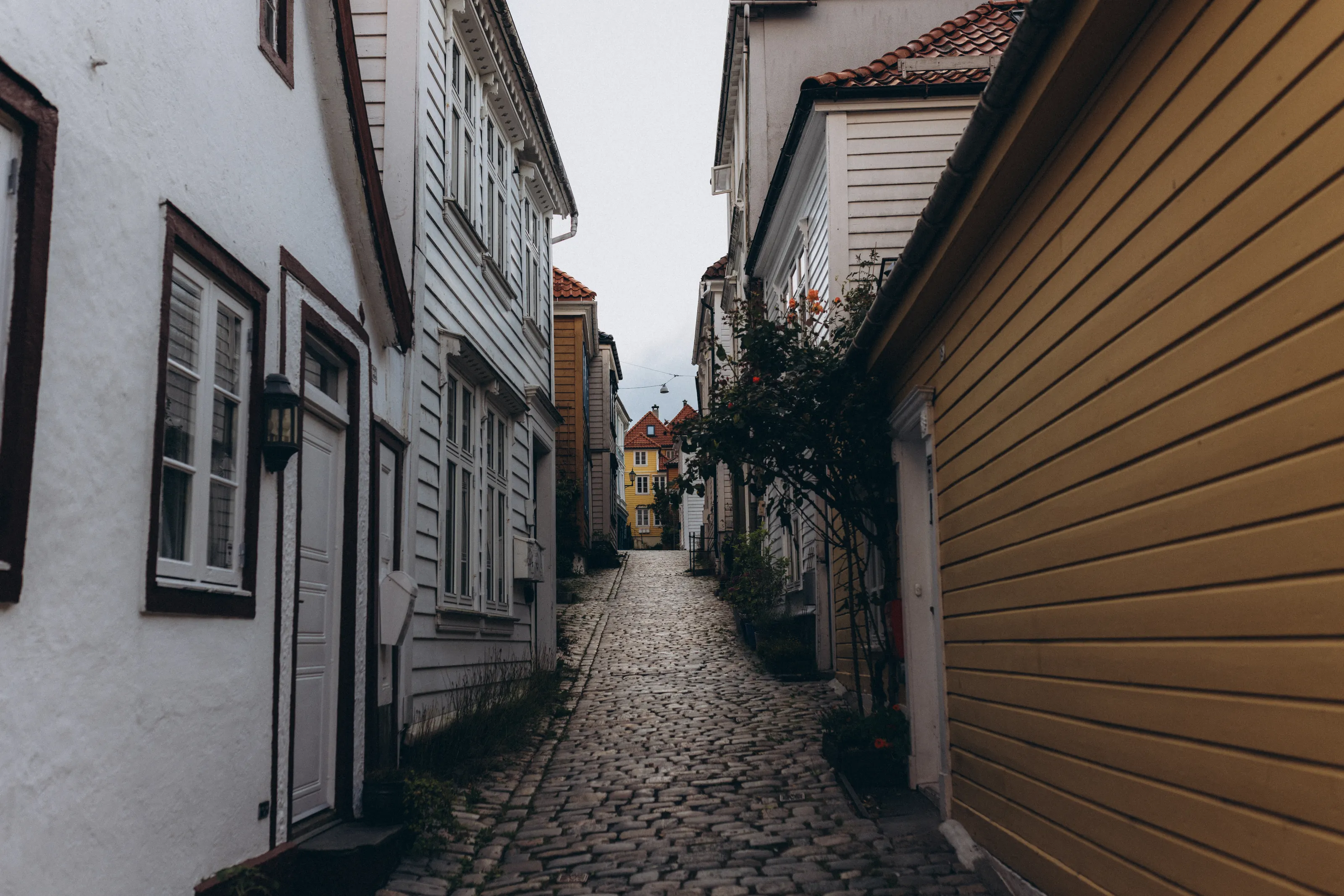
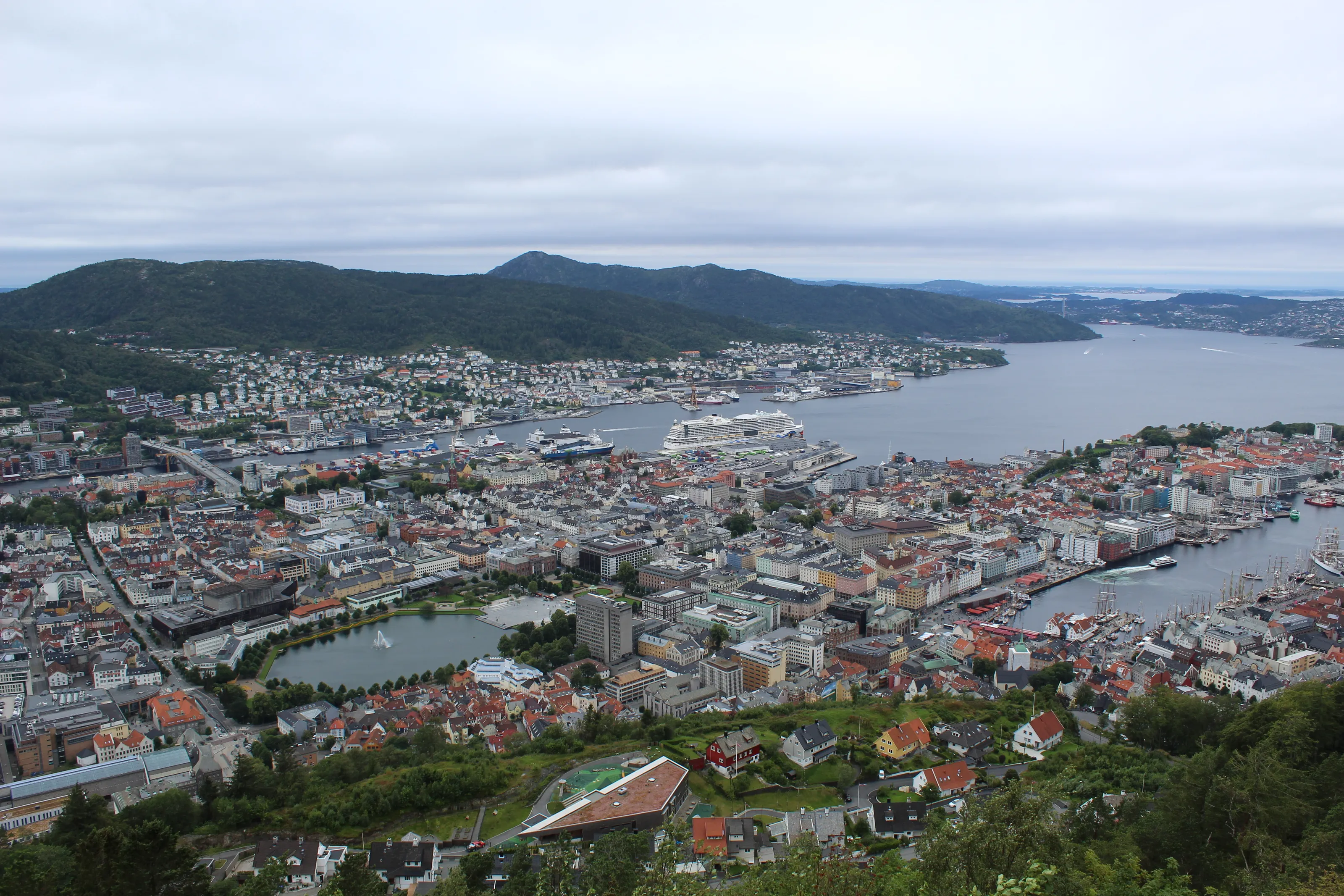
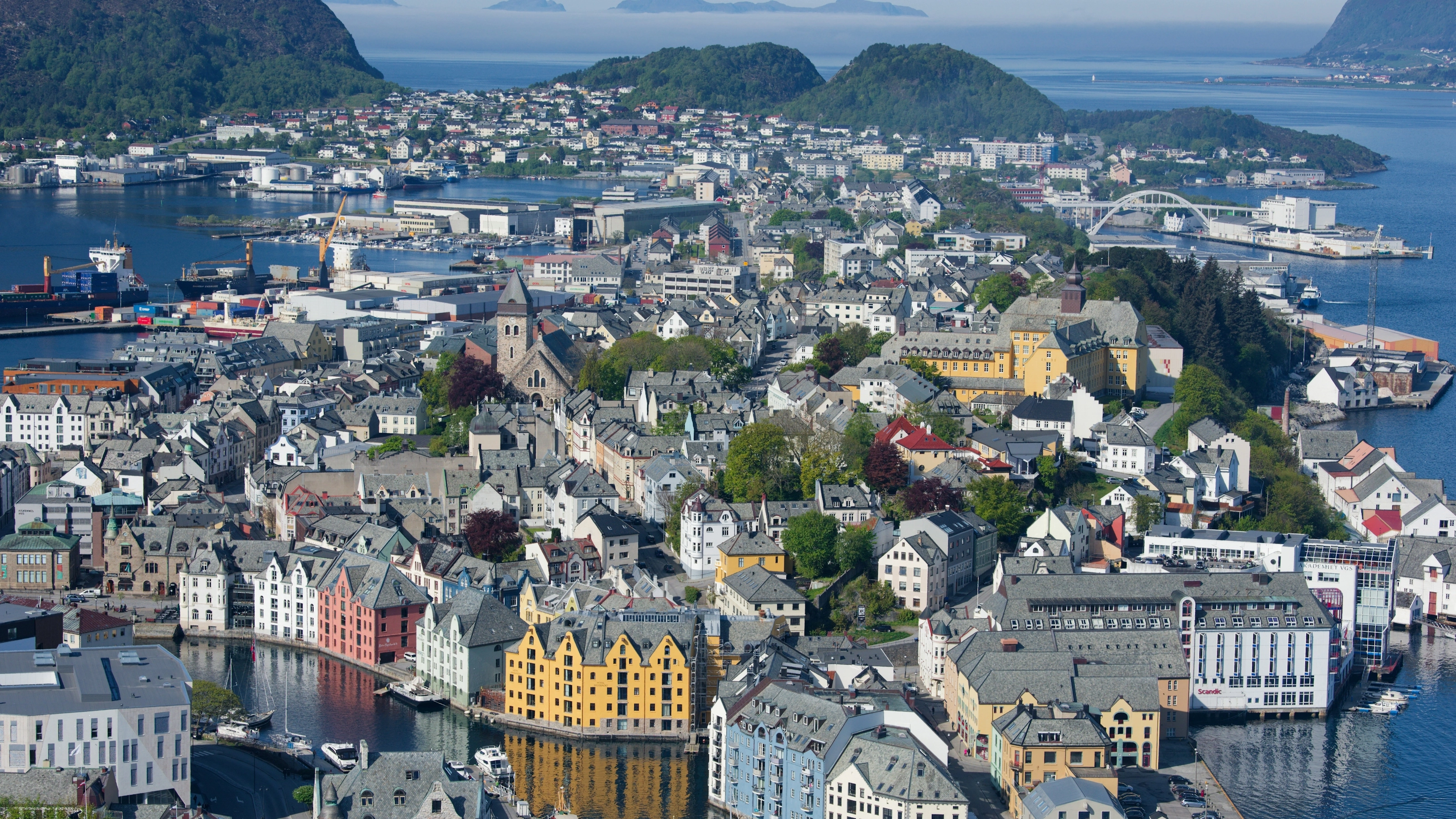
Bergen is a maritime city backed by seven mountains. Bryggen, the former wharf of the Hanseatic League, has been a UNESCO World Heritage Site since 1979 (Wikipedia EN, DE). It is best visited early in the morning, before the cruise groups arrive. After several fires the district was rebuilt to its original plans (German Wikipedia). Its colourful wooden houses now hold craft workshops, shops and small museums on Hanseatic trade.
The Bryggen waterfront
The coloured timber gables are mirrored in the Vågen harbour. The light changes quickly, so plan to pass by at different times of day, especially when the weather is unsettled.
Bergenhus and the centre
Fortress, fish market and funicular
The Bergenhus fortress dates from the 1240s (Wikipedia EN). Within its grounds, Håkonshallen, a great hall built around 1260 under King Håkon IV, and the Rosenkrantz Tower, a former keep, are among the symbols of the old royal capital (Wikipedia FR).
The fish market
It dates back to 1276 according to German Wikivoyage and sits at the end of the Vågen harbour. Much of the offer is aimed at visitors, with fried fish and takeaway food, but fresh fish can also be bought. Wikivoyage EN notes tasting samples of salmon, salmon caviar and whale; opening hours vary by season.
Fløibanen and Ulriken
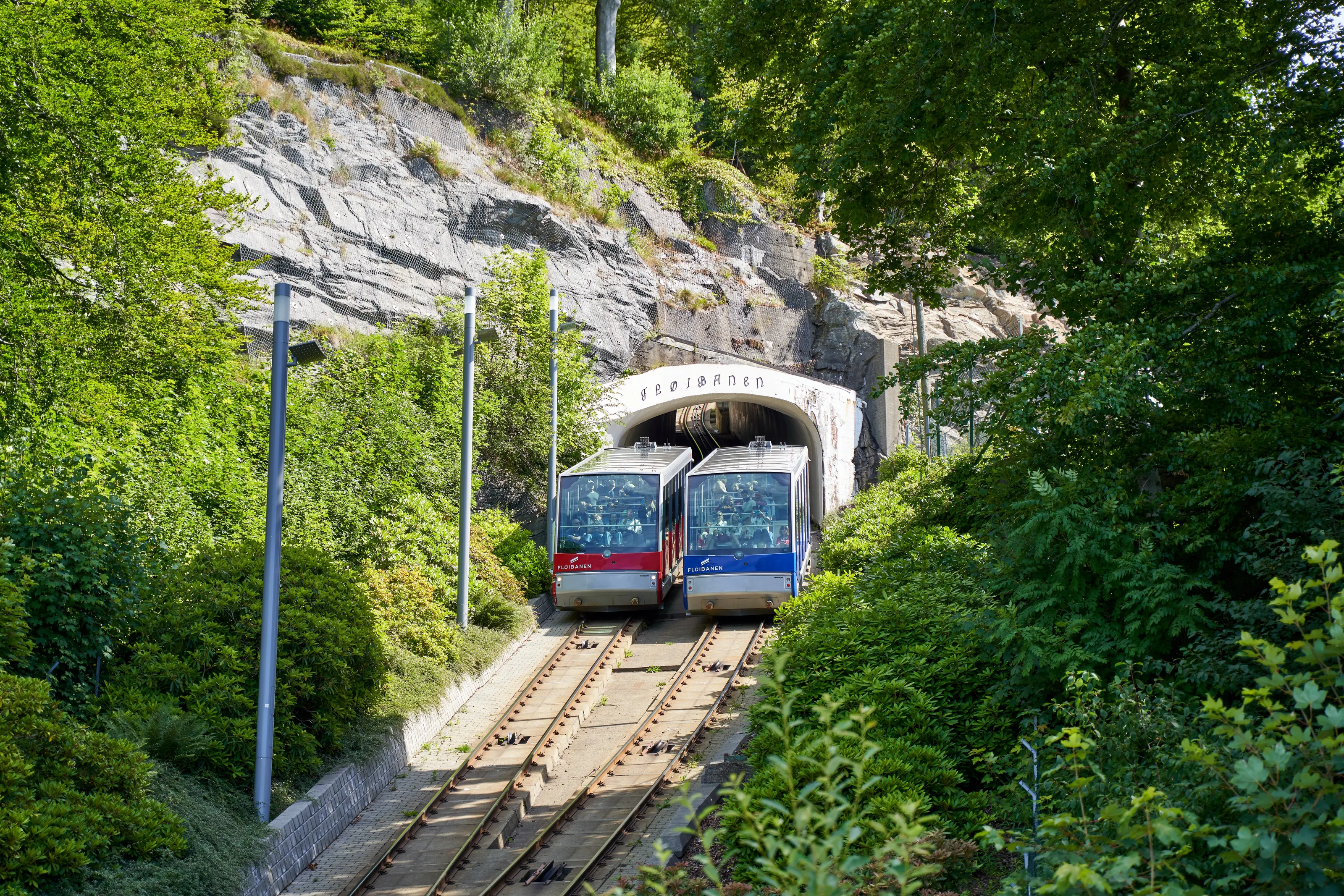
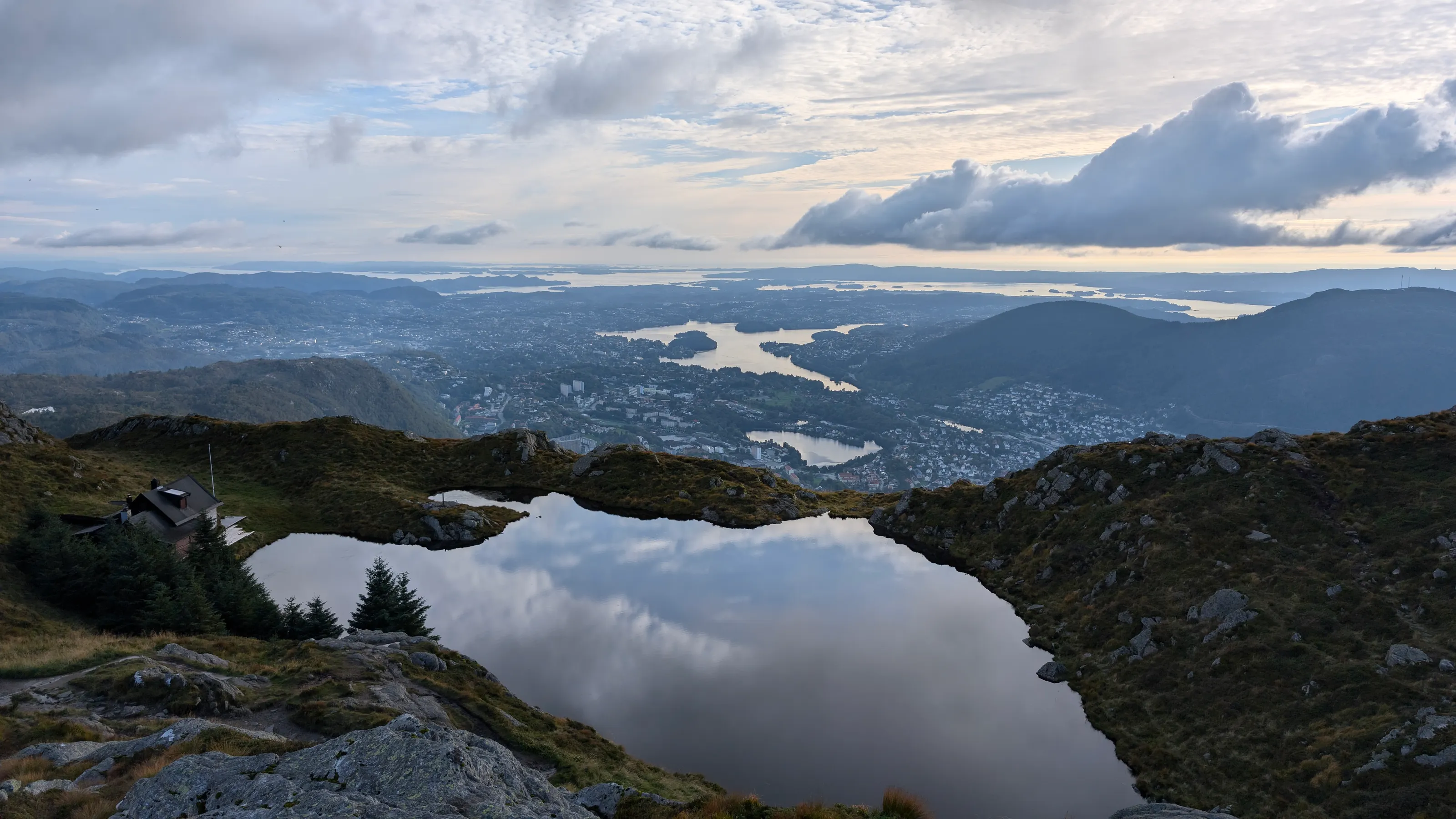
The Fløibanen funicular climbs Mount Fløyen, with views over the city and harbour. The Ulriken cable car goes to the top of the highest of the seven mountains, at 643 m (German Wikipedia). Hiking towards Ulriken gives a wider view if the weather is stable: Bergen is famous for its frequent rain.
Museums and monuments
Art, Hansa, leprosy and Grieg's home
Bergen has many museums, and most of those in the centre can be reached on foot. Opening hours and prices change with the season, so check before you go.
KODE art museums
The KODE complex brings together several art museums (Wikivoyage EN, DE). A regional visitor pass, the Bergen Card, covers public transport and free or discounted entry to most museums according to German Wikivoyage; its prices have changed, so check the official site.
Hanseatic Museum and Schøtstuene, Bryggen Museum
The Hanseatic Museum and the Schøtstuene assembly rooms bring the life of the German merchants back (German Wikipedia). The Bryggen Museum is devoted to the medieval district (German Wikipedia).
Leprosy Museum and Gamle Bergen
The Leprosy Museum is housed in St. George's Hospital. Gamle Bergen is an open-air museum of old wooden houses (German Wikipedia).
Troldhaugen and Fantoft stave church
Troldhaugen is the home and museum of the composer Edvard Grieg. Fantoft stave church, built in 1150 in Sogn and moved in 1883, burned down in 1992 and was rebuilt faithfully (German Wikipedia).
Other places
Other museums listed include the maritime museum, the university museum and the school museum. German Wikivoyage adds the Aquarium and the Bergenhus fortress museum; check their hours before going.
Fjord excursion
Flåm, the Nærøyfjord and the Bergen Line
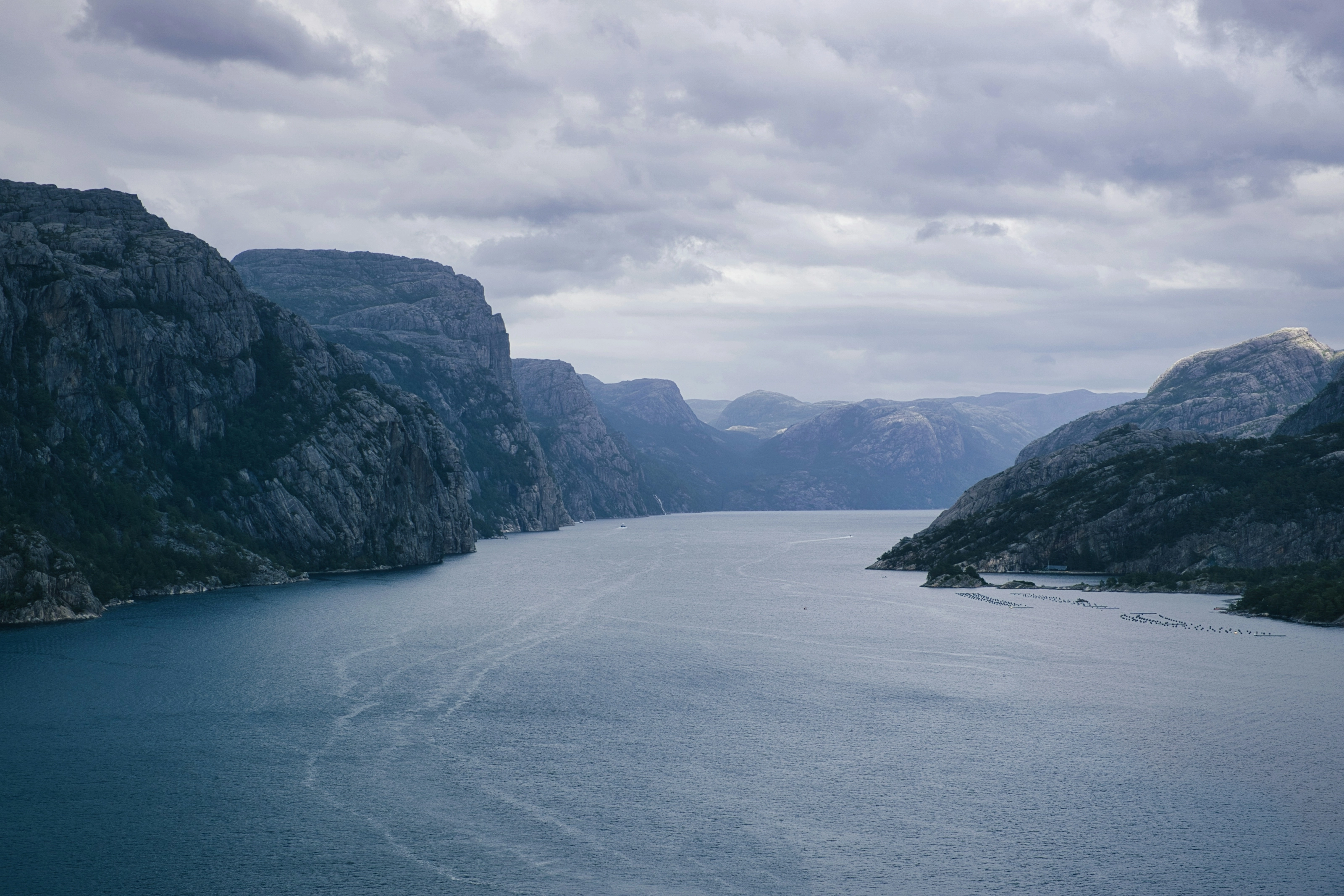
From Bergen, the Bergen Line train reaches Oslo across a mountain plateau, a journey to enjoy as an experience in its own right. Flåm, at the head of the Aurlandsfjord, is linked by a famous, very steep railway. The narrow, steep-sided Nærøyfjord, UNESCO-listed along with the Geirangerfjord, forms one of the most spectacular stretches of the western fjords.
Book ahead in high season
Cruises, ferries, buses and trains to the fjords should be booked ahead in high season, but do not chase only the best-known formula: sleeping in Aurland or a fjord village often makes the trip better than a day return.
Food and drink
Fish, soup, brown cheese and beer
Norwegian cooking leans on the sea and the cold. None of the open sources we consulted describes a cuisine specific to Bergen, so here are the Norwegian staples you will meet at the table.
Fish and soup
Fiskesuppe is a white, milk-based soup with vegetables (carrots, onions, potatoes) and several kinds of fish (Wikipedia EN). Stockfish, cod dried on racks, was long Norway's largest food export, and smoked salmon is the one Norwegian dish widely known abroad (Wikipedia EN, FR).
Brunost
Brunost, or brown cheese, is sweet; technically it is not a true cheese but a reduction of caramelised goat and/or cow milk, eaten on bread or used in cooking (Wikipedia EN, FR).
Drinks
Akevitt is a caraway-spiced spirit; the most popular beers are pilsners and red beers, with a growing craft-beer scene. Coffee, often served black with cakes, is part of everyday life (Wikipedia EN).
Where to eat
Eating at the fish market is convenient but geared to visitors; cafés and restaurants in the centre also serve dishes of the day. Book ahead in summer.
Getting around
Light rail, buses, bikes and ferries
You can cross the centre on foot in about twenty minutes (Wikivoyage EN). For longer trips, the Bybanen light rail has two lines according to Wikivoyage EN, and buses serve the rest of the urban area (operator Skyss).
Tickets
A single bus and light-rail ticket costs about 49 kroner (Wikivoyage EN, DE). 24-hour, 7-day and 30-day tickets exist, but their prices differ between sources: check with the operator Skyss. Signal the bus driver when you want to get off.
Bikes and boats
City bikes are available (Wikivoyage EN). Local boats leave from the Strandkaiterminalen.
From the airport
The light rail and the Flybussen are the two main options; taxis are available too.
Climate and seasons
A rainy city, but a mild one
Spring
April to June: waterfalls swollen by snowmelt. May is usually the driest month (Wikivoyage EN), ideal for fjord excursions.
Summer
July is the warmest month, with highs of 18 to 20 °C and lows of 11 to 12 °C (Wikipedia EN, DE). High season, best weather, but the most crowded excursions.
Autumn
Autumn colours and fewer people, but more frequent rain: October has around twenty rainy days (German Wikipedia).
Winter
January highs are around 4 °C and lows close to 0 °C (Wikipedia EN, DE). Heavy snowfall is rare, around three days a year (Wikipedia FR). Cosy atmosphere, with cafés and galleries to the fore.
Bergen is one of Europe's rainiest cities: about 200 days of precipitation a year and between 2,000 and 2,500 mm of rain depending on the station (Wikipedia EN, FR, DE). The record high is 33.4 °C, set in 2019, and the record low is −16.3 °C in 1987 (Wikipedia EN, FR). A waterproof jacket and good shoes are useful in any season.
Budget
A high price level
Norway is more expensive than central Europe (German Wikivoyage), and Bergen is no exception: accommodation, restaurants and fjord excursions weigh on the budget. We do not publish precise ranges in kroner because they change and cannot be cross-checked; compare when you book. Transport and visitor cards can cut costs if you chain several museums.
By length of stay
What to do in Bergen depending on your trip length
The essentials
Bryggen early in the morning, the fish market, Bergenhus and the Fløibanen funicular.
Going deeper
Add the hike towards Ulriken, a few museums (KODE, the Hanseatic Museum) and a stroll through the historic centre.
Fjord excursion
One or two nights towards Flåm and the Nærøyfjord, or the full train ride to Oslo.
In pictures
Bergen in pictures
You might also like
Similar destinations
FAQ
Frequently asked questions about flights to Bergen
Why is Bergen so famous for rain?
Its sheltered position among seven mountains, exposed to damp Atlantic winds, makes it one of Europe's rainiest cities: about 200 days of precipitation a year. Pack waterproof clothing in any season.
What's the best airport for arriving in Bergen?
Bergen Airport, Flesland (BGO) serves the city directly, 17 to 19 km from the centre; it is Norway's second airport.
How do I get from the airport to Bergen city centre?
By the Bybanen light rail (about 45 minutes) or the Flybussen bus (about 30 to 40 minutes). Buy tickets before boarding and check current fares.
When is the best time to visit Bergen?
May to September for fjord excursions and the mildest weather; May is often the driest month. Winter is mild but very wet.
How long should I spend in Bergen?
Two to three days for Bryggen, Bergenhus, museums and a viewpoint; three to five days if you add an excursion to Flåm and the Nærøyfjord.
Which museums and monuments are worth visiting in Bergen?
Bryggen, the Bergenhus fortress with Håkonshallen, the KODE museums, the Hanseatic Museum, the Bryggen Museum, the Leprosy Museum, Troldhaugen and Fantoft stave church.
What should I eat in Bergen?
Fresh fish at the market, fiskesuppe, smoked salmon and brunost (brown cheese), with a local beer or a coffee.
How do I get around Bergen?
On foot in the centre (about 20 minutes to cross it), by Bybanen light rail and Skyss bus, or by city bike.
Is Bergen an expensive destination?
Yes, the price level is high, above that of central Europe. We do not publish precise rates because they change and cannot be cross-checked.
Should fjord excursions be booked in advance?
Yes, especially in summer: cruises, ferries and trains to Flåm and the Nærøyfjord fill up quickly in high season.
How long does the Bergen-Oslo train take?
About 7 hours (6.5 to 7.75 hours according to German Wikivoyage), across the mountain plateau, a journey regarded as one of Europe's most beautiful.
How much does a flight to Bergen usually cost?
The price depends mostly on your departure city, the period and how far ahead you book. The "opportunities" section above shows real examples of prices SniperAir has already detected to this destination.
How do I get alerted when a flight to Bergen drops below my budget?
Create an alert profile with your departure airport, Bergen as the destination and your maximum budget. You are notified automatically as soon as a matching price is detected.
Ready to head to Bergen?
Set your budget and let SniperAir monitor fares for you.
Create my alert