
Cheap flights to Stavanger
Set your departure airport and maximum budget: SniperAir tracks prices to Stavanger and alerts you the moment a deal matching your criteria appears.
Quick summary
Country
Norway
Continent
Europe
Airport
SVG
Currency
Norwegian krone
Time zone
UTC+1
Deals already spotted to Stavanger
Real flight examples detected by SniperAir, with their reference price.
Loading examples…
Stavanger at a glance
Oil capital, wooden city and gateway to the Lysefjord
Stavanger is Norway's fourth-largest city, with about 150,000 residents (nearly 240,000 with Sandnes, Sola and Randaberg), on the south-west coast by the North Sea. For a long time Norway's sardine-canning capital, it became the centre of the country's oil industry after the discoveries of the 1960s and 1970s. It was a European Capital of Culture in 2008, together with Liverpool.
A city of wooden houses
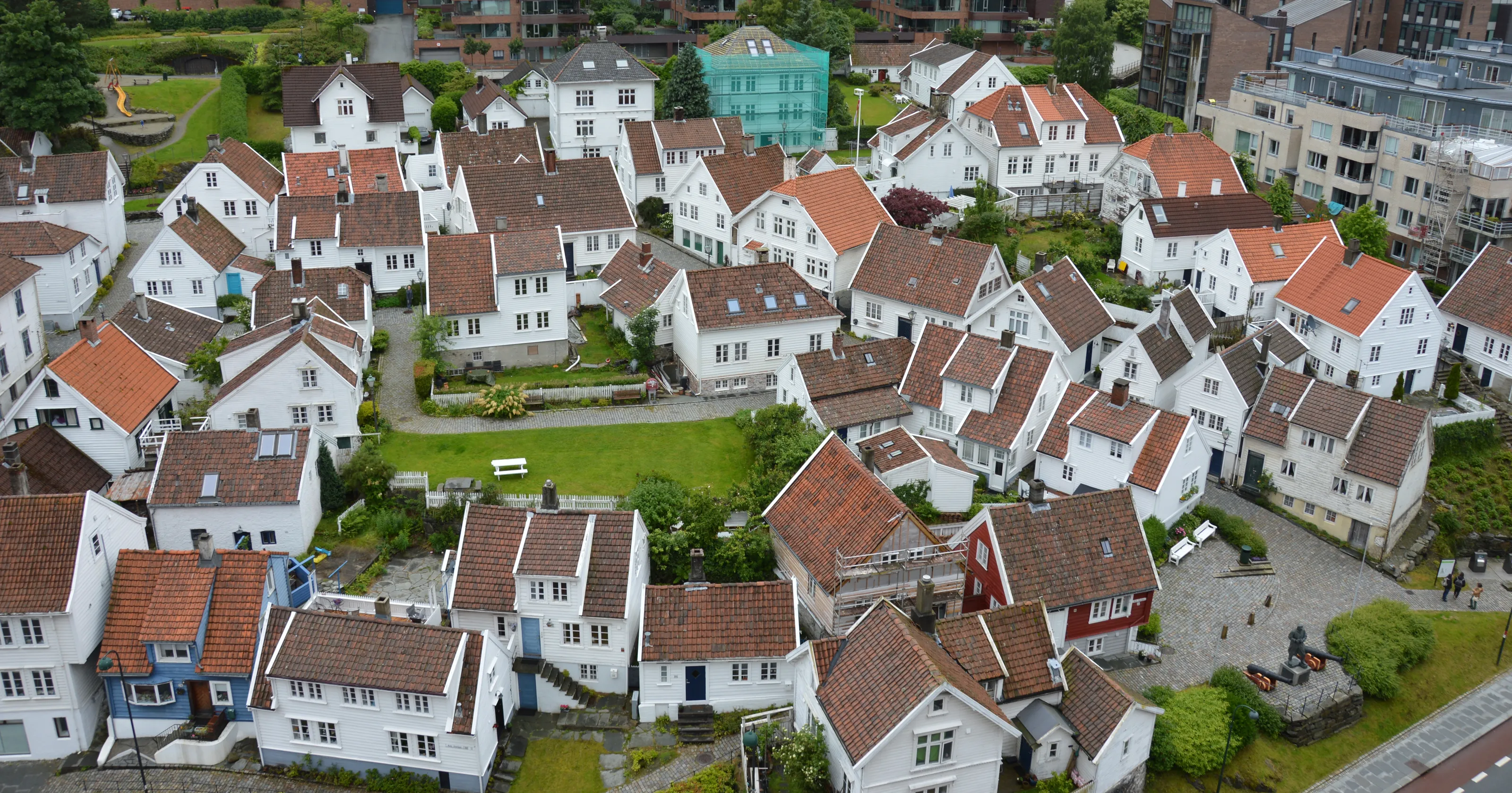
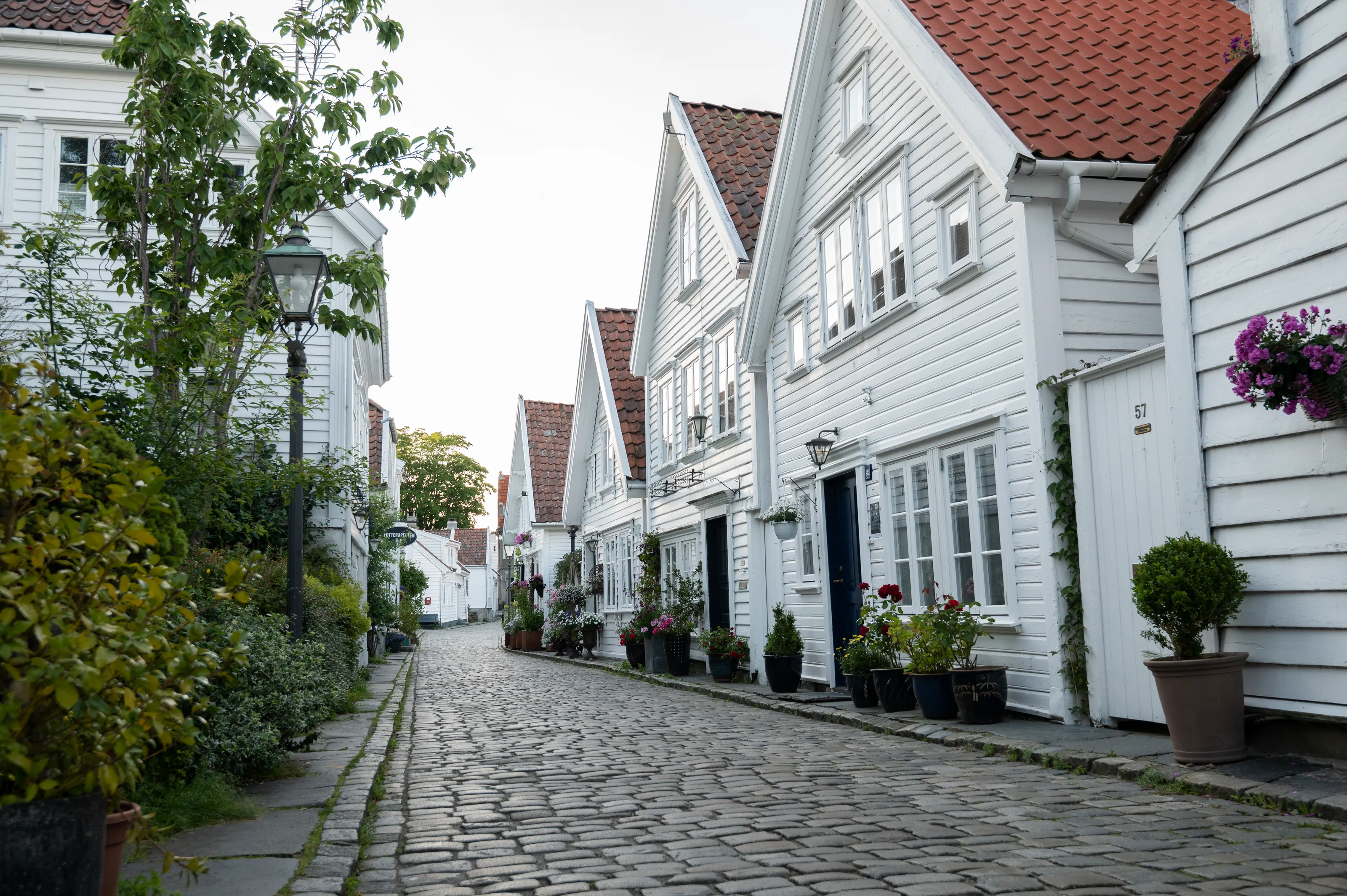
Wikivoyage notes that Stavanger has one of the largest collections of wooden houses in Europe. Gamle Stavanger, the white old town, is its heart; the cathedral, begun around 1125, is the best-preserved medieval cathedral in Norway.
A base for the fjords
More than the city itself, it is the nearness of the Lysefjord, Preikestolen and the beaches of Jæren that draws visitors: Stavanger is the most practical base for these Rogaland sights.
Stavanger Airport
The base for the Lysefjord and Preikestolen
Stavanger Airport, Sola
Sola airport, Norway's third busiest, is 11 km in a straight line and about 14 to 15 km by road from the city centre. Frequent flights from Oslo, Bergen and Trondheim; internationally SAS and KLM serve Copenhagen and Amsterdam, with other airlines flying from other European capitals according to Wikivoyage.
Approximate times, from Wikivoyage and Wikipedia; routes change from season to season. We do not quote fares.
From the airport to town
The Flybussen shuttle reaches the centre in about 25 minutes, leaving every 20 minutes (less often early morning, late night and weekends). A slower, cheaper option combines line 42 towards Sandnes with a city bus. A taxi takes about twenty minutes; fares are high in Norway.
By train, bus or boat
Oslo is about 8 hours by train via Kristiansand (3 to 3.5 hours from Kristiansand), and Bergen about 4.5 to 5 hours by express coach. Fjord Line's ferry links Hirtshals (Denmark) with Stavanger and then Bergen; Bergen to Stavanger takes about 5 hours 30 minutes. The station and bus terminal stand side by side near Lake Breiavatnet.
Preikestolen and the Lysefjord
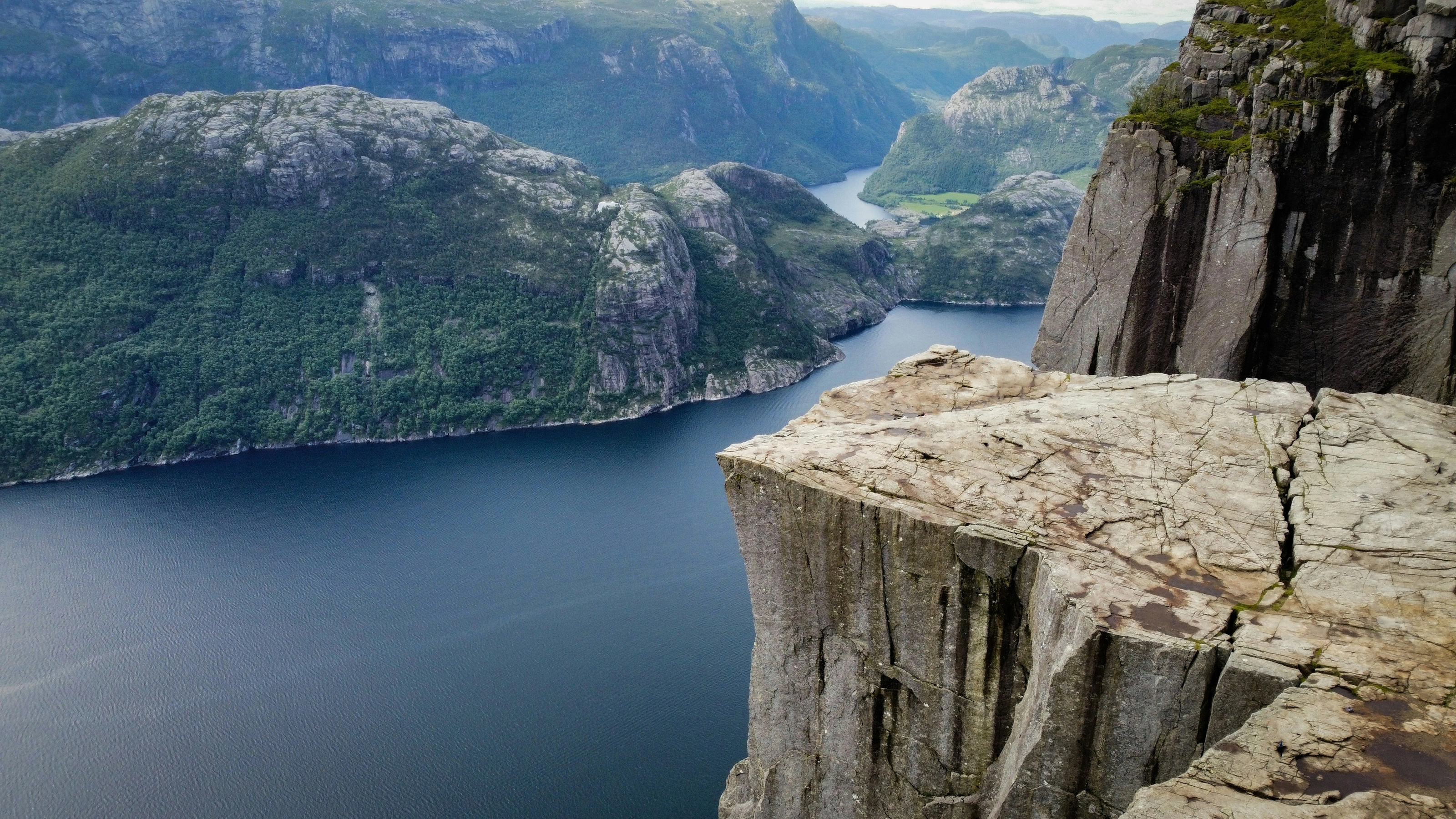
Pulpit Rock, one of Norway's most photographed sights
Preikestolen, or Pulpit Rock, is a granite cliff rising 604 metres above the Lysefjord, with a plateau of about 25 by 25 metres. About 300,000 people visited in 2024 according to Wikipedia. The trail is about 3.8 km each way; allow about 2 hours up and about 4 hours for the round trip with a break. Start early, with hiking shoes, water, waterproofs and a checked weather forecast.
Preikestolen above the fjord
The plateau has no railing, so take care, especially in wet or windy weather. Rescues are regularly needed, according to Wikivoyage. Buses from Stavanger drop off and pick up hikers at the start of the trail: check times carefully, because after the last bus the only option may be a very expensive taxi.
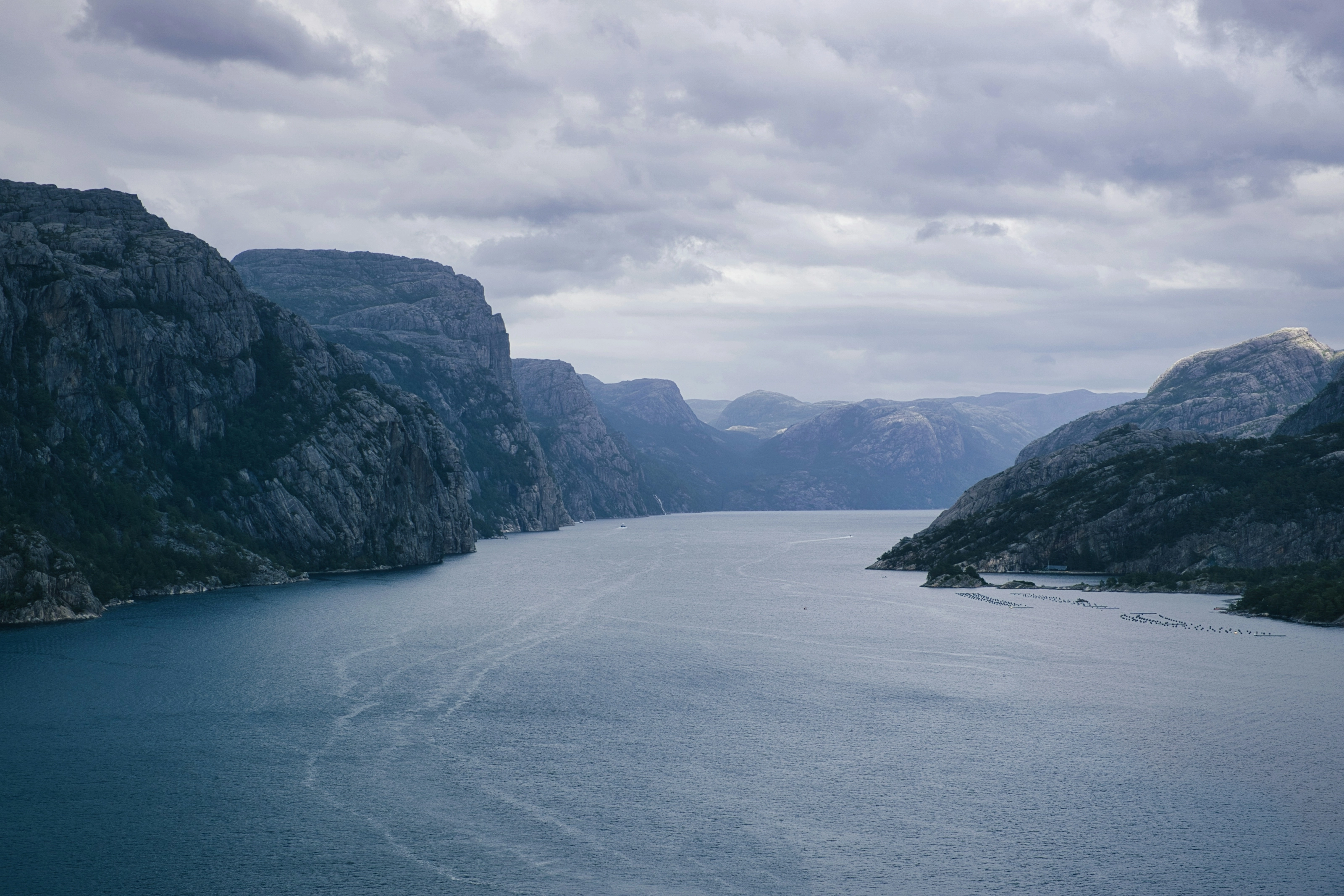
The Lysefjord from the water
The Lysefjord is about 40 km long, with walls rising almost vertically about 1,000 metres. Cruises leave from Stavanger and show Preikestolen from the water, a quieter option but just as spectacular. A spectacular road with 27 hairpin bends drops to Lysebotn at the head of the fjord.
Kjerag, for experienced hikers
Kjerag and its famous boulder wedged above the void are harder than Preikestolen: this is not an activity for a simple photo but for proper, well-equipped walkers. Wikivoyage mentions a bus to Kjerag.
Distances
Preikestolen is about 25 km in a straight line from Stavanger; you reach it by bus and ferry (to Tau) or by car. Allow a full day.
Old town and landmarks
Gamle Stavanger, the cathedral and the coloured street
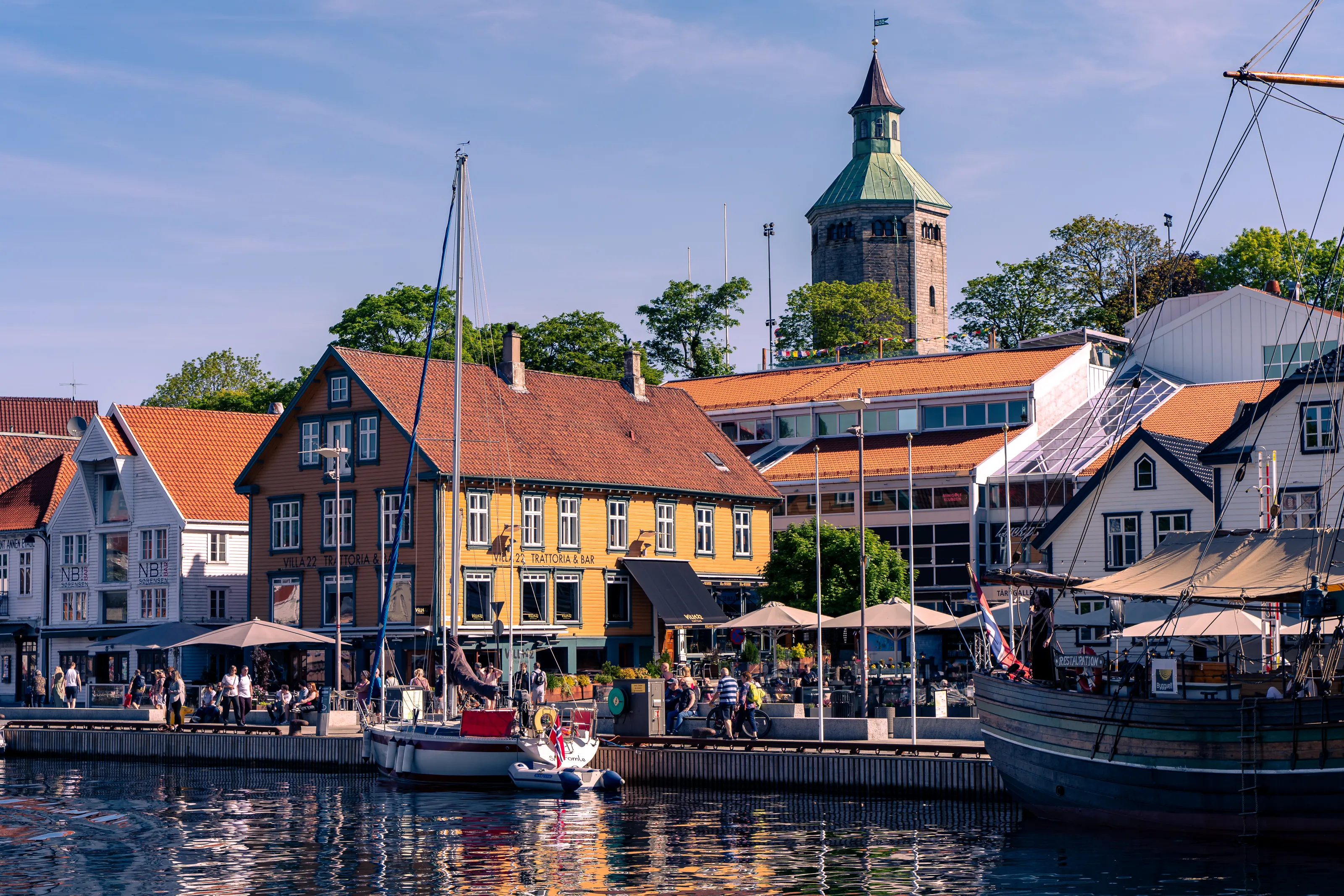
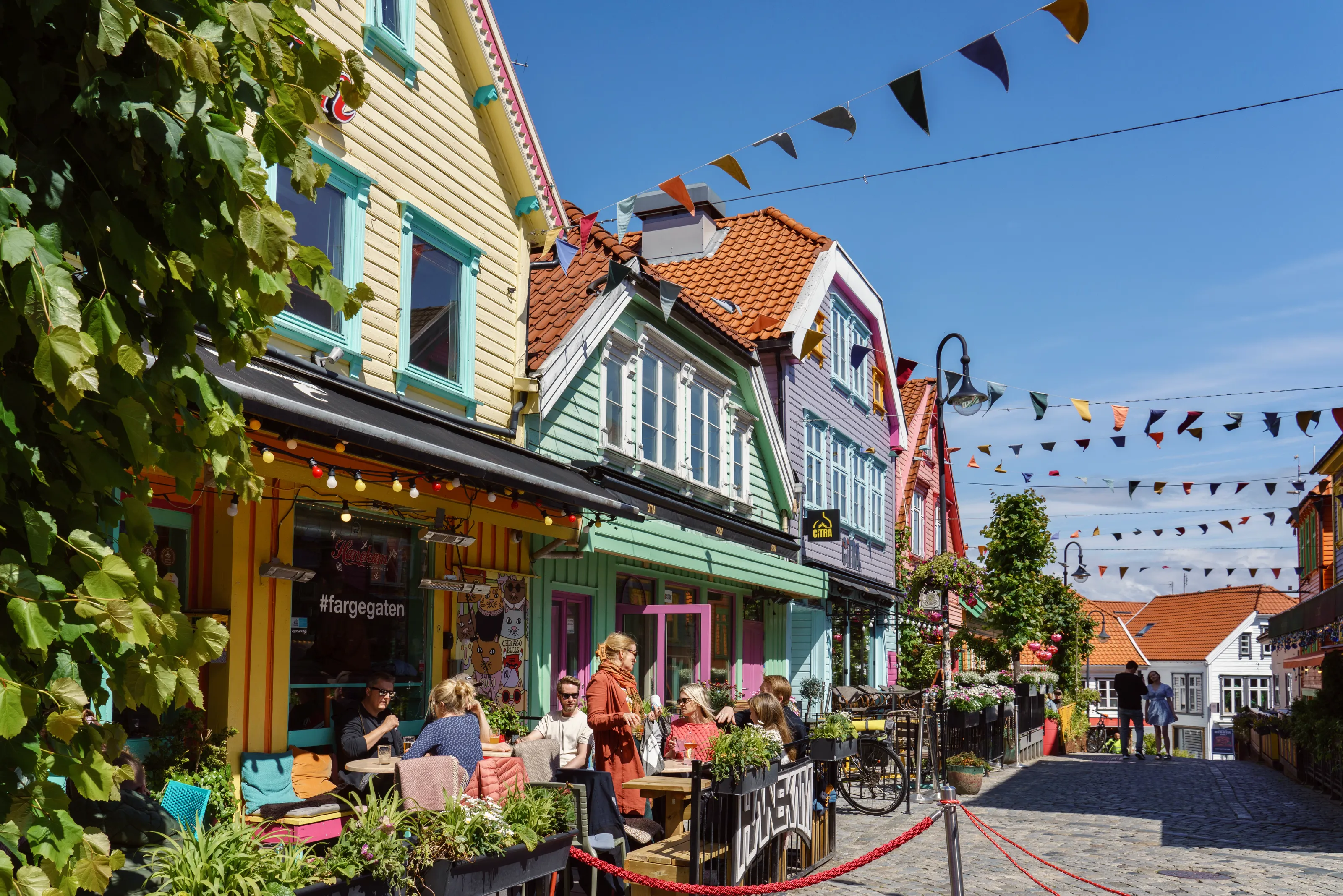
Gamle Stavanger, west of the harbour, is a cluster of winding cobbled streets and white wooden houses from the 18th and 19th centuries, typical of the days when the town was Norway's canning capital. It can be walked in an hour or two. Fargegaten (the coloured street), Øvre Holmegate, lines up bright façades, cafés and shops.
The cathedral and the centre
Stavanger Cathedral, Romanesque with later Gothic additions, is dedicated to Saint Svithun; the town also has a red-brick St. Petri church (1866) and the Valbergtårnet watchtower overlooking the harbour. Two historic ships, MS Rogaland (1929) and MS Sandnes (1950), are moored in the harbour.
On the hills and along the coast
At Hafrsfjord, the Sverd i fjell monument ("swords in rock") commemorates the battle of the late 9th century which, according to tradition, made Harald Fairhair the first king of Norway. Antony Gormley's sculptures, Another Place on Sola beach and Broken Column in the city, dot the coast and the centre.
Museums
Oil, canning, the sea and archaeology
| Place | What you discover |
|---|---|
| Norwegian Petroleum Museum | Opened in 1999 on the waterfront: the history of the oil industry, platforms, submersibles and drilling equipment, with activities for all ages. |
| Norwegian Canning Museum | In a real cannery in Gamle Stavanger (operating from 1916 to 1958), with hands-on exhibits and a neighbouring workers' cottage. |
| Stavanger Maritime Museum | The history of shipping and the port, with a free audio guide in several languages according to Wikivoyage. |
| Museum of Archaeology (University of Stavanger) | The prehistory of Rogaland, from the Stone Age to the Middle Ages, including the Bronze and Viking periods. |
| Stavanger Kunstmuseum | Norwegian art and temporary exhibitions beside Lake Mosvatnet; look for the landscapes of Lars Hertervig. |
The MUST museums (Museum Stavanger) offer a ticket valid for several sites on the same day, according to Wikivoyage: check opening hours and prices before you visit, as they change by season. Stavanger Museum covers the history of the town, natural history and the Norwegian Children's Museum.
Jæren, beaches and excursions
Windy beaches and the islands of the archipelago
Beaches of Jæren
Stavanger also gives access to Jæren, its coast, long windy beaches and quieter villages. Sola beach, near the airport, stretches for about 2.3 km according to German Wikipedia; surfing is possible, in water that stays cool even in summer. Other beaches such as Hellestø, Bore and Brusand are named by Wikivoyage for surfing.
Islands and swimming
Boats leave from Fiskepiren for the islands of Byøyene (Lindøy, Langøy, Kalvøy), with trails and swimming spots. East of the city, the coastal trail from Rosenli to Godalen, about 2.8 km, passes coves and beaches.
Further afield
The 92-metre Månafossen waterfall and the Flørli trail with its 4,444 steps beside a water pipe are other excursions, further afield in Rogaland.
Food and drink
Fish, canning heritage and starred tables
Local specialities
Local cooking relies on fish and seafood, and for decades the city was known for canned sardines. Wikivoyage presents it as a good place for foodies, with a food festival that fills the harbour for a weekend each summer.
Where to eat
Pedersgata, in Storhaug, is known for its variety of world cuisines; Fargegaten and Øvre Holmegate gather cafés and bakeries. Wikivoyage also names several restaurants recognised by the Michelin guide; check their current status before booking.
Drinking
Bars cluster around the Vågen harbour. Spirits are sold only at Vinmonopolet, as elsewhere in Norway.
Getting around
On foot, bus, boat and bike
In town
The centre can be covered on foot around the harbour and Lake Breiavatnet. Kolumbus runs buses, local trains and boats; most trips between Stavanger, Sandnes, Sola and Randaberg are in the same zone. The Kolumbus app sells tickets, including for e-bikes. A ticket bought from the driver costs more.
Boats and cycling
Kolumbus passenger boats serve the Byøyene islands; those to Ryfylke have separate fares. Stavanger has one of Scandinavia's most ambitious cycle superhighways, linking the centre, Forus and Sandnes.
By car
A car helps for Jæren and the Lysefjord, but tunnels and ferries are frequent to the east and north, and some tunnels are tolled.
Budget and precautions
A high budget, like the rest of Norway
Price level
Norway is expensive: restaurants, alcohol, accommodation and taxis weigh heavily, especially in summer. Small Asian restaurants and bakeries lower the bill, and tap water is drinkable. We do not publish prices because we could not cross-check them and they change quickly.
Flights and alerts
The flight is the most variable cost. SniperAir tracks fares to SVG, compares them with the route's history and alerts you, but does not sell or book tickets. Bergen (BGO) and Haugesund (HAU) are other entry points worth watching.
Precautions
Preikestolen and Kjerag are not strolls: suitable shoes, layers, water and a checked forecast are essential, and you should turn back in fog or heavy rain.
When to go
Mild, wet and windy, with long summer days
Spring
Trails can still be wet from snowmelt; check conditions before Preikestolen.
Summer
Best season for hiking, with very long days, but crowds on Preikestolen. Days are cool and sometimes rainy.
Autumn
Fewer people on the trails, more uncertain weather, with more wind and rain.
Winter
Mild and windy, with more rain than snow in town; Preikestolen stays reachable but is harder (snow, ice): ask locally.
Climate figures
Thanks to the Gulf Stream, Stavanger's climate is milder than its latitude suggests: the annual mean is 7.4 °C and rainfall about 1,180 mm (Wikipedia FR, ES, Wikivoyage). Winter temperatures rarely fall below -4 °C and summer ones rarely exceed 24 °C. On the longest day the sun rises around 4:24 and sets around 22:54; on the shortest it is up only from about 9:29 to 15:40 (Wikipedia ES).
By length of stay
What to do in Stavanger depending on your trip length
The essentials
Hike to Preikestolen (allow the day with transport) or, in poor weather, Gamle Stavanger and the Petroleum Museum.
Going deeper
Add a Lysefjord cruise, the old town and the museums (petroleum, canning).
Excursions
Kjerag for experienced hikers, the beaches of Jæren or the Byøyene islands.
Why watch Stavanger with SniperAir
You don't need to compare prices every day
Pick your departure
Enter your departure airport and your maximum budget for a flight to Stavanger (SVG).
SniperAir watches
Our systems continuously compare new prices with the real price history of the route. SniperAir watches prices and alerts you: it does not sell or book tickets.
You get an alert
As soon as a price matches your criteria you are notified, without having searched anything yourself.
In pictures
Stavanger in pictures
You might also like
Similar destinations
FAQ
Frequently asked questions about flights to Stavanger
How do I get from Stavanger airport to the centre?
Sola airport (SVG) is about 14 to 15 km from the centre. The Flybussen shuttle takes about 25 minutes with a departure every 20 minutes; a taxi is possible but costs more.
Is the hike to Preikestolen suitable for everyone?
The trail (about 3.8 km each way, about 4 hours round trip) needs no alpine experience but is physically demanding: hiking shoes, water and waterproofs are essential.
Can I see Preikestolen without hiking?
Yes, Lysefjord cruises let you admire the rock from the water, a quieter option that is just as spectacular.
When is the best time to visit Stavanger?
Summer for hiking and long days, spring and autumn for fewer people. Winter is mild but windy and wet.
Is Stavanger expensive?
Yes, like the rest of Norway: restaurants, alcohol and taxis are costly. The flight is the most variable cost, and SniperAir alerts you when a fare drops.
How long do I need for Stavanger and its surroundings?
One day for Preikestolen or the old town, two to three days with the Lysefjord and museums, three to four days for Kjerag or the beaches of Jæren.
How do I get around Stavanger?
On foot in the centre, by Kolumbus bus and boat, or by car for Jæren and the Lysefjord. A train links Stavanger with Oslo via Kristiansand.
What should I eat in Stavanger?
Fish and seafood, with specialities tied to the canning history. Pedersgata and Fargegaten gather cafés and restaurants; spirits are sold only at Vinmonopolet.
Is Kjerag harder than Preikestolen?
Yes, the Kjerag hike is longer and more technical, reserved for experienced, well-equipped walkers.
How do I get an alert when a flight to Stavanger falls under my budget?
Create an alert profile with your departure airport, Stavanger as destination and your maximum budget. You are notified automatically as soon as a matching price is detected; SniperAir does not sell or book tickets.
Ready to head to Stavanger?
Set your budget and let SniperAir monitor fares for you.
Create my alert