
Cheap flights to Belfast
Set your departure airport and maximum budget: SniperAir tracks prices to Belfast and alerts you the moment a deal matching your criteria appears.
Quick summary
Country
United Kingdom
Continent
Europe
Airport
BFS
Currency
Pound sterling (GBP)
Time zone
UTC+0 (UTC+1 during summer time)
Deals already spotted to Belfast
Real flight examples detected by SniperAir, with their reference price.
Loading examples…
Why track Belfast with SniperAir
You don't need to compare prices every day
Choose your departure
Enter your departure airport and your maximum budget for a flight to Belfast (BFS).
SniperAir keeps watch
Our systems continuously compare new fares with the route's real price history. SniperAir tracks prices and alerts you: it does not sell or book tickets.
You get an alert
As soon as a fare matches your criteria you are notified, without having searched for anything yourself.
Airport and getting into town
Two airports: BFS about 30 km out, BHD close to the centre
Belfast International (BFS)
Belfast International sits at Aldergrove, about 20 miles (30 km) west of the centre. It is Northern Ireland's main airport for low-cost carriers, with links to many British and European cities. The Ulsterbus 300 airport express reaches Grand Central station in around 50 minutes, every 20 minutes or so in the daytime according to Wikivoyage (EN); a taxi costs far more than the bus.
George Best Belfast City (BHD)
About 3 km east of the centre, George Best Belfast City airport handles mostly domestic UK flights and a few European routes. Bus 600 reaches the centre in under 15 minutes, and the nearby Sydenham station offers a train into town. Always compare BFS and BHD: the convenience of one does not always match the fare of the other.
Distances and times are approximate, based on Wikivoyage (EN) and Wikipedia (FR, DE, ES); timetables change, so check them before you travel. We give no fares.
Belfast is the capital of Northern Ireland and the second-largest city on the island of Ireland after Dublin, with around 340,000 people in the city proper and more than 600,000 in the wider urban area, depending on the source. It spreads along the Lagan estuary beneath basalt hills. Grand Central station, opened in 2024 in place of the old Great Victoria Street station and Europa bus centre, is where trains and coaches arrive. An Enterprise train runs to Dublin every hour in about 2 hours 15 minutes.
Landmarks and sights
A baroque city hall, a restored riverside and a castle on the hill
Belfast is best explored on foot in the centre and by bus for the nearby districts: the City Hall square, the university quarter, the old docks turned Titanic Quarter and the hill of Cave Hill. Four places are illustrated; others are described in text only.
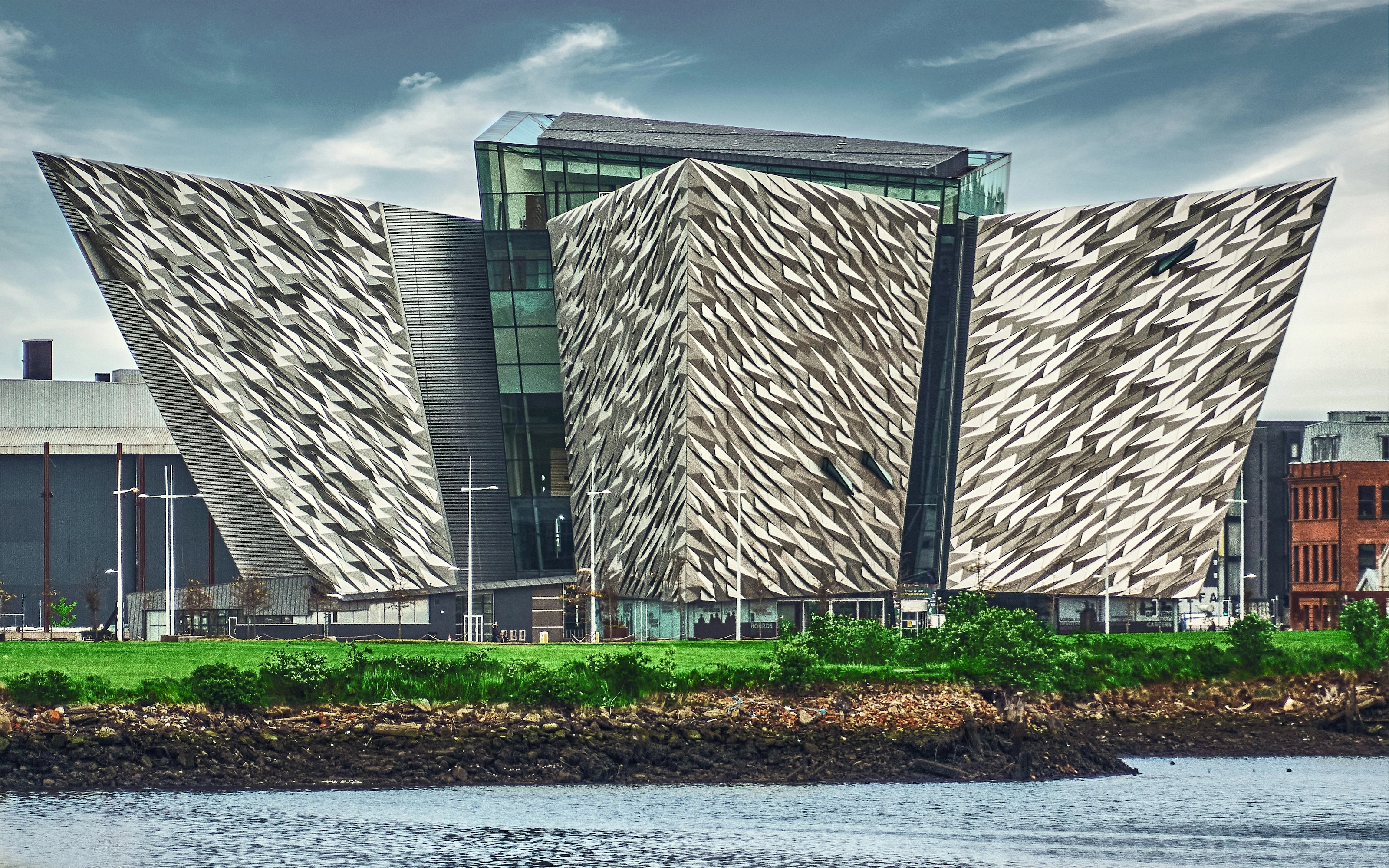
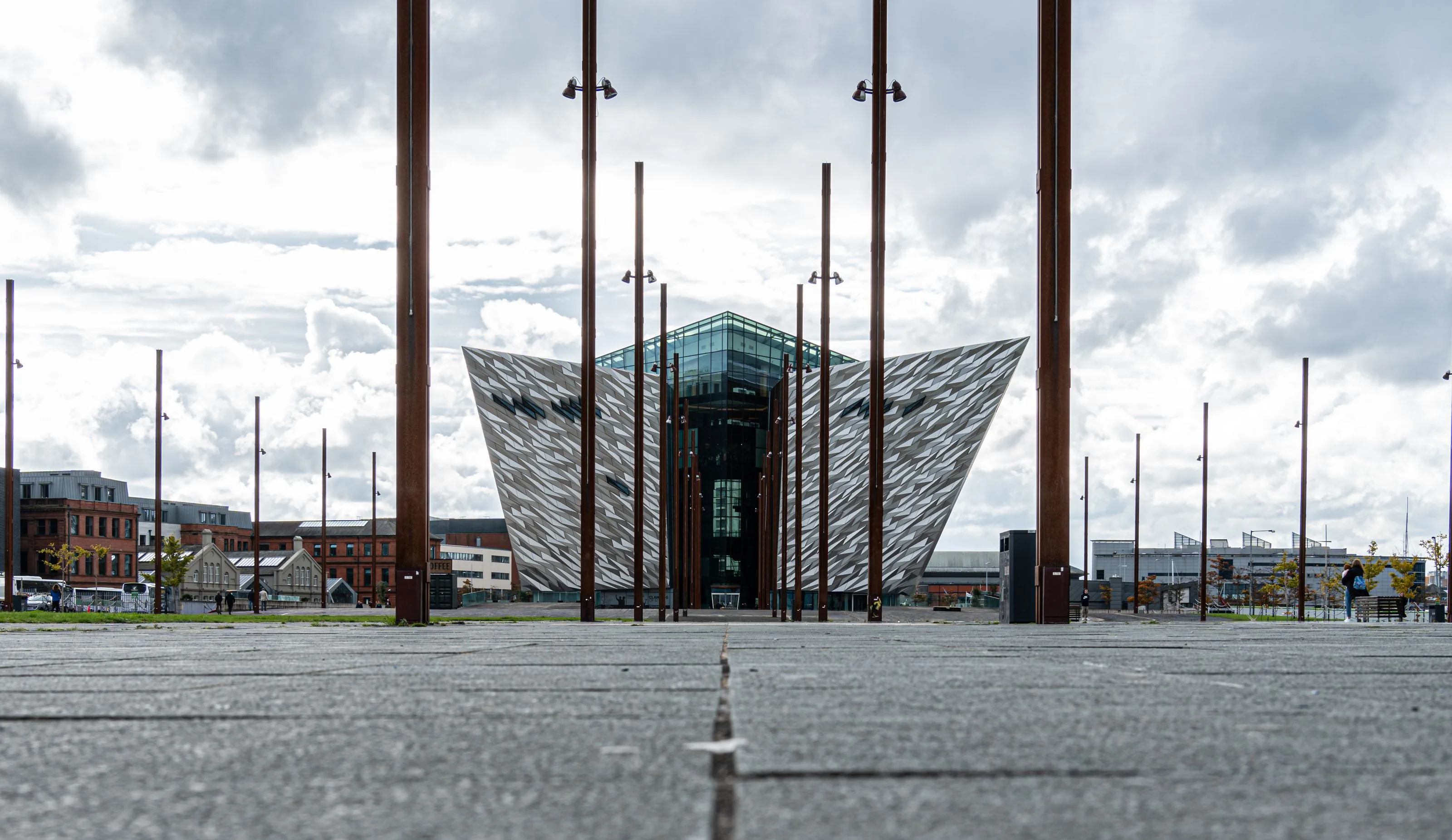
Titanic Belfast and the Titanic Quarter
Opened in 2012, Titanic Belfast stands over the former shipyard where the liner was built. Its faceted cladding evokes the bows of three ships rising towards the sky. The surrounding area, once a shipyard, is now a waterside promenade with hotels, offices and leisure spaces; the visit inside is described in the museums section below.
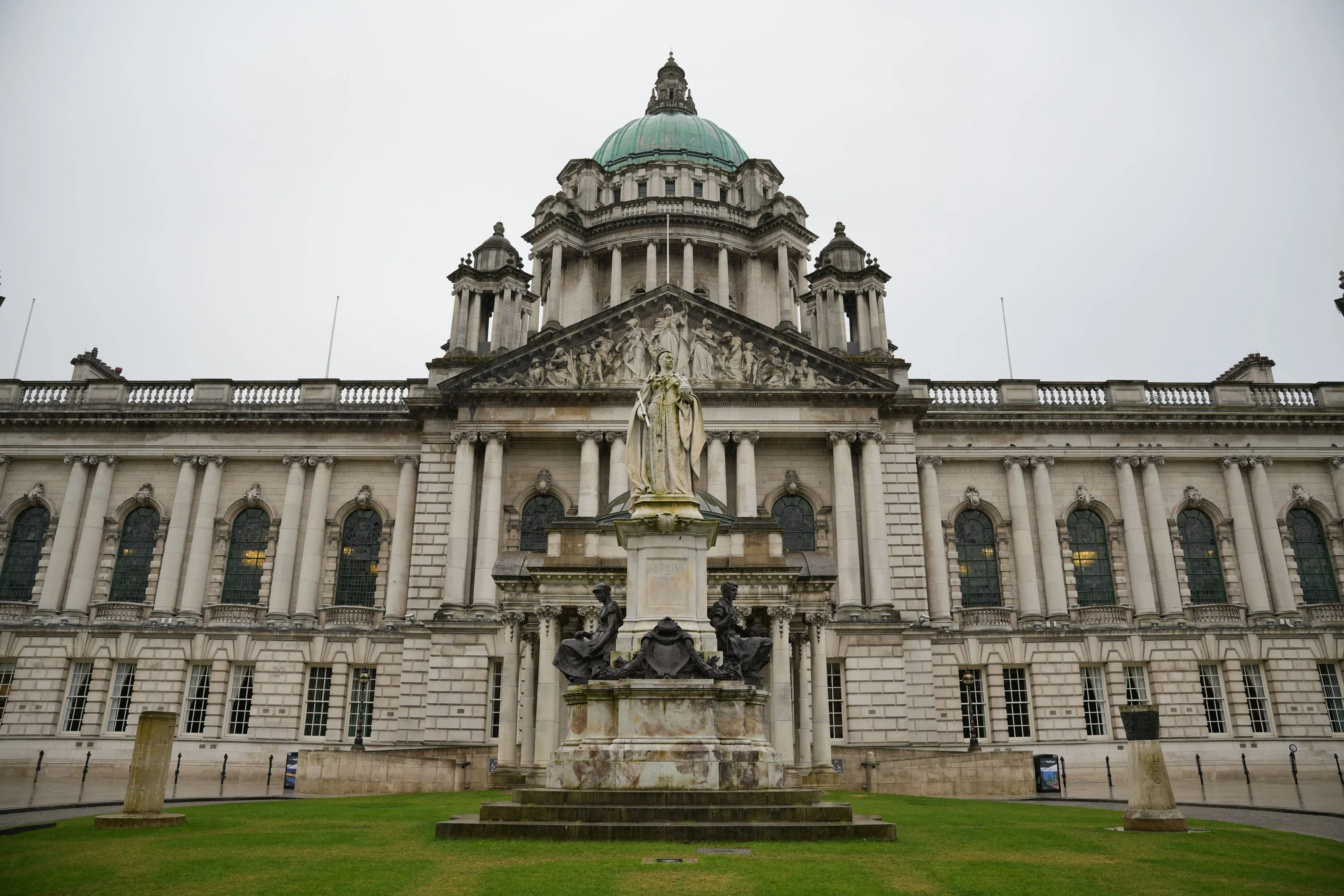
City Hall on Donegall Square
Built in 1906 of white Portland stone in the baroque style, City Hall is the heart of the city. Its green copper dome rises above the square, where a statue of Queen Victoria and a memorial to the Titanic's victims stand. You can walk freely into the entrance hall and under the rotunda, and guided tours run several times a day.
Queen's University and the Lanyon Building
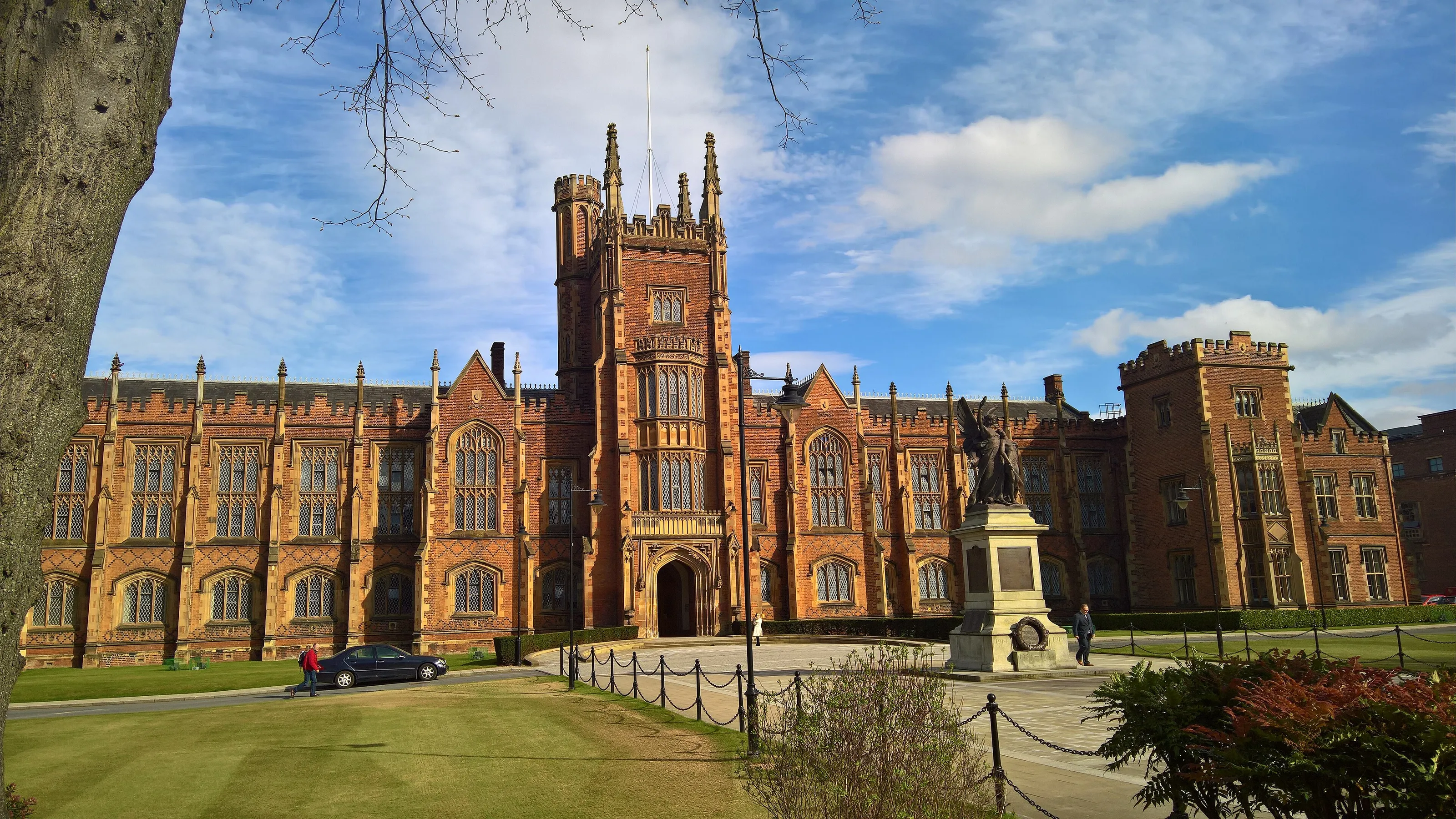
South of the centre, Queen's University's red-brick Lanyon Building, in the Tudor style, is modelled on Magdalen College, Oxford, according to Wikivoyage (EN). Its central tower and crenellated gables overlook a lawn, and the neighbouring Botanic district, with leafy streets, cafés and bookshops, is one of the most pleasant places to wander.
Belfast Castle and Cave Hill
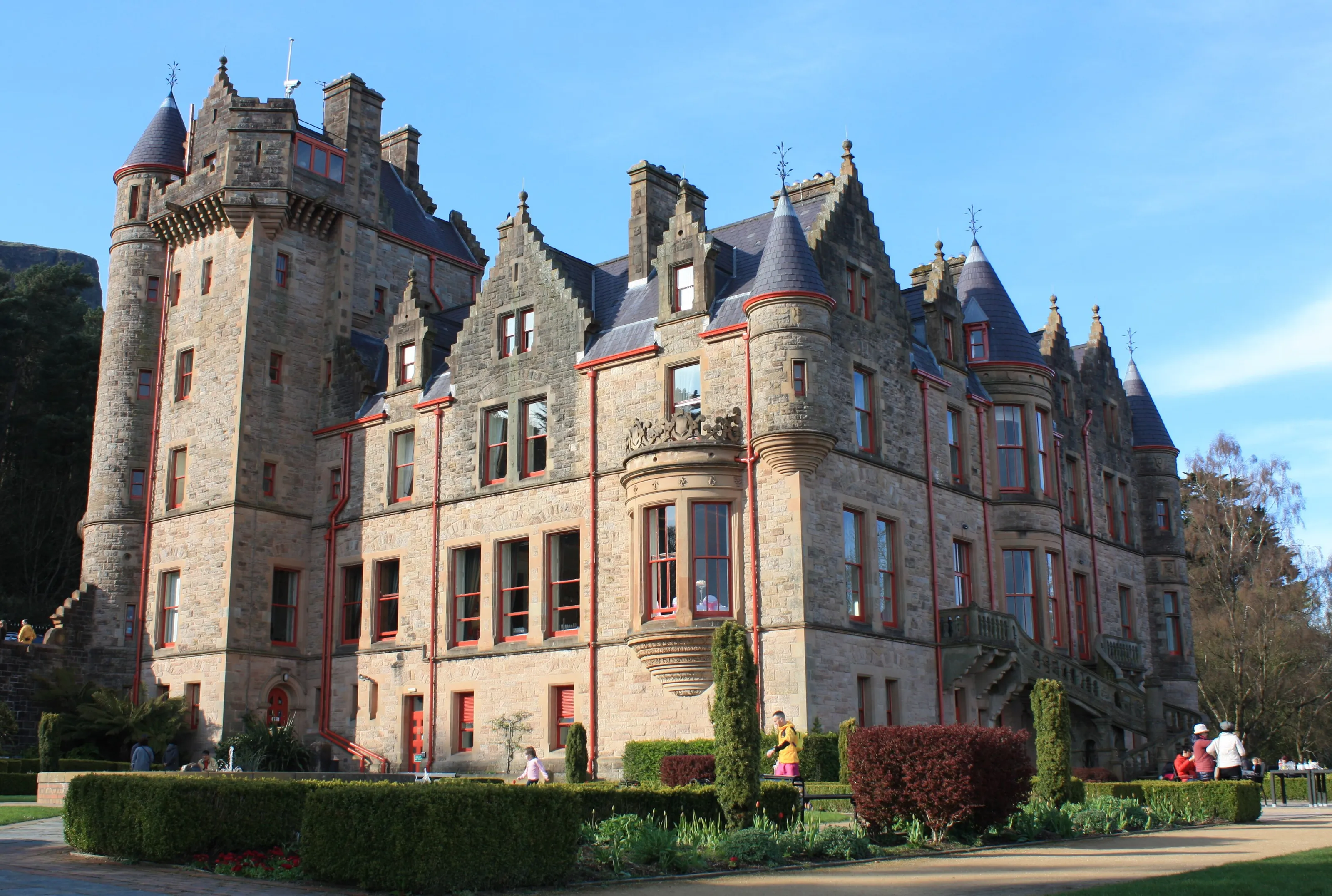
North of the city, Belfast Castle is a baronial-style castle built in the 1860s for the Shaftesbury family on the slope of Cave Hill. People come mainly for the view over the lough and the city; paths climb to the summit at about 368 m, from where Scotland can be seen on a clear day, per Wikivoyage (EN).
Cathedral, Victorian pubs and botanic gardens, in text
St Anne's Cathedral, in Romanesque style, opened in 1904 and has carried a lit metal spire since 2007. St Malachy's Church impresses with its fan-vaulted interior, and the Crown Liquor Saloon, a Victorian pub opposite the station, is worth a look even without a drink. The Botanic Gardens, open since 1828, hold the Palm House, a cast-iron glasshouse from 1840, and the Tropical Ravine. The Grand Opera House, from 1895, stages shows and pantomimes.
Museums and culture
Titanic, Northern Ireland history, art and reading
Titanic Belfast
The museum traces the industrial city of the Victorian and Edwardian era, the design and building of the liner by the Harland & Wolff yard, and then her only voyage, which left Southampton on 10 April 1912. The galleries mix models, reconstructions and stories. Allow several hours. We give no ticket prices.
Ulster Museum and the Botanic Gardens
The Ulster Museum, inside the Botanic Gardens, covers natural history, archaeology, the history of the island, including the recent conflicts, fashion and a fine art collection. Wikivoyage (EN) lists entry as free; check before you go. In the same grounds, the university's Naughton Gallery shows modern works.
Crumlin Road Gaol and the city's memory
The former Crumlin Road Gaol, opened in 1846 and in use until 1996, can be visited on your own. To understand the decades of conflict, local guides run tours, notably in the west of the city, where the peace walls still stand. The subject remains sensitive: choose well-regarded guides and stay respectful. The Linen Hall Library, founded in 1788, and Belfast Exposed, a photography gallery, add to the offer.
Food and drink
Ulster fry, a covered market, pubs and craft breweries
The dishes
The traditional Ulster breakfast, the Ulster fry, brings bacon, sausage, egg, fried bread and soda bread, very generous. Fish and chips is a safe choice, and the city has good modern British restaurants as well as Italian, Indian and Asian ones.
Market and districts
St George's Market, housed in an 1896 building and open Friday to Sunday, brings together fresh produce, hot food and crafts. The Cathedral Quarter, around the cathedral, has bars and live-music venues; Botanic Avenue and Lisburn Road, to the south, line up cafés and restaurants popular with students.
Pubs and beer
Belfast is a pub city: many have handsome Victorian interiors, some with live music. Several craft breweries in the east of the city have opened taprooms. The centre empties quickly after 8pm, per Wikivoyage (EN); the student districts stay livelier.
Getting around
A compact centre, buses and trains to the coast
On foot
The centre is small enough to cover on foot. City Hall, the Cathedral Quarter, the university and the Botanic Gardens are a few kilometres at most from one another, and the Titanic Quarter can be reached on foot or by bus.
Buses and trains
The pink Metro buses serve the city; the Glider, long purple buses, link east and west, including a line to the Titanic Quarter. The blue Ulsterbuses go to surrounding towns. Trains run east to Bangor and Holywood, and north to Derry, Portrush and Larne.
Black taxis and day trips
The black taxis, shared cabs on fixed routes, have a long local history; services vary, so ask on the spot. From Belfast, much of Northern Ireland can be seen on a day trip, from the Causeway coast to the villages of County Down.
Budget and precautions
Prices typical of a large British city, pricey rooms near the centre
Price level
Belfast sits around the British average: lodging of every category, affordable food in cafés and markets, but well-located city-centre rooms that can be costly depending on the dates. The currency is the pound sterling (GBP). We give no figures, as we could not cross-check them on two independent open sources.
Flying
The flight is the most variable item. SniperAir tracks fares to BFS and compares them with the route's history, but it does not sell or book tickets. Dublin, about 160 km away, is another possible gateway, with a direct train or coach to Belfast.
Entry and precautions
The United Kingdom is outside the Schengen area: entry requirements, including any electronic travel authorisation, depend on your nationality, so check the official sites. Belfast is broadly safe and welcoming, but at night avoid the so-called interface districts and steer clear of political debates or showy football shirts, per Wikivoyage (EN).
When to go
A mild oceanic climate, cool summers
Winter (December to February)
Cool and damp with short days; the city is quieter, a good season for museums and pubs.
Spring (March to May)
Parks turn green and days lengthen; on 17 March, St Patrick's Day brings the city to life.
Summer (June to August)
The best season, with long evenings; 12 July is a public holiday marked by large parades that disrupt traffic.
Autumn (September to November)
Soft light on the red brick of the university, rain returns; a good season for museums.
Belfast has a temperate oceanic climate, mild and fairly damp all year round, like most of north-west Europe according to Wikipedia (EN). We give no precise temperatures, as we could not cross-check them; check the forecast before you go. From May to September is the most pleasant period for Cave Hill and the waterfront, although rain can fall at any time.
By length of stay
What to do in Belfast depending on how long you stay
The essentials
City Hall, Titanic Belfast, St George's Market and a pub in the centre.
Culture and discoveries
The Ulster Museum, the Botanic Gardens, the Cathedral Quarter, Crumlin Road Gaol and a guided tour on recent history.
Going further
Belfast Castle and Cave Hill, the Causeway coast, the villages of County Down or a day in Dublin by train.
In pictures
Belfast in pictures
You might also like
Similar destinations
FAQ
Frequently asked questions about flights to Belfast
How do I get from Belfast airport to the centre?
Belfast International BFS is about 30 km west: the Ulsterbus 300 reaches Grand Central station in about 50 minutes, while a taxi costs far more. George Best BHD is about 3 km from the centre, with a bus in under 15 minutes. Check timetables before you travel.
When is the best time to visit Belfast?
From May to September for long days, Cave Hill and the waterfront; St Patrick's Day on 17 March is a lively moment; winter suits museums and pubs, with a waterproof jacket.
Is Belfast expensive?
It sits around the British average: affordable food in cafés and markets, city-centre rooms sometimes costly depending on the dates. We give no amounts, as we could not cross-check them on two sources.
How long should I stay in Belfast?
Two days for City Hall, Titanic Belfast and a pub; four days adding the museums, the Botanic Gardens and a guided tour on recent history; more with the coast and Dublin.
Is Belfast safe for travellers?
Yes, broadly, according to Wikivoyage (EN): the centre is safe at any hour, but at night avoid the so-called interface districts and political debates, and do not wear showy football shirts. For tours on recent history, choose well-regarded guides.
What should I taste in Belfast?
An Ulster fry for breakfast, fish and chips, produce from St George's Market and a craft beer in a pub or brewery.
How much does a flight to Belfast usually cost?
The price depends mostly on your departure city, the season and how early you book. The opportunities section above shows real examples of fares SniperAir has already detected to this destination.
How do I get alerted when a flight to Belfast drops below my budget?
Create an alert profile with your departure airport, Belfast as the destination and your maximum budget. You are notified automatically as soon as a matching fare is detected.
Ready to head to Belfast?
Set your budget and let SniperAir monitor fares for you.
Create my alert