
Cheap flights to Liverpool
Set your departure airport and maximum budget: SniperAir tracks prices to Liverpool and alerts you the moment a deal matching your criteria appears.
Quick summary
Country
United Kingdom
Continent
Europe
Airport
LPL
Currency
Pound sterling (GBP)
Time zone
UTC+0 (UTC+1 during summer time)
Deals already spotted to Liverpool
Real flight examples detected by SniperAir, with their reference price.
Loading examples…
Why track Liverpool with SniperAir
You don't need to compare prices every day
Choose your departure
Enter your departure airport and your maximum budget for a flight to Liverpool (LPL).
SniperAir keeps watch
Our systems continuously compare new fares with the real price history of the route. SniperAir tracks prices and alerts you: it does not sell or book tickets.
You get an alert
As soon as a fare matches your criteria, you are notified, without having searched for anything yourself.
Airport and getting into town
An airport about 12 km south, linked to the centre by bus
Liverpool John Lennon (LPL)
Liverpool John Lennon Airport is in Speke, about 12 km south of the city centre. Bus 500, which serves the centre with limited stops, runs roughly every half hour and takes around thirty minutes, and other city routes, slower, also reach the centre, according to Wikivoyage (EN, DE). A taxi takes twenty to twenty-five minutes outside the rush hour. The airport has many low-cost airlines, mainly to Europe and Ireland; Manchester (MAN), under an hour away by train or road, offers more long-haul flights.
Distances and times are approximate, based on Wikivoyage (EN, DE); bus and train timetables change, so check them before you travel. We give no fares.
Liverpool is a big port city in Merseyside, England, on the Mersey estuary. Lime Street station, in the heart of the city, has direct trains to Manchester, London, Birmingham and other cities across the country; London is a little over two hours away. European Capital of Culture in 2008, the city is famous for music, football and its maritime heritage.
Old town and landmarks
A monumental waterfront, brick docks and two cathedrals
Liverpool is best seen from the Mersey: the great buildings of the Pier Head, then the converted docks, before climbing up to the cathedrals. Four places are illustrated; the others are described in text only.
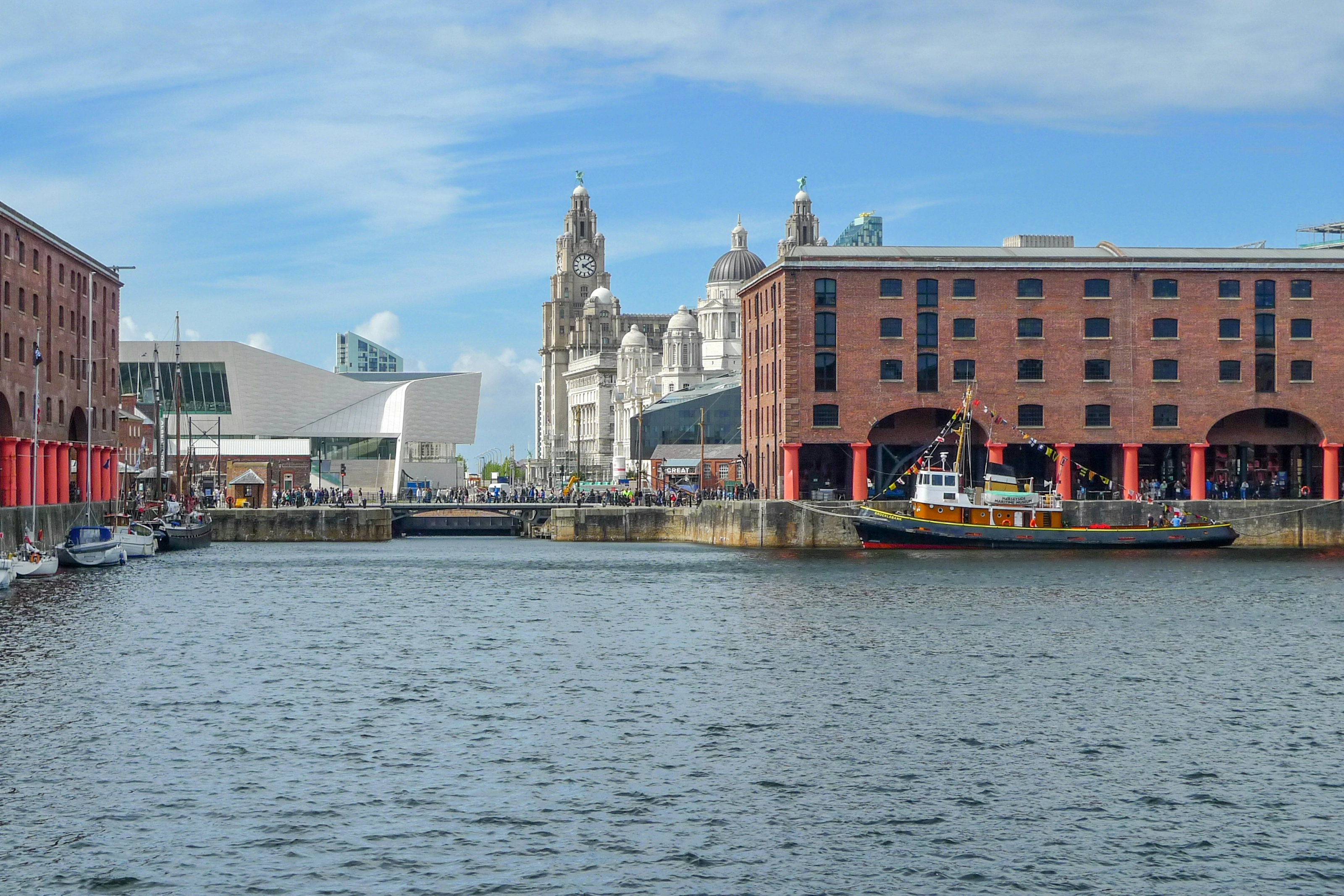
The Royal Liver Building
Finished in 1911, this stone skyscraper is the city's symbol. Its two clock towers carry the Liver Birds, mythical birds that watch over the Mersey and serve as a local emblem. With the Cunard Building and the neighbouring building, it forms the trio of waterfront facades often called the Three Graces.
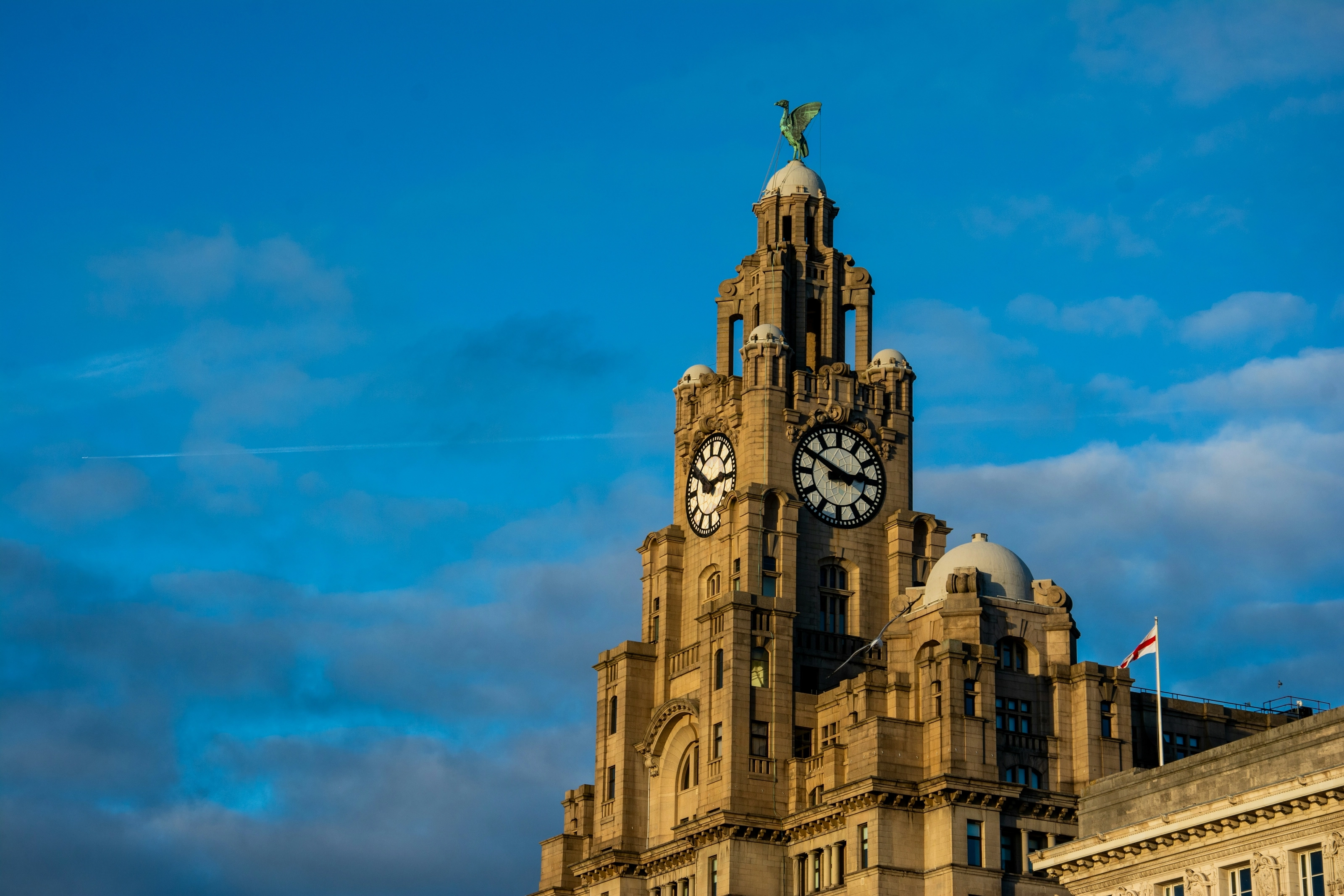
Albert Dock
These red-brick warehouses on cast-iron columns form the largest collection of Grade I listed buildings in the UK according to Wikivoyage (EN). Converted into shops, restaurants and museums, they line a basin lively with historic boats. Tate Liverpool and The Beatles Story are here, while the Maritime Museum is closed for renovation, so check before you go.
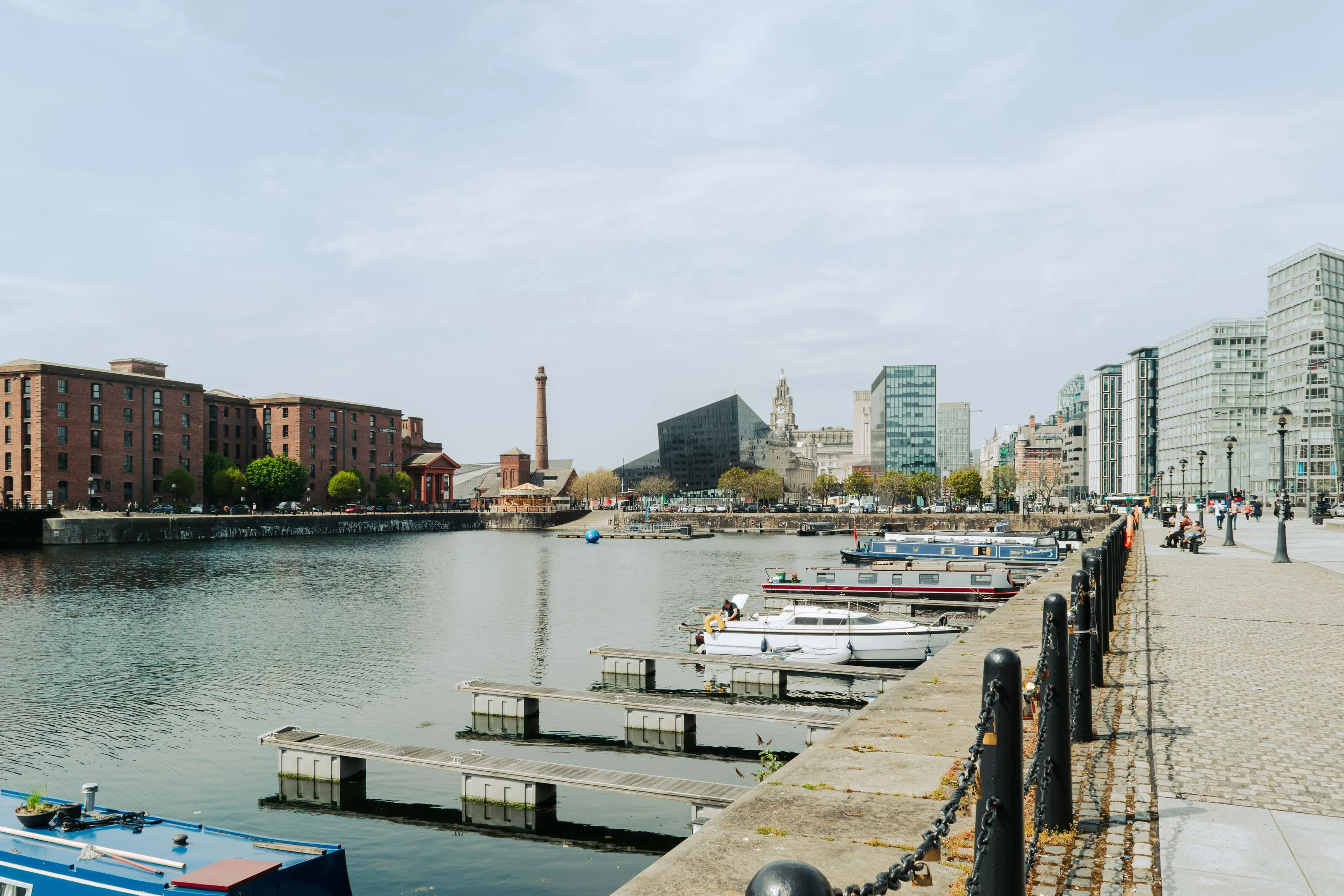
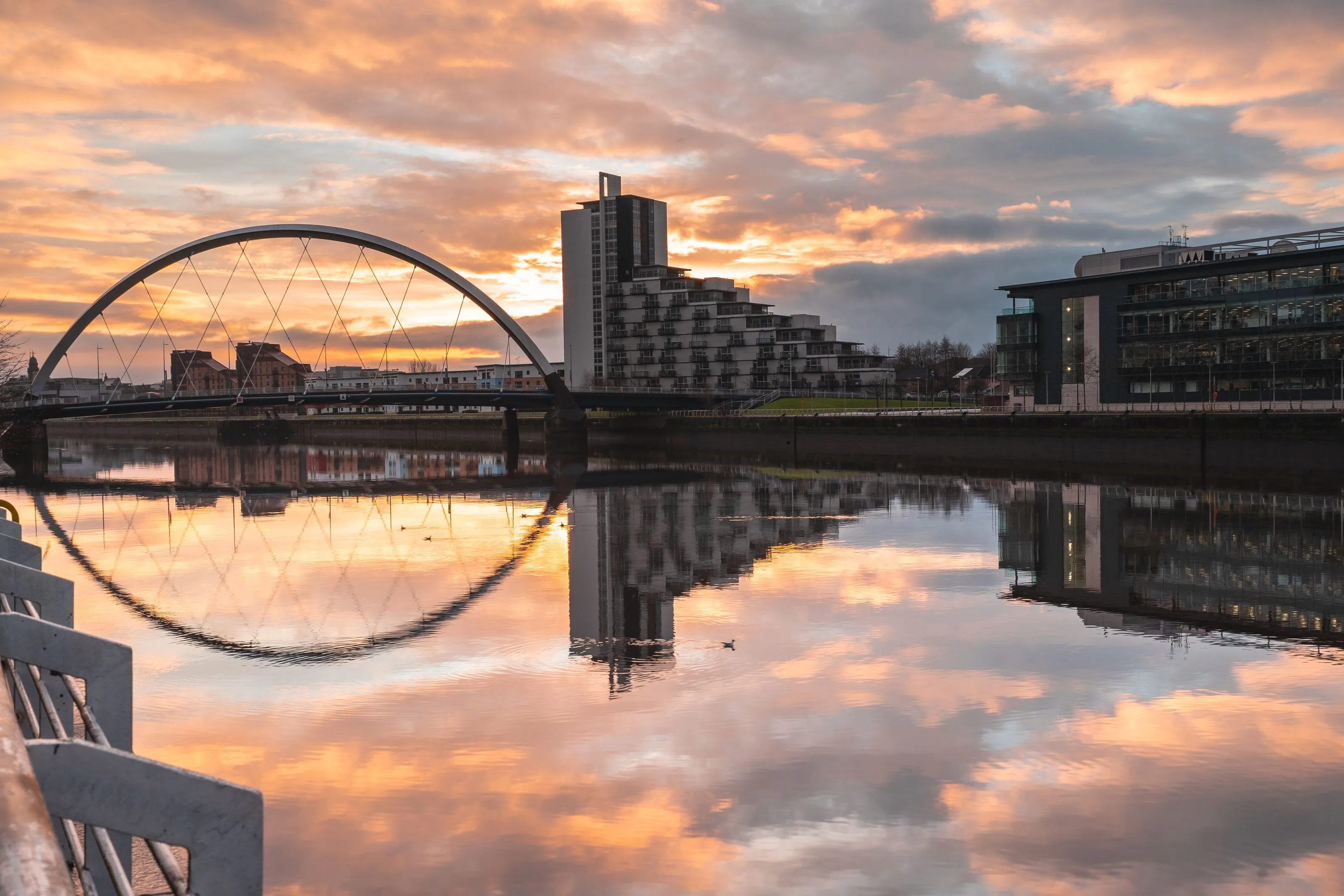
The old docks
Next door, the other waterfront basins line up pontoons, narrowboats and contemporary buildings, with the Liver Building in the background. The cobbled quays are best covered on foot, and the evening light is especially pleasant. The Museum of Liverpool, which is free, tells the city's story on the Pier Head.
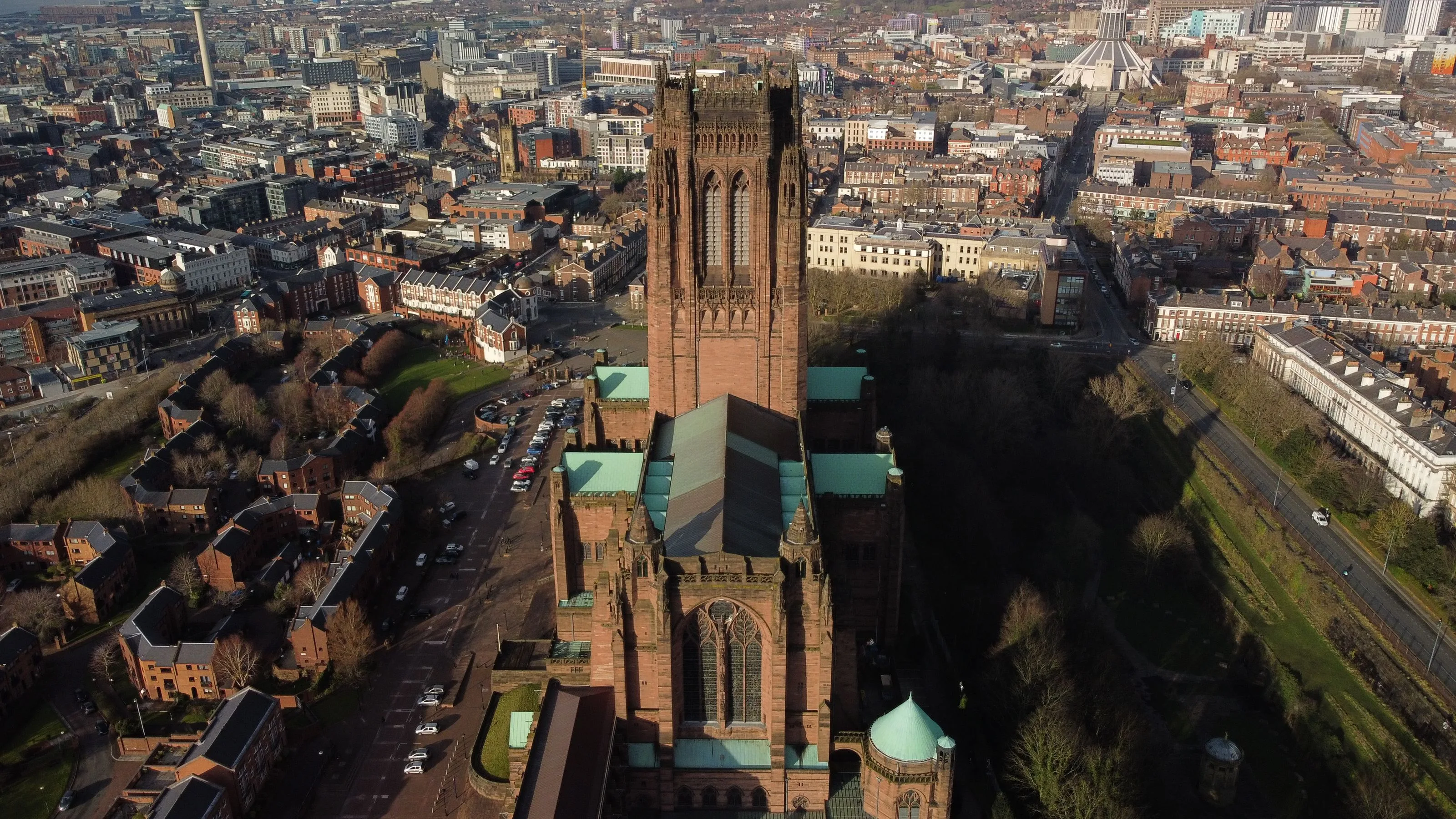
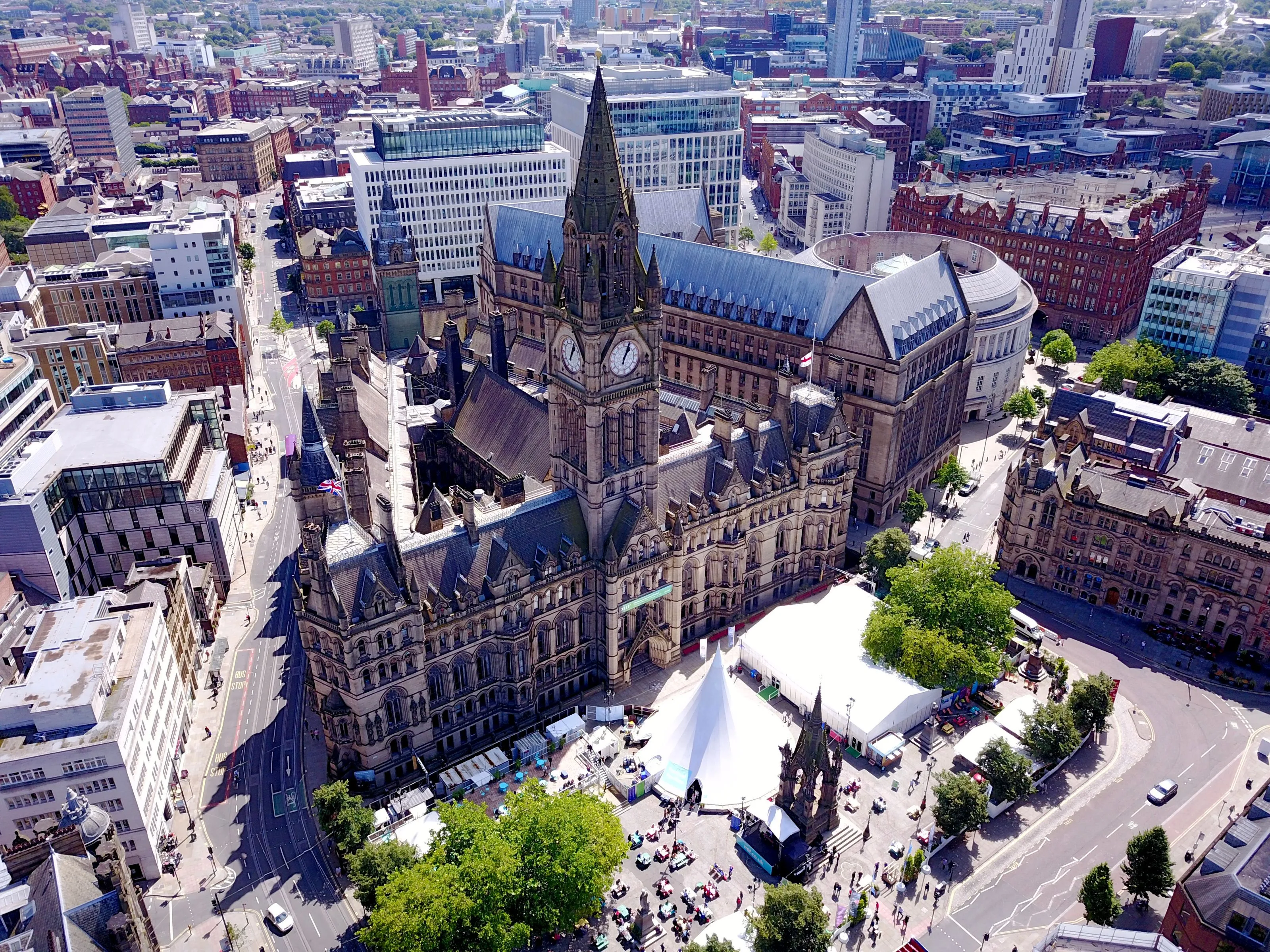
The Anglican cathedral
Seen from above, Liverpool Cathedral stands out like a red sandstone cliff above the roofs. According to Wikivoyage (EN) it is one of the finest examples of Gothic Revival architecture in the world, and its interior is awe-inspiring in scale; the tower offers a panorama of the city. On the horizon you can pick out the modern Metropolitan Cathedral.
Town buildings, library and tunnels, in text
St George's Hall, a vast neoclassical building near Lime Street station, is regarded as one of the finest of its kind in western Europe. Next to it, the Central Library has a circular reading room, and the Walker Art Gallery, opened in 1871, forms an ensemble with it. The Bluecoat, dating from 1717, is the oldest Grade I listed building in the centre. Williamson's Tunnels, an early 19th-century underground maze in Edge Hill, remain mysterious in purpose. The Metropolitan Cathedral of Christ the King, nicknamed Paddy's Wigwam, is worth a detour for its stained glass.
Museums and culture
Free museums, modern art and the Beatles
Museum of Liverpool and World Museum
The Museum of Liverpool, on the Pier Head, tells the city's story from its origins to its renewal; it is free according to Wikivoyage (EN). The World Museum on William Brown Street gathers varied collections, including one of the best Egyptology sections outside London.
Tate Liverpool, the Walker and the Bluecoat
Tate Liverpool, at Albert Dock, shows modern and contemporary art. The Walker Art Gallery, in a neoclassical building of 1871, houses European painting, and the Bluecoat, an arts centre in a building of 1717, stages exhibitions and performances. We give no admission prices.
The Beatles and music
The city is the cradle of the Beatles: Mathew Street and the Cavern Quarter keep the atmosphere of the 1960s clubs, while The Beatles Story and the British Music Experience, in the Cunard Building, trace the history of British pop. The football stadiums sometimes open their doors to visitors too.
Food and drink
Scouse, Chinatown and Hope Street restaurants
The dishes
Scouse, a lamb (or beef) and vegetable stew, gave the city's people their nickname. You find it in traditional pubs and cafes, alongside fish and chips, pies and the Sunday roast. Irish, Italian and Asian migration feed a very varied food scene.
Chinatown and districts
Liverpool has the oldest Chinatown in Europe, according to Wikivoyage (EN). For dinner, Hope Street and the Georgian Quarter, Lark Lane to the south and the Baltic Triangle offer good tables, while the restaurants of Albert Dock enjoy the water views.
Pubs and nights out
Liverpool is known for its nightlife. The pubs and clubs of the centre, around Mathew Street and Concert Square, are lively at weekends. In the morning, a cafe at the Bluecoat or a market lets you start gently.
Getting around
A walkable centre, Merseyrail and the Mersey ferry
On foot and by bus
The centre is compact enough to see on foot, from the Pier Head to Lime Street. Buses leave from the Liverpool ONE and Queen Square bus stations, with contactless payment strongly encouraged, according to Wikivoyage (EN). Taxis are plentiful.
Merseyrail
The part-underground Merseyrail network links the centre with Chester, Southport, Crosby and the Wirral peninsula. In the centre the stations are so close together that you save little time; it becomes useful for day trips and outlying districts.
Ferry and excursions
The Mersey ferry offers another view of the waterfront. By train, Manchester and Chester are within easy reach, as are the towns of the north-west coast; London takes a little over two hours.
Budget and precautions
An affordable big city, with flights to watch
Price level
Liverpool is thought to be more affordable than London, with many free museums, but we give no figures because we could not cross-check them against two independent open sources. The currency is the pound sterling (GBP).
Flights
The flight is still the most variable cost. SniperAir tracks prices to LPL and compares them with the route's history, but it does not sell or book tickets. Manchester (MAN) can be another gateway worth comparing, a train ride away.
Entry rules and precautions
The UK is not part of the Schengen area: entry rules, including a possible electronic travel authorisation, depend on your nationality, so check the official sites. As in any big city, keep an eye on your belongings in busy places and late in the evening.
When to go
A mild, rainy oceanic climate
Winter (December to February)
Cool and damp, with short days; the city lights up its quays and opens its Christmas markets.
Spring (March to May)
Parks turn green and the terraces of Albert Dock reopen; the weather stays changeable.
Summer (June to August)
Days are long and festivals plentiful; a good time for the waterfront, the ferry and nights out.
Autumn (September to November)
Soft light on the red brick of the docks and the return of the rain; an excellent season for museums.
Liverpool's climate is oceanic, mild and damp, with breezes off the Mersey along the waterfront. We give no exact temperatures, as they were not cross-checked; look at the forecast before you go. May to September is the most pleasant period for strolling the quays, but rain can fall at any time of year.
By length of stay
What to do in Liverpool depending on how long you stay
The essentials
The Pier Head and the Liver Building, Albert Dock, a free museum, the Anglican cathedral and an evening on Mathew Street.
Music and culture
Tate, the Walker, the Central Library, Hope Street, the Bluecoat, The Beatles Story and a tour of a football stadium.
Around the Mersey
Chester by train, Crosby beach and its sculptures, Southport, the Wirral peninsula or a day in Manchester.
In pictures
Liverpool in pictures
You might also like
Similar destinations
FAQ
Frequently asked questions about flights to Liverpool
How do I get from Liverpool airport to the city centre?
LPL is in Speke, about 12 km south of the centre. Bus 500 reaches the centre in roughly thirty minutes, other routes are slower, and a taxi takes twenty to twenty-five minutes. Check the timetables before you travel.
When is the best time to visit Liverpool?
From May to September for long days, the quays and festivals; December for the Christmas atmosphere; the rest of the year suits museums very well, with a waterproof layer.
Is Liverpool expensive?
It is thought to be more affordable than London, with many free museums. We give no amounts because we could not cross-check them against two independent sources.
How long should I stay in Liverpool?
Two days for the waterfront, Albert Dock and the centre; four days with the museums, the cathedrals, the music scene and a stadium; longer with Chester or Manchester.
How do I get around Liverpool?
On foot in the centre and along the waterfront. Merseyrail, buses and the Mersey ferry cover outlying districts and day trips.
What should I eat in Liverpool?
Scouse, a lamb stew, fish and chips, a Sunday roast in a pub, then the restaurants of Chinatown or Hope Street.
How much does a flight to Liverpool usually cost?
The price depends mostly on your departure city, the season and how early you book. The opportunities section above shows real examples of fares SniperAir has already detected to this destination.
How do I get alerted when a flight to Liverpool drops below my budget?
Create an alert profile with your departure airport, Liverpool as the destination and your maximum budget. You are notified automatically as soon as a matching fare is detected.
Ready to head to Liverpool?
Set your budget and let SniperAir monitor fares for you.
Create my alert